


Likes
Comments
Share
@Sr_mezo
Follow
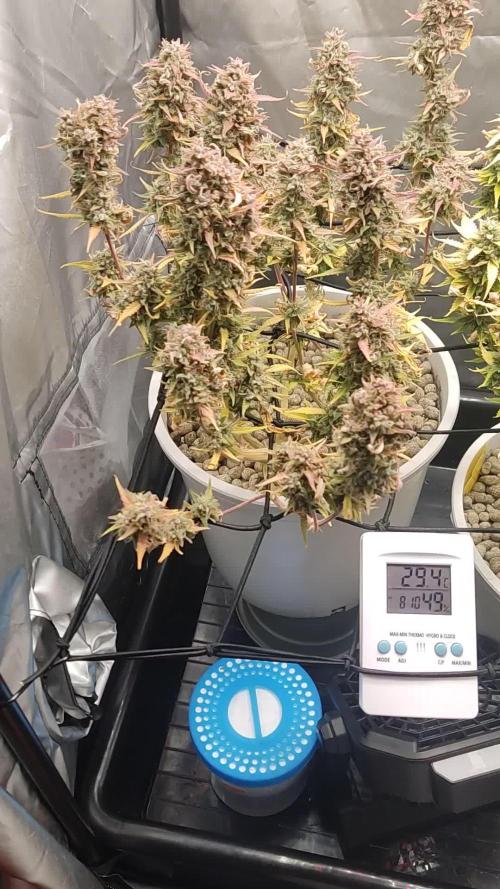
Fotos del día 75.
He estado de vacaciones 6 días y mientras tanto un amigo pudo venir a regar, solo 0,5 litros por planta ya que en anteriores riegos ya no bebian tanta agua.
Ahora mismo el olor de la pc ha pasado a fruta madura tipo papaya y mango, mientras que la cheese tiene un fuerte olor a skunk apestosa.
El aspecto de los cogollos es ya completamente formados y la gran mayoría de hojas se han secado, he revisado los tricomas y la pc empieza a tener algunos ámbar mientras que la cheese presenta mayormente lechosos. Les dejaré una semanita más y en función de cómo las vea cosechare las dos a la vez para pasar al secado.


Likes
4
Share


@JardineiroFiel420
Follow
The plant are going well, this week I start feed her with some bio grow.


Likes
Comments
Share


@andzzz
Follow
elongated stems made me worry, but they only needed little support
at day 3 I started spraying them every 2.5h with filtered water

Likes
21
Share


@BigBudWolf
Follow
The plants hung in the grow tent with the exhaust fan running low for 10 days with an RH between 45-50%.
80 grams at trim from 3 Blueberry Autos.
For a first time grower, I tried to let the plants do their own thing mostly, aside from some lite defoliation and tucking. In doing this I see ways I can improve.
After curing for 10 days, first sample was not disappointing. (I intend to cure it at least 1-2 months.)
Sweet berry aroma when chopping up the bud. Smooth burn with white ash. Can get a hint of berry flavor in the smoke however it also is not ready yet. But I can almost predict the possible flavors after curing.
I believe a strain like Blueberry benefits from longer cures of a few months or more. I will attempt to give it as long as possible.
Overall impressed with the grow and look forward to the final smoke. Ready to apply what I've learned and improve on my next grow.

Likes
18
Share


@Luca90
Follow
Back to lst, my homemade scrog wasn’t too good so I decided to order a professional one for the next grow in the meanwhile I tide them back doing lst
Also now they are really growing bigger and bigger
Again not sure if I’m doing a good job only time will speak
Got a microscope posted a pic and video of how my watermelon is doing with its flowers, the northern light is still not in full flower but its switching

Processing
Likes
5
Share


@Georgius
Follow
End of 5th week of flowering.
GSC and Tangie by Fairseeds
Cheesus by Tomáš Filcka

Likes
33
Share


@Roberts
Follow
Jack herer auto is growing great for only having 100 watts. She is doing good with the Athena blended line nutrition. She is currently bulking, and has a great resin layer on her. Everything is looking great at the moment. Thank you ILGM, Athena, and Spider Farmer. 🤜🏻🤛🏻💪🏻❄️🌱
Thank you grow diaries community for the 👇likes👇, follows, comments, and subscriptions on my YouTube channel👇. ❄️🌱🍻
Happy Growing 🌱🌱🌱
https://youtube.com/channel/UCAhN7yRzWLpcaRHhMIQ7X4g

Likes
1
Share


@TheBudTender
Follow
Been a long time growing this one but soon ready to put it into bloom.
Likes
3
Share

@GoodTimesOrganics
Follow
Hi liebe Community and Welcome back! 💚
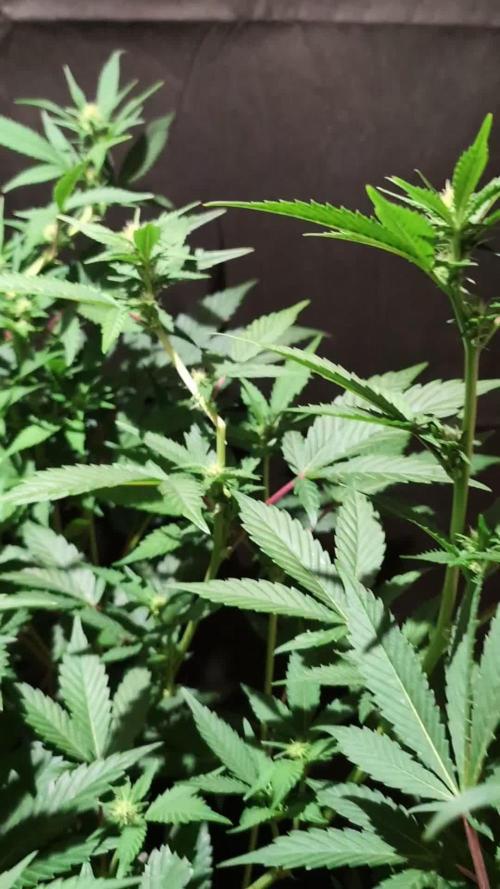
Der zweite Strain von Good Times Genetics. Entwickelt sich überaschend anders als vermutet.
Ein schönes Wuchsbild verreint mit einem doch unterschätzen Stretch! Die Pflanze hat innerhalb der letzten 2 Wochen einen starken Stretch von knappen 20 cm hingelegt.
Das bedeutet, das die Diesel Sativa Gene jetzt voll einschlagen.
Daher eher die Tendenz 60% Indica, 40% Sativa.
Nach der zweiten Blütenwoche entwickeln sich die Blütentriebe immer stärker und die Stigmen bilden sich weiter aus.
Der Stängelabrieb duftet schon stark nach säuerlichen, dieselartigen Nuancen, mit einen etwas GMO typischen Aroma.
Die Wachstumsbedingungen im Growzelt sind aktuell wieder super!
———————
🌞 Temp: 22°C
🌚 Temp: 20 °C
💨 RH: 53%
VPD: 0,91 kPa
😎PPFD: 830 mqm
———————
Stay Tuned! 💚
Likes
3
Share


@Krautbauern
Follow
We removed the lower 2-3 leaves that turned yellow and started to dry. Maybe dou can call this a defoliation
Like the first time, Ztrawberriez is a blast to grow. It already has a sweet, berry flavour. Soon she will be ready...we can hardly wait, but she is fast af
Likes
4
Share


@Kannamar
Follow
25/04/2023 Day 69
I cut the "twins" and finally discovered the inside of the DWC MyPot.
I took lots of pics so you can see the unexpected plant of the seed that I lost in the clay and then germinated anyway and found an awkward path to the surface through a tiny hole! Unbelievable!
I also found that the watering tube from the pump had moved during manipulation, don't know for how long it has been pressed between the upper and lower parts on the DWC.
Pretty sure for that final plants had received less or no feeding solution, and the use of Clean might not have been efficient.
I guess it's also the reason why I found the white (?) on the top of the clay, salts and something else, because of lack of watering.
Will come back in 3 weeks, will be dry and then I'll can trim and weight. And smoke, yeah!
Not expecting much and could be hard to smoke if the cleaning was not efficient.
Anyway, the next one will be better!
Likes
45
Share


@masterofsmeagol
Follow
9/10 Went and shook the plants off. I don't think it rained. I think it's just dew. Plants with ailments seem to be progressing well and it looks like they'll outrun the pathogens. It may not be a banner year yield wise but the quality will be great it looks like. GMO is stacking up real nice. The ones in further flower are swelling more and more everyday. Earwigs MAY be back because I noticed a couple of plants where I left a tiny little branch on the bottom have been lollipopped on tje sherb pie and rather quickly too. I suppose it could be leaves dieing and rotting bit I doubt it. If they are here there aren't many and most plants are too far in flower for them to bother. They eat the lower newly developing shoots. Not big dense buds. Luckily. I noticed some pm on the gmo with pm. Looks like it's time for another treatment of k bicarb. I'll probably do that tonight. I'll keep this updated.
WENT BACK OVER AND DEFOLIATED A BUNCH OF STUFF. ITS TIME FOR ANOTHER APP OF K BICARB. I CHECKED THE SHERB PIE AND IT DOESNT NEED TO BE WATERED. IT WAS STILL VERY HEAVY. IM THINKING I MAY HAVE EARWIGS THAT ARE FEASTUNG ON LOWER BRANCHES THAT SHOULDVE BEEN PRUNED. I NOTICED SOME LARFY SHIT THAT KOOKS LIKE NEW SHOOTS WERE CHEWED. LUCKILY THEY DONT SEEM TO BOTHER DEVELOPED BUDS. ESPECIALLY ROCK HARD BUDS. I'LL DO SOME RESEARCH AND DO SOME FORM OF APPLICATION FOR THE PM SPOTS I SAW AND THE SEPTORIA I KNOW IS THERE. IM SUPER GRATEFUL THOUGH. THESE ARE VERY HARD TO GROW STRAINS AND I THINK ILL KNOCK IT OUT OF THE PARK. Also thinking of switching to cha ching shortly on the toasted toffy and the event horizon that's furthest along.
9/11 I Didn't water anything today because things still seemed heavy. I'm noticing the same thing that happened a few years back. Lower secondary or tertiary branches are getting stripped on a couple plants. They never touch the developed buds they want the new shoots. If IT IS ear wigs they are impossible to fight. I put poison down and d.e. around those plantscand we'll see. It could also be rot from dying leaves. I need to treatcsome of the plants with a longer flowering time with plant doctor. I'm going over today to spend a few hours working in the garden. I'll apply something I just don't know WHAT yet. One event horizon looks like it tried to reveg AGAIN which is super weird . I just see a lot of one and 3 finger leaves. It will probably turn out to be great. The other event horizon looks like its going to be incredible. The toasted toffy is getting close too. Temps only reached 62° yesterday. It took FOREVER to shake these plants off. Time to get the leaf blower out. I'm going to bring my trich scope when I go over today. I wanna look at tgat event horizon. Pistols are retracting on the top flowers. This may be a multiple stage harvest. I'll keep this updated.
UPDATE: WENT OVER AT FOUR AND WATERED. I MIGHTVE BEEN ABLE TO HOLD OFF UNTIL TOMORROW MORNING BUT I HAVE PLANS EARLY MORNING. I ALSO DEFOLIATED QUITE A BIT. BUDS ARE SWELLING CONSIDERABLY. THE SHERB PIE HAS TURNED COMPLETELY PURPLE. IT HASNT HAD ANY FLOWERS ON IT BUT NOW IT HAS FLOWERS BIGGER THAN A QUARTER! THESE PLANTS ARE VIGEROUSLY FLOWERING. I NEED TO CHECK THE TRICHS ON A COUPLE PLANTS AS THEY DONT HAVE MUCH TIME LEFT. AS I WAS DEFOLIATED I NOTICED THAT SOMWTHING HAD STRIPPED FRESH BUDSITES ON SOME LOWER BRANCHES. IN YEARS PAST THATS ALWAYS BEEN EAR WIGS WHICH ARE IMPISSIBLE TO DEAL WITH. THEY USUALLY DONT TOUCH THE BIG BUDS THOUGH. TJEY LIKE THE FRESY SHOOTS. ILL GO OUT AT NIGHT AND SEE IF THIS IS THE CASE. ITS ONLYVHAPPENING ON A COUPLE PLANTS BUT STILL. THE EVENT HORIZON IN THE MIDDLE IS GROWING DIFFERENT THAN ITS SISTER. YOU CAN TELL THE STRAIN IS THE SAME BUT THIS SEEMED TO REVEG (AGAIN) BECAUSE IM SEEING SMALL FULLY DEVELOPED BUDS THAT I DONT REALLY SEE CONNECTING. CRAZY TRICHS THOUGH. IT WILL BE INTERESTING TO SEE HOW IT COMES OUT. I TREATED THE GMO WITH WPM WITH A QTR GALLON OF K BICARBONATE FOLIAR SPRAY WITH A DROP OF DAWN FOR A SURFICANT.
9/12 Shook everything off and then used the leaf blower to try to better dry them. Weather is lookingvyo be good for the next couple weeks. Perfect finishing weather for my two that are furthest in flower. I may have to do a staged harvest. Some BOTTOM branches on e.h. are FAT and have trichs on trichs. I'll have to use my scope. I'm switching to cha ching next feed for the three furyhest in flower. Maybe four. The sherb pie had NO flowers last week but it's exploding with really compact buds. The whole plant turned purple. I need to be careful of botrytis with this weather. I've been pretty good about leaving and removing any dead or dying leaves. Even the plant in the ten is filling out nice. I have SOMETHING (behaving like earwigs) and eating "fresh" shoots. It's like lollipopping the new growth on a couple plants. I'll becstaying at the grow from now forward so I'll go out tonight and see what I found. The poison I put down seems to be gone. Anyway I'm very grateful for what I've got. I'm update as I go.
9/13 It's sprinkling a half hour trom my grow. I think it's supposed to be nice though. I found some botrytis on two plants. Two are so close to finishing that I need to closely watch them. I don't want botrytis. I applied k bicarb to the middle gmo as I saw a spot of pm. I spent a ton of time defoliating. This cold weather has brought the fade much faster. Trichs are looking good.
WENT THROUGH THE PLANTS AND DEFOLIATED A SHIT TON. APPARENTLY THIS EARLY FADE IS NORMAL THIS YEAR. AT LEAST IN ALL MY CANNABIS GROUPS. WENT THROUGH EVERYTJING! STILL HAVE THE MIDDLE EVENT HORIZON I WANT TOO TIE DOWN BUT I DID A LOT OF DEFOLIATION. THIS ALLOWED ME TO FIND A FEW PIECES OF BOTRYTIS. ON MY PLANTS THAT ARE ALMOST DONE. WE HAVE GOOD WEATHER FOR A LITTLE BIT BUT I MAY HAVE REACHED DIMINISHING RETURNS ON A COUPLE. THAT E.V. AND THE TOASTED TOFFY I DONT WANT GETTING WET. THEY ARE TOO DENSE. TRICHS ARE ALL MILKY AND THEYRE SWELLING. IM SLEEPING ON IT BUT IM ALMOST POSITIVE IM GOING TO DO A SELECTIVE HARVEST ON THOSE TWO. IM NOT LETTI G SHIT ROT AND AGTER LOOKING AT THESE UNDER A SCOPE I WOULDS TAKEN THEM YEARS AGO. GMO IS FROSTY AS HELL. EXTREMELY ARONATIC GARDEN. ILL KEEP THIS UPDATED.
Decided to hold off feeding and watering. Defoliated a shit ton throughout the day. Around five I noticed that my shittiest GMO with the yellow leaves had a couple dead interior branches. Upon closer inspection it looked like grey mold. A few tiny buds were destroyed but the branch needed to be removed. Jot any big loss but if it's in the shit that doesn't matter than it's around the shit that does. Found info on event horizon flowering time. Middle of September until middle of October. That could be why I'm seeing coke cans on the bottom branches of that phenome. I've got some decisions to make. I mixed up enough water to water in the morning. I'll mix up feed in the morning. Tje garden has gotten a lot of attention lately. I hope it pays off. I'm leaning on a multi staged harvest of the event horizon amd toasted toffy but we'll
9/14 Hurries morning. Mixed water for this morning last night. WATERED AND FED EVERYTHING (BUT TOASTED TOFFY AND EVENT HORIZON #2 DUE TO THEM BEING CHOPPED SOON.) Everything got a gallon of water and a qtr of food. I had to cut a couple small interior secondary branches on my shottiest GMO due to the appearance of grey mold. I also found some botrytis in both the event horizon and toasted toffy that I plan to take the tops of today. I scoped them and I'm planning to do a staged harvest. Trichs are milky with some amber. Everything is blowing up! I'm not sure what's happening but like it previous years there's a couple plants with leaves dieing near bud sites and an overall yellow appearance. Maybe it's late stage septoria. I cant isolate it due to local laws but if I have to I'll deal with it. Nothing else had anything like that. I hace noticed SOMETHING nocturnal that can eat a small branch and leave it bare. Also eat the small newly forming shoots at the bottom of plants. I shouldve taken off ALL the larfy stuff as it draws bugs but I did things a like different with each plant this year. I'm going to go through the plants again today and I'll update what I decide. Chances are the top half of those two plants are coming down. I'll do a video.
9/15 I'll have to add pics and videos tomorrow. Last night I did a final check of the trichs on event horizon #2 and toasted toffy. Everything looked great so I proceeded to do a "wet trim" outside (ill use the leaf blower to clean up) and cut the tops off the plant. I know this injures tje plant but it also makes them go crazy thinking they are dying and the buds and trichs swell. I had one plant last year I got two harvests off and a bunch of fresh frozen for concentrates. I looked this morning and I madecthe right decision. These plants are DONE. I've got another event horizon but it's not quite there yet. I'm going to leave it as long as I can. If the injured plants pick up pm or something (already had septoria) then the flower will be used for extracts or I'll do a Cervantes wash. I imagine concentrates though. One GMO isn't doing as good as the rest. Yesterday I had to cut three branches off due to grey mold on the stalk. If laws allowed it I'd isolate that plant. Luckily since I spend so much time going through the garden I'm able to find this kind of stuff. The GMO'S look wonderful (even the one with some yellow leaves that I cut the branches off) . K bicarb has kept pm at bay so far. This strain has TONS of trichs. It's like trich on trich on trich. I can't wait to try it. It smells amazing. Sherb pie is completely purple with rock hard buds that smell amazing. It's quality over quantity this year. The big one in the 50 (I think red runtz) is swelling more everyday. I'm going to switch to ch ching soon. The plant in the 10 had TOTALLY SUPRISED ME. I've never grown a plant lime this. It started out with dark purple in the middle now buds are swelling and calyxes are EVERYWHERE! This plant is growing extremely fast! You'll see what I mean when I put the pics and the videos up. I'm not going to do the event horizon harvest until I get both plants and all of both plants. It will be a while before I finish the toasted toffy one as well.
9/16 I'm glad I took those plants. Weather is good but plants were soaked thos morning. I need to go out at night and see what is eating new shoots. Flowers are looking great. I need to do another app of k bocarb sometime. I'm suprised the pm has pretty much stayed with that one plant. That two other GMO's flanking it are doing awesome! Purple, sticky stinky. It's got the whole package. The one in the 50 has some huge flowers that won't require much longer. The one invthe 10 has some time left. This is clearly a sativa dominant hybrid. The buds are swelling like crazy. It went from NO buds to having little purple calyxes to flowers that look like cat-tails! I can't wait to see what rhis year brings. Once I get things dry and manicured I'll give you guys a look at how the first stage of the first harvest went. I'm super happy. Spent a large part of this morning shaking plants by handcand removing any dead leaves or anything that could cause rot then I went over them with a leaf blower. I'll need to water tonight I imagine.
WATERED AROUND 3:00 PM. MY FAVORITE GMO STARTED DROPPING. WATERED EVERYTHING A GALLON EXCEPT I SPLIT ONE GALLON ON THE PLANTS THAT HAD BEEN CUT. IM EXTREMELY TIRED BUT I NEED TO GO OUT AT NIGHT AND SEE IF I CAN FIND EARWIGS CRAWLING UP THE STALKS. WEATHER STILL LOOKS GOOD. BUDS SWELLING PISTOLS RETRACTING AND MORE AND MORE LEAVES DYING. I CANT BELIEVE THE SIZE OF THAT SATIVA LEANING HYBRID IN THE TEN!

Likes
43
Share


@TheBulldozerSicily
Follow
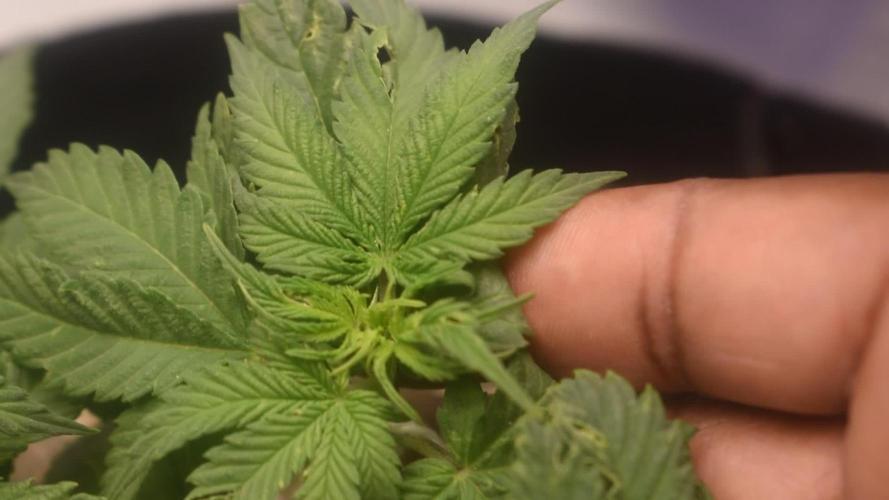
Come si evince dalle foto le talee sono oramai diventate piccole piante e stanno crescendo molto bene e in salute, oggi dopo 14 giorni cambiamo la soluzione per raffrescare acqua e nutrienti!!!
Happy growing!!!
Venerdì 19/01/2024
Inizio controllo ec 1444 ph 6.5
Cambiamo l'acqua
Partiamo da 75 lt acqua demineralizzata, otteniamo ec 345 ph 7
Aggiungiamo
135 grow 90 micro 45 bloom
75 sensizym 75 calmag 75 rhino skin 75 nirvana 75 bud candy
Ottenendo ec 1602 ph 6.1
Ci aggiorniamo la prossima settimana 🥂




Likes
6
Share


@elweedy92
Follow
Blütetag 29 nach sichtbarer Blüte der Geruch erinnert an die kleinen Kirsch lollis die es an den Tankstellen gibt nur fruchtiger. Der Geruch wird von Tag zu Tag mehr


Likes
8
Share

@420DeepGrow
Follow
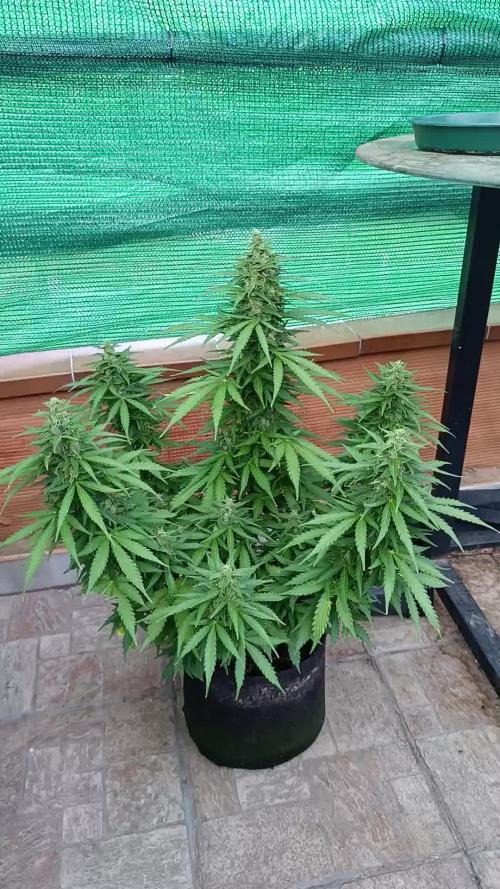
📆 Semana 5
La fase de engorde se hace evidente y los cogollos aumentan de tamaño de forma visible, uniéndose progresivamente a lo largo de las ramas. La producción de tricomas se intensifica y los aromas comienzan a ganar mucha presencia, mientras los pistilos siguen apareciendo en abundancia.
Tiene un aroma muy ácido y potente, pinta muy bien
⚡ EC: 1.7–1.9
💧 pH: 6.2–6.5
🌡️ Agua: 18–22°C
🌫️ Humedad: 40–50%
☀️ Luz: Fotoperiodo natural, abundante sol directo
🔥 Nota: El ritmo de engorde continúa acelerándose y la producción de resina aumenta semana a semana. Mantener unas condiciones estables permitirá que los cogollos sigan ganando densidad, aroma y peso.
Seguimos creciendo fuerte 💪!
Likes
53
Share


@Mrs_Larimar
Follow
2025-04-21
Holy guercamole
these ladies keep getting fatter ( vertical)- and they dont look close to end at all
mindblowing
the room is filled with remaining 7 huge plants , and 2 photoperiods in vegetation for outdoor
everything runs smooth
i am refilling the tank every 4 days, and its so easy----
iam going to give them some booster in this week
xxxxxxxxxxxxxxxxxxxxxxxxxxxxxxxxxxxxxxxxxxxxxxxxxxxxxxxxxxxxxxxxxxxxxxxxxxxxxxxxxxxxxxxxxxxxxxxxxxxxxxxxx
Growing Environment Setup & Specifications
Lighting System
Model: Sanlight EVO 5-150
Quantity: Up to 5 units
Power Output: 320W per unit
Maximum Total Output: 1600W
Environmental Control
Management Unit: Growcontrol Growbase Pro
Humidity Management:
Dedicated Humidifier
Dedicated Dehumidifier
Temperature Control:
Primary: System-controlled
Secondary: Additional Radiator for supplemental heating
Air Management
Air Circulation: 2x Stand Fans
Air Extraction: Exhaust Fan with Filter System
Irrigation System
Primary: Autopot XXL Pot System
Water Storage: Flexi Tank
Root Zone Aeration:
Airdomes
Dedicated Air Pump
Growing Medium
Type: TERRA PRETA MJ-Mix
Nutrients
System: BIOTABS
Method: "Just Add Water" Strategy
Type: Organic-based feeding
