


Likes
Comments
Share

@LueRootsGrowGermany
Follow
Hallo zusammen,
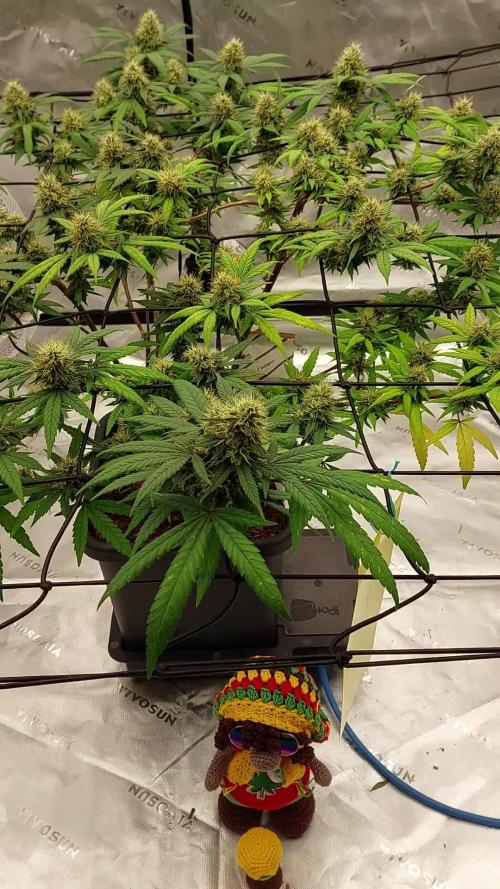
Wir befinden uns inzwischen in Woche 6 der Blütephase.
Es ist sichtlich festzustellen, dass sie identisch wie die erste Purple Coockie Kush, während der Blütephase vereinzelt Versorgungsprobleme aufzeigt. Es liegt zumindest durch den eigen Versuch mit identischen Pflanzengut sehr nah, dass es wirklich weiter vererbt wurde. Dahingehend ein toller eigenversuch mit eher negativen Ausgang aber zugleich, wertvollen Erfahrungen für uns. Aus diesem Grund, sehen wir davon ab, die P.C.K die sich z.Zt im Re veg befindet, weiter zu führen. Am Wochenende werden wir uns noch mal die Blätter die Kraft nehmen, kleinstblüten und wahrscheinlich den einen Unterversorgten Trieb entfernen. Ansonsten schwellen die Blüten die versorgt werden schön an und Baldchin bauen breitgefächert aufeinander auf.
So bis nächste Woche liebe Gartenfreunde und vielen Dank für das vorbeischauen!
VG ✌️ 😎

Likes
12
Share


@Italianganya88
Follow
Habe alle Pflanzen Entlaubt, um eine bessere Luftzirkulation und um den unteren Blüten mehr Licht zu bekommen.


Likes
5
Share


Likes
22
Share


@Luv2Grow
Follow
Day 57 - Starting week 9 and WOW, what a difference in week. I’m thinking this girl is gonna end up being a beast. She’s stretching about an inch every day and filling in more and more each day. I’m ready for the next few weeks of more of the same. Growing is still fairly new to me and I can’t be happier with the FastBud genetics and how this girl is looking so far. Will give her the next foxfarm trio feeding on Thursday.
Day 58 - Not much to really update. She’s getting fatter and filling in everyday and getting pretty frosty. Will give her her next feed of foxfarm tomorrow. It amazes me, how much she fills in and fattens up each day.
Day 59 - I’m still amazed by the growth everyday. She’s looking pretty amazing. Gave her the last week 9 foxfarm feeding and will give her straight water until the week 10. She’s still got a couple weeks to go but can’t wait for her to be finished.
Day 60 - Looking great. She slowed down her drinking a bit so held off on watering her but will check her out tomorrow and see how thirsty she is. She’s defensively fattening up each day but still a couple weeks before I think about chopping. She’s got lots of growing time left.
Day 61 - She’s really starting to smell the place up and it amazing. She was pretty thirsty, gave her a full gallon of pH’d water before she started any sort of runoff. All looking good and can’t wait for her to finish.
Day 62 - Nearing the end of week 9 and really pleased with this girl. She’s really starting to fatten up and fill in. Still a couple weeks left but can’t wait to harvest and try this girl.
Day 63 - Ending week 9 and looking sweet. She’s really starting to pack on some weight and filling in nicely. She’s definitely starting to get frosty and starting to smell really good.

Likes
2
Share


@Maddadog
Follow
From this week we started to give some extra nutrients to the plant. I used half of the quantity suggested from the fertilizer in order to reduce the overfert risks. She is growing day by day. I used to give water one time each 2 or 3 days during the night hours.


Likes
5
Share


@Jardineiro_Br
Follow
Chegando ao fim mais um ciclo , gostei das sementes e o resultado final ainda que não seja muito em quantidade pode ser favorável em qualidade .

Likes
27
Share


@Dreamchvser
Follow
Day 49
Plants had a little transplant shock from last week as they didn’t really grew much taller.
I’m not 100% satisfied with how the veg stage went so far, but I learned a lot and will do better next time.
I attached some gardening wire to some of the branches to create a more even canopy.
Haven’t watered since last Saturday (transplant) as the soil is still wet and starts to dry out slowly now.
Most likely I’ll flip them into flower in 2 weeks around Day 63.
I appreciate every advice 🙏🏾

Likes
55
Share


@Ultraviolet
Follow
What's in the soil? What's not in the soil would be an easier question to answer. 16-18 DLI @ the minute. +++ as she grows.
Probably not recommended, but to get to where it needs to be, I need to start now.
Vegetative @1400ppm 0.8–1.2 kPa 80–86°F (26.7–30°C) 65–75%, LST Day 10, Fim'd Day 11
CEC (Cation Exchange Capacity):
This is a measure of a soil's ability to hold and exchange positively charged nutrients, like calcium, magnesium, and potassium. Soils with high CEC (more clay and organic matter) have more negative charges that attract and hold these essential nutrients, preventing them from leaching away.
Biochar is highly efficient at increasing cation exchange capacity (CEC) compared to many other amendments. Biochar's high CEC potential stems from its negatively charged functional groups, and studies show it can increase CEC by over 90%. Amendments like compost also increase CEC but are often more prone to rapid biodegradation, which can make biochar's effect more long-lasting. biochar acts as a long-lasting Cation Exchange Capacity (CEC) enhancer because its porous, carbon-rich structure provides sites for nutrients to bind to, effectively improving nutrient retention in soil without relying on the short-term benefits of fresh organic matter like compost or manure. Biochar's stability means these benefits last much longer than those from traditional organic amendments, making it a sustainable way to improve soil fertility, water retention, and structure over time. Needs to be charged first, similar to Coco, or it will immobilize cations, but at a much higher ratio.
a high cation exchange capacity (CEC) results in a high buffer protection, meaning the soil can better resist changes in pH and nutrient availability. This is because a high CEC soil has more negatively charged sites to hold onto essential positively charged nutrients, like calcium and magnesium, and to buffer against acid ions, such as hydrogen.
EC (Electrical Conductivity):
This measures the amount of soluble salts in the soil. High EC levels indicate a high concentration of dissolved salts and can be a sign of potential salinity issues that can harm plants.
The stored cations associated with a medium's cation exchange capacity (CEC) do not directly contribute to a real-time electrical conductivity (EC) reading. A real-time EC measurement reflects only the concentration of free, dissolved salt ions in the water solution within the medium.
98% of a plants nutrients comes directly from the water solution.
2% come directly from soil particles.
CEC is a mediums storage capacity for cations. These stored cations do not contribute to a mediums EC directly.
Electrical Conductivity (EC) does not measure salt ions adsorbed (stored) onto a Cation Exchange Capacity (CEC) site, as EC measures the conductivity of ions in solution within a soil or water sample, not those held on soil particles.
A medium releases stored cations to water by ion exchange, where a new, more desirable ion from the water solution temporarily displaces the stored cation from the medium's surface, a process also seen in plants absorbing nutrients via mass flow. For example, in water softeners, sodium ions are released from resin beads to bond with the medium's surface, displacing calcium and magnesium ions which then enter the water. This same principle applies when plants take up nutrients from the soil solution: the cations are released from the soil particles into the water in response to a concentration equilibrium, and then moved to the root surface via mass flow.
An example of ion exchange within the context of Cation Exchange Capacity (CEC) is a soil particle with a negative charge attracting and holding positively charged nutrient ions, like potassium (K+) or calcium (Ca2+), and then exchanging them for other positive ions present in the soil solution. For instance, a negatively charged clay particle in soil can hold a K+ ion and later release it to a plant's roots when a different cation, such as calcium (Ca2+), is abundant and replaces the potassium. This process of holding and swapping positively charged ions is fundamental to soil fertility, as it provides plants with essential nutrients.
Negative charges on soil particles: Soil particles, particularly clay and organic matter, have negatively charged surfaces due to their chemical structure.
Attraction of cations: These negative charges attract and hold positively charged ions, or cations, such as:
Potassium (K+)
Calcium (Ca2+)
Magnesium (Mg2+)
Sodium (Na+)
Ammonium (NH4+)
Plant roots excrete hydrogen ions (H+) through the action of proton pumps embedded in the root cell membranes, which use ATP (energy) to actively transport H+ ions from inside the root cell into the surrounding soil. This process lowers the pH of the soil, which helps to make certain mineral nutrients, such as iron, more available for uptake by the plant.
Mechanism of H+ Excretion
Proton Pumps: Root cells contain specialized proteins called proton pumps (H+-ATPases) in their cell membranes.
Active Transport: These proton pumps use energy from ATP to actively move H+ ions from the cytoplasm of the root cell into the soil, against their concentration gradient.
Role in pH Regulation: This active excretion of H+ is a major way plants regulate their internal cytoplasmic pH.
Nutrient Availability: The resulting decrease in soil pH makes certain essential mineral nutrients, like iron, more soluble and available for the root cells to absorb.
Ion Exchange: The H+ ions also displace positively charged mineral cations from the soil particles, making them available for uptake.
Iron Uptake: In response to iron deficiency stress, plants enhance H+ excretion and reductant release to lower the pH and convert Fe3+ to the more available form Fe2+. The altered pH can influence the activity and composition of beneficial microbes in the soil. The H+ gradient created by the proton pumps can also be used for other vital cell functions, such as ATP synthesis and the transport of other solutes. The hydrogen ions (H+) excreted during photosynthesis come from the splitting of water molecules. This splitting, called photolysis, occurs in Photosystem II to replace the electrons used in the light-dependent reactions. The released hydrogen ions are then pumped into the thylakoid lumen, creating a proton gradient that drives ATP synthesis.
Plants release hydrogen ions (H+) from their roots into the soil, a process that occurs in conjunction with nutrient uptake and photosynthesis. These H+ ions compete with mineral cations for the negatively charged sites on soil particles, a phenomenon known as cation exchange. By displacing beneficial mineral cations, the excreted H+ ions make these nutrients available for the plant to absorb, which can also lower the soil pH and indirectly affect its Cation Exchange Capacity (CEC) by altering the pool of exchangeable cations in the soil solution.
Plants use proton (H+) exudation, driven by the H+-ATPase enzyme, to release H+ ions into the soil, creating a more acidic rhizosphere, which enhances nutrient availability and influences nutrient cycling processes. This acidification mobilizes insoluble nutrients like iron (Fe) by breaking them down, while also facilitating the activity of beneficial microbes involved in the nutrient cycle. Therefore, H+ exudation is a critical plant strategy for nutrient acquisition and management, allowing plants to improve their access to essential elements from the soil.
A lack of water splitting during photosynthesis can affect iron uptake because the resulting energy imbalance disrupts the plant's ability to produce ATP and NADPH, which are crucial for overall photosynthetic energy conversion and can trigger a deficiency in iron homeostasis pathways. While photosynthesis uses hydrogen ions produced from water splitting for the Calvin cycle, not to create a hydrogen gas deficiency, the overall process is sensitive to nutrient availability, and iron is essential for chloroplast function.
In photosynthesis, water is split to provide electrons to replace those lost in Photosystem II, which is triggered by light absorption. These electrons then travel along a transport chain to generate ATP (energy currency) and NADPH (reducing power). Carbon Fixation: The generated ATP and NADPH are then used to convert carbon dioxide into carbohydrates in the Calvin cycle. Impaired water splitting (via water in or out) breaks the chain reaction of photosynthesis. This leads to an imbalance in ATP and NADPH levels, which disrupts the Calvin cycle and overall energy production in the plant. Plants require a sufficient supply of essential mineral elements like iron for photosynthesis. Iron is vital for chlorophyll formation and plays a crucial role in electron transport within the chloroplasts. The complex relationship between nutrient status and photosynthesis is evident when iron deficiency can be reverted by depleting other micronutrients like manganese. This highlights how nutrient homeostasis influences photosynthetic function. A lack of adequate energy and reducing power from photosynthesis, which is directly linked to water splitting, can trigger complex adaptive responses in the plant's iron uptake and distribution systems.
Plants possess receptors called transceptors that can directly detect specific nutrient concentrations in the soil or within the plant's tissues. These receptors trigger signaling pathways, sometimes involving calcium influx or changes in protein complex activity, that then influence nutrient uptake by the roots. Plants use this information to make long-term adjustments, such as Increasing root biomass to explore more soil for nutrients. Modifying metabolic pathways to make better use of available resources. Adjusting the rate of nutrient transport into the roots. That's why I keep a high EC. Abundance resonates Abundance.
Likes
31
Share


@DudeGrowsWeed
Follow
Diesel Automatic is doing OK, growing slowly and still with the mosaic pattern on the leave. @James from RQS took a look and said:
I would say that you might have a potassium deficiency on your plants. the deficiency might be caused by an excess of fertilizers and nutrients. Excess salt is especially common as it tends to build up in the growing medium. Nutrient lockout is a very common cause of most deficiencies. When the pH of the soil is too low, it makes the medium too acidic. This causes stress in the root zone and prevents the uptake of potassium. Here you have an article that might be helpful:
https://www.royalqueenseeds.com/blog-potassium-deficiency-in-cannabis-plants-a-how-to-guide-n671
I gave her some Recharge and Espoma Organic Grow 2-2-2. Lets see what happens. 👍
Likes
33
Share


@TheSyndicate
Follow
D25-lst on two plants. I'm still deciding on training the third or letting her grow.
D27-lst and defoliate two plants. One is kept as is.
They look healthy and strong.

Likes
5
Share


Likes
17
Share


@Hashy
Follow
Week 7
Light cycle=12/12
Light Power=196w
Extractor controller settings
High temp= 25c
Low temp= c
Temp step=0c
High Rh= 56%
Low Rh= %
Rh step=0%
Speed max=8
Speed min=2
Smart controller settings (during lights on).
Lights on=10.00am
Radiator on= below 21c
Radiator off= above 22c
Smart controller settings (during lights off).
Lights off=10.00pm
Radiator on= below 18c
Radiator off= above 19c
VPD aim=0.6-1.4
DLI aim=35-45
EC aim=1.9
PH aim=6.3
Fri 2/2/24
#1 (Day 43)(Day 5 flower)
📋 raised camera, nearly touching the roof.
Sat 3/2/24
#1 (Day 44)(Day 6 flower)
📋 Defoliate a lot of lower leaves.
Sun 4/2/24
💧💧💧💧💧💧💧💧💧💧💧💧💧💧💧💧
Method= automatic
Feed=bloom nutes.
Neutralise=0.1ml/L
Silicon=1.0ml/L
Calmag=1.0ml/L
Terra Bloom=4.0ml/L
Sumo Boost=1.0ml/L
Roots=0.2ml/L
Easy Ph down=0.115ml/L
Ec=1.9 PH=6.1/6.5
Time start=12.00pm
Finish time=13.45pm
(11×5 minute runs with 5 minute gaps)
Total flow rate=190ml/min
Flow rate per plant=47ml/min.
Total volume made=13L
Total volume left=2.5L
Total volume used=10.5L
Volume per plant=2.62L (Est)
Runoff.
Total runoff=1.75L
Ec=2.4PH=5.9/6.2
💧💧💧💧💧💧💧💧💧💧💧💧💧💧💧💧
#1 (Day 45)(Day 7 flower)
📋
Mon 5/2/24
#1 (Day 46)(Day 8 flower)
📋 H=69cm D=30cm DLI=41.1
Tue 6/2/24
#1 (Day 47)(Day 9 flower)
📋 Looks like the weather is turning cold again over the next few days.
Wed 7/2/24
💧💧💧💧💧💧💧💧💧💧💧💧💧💧💧💧
Method= automatic
Feed=water
Neutralise=0.1ml/L
Roots=0.2ml/L
Easy Ph down=0.ml/L
Ec=0.2 PH=6.6/6.5
Time start=12.00pm
Finish time=13.45pm
(11×5 minute runs with 5 minute gaps)
Total flow rate=190ml/min
Flow rate per plant=47ml/min.
Total volume made=13L
Total volume left=2.5L
Total volume used=10.5L
Volume per plant=2.6L (Est)
Runoff.
Total runoff=1.5L
Ec=1.74 PH=6.6/
💧💧💧💧💧💧💧💧💧💧💧💧💧💧💧💧
#1 (Day 48)(Day 10 flower)
📋 H=76cm D=23cm DLI=48.5
HST 1 cola.
Thur 8/2/24
#1 (Day 49)(Day 11 flower)
📋 H=79cm D=20cm DLI=50.
Raised light 5cm.
Lowered power from 200w to 180w
H=79cm D=25cm DLI=42.
HST 1 cola.
She is real bush. There is 1 cola that keeps stretching higher but I keep bending it down. Development is good and she is coming along at a decent pace. Was showing some signs of light stress. Lifted the light and Lowered the power. Hopefully she doesn't stretch much more because the light is almost touching its support bar.
Back soon.
Take it easy.
Processing
Likes
14
Share


@zombikush81
Follow
#beginning of flowering 09/04/19
#04/13/19 update of photos and videos are from the 5th day of flowering

Likes
10
Share


@M3_Growing
Follow
Could have let her ripe a little longer and let lower buds fatten up more, but I've decided it's time now.
Harvested on 09.Nov.2023-Day 70
This little plant produced a lot of nice Business just 70 days. I am very happy with Gorilla Cookies and will definetly grow it again.
Thé plant loves LST and its highly recommended to increse thé yield. It felt like flower starts in week 3 but the plant continues to grow until like week 9 or 10..so high yield in short time is not just possible but likely.
Likes
18
Share


@valiotoro
Follow
Hello everyone, all good for this week 😎
They grow fast and with a beautiful green colour on the leaves!
In this grow i will be testing out Plagron Nutrients and Spider Farmer SE7000
Gelato auto from Fast Buds 🍦🍧




Likes
4
Share

@Selkot
Follow
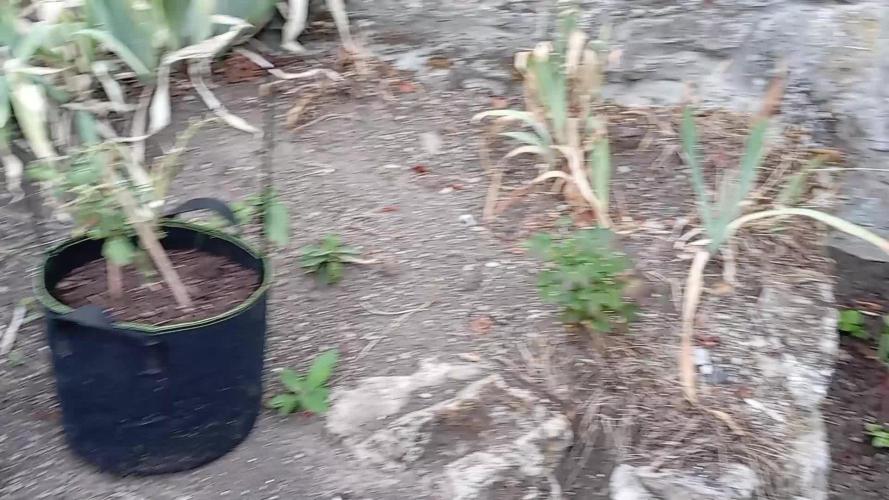
A very different week from the previous ones: several days of overcast skies, a drop in both daytime and nighttime temperatures, and a noticeable rise in humidity.
One night, a cold front came crashing into a warm front over the area; intense thunderstorms, see vid!
As a result, purplish hues are appearing on the leaves, which are also starting to curl, and growth has slowed down. That said, it hasn’t stopped her from becoming covered in trichomes.
I knew I was planting late in the season, but I’ll be happy to harvest my summer bonsai, whatever it ends up producing! 😊

