


Likes
Comments
Share

@LetsDiyGrow
Follow
31.08.2025
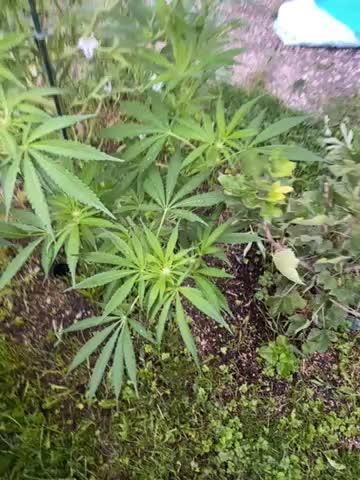
La Kush Cake photo looks fine.
She build her buds very good so far.
Weather is pure shit, but im sure she will do her best possible :-)

Likes
1
Share

@AboGrows
Follow
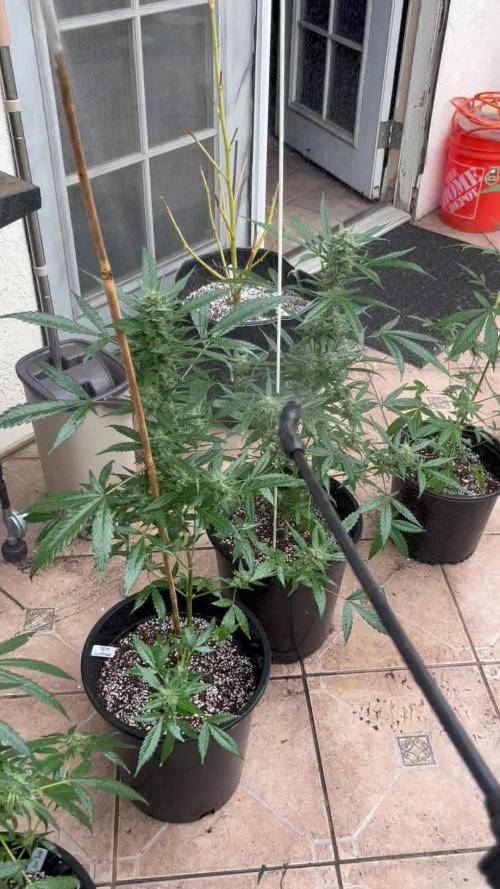
this is probably week three of flower. grow diaries doesnt give me the option to select week one of flower it skips automatically to week 5. glitches still persiat with this site that im not happy about. also upload times for a 30 second clip takes really long and i have good internet. i have to cut it into two 30 second clips to make it worth uploading

Likes
51
Share


@Corwinism
Follow
WEEK 16 - (06/13/2021 - 06/19/2021)
Week 8, Day 50 - FLOWER: 06/13/2021
After inspecting the trichome development for the last 7-10 days or so, I’ve decided that today would be the ideal time to begin flushing. The American Pie #1 does not look like it’s ready to begin flushing quite yet, as she appears to be about a week behind in maturity. Despite that, I’ll still begin flushing her today too.
Recycled water: 70ppm, 69℉
+ pH Up: 7ml
Mixture: 95ppm, 6.4 pH, 69℉
ppm/ppm = runoff/soil
JB#1 - 895/800, 6.1 pH
AP#1 - 529/434, 6.5 pH
AP#2 - 365/270, 6.7 pH
GC#1 - 624/529, 6.3 pH
--------------------------------------------------------------------------------------------------------------------------------------------
Week 8, Day 51 - FLOWER: 06/14/2021
Did a trichome check on the plants today. Spent more time with the Jelly Banana to better determine her maturity level. She actually looks like she is ready to harvest today. I’d say trichomes are 75-80% milky, with an amber trichome here and there.
I’m going to try and push her through at least one more low-ppm watering and test the runoff. If I start seeing more amber trichome development, I will cut her down.
--------------------------------------------------------------------------------------------------------------------------------------------
Week 8, Day 54 - FLOWER: 06/17/2021
Recycled water (8 gallons): 69ppm, 5.8 pH, 70℉
+ HydroGuard: 8ml
+ pH Up: 3ml
Mixture: 82ppm, 6.0 pH, 70℉
ppm/ppm = runoff/soil
JB#1 - 688/606, 6.5 pH
GC#1 - 602/520, 6.5 pH
AP#2 - 633/551, 6.9 pH
AP#1 - 685/603, 6.5 pH
--------------------------------------------------------------------------------------------------------------------------------------------
[SUMMARY]
I expect this to be my last full week of flower. All the girls are looking ripe for the chopping.
The aroma that bursts out of the tent when I unzip it every time is heavenly. American Pie #1
is still about a week behind in maturity, but she will get cut down with the other plants
regardless. Jelly Bananen started to turn a lime green color so she'll probably get chopped
and hung up in the next few days when my second tent arrives (4x2 AC Infinity).
That wraps up this week! See you ladies and gentleman in the next entry. 🙏


Likes
7
Share


@JustDoWhatIHave2
Follow
Alles super mein Training diese Woche war hart deswegen ist sie langsamer gewachsen dafür brauchte sie 2-3 Tage Regeneration ich hab sie mal verglichen
Mit ein paar anderen aus dieser grow Community ich bin sehr beeindruckt von Euren aufzuchten aber ich muss sagen ich bin irgendwie paar Tage voraus trotz hartem Training
Also wenn ihr Lust und Zeit habt vergleicht einfach mal selbst und Bildet
Eure eigene Meinung sagt mir
Was ihr denkt positiv wie auch negativ im
Fine
With that thx already and stay save and high!!!!!me stay save high!!!!enjoy life 💯💯
Likes
12
Share

@Northern_Ent
Follow
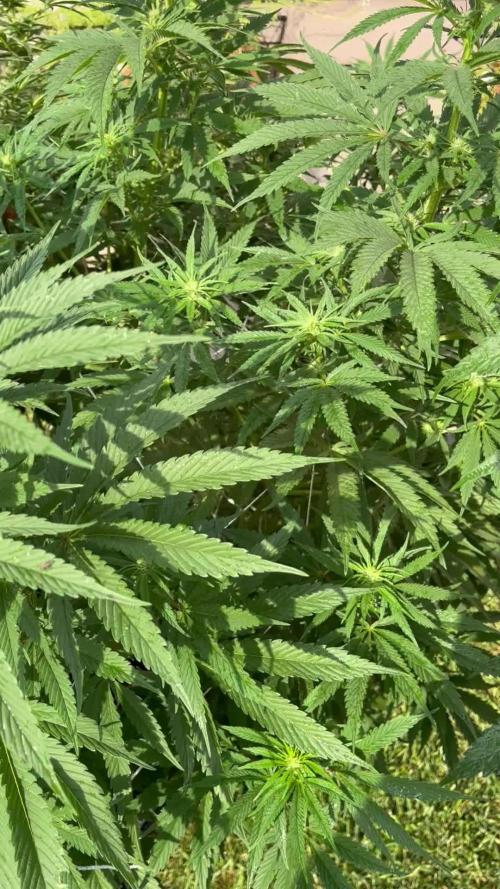
Aug 2: Mimosa Shot is hitting her stride now. She didn’t like the cooler temperatures as much as Sunday Punch EV, for example, but she’s loving this hot start to August.
Aug 3: done with force flowering and will now just leave her in the yard. So, back up to 15.5 h of daylight here now. Still using far red light at dusk.
Aug 6: Mimosa Shot has stretched again, likely mostly due to 3 days of hot weather.

Processing
Likes
6
Share


@eldruida_lamota
Follow
Esta semana quitamos productos, que termine bien de chupar todo el alimento, y que hinchen ya estás últimas semanas.
.tambien lavaremos la raíces esta semana para quitar el alimento sobrante y las sales acumuladas.
Empezaremos con el ESTRÉS HÍDRICO:el cual cada vez que regamos, regamos menos cantidad , así La Niña resina estas últimas semanas. Os incluyo vídeos.
Likes
4
Share


@Trixa
Follow
Buds are getting bigger day by day. Had to make some defoliation again. My humidity is much too high. 65%. But by very good Ventilation. Hope nothing starts to rot. Specially the days after watering is horrific.
Wish me luck ppl

Likes
15
Share


@rolling_stoned
Follow
The buds look good and smell strong; Mix Two has some monster buds growing. I'm still trying to determine its variety, but I'm leaning towards a Bruce Banner. Looking at the grow overall next week, I will drop the PK13/14 out of the mix, and I'm thinking maybe the week after I start the flush. I've put up a little fly-through video to get a better idea of the grow.
Likes
10
Share


@jayizrollin
Follow
Fast buds genetics are freakin awesome, I can’t wait to try some more soon, Mephistopho is next though.
Total Weight was 78 grams Dry, I dried for 9 days, 65 degrees and avg of 50ish humidity, was perfect but it was stable.
Smells of candy gas, had a lot of larf and buds I just didn’t want to trim so I have 37grams of trim to get some keif out of. Thanks for checking out this awesome grow of mine!
Likes
6
Share


@Toughpuff
Follow
Sorry I haven’t been posting to much been crazy busy but here’s an update of my grow using the sp 150 by @marshydro_official2 , ladies are loving it and are very happy besides the obvious heat problem I have going on in my tent. I have slowly been getting the temps of the tent down and hopefully the ladies bounce back up , they have all entered flower and I’m pumped to watch them bulk up 🙏🏽😁 I have purple punch , stardawg , strawberry cheese cake, and a pink kush Cbd . I have also just started a couple GSC and one is showing some crazy mutations as a seedling already 🤯


Likes
37
Share


@AutoCrazy
Follow
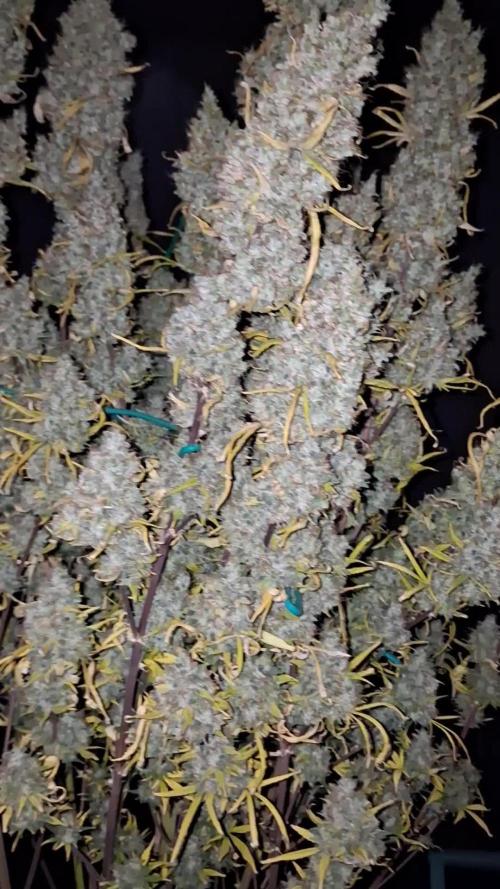
What else can I say, this plant is a beast!! She is bursting into flowering quite nicely. Pistils are popping out everywhere.
I have found a little bit of powdery mildew on a few fan leaves so I will have to up my mildew spraying with OMRI fungicide to once every 3 days. I will rotate between two types to stave off resistance to them.
I did a little top dress with my flowering mix of dry amendments. She seems to have liked it.
This plant is healthy and happy with the exception of a little PM!! I’ve battled PM before so I know this foe well. I have conquered it before and will do so again 😎
😎🍿🍻🌱



Likes
30
Share


@WeWantItToGrow
Follow
This week was absolutely torturous had an accident in which one of my plants was damaged fortunately I do not believe that all is lost I will just have to hold her back on sending her into flour with the rest until she is completely healthy I have sent one into flower a bit early just to see if I could and seems to be working swimmingly

Likes
13
Share

@Comfrey
Follow
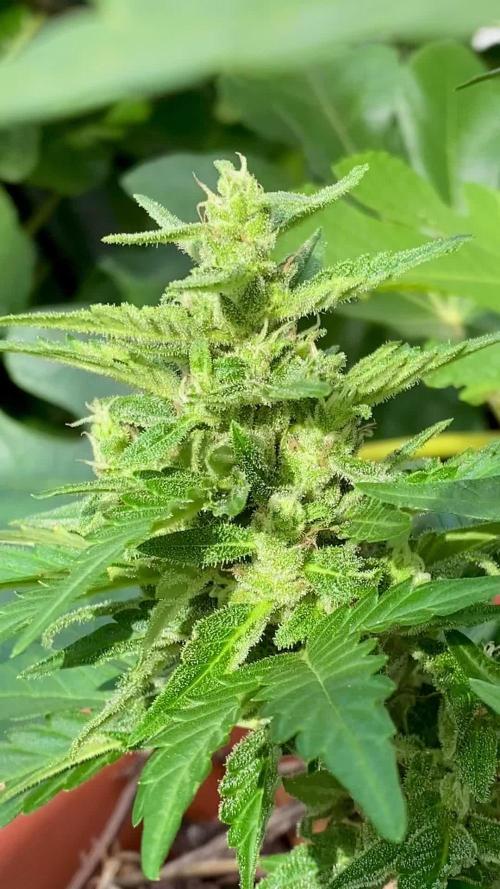
Es gibt nicht viel zu berichten. Ich habe sie einmal gegossen und ein Blatt abgezwickt.
Der Duft im Garten ist sehr angenehm. Sie hat einen betörenden Duft, der im Gesamtbouquet der Gartenkräuter deutlich hervorsticht, sich aber so einfügt, dass es nicht auffällt. Ich liebe den Duft.

Likes
3
Share


@Amboss
Follow
With this 405g of only flowers i will made bubble hash and Show you the result.
Maybe i do cold melt curing …


Likes
21
Share


@m0use
Follow
***Sponsored Grow*** = Medic || https://medicgrow.com || Grow = ***Sponsored Grow***
Everything is looking good on this plant this week, it has a different growth pattern then the others in the tent, its way more bendy and lengthy. When I place the steel forks on the stems to keep them from growing up this strain will go all noodle like and bend more fluidly then all the other plants. its like spaghetti or some other pasta related wet noddle thing. Still giving them a 2:1 or 2.5:1 grow vs bloom nutrient. Its helping with some of the pink stems from last week. Feeding strength is up .2 point to reach 900ppm or aorund 1.8EC will leave it here fro the remainder of Veg. Prob will do for 2 more weeks then flip to flower as I just topped them and want to give them some time to recover.
NPK ratio of 7-7-14 1:1 equal parts grow/bloom.
Grow=8-4-15
Bloom=6-10-14
Boost=1-15-30 "not yet used it yet"
Also took some clones from the plants as well, took two main cuttings from each plant, forgot to do the one so its not shown in the first video up the updated clone pics later in the week. If any of these impress me then the clones will go outside and grow there all year for a extra special harvest. Or I'll give them out to some friends and family maybe a little gorilla gardening project, but I will wait before getting ride of them all as I'm still kicking my self in the ass over the Blue Cindy loss. really liked that plant and wish its clones I gave out where still aorund.
Lights doing well. The V1 spectrum is good on the medic grow mini sun-2's 240w. No issues so far, dimmed at 80% till flower is initiated then up to 100%, Will test out 13/11 I think as the schedule to give them some more photons for an extra hour vs 12/12
.
Till next week.
***Sponsored Grow***
Official Website: https://medicgrow.com/
Facebook:
https://www.facebook.com/medicgrowled
Twitter:
https://twitter.com/medicgrow
Instagram:
https://www.instagram.com/medicgrow420/
YouTube:
https://www.youtube.com/channel/UCNmiY4F9z94u-8eGj7R1CSQ
Growdiaries:
https://growdiaries.com/grower/medicgrowled
https://growdiaries.com/grow-lights/medic-grow
Likes
4
Share


@805homegrown
Follow
Flushing for a week
I will be harvesting in about a week yeah can't wait to ✂️ this 🌱 down and make room for the next one's 👍

Processing
Likes
33
Share


@ganjaman24
Follow
Just started at 1/4 strength nutes everything appears to be fine; hand watered every two days until about 20% run off