


Likes
Comments
Share


Likes
56
Share


@Master_weeda
Follow
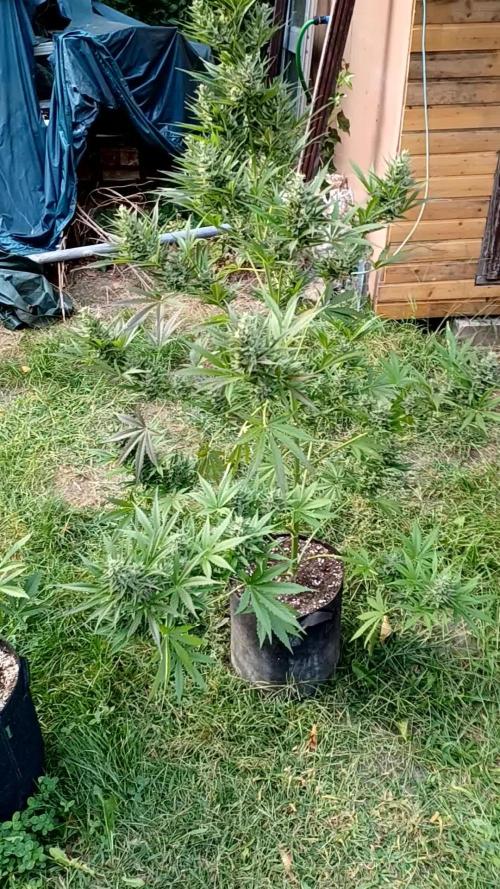
Stretch 8cm
Jour63 arrosage avec deux litres d'eau ph6.6
Jour66 grosse defolliation et arrosage avec de l'eau ph6.3 à laquelle j'ajoute un gramme par litre d'eau de feeding enhancer greenhouse

Processing
Likes
35
Share


@Njaak
Follow
Added 2 videos on preparing a nutrient solution and pH balancing the solution.
This week saw aggressive topping (mid week 4) and some serious leaf damage. Not sure if the leaf damage is from the topping, nutrients, etc. I did a flush and solution swap, cleaned the air stone and inside of the jar etc. Built the trellis and started training. I'll cut away whatever trellis doesn't end up getting used once flowering starts.
Creepy Don Santa is watching this grow closely. That cat of his is trouble.

Likes
10
Share


@Grilla
Follow
Wednesday, May 10 at 1:07 PM D 70
-today’s the last day of week nine. These past few weeks I feel like I’ve been trying to control the damage I did. It’s not like the plants are horrible. They actually all smell great even the blood Orange that had no smell is starting to smell again. It is definitely a different phenotype than the other Blood Orange. The other blood orange I have smells like an orange, and the other one smells like spiciness. With this being D 70 harvest is quickly approaching.

Likes
119
Share


@DogDoctorOfficial
Follow
Salutations, my fellow cultivators and guardians of the green realm! Welcome to the Week 5 Flower Report for our reigning botanical queen, Jealousy, in the Power Buds competition. The journey through the flowering phase is an ever-evolving spectacle, and Jealousy, true to her name, continues to dazzle us with her floral elegance.
As we delve into the fifth week of flowering, the grow room has transformed into a canvas painted with the vibrant hues of blooming buds. Jealousy, with her perpetual prayer pose, stands as a testament to the harmonious dance between plant and light. It's like witnessing a botanical sonnet, where each petal is a verse, and every leaf whispers secrets of chlorophyll wisdom.
The lush greenery that surrounds Jealousy is nothing short of mesmerizing. It's like a verdant tapestry woven with the threads of vitality, health, and sheer botanical exuberance. Every leaf is a brushstroke in this living masterpiece, and the grow room resonates with the vibrancy of a flourishing green kingdom.
The flower formation has entered a phase of sublime beauty. Buds, now plump and resinous, are like treasures waiting to be discovered. The turbocharged pace of their development is like witnessing a botanical sprint towards the culmination of this captivating journey. Each bud is a promise of the harvest to come, and the anticipation is akin to the horticultural thrill of unwrapping a long-awaited gift.
As we navigate the fifth week of flowering, let's extend our heartfelt thanks to Zamnesia and Plagron, the guiding lights on our green voyage. Their contributions have laid the foundation for the botanical marvel that unfolds before our eyes.
A round of applause to the Grow Diaries community – your shared experiences and collective wisdom weave a tapestry of knowledge that enriches our horticultural journey.
To my fellow contestants and growers, may your buds swell with opulence, and may the fragrance of success linger in your grow rooms. Here's to a week of perpetual prayer, botanical elegance, and the anticipation of a harvest that will be the jewel in the crown of our green adventure. Stay green, stay inspired, and keep cultivating those dreams!
As always, thank you all for stopping by, for the love and for it all. This journey of mine would just not be the same without you guys. The love and support are very much appreciated, and I feel honored and blessed with you all in my life !!!
With true love comes happiness. Always believe in yourself and always do things expecting nothing in return, with an open heart. Be a giver, and the universe will respond in ways you can’t even dream of .
Friendly reminder: all you see here is pure research and for educational purposes only.
Genetics - Jelousy @Zamnesia
Nutrients @Plagron
Light - @viparspectra P2000
Room size - 3x3 - 0,9x0,9



Likes
10
Share


@Genussmittel420
Follow
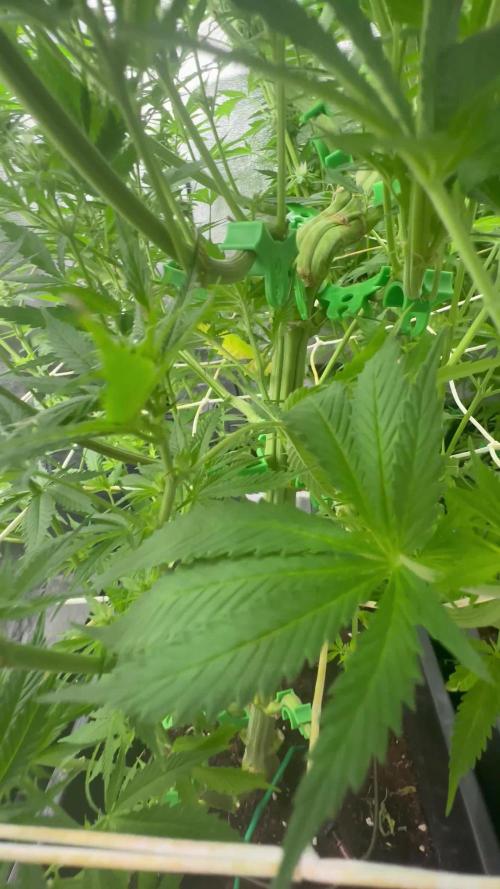
sugar leafs starting to get the first trichomes. few days later than the tripple g but the smell is (even when it is more decent than the tripple g) much better for my taste


Processing
Likes
5
Share


@DodgyOG
Follow
Growing tall. Kuchi is growing half day indoor and half day outdoor. check out the micro-topping slowmo!😵


Processing
Likes
3
Share


@zombikush81
Follow
Beginning 5 weeks of flowering, I will soon share a video of the two bitches


Likes
7
Share


@Thebyrdman420
Follow
I’m in love with this plant! Beautiful huge colas, awesome color, terps are like sour cherry candy and gas it’s ridiculous how good this plant smells! Harvest is gonna be sickkkkkk.

Likes
4
Share


@GanjaFarmer101
Follow
Smooth trim. heat outside is too much now - plant 2 got a little bit longer (about 3 or 4 days)
Both really resinous and super fast grows.
Likes
5
Share


@Jumbotron
Follow
I didn’t expect this strain to show this much color looks amazing almost done.
Likes
35
Share


@Hiroots420
Follow
16/04/2021
Llego el momento de iniciar temprano un nuevo cultivo de suelo vivo.
Para ello comenzamos armando el sustrato (200L) para posteriormente dejarlo pre mezclado y con su vida correspondiente para recibir a estos 4/5/6 esquejes que van a ingresar.
Se instalo el sistema de riego sensible de Blumat Tropf con sus dos zanahorias y 5 puntos de goteo por cada una, con apenas dos Dias ya observamos como se germinaron esas lentejas que van a producir ese cover crop y alojar a todos esos hongos benéficos de sus raíces hasta esperar que lleguen las plantas.
21/04/2021
Las lentejas ya germinaron de manera correcta, se colocó el mulch orgánico y el sustrato continua con una muy buena humedad por lo que se estima que la vida debajo se está poniendo interesante.
27/04/2021
Hoy sigue a la espera de una nueva luz Quantum Board 240w para este espacio, de todas maneras se colocaron las plantas en el espacio de cultivo para ver cómo queda la dispocion!
Likes
10
Share


@StickyFingah420
Follow
Extrema producción de tricomas de esta variedad! Gran parte de los frutos lo usaré para extraer rosin, su resina se ve ideal para este propósito.
Fragancia exquisita a ponche de fruta dulce, con notas ácidas y un fondo de especias.
Como mencioné anteriormente dejaré la parte de la reseña de efectos, sabores y sensaciones para cuando los cogollos estén secos y curados, por ahora solo puedo apreciar lo que mi vista y olfato me permiten captar.
Totalmente conforme por la calidad de estas flores y agradecido de los amigos de Sweet Seeds por la confianza.
Será hasta la cata entonces, buenos humos!
Likes
19
Share


@green_impression
Follow
All three strains doing really well all the time. Now er are in week 7 of flower and you can guess how the buds will looks when finished. All over good trichome and fruity terpene production!
Likes
20
Share


@adam_pawloski87
Follow
We are in Flush !! Was giving them GH Flora series + rapid start + cal mag
Likes
11
Share


@Chubbs
Follow
420Fastbuds
FBT2304 Week 1
Week 1 of the start of veg for these 2 FBT2304 plants. So far I've switched to 18/6 light cycle and keep a 75'f day temp with a 65'f night time Temps. I give them 500ml of straight well water every other day. I did to a pm spray and didn't realize my lights would be coming on as soon as they did. Lesson learned it'll burn the leafs. 😆
All in all Happy Growing