


Likes
Comments
Share

@Timmytooturnt
Follow
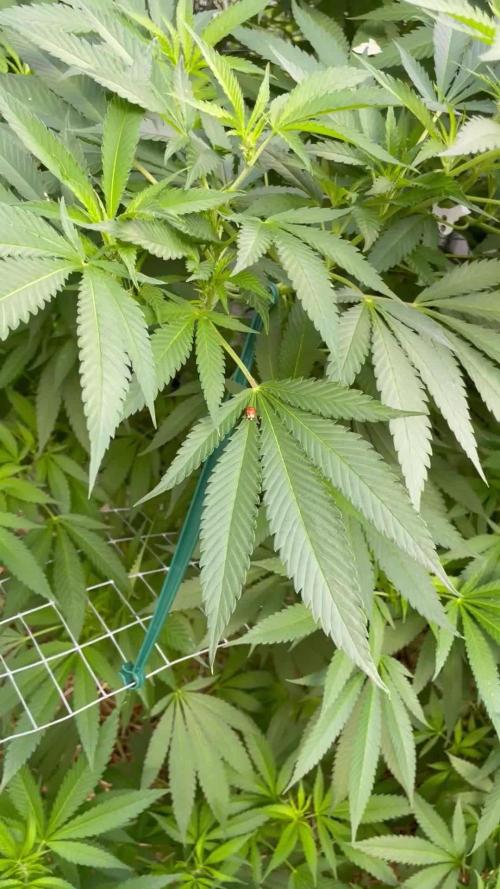
Plants in containers seem to be 2 weeks ahead of plant in ground, marigolds dping great
Likes
7
Share


@Snooziecheesecake
Follow
I was ahead of schedule with my weekly updates so I am changing this week to the true week 6 update, photos are about a week and a half from last week update.
Starting flowering nutes tomorrow after flushing all day today, seeing a lot of new pistil growth. I was hoping to have these harvested around week 10 but I’m thinking it’s gonna be more like 12 or 13 now which is fine, just taking it day by day. This week has been a lot of stretching, with the tallest one coming out at around 17 inches.
I was gone on a trip for 5 days and left them to their own devices, and returned to see great growth and no signs of any issues. Humidity was at 90% in the tent when I got back which scared me but I saw no signs of stress, these girls really are some hulks. Aired it out and it’s back to a reasonable level now.
I’ve been expressing my worries in previous updates about the plants growing too big for their grow area, however nothing is getting out of control and I don’t see them growing more than 12 more inches, which at max could be pushing a little close to the light but should be ok.
Starting to get hints of some nice pungent smells which are different than the previous earthy ones, getting pretty excited.

Likes
10
Share


@GoodTimesOrganics
Follow
Hi liebe Community and Welcome Back! 🌿💚
🖍️Permanent Marker von Seed Junky Genetics x Doja Exklusiv!
Wir befinden uns in Wachstumswoche 9 seit dem Eintopfen (Tag 54 + Tag 7 Blüte).
Die erste Blütewoche ist nun vorbei.
Die Pflanze geht auch ordentlich in den Stretch und hat in dieser Woche nochmal 17cm zugelegt
Die Pflanze hat einen wundervoll geschwungenen Wuchs. Sie ist schön Breit und dennoch kompakt. Ihre Höhe schätze ich als Moderrat ein.
Die Pflanze legt insgesamt eine top Performance hin.
Bildet allerdings viel Blattwerk aus, daher habe ich nochmal ordentlich defoliert und die unteren Triebe Rausgeschnitten.
Auch habe ich nun die oberen Triebe nochmal etwas runtergebunden um eine bessere Homogenität hinein zu bekommen.
Gegrowt wird wie immer rein Organisch, daher kam nun für die Blüte 10ml PK - Booster von Bio Tabs NL hinzu.
Die Bedingungen sind aktuell gut!
—————
🌞 Temp: 26
🌚 Temp: 18°C bis 19°C
💨 RH: 68%
VPD: 0,7 kPa
💡ppfd: 630 mpm
—————
Grüne Grüße 💚🌱

Likes
1
Share


@sunshinegroww
Follow
Super sticky and super dense flowers ,started flushing now for the next 2 weeks

Likes
178
Share


@NuggetPawn
Follow
Hey Guys,
Growth has taken off a lot this past week, have had to add a heater to the grow which isn’t ideal but with warmer months coming this should only be temporary. I have the thermostat set to start the heater when temps go below 23°c. Watching Dr Bruce Bugbee on YouTube, he stated that growth does start to suffer below this temperature.
One of the plants has some odd colours and growth which I’m pretty sure is Mg deficiency, which is probably due to that particular girl being more sensitive to PH swings than the rest of the ladies.
I have had to insulate some of the circulating pipes as the water cooler was struggling to keep the water baths cool. Seems to have helped keep temps down a couple more degrees, I mate have to reconfigure where my water cooler is in the piping run after this grow
Finally a special thanks to the GD team for selecting my previous diary for DOTM, very flattering considering some of the great content that was submitted for March 2020!
Happy growing all!

Likes
43
Share


@Sabac
Follow
Plantitas en su semana 12.
Crecen y crecen espero dejarlas entre 13 y 14 semanas.


Likes
17
Share


@Dunk_Junk
Follow
16cm vertical growth this week but she's fully entered flowering!!!!!!!!!!!
Look how bushy she got!
Likes
7
Share


@Ryno1990
Follow
Begining week 5 of veg the Purple Goat Cheese I moving along all her tops are starting to come up after being topped an she is looking nice an healthy just a little bigger then the Strawberry Banana but a nice bush just like her
The Purple Goat Cheese is doing good ending week 5 finally starting to pick up some size still the smallest tho but she's been catching up


Likes
33
Share


@Eyeduno
Follow
This grow has been on of them grows when everythings going against you and what you want it to do


Likes
35
Share


@eldruida_lamota
Follow
Venga familia, va la novena semana de vida y tercera semana de floración de estas Frosted Guava de Zamnesia.
Que color que sanas se ven como se nota que Agrobeta es de lo mejor, las niñas están de 10.
La humedad está en su punto, y por fin puedo controlar la temperatura en 25 grados.
Ya vamos viendo cómo progresan estas próximas semanas y van formándose esas flores.
Os comento que tengo un descuento y para que compréis en la web de Zamnesia de un 20%, el código es ZAMMIGD2023
The discount 20% and the code is ZAMMIGD2023
https://www.zamnesia.com/
Mars hydro:
Code discount: EL420
https://www.mars-hydro.com/
Agrobeta:
https://www.agrobeta.com/agrobetatiendaonline/36-abonos-canamo
Hasta aquí es todo, buenos humos 💨💨💨.

Likes
15
Share


@Autofutur
Follow
She is short and compact.tight internodal spacing.large fan leaves.
Typical indica looking plant.
Cut of 2 big fan leaves and kept lst as much as possible to open her and create more colas.

Likes
9
Share

@eldruida_lamota
Follow
Que pasa familia, estamos actualizando la primera semana de floración de estas Kritical de GrowBarato.
Cómo podéis apreciar en las imágenes el color que tienen es espectacular y con esa vegetación y vigorosidad pintan de miedo.
Además siendo tan rápidas , de 57/63 días, las tendremos listas como quien dice en un abrir y cerrar de ojos.
Agrobeta:
https://www.agrobeta.com/agrobetatiendaonline/36-abonos-canamo
Mars hydro:
Code discount: EL420
https://www.mars-hydro.com/
Las maximas de temperatura no superan los 26 grados y las mínimas no bajan 19, así que no me puedo quejar.
Los niveles de humedad también son los correctos van entre 50%/60%de humedad relativa.
Por supuesto el Ph lo estamos dejando alrededor de 6.
Hasta aquí es todo poco más la verdad, solo deciros que buenos humos 💨💨💨y nos vemos el finde en SPANNABIS.

Likes
15
Share

@Highsenberg82
Follow
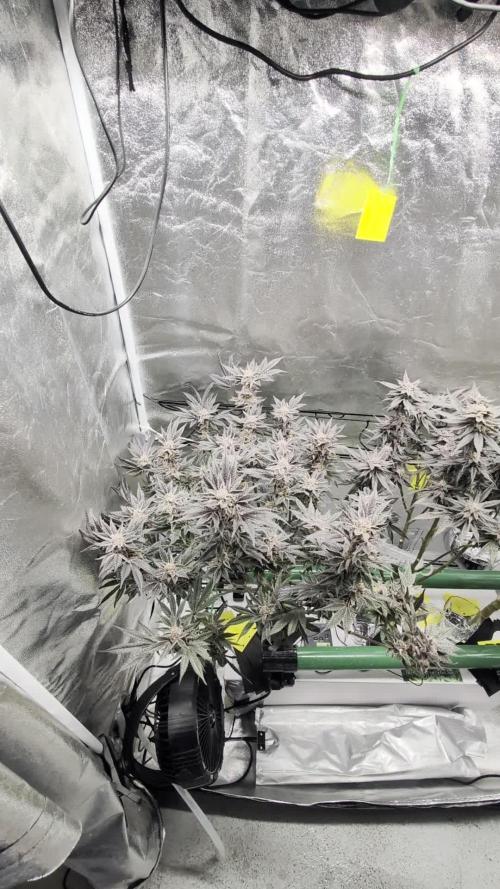
(Maybe) final week. Trichomes ckeck looks like there's still some time. Nice color so far. Cherry Gar-see-ya is pretty dark now.
For the last 4 days just Flawless Finish and Cleanse.
03/25/2026
It looks like the grape balls are taking the longest of all of them. I should probably remove some leaves so the buds lower down get a bit more light. Also new white stamps on sour fraise buds. Another week until hanging them?
03/27/2026
Sour Fraise and Cherry Gar-see-ya will go to drying the next 24h. Grape Balls of Fire e needs another week.

Likes
12
Share


@CoqueSousVide19
Follow
Started LST on the plant. Found a 6w LED light tube meant for an aquarium/terrarium and have started using that in a 24 hour light schedule.
Also giving it nutes with BioBizz Fish Mix and seaweed that I use on my vegetables, but I'm using small amounts to avoid any problems.
Likes
32
Share


@Compassionate_Gardener
Follow
All plants are doing INCREDIBLE, the buds are swelling up and on each branch huge colas start to form. The amount of flower production under the Q6W-Gen.2 LED-lamps (now dimmed to 100% at a distance of 60 cm) is INSANE and all flowers are gleaming with trichomes. The plants are sticky as hell and they smell like crazy. The Shiva Skunk has a sweet, musky aroma with hints of citrus, while the Serious Kush is getting danker every day, it has a PUNGENT GASSY SMELL...I LOVE IT! 😍 The first pistils on the buds start to get brown, which is a sign that they are ripening and that the moment of harvest is getting closer. I cant wait!


Likes
5
Share

@Sksssk99
Follow
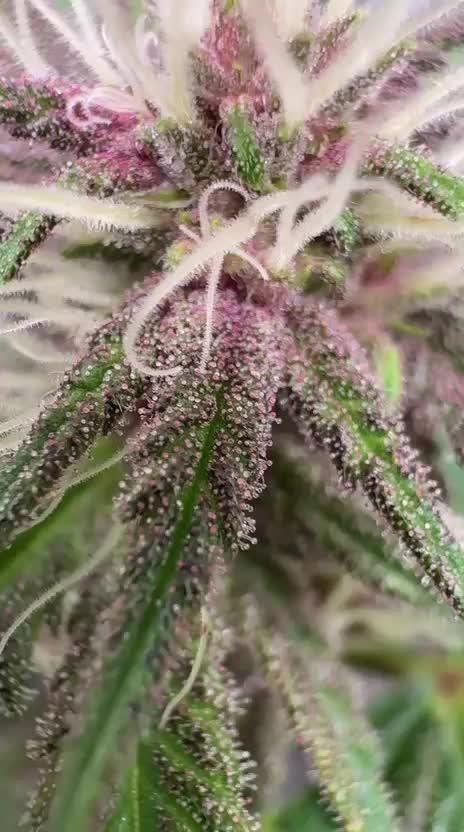
Week 3.
oh my days, the smell is incomprehensible, truly exceptional sweet and super tangy, I have never smelled anything so tangy

Likes
3
Share


@Easyspeesy
Follow
Hi everyone, had some slight troubles this week. I had my light too high and the thc bomb stretched to quick and fell over when I watered her 😫. I Propped her up then added more soil around the stem, she seems to be ok now. Also been having trouble with night time temperature dropping to 55f so I’ve brought a tube heater and thermostat this has helped keep it at 64.5 F. As you can see from the pics the auto bomb seems to have some defects with her leafs, not sure what’s wrong but it does not seem to be effecting her at all. Day 13 i noticed the edges of the leafs on the thc bomb started to curl up slightly, don’t know why. I lifted the light slight coz I thought it might be heat stress. Apart from all that I am still fine tuning my set up and learning loads along the way. Really happy with how my girls are coming along. 🍁🍁

Likes
36
Share


@pifflestikkz
Follow
Day 99
09/08/24 Friday
Feed today, using de-chlorinated tap water pH 6, no plagron products this week due to seeing nute burn.
But she has bounced back yet again from a heavy defoliation and topping last week.
Trying to keep her small enough to flip in the tent 🤞
Day 100
10/08/24 Saturday
Picture and video update ✌️ 💚
Day 101
11/08/24 Sunday
De-chlorinated tap water pH 6 today again with calmag.
Day 102
12/08/24 Monday
De-chlorinated tap water pH 6 today again with calmag and Plagron PK13-14 5L 10% run off
Just trying to maintain her still untill my dragon has finished 🤦♂️
Thriving 😍✌️💚

Likes
9
Share


