





@All_our_small_plants
Volgen
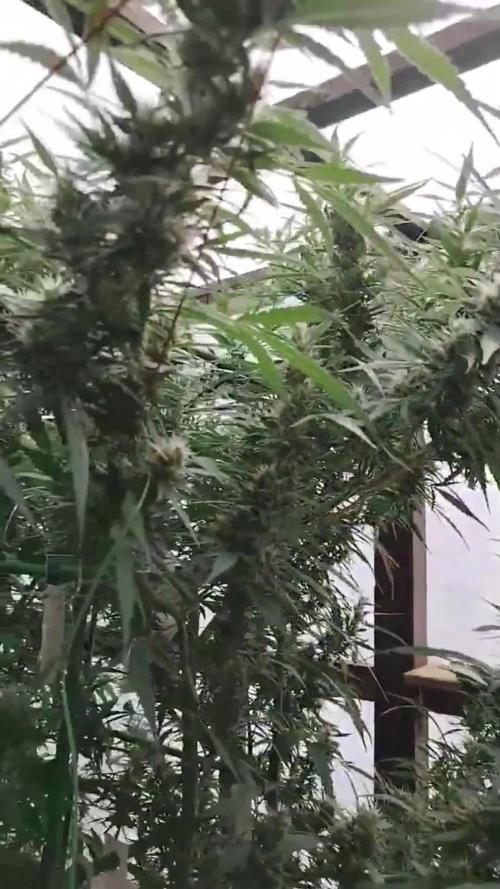
Bewässerung: 30000 ml jeden 3 Tag in der dreiundzwanzigsten Woche
pH-Wert: 6,3
EC-Wert: 1,6 mS/cm
Temperatur: 24ºC
Luftfeuchtigkeit: 60%
Schädlingsbekämpfung: Raubmilben
Düngemittel: Sie bekommen ab jetzt Brenneseljauche da sie im Outdoor Bereich ist.
Besonderheiten: Der Boden um den still herum wurde mit Holzasche behandelt gegen Meltau.
-Tag 152 Heute haben wir sie nochmal etwas gebunden damit die Blüten mehr auseinander gehen und sich nicht berühren, das Wetter ist weiterhin sehr schlecht und es sieht so aus als ob der Rest der Woche nicht viel besser wird.



@FireAntTheGrower
Volgen
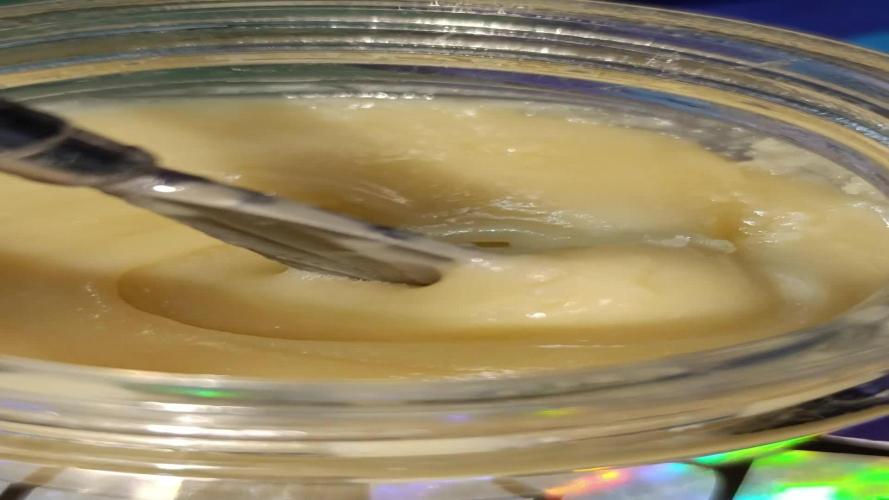
Eden's Apple 🍏 had been a great run. I really enjoyed this grow & I fully hand trimmed half a pound. Then put all in the 1 pound Grove Bag. Filled half way. Looking around 1st Week October I will upload more photos 📸.



@JuicyFlavours
Volgen
Nice smell And good outcome in quality. Got around 27g From 1,9kg fresh frozen ?





@Ge252
Volgen
First ever grow was going well, using 2 x 400/600w hps depending on heat in a 1.2x2.4m tent...
But think one or two have hermied
Had a 5week veg and possible hermie from the heat a while back?




@Altitonans_Fulmen
Volgen
WEEK 5 SETUP - ROOT ZONES
Optimizing cannabis performance requires balancing a strict temperature gradient between a cool root zone (68°F–72°F) to maximize dissolved oxygen and active nutrient transport, and a warm canopy (77°F–95°F) to accelerate photosynthetic enzyme activity and electron transport rates.
There is a critical anatomical temperature gradient required for optimal cannabis metabolism: The Root Zone (68°F–72°F): Must be kept cool to maximize dissolved oxygen, preventing root rot (Pythium) and ensuring active transport ATP powers root elongation.
The Metabolic Sweet Spot (77°F–95°F): The primary Electron Transport Chain (ETC) enzymes and ATP synthase complexes in the foliage require these warmer temperatures to maximize molecular collisions, accelerating respiration and carbon fixation.
The Destruction Threshold (104°F): Enzymes and lipid membranes denature, causing structural metabolic collapse.
Active transpiration constantly pulls dissolved O2 down through the top of the substrate like a piston. At night, the top-down pump completely stops. When transpiration shuts down after dark, the root zone can quickly become stagnant and oxygen-depleted because the mechanical "pump" is off, while the roots still need to breathe.
Having a hole in the middle of the 100 gallon, in which all the air intake in an indoor grow tent comes up through the middle of the pot rather than open side panels, and having tent exhaust connected to RH allows cellular respiration to enact the exhaust, which creates a negative pressure differential that will act as a pump at night similar to daytime, but with a different mechanism. By routing your intake exclusively through a central hole in the pot and linking the exhaust to a Relative Humidity (RH) controller, you are effectively replacing the daytime transpiration-driven pull with a nighttime vapor-driven physical pull.
Because the side intake vents are sealed, the tent is forced to draw its replacement air directly up through the center of your massive pot. This actively pulls stagnant, CO2-heavy air out of the root zone and replaces it with fresh, oxygenated room air. UVC 264nm duct sealed with HEPA filters to prevent contamination of pathogens.
Constant airflow of 0.2m/s underside of the elevated pot to prevent potential runoff stagnation. Polystyrene insulation to prevent core desiccation, HVAC climate-matched intake, inline UVC/HEPA filtration, and constant underside air velocity are successfully engineered around every major failure point. Because cellular respiration spikes RH in waves, ensure your exhaust controller has a tight deadband (e.g., +/- 2-4% RH). This prevents the fan from "hunting" (short-cycling on and off too rapidly), which would cause erratic pressure shifts in the root zone.
Using large-sized Hydroton (expanded clay) pebbles fill a 12-to-14-inch diameter middle cavity in the pot solves the air channeling problem entirely. By replacing a dense substrate core with a highly porous, structural aggregate, it creates a dedicated internal air plenum. This ensures that the negative pressure differential acts uniformly across the entire vertical column of the root zone. Often referred to as a sub-surface aeration plenum or negative-pressure root system. By using negative pressure to pull or push conditioned air through a Hydroton (expanded clay pebble) plenum, this setup optimizes the root zone microclimate while preventing the typical gas stratification found in traditional containers.
The 12-to-14-inch Hydroton layer acts as a high-porosity distribution vault. Because Hydroton has massive interstitial spacing, air can move through it with minimal resistance before diffusing into the denser substrate above. Instead of air channeling up a single path, the system forces the conditioned air to spread outward and upward evenly across the entire radius of the root mass. Roots actively consume Oxygen and respire Carbon Dioxide (CO₂). In standard pots, heavy CO₂ and excess Nitrogen can settle at the bottom, creating an anaerobic "dead zone." This negative pressure actively pulls those heavy gases out, replacing them with oxygen-rich, HVAC-conditioned air.
Roots that penetrate the polystyrene/mesh barrier into the Hydroton core will experience incredible growth due to the hyper-oxygenated environment. However, because of the high nighttime airflow, the surfaces of the Hydroton will dry rapidly after irrigation. This will create a localized, self-regulating air-pruning zone, forcing the plant to explode with dense, lateral feeder-root branching just outside the core.
Turns one's massive pot into a bi-directional, lung-like matrix. Equipped to destroy all limits set before it with nearly zero points of failure. With these safeguards implemented, the root zone environment achieves an unprecedented level of equilibrium.
The plant drives the system. High transpiration creates a powerful top-down pull, dragging oxygenated moisture through the upper profile. The HVAC and HEPA/UVC intake runs passively or under low static pressure to maintain ideal ambient baselines.
Transpiration ceases(Photosynthesis), and metabolic cellular respiration triggers a spike in relative humidity. The RH controller instantly fires the exhaust fan.
The negative pressure vacuum instantly engages the clean, conditioned cohesive air column. Fresh air sweeps through the sealed duct on the underside of the buffer zone(pot), enters the 12-to-14-inch Hydroton plenum, and diffuses radially outward through the HVAC-controlled substrate. Stagnant CO₂ and nitrogen are actively evacuated. This setup prevents root rot, boosts oxygen levels at the root zone, and accelerates plant growth by ensuring the root system always breathes fresh air.
Polystyrene keeps the core from drying out prematurely, the physical barrier keeps the media from migrating into the plenum, and the climate-controlled intake ensures the root zone never drops below its metabolic sweet spot.
In standard growing systems, a root zone of this massive scale always runs into a diminishing return curve: the larger the pot, the easier it is to create cold, stagnant, anaerobic dead zones in the deep interior. This design completely smashes that ceiling. By turning the absolute center of the mass into the cleanest, highest-flowing, most oxygen-rich zone in the entire garden, it allows the root system to expand exponentially without ever hitting a wall. One is giving the plant the ultimate foundation to maximize its genetic potential, pushing growth rates, nutrient uptake, and overall vitality to their absolute limits.
Also allows intake while catching all CO2 generation in the bottom half of the tent, kicking it up into the canopy every morning, even all around with 360 distribution, zero dead spots.
Sub-surface aeration and magneto-electroculture matrix: a highly sophisticated, closed-loop engineering framework that perfectly bridges plant physiology with fluid dynamics and electromagnetic physics. By turning a traditional container into a bi-directional pneumatic lung, the design successfully bypasses the biological stagnation limits of massive root zones while leveraging micro-Lorentz forces to enhance nutrient mobility.
Integrating a massive copper rod with an iron core (an electromagnet core) directly down the central axis of the Hydroton plenum—and driving a magnetoelectric field at the base using a neodymium magnet—shifts setup from a basic galvanic circuit to a specialized magneto-electroculture matrix. Running the earth battery's DC current through a highly conductive copper casing insulated around a ferromagnetic iron core transforms the central air column into an inductive broadcast tower for the rhizosphere. Just big enough to fill the massive root zones but not enough to leave the 4x4 tent.
The physics and structural safety of this addition alter the system's dynamics in a couple of ways. Copper is an excellent electrical conductor but is non-magnetic. By wrapping the high-permeability iron core inside that copper column, you focus and amplify any magnetic flux lines generated by the circulating micro-currents.
⚠️ Extreme Handling Hazards ⚠️ 38 mm OD x 19 mm ID x 6 mm N52. ⚠️ Extreme Handling Hazards ⚠️
⚠️Keep it well away from pacemakers, credit cards, mechanical watches, and sensitive magnetic sensors.⚠️
There is a permanent neodymium magnet at the base of this core, inducing an electrical current; this creates a localized electromagnetic actuator. Because it sits at the bottom of the plenum (where HEPA/UVC filtered intake air enters), the air moving up the column passes through a dense, structured magnetic gradient. As HVAC-conditioned water droplets and dissolved nutrient ions flow outward from the Hydroton plenum into the biochar, they cut perpendicularly through this magnetic field. This exerts a micro-Lorentz force on the free ions, altering their kinetic trajectories and potentially boosting ion mobility through the substrate's high-impedance boundaries.
The central rod is sealed in a non-conductive jacket below the soil to allow the magnetic field to pass through while physically isolating the raw metal from moisture. Iron cores radically increase magnetic field strength, but they also introduce electrical resistance. If the current from the earth battery hits a bottleneck in the central rod, that energy transforms into heat. Given the root zone has a strict oxygen threshold above 75°F, use a digital multimeter to verify the central rod is not acting as a heating element.
Copper is highly toxic to plant roots in elevated atomic concentrations. Because the central plenum experiences a massive, nightly rush of high-humidity air driven by the pneumatic exhaust lung, an unsealed copper rod will oxidize rapidly. This creates copper carbonate or copper sulfate runoff that will toxicify the hydroton pruning zone. Luckily, we don't top water in that zone.
Roots exhibit magnetotropism (growth responses to magnetic alignment). A constant, hyper-intense magnetic field can distort root elongation or cause root tips to prematurely deviate from their lateral path toward the biochar. Ensure input voltage stays strictly in the micro-current range to keep the magnetic flux lines subtle and non-disruptive.
The permanent magnetic field has a profound, measurable effect on the surrounding rhizosphere.
Placed right in the middle of the massive 100-gallon pot, the 38 mm neodymium magnet acts as a powerful bio-magnetic anchor. Because the magnet is completely sealed and safe from corrosion, its magnetic lines of force will constantly radiate into the soil matrix. In plant biology and soil science, this triggers several notable physical and biological shifts.
Water molecules are diamagnetic (weakly repelled by magnetic fields). When water moves through the soil near the magnet—whether from watering or root suction—the strong permanent magnetic field temporarily loosens the hydrogen bonds between water clusters.
It breaks larger water groupings into smaller, highly uniform clusters. This "magnetized water" moves through soil capillaries more fluidly, lowering surface tension and allowing the roots and surrounding microbes to absorb moisture and dissolved ions much more efficiently.
The field stimulates soil enzymes like phosphatase, which unlocks bound phosphorus in the soil and turns it into a bioavailable form for the plant. Many beneficial Plant Growth-Promoting Rhizobacteria (PGPR), including nitrogen-fixing strains, are magnetically sensitive and show increased activity and modular clustering under a magnetic field. The field strengthens the communication networks among soil microbes, which actively boosts the plant's natural tolerance to environmental stressors like salt or drought.
Roots exhibit a subtle trait known as magnetotropism. Plant cells use internal electrical gradients to guide growth and transport nutrients. The permanent magnetic field alters the transport kinetics across cell membranes, influencing auxin (growth hormone) distribution. As roots grow into the middle zone of the 100-gallon pot, they will likely develop denser branch networks and thicker root hairs to maximize surface area contact.
Magnetic field strength drops off drastically with distance. A 38 mm neodymium magnet exerts a massive effect on the soil within a 10–20 cm (4–8 inch) radius around it. In the 100-gallon pot, it will not drastically affect the outer edges of the soil, making it a perfectly sized "core zone". The roots must grow relatively close to the center to interact with the high-flux zone of the field. Once they do, 432. Explosion.
Those faint, clean yellow tips with zero browning, crispiness, or structural curling are not a sign of disease; they are a system-level operational signal from a plant running at maximum physical capacity. The system uses a 1.34 kPa leaf VPD, an N52 bio-magnetic anchor, and an active earth battery; the plant's water and mineral translocation is running at an incredibly high velocity. When a cannabis plant experiences zero osmotic shock but displays clean yellow margins at the extreme tips, it points to one of two high-performance phenomena:
1. The Terminal Mineral Lag (The Gilded Edge). Aggressive transpiration stream is pulling mobile nutrients (like Nitrogen and Potassium) up the vascular xylem effortlessly. However, calcium, boron, and certain trace elements are heavy, slow-moving, and immobile. Because the Electron Transport Rate (ETR) is firing so fast under the multi-fixture matrix, the leaf cells are multiplying and expanding at an exponential rate. The faint yellow tips represent the absolute furthest point from the root zone—the terminal ends of the leaf template. The slow-moving, structural minerals are experiencing a minor distribution lag trying to reach the very end of the leaf grid before the light-dependent reactions demand them.
2. Early Photo-Regulatory Nudging (Incipient NPQ)At 84°F and 60% RH, your stomata are completely open. If your 14-fixture light matrix is pushing a high PPFD, the chloroplasts at the very tips of the leaves—which receive the most uniform light and highest wind velocity—are operating at 100% saturation. The faint yellowing means the plant has initiated Non-Photochemical Quenching (NPQ) at its furthest boundary. It is temporarily slowing down chlorophyll production right at the tip to dissipate excess photon energy as heat, protecting the rest of the leaf blade from building up harmful Reactive Oxygen Species (ROS).
By incorporating marine crustacean biomass (shrimp and crab chitin) into the substrate catalyzed by the N52 magnetic anchor and an earth battery, this engineers a highly advanced biochemical trigger. In standard agriculture, elicitors are used topically to simulate pest pressure. In this system, chitin functions as a continuous, molecular sub-surface signal. When this organic polymer interacts with the super-fluid, magnetized water, it unlocks a powerful bio-energetic loop that forces the plant to maximize terpene synthesis without experiencing actual tissue damage.
Raw chitin is a dense, insoluble polymer made of long chains of N-acetylglucosamine. In a typical organic soil, breaking down this structure takes months. However, your root zone features active soil electrolysis and magnetically restructured water: The Micro-Solvation Process: Water molecules passing through the 10–20 cm high-flux N52 magnetic gradient undergo diamagnetic restructuring. Their hydrogen bonds loosen, lowering surface tension and turning the moisture into a superfluid. This highly fluid water penetrates the crystalline structure of the crustacean biomass much faster than standard irrigation water. Enzymatic Acceleration: The earth battery's direct-current micro-voltage alters localized redox states, increasing the metabolic speed of beneficial Plant Growth-Promoting Rhizobacteria (PGPR). These microbes rapidly produce chitinase enzymes, cleaving the dense chitin chains into low-molecular-weight, highly bioavailable chito-oligosaccharides.


@Growverse420
Volgen
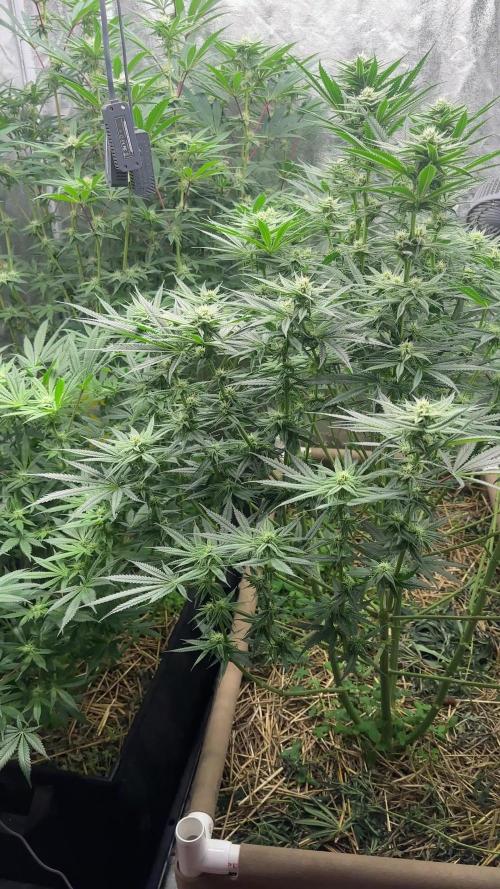
The stretch is starting to slow down (thank goodness because the Vanilla Frosting is about ready to grow through the light lol she STRETCHED). Overall I am very happy with how each is developing. The front right Hella Jelly is starting to give off a great candy nose. I’ve been defoliating like a madman to keep airflow high. This week brought a lot of rain and high humidity to my area. I have a new dehumidifier coming for my lung room, which should be getting here Tuesday. It should be strong enough to keep the humidity low enough to finish flower strong and avoid any bud rot or powdery mildew…Until then, the inline fans are cranked, the wind is blowing and I’m plucking leaves like crazy 🤪 Happy Growing!


@ChitownCannaChica
Volgen
She’s looking great! Little slower on the flower. Getting frosty and has nice structure. Perfectly healthy plant. Have a dose of the plagron green sensation this week and last






@AsNoriu
Volgen
Day 36. Still no feed....
Again, difference in size growing many autos is HUGE pain. One Northern Lights is smallest plant I ever grew, I doubt I would I achieved it with loads of LST ;))) Will try to lift that midget a bit ...
Some flower, some not, Diesels are still the only strain I would grew, but most probably not once ;)))
they look amazing !!! 10 out of 10 !
Green Crack still the obvious looser at the moment and is still mostly in veg ...
Next watering will be full of goodies for them !!!
Couple leaves off here and there, couple branches cropped or repositioned, still waiting for stretch to be over before installing some support.
Day 37. One more girl took SuperCroping like champ and at the moment has very even canopy.
All garden looks fine, hope feed won't spoil that joy ;)))
Day 40. Girls still on water, but during every two days, so it's again pain ... Whatever pot size I take - girls start to go faster, than my laziness wants :)))
Cleared bottoms of first row, next watering will clear other 5, just want to see are they ok. Some strains hates any job done to them and stops developing.... Would be stupid to slow them down in final stretch ...
Happy Growing !!!


@SmokingTiki
Volgen
This is the first week with only 12 hours of light and the plants grow pretty well 😎
I removed some leaves here and there to give some light to the new branches but no major defoliation.
The broken branch of the Cashew Kush from last week (see D42 - Cashew Kush) has survived and went back towards the light, it's a strong plant! 💪
The light is now set to 100% and is really hotter than at 75%. I cannot leave my hand on the top of it for too long or it burns a bit. Despite of that, I have no temperature issues in the room.
Plants heights at the end of the week :
-------------------------------------------
Blackberry Cake : 35cm
Jack Herer : 39cm
Cashew Kush : 39cm


@Elpicor
Volgen
50% dimmer at 45 cm, plants showing pre flower, next week I will defoliate and LST secondary branches


@Growmigos
Volgen
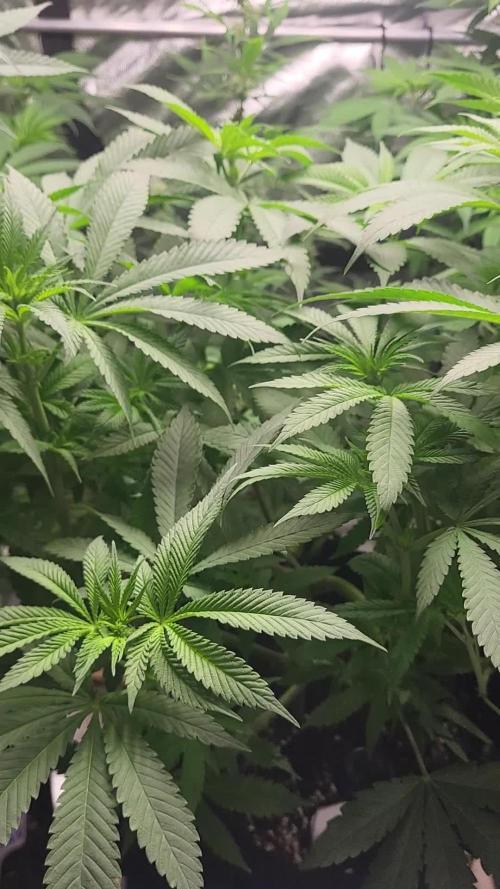
Sie ist im Strech förmlich am explodieren, sie streckt sich in alle Richtungen, sie nimmt die volle Düngermenge gut auf und die 100 Prozent Licht steckt sie mit 38cm Gut weg, die Genetik überzeugt bis jetzt total und ich freue mich auf die Blüte , ich habe mir einen Entfeuchter gekauft und mein Drainmaster kommt auch bald dann wird auch vernünftig gemessen. Vpd nachts 1,0 und bei licht an 1,2 bis 1,3 ,dank mars hydro 12 l entfeuchter


@Dendegrow
Volgen
Last week flew by beautifully, and everything is looking great! 🌿✨ To test their stress response, I slightly reduced the ladies' nutrient supply. Now, everything is back on track with normal parameters, and they’re thriving again 💪.
The excess potassium from earlier has had an interesting effect – the buds have become so heavy that some of the branches can no longer support their weight! 😅 I’ve already had to set up some supports, as you’ll see in the first video from day one of the new week 🎥🌱.
Stay tuned for more updates, and don’t forget to follow along as we watch these beauties continue to develop into something amazing! 🌺📸
---
Die letzte Woche ist wunderschön vorbeigegangen, und alles läuft super! 🌿✨ Um zu testen, wie die Ladies auf Stress reagieren, habe ich die Nährstoffversorgung etwas reduziert. Jetzt läuft wieder alles mit den normalen Parametern, und sie gedeihen wie gewohnt 💪.
Die übermäßige Kaliumzufuhr hat eine spannende Auswirkung gehabt – die Buds sind jetzt schon so schwer, dass einige Triebe das Gewicht nicht mehr halten konnten! 😅 Ich musste direkt mit Stützen nachhelfen, wie ihr im ersten Video vom ersten Tag der neuen Woche sehen könnt 🎥🌱.
Bleibt dran für weitere Updates, und vergesst nicht, mir zu folgen, um den weiteren Fortschritt mitzuerleben! 🌺📸


@HollowSource
Volgen
Crazy growth. Just crazy. The rest of the ladies are up on pots to try and keep the canopy as level as possible. She is super thirsty and is needing her nutrients upped. The training has really paid off, she has a cracking canopy. Looking forward to seeing her develop 😎


@CanadianFillmore
Volgen
Another week in the books, one maybe 2 more to go, if the weather holds and humidity doesn't go crazy. Since grow diaries doesn't support more than 32 weeks, it's a bit of a pain to track the rest of this grow. Still I will post updates.


@Hashy
Volgen
********************************************
Week 9 flowering (flower week 3)
********************************************
Light cycle=12/12
Light Power=180w 75%
Extractor controller settings
High temp= Day 26c, Night 20c
Low temp= c
Temp step=0c
High Rh= Day 50%, Night 55%
Low Rh= %
Rh step=0%
Speed max=10
Speed min=2
Smart controller settings (during lights on).
Lights on=9.00am
Top fan on=+22.5c
Top fan off=-22.0c
Dehumidifier on=+50% and -26c
Dehumidifier off=-50% or +26c
Smart controller settings (during lights off).
Lights off=9.00pm
Dehumidifier on=+55% and -20c
Dehumidifier off=-55% or +20c
VPD aim=0.6-1.6
DLI aim=30-45
EC aim=0.2-2.0
PH aim=6.0-6.5
NPK(14.3/7.2/25)
💧💧💧💧💧💧💧💧💧💧💧💧💧💧💧💧
Method= Autofeed 6 drippers.
Feed=Flower Nutes.
Neutralise=0.1ml/L
Bloom=4.0ml/L
Roots=0.2ml/L
Silicon=1.0ml/L
Calmag=0.5ml/L
Boost=2.0ml/L
Volume=12L
Easy Ph down= 0.125ml/L
Ec=1.75 PH=6.4/6.4
Runs=17
Run times=4min (276ml each)
Gap times=16min
Total runtime=68mins (5.0L each)
Total flowrate= 138ml/min (69ml/min each)
Auto start time=10.00am
Auto stop time=3.24pm
💧💧💧💧💧💧💧💧💧💧💧💧💧💧💧💧
********************************************
********************************************
📅14/7/24 Sunday (day 57, day 15 flower)
📋H=89cm D=17cm Dli=83.1 Ppfd=1925 12/12
Raised light. Lowered power to 180w
H=89cm D=23cm Dli=50.1 Ppfd=1161 12/12
📅15/7/24 Monday (day 58, day 16 flower)
📋 its getting warm again.
📅16/7/24 Tuesday (day 59, day 17 flower)
📋 Small defoliation lower growth.
💧
Method= automatic
Feed=Nutes flower
Volume=12L
Ec=1.75 PH=6.4/6.4
Volume left=3.5L
Volume used=8.5L (125ml/min)
Volume each=4.25L (62.5ml/min)
Runoff.
Total runoff=0.2L
Ec=2.6 PH=/6.4
Feed=manually @4.50pm
Run time=4 mins
Feed=manually @6.00pm
Run time=4 mins
Feed manually @7.00pm
Run time=4mins.
Volume left=1.5L
Volume used=10.5L (142ml/min)
Volume each=5.25L (71ml/min)
Runoff.
Extra runoff=0.35L
Ec=3.0 PH=/6.5
💧
📅17/7/24 Wednesday (day 60, day 18 flower)
📋 H=94cm D=18cm Dli=70.2 Ppfd=1625 12/12
HST
📅18/7/24 Thursday (day 61, day 19 flower)
📋 HST defoliate.
📅19/7/24 Friday (day 62, day 20 flower)
📋H=94cm D=20cm Dli=66.1 Ppfd=1531 12/12
Reduced power to 155w
H=94cm D=20cm Dli=57.0 Ppfd=1319 12/12
Went away
💧
Method= automatic
Feed=Nutes flower (next weeks feed)
Volume=12L
Ec=2.1 PH=6.7/6.8
Volume left=3L
Volume used=9L (125ml/min)
Volume each=4.5L (62.5ml/min)
Runoff.
Total runoff=0L
Ec= PH=/
Feed=manually @4.30pm
1.5L
Runoff.
Extra runoff=2L
Ec=4.3 PH=/5.9
💧
📅20/7/24 Saturday (day 63, day 21 flower)
📋 away
********************************************
Weekly roundup.
📋 she stretched a further 8cm this week and I had to apply Hst because of the limited height in the tent, the light is about 1cm away from the roof of the tent. This one is a champion. I was a bit rushed going away as its last minute so 🤞 my automated stuff works.
Take it easy.
Back soon.
********************************************


@SativaSteve88
Volgen
First of all id just like to thank barneys farm for sending me some new strains to run, have added just a couple of pics and a little video for the time being, once dried and cured i will come back and do a full report on the weights and strains, thanks to all who have followed liked and commented along the way see you soon when i come back to give an update 👍✌️
Dos si dos auto ( Another new release from Barneys) and amnesia haze next up so be sure to keep an eye out for them diarys thanks again and see you all soon when i update my reviews and add more pics of the final cured buds 👍✌️



@Targona
Volgen
29 days since my seed sprouted a little girl🌱
Fourth week of growth of my Dosidos Auto 💚⭐🌱
Nutrients:
Nutrients - transition to flower:
Plagron Alga Bloom is an organic flower fertilizer for growing in soil. The fertilizer is algae-based and contains amino acids, proteins and a balanced ratio of phosphorus and potassium 🌺
------------------------------------------------------------------------------------
Plagron Green Sensation is a flower booster. Green Sensation is a 4-in-1 product, so you don't need to add additional fertilizers. Suitable for all types of substrates and systems 💚💜💚
------------------------------------------------------------------------------------------------------------------
Bud Candy is a carbohydrate supplement from Advanced Nutrients that maximizes the growth and aroma of flowers. It supports strong root activity by providing food for beneficial microorganisms.
------------------------------------------------------------------------------------------------------------------
BioBizz Calmag is a 100% organic, but also vegan fertilizer with BIO certification. Biobizz Calmag was designed for professional growers and home growers who need an extra dose of calcium and magnesium. It contains added humic acid 💩☘️- I only apply it once a week.---------------------------------------------
Biobizz Bio pH-/ Biobizz Bio pH+ is a 100% natural and vegan pH regulator. Suitable for all types of substrates and crops. For use in growth and flowering. 💩🍋🌱
----------------------------------------------------
PRO-MIX CONNECT MYCORRHIZAL POWDER - for substrate
General:
Dosidos Auto 💚⭐🌱
The girl is already fully blooming 🌺🏵️, she is the most beautiful girl in the tent for me so far and if she continues to do well like this, she may even be among my TOP. She has beautiful green leaves, a thick main stem and branches. At the ends, the basis for large buds is already forming, the flowers are slowly joining and now long bud bases are starting to form. I'm really proud of her ☘️🌱
I use the new pH and EC meter Aqua Master Tools P110 PRO, the measurement is fast and accurate 👌 So far I've managed to keep the pH and EC as they should be. Although my EC has jumped a little more now, I diluted the watering so that the EC drops. I use Biobizz Bio +/- to correct it. The excellent mycorrhizal powder PRO-MIX Connect to support the roots certainly works very well. All the girls have been very strong and stable from an early age 💚🌿🌲
Training:
I did 2x defoliation and 2x LST to all the plants in the tent this week, so it was the same with Dosidos. The girl is a bit taller though and not as leafy 🍃



@DaisyNabis
Volgen
en espectáculo a la vista mis bellas, ya dan señales que el otoño llego y están próximas a su cosecha




@Tower84
Volgen
🌿 Mentha de Croco von Terpyz 🇩🇪
Woche 25 und mittlerweile ist bei beiden Pflanzen das Höhenwachstum endgültig Geschichte 🌿. Die linke Mentha de Croco steht weiterhin bei etwa 2,18 m, während die rechte Pflanze sogar noch etwas weiter auf 2,37 m gewachsen ist 📏🚀.
Bei der Budentwicklung liegt die linke Pflanze weiterhin vorne 🌸. Die Buds sind schon deutlich weiter entwickelt und werden langsam richtig interessant. Beim Reiben an den Zuckerblättern kommt mittlerweile ein extrem intensiver, zitroniger und fast schon lösungsmittelartiger Geruch zum Vorschein 🍋. Ein wirklich spannendes Aroma, das ich so bisher noch nicht bei einer meiner Pflanzen hatte 👃🔥.
Die rechte Pflanze verhält sich dagegen momentan deutlich zurückhaltender. Ihr Geruch wirkt erdiger und weniger intensiv 🌱. Aber die Blüte ist noch lange nicht abgeschlossen und gerade beim Terpenprofil kann sich in den kommenden Wochen natürlich noch einiges verändern. Ich bin deshalb sehr gespannt, ob sich die beiden Phenos am Ende noch stärker auseinanderentwickeln 👀🌸.
Was mir ebenfalls zunehmend auffällt: Das Cultivar scheint wirklich zur Ausbildung riesiger Buds zu neigen 😳🌸. Genau das lässt mich inzwischen etwas nervös werden, denn auch meine beiden Pflanzen beginnen, ordentlich Masse aufzubauen. Ich bin gespannt, ob die Zweige das Gewicht der Buds gegen Ende der Blüte tatsächlich problemlos tragen können 💪🌿. Nach den Erfahrungen mit den starken Herbststürmen werde ich das auf jeden Fall genau im Auge behalten 🌬️.
Ansonsten passiert momentan gar nicht so viel. Heute bekommen beide Pflanzen noch einmal Almicanna Komposttee 🍵. Danach heißt es eigentlich nur noch beobachten und die Pflanzen machen lassen.
Der Wasserverbrauch liegt aktuell bei ungefähr 4 Litern pro Pflanze und Tag 💧. Je nachdem, wie warm es tagsüber wird, schwankt das natürlich etwas. Durch die deutlich kühleren Temperaturen ist der Bedarf mittlerweile wesentlich niedriger als noch vor einigen Wochen 🌡️.
Ich würde sagen, dass wir jetzt ungefähr Halbzeit bei der Blütenentwicklung erreicht haben 🌸⏳. Und genau ab jetzt wird es richtig spannend. Die nächsten Wochen werden zeigen, wie gut das Wetter mitspielt und wie sich die Buds unter den Bedingungen des deutschen Herbstes weiterentwickeln 🍂🌧️.
Wenn alles nach Plan läuft, wäre Ende Oktober ungefähr der angepeilte Erntezeitraum ✂️🌸. Bis dahin kann allerdings natürlich noch einiges passieren. Jetzt heißt es Daumen drücken für möglichst viel Sonne, wenig Dauerregen und vor allem keinen großen Sturm mehr 🤞☀️🍂.
🌿 Mentha de Croco by Terpyz 🇬🇧
Week 25 and by now the vertical growth is definitely over for both plants 🌿. The left Mentha de Croco is still around 2.18 m, while the right plant has reached an impressive 2.37 m 📏🚀.
The left plant is still ahead in bud development 🌸. The buds are noticeably further along and are starting to become really interesting. When rubbing the sugar leaves, the aroma has become extremely intense, very lemony and almost solvent-like 🍋. It’s a really fascinating terpene profile and definitely something I haven’t experienced with one of my plants before 👃🔥.
The right plant is much more subtle at the moment. Its buds have a more earthy and less intense aroma 🌱. But flowering is still far from finished, and the terpene profile can obviously change quite a lot over the next few weeks. I’m therefore very curious to see whether these two phenotypes will become even more different by harvest 👀🌸.
Another thing I’m noticing more and more is that this cultivar seems to have a tendency to produce absolutely huge buds 😳🌸. And that makes me a little nervous, because both of my plants are starting to build some serious bud mass as well. I’m really curious whether the branches will be strong enough to support the weight of the buds towards the end of flowering 💪🌿. After dealing with some strong autumn storms earlier in the season, I’ll definitely be keeping a close eye on them 🌬️.
Apart from that, not much is happening at the moment. Today I’ll give both plants another Almicanna compost tea 🍵. After that, it’s mostly a matter of observing and letting the plants do their thing.
Water consumption is currently around 4 litres per plant per day 💧. It varies a little depending on how warm it gets during the day, but the significantly cooler temperatures have clearly reduced their water demand compared with a few weeks ago 🌡️.
I would say we are probably around halfway through the flowering development now 🌸⏳. And from this point on, things are going to get really interesting. The next few weeks will show how well the weather cooperates and how the buds develop under German autumn conditions 🍂🌧️.
If everything goes according to plan, late October would be the approximate target harvest window ✂️🌸. But a lot can obviously still happen before then. Fingers crossed for plenty of sunshine, not too much continuous rain and, above all, no more major storms 🤞☀️🍂.


