


Likes
Comments
Share

@Dr_Green_Thumb87
Follow
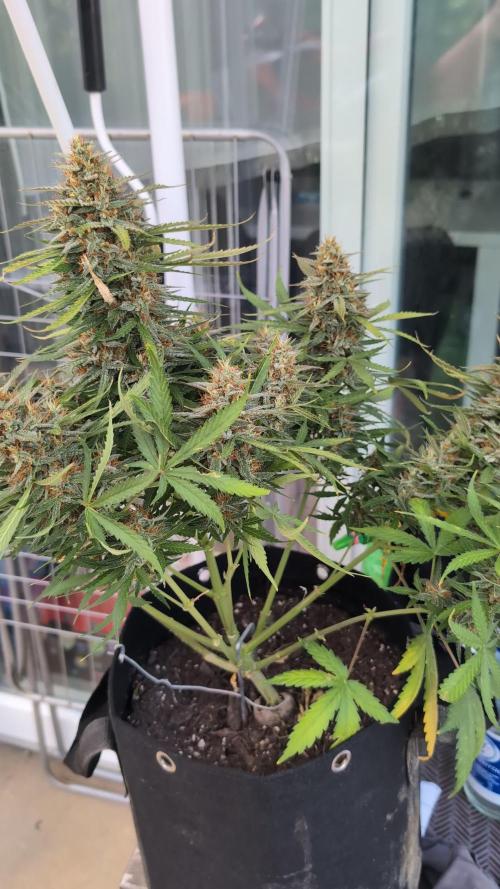
73 days from germimation to harvest of plant no1 from fast Buds
No2 chopped after 76days
No1 45gr. dry yield


Likes
4
Share


@zip420
Follow
1st Harvest: 45g
2nd Harvest: 6.29g
3rd Harvest: 62g
Total: 113.29g
It was a small grow, but I’m happy it yielded more than I expected.
Maybe the staggered harvest helped.
Right now, I’m curing in mason jars with Boveda packs.
I can’t wait until it’s ready to smoke!
Likes
14
Share


@wolvex
Follow
Although we have arrived and exceeded the time to harvest according to the breeder's specifications, I have decided to keep them under the lamp a little bit more in order to see a last push. Furthermore I haven't seen too many amber colored trichomes so this helped me to maintain it. I don't have the right tools to observe them either, so I'm somewhat hesitant about the time of harvest. Maybe I'll cut the biggest ones and keep the little ones a little more under the light. Anyway I saw that pure sativas can stay flowering between 100-120 days so I think I'm not so wrong.

Likes
126
Share


@nonick123
Follow
Día 69 (25/03) Su hermana Gorilla Cookies FF muestra una ligera necrosis... me preocupa...
Día 70 (26/03) Necrosis en Gorilla Cookies muy avanzada en solo 2 días. Hablo con el gran @dogdoctorofficial y me hace ver que estoy regando mal...
He dejado que se seque demasiado el sustrato! (como en la fase vegetativa) Y la Gorilla Cookies FF al ser la planta más grande y que más agua pide, está demasiado sedienta...
Voy a modificar los patrones de riego para que el problema no persista en Gorilla Cookies FF ni aparezca en las otras plantas!
Riego 0,5 Litro H20 sin nutrientes. TDS 225 PPMs - pH 6,6
Día 71 (27/03) Riego 1,25 Litro H20 + Wholly Base 3 ml/l + Solid Green 1,75 ml/l + Early Flower 0,75 ml/l + Big Bloom 1,5 ml/l de Gen1:11
TDS 1150 PPMs - pH 6,2
Día 72 (28/03) La necrosis en Gorilla Cookies FF se ha detenido 😁 y las flores siguen creciendo
Observa alguna mancha de necrosis también en Wedding Cheesecake FF y decido a subir un poco la lámpara
Ahora el PPFD en apical es de unos 830 PPFD
Día 73 (29/03) Riego 0,5 Litro H20 sin nutrientes. TDS 225 PPMs - pH 6,6
Día 74 (30/03) Riego 1,25 Litro H20 + Wholly Base 3 ml/l + Solid Green 1,75 ml/l + Early Flower 0,75 ml/l + Big Bloom 1,5 ml/l de Gen1:11
TDS 1150 PPMs - pH 6,2
Día 75 (31/03) Detecto una ligera necrosis en Purple Lemonade FF y en Wedding Cheesecake FF.
Voy a aumentar un poco la distancia de la lámpara para tener un DLI de 37, por si fuese estrés por luz.
💦Nutrients by Gen1:11 - www.genoneeleven.com
🌱Substrate PRO-MIX HP BACILLUS + MYCORRHIZAE - www.pthorticulture.com/en/products/pro-mix-hp-biostimulant-plus-mycorrhizae
Likes
21
Share


@MG2009
Follow
11/24/2021
First true leaves are showing, transplanted 7 jiffy pellets into their first pots. Should be good for a couple weeks.
Interesting to see how all the single finger leaves are developing differently.
11/25/2021
Transplantation complete #8 potted up into a small pot temporarily, Will start feeding next week Mirimichi 901C One ounce (7.8ml) to a gallon.
I am guessing (prediction) #2,#6 might be male.
(Both are vigorous girls) But time will tell.


Likes
49
Share


@CBD_Sweden
Follow
2018-03-20 Day 1
New week and not much to say. No water or nutes today, just the regular weekly check to see that they look nice and healthy.
Raised the lamp about 10 cm to make sure that the girls don't get burned again.
Zombie Kush nr1 is 58 cm
Zombie Kush nr2 is 68 cm
2018-03-22 Day 3
Gave the girls 2l water/nutes this morning.
-----------------------------------------------------------------------------------------------------------------------------------------
Strain information
From the selection of one of Ripper seeds first genetic search works, an old Lavender Kush clone was pollinated by brilliant Amnesia.
From there a clone that we named “Sideral” was selected and decided to pollinate it again later with Bubba Kush.
Its vegetative cycle should be generous if we want to develop the full potential of its Indica demeanor. With a low EC both in the vegetative and the flowering cycles we will get spectacular results.
Its purplish colour scheme and the great quantity of trichomes that cover its large flowers would make this strain a key one for Kush flavor lovers.
Vegetative: From 2 to 4 weeks
Genotipe: 20% Sativa / 80% Índica
Indoor flowering: 55/60 days.
Production: Medium / High
Effect: Powerful / Durable
------------------------------------------------------------------------------------------------
https://www.youtube.com/watch?v=G8sSHdfbu1g
https://www.youtube.com/watch?v=-Twzz8lBfEQ
https://www.youtube.com/watch?v=PnE5ixD9iTE
https://www.youtube.com/watch?v=bDyJXP4vEG8&t=906s
------------------------------------------------------------------------------------------------

Likes
31
Share


@Stince1981
Follow
Dec27. D63. COP fed and defoliated.
Dec29. D65. Watered. Thirsty girl... one more feed to do.. then just aqua!
Jan1. D68 Fed.

Likes
36
Share


@Salokin
Follow
I think she has finally completed her stretch, it’s getting very shiny and sticky in the tent and the buds continue to grow nicely. She continues to be super thirsty and I think i will shorten the tank change intervals. From the 11 cuttings I took in flower around 9 made it and started to root quite nicely. However I think I was a bit to generous with the nutrients, which is corrected for the next week. A third net was installed in anticipation of the main colas getting to top heavy at a later stage. I also increased the canna boost by another 25 ml.

Likes
21
Share


@biggreens420
Follow
to be honest this plant speaks for itself its beautiful the most colourful one iv ever done and she smells super berryish cant wait to taste her shes flushed out well packed with trichs buds are nice and dense and good sized all the way down 👏👏 to spliff seeds for this beauty she will be hung to dry for 7 days then dry trimmed and jarred thanks for reading happy growing guys

Likes
7
Share


@Sunstonedgrows
Follow
A tad late, but on Dec 20th we started flower! The pics and video are all from dec 20.
To kick it off we did a small feed (1tbsp) of veg nutrients and over the next few weeks will transition to flower blend.
So far she's taken well to the training and looks very strong overall.
Cheers til next time
-Dj Sunstone

Likes
25
Share


@Ultraviolet
Follow
Permanent Marker weed strain possesses the genetics for high anthocyanin production, which is responsible for its signature deep purple. While the genes are present, the expression of these colors is often enhanced by "thermal stress" (lower temperatures) during the final three weeks of flowering, which triggers the production of these pigments.
👋 Raising the Carbon-to-Nitrogen (C:N) ratio in the growing medium to avoid over-immobilizing nitrogen, on the flip side, being careful not to trigger early autophagy. Moderate, controlled increases in sugar support the energetic demands of flowering and act as a signal trigger, but excess sugar is more likely to inhibit flowering or damage the plant. Balance, like everything else. Visually, when the chloryphyll green gets darker, it is a subtle indicator that the concentration of nitrogen is increasing / more is being stored than is being used. I noticed when you push very high intensity lighting, it slowly fades the green as the plant degrades chloryphyll faster than it can be replenished. When the green of the leaf continually gets darker, it is an indication that the concentration levels of nitrogen are increasing, and I dont want to increase light intensity.
Turn down the nitrogen faucet. C:N ratio dictates the rate at which nitrification occurs, if at all.
The Carbon-to-Nitrogen (C:N) ratio acts as a critical biological "on/off switch" (or regulator) for nitrogen turnover by determining whether microbes
immobilize (consume/tie up) or mineralize (release) nitrogen during the breakdown of organic matter. This ratio regulates microbial activity by defining the balance between available energy (carbon) and building materials (nitrogen). The C:N ratio in a medium acts as a critical regulator of nitrification, effectively functioning as an "on/off" switch for the dominance of either autotrophic nitrifying bacteria or heterotrophic bacteria.
The shade of green in chlorophyll is subtly linked to the enzyme Rubisco through a co-evolutionary, functional relationship designed to optimize photosynthesis. Chlorophyll absorbs blue and red light for energy, reflecting green light, a process that ensures the "light-dependent" reactions provide the correct, controlled amount of energy (ATP and NADPH) needed by Rubisco to perform its "light-independent" carbon fixation. Because Rubisco is a relatively inefficient and slow enzyme—often considered the bottleneck of photosynthesis—chlorophyll and the overall structure of the leaf have evolved to manage energy distribution to prevent overwhelming the Calvin cycle.
While chlorophyll absorbs mainly red and blue light, it is not perfectly efficient, and leaves appear green because some green light is reflected or transmitted. This reflection allows light to penetrate deeper into the leaf, preventing the surface chloroplasts from becoming overloaded and enabling a more efficient distribution of energy to the high volume of Rubisco located throughout the leaf's mesophyll.
The rate of chlorophyll-driven electron transport (light reactions) is matched to the potential rate of carbon fixation (Rubisco activity). If Rubisco were faster, leaves might be darker; however, the "shade of green" represents a balance that prevents chlorophyll from producing more energy than the inefficient Rubisco can process. The green color itself is a byproduct of a photosynthetic system tailored to feed a slow, yet crucial, enzyme (Rubisco) just enough energy to maximize carbon assimilation without inducing excessive oxidative stress or inefficiency.
The shade of green in leaves is directly linked to the concentration of chlorophyll, which is in turn strongly correlated with the amount of
Rubisco (Ribulose-1,5-bisphosphate carboxylase/oxygenase) and, consequently, the rate of carbon fixation. Darker green leaves generally indicate a higher concentration of both chlorophyll and Rubisco, signifying greater capacity for photosynthesis.
Increase output or reduce input. Subtle tells.
While an excess of nitrogen (specifically ammonium) can cause an imbalance, nitrification—the microbial conversion of ammonia to nitrate—is highly sensitive to a variety of environmental, chemical, and physical factors. Because it depends on specific, slow-growing bacteria (Nitrosomonas and Nitrobacter) and archaea, anything that stresses these organisms can disrupt the process.

Likes
17
Share


@Lazuli
Follow
Very intense high, hits very fast and long. Im not stoned but still sleep like a rock after a few hits


Processing
Likes
3
Share


Likes
3
Share


@bk_garbage
Follow
Just another week of flowering. Buds have set pretty good and I will be defoliating/taking clones and pinching off anything that will be larf soon. I think the "mainline approach may be effective.. very even budding across each main shoot. I usually just bend and train until theres enough tops, but they don't always flower evenly.
Nute wise, since the buds started, I added in some liquid koolbloom to the mix and stopped the tarantula and Piranha powders. I have been feeding three separate one minute intervals per light period, and they're in one gallons. 2mins a night and they were getting dry, 3 is a bit heavy on the runoff so hoping they start drinking more as they get going more.
Processing
Likes
6
Share


@Weedzoks
Follow
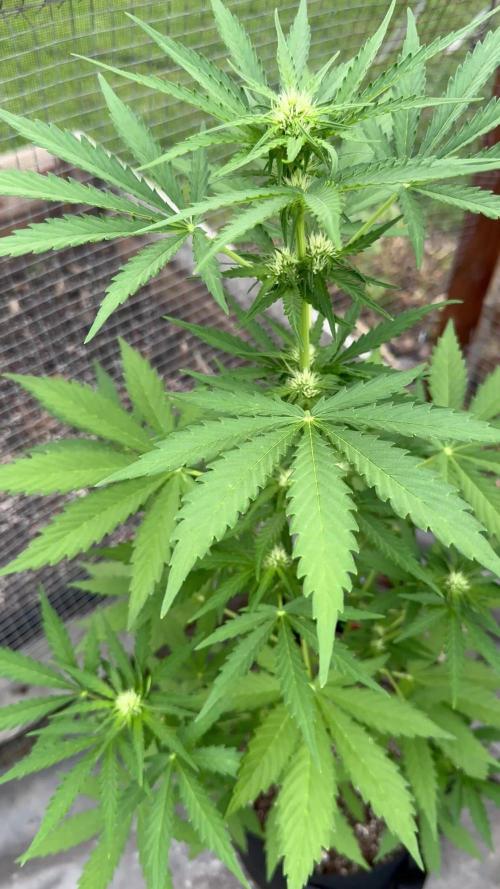
La plante a subitement repris des couleurs
Flo 29: Arrosage engrais complets
Flo 33: Arrosage engrais complets



Likes
41
Share


@TerpTurtle
Follow
15 Day dry then trimmed using the Trim Bin.
Curing with Grove bags, first harvest filled 3, 1/4lb grove bags.
*Updating with clone pictures of this pheno in late flower labeled in diary as you look through, If I pop a new seed of this strain Ill start another diary

Likes
20
Share


@eldruida_lamota
Follow
Que pasa familia, vamos a añadir la tercera semana de vida de estas Apple Fritter de RoyalQueenSeeds, empezamos con la temperatura que la tenemos entre los 21/24 grados, la humedad está entorno al 60%, el ph está en 6.2 , el foco actualmente lo tengo encendido 18 horas y la potencia es al 50% de lo que da el foco.
También añado la gama de nutrientes de Agrobeta, que no falla, sin duda de la mejor alimentación que hay para tus plantas.
Trasplantamos a macetas definitivas, 7 litros en este caso, se ven algo amarillas las hojas más antiguas pero es porque pedían ya un trasplante en nada recuperan.
Mars hydro:
Code discount: EL420
https://www.mars-hydro.com/
Agrobeta:
https://www.agrobeta.com/agrobetatiendaonline/36-abonos-canamo
Hasta aquí todo, Buenos humos 💨💨💨