Check the winners The Grow Awards 2026 🏆
Likes
Comments
Share
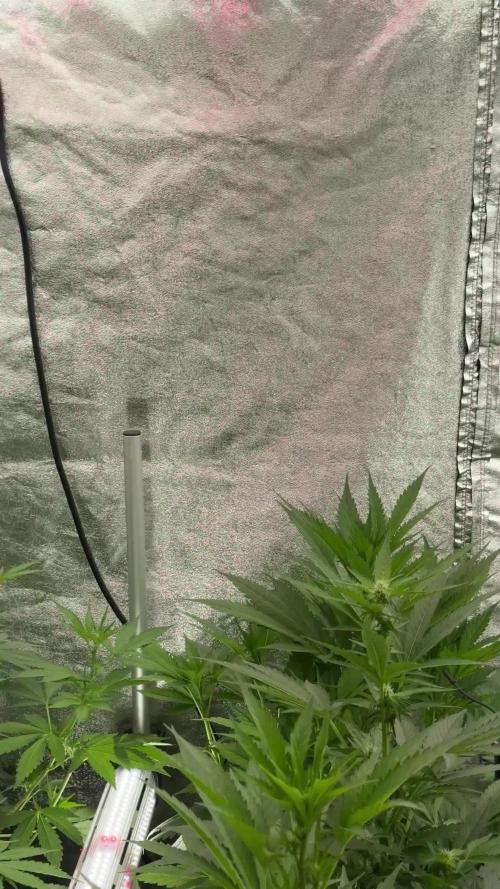
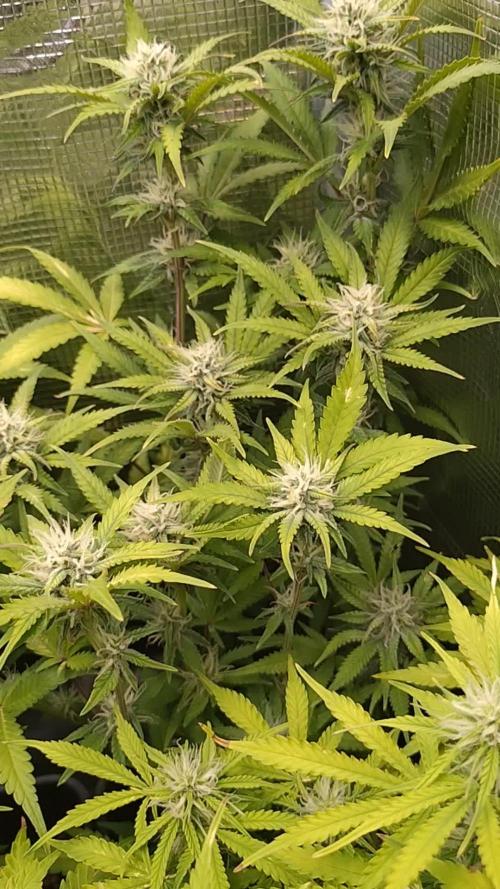
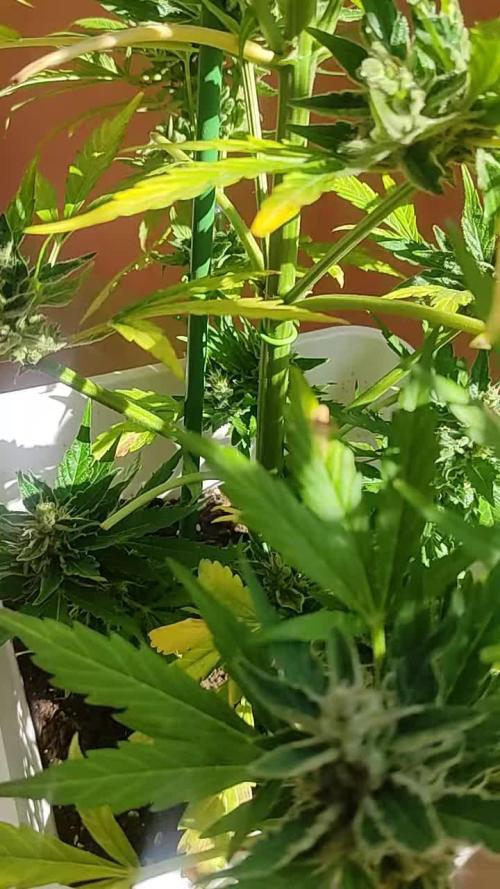
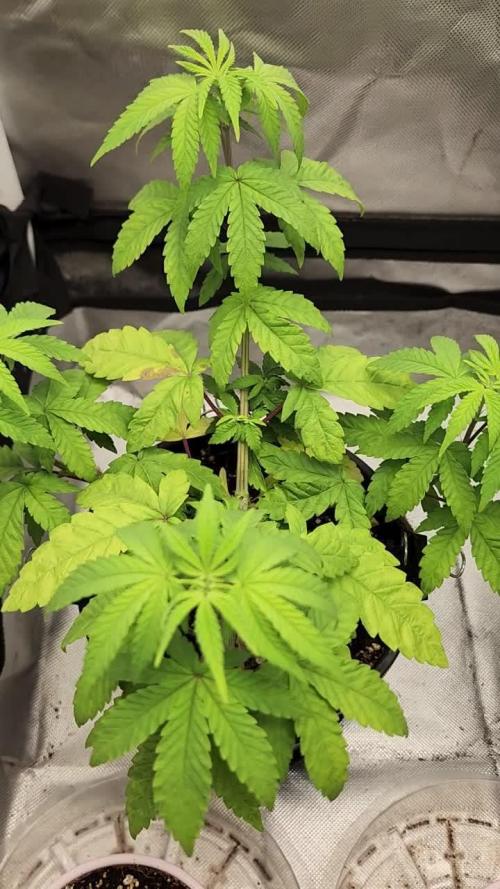
🌸 Week 2 Flower – BlueBerry Diaries Continue Grower’s Journal – BlueBerry by Zamnesia Seeds | Entry 007 ⸻ 🌱 From Seed to Here – A Quick Recap Our BlueBerry journey began with three germinated seeds, from which we carefully selected two strong phenotypes to carry into flower. From delicate sprouts to fast-branching vegetative bushes, they’ve thrived under a mix of Aptus nutrition and precisely managed environments. By Week 4 of veg, their symmetry and vigor showed just how stable and legendary these genetics really are true to the BlueBerry heritage: Afghan strength, Thai influence, and purple notes hidden in their DNA. Now, here in flower, they’re 57 cm tall, nearly twins in their morphology, and fully embracing their transition into bloom. ⸻ 🌸 Week 2 in Bloom – Shifting Morphology This week the girls are changing shape, stacking nodes tighter, pushing pistils, and clearly leaving veg behind. Their body language is all flower now: • Branches are stretching with intention. • Nodes are clustering toward bud formation. • Pistils are reaching, glowing under the LEDs. Despite fewer photos this week (a busy one outside the garden), a room tour video captures it all the environment, the gear, the girls in context. What the photos can’t show, the video will. ⸻ Nutrient Recipe – An Improvised Symphony We shifted last week from Start Booster → Top Booster, and this week we’ve gone further by weaving in Plagron additives. 🌼 Current Recipe (per liter) • Aptus Regulator – 0.15 ml • CalMag Boost – 0.25 ml • Plagron Power Buds – 1 ml • Plagron Sugar Royal – 1 ml • Plagron Green Sensation – 1 ml • Aptus Top Booster – 0.25 ml 📌 Note: All-in-One Liquid is on pause, the soil pellets are providing base nutrition, while Plagron complements are here to push flower expression. Why this recipe? Because flower is about stacking, energy, and quality. • Power Buds → boosts initial flower development • Sugar Royal → supports metabolism + secondary metabolites (terpenes, aromas) • Green Sensation → bloom stimulator for resin and density • Top Booster → P+K push at the perfect timing It’s experimental, yes, but that’s how progress and learning happen. Past runs with Plagron have shown promise, so this run is the testbed for full synergy. ⸻ Room Conditions – Riding the Summer Wave • Temperature peaks: up to 34°C (a bit high) • Humidity range: 50–70% depending on the day • VPD: averaging 1.89 kPa Not perfect, but the girls are adapting beautifully. Their leaves remain vibrant, posture upright, and growth unimpeded. ✅ Upcoming fix: AC unit arriving soon to stabilize temp & RH into optimal ranges. ⸻ 🌊 Watering & Substrate Monitoring Irrigation is triggered when soil moisture drops to 19–20%, measured precisely by the TrolMaster WCS Substrate Sensor, connected to the Tent-X brain. This system doesn’t just track moisture, but also EC and medium data, giving real-time insights into what’s happening below the surface. It’s like having an X-ray into the soil, ensuring that every watering is timely and efficient. ⸻ 💡 Lighting & Ecosystem • Future of Grow LEDs + ThinkGrow Model 1 LEDs running together, controlled by TrolMaster ecosystem. • New addition: Lumatek Zeus Compact Pro 465W in the tent, expanding coverage and spectrum flexibility. As the canopy thickens, we’ll be increasing light intensity to match plant demand and keep PPFD within optimal flowering ranges. ⸻ 🐝 A Moment for the Bees – Nature’s Allies This week, alongside garden updates, I want to honor the bees 🐝💛. In the wild, bees are the silent partners of flowering plants, carrying life between blossoms, ensuring the cycle of fruit, seed, and renewal continues. Without them, much of what we enjoy in gardens and on our tables would not exist. Just as I guide my BlueBerries with nutrients, lights, and sensors, bees guide the world with wings, pollen, and persistence. They are tiny alchemists, weaving ecosystems together. So here’s a fairy-tale note for the bees: “Every pistil in my tent glows in light. Every flower in the fields waits for you. May the hum of your wings remind us always, life depends on the smallest of guardians.” ⸻ 🔮 Looking Ahead – Week 3 Flower We expect: • Bud stacking to intensify • Resin glands to begin sparkling • Aroma to whisper into the air (first terpenes awakening) • Nutrient balance to remain key as morphology shifts fully into flower No heavy defoliation yet, focus stays on stability, airflow, and adaptation as the stretch slows and flowers bulk begins. ⸻ 💬 Final Thoughts – Busy Week, Blooming Garden Even without many photos, the garden speaks for itself. The video tour shows it: thriving plants, a robust ecosystem, and the beauty of legendary genetics expressing in modern conditions. From seed, through veg, and now two weeks into flower, the BlueBerry story continues to write itself. And it’s a story of balance: between nature and technology, experiment and tradition, the grower’s hand and the plant’s will. With bees in the fields and LEDs in the tent, life is thriving. And that’s what this journey is all about. 🌸🌍🐝 Growers Love to you all, DD (DogDoctor)🌱💚 📲 Don’t forget to Subscribe and follow me on Instagram and YouTube @DogDoctorOfficial for exclusive content, real-time updates, and behind-the-scenes magic. We’ve got so much more coming, including transplanting and all the amazing techniques that go along with it. You won’t want to miss it. • GrowDiaries Journal: https://growdiaries.com/grower/dogdoctorofficial • Instagram: https://www.instagram.com/dogdoctorofficial/ • YouTube: https://www.youtube.com/@dogdoctorofficial ⸻ Explore the Gear that Powers My Grow If you’re curious about the tech I’m using, check out these links: • Genetics, gear, nutrients, and more – Zamnesia: https://www.zamnesia.com/ • Environmental control & automation – TrolMaster: https://www.trolmaster.eu/ • Advanced LED lighting – Future of Grow: https://www.futureofgrow.com/ • Root and growth nutrition – Aptus Holland: https://aptus-holland.com/ • Nutrient systems & boosters – Plagron: https://plagron.com/en/ • Soil & substrate excellence – PRO-MIX BX: https://www.pthorticulture.com/en-us/products/pro-mix-bx-mycorrhizae • Curing and storage – Grove Bags: https://grovebags.com/ ⸻ We’ve got much more coming as we move through the grow cycles. Trust me, you won’t want to miss the next steps, let’s push the boundaries of indoor horticulture together! As always, this is shared for educational purposes, aiming to spread understanding and appreciation for this plant. Let’s celebrate it responsibly and continue to learn and grow together. With true love comes happiness. Always believe in yourself, and always do things expecting nothing and with an open heart. Be a giver, and the universe will give back in ways you could never imagine. 💚 Growers love to all 💚
Likes
34
Share
@ertaverd
Follow
ENGLISH BELOW ESP: Estas dos mangos fueron preciosas de cultivar. Cogieron un tono azulado y algunos pĂŠtalos se volvieron de un color rosa muy fuerte. No fue difĂ­cil de cultivar aunque la empezara en octubre, tuvo la visita de algunas orugas pero no causaron casi ningĂşn daĂąo. -EmpecĂŠ el cultivo en octubre, esto y la falta de luz hizo que mis plantas no llegaran a la altura deseada, no tuvieron todo el sol que necesitaban y se espigaron. Les hice un corte FIM a una planta y apical a la otra, lo cual hizo que las puntas desarrollaran una forma curiosa. - El producto final son 23,3 gramos de cogollos no demasiado prietos pero muy resinosos y con unos colores preciosos. - El sabor es algo difĂ­cil de definir. En el sabor no he encontrado el coco, pero sĂ­ las frutas tropicales, mango y cĂ­trico. Y me parece haber saboreado algo de hierbas. Es un sabor agradable aunque solo lo haya curado durante tres semanas. -El colocĂłn es indico, pero empieza como algo cerebral y se va extendiendo por el cuerpo pero sin dejarte k.o. A mĂ­ me ha convencido, he disfrutado cultivĂĄndola, la recomiendo a quien estĂŠ pensando en probarla These mangos are amazingly gorgeous. They took a bluish tone and some petals turned a very strong pink color. It was not difficult to grow considering that I planted it a little late, I only had the visit of some caterpillars. There are some pics of one of them. -I started cultivation in October, this and the lack of light caused my plants not to reach the desired height, they did not have all the sun they needed and they sprouted. I made a FIM cut to one plant and apical to the other, which caused the tips to develop a curious shape. - The final product is 23.3 grams of buds not too tight but very resinous and with beautiful colors. - The taste is something difficult to define. In the flavor I have not found the coconut, but the tropical fruits, mango and citrus. And i think i tasted something herbal. It's a nice taste even if I only cured it for three weeks. -The high is indicated, but starts as something cerebral and is extending through the body but without leaving k.o. It has convinced me, I have enjoyed cultivating it, I recommend it to anyone who is thinking of trying it00
Likes
10
Share
Likes
27
Share
@Dunk_Junk
Follow
Wow isn't she looking fab this week?? 😍 Flowers are really plumping up. 😎 Few more weeks yet I think.
Likes
9
Share
@Cultivate
Follow
Spent some time just defoliating the girls last night, tried not to go too far but you get lost😂 Also did some Pruning/Lollipoping to Increase that airflow 💨 Happy so far! Stinking now
Likes
22
Share
@NanoLeaf
Follow
End of Week 7 CO2 is definitely increasing growth rates but also changes the game with controlling your environment now that it has to be sealed in order to not waste CO2 unnecessarily. You change one thing and it adds many other variables to keep everything in check. I am learning everyday and that's why I grow. The trellis net is doing its job and the canopy is looking nice and even. I also added a soil top-up and top dress of some BioBloom and Mycorhizae so it can start breaking down before I flip to flower next week (Slow release dry organic amendments). And the ladies are using up nutrients in the soil much faster because of the added CO2 (another variable to take into consideration - faster growth = faster nutrient consumption) In detail: -Carefully removed trellis netting -Ammended each plant individually with my soil mixture and nutrients -Placed them back in the tent -Reinstalled trellis netting and trained the ladies to shape Pest Report: Thrips VS Ladybugs... I decided to fight fire with fire - I purchased Swirski-Mites from Koppert (They are beneficial insects that feed on the eggs and larvae of thrips and other unwanted pests). As for the adult thrips - I got very lucky and found about 10 Ladybugs in my garden and decided to introduce them into my grow room as they will feed on adult thrips and any other unwanted pests. I did not spray any insecticide this week and it really seems like the ladies are happy with my new method of bio-warfare and are wilting less and less often
Likes
6
Share
@mikemobes
Follow
5/27/19 -Looks like Cheese #1 is starting to turn purple. Sugar leaves starting to turn purple -RG #5 is really completely turning purple--most mistils have turned orange--waiting on lower small nugs to turn orange to harvest -RG #4 leaves are starting to claw for some reason. I went 1 day to many on the watering and i think i stressed the plants w the underwater -RG #4 watered with 1 large pH balanced water no nutrients -Week 10 grow solution made with 6mL Micro and 12mL Bloom--pH balanced to 6.42 -Thinking of harvesting RG#5 sometime this week. Not sure if i should wait for bottom most nugs to turn orange. 5/28/19 -Smaller RG#2 branches finished drying & transferred to mason jar to cure -some cal/mag deficiency starting to froliferate with Cheese #1-i anticipated this and made week 10 nutrient solution -harvesting most of RG#5 tomorrow-im liking the trichomes -going to water plants probably tomorrow, Cheese #1 with nutrients -RG#1 watered with 1 large cup pH 6.48 water no nutrients ' 5/29/19 -Cheese #1 watered with 1 large cup nutrient solution at pH 6.47 -RG#1,3,5 watered with 1 large cup water pH 6.47 no nutrients -going to water RG #4 tomorrow -Cheese #1 sugar leaves & bud leaves turning purple--hoping the nutrient supplement will strengthen the buds--looks like were entering mid-flower 5/30/19 -RG #4 watered with 1 large cup water no nutrients pH 6.47 -turned off bloom lights & things look different under white COB light. RG#1,4 are a litte lime green and definitely could use some nutrients. -not sure when im going to harvest RG #5 havent decided yet. 5/31/19 -RG #5 mostly harvested -All other plants are looking really good except for some fan leaves on RG #4, some weird coloration is goin on there but i believe that to be a nutrient deficiency i didnt catch early on. -RG #5 harvest went super well. All the buds are really thick and dense, and packed with resin, to the point where i needed to grab some nitrile gloves and some Fast-Orange to get the resin off my hands. Buds have this really beautiful purple tinge littered with crystals and orange pistils. Super excited to start the cure -Dry began today, expect to begin curing 6/4. 6/1/19 -RG #5 hang drying in a dark room with constant light airflow. Should be ready to cure 6/3-6/5 -hoping it wont take long for RG 5 small branches to ripen up -Cheese #1 rapidly changing color to purple--some lower fan leaves yellowing -Cheese #1 watered with 1 large cup Week 11 nutrient solution @ pH 6.42 -RG #3 watered w/ 1 large cup pH 6.47 water no nutrients
Likes
2
Share
3rd week of Flowering is over and the stretching stopped. She received a big defoliation and bottom half is lollipoped. She just enjoys life and keeps growing her buds. Frosting slightly started.
Likes
36
Share
@codebase
Follow
Finally all got rid of their little hats and are looking healthy. TD 3(drooping cotyledon) needed a bit of help so I removed the seed shell with tweezers. Note: The Mycotrex is listed as nutrient because it resides around the shell and than again 10cm below it. 2020-11-12: 1l nutrient solution with 0.5ml of Bia Canna Vega since the soil is Light Mix without any nutrition. I also lowered the light since they were stretching a bit. Light at 25% intensity. 2020-11-14: 300ml ph adjusted water each 2020-11-15: Raised light intensity to 50% 2020-11-17: 300ml ph adjusted water each TD1: 7cm TD2: 5.5cm TD3: 7cm
Likes
89
Share
Hi people! Hard lst continues) we form the horns! which in bloom will take on a reddish tint and the composition will become fantastic!)) overall growth and distribution are going well .. flowering begins!
Likes
8
Share
@Sinktip
Follow
Flowers are continuing to develop. Nice fragrance. Started to top-dress soil with Backcountry Blend Boost at recommendation of local hydro shop. Considering to stake plants soon to avoid the possibility of them getting too top heavy - would be a nice problem to have!
Likes
5
Share
10-24-2024 ALL THE STRAIN RECOMMEND FLOWERING TIME IS 7-8 WEEKS TRY TO FINISH WEEK 8 STILL HAS 19 MORE DAYS... LAST FEED WITH NUTS .BURNED SOME OF TOP FAN LEAVES ...... BUT CHECK OUT QUEEN,DR SLEEP , WULFF ,POWER... CRAZY FROST TOE TO HEAD SMELLS .............NEED TO RUN FANS WITH HIGHER SPEED FOR SMELL... NO MORE NUTS....JUST WATER .....STAY IN THE COURSE... STAY GREEN .... 10-27-2024 -HIT THEM WITH HUMBOLDT COUNTY NUTS G10 -5ML PER GAL SNOW STORM -5ML PER GAL PURPLE MAXX-7ML PER GAL EVERY TWO DAY NEED TO WATER....
Processing
Likes
16
Share
@GRow_M8s
Follow
* Buds progressing good, no deficiencies except stomper #1 with burn tips , no stretch except stomper #3 the stressed one ( 👈 check week 3), SODK looking good 5 days later though. * LST stopped at day 35 ,🔅 lights still 24/7. Temps steady at 25 c° and humidity 50-60%. * Day 39 watering 1l /pot with active vera, EMs and co2 tablet. 🔅Lights 20h -> Days 38-39 Trying to control VPD, maybe 🤔 transpiration in the lasts weeks wasn't on good levels and missed some stretch.!? We ll try to understand what we missed or it's just the genetics under these circumstances! ⚠️ So Day 42 end of week 6, had low temps and high humidity later this week. As we cant check the grow tent all day except few hours per day we've missed some highs and lows of the temps and humidity but overall we were ok. After looking closely back in the dairy infos and the signs of the plants, the overall progress, our rich soil composition, early bloom phase etc, 🔜 We came out with some interesting thoughts to share with you about our meph heads organic try, stay tuned at the next update ( 1st update of week 7)⚠️ Last update--> Day 42 🔚
Likes
5
Share
@N1gh7M4r3
Follow
Durante esta semana aplicamos aplical Nos fue bastante bien… Hicimos clones, espero salga alguno.
Likes
3
Share
@I_am_we
Follow
"Impossibility is a kiss away from reality." —Amanita I am really impressed with the RQS products, especially the easy bost. I think the micronutrients are a bit strong. With the bactohemp the plants have developed very well. I am normally a plagron fan and ordered the RQS batch out of curiosity. Now I regret not having bought the RQS mycorhizas as well. However, the bactohemp also works very well. I had ants and they went away with the cinnamon tea. I have applied spruzit twice and once alg a mic as a foliar nutrient. I think the micronutrients from RQS are a bit strong and I advise to dissolve them in 12 litres of water or more. But this is just a guess. Next week I will use them more dissolved and I will explain. I have not used the easy grow but instead I have started to use sugar royal from plagron. However, I am impressed with how the RQS autos grow. Next batch I will use Mafia Seeds with the easy bost and the RQS mycorrhizas. The RQS pots are also a marvel. I am glad to have had the opportunity to use these products. Plagron soil with coco fiber (2:1), mycorrhiza from bactohemp, some neem powder and the easy bost from RQS in the marevelous pots also from RQS are a working very well this year.
Likes
Comments
Share

@Grow4ever
Follow
Ein paar Tage nicht da und dann solche Büsche im Zelt. Das hieß heute gehts ran ans defolieren und Scrognetz einspannen. Zudem haben Sie leider einen ganzschönen VPD Schock erlitten, auf dem einem Foto sind an der Chocholate Mint OG deutlich Calcium Symptome und nach oben gerollte Blätter zu erkennen. Habe heute morgen also erstmal eine Ladung Wasser mit Cal/Mag und etwas algamic gegossen und die Lampe höher gehängt. Heute abend ging es dann direkt ans defolieren, da ich ehrlich gesagt, die Woche sonst wenig Zeit finden werde. Jetzt sollen Sie sich erholen und ins Scrog einfügen.
Likes
24
Share
The cannabis strain Grape Guava can be a purple strain, depending on its specific phenotype and genetic makeup. While not all phenotypes of Grape Guava are purple, some variations, such as the Zatix Grape Guava, are noted for their striking purple appearance due to the genetic expression of anthocyanin pigments. In a garden of green, Grape Guava gleams, With its fruity aroma, enchanting dreams. Clusters of grapes, guava's sweetness ignite, A strain so divine, in purple and white. Euphoria whispers, a lush fruity haze, Grape Guava's embrace, a tranquil daze. Off and away.@1400ppm. The increased CO2 allows plants to thrive at higher temperatures, which in turn necessitates higher humidity to maintain the ideal VPD for healthy growth and transpiration. 80F -5F = 75F LST with 70% RH = 0.72 kPa. Higher temperatures and humidity promote rapid growth, nutrient uptake, and photosynthesis while maintaining a lower stress level. Temperature influences the rate of enzymatic reactions involved in aerobic respiration. Enzymes, such as those involved in glycolysis, the Krebs cycle, and the electron transport chain, work most efficiently at an optimal temperature range. In low temperatures, enzymatic activity will slow down, thus reducing the rate of aerobic respiration. In high temperatures, enzymes can become denatured, thus impairing their function and stopping the process of aerobic respiration. Glucose is the primary fuel for aerobic respiration. The rate of aerobic respiration increases with the availability of glucose, as it is the starting point for glycolysis. If glucose levels are low, cells may rely on alternative energy sources such as fatty acids or amino acids , but these processes may yield less ATP or be less efficient. To determine this effect, carbon dioxide volume was measured (as carbon dioxide is an output of aerobic respiration) A seed germinated via skotomorphogenesis (in the dark) will generally develop faster in its initial stages to reach light, though it will be etiolated (elongated and weak) and will switch to slower, more robust photomorphogenesis (light development) once it emerges into light. While skotomorphogenesis is a rapid, growth-oriented process for soil escape, it's a temporary phase; photomorphogenesis is a more sustainable development program that prepares the seedling for photosynthesis. 18/6 with the 6 being IR instead of darkness, keeping temps overnight a neat 77F-80F. PPFD overnight 1.8. Think of my tent as a lung. What goes in must come out. When the rate of air going out exceeds the amount of air coming in, it creates a negative pressure. Tent concaves (bends in). If set up correctly, your RH will begin to drop slowly to the desired level you set, and the extraction turns off when it reaches 50% RH. The plant, as it performs cellular respiration, will always be releasing more water into the air, so the RH% of the tent overnight will always increase, so long as oxidative phosphorylation is occurring. As soon as the RH% creeps back up to 55%, the extraction turns back on, over and over, this creates a strong pressure differential which will work wonders on your grow. replicating high and low pressure fronts in nature, critical for oxygen diffusion, but more importantly, full control of your RH%. Moisture will not transfer from a saturated atmosphere to another if that air is already at or above its saturation point, meaning the air can't hold any more water vapor. Once I understood that water is produced as a by product during cellular respiration, specifically at the very end of the electron transport chain (ETC) where electrons are finally transferred to molecular oxygen, the higher the RH of the air, the more resistance there is for more moisture to be added to that environment, and effects the ease with which it does so. But none of that water comes from the pot; it's pulled from the air. If you run high daytime RH, your medium/pot is 100% reliant on transpirational root pull to move water. ZERO evaporation happens across the atmosphere if the tent air has high RH%, the medium cannot release its water through evaporation. Once a canopy develops, light no longer slowly wicks and evaporates from the topsoil. The Soil-Plant-Atmosphere Continuum (SPAC) describes the continuous pathway and process of water movement, driven by a gradient in water potential, from the soil, through the plant's roots, stem, and leaves, and finally evaporating into the atmosphere through transpiration. There is evaporation, there is transpiration, then there is evapotranspiration; Evapotranspiration (ET) is the combined total of two processes: evaporation (water lost directly from soil and surface water into the atmosphere) and transpiration (water released from plants to the atmosphere through their leaves). Evapotranspiration represents the total amount of water that moves from the medium into the air. There is no such thing as a medium with too much water, only a medium that retains too much for too long. The water must always flow efficiently from one atmosphere(Medium) to another(Air) in a timely manner. Moisture is a critical factor for bacterial growth and decay. Dictating how long it's allowed to sit in any one location for any given period is a key preferred control. To ensure a net reduction in a bacterial population, the rate of removal (ET) must exceed the rate of bacterial growth (decay rate), which is often modeled as a growth rate for the specific bacterium under the given conditions. By optimizing daytime VPD, we also optimize conditions for bacterial growth to explode exponentially above 77°F.. If water is allowed to sit in a medium without an escape within a timeframe, nothing good will happen. IF High RH is maintained overnight as well as during the day, placing 100% of water movement at the behest of daytime transpiration, roots can only pull where they can reach, and if soil is compressed above a certain point, moisture will become trapped in a medium with no way of moving day or night. This will begin the countdown for decay to take hold. When water stagnates in a medium, it loses oxygen, creating anaerobic conditions that foster the growth of harmful microorganisms like bacteria and fungi, which can produce toxins and disease vectors. Thigmomorphogenesis, the process by which plants respond to mechanical stimuli like touch by altering their growth and development, resulting in significant morphological changes to improve survival against mechanical perturbations. This complex response involves sensing touch and initiating physiological and genetic responses, leading to changes in form and structure over days or weeks. The process is triggered by physical forces such as wind, rain, or touch. Plants adapt to these stimuli by changing their shape and structure, which may include slower growth, thickened stems, or altered leaf development. Plants possess sophisticated mechanisms to detect even subtle mechanical stimuli and initiate responses. A variety of molecules, including calcium ions, jasmonates, ethylene, and nitric oxide, are involved in signaling these mechanical inputs. Touch can induce the expression of genes that encode proteins for calcium sensing, cell wall modification, and defense mechanisms. A plant exposed to constant wind may become shorter and sturdier. A plant that is touched frequently might grow slower to conserve energy and develop thicker cell walls. These changes increase a plant's resilience and ability to survive in harsh environments. Let's get Thiggy with it.
Likes
1
Share
@Unkraut
Follow
everything's looking good 😀 check www.sr-organics.com for some topnotch 5 in 1 fertilizer! root, growth, bloom, micro-organisms, enzymes & vitamins all in one! CODE: "Unkraut10" for 10% Discount! 😊