


Likes
Comments
Share

@MindFlowers68
Follow
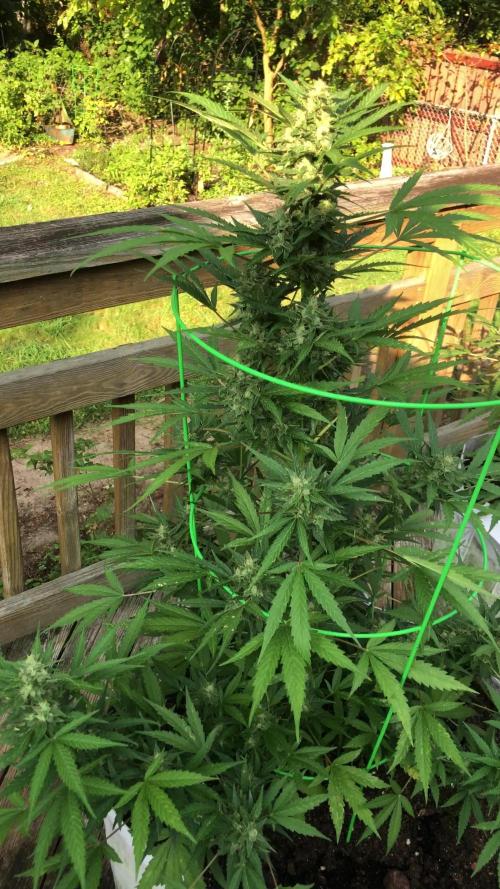
She finished up just in time for a round of some real bad weather rolling on twice this week. I had to bring inside one night or else they would have been hammered. I took them out the next morning because they were so stinky and got some a few solid last days of sun before another bad storm. I cut down the morning of and is drying whole in my studio around 65F and 60% humidity. I may press a little rosin with this one but plan on keeping this one mostly for the flower as Its been a whole since no fresh flower. Looking like a pretty decent harvest. May be my best auto flower harvest yet.

Likes
13
Share


@Growyourownathome2x2
Follow
16th of April day 37 some defoliation done to open up the inner nodes let them get some more light to grow up

Likes
8
Share


@Marihumama
Follow
Did some cuttings on her, found some bugseggs not much
It's been raining a lot but she won't be up for very much longer and I still hope for some sunny days😘

Likes
6
Share


@Ladyluck
Follow
So far so good,
Can anyone out there please advise if these are ready now or a few more days...
Tis getting warmer now where I am.
How hot is too hot for plants?
Thanks in advance..
Likes
9
Share


@Dmon013
Follow
The missing star Due to the weight and growth that is different from other numbers But she still has a highlight that is covered with snow Make us all want to have a relationship with this little girl once🍬🍒🍭❄️
This After harvest 14 Day
Living soil🥦🥦
Notill💚💚💚

Likes
10
Share

@420DeepGrow
Follow
📆 Semana 5
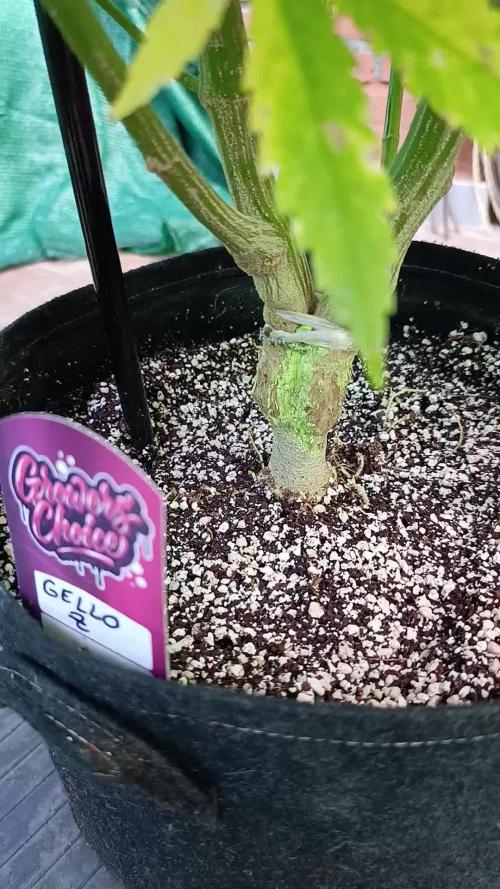
Durante esta quinta semana, la planta continúa avanzando con buen ritmo y sigue ganando estructura. Las ramas laterales continúan desarrollándose y la planta mantiene un aspecto fuerte y saludable.
La floración sigue avanzando poco a poco, aunque todavía no han aparecido los primeros erizos. La planta continúa preparándose para entrar de lleno en esta nueva fase, por lo que toca seguir teniendo paciencia y observar su evolución.
⚡ EC: 1.4–1.5
💧 pH: 6.2–6.3
🌡️ Agua: 18–22°C
☀️ Luz: Sol directo
🔥 Nota de cultivo: Mantengo la EC en los mismos valores, ya que la planta sigue respondiendo muy bien y todavía no necesita cambios. Seguimos observando cómo evoluciona la floración antes de aumentar progresivamente la alimentación.
¡Seguimos creciendo fuerte! 💪

Likes
22
Share


@Smith420
Follow
Still waiting for amber colors before I harvest watching daily. Watering with just Poland spring as needed and will will allow soil to dry up a day or two prior to harvesting. As usual I hope everyone nothing but the best and appreciate each one of you. Have a great day!!

Likes
67
Share


@Hashy
Follow
Grow diary 11 stage 6
Day 51-60
This last 9 days she has continued to bulk up more. This is probably the shortest plant I have ever grown and that's possibly down to the topping or over watering earlier on in the grow. Unfortunately due to the west coast o.g stretching so much I have had to lift the light and she isn't getting as much as the others in the tent. She is the farthest along out of the 4 strains and is definitely going to finish before the others.
Likes
3
Share

@Olduffybastard88
Follow
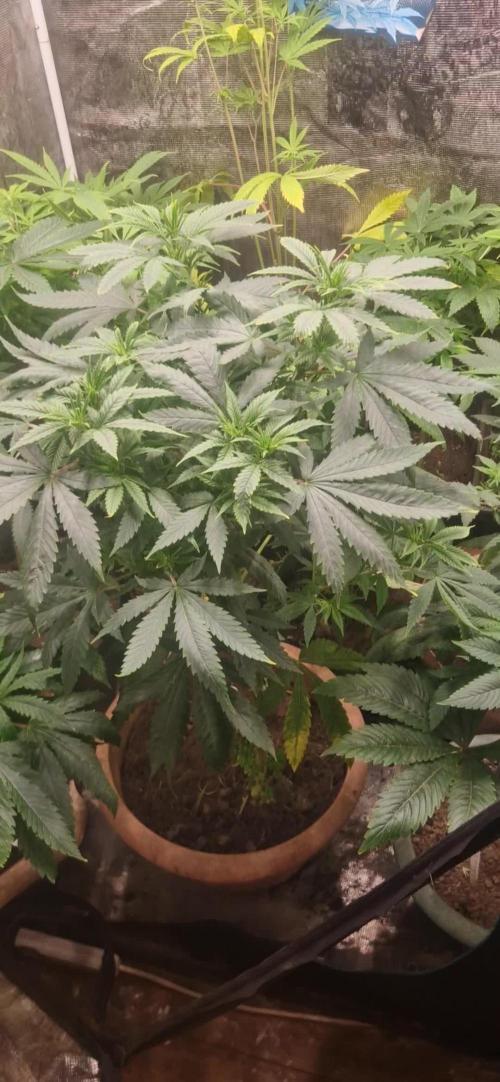
My other tent that I got full of kannabia plants theses girls seem to love stretching for the light I have a prober sog going on flipped before I ran out of space I forget how much they can stretch during the first 3 weeks



Likes
13
Share

@MrGrowDiarie
Follow
Day 63
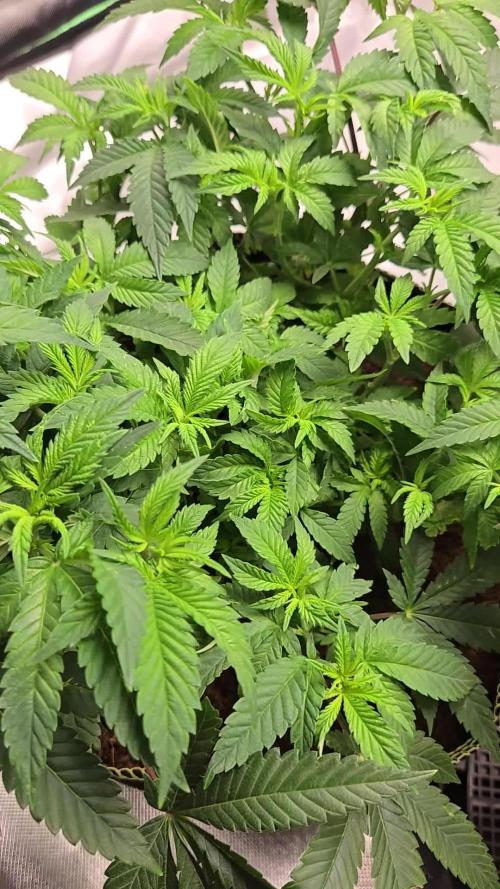
This plant now shows a much fuller canopy, with strong lateral growth and dense foliage. The training earlier in veg has clearly paid off — multiple tops are reaching upward, giving the structure a wide and balanced appearance. The node spacing is fairly tight, and the plant has developed into a bushy, healthy shape.
Leaf color is a deep, rich green, a sign of good nutrient uptake. The canopy is vigorous and energetic, with new shoots continuing to push through. The posture of the leaves is upright and responsive, indicating that the plant is currently in a comfortable environment. No major signs of deficiencies are visible from this angle.
At this stage, the plant looks ready to transition soon if the goal is flowering. The main considerations now are airflow and light penetration: the canopy is dense, so a light defoliation of older fan leaves could help improve circulation and ensure even bud development later on.
Next steps will be to maintain a steady feeding schedule, monitor watering carefully, and prepare for the upcoming stretch once the light cycle is switched.
Likes
14
Share


@Ultraviolet
Follow
Plants with more direct UV showed much more purple across all 3 plants.
The data shows that the number of terpenes in dried Cannabis flowers increases with a “No Red” light treatment for the final three days of production. Based upon these findings, we feel confident in recommending a spectrum control program that eliminates red light output from fixtures for the final 72 hours of the Cannabis flowering cycle.
Terpenes are aromatic compounds that give cannabis some of its most distinct aromas from citrus and berry, to more earthy tones. Many species of plants produce and emit terpenes in a diurnal, or daily cycle that is regulated by a complex web of signaling. There are also many plants that emit terpenes at night to attract nocturnal pollinators (Marinho et al., 2014346). Regardless of when the terpenes are produced or emitted, these processes are often dependent upon cues derived from natural light/dark cycles via a native circadian clock (Dudareva et al., 2004). Several light-sensitive pigments are involved in these processes of production and emission, and the different photoreceptors are dependent upon different wavelengths of light to be activated or deactivated. Emission of terpenes is a process that is entirely dependent upon phytochromes and red/far-red light cues in most plant species (Flores and Doskey, 2015). For example, repeated light/dark phytochrome signaling is necessary for the emission of terpenes in tobacco plants (Roeder et al., 2007). Based on previous findings, we hypothesized that a lack of red light and phytochrome-mediated light/dark signaling on the part of the plant is responsible for an increase in terpene content in cannabis. The plant continues to synthesize terpenes, but a lack of red light to trigger the Pr-Pfr shift results in a lack of terpene emission by the plant, thus causing the terpenes to accumulate in the maturing flowers.
REFERENCES
Dudareva N, Pichersky E, Gershenzon J. Biochemistry of Plant Volatiles. Plant Physiology. 2004;135(4):1893-
1902.
Flores, R.M., Doskey, P.V., Estimating Terpene and Terpenoid Emissions from Conifer Oleoresin Composition.
Atmospheric Environment. 2015. 113, 32-40.
Marinho, C.R.; Souza, C.D.; Barros, T.C.; Teixeira, S.P.; Dafni, A. Scent glands in legume flowers. Plant Biology ,
Volume 16 (1) – Jan 1, 2014
Roeder S, Hartmann AM, Effmert U, Piechulla B (2007) Regulation of simultaneous synthesis of floral scent terpenoids by the 1,8-cineole synthase of Nicotiana suaveolens. Plant Mol Biol 65: 107-12
Abstract
Sound waves technology has been applied to different plants. It has been found that sound waves were at different frequencies, sound pressure levels (SPLs), exposure periods, and distances from the source of sound influence plant growth. Experiments have been conducted in the open field and under greenhouse growing conditions with different levels of audible sound frequencies and sound pressure levels. Sound waves at 1 kHz and 100 dB for 1 h within a distance of 0.20 m could significantly promote the division and cell wall fluidity of callus cells and also significantly enhance the activity of protective enzymes and endogenous hormones. Sound waves stimulation could increase the plant plasma-membrane H+-ATPase activity, the contents of soluble sugar, soluble protein, and amylase activity of callus. Moreover, sound waves could increase the content of RNA and the level of transcription. Stress-induced genes could switch on under sound stimulation. Sound waves at 0.1–1 kHz and SPL of (70±5) dB for 3 h from plant acoustic frequency technology (PAFT) generator within a distance ranged from 30 to 60 m every other day significantly increased the yield of sweet pepper, cucumber and tomato by 30.05, 37.1 and 13.2%, respectively. Furthermore, the yield of lettuce, spinach, cotton, rice, and wheat were increased by 19.6, 22.7, 11.4, 5.7, and 17.0%, respectively. Sound waves may also strengthen plant immune systems. It has been proved that spider mite, aphids, gray mold, late blight and virus disease of tomatoes in the greenhouses decreased by 6.0, 8.0, 9.0, 11.0, and 8.0%, respectively, and the sheath blight of rice was reduced by 50%. This paper provides an overview of literature for the effects of sound waves on various growth parameters of plant at different growth stages.
https://doi.org/10.1016/S2095-3119(13)60492-X



Likes
3
Share


@Ninjabuds
Follow
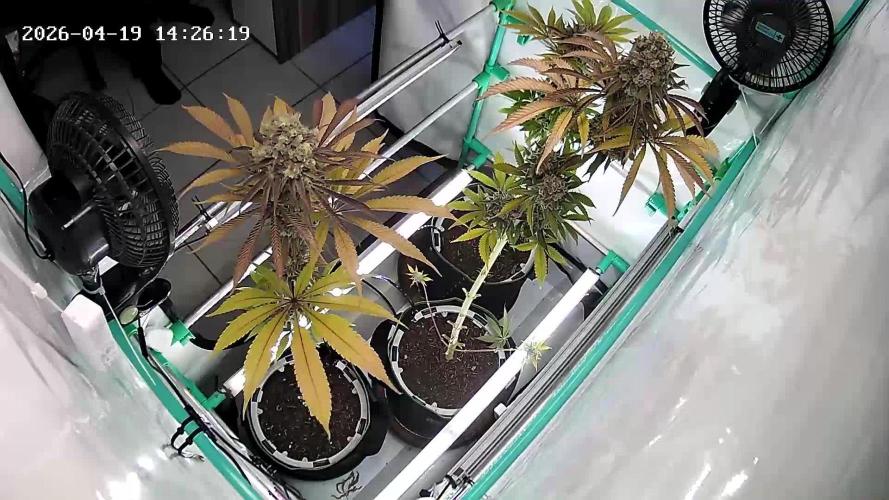
The northern lights 10 seedling has a smell of skunk it’s pretty nice I hope it stacks nicely like a skunk plant it’s one of the biggest and bushiest plants in the tent and seems to like to branch out
This past week was smooth sailing and I topped all the plants

Likes
43
Share

@Natrona
Follow
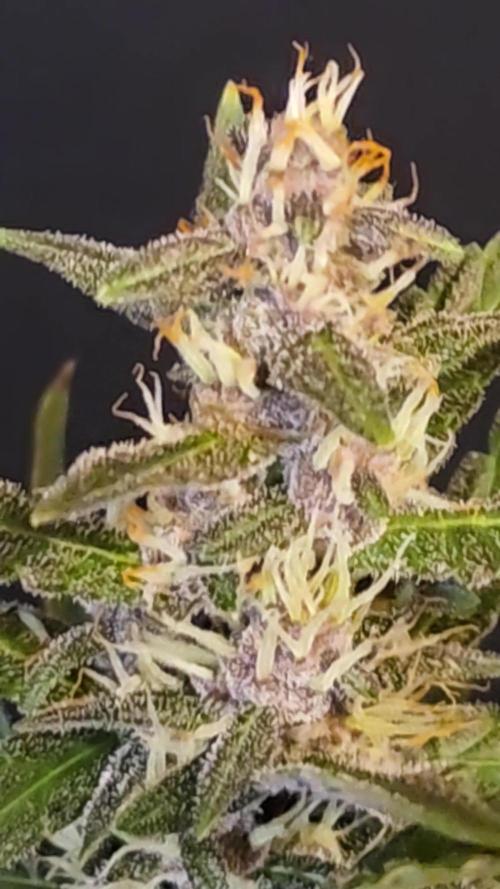
Apricot Auto FastBuds
This week I had to increase watering on Apricot #1 4.5 liters and #2 3 liters.
Since NYC Diesel leaves look so dark green with some clawing and all the gals in the tent are receiving the same nutrients as NYC Diesel, I determined I ‘ve overfertilized. The apricots don’t show dark leaves but to be cautious I gave them Calmag the first time and the second flush 1 gallon PH 6.15 water. I defoliated some large fans that were damaged by low cal mag. Only one of the Apricot is showing colors as Fastbuds describes. Purples in the buds with orange pistils.
Stay green, growers love 💚🌿
💫Natrona💫
Likes
2
Share


@Limestone_Island
Follow
Im feeding her steadily at around 825ppm every morning monitoring any possible deficiencies. I did defoliate quite a few leaves from the to[ and bottom once I felt that she is thriving happy and growing more vigorously during the stretch. I raised the light a full 2 feet. during week 1 and now at the end of week 2 the tallest stalk is about 14 inches while most are around 20. reason for a few stalks being taller is because of what happened when our 3rd plant ended up being a male during the transition to 12/12. Im not gna try anything crazy to try and fix it. Obviously there are no problems so dont fix whats not broken I guess. Have a great week !

Likes
17
Share


@DudeGrowsWeed
Follow
5’-4” & 6’-0”👍👍
They keep growing and growing and growing!!! Really loving watching these girls do their thing. Still at least a month before they flip to flowering (probably more) gonna be HUGE!!!
Still supplementing Recharge and Cal/Mag once per week.
Likes
11
Share


@Lahuertade_Bototo
Follow
🌱🌱🌱Continuamos este cultivo, con esta hermosa cepa de FastBuds, Girl Scout Cookies Auto, de lleno en el periodo de Floración .🌱🌱🌱
👨🍳👨🌾🏻 Nutrición y Bitácora 👨🌾🏻👨🍳
-Día 29. Sigue creciendo vertical.
-Día 30. Se riega con una solución nutritiva NPK de 1.5 Litro con Plagron Power Roots (3.75 ml), Plagron Pure Zym (1.5 ml), Plagron Alga Bloom (3 ml) y Plagron Sugar Royal (0.75).
-Día 31. Se riega con una solución nutritiva NPK de 1.5 Litro con Plagron Power Roots (3.75 ml), Plagron Pure Zym (1.5 ml), Plagron Alga Bloom (3 ml) y Plagron Sugar Royal (0.75).
-Día 32. Se riega con agua 700 ml de agua declorada, y se realiza una leve defoliación para mejorar la penetracion luminica y despejar brotes tapados por hojas grandes hacia el interior de la planta.
-Día 33. Se riega con una solución nutritiva NPK de 3 Litros con Plagron Power Roots (7.5 ml), Plagron Pure Zym (3 ml), Plagron Alga Bloom (6 ml) y Plagron Sugar Royal (1.5 ml) + la adición de Trichodermas (1.5 ml).
-Día 34. Responde bien al riego con 3 litros del día 33, ya casi seca el sustrato y sigue creciendo y formando mas flores🌺💪.
-Día 35. Se riega con una solución nutritiva NPK de 3 Litros con Plagron Power Roots (7.5 ml), Plagron Pure Zym (3 ml), Plagron Alga Bloom (6 ml) y Plagron Sugar Royal (1.5 ml).
🚀Equipamiento🚀
Indoor de 60x60x159 cm y una iluminación BlackCob F320, se activa solo 1 modulo (160w) a 45 cm del canopy por el resto del cultivo. Intractor de 135mm, extractor de 135mm, filtro de carbón, ventilador "oscilofan", ventilador "clip fan", este ultimo ventilador se ajusta en la parte baja de la carpa para mejorar la circulación de aire bajo el canopy, 2 termohigrometros y una malla SCROG de kanovi a 15 cm de la maceta.
Acompáñenme para ver los resultados de este hermoso desafío, un saludo cultivadores 🔥🔥🔥


Likes
14
Share


@BLAZED
Follow
Week 13 (24-4 to 30-4)
24-4
Temperature: 23.8 degrees (lights on) 18.9 degrees (lights off)
Humidity: 66% (highest) 53% (lowest)
No pictures.
Opened the reservoir for a couple of minutes.
25-4
Temperature: 24.7 degrees (lights on) 18.9 degrees (lights off)
Humidity: 66% (highest) 52% (lowest)
Increased the strength of the light from 60% to 65%.
26-4
Temperature: 25.2 degrees (lights on) 19.5 degrees (lights off)
Humidity: 66% (highest) 51% (lowest)
No pictures.
I emptied the reservoir, there was 2750ml left.
I made a 15L new feed and added it to the reservoir.
Opened the reservoir for a couple of minutes.
27-4
Temperature: 26 degrees (lights on) 19.9 degrees (lights off)
Humidity: 65% (highest) 47% (lowest)
28-4
Temperature: 26.4 degrees (lights on) 21.5 degrees (lights off)
Humidity: 64% (highest) 47% (lowest)
Opened the reservoir for a couple of minutes.
29-4
Temperature: 26.4 degrees (lights on) 20.6 degrees (lights off)
Humidity: 64% (highest) 39% (lowest)
Increased the strength of the light from 65% to 70%
Opened the reservoir for a couple of minutes.
30-4
Temperature: 27.4 degrees (lights on) 21.1 degrees (lights off)
Humidity: 62% (highest) 47% (lowest)

Likes
27
Share


@Bluemels
Follow
Die Woche war anstrengend, die Luftfeuchtigkeit ist stark gefallen so bin ich froh rechtzeitig wieder einen Befeuchter reingestellt zu haben.
Zum Gießen muss ich aber immer alles ausbauen 😑
Die Arme der Pflanzen sind recht dünn und biegen sich jetzt schon enorm. Durch hochschieben des Netzes versuche ich mehr Stabilität herzustellen.
Die Blüten sehen trotz allem sehr gut aus, und duften sehr süß, sind voll mit Harzdrüsen 😍
