Likes
Comments
Share

@sellem
Follow
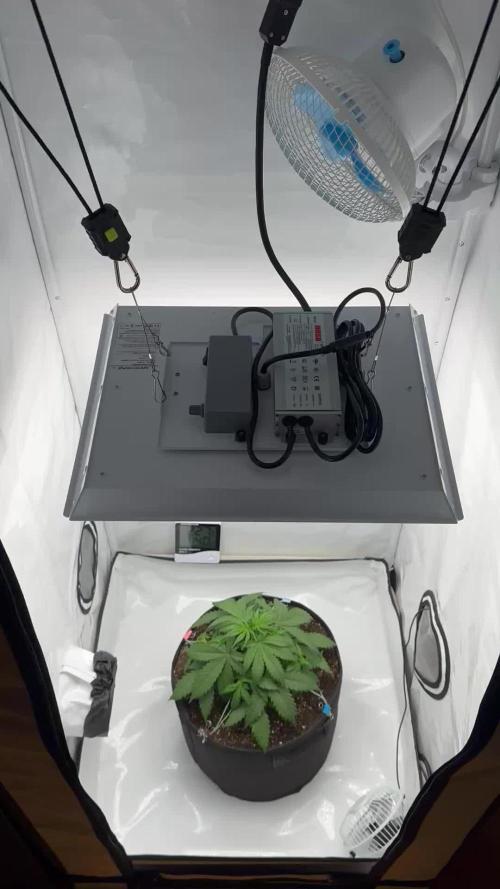
After a 7 Day dry, theyre ready for the bags. Did a final dry trim of them, was thorough but not overly. Excited on how they will smell and taste once cured!

Likes
1
Share


@Cannerd
Follow
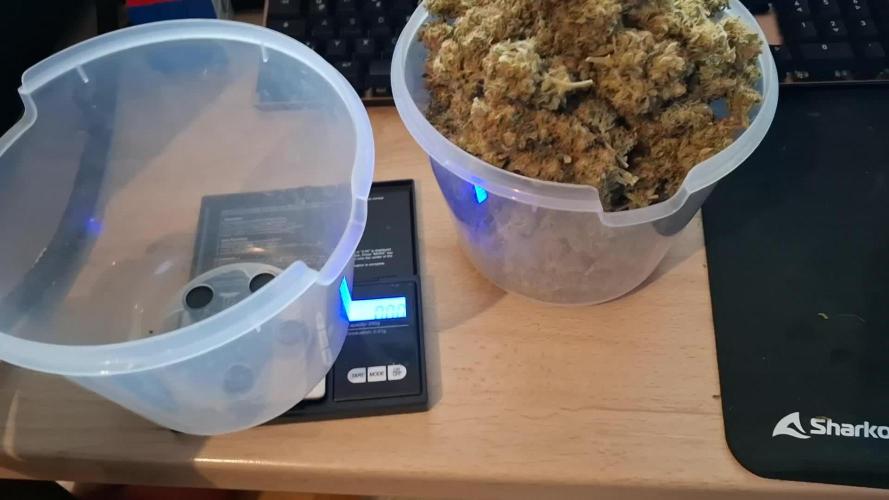
I'll be updating the comment with the daily log shortly, but figured I'd get the photos and weekly overview up.
I started off this week with a topping at about the 4th node, leaving the larger fan leaves on for now. I then left then alone for a bit while I waited for the new branches at the nodes to grow out, rotating as needed. By the end of the week, they had all bushed back up with new foliage and growth.
I also included photos pf the flowering mother plant to keep up with that sneak peak. She still wasn't showing signs of flowering, so I gave her an extra 24 hours of darkness to hopefully kick start the process. As I went to go shut unplug the light source, I noticed that there was a smaller light leak from one of the vent ports, so I also made sure to close that up. At the end of the week when she started to show signs of flowering, I defoliated her to help with light penetration, as she's got massive fan leaves. You'll see in the photos that I took that opportunity to decarb the trim as well. I'm sure there's little to no THC-A, but whatever other compounds are present should make for a nice addition to some butter later on down the road. I just won't factor it in when approximating the potency of the final product.
Likes
20
Share


@Gardengobblin
Follow
Léger retard au niveau de la croissance . Elle as moi s profiter que ses soeur . Bien repris à l'étape de la floraison
Likes
27
Share


@Trickybis82
Follow
Hey all,
So we fully into flower mode, everything seems well and be going good. Buds are stretching nicely and I seem to have a fairly level canopy so fingers crossed.
Peace and love ❤️
Likes
9
Share


@NotoriouslyAnonymous
Follow
Girls are doing great! Tent is very stinky inside. Started watering with 6 gallons now. So 1 gallon per plant with full strength nutes. They seem to want water about every other day. Temps have gone up a little. I had to install a dehumidifier. Also added a large metal 20" fan to counteract the heat from dehumidifier. Averaging around 88 f and 50%RH. About the best I can do without getting an A/C unit.
I'm pulling out dead leaves under the bottoms. Still tucking in fan leaves daily to expose buds to maximum light. The buds are getting very sticky and frosty. Had to break out the box of rubber gloves. Or else have sticky fingers with a lingering odor of fantastic. This grow has been fun and looks like a decent possible yield for a noobie. These pics are day 28 and 29 of flowering.

Likes
5
Share


@KannaGrowing
Follow
Ha llegado el momento de cambiar la duración del periodo diurno de nuestro cultivo para inducir la floración.
Pasamos a 12h de luz y 12h de oscuridad.
Las cuatro luminarias están conectadas al 50% de su potencia máxima.
También realizamos una poda baja, para que la planta concentre su energía en la canopia, al mismo tiempo que facilitamos los riegos.
Seguimos con la fertilización JUJU Royal by BioBizz, siguiendo su tabla de dosificaciones.
Likes
16
Share


@Noob_quest
Follow
Another week checked off and looking pretty good.
1st nutes were are little heavy a think with a little bite burn so have dialled it right back (only fed twice) nothing since.
Overall all the girls seem healthy & happy apart from one... She seems to start drooping before the others at the end of the day and just seems less lively. She’s drinking about the same as the others so not sure. Will just keep watching not panic and see what happens.
Think the stretch has just about stopped and I’ve filled up the canopy pretty well. Hopefully just big fat stinky buds from here...
Spent quite a bit of time on YouTube etc learning this week. Feel like I’ve spotted a few places I’m still going wrong but some easy fixes so all good feel richer for the experience etc...
Thanks for reading have a great week 😊


Likes
135
Share


@Anna_J
Follow
The plants finally seem like they're picking up steam, with more noticeable growth every day.
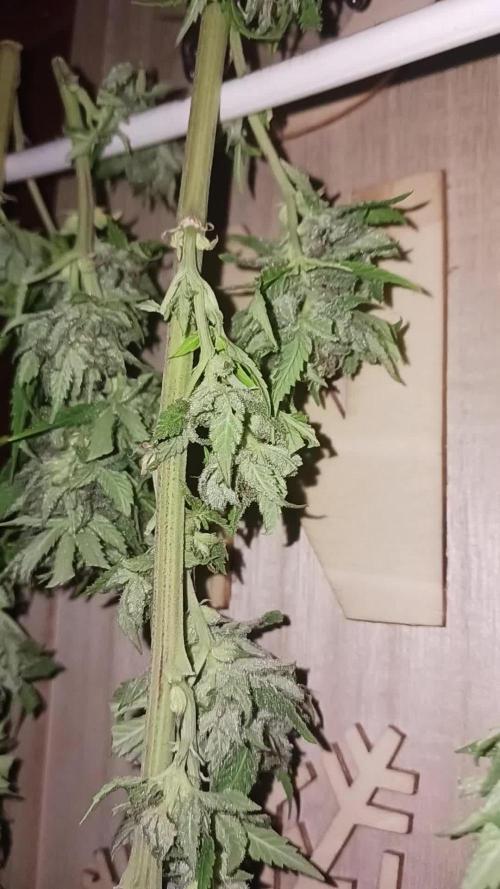
We're really surprised by the variation between Plant #3 and the others. All plants have been receiving the same light levels and watering but Plant #3 is super leggy! The space between 2 nodes is almost as much as the entire height of Plant #2.
Day 22
- light levels have been slowly increased throughout week 3. We're now averaging 27k LUX across the canopy.
- More LST on Plants #1 and #3, started some very minor LST on Plant #2.
- We plan to do another magnesium sulfate (epsom salt) foliar feed, although we think that our last foliar feed did have some positive effect and the yellowing of the leaves has improved some.
- These girls are also finally starting to become thirsty and i expect that we'll be increasing our watering frequency this week.
- We've noticed that these plants tend to respond better to daytime temps between 78-83F. Under 78F and they seem to look and grow rather sluggish.
We wonder if that has to do with the fact that LED lights do not provide any UV, therefore, in order to maintain optimal leaf surface temperature, the air temp perhaps needs to be slightly higher than if using CMH or HPS bulbs. It's just a theory but regardless of the science, we're aiming for 80-82F during veg.
- We trimmed the lowest set of branch shoots off of Plant #2. It is so compact in there... 6 nodes in less than 2 inches of growth! The branches are all tiny so we're going to experiment a little and focus the growth on the main stem, leaving a few of the more robust looking branches.
Day 23
- Watered with dechlorinated, aerated tap water, with approximately 1ml/gal of GHE's "CALiMAGic". pH adjusted to 6.5
- Continued LST on plants #1 & #3. We got a little too carried away with Plant #1 and ended up ever so slightly breaking the main stem! Luckily, it was just a small "gash" and we're confident it'll heal up quickly (see "Day 23" photo above).
- As part of our LST treatment, we do leaf tucking as well, which seems to be having a positive effect on the development of some of those branches that are covered by the larger fan leaves.
- Day 23 really was a day of mishaps... our air conditioner timer did not turn on again and for about 6 hrs the temperature inside the tent reached 87F.
- Our HLG Elite 360 light fixture is now running at approximately 40-45% intensity, at about 32" above the canopy. Combined with the Sunblaster strip lights, we're getting approximately 28-30,000 LUX across the canopy.
- I expect that we'll start seeing some pre-flowers/pistils within this next week, at which time we'll be looking at swapping the three 6400K Sunblasters with two 2700K Sunblasters, to supplement our main light.
- Lastly, we did another magnesium sulfate (epsom salt) foliar feed at lights-out. We went a bit stronger than anticipated, with a 700ppm solution of dechlorinated, aerated tap water and approximately 1 teaspoon of epsom salts per gallon. We were aiming for about 400ppm, so hopefully 700 isn't too high! pH adjusted to 6.6 and applied with a fine mist spray bottle.
Day 24
- Started LST on Plant #2, tied down main top, some leaf tucking.
- Temp: 73-82F
- RH: 45-60%
- Lowered HLG Elite 360 light fixture by 1-2 inches, to approximately 30 inches above canopy.
- Lowered the center Sunblaster LED strip by 1-2 inches.
- LUX: 27-30,000+
- Our "light meter" app maxes out at 30,000 LUX, so we're unable to read anything above that... A proper light meter is on our wishlist! 👌
Day 25
- LST on Plant #2
- Lowered Elite 360 fixture to 28" above canopy. Increased intensity to approx. 50%.
- LUX estimated at 29-32,000 across canopy.
Day 26
- Plant #2 showing some light/heat stress.
- Raised Elite 360 fixture up 2-3 inches.
- Aiming for slightly lower temperatures of 78-80F, instead of 80-82F
Day 27
- Watered with a 315ppm nutrient solution. Watered to approximately 10% runoff.
Day 28
- Defoliation of a few fan leaves and small branches from Plant #1 & #2.
- Plant #2 really seems to have some dwarf genetics showing up or something... very small branches and leaves... looking under-developed. We're a bit concerned that she won't have what it takes to put on weight.
- Temperatures have been swinging a bit further than we'd like, reaching down to 73F during lights off and occasionally getting up to 84F during lights on.
Most of the time the temp sits between 79-80F.
- Pistils are definitely showing on Plants # 1 & #2, with Plant #3 the furthest behind in pre-flower (but also the largest plant!).
- Week 4 to week 5 is typically where we've run into nutrient deficiency and excess issues, so we're really hoping this coming week goes smoothly.


Likes
121
Share


@DogDoctorOfficial
Follow
Canopy is felling and the TSW2000 so far is not disappointing, have it higher at 85% power with gives me a 650ppfd in the center and 450 on the edges, with for this time is quite perfect. The reason i have the light higher than recommended by MARSHYDRO is because I’m looking for more heat inside my grow tent, so to compensate increase % on the power 😇💚
I’ll keep training them day by day, little by little until I’m happy with the canopy 😁
Week 2 day 6 And they are loving the MARSHYDRO, they are running for the light and felling up the canopy pretty fast 🙏 off course Aptus Nutrients are a big, but a big must on this love recipe 😇🙏🙌💚💚💚
One more week here we go 💚🌱💚🌱💚🌱
And with and enormous honneur and pleasure that i start collaborating with MARSHYDRO, they wore kind enough and send me a 4x4 grow tent and a TSW2000 for me to do tests and reviews, i got to admit the quality on the materials, the easy assembling, the user manual, even the art detail that came with a bunch of cool stickers, are plus things that can not go unnoticed 🙏💚 Thanks Marshydro for so many details 🙌😉 i will try and post them all in here, but you can follow me on my instagram account https://instagram.com/dogdoctorofficial for every day updates , videos giveaways etc, or in my youtube channel- https://youtube.com/channel/UCR7ta4DKLFMg2xxTMr2cpIg keep tuned 💚💚💚
Thank you MARSHYDRO for having faith in my love for growing , lets make magic together 🙏🙏🙏
Genetics - Cookies Fam genetics - 3x SunsetSherbet
Grow tent - MARSHYDRO 4x4
Ligth - MARSHYDRO TSW 2000 @ 85%
Filter - vanguard hydroponics Falcon Filters
Extraction - 2 x vanguard hydroponics 280m3h
Extraction control - SMSCOM Smart MK2
All i grow is medicine for myself, for me and for my best friend with is me 😆 nothing to sell, so don’t even ask 😅💚💚💚
All info and full product details can be find in can find @
https://www.mars-hydro.com/grow-tent
https://www.mars-hydro.com/led-grow-light/mars-ts-series-led-grow-light/mars-tsw-2000-led-full-spectrum-hydroponic-led-grow-light
https://marshydro.eu/ DISCOUNT CODE - DOGDOCTOR 💚💚💚🙏🙏🙏💚💚💚
https://marshydroau.com/
More info and updates @
https://growdiaries.com/grower/dogdoctor
https://instagram.com/dogdoctorofficial
https://youtube.com/channel/UCR7ta4DKLFMg2xxTMr2cpIg
💚💚💚Growers love to you all 💚💚💚


Likes
3
Share


Likes
17
Share


@CanadianFillmore
Follow
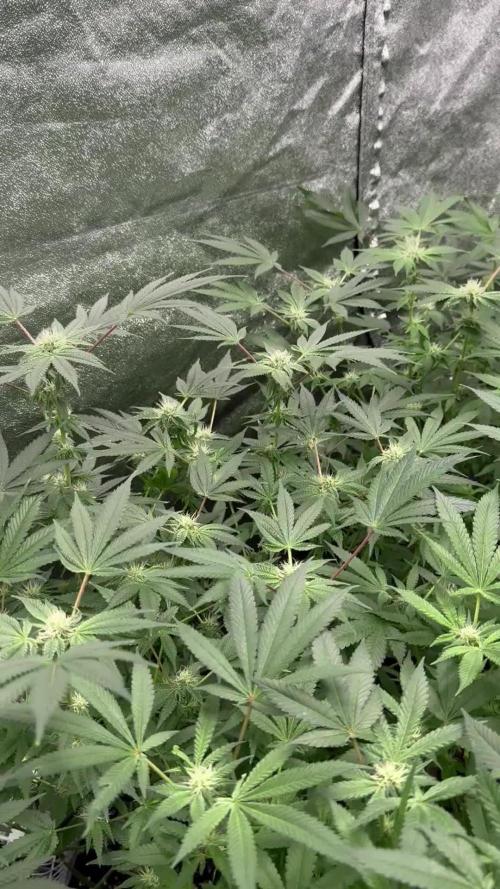
Week 3 begins for DS and MD ladies. All four are developing nice bud sites, but the plants have not stretched as much as I was expecting they would by now.
Thank you to Kaoritracy from Mars-Hydro for the TSW2000 light, I am very happy with it's performance.
Thanks for stopping by growfessors 👽🌳💚

Likes
8
Share


@TrueNorth
Follow
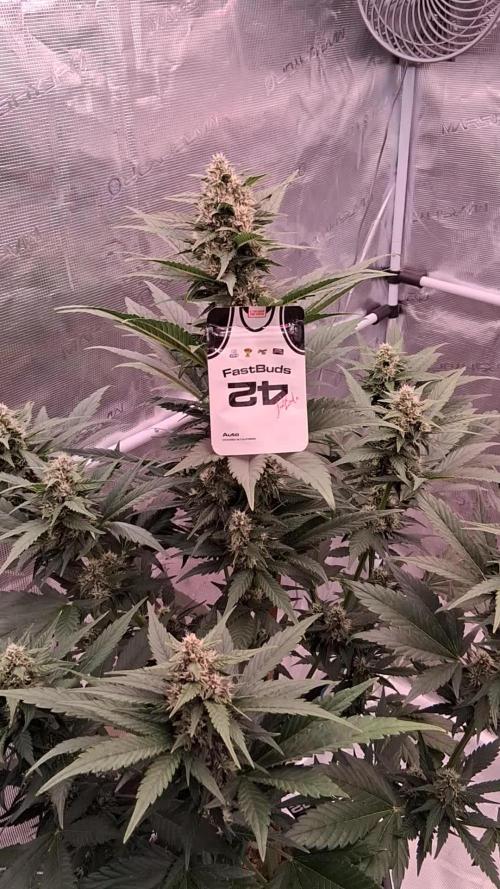
Okay growmies here we are at the end of our GELATO AUTO 🍧 by FAST BUDS. It was such a pleasure to grow, i learned so so so much this run that will help me through the rest of my adventures. The beginning was tough as i am new i over watered and did not ph the water and what i mistake. But its okay i learned. She bounced back like nothing and produced these HUGE, FROSTY, DENSE BUDS! I remember the panic i had week 2-3 and wanted to scrap all of this and start over.... thank the weed gods i didnt because look at this masterpiece. I always said she took for ever but hoped she becomes a beautiful queen. And here she is. She was SOOO HUNGRY AND THIRSTY! Over a all a pleasure and amazing grow. I will for sure grow again and again. She responded so well to LST and topping... slowed it down but it was so worth it guys lmao...
GROWMIES! I LOVE LOVE LOVE YOU ALL SO SO MUCH! Thank you for all the continued support and likes and comments and help. Id be no where with this with out all of you. And thank you to the FAST BUDS team and to you heather! Grow diaries thank you for the plat form. I love you guys. All of you. All my sponsors. Thank you.
Until
Next time growmies! Stay positive, stay safe, stay
Likes
13
Share


@rhajaed
Follow
Just took some clones from this beauty and we have about 4 weeks until i begin flower.Will increase nutrient dosage a little bit as i feel i could push them a bit more..
My feeding schedule is interchanged daily between nutrients and regular ph'd water as it is very hot and these pots dry out daily. The tap water in my area is about 250 ppms so i am working with that until i get an RO filter.. This is still my first grow so im taking it one step at a time.. all advice is welcomed and would be greatly appreciated .
Likes
23
Share

@BlaKX
Follow
It's BPP RF3 time!
Durch des reduzieren vom Licht Zyklus auf 18/6 hat die Farbe mittlerweile gut verstärkt. Das entlauben war nochmal nötig und die Blüten sind ordentlich am dick werden samt Harz bessatz zugelegt!
Sie ist eine wahre Augenweide 😈
Likes
3
Share


@Purplepassion
Follow
Almost there. Low stress worked pretty well
There you see my outdoor mimosa x orange punch on the right :)

Likes
8
Share


@PhilosoraptorX
Follow
The last week that they will receive 'veg' supplements.
Next feed will have bio bloom and top max added, root juice is removed.
I try to give them a feed with nutrients one or twice a week, and one without (just water).
Likes
5
Share


@Rizza78
Follow
Sorry busy week. They are getting close. Just turned the lights down 20% to simulate fall for last couple weeks. Will add ice in 6 days to flush.