


Likes
Comments
Share

@MindFlowers68
Follow
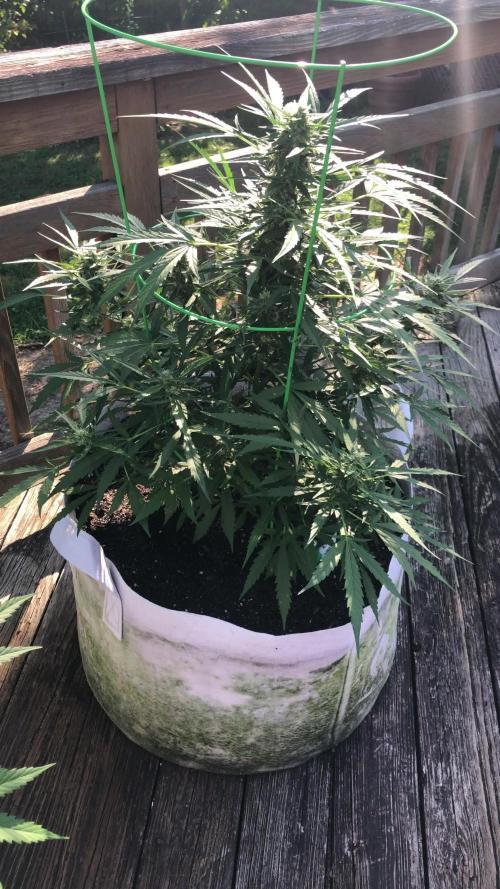
Shes stoped growing in height for the most part but the buds are just getting started and already filling the space of the nodes. Already covered in trichomes and the smell is very sweet and citrus. Going to be some perfect mid summer smoke! I cant wait.

Likes
25
Share


@Ultraviolet
Follow
ANTHOCYANIN production is primarily controlled by the Cryptochrome (CR1) Photoreceptor ( !! UV and Blue Spectrums are primary drivers in the production of the pigment that replaces chlorophyll, isn't that awesome!
1. Diverse photoreceptors in plants
Many civilizations, including the sun god of ancient Egypt, thought that the blessings of sunlight were the source of life. In fact, the survival of all life, including humans, is supported by the photosynthesis of plants that capture solar energy. Plants that perform photosynthesis have no means of transportation except for some algae. Therefore, it is necessary to monitor various changes in the external environment and respond appropriately to the place to survive. Among various environmental information, light is especially important information for plants that perform photosynthesis.
In the process of evolution, plants acquired phytochrome, which mainly receives light in the red light region, and multiple blue light receptors, including his hytropin and phototropin, in order to sense the light environment. .. In addition to these, an ultraviolet light receptor named UVR8 was recently discovered. The latest image of the molecular structure and function of these various plant photoreceptors (Fig. 1), focusing on phytochrome and phototropin.
Figure 1
Ultraviolet-visible absorption spectra of phytochrome, cryptochrome, phototropin, and UVR8. The dashed line represents each bioactive absorption spectrum.
2. Phytochrome; red-far red photoreversible molecular switch
What is phytochrome?
Phytochrome is a photochromic photoreceptor, and has two absorption types, a red light absorption type Pr (absorption maximum wavelength of about 665 nm) and a far-red light absorption type Pfr (730 nm). Reversible light conversion between the two by red light and far-red light, respectively(Fig. 1A, solid line and broken line). In general, Pfr is the active form that causes a physiological response. With some exceptions, phytochrome can be said to function as a photoreversible molecular switch. The background of the discovery is as follows. There are some types of plants that require light for germination (light seed germination). From that study, it was found that germination was induced by red light, the effect was inhibited by subsequent far-red light irradiation, and this could be repeated, and the existence of photoreceptors that reversibly photoconvert was predicted. In 1959, its existence was confirmed by the absorption spectrum measurement of the yellow sprout tissue, and it was named phytochrome. Why does the plant have a sensor to distinguish between such red light and far-red light? There is no big difference between the red and far-red light regions in the open-field spectrum of sunlight, but the proportion of red light is greatly reduced due to the absorption of chloroplasts in the shade of plants. Similar changes in light quality occur in the evening sunlight. Plants perceive this difference in light quality as the ratio of Pr and Pfr, recognize the light environment, and respond to it.
Subsequent studies have revealed that it is responsible for various photomorphogenic reactions such as photoperiodic flowering induction, shade repellent, and deyellowing (greening). Furthermore, with the introduction of the model plant Arabidopsis thaliana (At) and the development of molecular biological analysis methods, research has progressed dramatically, and his five types of phytochromes (phyA-E) are present in Arabidopsis thaliana. all right. With the progress of the genome project, Fi’s tochrome-like photoreceptors were found in cyanobacteria, a photosynthetic prokaryotes other than plants. Furthermore, in non-photosynthetic bacteria, a homologue molecule called bacteriophytochrome photoreceptor (BphP) was found in Pseudomonas aeruginosa (Pa) and radiation-resistant bacteria (Deinococcus radiodurans, Dr).
Domain structure of phytochrome molecule
Phytochrome molecule can be roughly divided into N-terminal side and C-terminal side region. PAS (Per / Arndt / Sim: blue), GAF (cGMP phosphodiesterase / adenylyl cyclase / FhlA: green), PHY (phyto-chrome: purple) 3 in the N-terminal region of plant phytochrome (Fig. 2A) There are two domains and an N-terminal extension region (NTE: dark blue), and phytochromobilin (PΦB), which is one of the ring-opening tetrapyrroles, is thioether-bonded to the system stored in GAF as a chromophore. ing. PAS is a domain involved in the interaction between signal transduction-related proteins, and PHY is a phytochrome-specific domain. There are two PASs and her histidine kinase-related (HKR) domain (red) in the C-terminal region, but the histidine essential for kinase activity is not conserved.
3. Phototropin; photosynthetic efficiency optimized blue light receptor
What is phototropin?
Charles Darwin, who is famous for his theory of evolution, wrote in his book “The power of move-ment in plants” published in 1882 that plants bend toward blue light. Approximately 100 years later, the protein nph1 (nonphoto-tropic hypocotyl 1) encoded by one of the causative genes of Arabidopsis mutants causing phototropic abnormalities was identified as a blue photoreceptor. Later, another isotype npl1 was found and renamed phototropin 1 (phot1) and 2 (phot2), respectively. In addition to phototropism, phototropin is damaged by chloroplast photolocalization (chloroplasts move through the epidermal cells of the leaves and gather on the cell surface under appropriate light intensity for photosynthesis. As a photoreceptor for reactions such as escaping to the side of cells under dangerous strong light) and stomata (reactions that open stomata to optimize the uptake of carbon dioxide, which is the rate-determining process of photosynthetic reactions). It became clear that it worked. In this way, phototropin can be said to be a blue light receptor responsible for optimizing photosynthetic efficiency.
Domain structure and LOV photoreaction of phototropin molecule
Phototropin molecule has two photoreceptive domains (LOV1 and LOV2) called LOV (Light-Oxygen-Voltage sensing) on the N-terminal side, and serine / on the C-terminal side. It is a protein kinase that forms threonine kinase (STK) (Fig. 4Aa) and whose activity is regulated by light. LOV is one molecule as a chromophore, he binds FMN (flavin mononucleotide) non-covalently. The LOV forms an α/βfold, and the FMN is located on a β-sheet consisting of five antiparallel β-strands (Fig. 4B). The FMN in the ground state LOV shows the absorption spectrum of a typical oxidized flavin protein with a triplet oscillation structure and an absorption maximum wavelength of 450 nm, and is called D450 (Fig. 1C and Fig. 4E). After being excited to the singlet excited state by blue light, the FMN shifts to the triplet excited state (L660t *) due to intersystem crossing, and then the C4 (Fig. 4C) of the isoaroxazine ring of the FMN is conserved in the vicinity. It forms a transient accretionary prism with the tain (red part in Fig. 4B Eα) (S390I). When this cysteine is replaced with alanine (C / A substitution), the addition reaction does not occur. The effect of adduct formation propagates to the protein moiety, causing kinase activation (S390II). After that, the formed cysteine-flavin adduct spontaneously dissociates and returns to the original D450 (Fig. 4E, dark regression reaction).
Phototropin kinase activity control mechanism by LOV2
Why does phototropin have two LOVs? Atphot1 was found as a protein that is rapidly autophosphorylated when irradiated with blue light.
The effect of the above C / A substitution on this self-phosphorylation reaction and phototropism was investigated, and LOV2 is the main photomolecular switch in both self-phosphorylation and phototropism. It turns out that it functions as. After that, from experiments using artificial substrates, STK has a constitutive activity, LOV2 functions as an inhibitory domain of this activity, and the inhibition is eliminated by photoreaction, while LOV1 is kinase light. It was shown to modify the photosensitivity of the activation reaction. In addition to this, LOV1 was found to act as a dimerization site from the crystal structure and his SAXS. What kind of molecular mechanism does LOV2 use to photoregulate kinase activity? The following two modules play important roles in this intramolecular signal transduction.
Figure 4
(A) Domain structure of LOV photoreceptors. a: Phototropin b: Neochrome c: FKF1 family protein d: Aureochrome (B) Crystal structure of auto barley phot1 LOV2. (C) Structure of FMN isoaroxazine ring. (D) Schematic diagram of the functional domain and module of Arabidopsis thaliana phot1. L, A’α, and Jα represent linker, A’α helix, and Jα helix, respectively. (E) LOV photoreaction. (F) Molecular structure model (mesh) of the LOV2-STK sample (black line) containing A’α of phot2 obtained based on SAXS under dark (top) and under bright (bottom). The yellow, red, and green space-filled models represent the crystal structures of LOV2-Jα, protein kinase A N-lobe, and C-robe, respectively, and black represents FMN. See the text for details.
1) Jα. LOV2 C of oat phot1-to α immediately after the terminus
Rix (Jα) is present (Fig. 4D), which interacts with the β-sheet (Fig. 4B) that forms the FMN-bound scaffold of LOV2 in the dark, but unfolds and dissociates from the β-sheet with photoreaction. It was shown by NMR that it does. According to the crystal structure of LOV2-Jα, this Jα is located on the back surface of the β sheet and mainly has a hydrophobic interaction. The formation of S390II causes twisting of the isoaroxazine ring and protonation of N5 (Fig. 4C).
As a result, the glutamine side chain present on his Iβ strand (Fig. 4B) in the β-sheet rotates to form a hydrogen bond with this protonated N5. Jα interacts with this his Iβ strand, and these changes are thought to cause the unfold-ing of Jα and dissociation from the β-sheet described above. Experiments such as amino acid substitution of Iβ strands revealed that kinases exhibit constitutive activity when this interaction is eliminated, and that Jα plays an important role in photoactivation of kinases.
2) A’α / Aβ gap.
Recently, several results have been reported showing the involvement of amino acids near the A’α helix (Fig. 4D) located upstream of the N-terminal of LOV2 in kinase photoactivation. Therefore, he investigated the role of this A’α and its neighboring amino acids in kinase photoactivation, photoreaction, and Jα structural change for Atphot1. The LOV2-STK polypeptide (Fig. 4D, underlined in black) was used as a photocontrollable kinase for kinase activity analysis. As a result, it was found that the photoactivation of the kinase was abolished when amino acid substitution was introduced into the A’α / Aβ gap between A’α and Aβ of the LOV2 core. Interestingly, he had no effect on the structural changes in Jα examined on the peptide map due to the photoreaction of LOV2 or trypsin degradation. Therefore, the A’α / Aβ gap is considered to play an important role in intramolecular signal transduction after Jα.
Structural changes detected by SAXS
Structural changes of Jα have been detected by various biophysical methods other than NMR, but structural information on samples including up to STK is reported only by his results to his SAXS. Not. The SAXS measurement of the Atphot2 LOV2-STK polypeptide showed that the radius of inertia increased from 32.4 Å to 34.8 Å, and the molecular model (Fig. 4F) obtained by the ab initio modeling software GASBOR is that of LOV2 and STK. It was shown that the N lobes and C lobes lined up in tandem, and the relative position of LOV2 with respect to STK shifted by about 13 Å under light irradiation. The difference in the molecular model between the two is considered to reflect the structural changes that occur in the Jα and A’α / Aβ gaps mentioned above.
Two phototropins with different photosensitivity
In the phototropic reaction of Arabidopsis Arabidopsis, Arabidopsis responds to a very wide range of light intensities from 10–4 to 102 μmol photon / sec / m2. At that time, phot1 functions as an optical sensor in a wide range from low light to strong light, while phot2 reacts with light stronger than 1 μmol photon / sec / m2. What is the origin of these differences? As is well known, animal photoreceptors have a high photosensitivity due to the abundance of rhodopsin and the presence of biochemical amplification mechanisms. The exact abundance of phot1 and phot2 in vivo is unknown, but interesting results have been obtained in terms of amplification.
The light intensity dependence of the photoactivation of the LOV2-STK polypeptide used in the above kinase analysis was investigated.
It was found that phot1 was about 10 times more photosensitive than phot2. On the other hand, when the photochemical reactions of both were examined, it was found that the rate of the dark return reaction of phot1 was about 10 times slower than that of phot2. This result indicates that the longer the lifetime of S390II, which is in the kinase-activated state, the higher the photosensitivity of kinase activation. This correlation was further confirmed by extending the lifespan of her S390II with amino acid substitutions. This alone cannot explain the widespread differences in photosensitivity between phot1 and phot2, but it may explain some of them. Furthermore, it is necessary to investigate in detail protein modifications such as phosphorylation and the effects of phot interacting factors on photosensitivity.
Other LOV photoreceptors Among fern plants and green algae, phytochrome ɾphotosensory module (PSM) on the N-terminal side and chimera photoreceptor with full-length phototropin on the C-terminal side, neochrome (Fig. There are types with 4Ab). It has been reported that some neochromes play a role in chloroplast photolocalization as a red light receiver. It is considered that fern plants have such a chimera photoreceptor in order to survive in a habitat such as undergrowth in a jungle where only red light reaches.
In addition to this, plants have only one LOV domain, and three proteins involved in the degradation of photomorphogenesis-related proteins, FKF1 (Flavin-binding, Kelch repeat, F-box 1, ZTL (ZEITLUPE)), LKP2 ( There are LOV Kelch Protein2) (Fig. 4Ac) and aureochrome (Fig. 4Ad), which has a bZip domain on the N-terminal side of LOV and functions as a gene transcription factor.
4. Cryptochrome and UVR8
Cryptochrome is one of the blue photoreceptors and forms a superfamily with the DNA photoreceptor photolyase. It has FAD (flavin adenine dinucle-otide) as a chromophore and tetrahydrofolic acid, which is a condensing pigment. The ground state of FAD is considered to be the oxidized type, and the radical type (broken line in Fig. 1B) generated by blue light irradiation is considered to be the signaling state. The radical type also absorbs in the green to orange light region, and may widen the wavelength region of the plant morphogenesis reaction spectrum. Cryptochrome uses blue light to control physiological functions similar to phytochrome.
It was identified as a photoreceptor from one of the causative genes of UVR8 Arabidopsis thaliana, and the chromophore is absorbed in the UVB region by a Trp triad consisting of three tryptophans (Fig. 1D). It is involved in the biosynthesis of flavonoids and anthocyanins that function as UV scavengers in plants.
Conclusion
It is thought that plants have acquired various photoreceptors necessary for their survival during a long evolutionary process. The photoreceptors that cover the existing far-red light to UVB mentioned here are considered to be some of them. More and more diverse photoreceptor genes are conserved in cyanobacteria and marine plankton. By examining these, it is thought that the understanding of plant photoreceptors will be further deepened.


Likes
12
Share


@BrainStorm22
Follow
Nota:
La primers mitad de las imagenes corresponde al principio y la otra mitad al final respectivamente
En esta semana comenzamos a aplicar fertilizantes de engorde y se logro notar una diferencia al aplicar monster bloom el viernes hoy domingo ya se vio una diferencia de tamaño las plantas lucen bien y an empesado a adquirir resina y bellos colores
Martes : solo tek bloom , heavy bud pro (1600 Ec)
Viernes: monster bloom , vitamax , cal mag (800 Ec )
Ph 6.5


Processing
Likes
73
Share


@Andres
Follow
she continues to fatten the buds ... they are taking shape and a smell of mint .. wild smell ... every time less in her ... he has a good smell waiting for his zombie kush ... and now fighting against the red spider ... but but the red spider is not going to win


Likes
26
Share


@mi_auto_grower
Follow
This raspberry diesel smells like fruit punch so much just imagine the most fruit punch smelling drink you like and picture this plant smelling just like that the sour kosher has the sour diesel smell and the lemon chem 18 smells like lemon/sprite so much


Likes
21
Share


@Swvacountryboy
Follow
Got in my bloom nutes in and started feeding this week. Stopped with superthrive didn't want to go to hard with the nitrogen. Seem to be growing strong. Good luck to all.

Likes
26
Share


@imibi
Follow
The plant showed some problem areas on the leaf, and the characteristic red stems appeared on the upper floors of the plant. I began to wonder if this was due to the PH level or not, but I added some PK 13-14 just in case.
keeping track of the PH level when growing on soil is very difficult for me. On coco substrate it was easy
there are still some problems with the humidity of the tent, because my ventilation with a pc cooler and a charcoal filter mat for the hoods can barely cope with the large vapors of the leaves
Likes
7
Share


@StickyFingah420
Follow
Avanzan la semanas de floración y esto se pone cada vez mejor, las flores han ido cogiendo volumen y repletandose de tricomas que huelen genial.
Likes
28
Share


@GanjaGecko
Follow
Die ersten Tage an der frischen Luft haben die Ladys gut überstanden. Die einzige Nacht die mir zu denken gab war die Nacht von Tag 6 auf Tag 7. Die Nacht wurde mit 7°C vorhergesagt. Ich hab die Ladys über Nacht reingeholt, damit sie in dem frühen Stadium nicht allzu sehr herausgefordert werden. Sie wurden dann nächsten am nächsten Morgen zurück nach draußen in die Sonne gestellt. Die Nächte sollen jetzt nicht mehr unter 10°C. Damit bleiben sie jetzt Tag und Nacht draußen. Diese Woche haben sie in einem kleinen Gewächshaus verbracht. Damit es nicht zu heiß wird, bleibt eine Seite offen und die Luft kann auch besser zirkulieren. Die Ladys bleiben vermutlich noch ca 1 woche in dem Gewächshaus und wenn sie dann etwas kräftiger sind, stehen sie unter freiem Himmel.
Jede Lady kam an Tag3 in ihren Endtopf und auch ins Freie.
Die StrawberryBanana steht in einem 11l Topf und die GorillaAuto und die GorillaZkittlez stehen jeweils in einem 8l Topf. Bei jedem Topf ist ca 1l weniger an Substrat im Topf. Der letzte Liter Substrat kommt mit dem Blütebeginn in die Töpfe.
Jede Lady steht in einem Substratgemisch.
Die Basis bildet Biobizz LightMix.
Es wurden ca 5l BioBizz LightMix mit 2l Cocos/Perlite(70/30) gemischt.
Jeder Topf bekam 5 gehäufte Esslöffel Megaworm, 1 gehäuften Esslöffel Batguano in die untere Hälfte des Topfes. Beim einsetzen der Ladys gab es ein wenig Great White Mykorrhiza an die jungen "Wurzeln" und auch ein wenig in dem Bereich wo sie eingesetzt wurden. Der Rest wurde mit dem Substartgemisch aufgefüllt. Auf die Oberfläche wurde ca 15g BioGrow von GreenHouseFeeding mit eingemischt. Da die Ladys vermutlich nach ca 3-4 in die Blüte gehen und generell nicht allzu viel Dünger brauchen, sollte das mit dem Megaworm und Batguano die unten mit eingemischt sind, bis zu Blüte reichen.
Zu Beginn der Blüte wird der letzte Liter Substrat mit 20g BioBloom von GreenHouseFeeding, 2 gehäufte Teelöffel Batguano und 4 gehäufte Teelöffel Megaworm von Plagron gemischt und in die Töpfe gegeben.
Angegossen wurde mit 1ml/L PowerRoots von Plagron und 1g/L BioEnhancer von GreenHouseFeeding. Jede Lady hat ca 500ml mit einem ph-Wert von 6.5 bekommen. Vorher wurde die Oberfläche anständig angefeuchtet damit das Wasser beim gießen nicht einfach durchläuft.
An Tag7 war es erst nötig das zweite mal zu gießen. Auch hier gab es ca 500ml mit einem ph-Wert von 6.5.
Vielen Dank fürs reinschauen liebe Growmies 💚
Likes
3
Share

@fabialien
Follow
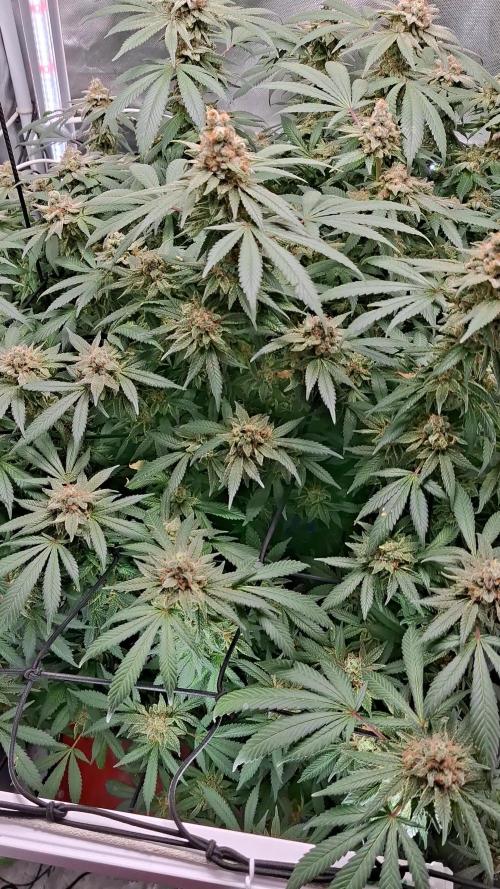
semana del 28 de marzo al 3 de abril 2026, en el que quitamos toda la nutricion y solo dejamls full tit de floraflex para el cierre, próximo cambio de agua sera con flawles finish de advanced nutrients x 24 horas, posteriormente 6 dias de agua purificada en ph 5.8
Likes
5
Share


@GermGrowFox
Follow
Eine neue Woche steht an. Ich hab mich jetzt nun nach vielem hin und her überlegen doch dazu entschieden die Blüte einzuleiten. Ich bin gespannt was passiert und freu mich auf die Woche.
25. November
Cookies gelato wurde mit 4l gegossen zusätzlich noch mit Green sensation und Bloom Dünger.
Tropimango wurde mit 2,5l gegossen ebenfalls mit Green Sensation allerdings ohne zusätzliche blütenährstoffe. Es sollte genügend florganics im subtratsein, dass es vorerst nicht nötig sein sollte zusätzlich Nährstoffe geben zu müssen.
Royal Runtz hat 3l Wasser mit green sensation und Blütendünger erhalten.
26. November
Pflanzen wachsen. Bin zufrieden. Heute besteht kein Handlungsbedarf.
27. November
Der dritte Blütetag. Man merkt dass die Pflanzen an Wachstum zulegen wollen.
Cookie gelato und Tropimango wachsen uneingeschränkt.
Die Runtz hat einen Bruch erlitten und ich hab kein Superkleber oder Panzertape da
28. November
Aus mir unerklärlichen Gründen scheint das bisschen Kreppband auszureichen, um den gebrochenen Ast am Leben zu erhalten. Würde behaupten zu 4/5 war er durchgebrochen und hielt eher an einem Rindefaden. Reicht scheinbar um den Ast weiterhin mit allem zu versorgen.
Habe leichte Sorge dass der ganze Stress, den die Runtz bisher schon hat mitmachen dürfen, zu Zwitterbildungen.
Cookie Gelato kommt weiterhin vorwärts.
Tropimango hat 3l Wasser bekommen. Sie hatte als einzige einen furztrockenen Topf
Cookies Gelato ist nun 46 Tage alt
Tropimango ist nun 41 alt.
Royal Runtz ist nun 30 Tage alt
Blütetag 4
29. November
Cookies Gelato 4l Wasser bis Drenage
Roy’s Runtz 3l Wasserbis Drenage
Ab- und Umluft wurde auf AC Infinity umgerüstet und läuft jetzt über ein growcontrol.
Fyta-Sensoren liefern mir jetzt aktuelle Zahlen aus dem Substrat.
1. Dezember
Die Woche neigt sich langsam dem Ende zu und es ist einiges passiert.
Die Runtz hat einen Bruch diese woche erlitten aber entwickelt sich prächtig. Der gebrochene Ast ist der stärkste. Traue mich allerdings noch nicht das Klebeband zu entfernen.
Die Cookies sieht wunderschön aus ❤️
Tropimango muss immer wieder entlaubt werden, macht sonst gute arbeit.
Das Zelt hat einige Upgrades bekommen und die neuen Möglichkeiten auf Messungen, klimabedingungen und Substratanalysen erleichtern einiges.


Likes
28
Share


@Felloffthegrid420
Follow
11 foot tall and some dank smelling stuff go back ones a week and feed look like some winds came tho

Likes
56
Share


@Ganjagrandaddy
Follow
Day 42 Flowering: Another great week creating some beautiful looking buds and plenty of trichrome action too.
The #1 has begun to colour up her bids now with orange hairs as she matures more. Still.lots of fresh and new pistils being put out too but it is giving her a nicer ripened appeal to her tight , fluffy edged buds. Her gorilla glue genetics are certainly visible along with her twin #3 who is also putting effort into her bud production now.
#2 is turning into an amazing looking plant amd i amd so impressed with the teichrome production now. Her pitch black/purples are being covered in a snowy coating of heavily built up trichromes. Her buds are so tightly packed in too with very little leaf among them. Her main leaves are turning some very nice autumn leaf colours among the dying off ones . I think she needed feeding earlier in her flowering period to have given her the better boost but the mature looking fade away on also a good sign of her intentions to harvest soon.
#4 is approx a week behind the other 3 and is beginning to look very similar to the #2 now so could be the same pheno after all. She has some real appeal on the stems, I just wish they were all a lot bigger .lol The pictures do not do the beauty of the strain justice at all but the video is at least a little more able to show the differences better. They are really pumping out some funk now as soon as I go up the ladder you can smell the danger of the potency ahead.lol
Up close and touched they smell so sweet with a hint of chocolate I think!. Lets see how they end up.
All in all a good week and now hopefully the swelling starts before the final two weeks to ripen come into play. Be safe and well Growmies.
Sweet cheese looks like an advert for an auto grow with her visual appearance. classic Christmas tree with thick main and growing side branches. Her leaf to bud ratio is not very impressive but if she coats with trichs well enough, then trimming the leaves into the final manicure will be OK i think.
Likes
1
Share

@Ninjabuds
Follow
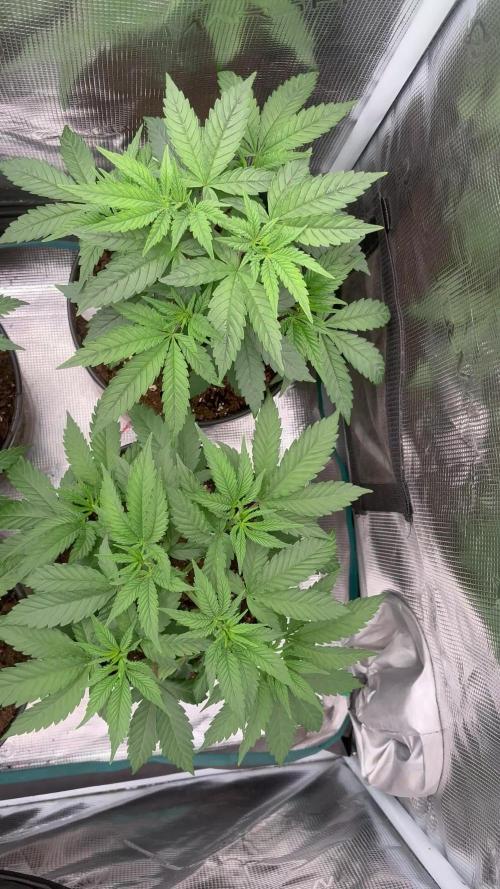
It’s day 33’from seed. All of the plants are really healthy. The plants have a really great root system at this point… I am currently slowly moving the light intensity up to the veg area. Now that are in a groove they are about to explode… I’m hoping I can flip the plants to flower in 1 weeks but I’m thinking I will wait to weeks and let them get a little larger. The plants are just now starting to look visually different next weeks update I will be ababoe to go into the visual differences, they are just not that extreme yet to really talk to much about.
Likes
35
Share


@organically
Follow
Week 5 - Day 4 - 11.12.2017
-
Hay lovers of Green, i will give you a big update.
While trying to fix the PH and Humidity issues last week, i've already found some nice root developments and decided to transplant to support the regeneration - 6.12.2017 -.
The Plants were unhealthy and shocked.
After 2 Days they started to reviltalize and stable - 08.12.2017 - and i found a suprise, the Dinamed's start to Preflower.
-
Today the sweetys are healthy,vital,bushy and got nice stems, in height arround 16 cm
-
■ Dinamex Auto. [Dinamex (Cali Sour D x OG Kush {Emerald OG}) x Haze 2.0 Auto (Jack Herer x Haze Automatic) ]
■ OG Kush Auto. CBD [ OG Kush Auto {OG Kush x Haze 2.0 Autoflowering} x Auto CBD ]
-
■ Timeline ■
Germination start [ 09.11.2017 - 17:00]
Germinated / into Coir Pellets [ am - 11.11.2017 / ]
PreVegetative start [ 13.11.2017 ]
Transplanted into 1L Airpots [ 19.11.2017 ]
Vegetative start [ 26.11.2017 ]
Transplanted into 7L TeKu [ 06.12.2017 ]
-
PreFlowering start [ Dinamex - 08.12.2017 // ]
-
Flowering start [ xx.xx.xxxx ]
Harvesting Part 1 [ xx.xx.xxxx ]
Harvesting Part 2 [ xx.xx.xxxx ]
-
■ Growroom ■
Size » 90x90x170 ~ 0,8 m²
-
PreVegetative Lightning
» 24 ▪️ LED ~ 33W - daylight - 3700lm
Vegetative Lightning
» 24 - 20/4 ▪️ HID ~ 250W - 5600K - 18.000lm
Flowering Lightning
» 12/12 ▪️ HID ~ 400W - 2100K - 56.500lm
-
Supply air ▪️ mesh window - negative pressure
Exhaust air fan ~ max.420m³/h ]
Circulating air fans ~ 3x16W max.2250 rpm
-
Pots ▪️ Coir Pellets --> 1 L Airpots --> 7 Liter TeKu.
Medium ▪️ Organic Soils!
Composition ▪️ bark humus,wood fibers,coconut fibers,coconut husks,compost,guano,hornmeal,clay minerals,trace elements,calcium carbonate,perlite.
-
■ Supported by ■
» Dinafem Seeds!
» Cellmax - Organic Growing.
//////////////////////////////////////////////////////////////////
👋 Greetings your organically
» tried and true, since simple is the best! 👍

Likes
23
Share


@adam_pawloski87
Follow
This has been another great week ! We are at day 36 end of week 4 and these ladies are getting nice and bushy! Still using the same dose nutrients just a little less rapid start at 1/2tsp per gal now PH at 6.5 still. The plants have now grown into 600 par an should start flowering this week!! Can’t wait to see what these ladies do this week😍😍 Stay Tuned Cheers an Happy HALLOWEEN 🎃 👻🔪
Likes
13
Share


@CannaIGrow
Follow
Bruce Banner fed on 7/31/22 with 1 gallon. Ph of run off before feeding was 6.8, 715 ppm and 1.5 ec. Fed Bruce with 5 ml cal-mag+, 1.5 tsp of flora nova bloom, 3 ml amino acids, 6 ml fish shit, 1/2 tsp of great white. When mixed together it had 5.7ph, 894ppm and 1.8ec. Runoff contained 6.4ph, 815ppm and 1.7 ec.
I think I'm doing this right but idk. Maybe someone who understands tds better can explain to me what the difference between the numbers going in and coming out mean.
To me the plant looks like I need to defoilate it more or just try to tuck leaves. I removed a few today, like less than 5. If yall think I need to remove more leaves please let me know.
If you see anything or have any pointers please let me know!
Thanks for checking out my grow!


