Likes
Comments
Share
Plant started drooping in the last couple of days. I'm not completely sure but think it's probably from over watering so I'll keep an eye on it over the next few days. Gave the plant another big defoliation and took off all the small stuff that I don't think will become decent buds. Going away for nine days next week so I'm trying to get the water right. UPDATE: left the plant for 24 hrs and it continued to droop. Definitely under watering. Gave it 3 l litres and it's looking normal now.
Likes
42
Share
Tried some new growing techniques, which may have resulted in lower yield compared to my last grow, but I also think the strain just yields a bit less. Overall easy to grow, didn't have to do too much and got a decent amount of good looking buds
Likes
93
Share
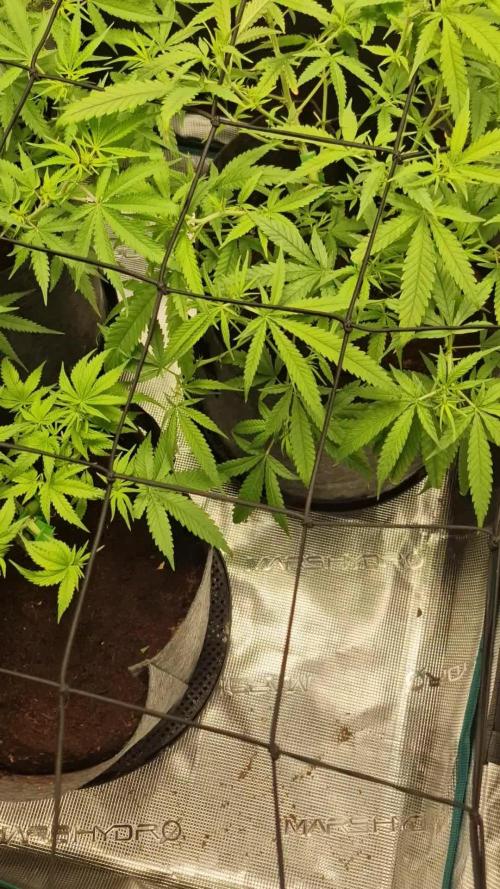
Este seguimiento es posible gracias a la colaboracion de Anesia Seeds, MarshHydro y 420DeepGrow. 💡El Mars Hydro TS 3000 es lámpara de cultivo LED más grande de la serie TS, ofrece suficiente cobertura para un área de 4 × 4 pies con un precio asequible y rendimientos de calidad; a cambio, puede aplicarse tanto al cultivo doméstico como al cultivo comercial. Puedes comprarlo aqui: https://marshydro.eu/products/mars-hydro-ts-3000-led-grow-light/ La Vanilla Frosting es la más destacada de todas las variedades de Gelato 🍦 de los últimos años y tiene un crecimiento extraordinariamente fuerte y resistente 💪. Las flores se vuelven densas y brillan 💎plateadas debido a su gruesa capa de resina. Algunos fenotipos adquieren un hermoso brillo púrpura durante la floración. El aroma de Vanilla Frosting es abrumadoramente delicioso y tiene una clara nota de vainilla con aromas dulces que recuerdan a los caramelos. No querrás dejar de fumarla. Sin embargo, debes tener cuidado porque esta cepa es muy potente y puede catapultarte fácilmente a un viaje de aventura al espacio. No podrás volver de esto pronto. Las plantas de esta variedad forman flores largas, grandes y pesadas que se ahogan en resina y brillan como cristales de hielo. Al increíblemente dulce y delicioso sabor a vainilla le sigue un subidón de combustible, impulsado, entre otras cosas, por un estimulante contenido de THC de hasta el 29%. Consigue aquí tus semillas 🌻🚀: https://anesiaseeds.com/es/product/vanilla-frosting/ 📆 Semana 8: Continuamos con la etapa de engorde, esto va que vuela 😍, la resina esta muy presente ❄️ , el cogollo central es impresionante Esta semana seguira el TS-3000 de MarshHydro al 100% y 30cm de distancia. Se estan desarrollando mejor que nunca, con una floracion mucho mas rapida, noto una gran mejoria gracias al Marshydro TS-3000. Se que va bien de nutrientes, ya aclarando Continuo con defoliaciones Aplico una solución con nutrientes EC 1500 y otra con agua del grifo reposada y PH 6.6
Likes
20
Share
We are all finished! 79 days from seed, 11 weeks !
Likes
2
Share
@Piro420
Follow
Very happy better then the medical dispensary version i got the seed from it made it threw to my grinder and turned out female :D
Processing
Likes
6
Share
growing happily along, platinum yeti stretching more then sour 76. defoliate day 21 . smell starting to come on, stopped using foliar feed this week, been on top of hitting compost teas every single off watering (1 feed heavy 16 nutes, 1 compost tea when coco dries. repeat).
Likes
47
Share
@BloodBath
Follow
Just checking trichomes at this point. Only feeding water for remaining time left before she gets chopped, dried, and cured. One more month and she will be tasty af.
Likes
31
Share
I think she's suffering from some light burn from my LED's, take a look at the pics of the top bud sites. I completely rearranged my tent and got the LED on her side up as far as it can go. I hope that helps. The buds themselves look completely fine but the sugar leaves are turning dark purple and yellow. This is only happening on the upper most bud sites. Any other feedback suggestions are welcome. Please comment away.🙏 I got some Fox Farms Organic Big Bloom this week and added it with Recharge in this weeks feeding. Looking forward to seeing the results. Feb 5, 2018 update: Raised the LED light even more and removed most of the damaged leaves.
Likes
10
Share
Hello everyone! Mimosa X Orange Punch is doing amazing she loves the environment I have set up for her. Might have to top dress with some power bloom soon as they are growing quite big and I have been very sparse in giving them to much nutes as I really didn’t want to give them nitrogen toxicity. Thinking about another 2 weeks in veg to really fill the tent out. I have tied down a lot of the branches to the trellis net to maximize the area, once they are where I want them I will untie them. Until next time growmies hope all your harvest are blessed with abundance of dank. ✌️ 07/24/23
Likes
2
Share
"You will know them by their fruits" 46-47 days from germination, she fills the canopy herself, and the apical dominance is broken. It's not all about the amount of light, but the ratio too, as this will dictate growth through the ratio of phytohormones. In order for correct bud development, there needs to be a correct ratio of RGB. Different wavelengths have different penetration depths. When one grows using top-down lighting, only the entire canopy is limited to 2-3 layers of leaf, meaning there will only be correct bud development in those layers, regardless of getting 45DLI. The biomass potential of a plant is linked to root mass. Generally, when a plant reaches its maximum biomass, you can help to chop off parts of the plant that are in less than efficient areas of the plant (low light). So that it can create new biomass growing towards the light. Strength is the maximum potential, and power is the rate of conversion. You can have the biggest veg period of 18 weeks, and it means nothing, as soon as you start flower, the chronological clock starts ticking, the only metric that matters to bud size is how much energy you convert each cycle, not by how long it took you to build the framework. Each leaf is like a satellite receiver attached to an antenna called a stem; each leaf removed lowers the energetic potential of conversion. Not saying you cannot defoliate for a reason, only that you should have one, and at the right time. Don't defoliate 30+% on autoflowers or 4 weeks into the flower period and expect an increase in yields; it doesn't work like that. There is certainly room for dictating growth patterns and clearing out overcrowded nodes, but it needs to be done in veg because once that timer starts and buds start growing, it's all just energy conversion. Most grows I barely defoliate at all in a 4x4 because with side lighting, turning a 2d canopy penetration into a 3d, even lower buds are 90% the quality and density of top ones. The rate of photosynthesis and the ultimate density of lower buds aren't just about the sheer number of photons PPFD. The specific ratio of R:G:B dictates canopy penetration and drives different photochemical reactions. The Electron Transport Rate (ETR) measures the speed at which electrons are driven through Photosystem II (PSII) during photosynthesis. The ratio of Red, Green, and Blue (RGB) light heavily dictates this rate. Plant leaves continuously perform cellular respiration regardless of the time of day, using energy and oxygen to fuel essential metabolic maintenance. If you over-defoliate, the remaining canopy may be unable to produce enough net sugars during the day to offset the constant respiratory demands of the plant. Must balance fixation with assimilation; there's no point in capturing 45 DLI if you only convert 20% every cycle due to an extreme lack of respiratory capacity to perform cellular oxidative phosphorylation. A crinkle-cut French fry has more surface area. When it cooks, it has a higher capacity for energy transfer/conversion, which is what makes it slightly crispier than a regular straight-cut French fry when it comes out of the oven. You can have a 4x4 canopy or a 4x4x4 canopy. Oversimplified, but you get the idea, yes, we know that side lights are not as effective at absorption from the sides or underneath, but it's not about DLI, it's never been just about efficiency, it's about the penetration ratios of RGB that drive ETR of/photosynthesis and trigger correct bud development. The size of each bud is its own ability to perform the ETR required for its own personal growth, and bud development is dictated by the ratio of RGB. It drives localized growth and acts as a regulatory switch for that development. Turgor pressure is another very important factor in understanding if you want big buds, for it is the "steam engine" that dictates the rate of bud expansion. Simply, never going to happen playing it safe metabolically at ambient 75F. Because buds have less chlorophyll, they do not suffer from the same photosynthetic shutdown that over-exposed, light-stressed leaves do. They can soak up direct light energy to swell in density and size. Their tolerance to intense light is heavily limited by the temperature and humidity, but if you can control those temps and keep the rot away, buds have a much, much higher tolerance to high light than leaves. Beneficial to hammer with high light before trichomes appear. Balancing this with trichome maturity is key for rich terpene and flavonoid profiles, want it just right, somewhere in the middle, not too much, not too little. Find cannabis plants can defoliate themselves come harvest, given the right signals. Every last ounce of potential is recycled into buds by the plant itself (senseceance), given you can keep the level of conversion high enough to prompt a need to do so. Get the canopy @ optimal PPFD range, 45-55DLI, then let the plant "stretch" the stems into a "PPFD range much higher, one that leaves don't like to grow in, but buds thrive in. What is optimal for a bud is different than what is optimal for a leaf photosynthetically. Genes provide the blueprint, but the environment dictates how, when, and if those genes are expressed. Must first signal the condition to increase the expression you want to exist through stress and response, cause and effect. A well-buffered CEC medium prevents extreme nutrient swings, allowing plants to maximize their dedicated genetic expression. A plant is either genetically expressing "growing" or "recycling" genes based on its nutrient starvation level in the medium. Constantly toggling between "growing" and "recycling" hormonal states creates a futile cycle that wastes valuable metabolic energy. Plants rely on sophisticated biochemical switches to manage this trade-off, and prevent rapid fluctuations that disrupt that balance. This energy inefficiency is a recognized biological challenge. Plants avoid this costly "flip-flopping" by using hierarchical master regulators (like the TOR and SnRK1 protein kinases) that act as strict molecular switches. These networks enforce cellular commitment to either growth or survival, preventing mixed signals. This is something that was missing from previous grows. Under nutrient-rich conditions, TOR promotes protein synthesis, cell division, and structural expansion. Under starvation, TOR is inhibited and SnRK1 is activated. This triggers autophagy—where the plant breaks down old macromolecules and organelles to scavenge and reallocate essential nutrients to critical sinks. "What's the point in flushing?" The core idea behind a PK booster is to deliver a massive, concentrated surge of P&K exactly when buds are swelling in conjunction with a N starvation. Because these are short, targeted windows, the nutrients must be highly bioavailable so the plant can process them immediately. As soon as you go "organic," that's out the window. Much slower release, uncontrolled, very difficult to "spike". to cause the ratio that will initiate a response. High-volume PK spikes rely strictly on the immediate uptake capabilities of mineral fertilisers. Making it far less efficient in organic/living soil setups. When you use organic nutrients, it changes the dynamic with which the plant delivers and trades its nutrients; organic is always releasing new nutrients into the immediate EC. This prevents a lot of autophagic responses from occurring due to a constant stream of new nutrients into the immediate medium's EC. This can prevent nutrient starvation signalling. PK boost is essentially just N starvation, triggering an autophagic response. Concentrated ratio of P&K while tapering off the Nitrogen base. To the plant, the sudden drop in Nitrogen registers as a severe environmental stressor—essentially, the beginning of starvation protocols. She aggressively strips nutrients and proteins from older leaves and vegetative structures and shuttles them directly to the developing flowers and fruit. Ta daaa. Call it a PK booster and sell it. Nothing to do with the P and K itself, it's the ratio immediately available in the medium triggering a nutrient recycling mechanism within the plant itself; all the "booster" sells is the trigger to the signal. Very difficult to initiate a response when organic nutes are doing their thing. It takes 4x5x more water significantly to leach or wash ammonia out than it does nitrates. This alone will prevent flushing from having its normal impact. I'll be manipulating the C:N ratio in the medium instead. One autophagic response has multiple potential signal triggers. Nutrient starvation is not an option. Well, it is, just it's going to be manipulated Nitrogen starvation through Excess Carbon, instead of starving the medium entirely(EC).
Likes
17
Share
@Roberts
Follow
Super Skunk is doing good. I had to hst her again today. I also did a solution change. She is ready to go for the final stretch. Thank you Spider Farmer, Athena, and Spliff Seeds. 🤜🏻🤛🏻🌱🌱🌱 Thank you grow diaries community for the 👇likes👇, follows, comments, and subscriptions on my YouTube channel👇. ❄️🌱🍻 Happy Growing 🌱🌱🌱 https://youtube.com/channel/UCAhN7yRzWLpcaRHhMIQ7X4g.
Likes
6
Share
@Comfrey
Follow
This is the last week. Every second evening I did an ice water flush. At day 90 she moved from the sunny balcony to the dark basement. I chose and bought a grow tent for me and my wife. So the winter we‘ll be growing our weed for the spring and summer. But actually I love to grow outdoors. Next outdoor season will be only in half a year. For me the arriving of the tent a few days ago gives me the possibility to dry without the smell in the house. Happy legal growing!
Likes
4
Share
Week is going good aside from me accidently cutting off a stem on pheno 2. If I can properly save the cutting though I might have a chance at another female. Pheno 3 I'm hoping can make some comeback as I really want to flower the plant, its not dead by any means but the way its growing I just cant see it allowing itself to flower the top leaves were barely growing so I topped. Hopefully positive changes within the next week.
Likes
Comments
Share
@BruWeed
Follow
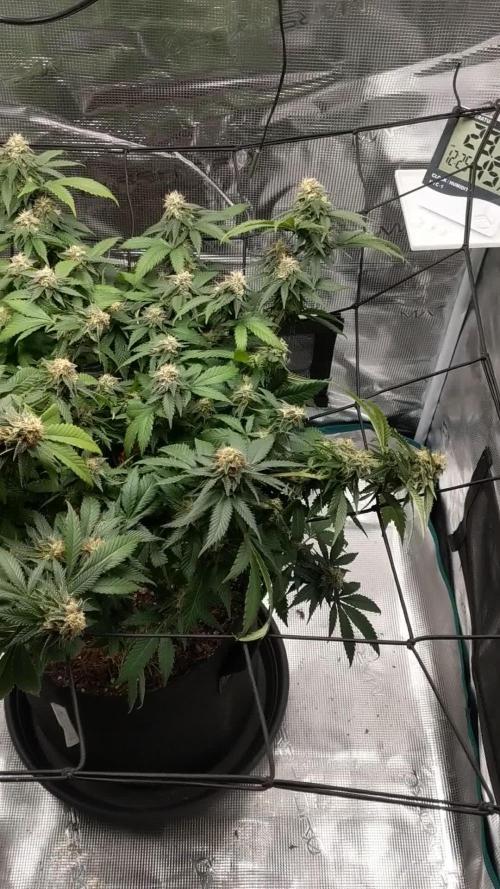
10/04 - Cumple tres semanas en etapa de crecimiento. Se encuentra perfecta, sus chalas estan impecalbles. Le realice la poda apical y en unos dias voy a realizar LST. Con lo que corte lo clone y lo puse en una maceta pequeña. Voy a dejarla en crecimiento 5 semanas asi se desarrolla bien. En estos dias estare publicando mas imagenes de como viene. 13/04 - Realice LST. Podes seguirme en Instagram @bruweed_arg
Likes
10
Share
Last couple of days before harvest. Plants were flushed last 2 weeks and showing a lot of yellowing, as planned. 48h of dark will be next thing to do now. Hulkberry looks like a sticky beast and orange sherbert smells and looks awesome too.
Likes
9
Share
Likes
29
Share
Sundae Driver- (Fruity Pebbles x Grape Pie) - The start of flower stage. .
Likes
9
Share
@PhatRobs
Follow
Huge growth after adding a new 1000w light! Responding very well to light and nutrients!