


Likes
Comments
Share

@Bread_n_Buds
Follow
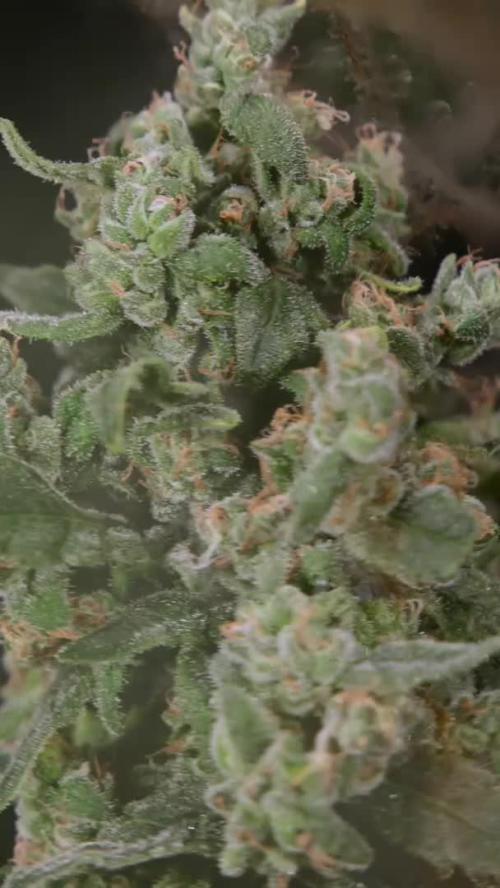
We loved this photoperiod Super Boof from Zamnesia right from the start.
This plant has developed an excellent cannabis body that has allowed it to give us beautiful flowers, with good density, a great scent, and excellent resin production, especially considering the hot periods it experienced.
Up until now, I haven't had the chance to control the temperatures with air conditioning, but I'll soon be able to do so at the new location, and everything will be even more precise. However, finding an ideal spot and making as few adjustments as possible remains the ideal solution. I love hillside locations; at most, you need to cool them a little in the summer and heat them a little in the winter, for sure. In any case, we're gearing up for full control; I'm still a home grower like everyone else.
Our plant has given us good trichome maturation, mostly milky/cloudy, just as I like it, with some amber and still a bit of clear stuff.
Always cultivated from start to finish with Plagron fertilizers in the 100% organic version, soil included.
Leafy's Strain of the Year ---- // https://www.zamnesia.io/en/13317-zamnesia-super-boof-seeds.html
Zamnesia Quick Facts // Here's your chance to grow one of the most sought-after strains of recent years: Super Boof, rightfully crowned Leafy's Strain of the Year 2024. Derived from Black Cherry Punch and Tropicana Cookies, this 70% indica-dominant hybrid takes the already exceptional traits of its predecessors to new heights. Grow it at home to find out for yourself.
The whole world of growing and more is at Zamnesia - just take a look around the site and you'll find "nature's best" in all shapes and colors.
New strains are awesome and old ones are no exception...
-- // www.zamnesia.com

Likes
2
Share


@BucketHathead
Follow
1/23/23
Well everything’s in flower now so I’m changing the journal to flower in the perpetual garden. Added humidifier.
I top dressed everything w buildasoil top dress and build a bloom. Watering everything w the Q watering agent as well. It’s all taking off beautifully.
I tossed a buncha lady bugs in there to help w the thrips. Also got spinosad but not sure if I can use it now with the lady bugs. We’ll see how it goes this week.
Mandarin cookie
Doing well, bushing out and up more. Stopped lst bc it’s getting very bushy and I need to defoliate. But waiting until there’s more stretch bc it’s a small little bush and I don’t want to take away too many fan leaves bc they have thrips. Would rather allow for more light to be absorbed.
Head knock
Looking like the best one after it was the safest! So much flower so many trichs. Fan leaves are all sorts of colors. It’s really poppin off. I defóliate da but so the lower flowers could pop through and they’re really colorful. I’d grow this guy again for sure. Might actually see it there are anymore clones avail.
Headknock 2
We got big in veg. Defoliated a bit and got it to a great place before moving to flower tent. But ultimately I’m ready to flip it even if it’s kinda smaller than I’d want. Probably need a stronger light in veg tent to keep them up to par when moving to flower. Pre bloomed and moved to flower. Haven’t seen any trichs but it’s only been in flower since Sunday.
Secret scone
Finally looking like it’s supposed to with happy buds and flowers coming along. Thrips really. Did some damage to this guy and he went thru it with all the mishaps since September. Finally looking good.
Sabowaka
Tepremental little bitch. Starting to show trichs. Gave it too much water and it was sitting next to humidifier tube so old growth was not looking too hot. Cutting back in water bc he wonders drink fast enough. As
Barnyard apples
Got massive in veg just like headknock. Really happy with it and can’t wait to see how it flowers over the next month.
Likes
2
Share


@DrBud420
Follow
Today they got a flawless finish for the second time since the last update, the weather should be like this until the end of the month, without rain, that's what I hope for, so we'll see...
all in all, the girls are close, it's time to finish this season, I hope for good weather for at least another 10 days and then I can finish this seasom😁

Likes
10
Share


@Paul_on
Follow
Still putting on girth(weight) I can honestly say this is a powerhouse of a plant fattening as quick as big autos ,I will grow it again and FIM it, it's a strain that's very forgiving, and doing great in organic soil,all mix with @Biotabs and @Ecotrive's Biosys and some @Plagron naturals,and minerals, and just water when needed.
Thanks for your support 🙏

Likes
24
Share


@Dr_Sampson
Follow
Day 8- CRX Sunny X-5 is failing. Time for a new flowering LED. Thinking either the Viparspectra 1200w or the Mars Reflector 192 but open to suggestions for a 4x4 canopy.
Day 9- more leaf tucking in the net. Decided to go with two smaller lights(Mars ECO98’s) rather than 1 big one as there’s nothing in the middle to utilize the primaryily lit area of a bigger light. Hopefully they arrive tomorrow.
Day 10- Everyone happy and flowering. Topped up res with H2O. Anxiously awaiting new lighting
Day11 - New lights arrived and installed. More leaf tucking. All plants are actively flowering now
Day13- more tucking. Buds are beginning to stack up and seem to be liking the new lights.
Day 14- more leaf tuck and H2O topup. Next week lower N. Raise PK and will likely add some RAW amino acids, and biogenic silica. Possibly some vitamin B.


Likes
52
Share


@Rangaku
Follow
Perfect conditions this week , a touch too wet as some perlite is turning green but I’m repotting in a week so shouldn’t be an issue . Keeping heat mat on in off cycle to maintain temps and humidity. These girls are off to a flyer

Likes
4
Share


Likes
44
Share


@hinterhofgrower
Follow
🌱: the mild deficiency symptoms grow out slowly, Trichomes are developping
💧 : 2l, 10l SIP
💡 : Dli: 45 mol/m²/d,
🤔:


Likes
3
Share

@AestheticGenetix
Follow
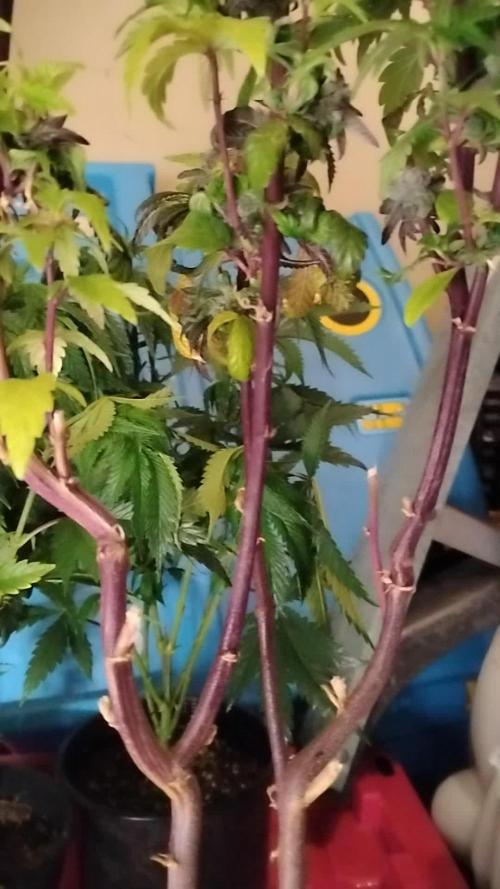
Coming along nicely. It's cool to see that different plants have different styles of revegging. This one is super clustered and comes straight out of the buds. Check out my Acai gelato reveg, it has like full ass branches coming out and looks more nice and neat than this one.
I gave her a top dress of terp teas grow 711 and Dr earth 463
Likes
13
Share


@Naujas
Follow
77 days, for some reason, the girl is growing without me, I see that she lacks water, I water her every other day, but she needs more, I will come back to her next week, good luck to everyone :)
Likes
19
Share


@EmeraldLakeCannabis
Follow
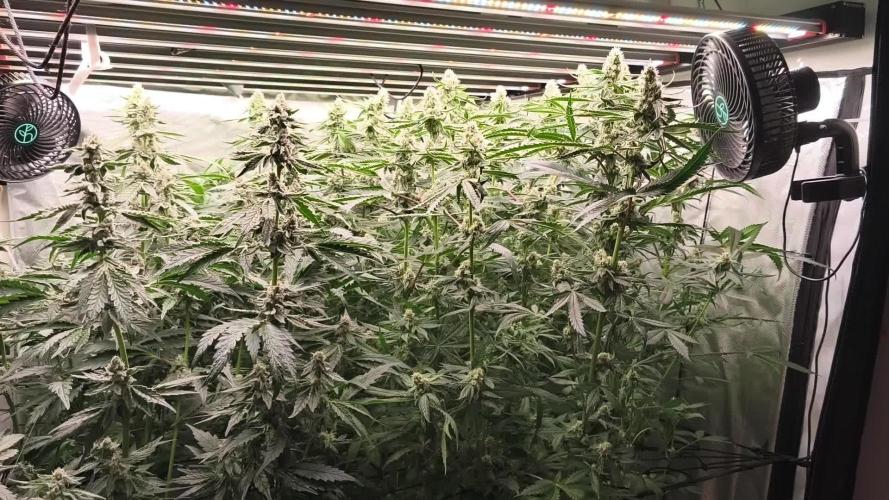
Was another pretty good week in the books both in and out of the tent. More and more branches are being weighted down by colas, and had to be tied up. UKBS 1 continues to frost up like a winter morning. I'm doing my best to keep airflow moving in the tent, mainly in and around UKBS 1 as it's the denser of the two. Carl 1 was having a little bit of an issue but I believe it's been mostly resolved as of now as I've given it a pure watering in between the latest feedings.
Outside (inside, most of the time. haha) The plants are doing quite well, save for the high winds that magically spring up whenever they go outside. At this point I'm basically forced to purchase a greenhouse or something of that sort so they don't blow away completely.
Timelapse is out for the week, as per usual. EOS Rebel T5 shots will probably come tomorrow or the next day.
-6/18/2021 - Keep fuckin' up the watering schedule. Carl 1 is not pleased. These kinds of whoopsies shouldn't be happening in flower, especially not this late. Gotta get on top of things. - In other news, took some shots with the EOS Rebel T5. Hope you'll enjoy.
-6/23/2021 - Built a greenhouse kinda thing. Should keep the wind off the plants well enough while allowing a wee bit for airflow. Hoping all goes well.


Likes
13
Share


@DaisyNabis
Follow
cada dia mas glotonas mis bellas, estoy aplicando riego casi día por medio, solo una vez a la semana las abono, el resto solo con agua. hice algunos amarres a los tutores ya que están en pleno crecimiento

Likes
21
Share


@DeeDeeKushner
Follow
Day 19 of flower, I went ahead and lollipoped both girls. This will be my last time defoliating that heavy. As the days go by, I will defoliating here and there. They’re growing strong and healthy as well. 51 days until I harvest. I can’t wait!
Catch yall on the next update ✌️🏾


Likes
24
Share


@Lycheegrow
Follow
This week went a lot better than last, although still not optimal. After last week's transplant they all did well, as you can see in the time lapse. They do all have one or more deformed leaves and a slight calcium deficiency but look otherwise healthy. Increased base water (RO+calmag) EC from 0.3 to 0.4, feeding 0.7EC in total.
At the end of the week, the root systems looked very well developed and I transplanted them into their final 5L pots. Decent so far.
Processing
Likes
14
Share


@SunshineBud
Follow
So, this is my first grow, just starting out. After NJ passed recreational weed, I was like you know what... Went on an amazon spending spree and got some seeds from cropkingseeds and this is it!
I let the seeds soak for 18hr in deer park spring water w/ 1 drop of Organic Liquid Seaweed and Kelp Fertilizer Supplement by Bloom City.
At the end of soakage, it didn't look like any had cracked maybe one did not so sure. So I did up the papertowels according to the video and have to say I feel a little nervous/anxious that there is too much water/weight on the seeds and feer drownage. I'm going to keep it on there though. I check the towels a few times throughout the day and am surprised they're very moist throughout the day and next morning still somewhat damp.
24 hours in the towels I check my babies and one had cracked but the rest were still sealed up tight, unwilling to share the goodness that we all so desire, cmon babies crack that shell for papa!
11/12 looked like 1 seed popped, yay! I remoistened towels a bit but didn't wanna soak them. I also put some rapid rooters in water to soak overnight gunna throw the seeds in them in AM... I was going to do it tonight but figured I should wait see if some pop out more.
11/13 OMG upon checking seeds at 07:10 I found the papertowels like bone dry OMG WTF!!! Panic sets in but I just set up the little terrarium with 6 plugs and put the seeds in and tore some plugs off bottom of a plug to cover seedhole with.
11/14 Got a sprout! YES!! The plugs look nice and moist just going to let it go!
11/15 Woke up this mornin, saw a new sprout peeking thru and then another about to! I got ansy and took off the little top plugs and found all the sprouts were coming up! Leaving the top plug off, hopefully thats not a bad idea.

Likes
6
Share


@emeraldlabs
Follow
Noticed some leaf discoloration on one plant this week. Assumed a deficiency of some sort. Now doing 1/2 strength fox farm trio with a tsp of calmag. Also been watering with a higher pH as runoff was noticeably low previous watering.
Night humidity is a lil higher than I’d like but the airflow is great.
All in all, everything seems good at the moment.
Photos/video are day 64 since breaking the soil (except leaf deficiency pictures).

Likes
11
Share


@Neo4422
Follow
Day 86
A life cycle is about to reach an end. Knowing that i am the one whos gonna chop and blaze her up is kinda sad or maybe because Im high.
It is wht it is though. It is just time
Day 91
The photo girls still developing. Seems like they are gonna be ready in weeks. The top colas seem less frosty compared to the lower buds though.

Likes
8
Share

@CalGonJim
Follow
3/16 324AM PRETTY GOOD
⚡️ 3/16 2:41PM nside the Genetics: How Ice-T & Montel’s Strain Was Born
Seedsman Seeds https://www.youtube.com/watch?v=q5eMAVat60M
3/19 330AM 👨🔬⚡️**Adding L-Proline (the amino acid supplement growers use) to plants on soft water can provide some helpful support against the stresses you're dealing with, but it's not a full fix—think of it as a stress-buffer rather than a mineral replacement.**
Soft water (low in calcium and magnesium) often triggers **Ca/Mg deficiencies** in bloom stage (especially with Cha Ching or MaxiBloom, which don't supply much Ca/Mg on their own). This leads to issues like tip burn, leaf curl, weak cell walls, nutrient lockouts, oxidative damage (ROS buildup), and overall plant stress that feels like "the plant is struggling to hold it together." Proline steps in here as an **osmoprotectant**—it's one of the compounds plants naturally ramp up under stress.
### What Proline Actually Does in This Situation
- **Helps with osmotic/water balance** — Soft water can disrupt turgor pressure and water movement inside cells (similar to mild drought or salinity stress). Proline stabilizes cell membranes and helps the plant retain water better, reducing wilting or limpness.
- **Reduces oxidative stress** — Ca/Mg shortages cause free radical damage. Proline acts as an antioxidant and protects proteins/enzymes, so deficiency symptoms (yellowing, spotting, slowed bud development) don't spiral as fast.
- **Improves overall resilience** — In cannabis and general hydro/soil grows, L-proline (or full amino acid mixes containing it) has been shown to boost stress tolerance, speed recovery, and even support better nutrient uptake indirectly. Studies and grower reports note it helps under nutrient imbalance, drought-like conditions, and environmental swings—exactly the secondary stresses soft water creates.
- **Bloom-stage bonus** — Since you're already in late flower with Cha Ching/MaxiBloom, proline can support resin/terpene production and bud density without pushing excessive veg growth.
It won't magically add the missing Ca or Mg (those are still critical—soft water + high-P bloom nutes often screams for CalMag), but it can make the plant more tolerant while you correct the root issue.
### How Much Effect to Expect Right Now
- **Positive but moderate** — Many hydro/RO growers add amino acids (including proline) specifically for soft water setups and report less burn, better leaf health, and stronger finishes. It won't turn a severe deficiency around overnight, but it can slow the damage and give your plants a fighting chance in the final weeks.
- **No downside at proper doses** — It's very safe and plants use it quickly.
### How to Add It (Practical Dosing)
- **Source**: Pure L-Proline powder (available cheap online—make sure it's the plant-grade L-form, not human supplements).
- **Root feed** (with your Cha Ching/MaxiBloom): Start at 0.5–1 g per gallon (about 100–200 ppm). Mix into your res or feed water once a week. pH as normal.
- **Foliar spray** (often more effective for quick stress relief): 0.25–0.5 g per gallon + a drop of surfactant. Spray lightly every 5–7 days in the dark period.
- **With your current nutes**: Yes, it layers fine—reduce if you see any tip burn. Many run it alongside MaxiBloom + Cha Ching in soft water without issues.
- **Best timing**: Now through harvest is perfect, especially if you're noticing stress signs already.
**Real talk**: The biggest win will still come from adding a proper CalMag supplement (like Botanicare or General Hydro's) at 0.5–1 ml/gal or whatever your PPM tests call for. Proline + CalMag together is a strong combo for soft water grows. If you're running pure RO/soft, most experienced growers treat this as standard.
3/19 445am BKO Blueberry KnockOut!! (Gelato 44 by RQS & Bubbles Blueberry F4 by Grimm Brothers Seeds) my own creation!!👨🔬
A spoonful of butter helps the sugar go down, Im helping.
3/19 10:42PM mmm butter and sugar are just a few ingredients shy of cookie dough, good enough.
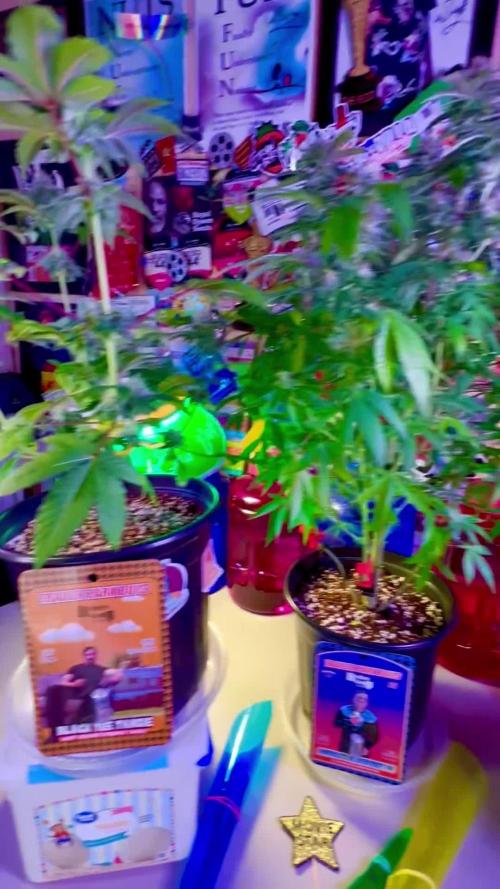
Now ICE-T BODYCOUNT Grows efficiently in a one gallon with very little effort No real LST, lower than normal lighting, so cheaper to grow. MONTEL: growing great in such a small container!! Should have topped, she is tall. Colors are coming in now, very strong also growing great at low watt so very efficient as well!!!
3/21 1:38PM https://www.stonedgenie.com/collections/cool-bongs?&sort_by=price-descending This hits like a hand pipe, the chambers are just the right size its just the best..I put on a silicone funnel I tore apart for a dental guard. dont smoke from metal or glass directly.

