


Likes
Comments
Share


@GermanGrow182
Follow
Es läuft prächtig. Die Photos sind auf Geländerhöhe, also über 80cm. Der 80 Liter kübel: um die Kronen zu öffnen, hab ich die je 2 Haupttriebe von fat Banana nach außen gebogen und an stöcken fixiert. Die Lemon skunk wurde schon durch LST an den Rand des Kübels gebracht.
Larry ist auf gleicher Höhe gewesen und wurde genauso behandelt. Die ak bildet 6 Gleichhohe Haupttriebe und 4 untere Seitentriebe, wird schön buschig.auch hier wird demnächst die Krone geöffnet.
Die Photos wachsen so gut, dass ich bald das 3. Und somit letzte Mal toppen kann.
Die automatics:
Die 3 Apple fritter Auto bilden dicke blüten und haben angefangen, stark zu riechen. Die kleinste (28cm) hat den dicksten mainbud und wirkt insgesamt sehr gedrungen. Wohl, wegen dem schlechten Wetter am Anfang der Vegetationsphase wuchs sie nur langsam. Die zwei anderen sind 59 und 63cm und wurden mit LST gut zum verzweigen gebracht.
Die 4 fat banana Auto kommen gut in Schwung, aber haben noch nicht die Blütenmasse, die ich erwarte. Geruch wird langsam stärker.
Die tropicana Cookies purple Auto haben alle 3 eine schöne Struktur entwickelt und bei 2 von 3 schon dicke blüten hervorgebracht. Eine scheint ein anderer pheno zu sein, der in diesem Stadium relativ kleine buds zeigt. Mittelstarker Geruch, etwas fruchtiges bemerkt man schon.
Wetter ist gerade wechselhaft, soll aber sonniger werden in den nächsten Tagen. Wir werden sehen.
Es läuft ziemlich gut 👍 bis nächste Woche ✌️

Likes
10
Share


@Rabidreject
Follow
Nothing has realy happened since I cropped the royal cream....It is just hanging. Decided to do a dry trim so that it takes longer to dry due to the fact I am having to just use my cupboard so the humidity is pretty low. Leaving the leaves on just means It takes longer to dry.
I am going to crop the Easy Bud in the next few days when the mood takes me.
I had 4 left over R. Cream seeds left over because I informed them that. bought 2x 3 packs and only 2 seeds germinated so they sent me another packet which is REALLY good of them and the sort of thing that means I would definitely use Royal Queen Seeds again, for sure!
The trich's are basically all cloudy with a few clear. I cant see any amber but my loupe is a ridiculously cheap Chinese piece of crap. I will invest in a microscope camera so I can hook it up to my phone or MacBook. It is way too hard to keep everything steady In order to see what is popping with my sexy trichomes.
Obviously feeding has stopped for about a week now. I forgot to change it In the diary last week so will try and correct that now..
I know it is not strictly relevant but I had to go somewhere earlier and took a video because I was able o walk in the middle of a main road in my town which Is usually packed full of cars, especially at the time I was walking on it. It is a time that makes me even more glad I grow my own. I really need to buy the bigger tent, lights and re-locate to the bigger, more subtle cupboard (not the one i am using to dry my weed in the video I posted) and then I will be able to effectively ScrOG the 2 or 3 plants I have, in order to maximise yield so I can be totally self sufficient with regards to my cannabis medicine.
UPDATE - MONDAY
I just realised I have made a proper idiots mistake an missed out on some much tastier buds because of it. OK, so I got paid today, so I though I would treat myself to some of them cheap COB chips I used for my last grow because hey were super cheap and actually really effective considering the price. I ordered 2x 100w 6000k veg spectrum chips with a solderless connection for my power. I also ordered one of these heatsink + reflector. https://www.amazon.co.uk/gp/product/B01MT824NP/ref=ppx_yo_dt_b_asin_title_o01_s00?ie=UTF8&psc=1
My thinking was that I have a spare heatsink here that the old citizen CLU-048 is attached to so I was going to fit one of the chips into that and the other into the heatsink and fan I bought. This hought process lead me to go ad retrieve the old citizen LED and I thought I would try it. Still didn't work, then suddenly I thought it could be a simple blown fuse so I changed it aaaannnnd.....still doesn't work. doh!
I started to remove the COB holder and COB from the heatsink (it was just glued to it using thermal compound) and when I laid it on the table I decided to test the driver without the COB holder on the tiny off chance it might work...nope
I then realised maybe I got the + and - the wrong way round, tried again and boom works perfectly. The connection from the holder to the cob had bent slightly off contact.
Really annoying that this whole time I could have doubled my photons to the plant, however, really nice that I don't have to spend a load more money on lighting in order to upgrade into the new room.
So all I have to do now is spend money on a pre-drilled heatsink and a new metal COB holder for the citizen.
Likes
15
Share


@Mosquito_Haarlem
Follow
De koningin is vandaag 21 september geoogst en in zijn geheel opgehangen in de tent.
Als de toppen droog zijn zal ik de uitkomst delen.
Beste Weedseedsexpress,
Ik wil jullie graag hartelijk bedanken voor de kans om de Permanent Marker Autoflower te mogen kweken.
Vanaf het begin groeide de plant krachtig en gezond, en de toppen die ze produceerd zijn werkelijk indrukwekkend. Ze werden zelfs zo zwaar dat ik extra ondersteuning moest bieden om de takken overeind te houden – een luxeprobleem waar ik als kweker heel blij van word.
Ik ben meer dan tevreden met het eindresultaat en kan niet wachten om deze strain in de toekomst opnieuw te kweken.
Nogmaals dank voor jullie geweldige service en kwaliteitszaden. Ik kijk ernaar uit om meer van jullie aanbod te ontdekken!
❤️

Likes
5
Share


Likes
6
Share


@Rinna
Follow
This was a wild ride. Gave way to many nutrients and I realised this way too late, when lock-ups already started to happen. The buds still look very potent, I just think they had way more in em size/potency wise if the nutrients would've been on point. Not growing auto flowers indoor anymore, but I'll deffo be growing this one outdoors this year! The smell is out of this world, #1 smells like tropical fruit juice, #2 more of a candy-sweetness but definitely tropical. Can't wait for ya'll to grow this one!
Likes
45
Share


@Hologram
Follow
Bubatz is growing well, she is now starting to make pre-flowers, i can see some small pistels coming up..(i have given her 'flower'nutes yesterday)
But weather is still very unstable and now she is standing in their safehouse, to stay dry and comfy..
weather is gonna get better end of this week, they say, lets just hope for some sunshine now and then...
😇
But as you can see, she grows strong and doesnt seem to care
Its feels so nice in the safehouse when it rains.. 😎👌 i just want to 'set up shop' there when i visit them.. oh wait a moment!! I already have !!...😜👍
happy growing for all✊
*** KISS! Growtechnique: KeepItSimple, Stupid!
PS i also sprayed her with a mix of neemoil (8ml) , detergent(2'squeezes) and luke warm water. last week.bc there are a lot of parasites running/flying/crawling around..

Likes
17
Share


@TreeFarmerCharlie
Follow
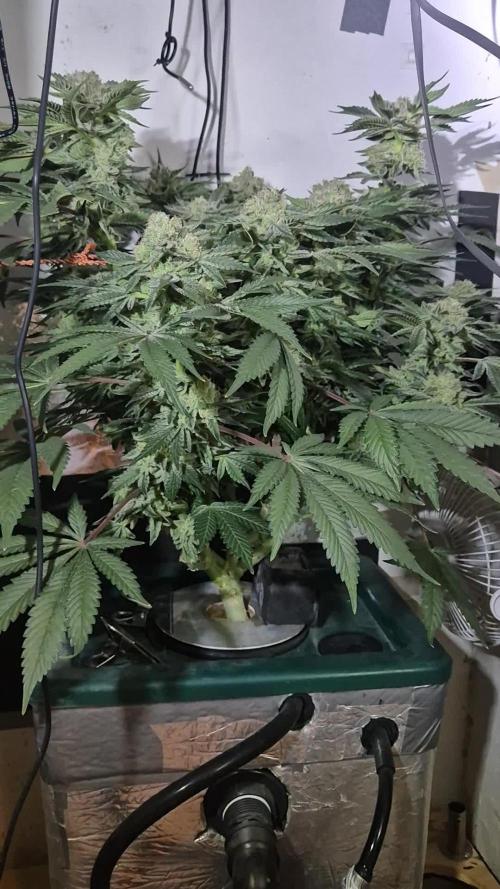
Day 42 of flower (day 93 since germination). No major changes over the last week. The growth has slowed down, and the buds are fattening up. Each plant was was fed 700mL compost tea, today, that was brewed for 24 hours.
Likes
6
Share

@Janerussel
Follow
Flowering week 8.
Flower developing was quite slow because i had too low humidity too early. Now humidity should be ok. Ph 6.0 & ec lovered to 1.60. Plant started to drink heavily on fd 52.

Likes
46
Share


@KingSalomonsWeed
Follow
Day 106 Flower 64.
17.03.
Hallo Leute.
Hat die an Glitzer zugelegt. 😍
Plus weiterhin Gewicht Zunahme.
Und Volumen.
Der Kohlgeruch ist komplett weg. Es bleibt ein Geruch nach heißem Plastik.
+ 3 Wirklich 3 Gerüche, die ich als Großmeister noch nie gerochen habe.
+ Weed.
PLANET SUHH. Dort ist der Geruch wohlbekannt.
PLANET ERDE. Der Grower ( mich) staunt.
Der Rauch steht noch aus, aber wow.
Sowas von, ja krankhaften ( nicht aufzuhalten, Manisch, enervierend ) WACHSTUM.
Erst pumpen sich Knospen auf, dann werden sie hart, und danach pumpen sie in gleicher Weise weiter.
Also habe ich harte geile Knospen mit bis zu 32 % Thc.
Ohh, das ist viel.
Sehr viel um genau zu sagen.
Hängt auch genug dran. Bin zufrieden.
In, wie nennt es ANESIA?
Psychedelisch.
Oh je.
Habe trotzdem Lust drauf.
Mein Gehirn schreit JAAAA.
Danke fürs liken lesen und alles.
19.03. Day 66 der blüte.
Schnick schnack schnock: DARKNESS für 3 Tage.
20.03 (Pferdewiehern) WIIIHIHIHHHIIII
Leute in meinen Zelt , sind gerade 2 Bomben am trocknen. Diese hier und ne Future 1. Explosive Mischung sage ich nur .
23.03. es ist vollbracht. Gecuttet. Aufgehängt.
Eine Testbund von unten wurde zerkleinert zum trocknen, konsumieren.
Selbst die Stämme waren Gummiartig klebrig.
25.03. Wie die Testbud war? ICH KANN MICH NICHT ERINNERN!😳
Ich habe den ganzen Abend davon geraucht. ... Sandelholz Zitrone Aroma.. das weiß ich noch... Aber Turn... Ähh tut mir leid, ich kann mich nicht erinnern..
😳😂
27.03. geil, ich kann's kaum Erwarten bis alles fertig ist.

Likes
6
Share


@CanadianFillmore
Follow
Week 8, the last feed! Defoliated to let more air flow and light penetrate down into the lowers of the plant. Bud's are insanely sticky, plant is covered in frost, the pics don't do it justice.

Likes
16
Share


@HagsGrowsDank
Follow
Starting week 4 by lowering scrog and bending some branches, slightly weaved the branches through anywhere they would fit. First time using a scrog net executed to see the results. Thinking next week will be last week of veg


Processing
Likes
5
Share


@Subbe
Follow
They are growing very well .
I trues top and lst on one og the plants. Just triumf to get a frem for it. Proberbly dosent make sens when the rest is not lst or topped. But had to try

Likes
24
Share


@m0use
Follow
***Sponsored Grow*** = Medic || https://medicgrow.com || Grow = ***Sponsored Grow***
Plants still looking good from last week, the yellowing has seemed to stop spreading, still some dull green in some leaves, I think I was under feeding them, but runoff says otherwise. Noticed some more pink/purple stems on the plants and decided to increase the phosphorus content in the feed by mixing in half grow and half bloom from the nutrient lineup. I'd use the PK booster I have but its to high in K for my liking. The entire lineup is very high in K. mixing grow and bloom gives a NPK ratio of 7-7-14 then done 1:1 equal parts.
Grow=8-4-15
Bloom=6-10-14
Boost=1-15-30
Run off was a bit high for my liking but only seeing minimal signs of nutrient burn. Still watering once with feed and runoff and then later in the week with water and no/little runoff for my watering cycle.The number in the nutrient section are wrong but the EC and ratio are correct. Also impressed the roots have started popping out the bottom of the container already after only being transplanted for a week. Good root growth on these ones.
Lights doing well. The V1 spectrum is good on the medic grow mini sun-2's 240w. No issues so far, dimmed at 80%
.
Till next week.
***Sponsored Grow***
Official Website:
https://medicgrow.com/
+
https://www.emeraldtriangleseeds.co.uk/
Facebook:
https://www.facebook.com/medicgrowled
+
https://www.facebook.com/OriginalETS/
Twitter:
https://twitter.com/medicgrow
+
https://twitter.com/emeraldseeds
Instagram:
https://www.instagram.com/medicgrow420/
+
https://www.instagram.com/emeraldtriangleseeds/
YouTube:
https://www.youtube.com/channel/UCNmiY4F9z94u-8eGj7R1CSQ
Growdiaries:
https://growdiaries.com/grower/medicgrowled
https://growdiaries.com/grow-lights/medic-grow
+
https://growdiaries.com/grower/emeraldtriangleseeds
https://growdiaries.com/seedbank/emerald-triangle-seeds

Likes
29
Share


@Seldom_Seen
Follow
Captain’s Log (I know that’s a different show)
Today was my first day on earth and Willie got me straight to work mixing and digging preparing the soil. I would add 2ltrs of Plagron lightmix, 0.5ltrs of perlite, then 6grms of RQS Easy Boost, 1grm of Mycorrhiza mix, 0.5grms of Rhizobacter, mix it up and then keep repeating these steps until the pot was full. I feel like I could sleep for a whole light year. Seed was soaked in ph’d water for 24hrs before planting. I’ve got a lot of thinking and soul searching to do before I can decide how much Lightside and Darkside I want in my strain, or Sativa and Indica as they call it here on earth. I think I may need to try contact the ghost of Obi Wan for some advice on this one.

Likes
10
Share


@TiRobotProds
Follow
Les colas commencent a gonflé j'ai enlevé les grosses feuilles pour une meilleure qualité lumineuse. Pas signe de surengraissage(les pointe des feuilles ne sont pas décolorés), plante petite mais compacte avec une odeur d'agrume verte laissons la dans sa course pour la coupe de DuctchPassion@ la suite au prochain épisode.
Likes
39
Share


@Growergreg
Follow
Potted up four gorilla girl xl in to 5 gal pots, using plagron light mix.🇬🇧
moistened the The soil gently in advance with 1l regular tap water and 4ml root juice. Using gloves pushed the seed just under the soil. dusted over With a bit more soil, added A tiny bit more water gently as possible and finally covered with humidity domes
*Day 2, all four seeds germinated over night, chuffed! removed Humidity domes
*Day 3, Two of the Four seeds are expressing yellowing, one just Having 1 yellow leaf. I’m guessing this was down to the seed case partially being stuck. and or bad ph. Ph up and down on route.
*Day 4, mixed up a litre of cal-mag buffed Tap water, left out to dechlorinate/come to room temp and watered accordingly. Plant’s #1 and #2 progress. Plant 3# yellow leaf dropped. Plant 4# stunted but think she’ll be ok
*Day 5, gave mini feed bio- grow and cal-mag then ph to 6.0. I changed the light cycle to 18hrs on, 6 off also
*Day 6, possible nitrogen toxicity:/, just water from now

Likes
3
Share


@AutoCrazy
Follow
This girl is coming along nicely. She is taking longer to finish up then I expected I think I have another week or two for her to finish up completely.
I haven’t see any more powdery mildew in a week now which is nice!
Now all I need is the weather to hold out!!
😎🍿
Likes
4
Share


@CheeRz
Follow
Our journey is slowly coming to an end. Both Gelatos have developed well, and I'm looking forward to testing them soon. The smell in the box is mind blowing 💚💚💚.


Likes
17
Share


@Sativa_Juice_Grows
Follow
Dec. 6 -
Girls are finally getting used to the tent!!
Theyre looking really good after defoliation.
Lush green, already filling back in a bit
the two main stems from where i topped
are starting to stretch and they look really strong.
When i had the tent at around 45-50% power the temp was 69-70 and ive turned the
lights up about 80% and temp is bouncing around a from 78-79.
48-52% humidity during the day
42-46% at night
i should be able to maintain that in the next few days.
Ive read that you dont really want them to
get higher than 70 when theyre in flower but
but they havent showing any pistols yet
so im assuming i have some more time
before i have to worry otherwise
the ladies are looking great so high hopes!
Dec. 7-
There showing some bud sights!!!
Very relieved theyre progressing.
She filled back in alot. She looks taller
but tape measure says otherwise
I've opened a window near the tent and its
helped bring the temp to around an avg. of 73-75. durin the day
67 steady at night.
Hoping they maintain right around there.

Likes
1
Share


@GreenSunrise
Follow
flowers really packing on weight this week. I've had to tie up supports and stripped off quite a few of the older fan leaves. I've started the flush this week to go with the strain timings. any flush advice would be appreciated.
