


Likes
Comments
Share


@Finally_free
Follow
Looks great, flowers are growin nicely! Very small and compact little plants. I guess they gonna be like 30-ish grams, eventually
The straight one smells too much, Northern Light shouldn´t be doin that, not good! I can smell her on my terras 😮 hope neighbors don´t...
Great top on the one plant, flowering very nicely on the other one.
Some animal is chewin on leaves 😮 unacceptable
Looks great! Flowers are doin great on both.
I would like to keep them another month, but they are doin very well, might not take that long 👍 so exciting 😛
They look SO F good!! Sweet flowers on both of them. One smells way too strong. Bottom leaves are chewed/picked off...
I´m in love with these flowers! They look so cool! ❤️

Likes
28
Share


@Professor_Chaos
Follow
Beginning of week..
Ok.. So it seems as if the Phosphorus deficiency has cleared.. But now the runoff pH is coming out 5.5 - 5.4 when it goes in at 6.3 every watering.. And this morning the runoff PPM was a bit high and that's just with plain water.. She needs another plain water before I feed again.. Idk wtf is going on in this rootzone but its really confusing the shit outta me! Ugh! Now I see that the Mandarin Cookies is ALSO showing some purple tipped CALYCES (didnt know THAT is how you spell the plural for calyx!) These are gonna be some dank, gorgeous ladies by harvest! I can't wait!! So I guess I will try to water/feed at 6.5 for a couple waterings.. That makes me nervous tho lol.. They say its "fine".. that it's "ok"... Bullshit.. I always hit some issues if I move out of 6.1 - 6.3.. But the runoff is getting WAY too low if it's at 5.4.. Doing the 6.5 thing should help for a little bit, it did last time.. Not perfect but it helped.
Mid week..
ETHOS Cookies is doing great.. No issues.. Runoff is perfect.. Still just needs watering/feeding every other day.. I COULD go everyday with her.. But that's a little too time consuming for me at the moment.. I should have changed the 12/12 cycle from 5 - 5 to 7 - 7 or something.. Blah.. As for the Mandarin Cookies, she was flushed a bit for about 36 hours with no nutrients.. So she is showing some wounds on her leaves.. Looks like mostly calcium def. spotting.. Also I do see some purple/red stripes on her main stalks/stems.. Looks kinda cool tho.. I remember I had an autoflower do that before.. the entire stem went completely RED.. it was beautiful lol... But her flowers and trichomes are still boomin! Just for shits and giggles, I went ahead and checked the trichomes on both ladies.. Mandarin Cookies seems to already be showing alot of milky.. Definitely 0 amber trichomes.. But alot are cloudy. She may be done super quick! Idk.. ETHOS Cookies is still showing mostly clear.. A few milky here and there.. Both smell so amazing! Damn, I really can't wait to have a threesome with the lovely ladies! By the way they both smell already.. It's gonna be fucking orgasmic!

Likes
2
Share


@Kali_DC
Follow
The first Glookies and Permanent Marker Auto seed went dormant. I had to germinate another one.
Glookies 3 days old
Permanent Marker 7 days old
1 l of reverse osmosis watering every 3 days


Likes
4
Share


@Shigg
Follow
It’s really starting to look like a grown-up now. I think three more weeks should do it.
I’ve been doing some very light defoliation, but other than that, I’m just left it alone.
The smell is delicious, very evergreen.
I love my Tray2Grow.
Adding the calcium and magnesium seems to have lessened the yellowing at the tips, but I still have it. I’m not sure what else it can be, I’m already giving it more than the normal dose of calmag. PH is spot on, vpd is 1.


Likes
38
Share


@Homegrown93
Follow
Pink kush has been flowering the quickest, she’s growing well and her new leaves don’t show any sign on the claw so good thing I backed off of that two weeks ago. Her preflowers are turning purple and sometimes it almost looks as if she’s bleeding pink blood. I’m giving her big bud already as she started flowering a solid week before the others. Only giving a little lst and defoliation lately.
Canna cheese just keeps stretching, I can’t complain because I let her go. I just hope she won’t overgrow her space. She has a nice thick stem and drinks plenty. Only a little lst and defoliation lately.
Alien berries so far is the smallest of the bunch, although she’s the slowest to flower, I gave her one more dose of grow nutes before committing to bloom nutes for her. She keeps stretching and gets awfully bushy. Some light Defoliation and little lst.
Strawberry Skywalker has a nice fat stem for its size, she’s short but wide and is throwing out some insane preflowers. She gets very bushy so I defoliate and lst her.
In the next few feeds I’ll add big bud to the rest of them.


Likes
8
Share


@Ctrellis90
Follow
Wow!
That's what I find myself saying every time I look into this beautiful flower tent!
It's the end of week four bloom and dang am I happy lol. I'm absolutely in love with this plants strong indica structure. She looks so strong and sturdy, can't wait to see how she looks in full bloom, stacked up with flower... gorgeous plant.
We're running the insect Frass now, full strength and I also put down some hummus and compost as a top dressing just to be sure that these ladies have enough food. I'm sure that should be plenty until harvest.
Thanks for stopping by and be sure to check out Nupeddler and Growing Organic! Discount code CollinT

Likes
22
Share

@BettyFlores
Follow
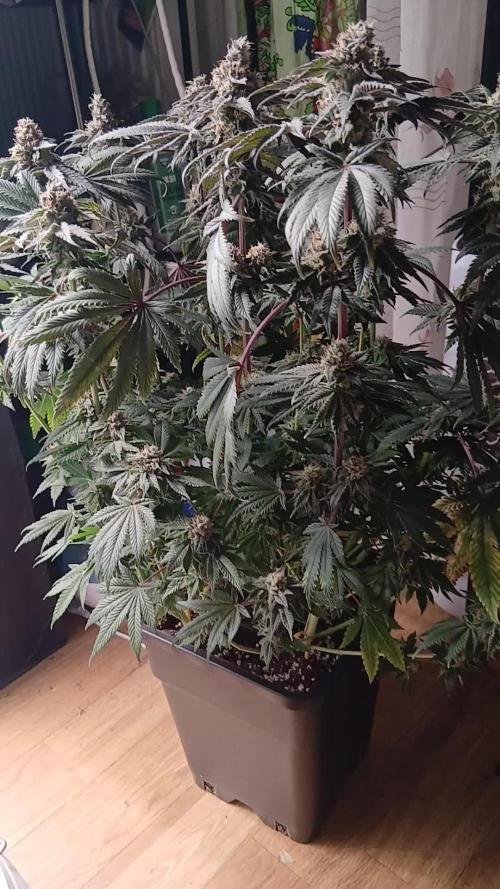
13.12.2025 Today I did cut her off and my heart is bleeding. She was such a beautiful plant and depending on the smoke-check I will grow her again. Her smell is skunky-citric, with notes of whiskey and fireplace and just calling out to be smoked. I will give an update on her quality but up for now she needs to dry slowly but surely to be ready for christmas 🌸💜

Likes
29
Share


@BioGrowKing
Follow
Letzte Woche & auch hier Spüle ich seit 2-3 Tagen die Erde mit klarem Wasser durch :)

Likes
148
Share


@BioBuds
Follow
Another week on the Gorilla, she is forming bud, but real irregular and she seems to not fill out like she is supposed to. The plant is way smaller than her roommates too, in this case thankfully cause this will compensate a little for the loss of total weight she will cause.
I had made a video but decided not to put it up, with too much strong language and questions of the integrity of the third-party seed bank in question.
Remember that Expert seeds probably cant help this much, except not dealing with third parties messing up their good name.
Well enough words for an so far underperforming plant. We did as much magic as we could, I think Im lucky if she yields 30 grams, lowering my total and average gram per watt score so thanks...

Likes
13
Share


@tresplantes
Follow
One week to Go and ladies just Look amazing
Bluezy Structure is Strange but rockhard Headbuds and smell is just out of this Planet
Dantes Inferno is Talking the room over just massive Colas Frosted out down to the bottom
Smell is tropical super Sweet Candy
Tomb raider Structure is Perfect all the buds Hard Even the small ones smell is like a sour Candy Gas


Likes
41
Share


@Growing88
Follow
For now I'm happy with the germination,Even the transplant in the organic coco hydro growth modules all right yesterday✌️🏿


Processing
Likes
4
Share


@BangLaadje
Follow
Ph 6,8 and 1 liter a day, sometimes 0,8l then 1,2l depending on the weight of the soil. Yesterday I gave them each 1,4l with enhancer.
Every 2 days I give 2 gr Great White on 3liter as the Purple Punch is in his last 2 weeks. I got some Green House Booster that I wa't to try on the Amnesia Skunk, what do you think? Or keep it bio aswell? Greetings


Likes
22
Share


@MrsGreen_98
Follow
Blue Dream Auto 1
15th Feb Mon -
Placed blue dream auto seed into jar of ph balanced water,and then kept in dark airing cupboard for 24hours.
16 Feb Tue -
Set up grow tent today. Placed seed into soil and cut a quarter of a plastic bottle top and placed over planted seed to create moisture dome. If seedling hasn’t popped after 3 days turn light on to give more energy. Will leave now and check up on it in the next 24 hours 17th Feb.
17th Feb Wed -
Checked on seedling today. No sprout as of yet,19:35, everything seems fine soil is moist and in the dome is moist. If there is any issues it would be the temp is lower than I’d like.
18th/19th Feb Thur - Fri -
Still no sprout on Thursday 18th. Checked soil and it still a bit wet all around, I think I’ve planted the seed a little too deep. Noticed a few gnats.
On day 19th Friday, there is still no sprout so to give it a bit of help I have turned the light on today. Noticed quite a few more gnats so I will try to put some white vinegar and fairy liquid in a bowl to place in tent. Will update over the weekend.
20th Feb Sat -
Finally!!! The seed has finally sprouted, I won’t water this morning but I will check later tonight. Need to keep soil around plant moist but the outer bits of soil I’ll leave dry due to Gnats. Will leave moisture dome on for a day longer until I see leaves form. Very happy! Also repositioned light so it is directly above plant
21st Feb Sun -
She is looking good! A lot of growth from yesterday to day gave some more water this morning as she was looking a bit dry. I’m looking to take the dome off tonight as she has started to come out. I’ve turned lamp off for 4 hours to give some rest. One leaf is curling over a little but I’m not too sure why? Will monitor and keep updated. Any advice appreciated!!
Likes
8
Share

@GreenEldritchGardens
Follow
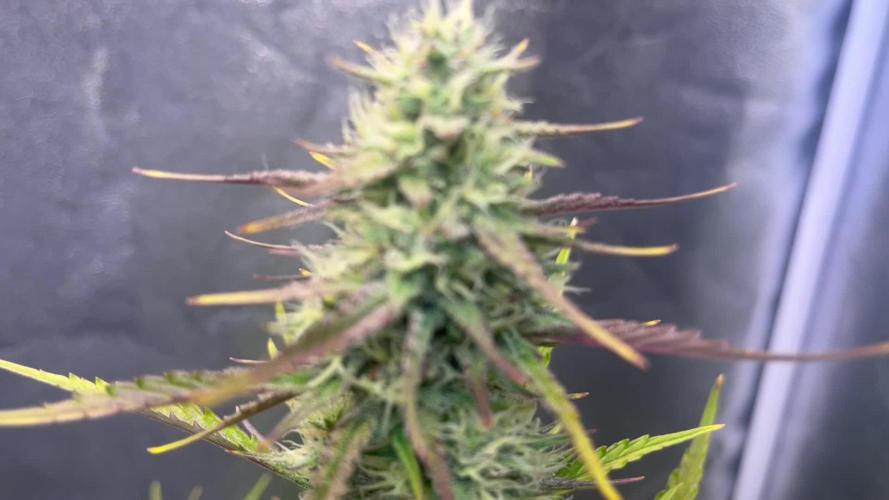
It seems she is very demanding in Phosphorus, so the addictive are doing good for this plants but she demands more!
The smell is very tropical fruit with strong gelato funk, the buds are full of thichomes but she need to gain weight now, so P and K extra are for sure needed in this strain or phenotype.



Likes
2
Share

@eldruida_lamota
Follow
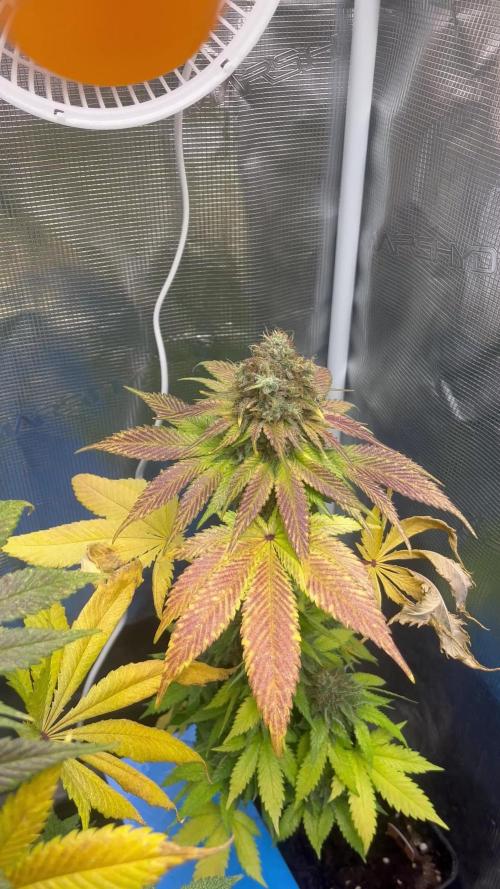
Vamos familia, actualizamos la octava semana de floración de estas NoName de Seedstockers.
La temperatura que estuvo entre los 24-25 grados y humedad dentro de los rangos correctos.
En cuanto a las plantas pues estas últimas semanas cogimos un poco de trips y pues ahí ando combatiendo con planchas pegajosas de color azul, estiraron bien y ensancharon bastante también.
Las flores se están llenas de tricomas estan madurando, aún con la plaga, por el momento todo correcto.
Ya estoy regando solo agua, para limpiar las raíces y demás.
Hasta aquí todo lo de esta semana , ya queda nada, buenos humos.
- os dejo por aquí un CÓDIGO: Eldruida
Descuento para la tienda de MARS HYDRO.
https://www.mars-hydro.com
Hasta aquí todo, Buenos humos 💨💨💨


Likes
12
Share


@Archieballs
Follow
These ladies are just getting PH water. Checking their trichomes every day and waiting to harvest. The bugs on these two are far denser then what was on the Daiquiri so can’t wait to see the weight of these ladies!! Growing 3 Ultimates the next grow and can’t wait to have those massive colas fill the tent!!

Likes
22
Share


@Elendil
Follow
More like HST instead of LST.
This week was all about low stress training or lst. But as it was for the very first time I would say it was more of a high stress trainig (for me of course).
First ties I started already the previous week but this week was hard tie downs on pretty much every branch.
Since I messed up the first week and put my lights on almost max power the plants didnt strech out for light and are pretty low and bushy. Thats why the space is really tight and lst is just the thing to do.
I used a metal string since I think its better because I can adjust it more and all tension is not on the string.
For the past 2 weeks or so I noticed some weird spots on one leaf. This week it went on 3 more leafs and on one more plant.
After some research I found out thats a serious
Calcium defficiency. Since I’m not from US I didn’t have the same things as in videos I watched. So I didnt get the regular cal mag. But instead some from local store and I must say it was bad choice.
Way too less calcium. Ordered a proper one and hopefully it will come in the next fee days.
Another interesting thing happened.
At the beginning I was cinsidering toping. But after researching more decided no to go with it on the first grow.
As the lack of calcium appeared I went full blast with feeding. And it appears thats I was underfeeding, since I thought that my coco was too wet.
Guess what happened when I went from once in 3days to twice per day.
Thats right. The growth was massive ! One of the metal strings somehow got stuck in the plant and when this acceleration happened it simply snaped itself of 😳
I must say I was a bit sad at the moment, but then I figured it’s some form of self-toping. Not that I wanted it to happen on my strongest plant. But will see what will happen out of it.
Alltogether this was a nice week full of wide strech and a lot of new knowledge!