


Likes
Comments
Share


@Organic473
Follow
Monsters on the rise and training has begun…not even the high humidity can stop them now. The marathon continues for some Classic Skunk!

Likes
8
Share


@CanarianGrow92
Follow
Getting better day by day, we did try to correct a small calmag issue which was observed last week, but not really a big deal as we are already started to provide bloom nutrients, at the moment the girls are doing great under the TS1000 😃🤗


Likes
10
Share


@DisTentAint4Campin
Follow
She is getting yuuuhhge she is getting purty with these big razor purple leaves she definitely doesn't look like a auto love how this plant is growing I've trained her with budtrainer clips go to www.budtrainer.com and use cupon code ~DISTENTAINT4CAMPIN~ and save you 10% off entire website

Likes
20
Share


@Rabidreject
Follow
Update- Fri 14th May
Week has been ok but I've not been there as much so it'll be nice to see them today. It looked gorgeous last time there are so many bud sticks popping up from the curly FAT main lines .
UPDATE - TUESDAY 18th May
All has been going well as you can see from the photos. The only problem is that I have two TOTALLY different Spectrum lights in there so I have to keep switching them over to even the plant out!
I’m trying to come up with a better solution but I don’t know if I will be able to afford my cabling, adaptors and all the little bits I need to build my 10 light COB.

Likes
55
Share

@Prof_Weed
Follow
SSSC ? Dutch Power!
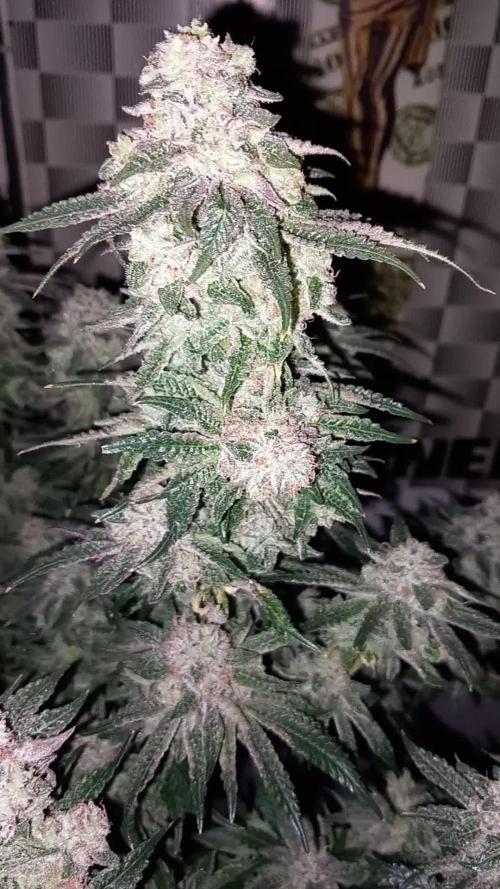
Madame Devil's Cookie One is fuckin' healthy, i treat her better than my own body.
104% healthy, gave her a vegan compost tea after a small dry back, EC 3.7 ahaha!
Also add a small UVB Light by Migro for 2 hours at the "Main sun".
It seems i can do anything with her..
She is a little Devil. I love her.
The leaves have got a perfect color, no light /nutrient burn. A robust modern genetic.
Perfect VPD around 1.2, PPFD around 930 at the highest bud.
The AC infinity Ventilator works 24/7 with natural Wind.
The flowers smell creamy and not too strong, which is Not bad for my neighbours.
But the buds are gettin hard, she is a small mama with 56cm, but should throw 130 or more. We will see..
Overall i am happy with my Dutch Run.
Feeding by Bionova and Seeds from SSSC!
Hollandse hehe.
Bedankt!
Likes
17
Share


@Hoodoo
Follow
2020-08-16 End of week 8 of flowering! Nutrients are still stable with the same amounts (EC=1600/1200). Gonna ride them out until the end of the growth. Gonna start monitoring the trichomes daily so I can figure out when to flush. They look about 100% milky!

Likes
Comments
Share


@Robom069
Follow
Its day 22 and they´re developing great, got´em topped and added some calmag bc of the leds.
the 3 in the front are acid dough, the others are black dominas with the red flag.


Likes
22
Share


@CampExotic
Follow
Week two I tried the scrog net but ditched it. Started using the heavy 16 line up as well. I had a spider mite issue that I squashed with neem oil. You can see they are bouncing back.


Likes
2
Share

@Coman
Follow
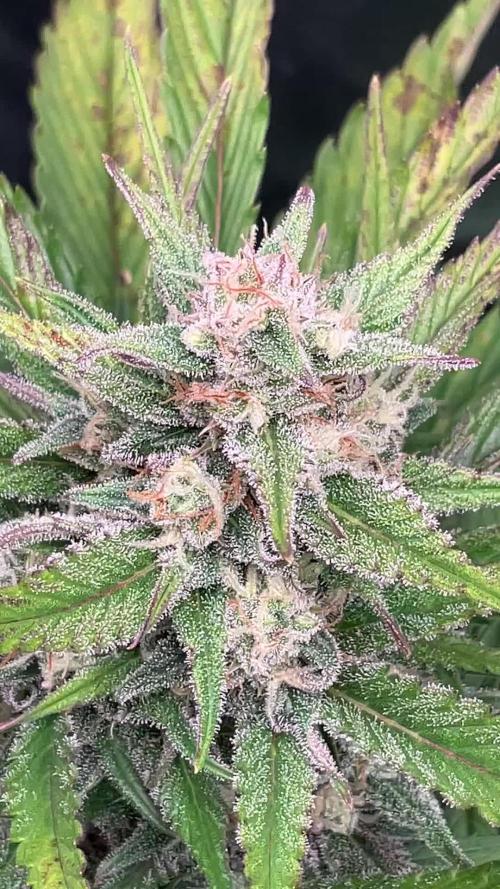
Gorilla cookies is doing good and might be ready for harvest in 2 weeks, the other 2 ladies might need 3 more weeks.
Likes
28
Share


@GanjaGecko
Follow
Die ersten Tage an der frischen Luft haben die Ladys gut überstanden. Die einzige Nacht die mir zu denken gab war die Nacht von Tag 6 auf Tag 7. Die Nacht wurde mit 7°C vorhergesagt. Ich hab die Ladys über Nacht reingeholt, damit sie in dem frühen Stadium nicht allzu sehr herausgefordert werden. Sie wurden dann nächsten am nächsten Morgen zurück nach draußen in die Sonne gestellt. Die Nächte sollen jetzt nicht mehr unter 10°C. Damit bleiben sie jetzt Tag und Nacht draußen. Diese Woche haben sie in einem kleinen Gewächshaus verbracht. Damit es nicht zu heiß wird, bleibt eine Seite offen und die Luft kann auch besser zirkulieren. Die Ladys bleiben vermutlich noch ca 1 woche in dem Gewächshaus und wenn sie dann etwas kräftiger sind, stehen sie unter freiem Himmel.
Jede Lady kam an Tag3 in ihren Endtopf und auch ins Freie.
Die StrawberryBanana steht in einem 11l Topf und die GorillaAuto und die GorillaZkittlez stehen jeweils in einem 8l Topf. Bei jedem Topf ist ca 1l weniger an Substrat im Topf. Der letzte Liter Substrat kommt mit dem Blütebeginn in die Töpfe.
Jede Lady steht in einem Substratgemisch.
Die Basis bildet Biobizz LightMix.
Es wurden ca 5l BioBizz LightMix mit 2l Cocos/Perlite(70/30) gemischt.
Jeder Topf bekam 5 gehäufte Esslöffel Megaworm, 1 gehäuften Esslöffel Batguano in die untere Hälfte des Topfes. Beim einsetzen der Ladys gab es ein wenig Great White Mykorrhiza an die jungen "Wurzeln" und auch ein wenig in dem Bereich wo sie eingesetzt wurden. Der Rest wurde mit dem Substartgemisch aufgefüllt. Auf die Oberfläche wurde ca 15g BioGrow von GreenHouseFeeding mit eingemischt. Da die Ladys vermutlich nach ca 3-4 in die Blüte gehen und generell nicht allzu viel Dünger brauchen, sollte das mit dem Megaworm und Batguano die unten mit eingemischt sind, bis zu Blüte reichen.
Zu Beginn der Blüte wird der letzte Liter Substrat mit 20g BioBloom von GreenHouseFeeding, 2 gehäufte Teelöffel Batguano und 4 gehäufte Teelöffel Megaworm von Plagron gemischt und in die Töpfe gegeben.
Angegossen wurde mit 1ml/L PowerRoots von Plagron und 1g/L BioEnhancer von GreenHouseFeeding. Jede Lady hat ca 500ml mit einem ph-Wert von 6.5 bekommen. Vorher wurde die Oberfläche anständig angefeuchtet damit das Wasser beim gießen nicht einfach durchläuft.
An Tag7 war es erst nötig das zweite mal zu gießen. Auch hier gab es ca 500ml mit einem ph-Wert von 6.5.
Vielen Dank fürs reinschauen liebe Growmies 💚
Likes
1
Share


@Ultraviolet_
Follow
Turned off IR @ nights
Red wigglers (Eisenia fetida) are highly beneficial. They are considered an ideal choice for "no-till" or container-based organic growing because they live in the upper layers of soil, feeding on organic mulch rather than the plant's root system. Red wigglers accelerate the breakdown of organic amendments and produce high-quality, nutrient-dense worm castings directly in the root zone. Clover is another exceptional component of an organic rhizosphere, offering a sustainable, self-sustaining alternative to synthetic nitrogen fertilizers produced via the energy-intensive Haber-Bosch process. By forming a symbiotic relationship with Rhizobia bacteria, clover converts atmospheric nitrogen N2 into ammonium NH4, providing a steady, slow-release nutrient source that enhances soil health and reduces environmental impacts. Red clover offers superior nitrogen fixation and biomass production compared to white or yellow clover, making it the premier choice for maximum soil vitality, particularly for improving soil structure and providing a high-volume nitrogen credit for subsequent crops.
If it is fully functional and efficient soil, the rhizophagy cycle is far superior long-term than any synthetic delivery when it comes to preventing deficiencies, not because it's "better," per se. The medium will require a very high CEC to make it to harvest without re-fertilization. The rhizosphere acts as a dynamic, interactive exchange where plants and soil microbes trade resources based on immediate needs. When a plant lacks a specific nutrient, it changes its physiology and releases specialized chemical cocktails—root exudates—into the surrounding soil. These exudates, which include sugars, amino acids, and organic acids, serve as a "shopping list" to attract specific microorganisms, which in turn return higher levels of desired nutrients. There is nothing in comparison to synthetic delivery, which causes plants to stop producing exudates, effectively "starving" the beneficial soil life, over time turning the soil barren and void of microbial life. Responsible use, applying the right amount at the right time, can minimize these negative effects. Relying solely on synthetic fertilizers without replenishing organic matter is what typically leads to exhausted soil. The use of synthetic fertilizers can utilize the Cation Exchange Capacity (CEC) of the soil, but without a robust rhizosphere and active microorganisms, the efficiency of this process is significantly reduced. This makes synthetic growing more difficult to prevent deficiencies overall compared to an efficient organic living soil with a robust rhizophagy cycle, as there is no "one size, fits all" when it comes to different nutrient profiles of strains/genetics, making it trickier to "guess" and prevent creeping deficiencies.
CEC does not contribute towards EC. Add more CEC using biochar, problem solved. If you keep pH between 6.3 and 6.7, hydrogen is exudated to cycle the medium's CEC for its needs. Keeping the pH between 6.3 and 6.7 creates an environment where plants release H+ to displace positively charged nutrients (like Ca2+, Mg2+, K+ held on soil particles or within artificial media this cycle through nutrients via the medium's Cation Exchange Capacity (CEC)
Microorganisms generate a stable potential of approximately 0.5 V EC. The rhizosphere creates its own food, similarly to chelation, using 1000's of varying combinations to create its own food.
Start to finish, just add water. Eventually, more materials will need to be added at the beginning of each new grow, but very attainable to go from seed to harvest without ever fertilizing, regenerative cultivation.
ATP is king above all else when it comes to biomass accumulation. Cellular root respiration and cellular respiration are essentially the same biological process, the breakdown of glucose to create usable energy (ATP) in the presence of oxygen, just taking place in different parts of the plant. Synthetic (salt-based) grows have significantly lower levels of total rhizosphere respiration, often referred to as root-zone activity, compared to organic living soil grows. While the plant roots themselves may respire in both systems, the surrounding soil ecosystem in a living soil setup is vastly more active, teeming with bacteria, fungi, and beneficial microorganisms.
2 pools of ATP, it won't double in growth buuuut, but improving root respiration by ensuring high oxygen in the soil is crucial. Good aeration ensures roots can fully utilize glucose to generate the ATP necessary for nutrient uptake, leading to healthier and more productive plants, even if growth isn't exactly doubled. The ATP created using root respiration is dedicated to rootzone growth; the ATP created using regular cellular respiration in a synthetic system would have to dedicate a lot of ATP to the roots when there is little or no root respiration. It's true that there is less of an initial ATP cost in breakdown when nutrients are already in their final form (synthetic), but you lose a solid chunk of ATP when the entire plant is reliant on cellular respiration alone; a large portion of ATP is dedicated to root zones for "forced" (active) nutrient uptake. Making it overall less efficient, even if the initial cost of breakdown is higher. If that makes sense. Oxygen is of critical importance when growing in living soil compared to synthetic methods because it supports the metabolic needs of the microbial, fungal, and insect ecosystem, rather than just the root respiration required by the plant itself. While synthetic grows can survive in lower-oxygen environments with precise mineral feeding, living soil systems rely on aerobic microbes to decompose organic matter (microbial mineralization) to create plant-available nutrients, which is an oxygen-intensive process. While a specific fair percentage is difficult to guess, my experience points to a massive, compound difference between the two methods and the amount of oxygen required. All the ATP spared is used on more biomass, not only that, but the extra root respiration can achieve a much higher CO2 compensation point naturally than you could with synthetic and atmospheric CO2 alone.
As a plant grows faster and increases in size, its demand for nutrients to support that growth increases, requiring a higher rate of nutrient uptake. As plants enter phases of rapid vegetative/floral growth, their metabolic demand for nutrients increases exponentially. Without a robust buffer zone—whether in the soil (cation exchange capacity) or in a hydroponic reservoir—deficiencies will occur rapidly because the instantaneous demand for specific nutrients can quickly exceed the rate of supply.
A growing body of evidence suggests that organic living soil provides superior long-term soil health and environmental benefits compared to synthetic fertilizers, which are often criticized for promoting a cycle of dependency and degradation. While synthetic fertilizers offer short-term convenience and high yields, they often come at the expense of long-term soil health, sustainability, and increased corporate control over growers/ farmers. Organic living soil, while slower and requiring more care to establish, creates a sustainable, resilient, and, ultimately, more fertile environment.
We don't grow; we facilitate energy conversions.
Once all water is removed, approximately 95% to 97% of a plant’s dry matter consists of carbon, oxygen, and hydrogen. These three elements form the structural backbone of all plants. Corporate interest sells you the other 3-5% NPK & all the rest in RATIOS! Why not throw the 3-5% in a pot, and focus your energy on the other 95-97%?
Indigenous Amazonians created, or at least significantly enhanced, the fertile, dark soil known as Terra Preta de Índio (Portuguese for "Indian Black Earth") by incorporating biochar and other organic materials into the soil. This anthropogenic (human-made) soil technique, which dates back roughly 2,500 to 8,000 years, allowed ancient civilizations to flourish in regions with naturally poor, acidic, and nutrient-poor tropical soils.

Likes
8
Share


@CanabisLoverHobbyGrower
Follow
Well crisis averted she reacted really well to what turned out to be just a very early top,.. she reacted so well I've topped the other one today,.. both look good and healthy, roll on next week 👌
Likes
18
Share


@DBQush
Follow
Dear diary,
Week 9 marks the last week of veg as it ends with us finally transitioning into the flowering phase. As we embark onto flowing, I continue to fine-tune the environmental conditions and adjust nutrient levels to support optimal development.
One thing to note is that GC #2 still shows some of those strange leaf mutations on some of the tops but continues to grow well. Mutations doesn’t have to be something bad, but will need to keep a close eye on her to make sure she isn’t a hermie.
🍀🍀🍀🍀🍀🍀🍀🍀🍀🍀
⏰ Day 60:
I administered a feeding with a nutrient strength of 1.66ms and adjusted the pH to 5.8. Additionally, I increased the light intensity from 20 to 25 dli (daily light integral).
To maintain the desired humidity levels, I turned on the air conditioner to dehumidify the space, successfully bringing it back down to 58% as it started slipping up to the 70s again. However, this adjustment caused a slight drop in temperatures to 24.5 degrees Celsius.
⏰ Day 61:
During the evening feeding session at 18:00, the plants received a feeding with a nutrient strength of 1.66ms and a pH level of 5.8. Furthermore, I elevated the light intensity from 25 to 28 dli, positioning the lights 50cm above the canopy.
The night temperatures have also stabilized at 22.5 degrees Celsius after the AC change.
⏰ Day 62:
I provided a feeding with a nutrient strength of 1.67ms and a pH level of 5.6.
I also conducted some light low-stress training and removed any growth on the horizontal stems, as each stem already possesses its intended 16 tops. These adjustments will help maintain an even canopy and ensure optimal light penetration.
⏰ Day 63:
During the evening feeding session, I administered a feeding with a nutrient solution at a strength of 1.67ms and adjusted the pH to 5.7.
To enhance light exposure, I increased the light intensity to 32 dli/500ppfd and positioning the lights 48cm above the canopy.
⏰ Day 64:
At 11:55, just before lights off, I applied pesticides to address any potential pest issues.
During the evening feeding session, I provided a feeding with a nutrient strength of 1.67ms and a pH level of 5.7.
Additionally, I removed some excess growth and increased the light intensity to 37 dli/580ppfd, getting to the optimal levels before flowering starts.
⏰ Day 65 (Day 1 Flower):
I initiated the flowering phase by switching the lights to a 12/12 cycle and provided a feeding with a nutrient strength of 1.85ms and a pH level of 6.1.
As the plants enter the flowering stage, I have adjusted the nutrient composition.
The calmag has been reduced to 1.5ml/l, Bud Candy has been added at 1ml/l, and the A+B mix has been increased to 3ml/l.
The plants water consumption has also increased, now reaching approximately 2 liters per day, which aligns well with the timing of the light cycle change.
The temperatures have stabilized around 25 degrees Celsius during the day, and the relative humidity ranges between 55-60%. I have also set up the scrog net in preparation for the upcoming stretch phase.
⏰ Day 66:
During the evening feeding session, I administered a feeding with a nutrient strength of 1.85ms and adjusted the pH to 6.0.
Likes
10
Share


@Zeravlab
Follow
1/29/24 - Beginning of week. Looked good, was planning on letting it go another week but within a day the top leaves started turning yellow all over and I started seeing amber, just a few but spread out all over the plant, so last minute decision to harvest on 1/31/24.


Likes
6
Share


@Servietsky
Follow
Another good week getting ready.
They are all very well, as envisaged last week I will switch to Extreme mode of the table Aptus.
I hope not to make mistakes, my mixture is ready but I find it very busy, but I tell myself that I follow the guide Aptus.
We'll see 😥😱?

Likes
2
Share


@StickyBlack
Follow
Tropicana Cookies - Starting to see amber/cloudy trichomes. Will probably harvest in the next couple of days. Not a big plant by any means but I’m stoked on it. Covered in trichomes, smells like god and nice, dense buds.
Likes
31
Share


@TheHighentist
Follow
I changed the light cycle 11/6, directly to 12/12 by prolonging the sleep period.
They got their first bloom nutrients 13/6
Humidity im slowly dropping, as they have not bloomed yet.
12/6
-Temps 24-28day/21-23 night
-Humidity 69% (+-4)
13/6 Water day*
-Upped the water intake, from 750ml last watering, to 850ml and change in nutrients.
Changed nutrients from Biobizz Grow(2ml/L) + Biobizz Fish-mix(2ml/L)
to Biobizz Topmax, Bio heaven, and Bloom (1ml/L) (((biobizz grow every other feed)))
-Temps 24-28/22-23
-Humidity 65% (+-3)
14/6 They look healthy and happy. 47 Cm in height.
-Temps 24-28/22-23
-Humidity 65% (+-3)
15/6 Look just fine, not any huge growth but no signs of mistreatment
-Temps 24-28/22-23
-Humidity 64% (+-3)
16/6
13/6 Water day* and grow tent cleaning.
-850ml
Biobizz Topmax, Bio heaven, and Bloom (1ml/L) (((biobizz grow 1ml/L every other feed)))
-Temps 24-28/22-23
-Humidity 63% (+-3)
17/6 Looking good
-Temps 24-28day/21-23 night
-Humidity 63% (+-3)
18/6 was away all day
-Temps 24-28day/21-23 night
-Humidity 63% (+-3)

Likes
92
Share


@DeepWaterGrower
Follow
🗓️ 10° WEEK FLO // DAY 64-70 (from switch) // DAY 148-154 (from the sprout) - [HARVEST WEEK]
⚡ Light: 40 cm / 150 watt. Removed the TS600, we're looking for colder temperature before harvesting and now the TS1000 alone is enough;
⌛ Schedule: 12/12;
🌡️ 28° C - 65% RH average;
📑 PH 6 - EC 0.4;
💧 DWC change: 5 days flush with Flawless Finish by Advanced Nutrients. It's the first time I've used a specific flush product and it actually seems to work!
🌱 According to trichomes and pistills, she's ready on day 68 flo;
🌸 Buds are heavy!
⚙️ Fans, extractor and pump ON 24/0. No dehumidifier.
✅ HARVEST
- Day 68 from switch;
- Wet trim, removed fan leaves.
