


Likes
Comments
Share


@JUNGLE_B4RNS
Follow
The Sensi Seeds Research breeding project has created eleven cannabis seed varieties.
How? By combining new cannabis cultivars with a selection of strains from their long-established cannabis gene bank. For the first time in thirty-six years, they are opening the doors of the Sensi Seeds Research and Development Department.
Week #4
I have let the plants grown their 4th node and have topped them all at the 3rd node during the week. All the plants responded well and started to grow 2 tops. All the genetics looks good with no shitty weird plants. Every plants are in "V" and excited to grow.
The light coverage of the Mars-Hydro SP250 is good enough to leave them another week without adding more light. Using only 245w for the lightning during 5 weeks is very economic 👍
Last week feeding has been done in time, everyone is green lush. No need to add any nootz this week, just giving plain pH’d water.
(I’m looking for a job in the Cannabis industry as Master Grower, Mineralogist, Quality Control)

Likes
35
Share


@Jacks_Pot
Follow
Nine weeks since the switch and the Runtz have had 7 weeks of actual flowering.
I've noticed more trichomes were produced, wich I checked and most of them were still clear,
maybe 10-20% was getting milky and very few were amber.
I want to see way more amber before harvest, so +/- 70 days of 12/12 will be needed.
This week was the last time I gave them nutrients. That was on the first day.
The rest of the week I gave them ph adjusted tapwater every other day. (ec 0.5 – ph 6.24)
Next week I'll start flushing with ec levels of 0.3
For that I will use a mix of tap water and demineralized water.
3 liters(0.8 gallon) tapwater and 2 liters (0.5 gallon) of demineralized water gives a 0.3 ec level.
The distance between the cobs and the plants got a bit higher,
from 48cm(19inch) to 55cm (21.5 inch) and the power of the cobs was reduced to 300watt. Autumn is here...🍂🍁
Temperatures stayed between 18,4 – 23,9 °C (65 – 75 °F) and humidity levels between 34 – 50 %
One week of ripening & flushing and then it will be time to harvest.
To be continued... ✋
Do you want to grow this strain?
👉 https://www.zamnesia.com/6000-zamnesia-seeds-runtz-feminized.html 👈


Likes
226
Share


@Kitties_and_Colas
Follow
~_~_~_~_~_~_~_~_~_~_~_~_~_~_~_~_~_~_~_~_~_~_~_~_~_~_~_~_~_~_~_~_~_~_~_~_~_~_~_~_~_~_~_~_~_~_~_~_~_~_~_~_~_~_~_~_~_~_~_~_~_~_~_~_~_~_~_~_~_~_~_~_~_~_~_~_~_~_~_~_~_~_~_
10/22/21
😻Harvest week!! Trichs are finally there friends!..We'll update with photos,vid and weights after our camping trip..thanks for dropping by and happy harvests everyone!! https://youtu.be/JC6zVPeKFPk
~_~_~_~_~_~_~_~_~_~_~_~_~_~_~_~_~_~_~_~_~_~_~_~_~_~_~_~_~_~_~_~_~_~_~_~_~_~_~_~_~_~_~_~_~_~_~_~_~_~_~_~_~_~_~_~_~_~_~_~_~_~_~_~_~_~_~_~_~_~_~_~_~_~_~_~_~_~_~_~_~_~_~_



Likes
6
Share

@SzkolaZiola
Follow
Day 60 of 12/12
HARVEST TIME
They are soooo fine I barely have words.
Weak-neck gland trait is a fact. I was collecting FRESH, "WET" (non-dried) flowers for Fresh Frozen - the amount of trichome heads just breaking off during that process was astounding. Air was full of trichome heads every time I touched a branch or a bud.
I repeat - it was non-dried flowers, straight from a branch, from alive, watered plant - and I collected a few grams of loose heads in my TrimBin. Crazy stuff. I also pressed it and I got top-shelf rosin - without dryiyng and sieving or bubble ice wash. Mind blown 🤯
8 plants
60 days (8.5 weeks) of flowering under 12/12
4x4 ft tent
466W Mars Hydro light
= 2166g
of Whole Plant Fresh Frozen material (just trimmed buds + some trichome-covered leaves)
Now floweres are in deep freeze -36°C waiting to be washed for bubble hash and pressed into live rosin in the near future.
Likes
Comments
Share

@Growfather1
Follow
Hello everyone.
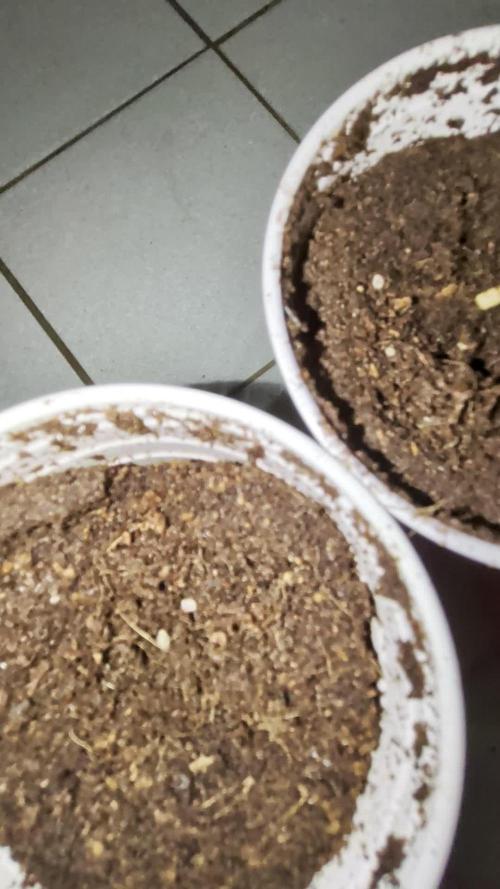
Welcome to the first diary for this grow. I've germinated five Amnesia Haze seeds, and all of them have sprouted.
The reason I'm keeping two separate diaries for this grow is that three plants will be switched to flower after a four-week veg period in 15-liter pots.
The other two plants will get seven weeks of veg in 21-liter Air-pots before switching to flower, so it's better to keep the progress separate.
Thank you for stopping by and have yourself a great weekend.
Best regards,
Growfather.

Likes
26
Share


@1Right_Angle
Follow
Sunday Jan 3; Transitioning from Veg to Flower Nutes is in progress.
Tonight sees 2/3 Bloom / 1/3 Veg and that’s it.
- dropped tent temp down to 26C and humidity seems steady just under 50%
- feeding schedule has been every other day. Stretching that to every 3 days after tonight
** water volume is my conundrum **
Do I add more water for the plant ?
Am I giving enough Nutrients to the plant for it to grow big?
Question Time ! &. Results:
Volume of water was raised again for dinner tonight. 2.5 g between both plants. On the great advice I received today from 2 growers, and my desire to increase the amount of food that the plants see; the volume of water will go up and the time between feedings will resemble more of a 4 & 2 day cycle.
Other Changes—-
*”hand-weighing the pots” to get a Feel for moisture content, will become a regular task.
**Giving the plants an extra day to absorb larger feedings, will become part of a staggered routine to help keep them on the Dry-Side
Mad growth again today (sun p.m.), with the last taste of Medi-One out of the way early in week 3. A 4 day liquid-break and then 100% flower food.
Jan 4 saw the plant looking well hydrated. No obvious run-off from yesterday’s feeding, says a deep watering has not happened yet.
I will give the soil moisture a chance to recover, and increase next weeks Volume of water (aka nutrition) slightly once again.
Breaking new ground ie: past a gallon per plant indoors and watering based on actual Needs. looking for real progress
Jan 6th: next dinner is listed above, either tonight or tomorrow it will be used, based on how Dry the plants feel tonight
Today is day 3 since the last watering. If possible I’ll hold-out till tomorrow. is Desert-like.
Leaves are still pert. And the
~13 gallons or so of soil still feels bloody solid.
So I’ll wait till a 4th day and feed it tomorrow. Fresh pictures uploaded w/ a video
Jan 7: Fed each plant after 4 days without food or water, and they look great. Upped water volume 1/4 gal ea., (1.5 gal total ea.) and this will start the desired 4/2 watering schedule. Amount goes up each of next couple weeks. (Then taper off nutes and h2o in the last weeks is the plan)
-plants looked great after 4 days without water. Here’s one for patience.
-if the plant growth and bud development are any indication... the plant on the left appears to be a week ahead of the plant on the right.
The one on the right just seems to be taking off now.
Jan 8 Uv-B use has been s/d for the time being ~ 3 or 4 weeks. I am going to wait until there are actual buds on the branches, before making good use of the wavelength.
* also behind that decision is the fact that the plant Under the Light, is solidly 4” behind the other since I started adding short periods of uv-b exposure. (The plants were exactly equal up until I started exposing the R plant for 1/2 the CMH exposure. ie: 6 hours)
The plant lagging behind in reach and bud development, is the uv-b plant. And that’s only been using it since Dec 31st !
As it stands articles are saying to use the Uv-B later in flower. OK, I’m in !
Taking action on an observation.
Sat Jan 9:
- opening the tent tonight there was a 3” stretch over the course of the nite/day on the left. And it looks like the plant on the right is kicking-in as well. Slower, but happening.
Like the whole L plant grew 3”


Likes
3
Share

@gammacrowns
Follow
growbox upgrade from 0.36m² to 0.64m²
This is my second DWC grow. On my first run, I used Plagron Aqua and got good results with healthy-looking roots.
This time, I’m using Canna Aqua under the same conditions and with the same water, but the roots look much worse. Here is the result.
Has anyone had a similar experience with Canna Aqua? Could the nutrients be causing this, or should I be looking at something else?
Both plants are affected, they are different strains.
Likes
7
Share


@FrostyB
Follow
Now this baby was a delight to grow and grew real big. I decided to leave this lady to do her own thing and she ended up finishing just short of 6ft! The main cola was huge and juicy and all round the end result was really nice and super strong just the way it should be.

Likes
15
Share


@JeyGanesha
Follow
3° settimana di fioritura. Il profumo che emanano è già bello forte... immagino che l'ultima settimana sarà concentrato di aromi dolci e fruttati 😂🤣👍💪✌️🙏
Likes
3
Share


@Blunoser
Follow
Week 8 Veg. Moved to groom this week. Getting ready to flower in a week or 2. Switched from Cfl lights to 2x 315cmh

Likes
55
Share


@Amaya
Follow
На этой неделе проведу дефолиацию, очень густо растет ботва, обдув не справляется.

Likes
Comments
Share


Likes
20
Share


@scooter112
Follow
Moving right along, each girl is on her own pace. Tent was so crowded I had to remove the heater therefore I bought a bigger tent and will use use this one for drying.
Thanks for looking..


Likes
39
Share


@J_diaz420
Follow
Realmente muy feliz con lo obtenido, 307g en 0.8me me parece genial, estas flores tienen un aroma genial entre el típico haze mezclado con cacao, un efecto muy agradable y confortable, rica al fumar y muy poco picante gracias al lavado de raíces con flawles finish 👌👨🌾🏻
Totalmente recomendable esta genética de royalqueenseeds muy agradecido por la oportunidad 👍👌👨🌾🏻
Likes
32
Share


@MunichGrasfabrik
Follow
Hallo, Servus und herzlich Willkommen in der Glasfabrik.
Leute kommt nach Bayern zum kiffen.
Die Fabrik ist in der 12. Woche. Kurz vor der ersten Ernte.
17.06.
Hier hat sich viel getan.
Meine Teile sind jetzt gekommen.
Bis auf den AC Infinity und meine Bluetooth-Dimmer für die SANligths.
Der AC Infinity Lüfter wäre erst etwa Dezember gekommen. Deshalb hab ich einen anderen Lüfter gekauft, der verfügbar war, den Aygochy 150mm mit einen bärenstarken max. Durchzug von 688m³/h.
Ein Ferrari unter den Lüfter. Tim Tylor, der Heimwerker-King, wäre blass vor Neid wegen der Power.
Ich habe auch Fotos reingestellt, da könnt ihr meine neuen Errungenschaften bewundern und beneiden. So wie ich immer neidisch wurde, wenn all die Reports hier sehe.
Für den alten Lüfter hab ich auch eine Neue Verwendung gefunden. Den kann ich in der Küche schon gebrauchen.
Es war aber überhaupt nicht einfach, den neuen Lüfter so einzustellen, dass er das macht, was ich will.
Zunächst zeigte sich, dass mir ein Luftbefeuchter nicht ausreicht, um auf die gewünschten 65%. Ich musste einen zweiten in das Zelt stellen (noch nicht im Bild).
Und der Lüfter hat seinen eigenen Hydrometer, der nicht ganz synchron läuft mit dem von Govee. Da muss man einiges kalibrieren.
Aber jetzt macht er, was ich will und ich muss mich eigentlich gar nicht mehr darum kümmern.
- Ja puh, eine Menge Freizeit jetzt.
Ich arbeite ja nicht: Arbeitslos, Krankheit, Rente - irgendwie etwas vom allem davon.
Zum Glück habe ich noch die Wässerung alle 3 Tage und die Fototermine alle Montag für den Report.
Ja, und dieser Report.
Das Aufzuchtzelt musste ich auch lange kalibrieren.
Ich hatte mir überlegt, ob ich im Aufzuchtzelt einen Filter brauche.
Aber besser ist es. Vielleicht will ich da auch trocknen oder solche Dinge.
Ich habe auch ein Video reingestellt, das euch das gesamte Fabriksgelände zeigt, - komplett!.
In diesem Video ist auch ein Suchspiel enthalten:
Findet die blaue Pipette.
Wo hab ich die wieder hingelegt?
Kennt ihr das? Man legt schnell man was ab und das ist plötzlich spurlos verschwunden, egal wie lange man sucht, es ist weg.
Dann irgendwann will man ein Brötchen machen, dann liegt das dort einfach da.
Das passiert mir oft.
Mein Couchtisch ist das reinste Bermuda-Dreieck.
Das kommt alles von meiner Cannabis-Psychose.
Ich habe nämlich schon mit 15 angefangen zu kiffen.
Kein Mensch hat mir gesagt, dass ich erst mit 25 anfangen darf.
Ja, und das bedeutet zwangsläufig eine Psychose, wenn ich Hr. Pilsner (CSU) richtig verstanden habe.
Jetzt hab ich den Salat und finde die Pipette nicht mehr. So ein Mist.
Aber das ist halt einfach meine Bestimmung.
Wohl gemerkt, die blaue Pipette. Die gelbe hab ich selbst gefunden.
Wie toll jetzt alles ist.
Ich sag euch, ich bin so glücklich.
Ich habe fast mein ganzes Leben davon geträumt, dass sowas mal kommen könnte und dass ich völlig unbehelligt Pflanzen großziehe.
Nicht das ich nicht vorher schon bereit gewesen wäre, illegal etwas anzubauen, aber ich durfte ja nicht, meine Vermieterin hat das nicht erlaubt.
Aber jetzt ist es so weit. Der Traum wurde wahr.
Meistens wenn Träume wahr werden, dann verwandeln sie sich in Albträume.
Ich hoffe, dass ist jetzt nicht genau so.
Bisher jedenfalls nicht. Bisher ist alles Bestens.
Gut, da war doch noch was?
Ach ja, die Pflanze.
Alle 3 Pflanzen haben in den letzten 2-3 Tage furchtbar gelitten.
Wegen meine Kalibrierungen standen sie of stundenlang im Zimmer rum mit einem VPD-Wert über 1.6kPa. Nicht gut.
Und man sieht es den Pflanzen an. Nicht so wehr in den Bilder, aber wenn man sie live sieht ...
Wir sind in der 12. Woche. Ich hab mir die Trichomen angesehen. Die sind schon trübe, aber ich habe noch keine bernsteinfarbene gesehen.
Die Blüten könnten auch noch etwas anschwellen.
Also eine Woche braucht sie mindestens noch.
Was mich an den Autopflanzen stört, ist ihr Aussehen. Da ist zu viel von der hässlichen Rudalis drin.
Ertrag und Wirkung sind OK, aber das Aussehen und der Kleinwuchs. Nicht mein Ding.
Den Raum füllen sie in keinster Weise aus.
Darum steig ich auf photoperiodischen Pflanzen um.
6 Wochen Wachstum und dann die Blüte.
Das sieht dann ganz anders aus.
Wir werden sehen. Die nächste Pflanze wird schon eine photoperiodsche sein.
--
Ja, und was ist inzwischen aus meinen gefürchteten, aber auch verachteten, Landes-Shrek geworden. Wo ist Markus?
Ist natürlich sau dumm gelaufen:
Diese pathetische, aufrührerische und doch geschichtsträchtigen Rede nach der Europa-Wahl.
Aber leider auch kurz vor der EM.
Söder wollte ja weiter gehen.
Aber leider, die Menschen hatten gar nicht mehr hingehört.
Wegen der EM. Ausgerechnet jetzt, denkt sich Markus.
Söder hofft jetzt, dass die Menschen nicht vergessen, dass er mit seiner CSU die Europa-Wahl haushoch gewonnen haben.
Aber ich befürchte …
Also ich hab das schon vergessen.
Nun gut. Dumm gelaufen Markus.
Das ist ja nicht seine erste Peinlichkeit dieser Art
Das steckt er locker weg.
Morgen reitet unsere wackere Ritter Don Qujsöder ohne Fehl und Tadel wieder gegen die bösen Windräder.
Er wird die Probleme der Kernfusion lösen und die geilsten Reaktoren bauen.
Er wird auf den Mond fliegen.
Ja Markus, das ist deine Bestimmung. Flieg zum Mond und sei unser Mond-König.
--
Leute kommt nach Bayern zum Kiffen.
Hier ist was los, hier geht es in die nächste Runde.
Verpasst nicht Söder bei seinem neuen Showdown:
Kanzlerin oder Kanzler? Söder oder Merz.
Nirgends erlebt ihr das so authentisch wie in Bayern.
Und dazu die sauber Luft; die Kühe; die Blasmusik und die Dirndl.
Kreiert mit uns das neue Bayern.
Die Symbiose von Hippie und Wurzelsepp.
Das beste aus beiden.
Kreiert mit uns das Bayern 2.0
Natürlich sollen die Dirndl erhalten bleiben,
darum ist es eine Kultur-Evolution, keine Kultur-Revolution.
Wir bringen die bayrische Kultur auf das nächste Level.
Aber nicht so ein Schwachsinn wie einst die Musikantenstadl-Show. Oder gibt’s die noch?
Auf so was lächerliches kann nur von ein Konservativer kommen.
Nein – es muss ehrlich sein und echt, und total bekifft.
Als Anregung habe ich euch ein Bild gebastelt. So in etwa ist das gemeint.
Gestaltet mit, statt nur zuzuschauen.
Bleibt, bis die Mondrakete vom Englischen Garten abhebt.
Streckt ihn einen brennenden Joint entgegen und ruft „Geile Aktion Markus! – Respekt!“.
Kommt nach Bayern zum Kiffen.
Was ihr hier seht und erlebt, werdet ihr nie mehr vergessen.
--
Geiler Lüfter!
----
18.6.
JA - schon gut - ich habe es verstanden.
Alphörner kommen aus der Schweiz und nicht Bayern.
Gut, aber alles die selbe Familie.
Überall Lederhosen, Dirndl, Blasmusik und überall wird gejodelt.
Bayern, Österreich und Schweiz.
Sie folgen alle der bayrischen Leitkultur.
Aber ihr habt Recht, das ist zu grob.
Soweit dürfen wir nicht gehen.
Dann bekommen die Ureinwohner nur Angst.
Bah - das sieht wirklich brutal aus.
Schaut euch das gar nicht erst an.
--
19.6.
Ja schon gut - Südtirol folg auch der bayrischen Leitkultur.
Bella Italia.
--
22.6.
Freunde, es ist der Wahnsinn, wir hatten jetzt 2 Tage mit 30°C und der neue Lüfter hat sich bestens bewährt.
Zwar kann man nicht verhindern, dass die Temperatur im Zelt auf 30°C steigt, wenn der Raum, in der das Zelt steht, bereits 30°C hat.
Aber weil er dann sozusagen permanent auf Alarmstufe läuft (ab 28°), kann man die Temperatur an der Raumtemperatur angleichen und der Alarm schaltet sich ab, wenn der Raum wieder unter 28° fällt.
Damit der VPD-Wert nicht über 1,6 steigt, muss man schon gehörig Wasser ins Zeltpumpen. Bei 30° sind das 3 oder 4 Liter am Tag. Dafür brauche ich 2 Luftbefeuchter.
Hat etwas gedauert, bis ich den Dreh heraus hatte. Aber jetzt klappt das Supi-Dupi.
Ein neuer Samen ist auch schon unter der Erde. Die erste Photo-Pflanze. Ich freu mich.
✋✋✋Spoiler Alarm✋✋✋
Es ist die Critical von RQS.
Die neuen 20l Töpfe sind auch gekommen. Ich finde, sie passen von der Proportion her perfekt zum Zelt.
Das ergibt eine harmonische Komposition. - Richtig malerisch.
Äh - gibt es eigentlich schon Ölgemälden mit einer Growbox als Motiv? Das wäre wie ein Stillleben, sehr anregend.
Ich kann nicht malen, aber macht das mal einer von euch?
Ich habe mir außerdem organischen Dünger bestellt.
Mal sehen, wie es damit ist.
------
Ach ja, was Söder angeht, ich hoffe, ich trete keinen auf den Schlips, wenn ich über Söder her zieh?
Den mag doch keiner, oder?
ODER? - Sonst bist Du hier komplett falsch.
Wir mögen Söder nicht
Söder ist übrigens ein toller Name für einen Bösewicht, finde ich.
Der Söder treibt wieder rum. - klingt gruselig.
Aber Söder, das muss man zugeben, ist ein erstklassiger, toller Bösewicht.
Als Bösewicht ist er mir sogar sympathisch.
Schon allein das endlose Fotomaterial im Internet, dass man gegen ihn verwenden kann, wer würde sowas zulassen?
Söder hat die meisten sogar selbst gepostet, ist das nicht unglaublich.
Das ist natürlich wahnsinnig schlau.
Wenn man über ihn lacht. - Lachen ist eine positive Empfindung.
So wird er auch bekannter, weil die Bilder überall gezeigt wird.
Er ist nur der Ministerpräsident eines Bundeslandes.
Wer kennt schon die Ministerpräsidenten der anderen Länder?
Söder kennt jeder.
Er hat seine Hausaufgaben als Bösewicht gemacht.
Und erst seine Reden.
Knapp, auf den Punkt gebracht.
Er bietet für alles ein Lösung. - Natürlich ist ER die Lösung.
Selbst den Populismus verachtend, verbreitert er seine populistische Thesen.
Weil Populismus, was von einem Genie kommt, ist gut.
Zur Zeit steht er rum, und sobald ein Mikrophon auftaucht sagt er:
"Reden; es wird immer nur geredet; Wir müssen jetzt handeln; Nicht immer nur vertagen, verschieben und bedenken; Wir müssen jetzt was tun"
Ein wenig erinnert er mich an Donald Trump, als er am Kapitol zum Putsch aufrief.
Nun, Söders putsch wird nicht ganz die Dimension aufweisen wie der von Trump.
Aber am Ende haben sie beide die Regierung nicht gestürzt.
Aber was wird Söder noch einfallen?
Wie kann er Regent werden?
Die Leute lieben ihn doch, oder?
--
Puh, - stellt euch mal vor, Söder hätte die Chance, nach Peking zu fliegen und den Handelsstreit zwischen China und der EU bei zu legen.
Er würde den ganzen Tag Purzelbäume drehen, vor Freude.
Er wäre dann der Macher.
Der starke Mann und knallharte Verhandler.
Er wäre zweifellos der Mann, den Deutschland braucht.
Es würde seinem Putsch wieder neuen Schwung geben.
Und stellt euch vor, genau das ist passiert.
Nur das nicht Söder nach Peking flog, sondern Habeck.
Robert Habeck, denkt sich Söder, ausgerechnet dieser grüne Taugenichts mit seinen Wärmepumpen.
Der doch nicht.
Söder tut mir jetzt leid.
Erst schreit er noch, es muss etwas getan werden, und dann fliegt Habeck nach Peking. Kann es dümmer laufen?
Naja, Gott sei dank ist immer noch die EM, dann merken die Leute das vielleicht gar nicht.