





@PEAKYPLANTERS
Volgen
hi friends farm, did you have a good Easter? we made a decent harvest that left me quite satisfied even if I had to collect a little earlier because of my absence at home but this did not ruin the work 🤪🤪🤪🤪😎😎



@Rangaku
Volgen
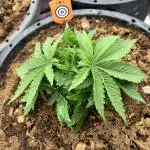
Topped and transplanted into her final home , 27 L pot . She’s healthy strong and green .


@Gumbassman
Volgen
Looks drippy so I water with ph on 6.5 I start lst later on today overall looking good I water about 200 to 400 ml at a time.


@Tower84
Volgen
🇩🇪 Cherry Limeade Doja - Wochenkommentar
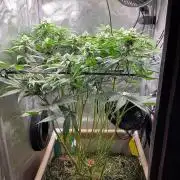
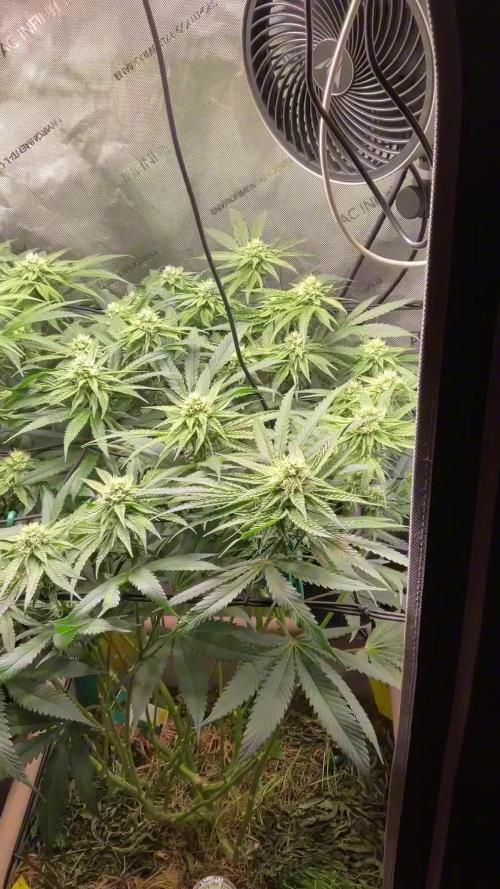
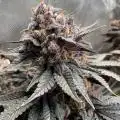
Die Cherry Limeade von Doja entwickelt sich weiterhin hervorragend 🌱. Die Blütenentwicklung schreitet sichtbar voran, die Pflanze ist kerngesund und ihr Stoffwechsel läuft aktuell auf Hochtouren 💚.
Nach dem Lollipoppen ist der Wasserverbrauch zunächst erwartungsgemäß etwas zurückgegangen 💧. Nach ungefähr vier Tagen hat sie dann aber wieder deutlich zugelegt und mittlerweile trinkt die Cherry Limeade etwa 3 Liter pro Tag 🚰. Gleichzeitig beginnen die Buds langsam sichtbar anzuschwellen 🌸 – genau das, worauf ich gewartet habe.
Mängel oder Krankheiten sind weiterhin keine zu erkennen 👌. Lediglich ein kleiner Schönheitsfehler bleibt: Beim Scroggen ist mir bereits letzte Woche auf der linken Seite ein Main Bud abgebrochen 😬. Dadurch fehlt vorne links leider ein Trieb, aber ansonsten hat sie den kleinen Rückschlag sehr gut verkraftet.
Eigentlich müsste ich momentan gar nicht viel an der Pflanze machen 😎. Trotzdem ertappe ich mich dabei, wie ich mehrmals täglich nach meiner kleinen Schönheit schaue, einfach um sicherzugehen, dass es ihr gut geht ❤️. Jetzt beginnt schließlich die Phase, in der man am liebsten jede kleine Veränderung beobachten möchte.
Auch der Geruch wird zunehmend intensiver 👃. Aktuell duftet sie herrlich spritzig, frisch und limettig – genau die Richtung, die ich mir von der Cherry Limeade erhofft hatte.
An den Parametern habe ich diese Woche nichts verändert ⚙️. Einige der Main Buds bekommen inzwischen etwas weniger als 1000 PPFD, im Durchschnitt liegt die Lichtintensität aber weiterhin bei etwa 900 PPFD ☀️. Solange die Pflanze so gesund und vital aussieht, sehe ich keinen Grund, momentan etwas am Setup zu verändern.
Jetzt heißt es eigentlich nur noch: zuschauen, genießen und den Buds beim Anschwellen zusehen 🌸👀. Ich bin gespannt, wie sich die Cherry Limeade in den nächsten Wochen noch entwickelt 🚀.
📊 Parameter der letzten Woche:
💡 Licht: 900 PPFD / DLI 39 (12/12, Stufe 6, 40 cm Abstand)
🌡️ Temperatur: 28 °C
💧 Luftfeuchtigkeit: 67 %
📈 VPD: 1,2 kPa
🌿 CO₂: Ø 740 ppm
💦 Bodenfeuchtigkeit: 120 mbar
🇬🇧 Cherry Limeade Doja – Weekly Update
The Cherry Limeade by Doja continues to develop exceptionally well 🌱. Flower development is progressing nicely, the plant is perfectly healthy, and her metabolism is running at full speed right now 💚.
After the lollipopping, her water consumption understandably dropped for a while 💧. After about four days, however, it increased significantly again, and she is now drinking around 3 liters per day 🚰. At the same time, the buds are slowly starting to swell 🌸 – exactly what I’ve been waiting for.
There are still absolutely no signs of nutrient deficiencies or disease 👌. The only small imperfection is unfortunately still visible: I accidentally broke one of the main buds on the left side while scrogging last week 😬. That’s why there’s a small gap at the front left, but apart from that, she handled the setback extremely well.
Technically, there isn’t really much I need to do at the moment 😎. Still, I find myself checking on my little beauty several times a day, just to make sure she’s doing well ❤️. This is the stage where you simply want to watch every little change.
The smell is also getting noticeably stronger 👃. Right now she has a wonderfully fresh, zesty lime aroma – exactly what I was hoping for from this Cherry Limeade.
I haven’t changed any of the environmental parameters this week ⚙️. Some of the main buds are now receiving slightly less than 1000 PPFD, while the average light intensity remains around 900 PPFD ☀️. As long as the plant continues to look this healthy and vigorous, I don’t see any reason to change the setup right now.
So for now, there’s really only one thing left to do: sit back, enjoy the process, and watch those buds swell 🌸👀. I’m very curious to see how much the Cherry Limeade will develop over the next few weeks 🚀.
📊 Parameters from last week:
💡 Light: 900 PPFD / DLI 39 (12/12, Level 6, 40 cm distance)
🌡️ Temperature: 28 °C
💧 Humidity: 67%
📈 VPD: 1.2 kPa
🌿 CO₂: Avg. 740 ppm
💦 Soil moisture: 120 mbar


@littlefoot
Volgen
Starting to green back up and grow, getting bushy agian, continue with defoliation and LST. Raised the light some, lowers my dli but I want it to stretch some...snapped branches are still healing and have some new growth.


@Ultraviolet
Volgen
ANTHOCYANIN production is primarily controlled by the Cryptochrome (CR1) Photoreceptor ( !! UV and Blue Spectrums are primary drivers in the production of the pigment that replaces chlorophyll, isn't that awesome!
1. Diverse photoreceptors in plants
Many civilizations, including the sun god of ancient Egypt, thought that the blessings of sunlight were the source of life. In fact, the survival of all life, including humans, is supported by the photosynthesis of plants that capture solar energy. Plants that perform photosynthesis have no means of transportation except for some algae. Therefore, it is necessary to monitor various changes in the external environment and respond appropriately to the place to survive. Among various environmental information, light is especially important information for plants that perform photosynthesis.
In the process of evolution, plants acquired phytochrome, which mainly receives light in the red light region, and multiple blue light receptors, including his hytropin and phototropin, in order to sense the light environment. .. In addition to these, an ultraviolet light receptor named UVR8 was recently discovered. The latest image of the molecular structure and function of these various plant photoreceptors (Fig. 1), focusing on phytochrome and phototropin.
Figure 1
Ultraviolet-visible absorption spectra of phytochrome, cryptochrome, phototropin, and UVR8. The dashed line represents each bioactive absorption spectrum.
2. Phytochrome; red-far red photoreversible molecular switch
What is phytochrome?
Phytochrome is a photochromic photoreceptor, and has two absorption types, a red light absorption type Pr (absorption maximum wavelength of about 665 nm) and a far-red light absorption type Pfr (730 nm). Reversible light conversion between the two by red light and far-red light, respectively(Fig. 1A, solid line and broken line). In general, Pfr is the active form that causes a physiological response. With some exceptions, phytochrome can be said to function as a photoreversible molecular switch. The background of the discovery is as follows. There are some types of plants that require light for germination (light seed germination). From that study, it was found that germination was induced by red light, the effect was inhibited by subsequent far-red light irradiation, and this could be repeated, and the existence of photoreceptors that reversibly photoconvert was predicted. In 1959, its existence was confirmed by the absorption spectrum measurement of the yellow sprout tissue, and it was named phytochrome. Why does the plant have a sensor to distinguish between such red light and far-red light? There is no big difference between the red and far-red light regions in the open-field spectrum of sunlight, but the proportion of red light is greatly reduced due to the absorption of chloroplasts in the shade of plants. Similar changes in light quality occur in the evening sunlight. Plants perceive this difference in light quality as the ratio of Pr and Pfr, recognize the light environment, and respond to it.
Subsequent studies have revealed that it is responsible for various photomorphogenic reactions such as photoperiodic flowering induction, shade repellent, and deyellowing (greening). Furthermore, with the introduction of the model plant Arabidopsis thaliana (At) and the development of molecular biological analysis methods, research has progressed dramatically, and his five types of phytochromes (phyA-E) are present in Arabidopsis thaliana. all right. With the progress of the genome project, Fi’s tochrome-like photoreceptors were found in cyanobacteria, a photosynthetic prokaryotes other than plants. Furthermore, in non-photosynthetic bacteria, a homologue molecule called bacteriophytochrome photoreceptor (BphP) was found in Pseudomonas aeruginosa (Pa) and radiation-resistant bacteria (Deinococcus radiodurans, Dr).
Domain structure of phytochrome molecule
Phytochrome molecule can be roughly divided into N-terminal side and C-terminal side region. PAS (Per / Arndt / Sim: blue), GAF (cGMP phosphodiesterase / adenylyl cyclase / FhlA: green), PHY (phyto-chrome: purple) 3 in the N-terminal region of plant phytochrome (Fig. 2A) There are two domains and an N-terminal extension region (NTE: dark blue), and phytochromobilin (PΦB), which is one of the ring-opening tetrapyrroles, is thioether-bonded to the system stored in GAF as a chromophore. ing. PAS is a domain involved in the interaction between signal transduction-related proteins, and PHY is a phytochrome-specific domain. There are two PASs and her histidine kinase-related (HKR) domain (red) in the C-terminal region, but the histidine essential for kinase activity is not conserved.
3. Phototropin; photosynthetic efficiency optimized blue light receptor
What is phototropin?
Charles Darwin, who is famous for his theory of evolution, wrote in his book “The power of move-ment in plants” published in 1882 that plants bend toward blue light. Approximately 100 years later, the protein nph1 (nonphoto-tropic hypocotyl 1) encoded by one of the causative genes of Arabidopsis mutants causing phototropic abnormalities was identified as a blue photoreceptor. Later, another isotype npl1 was found and renamed phototropin 1 (phot1) and 2 (phot2), respectively. In addition to phototropism, phototropin is damaged by chloroplast photolocalization (chloroplasts move through the epidermal cells of the leaves and gather on the cell surface under appropriate light intensity for photosynthesis. As a photoreceptor for reactions such as escaping to the side of cells under dangerous strong light) and stomata (reactions that open stomata to optimize the uptake of carbon dioxide, which is the rate-determining process of photosynthetic reactions). It became clear that it worked. In this way, phototropin can be said to be a blue light receptor responsible for optimizing photosynthetic efficiency.
Domain structure and LOV photoreaction of phototropin molecule
Phototropin molecule has two photoreceptive domains (LOV1 and LOV2) called LOV (Light-Oxygen-Voltage sensing) on the N-terminal side, and serine / on the C-terminal side. It is a protein kinase that forms threonine kinase (STK) (Fig. 4Aa) and whose activity is regulated by light. LOV is one molecule as a chromophore, he binds FMN (flavin mononucleotide) non-covalently. The LOV forms an α/βfold, and the FMN is located on a β-sheet consisting of five antiparallel β-strands (Fig. 4B). The FMN in the ground state LOV shows the absorption spectrum of a typical oxidized flavin protein with a triplet oscillation structure and an absorption maximum wavelength of 450 nm, and is called D450 (Fig. 1C and Fig. 4E). After being excited to the singlet excited state by blue light, the FMN shifts to the triplet excited state (L660t *) due to intersystem crossing, and then the C4 (Fig. 4C) of the isoaroxazine ring of the FMN is conserved in the vicinity. It forms a transient accretionary prism with the tain (red part in Fig. 4B Eα) (S390I). When this cysteine is replaced with alanine (C / A substitution), the addition reaction does not occur. The effect of adduct formation propagates to the protein moiety, causing kinase activation (S390II). After that, the formed cysteine-flavin adduct spontaneously dissociates and returns to the original D450 (Fig. 4E, dark regression reaction).
Phototropin kinase activity control mechanism by LOV2
Why does phototropin have two LOVs? Atphot1 was found as a protein that is rapidly autophosphorylated when irradiated with blue light.
The effect of the above C / A substitution on this self-phosphorylation reaction and phototropism was investigated, and LOV2 is the main photomolecular switch in both self-phosphorylation and phototropism. It turns out that it functions as. After that, from experiments using artificial substrates, STK has a constitutive activity, LOV2 functions as an inhibitory domain of this activity, and the inhibition is eliminated by photoreaction, while LOV1 is kinase light. It was shown to modify the photosensitivity of the activation reaction. In addition to this, LOV1 was found to act as a dimerization site from the crystal structure and his SAXS. What kind of molecular mechanism does LOV2 use to photoregulate kinase activity? The following two modules play important roles in this intramolecular signal transduction.
Figure 4
(A) Domain structure of LOV photoreceptors. a: Phototropin b: Neochrome c: FKF1 family protein d: Aureochrome (B) Crystal structure of auto barley phot1 LOV2. (C) Structure of FMN isoaroxazine ring. (D) Schematic diagram of the functional domain and module of Arabidopsis thaliana phot1. L, A’α, and Jα represent linker, A’α helix, and Jα helix, respectively. (E) LOV photoreaction. (F) Molecular structure model (mesh) of the LOV2-STK sample (black line) containing A’α of phot2 obtained based on SAXS under dark (top) and under bright (bottom). The yellow, red, and green space-filled models represent the crystal structures of LOV2-Jα, protein kinase A N-lobe, and C-robe, respectively, and black represents FMN. See the text for details.
1) Jα. LOV2 C of oat phot1-to α immediately after the terminus
Rix (Jα) is present (Fig. 4D), which interacts with the β-sheet (Fig. 4B) that forms the FMN-bound scaffold of LOV2 in the dark, but unfolds and dissociates from the β-sheet with photoreaction. It was shown by NMR that it does. According to the crystal structure of LOV2-Jα, this Jα is located on the back surface of the β sheet and mainly has a hydrophobic interaction. The formation of S390II causes twisting of the isoaroxazine ring and protonation of N5 (Fig. 4C).
As a result, the glutamine side chain present on his Iβ strand (Fig. 4B) in the β-sheet rotates to form a hydrogen bond with this protonated N5. Jα interacts with this his Iβ strand, and these changes are thought to cause the unfold-ing of Jα and dissociation from the β-sheet described above. Experiments such as amino acid substitution of Iβ strands revealed that kinases exhibit constitutive activity when this interaction is eliminated, and that Jα plays an important role in photoactivation of kinases.
2) A’α / Aβ gap.
Recently, several results have been reported showing the involvement of amino acids near the A’α helix (Fig. 4D) located upstream of the N-terminal of LOV2 in kinase photoactivation. Therefore, he investigated the role of this A’α and its neighboring amino acids in kinase photoactivation, photoreaction, and Jα structural change for Atphot1. The LOV2-STK polypeptide (Fig. 4D, underlined in black) was used as a photocontrollable kinase for kinase activity analysis. As a result, it was found that the photoactivation of the kinase was abolished when amino acid substitution was introduced into the A’α / Aβ gap between A’α and Aβ of the LOV2 core. Interestingly, he had no effect on the structural changes in Jα examined on the peptide map due to the photoreaction of LOV2 or trypsin degradation. Therefore, the A’α / Aβ gap is considered to play an important role in intramolecular signal transduction after Jα.
Structural changes detected by SAXS
Structural changes of Jα have been detected by various biophysical methods other than NMR, but structural information on samples including up to STK is reported only by his results to his SAXS. Not. The SAXS measurement of the Atphot2 LOV2-STK polypeptide showed that the radius of inertia increased from 32.4 Å to 34.8 Å, and the molecular model (Fig. 4F) obtained by the ab initio modeling software GASBOR is that of LOV2 and STK. It was shown that the N lobes and C lobes lined up in tandem, and the relative position of LOV2 with respect to STK shifted by about 13 Å under light irradiation. The difference in the molecular model between the two is considered to reflect the structural changes that occur in the Jα and A’α / Aβ gaps mentioned above.
Two phototropins with different photosensitivity
In the phototropic reaction of Arabidopsis Arabidopsis, Arabidopsis responds to a very wide range of light intensities from 10–4 to 102 μmol photon / sec / m2. At that time, phot1 functions as an optical sensor in a wide range from low light to strong light, while phot2 reacts with light stronger than 1 μmol photon / sec / m2. What is the origin of these differences? As is well known, animal photoreceptors have a high photosensitivity due to the abundance of rhodopsin and the presence of biochemical amplification mechanisms. The exact abundance of phot1 and phot2 in vivo is unknown, but interesting results have been obtained in terms of amplification.
The light intensity dependence of the photoactivation of the LOV2-STK polypeptide used in the above kinase analysis was investigated.
It was found that phot1 was about 10 times more photosensitive than phot2. On the other hand, when the photochemical reactions of both were examined, it was found that the rate of the dark return reaction of phot1 was about 10 times slower than that of phot2. This result indicates that the longer the lifetime of S390II, which is in the kinase-activated state, the higher the photosensitivity of kinase activation. This correlation was further confirmed by extending the lifespan of her S390II with amino acid substitutions. This alone cannot explain the widespread differences in photosensitivity between phot1 and phot2, but it may explain some of them. Furthermore, it is necessary to investigate in detail protein modifications such as phosphorylation and the effects of phot interacting factors on photosensitivity.
Other LOV photoreceptors Among fern plants and green algae, phytochrome ɾphotosensory module (PSM) on the N-terminal side and chimera photoreceptor with full-length phototropin on the C-terminal side, neochrome (Fig. There are types with 4Ab). It has been reported that some neochromes play a role in chloroplast photolocalization as a red light receiver. It is considered that fern plants have such a chimera photoreceptor in order to survive in a habitat such as undergrowth in a jungle where only red light reaches.
In addition to this, plants have only one LOV domain, and three proteins involved in the degradation of photomorphogenesis-related proteins, FKF1 (Flavin-binding, Kelch repeat, F-box 1, ZTL (ZEITLUPE)), LKP2 ( There are LOV Kelch Protein2) (Fig. 4Ac) and aureochrome (Fig. 4Ad), which has a bZip domain on the N-terminal side of LOV and functions as a gene transcription factor.
4. Cryptochrome and UVR8
Cryptochrome is one of the blue photoreceptors and forms a superfamily with the DNA photoreceptor photolyase. It has FAD (flavin adenine dinucle-otide) as a chromophore and tetrahydrofolic acid, which is a condensing pigment. The ground state of FAD is considered to be the oxidized type, and the radical type (broken line in Fig. 1B) generated by blue light irradiation is considered to be the signaling state. The radical type also absorbs in the green to orange light region, and may widen the wavelength region of the plant morphogenesis reaction spectrum. Cryptochrome uses blue light to control physiological functions similar to phytochrome.
It was identified as a photoreceptor from one of the causative genes of UVR8 Arabidopsis thaliana, and the chromophore is absorbed in the UVB region by a Trp triad consisting of three tryptophans (Fig. 1D). It is involved in the biosynthesis of flavonoids and anthocyanins that function as UV scavengers in plants.
Conclusion
It is thought that plants have acquired various photoreceptors necessary for their survival during a long evolutionary process. The photoreceptors that cover the existing far-red light to UVB mentioned here are considered to be some of them. More and more diverse photoreceptor genes are conserved in cyanobacteria and marine plankton. By examining these, it is thought that the understanding of plant photoreceptors will be further deepened.

shorts_status_processing


@russrahl
Volgen
Beginning of week 4 in flowering and everything is coming along quite nicely. plants are loving there Remo nutes! just switched this tent over to a self watering drip system cause it was getting to be a real pain watering these girls by hand. Their siting in 7 gallon fabric pots and boy do they drink a mad amount of water/nutes! the pots are just packed with roots! really loving the Remo lineup of nutes so far! go Remo! Go Sports! Buds are starting to form nicely! Started to open up the bud sites a bit by tucking what i could but had to snip a few leaves up top to open a few lower sites up trying to get through.


@FourTwenty_Plants
Volgen
Date: 30.09.2024
So the green gelato is doing fine inside shes kinda starting to turn purplish red on some parts of her buds.
The 2 Lemon Cherrys are still outside Im starting to lose hope for the 2 girls but fck it hope will still get smth out.
Date: 04.10.2024
Sooo I think that the gelato is going to get chopped down in the next 2-3 weeks.
The 2 Lemon Cherrys aint getting any where with the weather atm so I think im just gone give them a few more weeks and hopefully this strain will be good enough for a bit of rosin or IceOLator


@KozerojkaV
Volgen
Сухим весом получилось более 200 грамм шишек с каждого куста. На фото шишки с одного куста, перетертые через сито для приготовления канна шоколада. Россыпь получилась на столько жирной, что я резал ножом))). Веточки что остались после перетирания шишек- закинул в бутылку с вискарем. Они там настоятся и будет напиток веселее! Ресурс очень хороший, жаль не дружит с Украиной, а ведь пора уже расширять службу доставки посевного материала и не только. Всем удачи и отличного настроения. Получилось шикарное масло и шоколадок сделал для майских праздников на природе.


@Erpollic3verde
Volgen
Piccolo aggiornamento dalle altre mie piante che si trovano distanti dalla altra coltivazione, nonostante siano i stessi semi tra una pianta e l altra si notano grandi differenze. Sono sbalordito dalla Durban poison non per la sua grandezza ma per l odore che emana e per il mistico colore violaceo che già mi ha stregato!! Non vedo l'ora di provarla


@Prilyfe13
Volgen
May 10, 2024 Day 85
A new week and I'm not sure these 2 are ready for flushing. They have way too many white pistils. Plenty of orange, though. Banana Purple Punch A has more orange pistils.
Both got a gallon of nutrient water today. So they are definitely still drinking somewhat heavily. And they haven't slowed down yet. I'll keep an eye on them though. Flushing will have to happen sometime. I'd say in the next 3 waterings. That's just a guess based on their current progress. It just seems that they aren't done swelling and there's absolutely no purple coming through yet.
Banana Purple Punch A still looks great. Her buds are starting to weight down the taller tops and they are slightly leaning toward the outside of the plant. It's actually quite good. It's opening up even more space for the lowers to get as much light as possible.
Air flow is great as well. This is especially important because she is in the back directly under a clip fan. So it's more prone to mold. At least that's what happened in my last grow. This time I have another clip fan across from this one, so the air circulates throughout the whole tent, top to bottom.
Banana Purple Punch B looks great! She's not bending any tops, but I don't expect her to with how strong her branches are. Practically immovable. However, she's definitely getting more jiggly. And she has huge buds top to bottom. I wonder if that's the reason she doesn't budge. No room. Lol. Honestly, she may be really compact, but I have her branches spread out enough for good airflow. There's just a couple of clusters that are a bit too dense with foliage, but it doesn't seem to be a problem. Lots of airflow and light.
She's a bit behind her sister plant. Way more white pistils and orange on this one. No signs of purple whatsoever. Just a healthy growing plant.
I'll be checking trichomes later today if I'm up to it. I hurt my back earlier. Regardless of that, I'll be getting trichome pics today or tomorrow. Probably tomorrow with videos at the end of the week. It's been quite some time since I last took trichome pics. Bad planning on my part. However, I'm excited to see how much further along they are from last time.
I won't be changing the light for another few days I think. Then I'll drop the power down. As I said before, I don't think they are ready for flushing, so not ready for light changes.
The environment is still a bit off. Today the temp is 76° but the humidity is still high at 56%. This is sure to ruin something. I'm still trying to get the humidity down. I have a feeling I just don't have enough air exchange in my bed room. I'm going to continue messing with it until it's right though.
Grow System Environment:
Temp: 74.1°
RH: 54.2%
VPD: 1.29 kPa
May 11, 2024
Not a lot going on today. Just some pictures.
Banana Purple Punch A is looking really good. She looks to have another week or so. I'm really confused as to why my plants take so long to grow and finish up.
Banana Purple Punch B has completely caught up with her sister plant. She has the same amount of orange pistils. That tells me there isn't much left to go. If she caught up, that means Banana Purple Punch A is even closer to being done than I think. Maybe.
I'll check the trichomes again tomorrow. No pics unless they are done. I doubt they will be. Especially Banana Purple Punch B. On the other hand Banana Purple Punch A could have only a couple days left and just isn't going to turn purple or fade at all.
I'm going to start flushing in a couple days I think. They both look about ready for it. Plus, they are about as big as they are going to get. I think the flush will bring out the colors. So next watering will be the beginning of the flush cycle. It should be in a couple days.
Also, both ladies have slowed down on their water intake. So the reservoirs should be empty in 2 to 3 days. Probably 2 days. Then I can clean them out and get to it.
The lights are going to be turned down when flushing begins. I'm going to aim for a DLI of 36 mol/m²/d for the rest of the grow. It shouldn't be anymore than a week of flushing before they are done.
The environment is still messed up. It got down to 49% yesterday for a couple hours, but then this morning it was right back up to 54%. The temp is fine at 76° Still not cold enough at night, but I have time. A few days to work it out. I'd like to be down to 65° by then for the last week of their lives.
Grow System Environment:
Temp: 73.1°
RH: 53.7%
VPD: 1.27 kPa
Update: I decided to check the trichomes anyway.
Banana Purple Punch A has quite a few cloudy trichomes. Very few amber and a bit too many clear. I'd say she has about 5 days left.
Banana Purple Punch B also has quite a few cloudy trichomes. However, she has about 15% to 20% clear trichomes. Amber trichomes are basically nonexistent. There's a few here and there, but mostly on the sugar leaves and not on the buds themselves. I'd say she has another 7 days left.
Honestly I don't want to harvest them separately. I'd rather harvest them at the same time, so I might harvest them in 6 days. Right in between. Maybe 7 days if Banana Purple Punch A isn't quite there yet.
To be honest, I have no real idea with this strain. They seem to be getting there, but there's no purple, still a lot of clear trichomes and it's been 12 weeks. So it could be another 2 weeks for all I know. I'd like to push them as far as they need, but I have 4 other plants that need to come in the tent ASAP. So I may have to chop a bit earlier than I really want to.
I'll post some trichome pics tomorrow and see what you all think. Comments are welcome. Lol
May 12, 2024
Some pics today. I'll try to keep this one short.
Banana Purple Punch A looks good. I checked the trichomes. Not done yet. I'm sticking by my 5 days estimate. So 4 days left.
She doesn't seem to be drinking at all. She is, but it's a trickle. Definitely not like it was. I'll have to empty the reservoir out tomorrow and start the flushing cycle.
Banana Purple Punch B also looks great. I also checked her trichomes. She is about the same as her sister plant. Not enough cloudy trichomes, but the amber ones are starting to show up. A good sign. She might be ready in 4 days. I'm still guessing 5 to 6 days.
She also isn't drinking nearly as much as she was before. A great sign that she should be starting the flush.
For trichome pics, I'll be posting some tomorrow. Nothing to post today.
I'll be dropping the light power when I start flushing. Which should be tomorrow or the next day. As I've said before, the DLI will be around 36 mol/m²/d.
The environment is a lost cause. I cannot for the life of me get the damned humidity to a reasonable level, so I'll continue to open the tent every couple of hours throughout the rest of the grow. Happily, it's only a few days to a week. The temp is a bit high today as well. 77°. I'm already working to drop it a bit without going over 60% humidity. I should be able to get it down to 74° without a problem. It's just the humidity that's killing me.
Grow System Environment:
Temp: 73.9°
RH: 55.6%
VPD: 1.25 kPa
May 13, 2024
Flushing day! I decided to rinse out the basins and begin the flush. I was going to wait another day, but I think it's time. They have about a week left I think. Honestly it should be done by now, but they aren't. Lol. No matter. They should be done in about a week. Maybe slightly less. So they have been given 4 ml of Flawless Finish. It should be the only dose I have to give. Maybe one more, but I doubt it. I still need to dry the containers out. That will take a day or two. So maybe a half gallon in a few days, just to get that last push in.
Banana Purple Punch A looks great! Some more lean happening with the tops. Nothing bad or anything, just a slight lean. Perfect for heavy buds. I didn't bother checking her trichomes today. No point. You can tell she's not ready just by looking at her.
Banana Purple Punch B may need even more time. I'm going to have to decided what to do. Wait for this one to be done then harvest both? Or harvest one at a time as they finish up? Decisions decisions. I'll figure it out in a week.
Her branches are really jiggly now. No lean exactly, more like a sway. When she gets moved her top heavy branches sway a bit. Great sign for a heavy yield from a 17" plant. Or is it 19"? Either way, it's going to have a fantastic yield compared to her size.
One advantage I am seeing with the longer finish is it will give me time to dry some Tropicana Cookies I am harvesting in a couple of days. I'll be wet trimming this time around and the dry time should only take about 5 to 7 days. Maybe 10, but I'd rather not try to stuff 4 plants in a 2x2 to dry. It's a recipe for disaster. 2 at a time stacked on top of each other.
I'll be dropping the light intensity tomorrow or later this afternoon. Maybe even tonight during lights out so in the morning it will be ready for the new day of less light. As I've said before... Over and over... I'll be dropping the light power to 70% which should drop the DLI down to 36 mol/m²/d. Oh, btw, I use the Photone for my light measurements. It has a PAR meter, Lux, DLI and I Believe color spectrum? Kelvin? No clue what that does. I focus on DLI. It's a better reading than just PPFD.
The environment is still messy... as always... I'm keeping the temp down to 74°. The humidity at 58%. So it's still too high, but I've done all I can to drop it down and it won't even go below 50% with the tent door wide open. It just won't. So unless I can get the humidity in my room down to like 30%, the humidity in the tent remains over 50%. Hopefully pulling the plants out daily is enough to prevent mold and other issues. There's also the two circular fans. They aren't at full power, but they don't need to be as there's two. Plenty of airflow. I'll really need to keep an eye on these plants. Maybe I'll take them out multiple times a day. Like 2 or 3.
Grow System Environment:
Temp: 74.5°
RH: 56.2%
VPD: 1.25 kPa
Update: I ordered a new dehumidifier for grow tents today. It should be here tomorrow. I'm guessing a lot of my problem with the humidity is my current dehumidifier. It barely pushes air. Cheap and well used. The new one is from Vivosun. A much more reputable company.
May 14, 2024
Trichome day! Alright, so I took some video today. Not the best quality, but I hurt my back so I'm all shaky. The pics were a lost cause. Lol
Banana Purple Punch A looks great! More leaning branches. This late in the grow, I don't care. They aren't leaning that bad and it's only showing how heavy these buds are.
Trichomes are mostly cloudy with a bit left of clear and nowhere near enough amber. 5 to 6 more days I think.
Banana Purple Punch B is so pretty. She has the faintest purple coming from the flowers, but not much. It is a sign that we may end up with a purple plant during flush.
Trichomes are partly cloudy with 30% clear and next to no amber. She still has time to go. I'd say another 7 to 10 days. Now I'm overshooting it just incase.
I don't think the plants noticed a difference in the light drop, or they did and it's not doing anything. However, I'm not sure what it should be doing. I'm guessing preserving trichomes? Makes sense. Anyway, it's staying at 36 mol/m²/d DLI.
The environment is still an absolute mess. The humidity is at like 59% and as always, I can control the temp, but nothing changes the humidity. And it's like 55% humidity out today. Fail. Lol.
Grow System Environment:
Temp: 74.3°
RH: 59.0%
VPD: 1.16 kPa
May 15, 2024
Nothing to do today. They are still watered and whatnot. No changes in color yet either. I'm starting to think these both will be green phenomes. Or maybe they really aren't ready yet. It's just weird. What am I doing wrong to get all my plants to grow for so long? Oh well.
This round is just different because of the other 4 plants that need this space. I really need them to finish up ASAP. No trichome check today. I can still t ell they aren't ready. The bottoms still have a majority of white pistils and the tops are just not there yet. I think they can get denser. They aren't quite rock hard yet, so I know they still have time.
Banana Purple Punch A looks amazing. More leaning branches that are swaying in the breeze. No fade yet, but the leaves are starting to look ready for the fade. Maybe.
Banana Purple Punch B is strong as ever. Definitely still packing on weight. Definitely not ready for harvest. Still another week I think. I'll check trichomes tomorrow on this one. I think I'll wait for her to be done then I can harvest both plants at once.
The light seems to be just being a light now. I can't really see what it's doing, but I know the frost is there. Lol. So it must be doing something.
The environment is killing me. Still over 60% and my room has climbed up to 60% as well. I have a heater running and the dehumidifier that I think is done working. My new one should be here today. And not a moment too soon. I should have replaced this one months ago. Unfortunately, I don't have much control over the heat anymore. The humidity is just over powering it and I can't get anything to change. I'm going to crank the heat and see if that helps. Like set it to 80° and see what happens. It's currently set to 74°. And 8 don't think that temp is high enough to combat the humidity. Crank it up!
Grow System Environment:
Temp: 72.9°
RH: 63.0%
VPD: .00 kPa
May 16, 2024
Today is looking pretty good. I checked the trichomes on Banana Purple Punch B as she has the longest to go. I figure when she is done, Banana Purple Punch A will be as well.
I've also watered them with plain water. PHed to 6.2. just a half gallon in the reservoirs. I'm not ready to let them dry out yet.
Banana Purple Punch A looks great! Her branches are starting to lean a bit harder and her buds look amazing. No purple yet. Or at all. I'm not sure. But I'm certainly sure that the fade hasn't begun yet.
I'm not bothering with trichomes for now. I'll just wait to see what her sister does. I'll check trichomes in a couple of days.
Banana Purple Punch B looks amazing. Her buds are fat and dense. She smells great and stays strong. A bit more swaying. But it's the whole plant now. Wonderful!
I checked the trichomes on this one. She is developing quite nicely. I'd say another 5 to 7 days? Maybe a little less if we're lucky. There's more cloudy trichomes than before and finally some amber. Much less clear as well.
She definitely is nowhere near fading, so that's a concern for time.
The light stays the same.
It seems to be perfect for these two. So no changes.
The environment is still a nightmare, but it's 86% humid outside and 63% in my room. Happily, not really, the humidity is down to 60%. Not good at all, but better than 63% or even 65%. I'm really hoping these ladies are super resilient. They should be. It's FastBuds and they have great genetics. The temp is fine. I haven't a bit higher to help some with the DLI. So it's hanging out around 76° to 77° for now.
The new dehumidifier works way better than the other one. But a cool thing is that they are both small, so I fit them both in and it seems to be kinda working. It's keeping the humidity below what it is in my room, but not low enough. I know it will drop when I figure out how to drop it in my room. I really need a big dehumidifier for my room. That would solve quite a bit.
Grow System Environment:
Temp: 75.8°
RH: 62.8%
VPD: 1.07 kPa


@Cosmodude
Volgen
10/29/20-Day 23 #1) 4.5” tall, nice looking 4th set of leaves. #2) 5.75” tall. All new growth, including lower axillary buds, is yellowing. Green tint toward tips, brown/copper spots on 3rd set of leaves. #2 is taller because is lacks chlorophyll and is stretching to get more light.
10/31/20-Day 25 - watered 300ml each
11/2/20-Day 27 started LST on #1.


@CanabisLoverHobbyGrower
Volgen
Well we have hit flush week,.. a couple weeks later than planned,... mainly cloudy trichomes few Amber dotted about, smells amazing,.. defo roll on next week for the chop 😀 👍


@GreenForce
Volgen
Hey Growers,
Week 7 Day 1, girls growing well, good juump in week 6.
We can see 2 girls more developed then other, since i dont know the strains (yet) i dont know the days off flowering.
Thank you.
Have a great Week, i will come back next year, with updates.
Good entrances for everyone 😎.
_GrF_


@Belverde
Volgen
Plants really very resistant and above all resinous..
I'm sorry not to have even posted the vegetative phase, it will be for next time..
With them I used a substrate filled for about half with light-mix
cocomix
perlite
humus
guano kalong ( bloom)
mycorrhite ..the upper part only Light-mix with perlite coconut.. In the vegetative phase I gave them only the root juice the few nutrients already present in the light-mix..
The light that I used is a 205w Black-dog phytomax 2-200..
The total of the light must be subdivided as well as their two also another Peyote C.
n ° 2 LSD autoflowering (for the whole first month of flowering)
n ° 3Cookies Kush (in the last two weeks)..
So the final weight in flowers has probably been affected enough ...but the quality is the quantity of the resin and it was really exceptional ..
Vaporizer test (mighty / ghosmv1) 180/185/190 °..taste on the classic line of kush, but with sweet notes of vanilla, coffee in mix with an earthy and pungent base, but not persistent..
Very good ...
Relaxing effect but not by "locking sofa"..
Mind quite clear and focused..like good kush ..
Of Critical has taken a lot in the structure of the plant, but also a little bit in the flavor with some fresh" notes "referable to some fruit like mango / lemon, just a pinch..
I think it is suitable for making extractions..
With secondary peaks and resin-laden leaves I will most likely make a coconut oil, to eat alone or in a mix where I happen to be..
Strain recommended for everyone ..
Excellent for beginners..
Thanks for reading..
🙏🌱😊


@MadeInGermany
Volgen
Info:
Unfortunately, I had to find out that my account is used for fake pages in social media.
I am only active here on growdiaries.
I am not on facebook instagram twitter etc All accounts except this one are fake.
Hi everyone :-)
This week it has developed really well again :-).
I didn't train her this week, I'll do it again next week :-).
It was poured twice this week with 1.2 l each time (see nutrient table above for adding nutrients).
I sprayed them all with GreenBuzzLiquida Fast Plant spray.
I also cleaned the entire tent and checked everyone's health.
Fresh osmosis water was prepared and filled into canisters.
Yellow boards against flies have been put up and blue tags to prevent trips.
Unfortunately I still struggle with them but they have become significantly less pushed.
I think in a few weeks the last story should be :-).
Otherwise, like every day, they were looked at and petted for a while ;-).
I wish you lots of fun and stay healthy 🙏🏻
You can buy this Nutrients at :
https://greenbuzzliquids.com/en/shop/
With the discount code: Made_in_Germany you get a discount of 15% on all products from an order value of 100 euros.
You can buy this Strain at :
https://www.amsterdamgenetics.com/product/kosher-tangie-kush/
Type:
Kosher Tangie Kush
☝️🏼
Genetics:
Kosher Kush
X
Tangie
👍
Vega lamp:
2 x Todogrow Led
Quantum Board 100 W
💡
Bloom Lamp :
2 x Todogrow Led
Cxb 3590 COB 3500 K 205W
💡💡☝️🏼
Soil :
Canna Coco Professional +
Nutrients :
Green Buzz Liquids :
Organic Grow Liquid
Organic Bloom Liquid
Organic more PK
More Roots
Fast Buds
Humic Acid Plus
Growzyme Big Fruits
Clean Fruits
Cal / Mag
Organic Ph - Pulver
☝️🏼🌱
Water: Osmosis water mixed with normal water (24 hours stale that the chlorine evaporates) to 0.2 EC. Add Cal / Mag to 0.4 Ec Ph with Organic Ph - to 5.8


@Nutrient_gro
Volgen
Growing this gelato 41 bx feminized along with some autos so it’s gonna veg for a while. May take some cutting eventually. I havnt seen any grows on this yet.
