


Likes
Comments
Share


@Stonerapaisana
Follow
Notas/Registos:
19/06/2025 - Fiz uma rega apenas com agua mineral, usei 1L para cada uma.
21/06/2025 - Algumas fotos.
23/06/2025 - Fiz uma rega apenas com agua mineral, usei 1L para cada uma, fiz aplicação foliar de rega "C", 200ml para cobrir todas as amostrar, comecei hoje o LST, vou esperar responderem ao treino para decidir quando refaço as amarras.

Likes
7
Share


@Mett420
Follow
Dopo due settimane senza postare nulla siamo all’ultima settimana di prodotti prima del risciacquo. Tutte e 4 le piante sembrano avere un ottima struttura, una buona ramificazione degli apicali e teste compatte e profumate (a super incollose, senza guanti non si possono toccare. Partiremo a breve con il risciacquo con il ghiaccio per incentivare i pigmenti viola a formarsi ed espandersi su tutta la pianta. Ci aggiorniamo a inizio risciacquo!


Likes
22
Share


@Spliffi
Follow
Week 13👍🤙👍🌱
And it's Chop time. I made some bubble hash from the wet trim. First time and did not expect anything yet is was a success. Got a few drops. Will do one more bubble hash cycle with the dry trip. Overall the contest was nice. Still waiting on all the details.
Jon Dabs
Check them out here:
https://jondabs.com
@jondabs Instagram
The Sponsors
Check them out here:
Dutch Passion
https://dutch-passion.com/en/
Hydroponic.co.za
https://hydroponic.co.za/hydroponic/harvesting-and-growing-accessories/
Bud Juice
https://www.gohydro.co.za
The Best Grow
https://thebestgrow.co.za
Dynomyco
https://www.dynomyco.com
Nuclear Roots
https://www.nuclearroots.co.za
Photronic
https://shop.photronic.net
Special Thanks to Hydroponic.co.za. I buy all my products from them. Best service.
Daily updates coming...

Processing
Likes
21
Share


@GreenISR
Follow
I have made some clean up down the plant ,I cant belive its a clone so big 🤗

Likes
20
Share


@m0use
Follow
Weeks has been good. its really week 5.5 half way though but wanted to do the update today.
The one THCv plant is having some issues flipping back to veg after the mix up. Its really getting weird AF. and I think next week is when I will be flipping them to bloom so IDK how that one is going to react. I have more seeds of that one so if it fails its ok I can grow it again. the CBG's are the strongest in the tent.
Added their first feeding of the Acadie fertilizer, low amount. 5ml/1gal its recommended rate is 30ml per 1L seems crazy high but that's what the label suggests.
Herbs also doing well, gave them a feeding too and last week I added in some Nematodes as I saw a gnat, but have not seen any other ones since applying. so that's a bonus. Again a bit to much N in the mix, I did not think I added that much but guess I did. Looks ok on all the other nutrients.
Also a nice little shoutout to IZI, they sent over a strain to try with some cool stickers and a leaflet of all their strains. I got the Lemonade Kush, This was stuck in the mail for a month or so, I think they sent it out just before the strike in Nov and it arrived in early/mid Jan.
https://izi.farm/seeds/lemonade-krush-genetics-fem-izi-2
Other then that nothing much to report.


Likes
13
Share


@Oyziphar
Follow
The plants are doing very well. The plants are not very homogeneous. Neither in height, nor in flowering time.
The plants got their first week of cold nights. Let's wait to see if beautiful colors emerge.
As last week, the 4 autopots of 24 l., (each containing 4 plants), received a nutrient solution of 0.5 liters per pot every 5 days. The plants receive the rest of the water through the autopots.
I forgot to take pictures of plant#14... 😩

Likes
7
Share

@NSABND
Follow
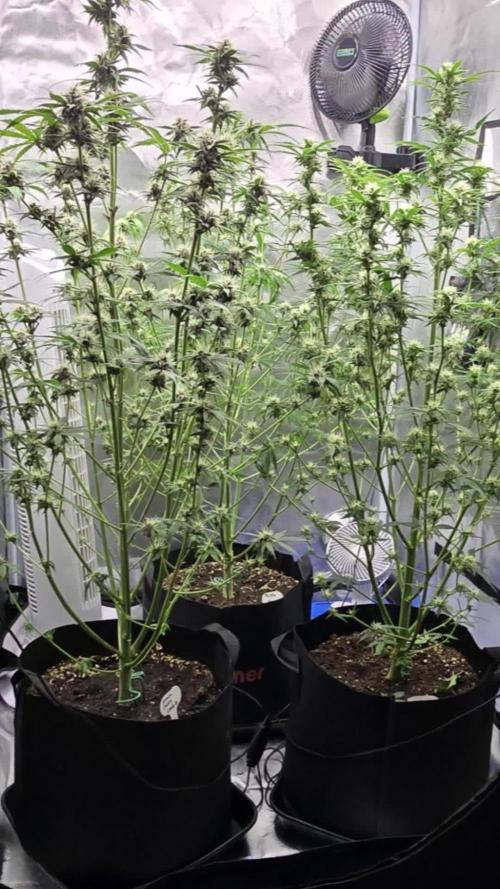
Day 50 😍welcome to week 7 😃👌
Day 51 i like the colorchange 😍🙏👍
Day 52 everything seems to ok 😃🙏👍
Day 53 and a long weekend 😎🙏👍 after 3 weeks a new SF SE3000 has to build in 💪😃👌
Day 54 after 4 weeks with SE1500 LED i upgrade today to SE3000 from Spider Farmer 💪😃👌
Day 55 massive leave cuttings in the morning and after that nutrients 😵 we will see whats happens next 🙏

Processing
Likes
18
Share


@Manic
Follow
A few lower leafs have yellows and shriveled but other than that both of the gals are looking good and the smell is finally started to kick in a bit. No problems at all and totally satisfied with there growth in bud size. Looking forward to this week and compare the difference.

Likes
16
Share


@Terpyboyz
Follow
Final product is been absolutely amazing on these clones - the jungle came out about average but the clones definitely exceeded expectations there absolute fire in comparison but still just as good hopefully I can just improve a few issues we had on this run and dial right in 100% will be so much better, next few run is going to be special I’ve got a few things lined up. From tester packs to breeders packs I can hunt from. So lots to choose from but what to keep to run will be interesting


Likes
2
Share


@Saintgrower
Follow
The frost in this girl is outrageous. Was getting some hot weather there so struggling to keep the temps down to preserve terps. Goin well
Likes
5
Share

@Growfather1
Follow
Hello everyone.
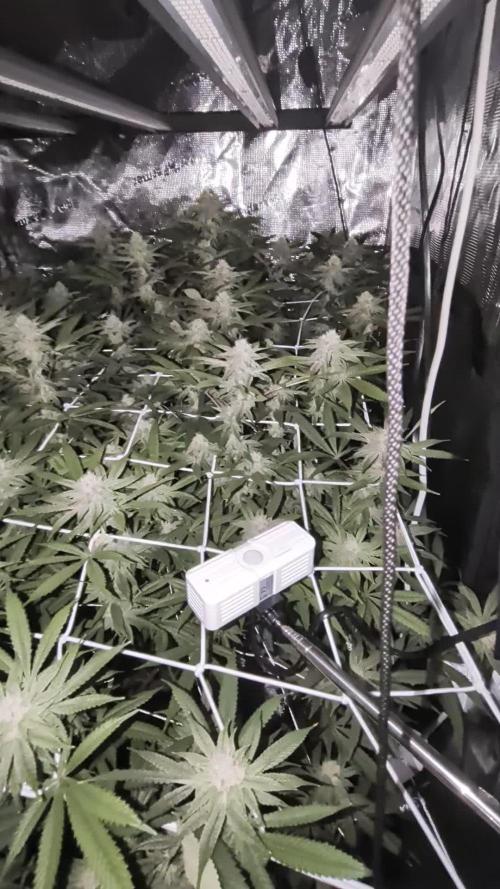
It is Day 27 of flowering, and she is stretching like she just woke up from a long nap.
The conditions are being a bit moody this week, with humidity swinging around 67% in the lung room and temperatures creeping up to 29°C inside the tent due to the dehumidifier working overtime.
On the feeding side, I started pushing the limits with PK 13/14 at 1.5 ml per 1 liter, alongside 2.8 ml per 1 liter of Canna Coco A and B.
Since I forgot to take photos with the lights on, you will have to settle for dark-mode shots until I update the journal tomorrow.
Thank you for stopping by and have a nice day.
Best regards,
Growfather.

Likes
30
Share


@Pheno_Minds
Follow
📋 Die Golosa von Delicious Seeds befindet sich in der Blütephase, Woche 9, also insgesamt in der 12. Woche. Die Pflanze steht bei einer Höhe von 49 cm und zeigt eine kompakte, robuste Struktur. Das Licht läuft stabil bei 12 Stunden am Tag. Die Bilder zeigen eine sehr starke Harzbesatzung auf den Blüten und Blättern, was für diesen Strain typisch ist. Die Blattfarbe ist tief dunkel bis violett, ein deutliches Zeichen für die Genetik. Die Blütenentwicklung schreitet voran, wobei noch frische, weiße Stigmen sichtbar sind. Punktuell sind leichte Blattverfärbungen oder kleine Spots an älteren Blättern zu sehen, was in dieser späten Phase der Abreife absolut im Rahmen ist.
💧 In der vergangenen Woche habe ich insgesamt 4 Liter gegossen, was einem Durchschnitt von 2 Litern pro Vorgang entspricht. Die Wassertemperatur lag im Schnitt bei 22.15 °C, der pH-Wert bei 6.2 und der EC-Wert bei 1.7 mS/cm. Die Düngergabe erfolgte zweimal mit dem Athena Schema: 1.5 ml/L Balance, 5.7 ml/L Pro Bloom und 3.2 ml/L Fade.
🌡️ Das Klima im Zelt ist warm und trocken. Mit durchschnittlich 29 °C und einer Luftfeuchtigkeit von 54 % ergibt sich ein VPD-Wert von 1.95 kPa. Der CO2-Gehalt liegt im Schnitt bei 1109 ppm, was die Pflanze bei den Temperaturen gut verarbeiten kann.
📸 Die aktuelle Entwicklung lässt sich gut an. Die Trichombildung ist massiv und die Pflanze zeigt ein tolles Farbspiel. Die Blüten wirken kompakt, auch wenn sie noch etwas Zeit brauchen, um voll auszureifen. Ich werde die kommenden Tage genau auf die Trichome achten, um den perfekten Erntezeitpunkt nicht zu verpassen. Die Pflanze ist in einem guten Zustand und liefert genau das, was man von der Golosa erwartet. Alles läuft nach Plan.

Likes
14
Share


@GanjaReaper
Follow
Day 14:
Still not much sun this week or higher temperatures. Therefore my plants don't grow faster and thicker. Just bit by bit.
Also because of the lower temperatures, my medium doesn't dry up and the roots don't drink that much, so I can't water them often.
If I would water them everyday or once per 2 days, they will get soaked, roots will rot and the plant will turn lightgreen and stop growing.
I gues the same climate temperature will continu for another 2 weeks, meaning that my plants won't veg into maximum size before going into flowering.
Let see how it goes and hopefully i'm mistaken.
Until next week!
Likes
8
Share


@Salokin
Follow
Week went again very uneventful. The plant does what she is supposed to be doing (gaining weight) :). Still lots of new pistils appearing overnight, I am checking the Trichomes daily, however, everything remains milky, with only very little % of amber trichomes. Once amber colours start increasing I will start flushing.

Likes
3
Share

@Bear_Grows_Green
Follow
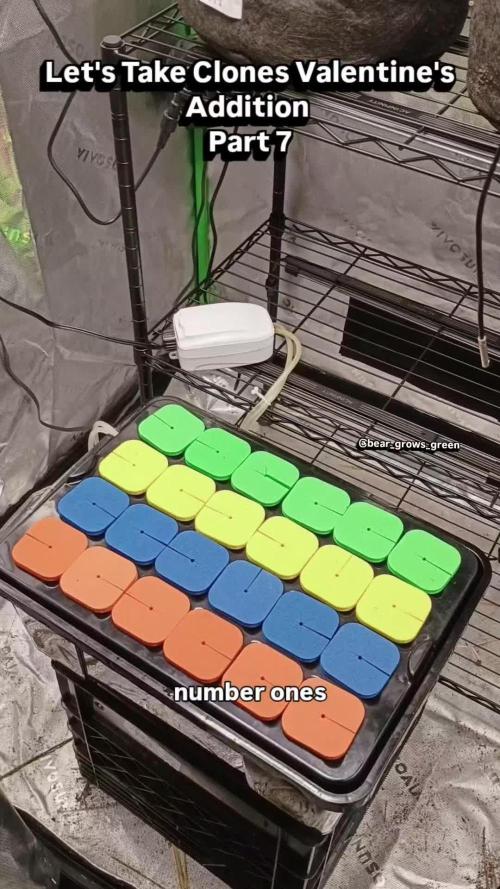
02/16 start of a new week
02/18 mums got watered
02/20 mum #1 looks like total shit
Likes
16
Share


@BudsBanditUK
Follow
Maybe 2 weeks left on her. She is getting denser by the day. Smells so strong and sweet. Getting very nice fade now, will stop feeding next week and then just water.
Likes
1
Share

@ElCapitol
Follow
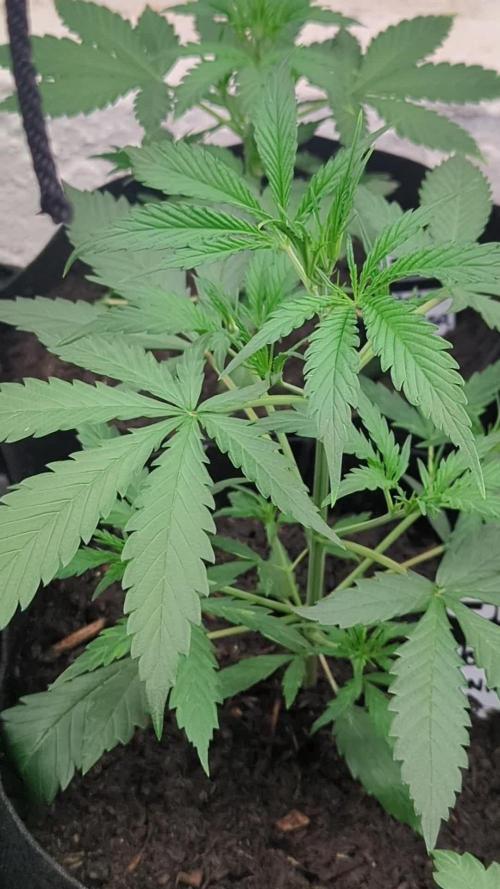
Nice growth in only one week. More than doubled, she seems very happy and strong. Good stem that is thickening up so she can hopefully carry more buds :)
No problems so far.
Likes
7
Share


Likes
4
Share


@knnabisgrower
Follow
En la 6ta semana de vegetación hicimos una poda de bajos y desfoliación en general para potenciar el crecimiento de los brotes superiores, mejorando la iluminación y ventilación en el cultivo. También hicimos unos cuantos amarres (lst).

Likes
8
Share


@Bryankush
Follow
Giorno 1 bene le ragazze si sono riprese bene dal trapianto e stanno sviluppando bene le radici e iniziano a bere più acqua.
Giorno 2 LST e verrà già pulita con una leggera defogliazione e più che altro lollipopping( solamente 1 nodo in meno per ogni ramo e 2 nei più sviluppati) perché è già più grande della compagna e ha i rami troppo cespugliosi che rovinano il flusso di aria e il loro corretto sviluppo.
Giorno 3 annaffiata con 1L di acqua
Giorno 7 defogliazione e lollipopping

Likes
13
Share


@NanoLeaf
Follow
Started Training Late!
Was on summer holiday for a week and only started training now. Above are the plants during training as well as a few hours after training.
Autos are definitely more delicate and the two runts are growing slow but yet still showing some progress.
Changed my bulbs back to the CMH set to 400w each (2)
Also gave them a good amount of water as the FloraCaps aren’t covering the whole pot I felt like it was necessary to wet the entire grow medium well for a change.
Some of them were a bit far along for training but I did the best I could.
Also the Purple Lemonade and 2 other plants are showing signs of flowering.

