Likes
Comments
Share
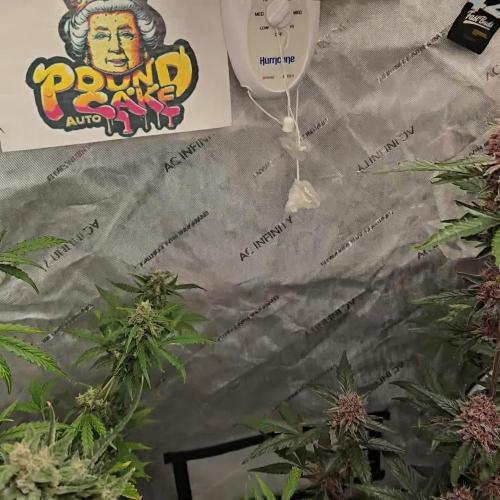
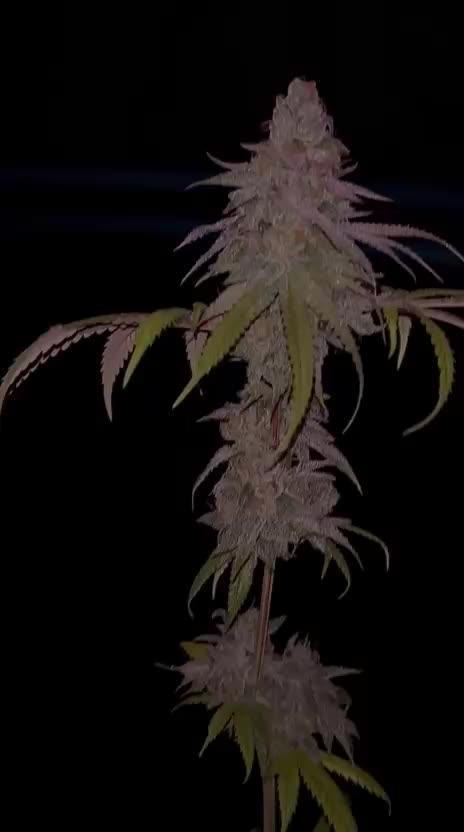
Vamos familia, cosecha de estas Fruit Cake de Seedstockers, que ganas que tenia ya de darles machete. Que locura la pinta que tienen estas plantas. Las flores aparte llevan una capa muy resinos, y muy prietas, aparte son bien aromáticas huelen bien fuerte. En general es una genética con la que disfruté bastante cultivarla, la genética es perfecta para cultivos de floración corta con rangos entre los 20/25 grados en interior, es bien fácil cultivarla y bien resistente, es excelente para cultivadores principiantes. Hasta aquí es todo, agradecer a Mikele, Giorgio de Seedstockers, y al equipo Agrobeta por hacer posible este proyecto espero que lo disfrutéis, buenos humos 💨💨.
Likes
24
Share
Had a lot going on this week so the plants didnt get any care or maintenance at all other than just checking on the water level a couple times. They need some major defoliation which I wanted to do this week but procrastination is the vibes currently. Will probably get some done next week.... the plants are looking good and most of them are bushing out pretty nice. They dont seem to be stretching as much as they normally do by this time, but they are transitioning to flower. Will probably do a flush and water change soon since they haven't had one in over a month. I'm just anxious to see some frosty buds at this point.
Likes
13
Share
@DrDuhboto
Follow
Trying to learn what plants I like to grow the most. This run is a test of each strain I ordered from seedsman. Blueberry is a clone from a seed, As I only had one of these seeds I didnt want to risk flowering it and losing a good pheno, So instead I grew that seed and cloned off of it. Maui Waui is from seed, and looks pretty wonky here, it got a bit out of hand during veg as I didn't have a screen in there. The seed has been vigourous though and I have high hopes for it being the only pure sativa in the bunch, Cheese is a clone taken from my last grow. I cloned it off the seeded plant before they went into flower. My last run with cheese went well with dense buds and good potency. Buttercream gelato is from a seed and has pretty interesting growth. It has been hard to keep nitrogen up in it and pales to lime much quicker than the other plants around it. Buttercream and Maui waui have been vegging for 2 months. Blueberry and chees have been vegging for 6 weeks
Likes
14
Share
@Flauros
Follow
Good stuff but little yield. 106g dry buds. https://jahseeds.ua/auto-white-widow-fem-poshtuchno Auto White Widow Производитель: Импорт Испания Тип сорта: Автоцветущий Гибрид Генетика: White Widow * Ruderalis ТГК: 22-24% Урожай: до 400 гр/м2 Цветение: 70 дней Высота растения: до 100 см. Вкус: Фруктовый, Тропический, Цитрус Эффект: Для кухни, Универсальные, Для отдыха https://jahseeds.ua/auto-white-widow-fem-poshtuchno
Likes
10
Share
@40Plug
Follow
Wow! Look at these amazing two plants. They both turned a bit purple. The smell is insane. Belive me or not but my entire room smells like a sweet ice cream restaurant. 😍 I had given this week only PH adjusted water and darkness for two days before harvest. Going to dry for like 7-10 days and then curing for another month or so. I will upload more pictures of the dried buds when the time comes
Likes
12
Share
Essa semana estamos no meio da estabilidade, você aumentará a rega um pouco pois as plantas são grandes e a temperatura está mais alta. As plantas estão bem resinadas.
Likes
24
Share
Es läuft weiterhin gut die hintere Reihe verhält sich aber besser von dicke der Knospen etc. Die vorderen sind etwas kleiner als die anderen aber denke sie ziehen noch nach. Ab Mitte nächster Woche wird nur noch Ph-reguliertes H2O gegeben und auch eventuell einmal geflusht.
Likes
46
Share
@Crwfz1
Follow
This plant is a monster idk what else to say 🤣 I'm stoked as hell and can garentee it will have best yield iv had indoor to date off one plant I can't believe how well it takes to training it is slow coming into flower and all the nodes are crazy close together these nugs are gonna be massive and heavy the roots on this plant are so robust you can't stick in a probe it's solid roots as u can see in the video the soil is straight roots not even a half inch under surface she's inhaling tons of water stay tuned it's gonna be worth it !!
Likes
16
Share
@GutterHoe
Follow
So as the week ends and I draw closer to harvest(10 weeks of flower 17 in all) of my first ever grow I trimmed dried and smoked a bottom bud that was wasting nutes. Jesus God in heaven it's got a kick already. Send me a like! Make a comment. I'm here alot.
Likes
30
Share
So far these plants have shown nothing but resilience and a will to grow I have put quite a bit of effort in but I’m sure I’m lacking in one or two spots but you would never be able to tell by the Look at the plants they seem quite happy and they are relatively patient with a new grower lol
Likes
14
Share
*********************************************************************************************************** START OF WEEK The Hawaiian Lion (right) and Tricho Jordan (left) are the two plants that dominate the face-on tent photos, and for good reason. Each of those plants is twice the mass of either Chimera. The HL is superior in bud sites, resin, and terp intensity, but the Tricho and the good Chimera #3 are both not too far off in resin production and aroma profiles. The weird runt is frosting up too, so we're looking at getting something unique and quality from each. That is, if I don't muck this up. I fed last night, and as part of that process, I mix my nutrients in a four gallon batch at a double(ish) strength. I then add that to my reservoir, which is shut off at that time. This allows me to work in the res, to both get the ppms right and the ph within range. I just use plain water to level off the ppms and then I adjust for ph. What I didn't do last night is TURN back on the flow of water from the reservoir. However, you wouldn't have guessed it from how the plants woke up today (see first image). I normally check the bases of each plant daily, and in doing so today, I noticed that one felt slight dry. All tanks were empty, but all plant bases were somewhere between wet to moist. This is how I spot check, and it's worked in the past. This isn't the first time these tanks have had a catastrophic issue leading to an unexpected no flow sitch. There's a filter that sits between the reservoir tank and the primary feed line. That has unexpectedly clogged on me in the past, but with no deleterious effect to the grow. That was caught within a day as well by testing the plant bases. I don't blame autopot for either event. Obviously, last night I was a baked potato and just forgot a step. The clog is because I use yucca in my mix, which is an organic material that over time in the reservoir leads to build up. I'm afraid to introduce hydrogen peroxide into the set-up, so I'm just maintaining my reservoir by cleaning it fully every other week for now. I don't want to kill off the bacteria in the environment. I'm also using some fungus, too, so I'd rather promote coexistence of a microbiome than serialize it, especially considering the plants seem to be on pace. **************************************************************************************************************************************************************** END OF WEEK Shit! I've got a herm. I've found four nanner clusters this week, all on the lower third-ish of the Hawaiian Lion. Someone, thankfully, spotted it in the purple flower pics. Turns out, while super fun to look at, those sweet violet flowers turned into harbingers of mother fucking doooooommm. I've never seen this before. I guess I've been fortunate, but I've also never had a camera this capable before either. I had no idea how small these pee pee's were. I guess I was expecting girth, but shame on me for not knowing. I rapidly learned as much as I could over the last two days, and I've come to the conclusion that I may or may not be screwed. The consensus on my situation ranges from either burn my tent down to thank ja for the blessings of feminized seeds. We're riding this baby out. I think I have fifteen to twenty days left and I think these little nanners might have been in action for ten days, hopefully less. I don't know what kind of damage will be done in that time, but honestly, I'm not too worried. While disappointing, my use case is a personal supply of bubble hash and flower rosin. If it's seedy, I'll wash most of it. I don't know what caused it, but I'm thinking a light leak or genetics. The environment is dialed and that plant hasn't shown one sign of anything less than vigor throughout. The spots that developed the purple flowers (lower bottom half to bottom quarter) are all in the vicinity of where I found the herms (four locations) and these locations are close to the edge of the tent along the zipper. I'm vigilant about keeping my tent and grow space in order, but a light leak can't be ruled out. I'll have to test that after the harvest. The herm flowers are minuscule and I'm surprised I found them. The camera was a great tool in this case. I sprayed the areas that I removed the nanners and then dried it, but for what it's worth, I think the damage was already done. That water bit felt more like ritual, but I'm still feeling optimistic that I'm not totally hosed.
Likes
37
Share
Day 70 for these Fastbuds beauties Blackberry Auto: With dark purple buds glowing fiercely and a dank smell to match, this girl could make anyone's tent look amazing. During the last few weeks her buds have become incredibly dense and sticky. She is very short and thick in stature compared to the other plants I have in flower. I inspected her trichomes over the weekend and ive determined that she is pretty much ready for harvesr. I expect about 2 oz of high quality flower after dry/cure. Forbidden Runtz Auto I'm really blown away with the turnaround in this girl. She was mutated & so small I almost tossed her out during early veg; I'm glad I changed my mind. She stretched significantly between weeks 4-6 and I really wasn't expecting much from her. In reality, she has blown my mind... incredibly dense and sticky buds have developed in the past 4 weeks. She's got the zkittles smell mixed with a gassy terp profile.. I think the higher humidity through flowering phase really helped develop these dense buds. When I checked her trichomes over the weekend I determined that she will be cut down within the next 7-10 days. Process/ Environment changes: - Lowered my SF4000 roughly 20 cm to increase photon delivery to the canopy - Water/kelp meal only from this point to harvest - My temperature has risen due to change of seasons .. roughly at 27-28 deg C during daytime.. this is why I lowered my lights rather than turning them up - Defoliating any unnecessary fan leaves at every chance I get - I've had to use spools of twist tie to use to keep the branches from falling over from their own weight. I'll tie one end to the top of a branch, and the other to the stock. Not ideal but its working. Cheese auto dry/ cure update: After 10 full days of drying, I gave the buds a decent trim and put them inside glass jars where they will remain for many weeks. I add 2 way Boveda humidity packs to help regulate the relative humidity within the containers. I also use tiny hydrometer pucks to measure the humidity and temperature inside the jars. My ideal cure is at 62% RH
Likes
9
Share
Comienza el engorde en algunas cepa. Se cambió el sistema de extraccion de temperatura (cooltube) y de olor y aumento distancia de foco, logrando reducir temperatura de 31-32 a 27-29. Primer doblés a LSD 25, primeros signos de entrar a prefloración.
Likes
45
Share
2nd net is up. Early bud formations are promising. holding up to the extremes pretty well, some leaves taking minor damage, but overall, she is holding up, gave her 1 night at 50F see how she would react, stressful. Not advised as it messes with her metabolism, but I want to see if it triggers any anthocyanin response. Love to see her purp up but no signs yet. My homework. Rubisco regeneration is intrinsically linked to nitrogen supply because Rubisco is a major sink for nitrogen in plants, typically accounting for 15% to over 25% of total leaf nitrogen. The regeneration phase itself consumes nitrogen through the synthesis of the Rubisco enzyme and associated proteins (like Rubisco activase), and overall nitrogen status heavily influences the efficiency of RuBP regeneration.Structural Component: Nitrogen is an essential building block for all proteins, and the sheer abundance of the Rubisco protein makes it the single largest storage of nitrogen in the leaf. Synthesis and Activity: Adequate nitrogen supply is crucial for the synthesis and maintenance of sufficient Rubisco enzyme and Rubisco activase (Rca), the regulatory protein responsible for maintaining Rubisco's active state. Nitrogen deficiency leads to a decrease in the content and activity of both Rubisco and Rca, which in turn limits the maximum carboxylation rate, Vmax, and the rate of RuBP regeneration Jmax, thus reducing overall photosynthetic capacity. Nitrogen Storage and Remobilization: Rubisco can act as a temporary nitrogen storage protein, which is degraded to remobilize nitrogen to other growing parts of the plant, especially under conditions of nitrogen deficiency or senescence. Nitrogen Use Efficiency (NUE): The allocation of nitrogen to Rubisco is a key determinant of a plant's photosynthetic nitrogen use efficiency (PNUE). In high-nitrogen conditions, plants may accumulate a surplus of Rubisco, which may not be fully activated, leading to a lower PNUE. Optimizing the amount and activity of Rubisco relative to nitrogen availability is a target for improving crop NUE. Photorespiration and Nitrogen Metabolism: Nitrogen metabolism is also linked to the photorespiration pathway (which competes with carboxylation at the Rubisco active site), particularly in the reassimilation of ammonia released during the process. To increase RuBisCO regeneration, which refers to the process of forming the CO2 acceptor molecule Ribulose-1,5-bisphosphate (RuBP) during photosynthesis, the primary methods involve optimizing the levels and activity of Rubisco activase (Rca) and enhancing the performance of other Calvin-Benson-Bassham (CBB) cycle enzymes. Biochemical and Environmental Approaches: Optimize Rubisco Activase (Rca) activity: Rca is a crucial chaperone protein that removes inhibitory sugar phosphates, such as CA1P (2-carboxy-D-arabinitol 1-phosphate), from the Rubisco active site, thus maintaining its catalytic competence. •Ensure optimal light conditions: Rca is light-activated via the chloroplast's redox status. Adequate light intensity ensures Rca can effectively maintain Rubisco in its active, carbamylated state. •Maintain optimal temperature: Rca is highly temperature-sensitive and can become unstable at moderately high temperatures (e.g., above 35°C/95F° in many C3 plants), which decreases its ability to activate Rubisco. Maintaining temperatures within the optimal range for a specific plant species is important. •Optimize Mg2+ concentration: Mg2+ is a key cofactor for both Rubisco carbamylation and Rca activity. In the light, Mg2+ concentration in the chloroplast stroma increases, promoting activation. •Manage ATP/ADP ratio: Rca activity depends on ATP hydrolysis and is inhibited by ADP. Conditions that maintain a high ATP/ADP ratio in the chloroplast stroma favor Rca activity. Enhance Calvin-Benson-Bassham (CBB) cycle enzyme activity: The overall rate of RuBP regeneration can be limited by other enzymes in the cycle. •Increase SBPase activity: Sedoheptulose-1,7-bisphosphatase (SBPase) is a key regulatory enzyme in the regeneration pathway, and increasing its activity can enhance RuBP regeneration and overall photosynthesis. •Optimize other enzymes: Overexpression of other CBB cycle enzymes such as fructose-1,6-bisphosphate aldolase (FBA) and triose phosphate isomerase (TPI) can also help to balance the metabolic flux and improve RuBP regeneration capacity. Magnesium ions, Mg2+, are specifically required for Rubisco activation because the cation plays a critical structural and chemical role in forming the active site: A specific lysine residue in the active site must be carbamylated by a CO2 molecule to activate the enzyme. The resulting negatively charged carbamyl group then facilitates the binding of the positively charged Mg2+ion. While other divalent metal ions like Mn2+ can bind to Rubisco, they alter the enzyme's substrate specificity and lead to dramatically lower activity or a higher rate of the non-productive oxygenation reaction compared to Mg2+, making them biologically unfavorable in the context of efficient carbon fixation. The concentration of Mg2+ in the chloroplast stroma naturally increases in the light due to ion potential balancing during ATP synthesis, providing a physiological mechanism to ensure the enzyme is activated when photosynthesis is possible. At the center of the porphyrin ring, nestled within its nitrogen atoms, is a Magnesium ion (Mg2+). This magnesium ion is crucial for the function of chlorophyll, and without it, the pigment cannot effectively capture and transfer light energy. Mg acts as a cofactor: Mg2+ binds to Rubisco after an activator CO2 molecule, forming a catalytically competent complex (Enzyme-CO2-Mg2+). High light + CO2) increases demand: Under high light (60 DLI is a very high intensity, potentially saturating) and high CO2, the plant's capacity for photosynthesis is high, and thus the demand for activated Rubisco and the necessary Mg2+ cofactor increases. Mg deficiency becomes limiting: If Mg2+ is deficient under these conditions, the higher levels of Rubisco and Rubisco activase produced cannot be fully activated, leading to lower photosynthetic rates and potential photo-oxidative damage. Optimal range: Studies show that adequate Mg2+ application can enhance Rubisco activation and stabilize net photosynthetic rates under stress conditions, but the required concentration is specific to the experimental setup. Monitoring is key: The most effective approach in a controlled environment is to monitor the plant's physiological responses e.g., leaf Mg2+ concentration, photosynthetic rate, Rubisco activation state, and adjust the nutrient solution/fertilizer to maintain adequate levels, rather than supplementing a fixed "extra" amount. In practice, this means ensuring that Mg2+ is not a limiting factor in the plant's standard nutrient solution when pushing the limits with high light and CO2. Applying Mg2+ through foliar spray is beneficial to Rubisco regeneration, particularly in alleviating the negative effects of magnesium (Mg) deficiency and high-temperature stress (HTS). While Mg can be leached from soil, within the plant it is considered a mobile nutrient, particularly in the phloem. Foliar-applied Mg is quickly absorbed by the leaves and can be translocate to other plant parts, including new growth and sink organs. Foliar application of: NATURES VERY OWN MgSO4 @ 15.0g L-1 in a spray bottle. Foliar sprays are often recommended as a rapid rescue measure for existing deficiencies or as a supplement during critical growth stages, when demand for Mg is high. Application in the early morning or late evening can improve absorption and prevent leaf burn. The starting point [of creativity] is curiosity: pondering why the default exists in the first place. We’re driven to question defaults when we experience vuja de, the opposite of déjà vu. Déjà vu occurs when we encounter something new, but it feels as if we’ve seen it before. Vuja de is the reverse—we face something familiar, but we see it with a fresh perspective that enables us to gain new insights into old problems. Come walk in the enchanted forest.
Likes
2
Share
Likes
23
Share
Likes
42
Share
Harvest done, plant is drying. 116 days from seed: 51 days veg + 65 days flora.
Likes
7
Share
Day 64 and the start of WEEK 10 These green crack autos go on automatic gear and need very little maintenance. Checking Trichomes every couple of days and it seems they will be going further. Day 66 Still building up bud .... waiting for the right day to harvest these green babes Day 68 Took out 90% of their fan leaves in preparation for harvest. Some Amber trichomes visible so they are nearly there 😍