


Likes
Comments
Share


@WalterKEKWhite
Follow
Feeding Molasses, epsom Salt and envi seafeed xtra.
Also as foliage spray. Some leftover glozing BB spray.
I did a second topping over the 4th new node and tried to defoliate a bit on the bottom.
All Plants are doing great, no pest, no signs of nutrient deficits.
Still 6 weeks of veg left ❤️


Likes
57
Share


@MadeInGermany
Follow
Hey everyone 😊.
Another great week is over and the women are developing beautifully .
The Phenotype 1 is particularly beautiful 😍.
I have never seen a plant turn purple / reddish at such an early stage .
Absolutely beautiful .
You can see very nicely how the buds start to develop 🙂.
Otherwise, there is nothing exciting to report this week.
I wish you all a lot of fun with the new update, stay healthy 🙏🏻 and let it grow 👌🌿🌱☘️🍀
You can buy this Strain at :
https://sweetseeds.es/de/red-mandarine-f1-fast-version/
Type:
Red Mandarine F1 Fast Version
☝️🏼
Genetics:
Red Poison Auto®️ (SWS39)
X
Tangie (California Orange x Hybrid Skunk)
👍
Vega lamp:
2 x Todogrow Led
Quantum Board 100 W
💡
Bloom Lamp :
2 x Todogrow Led
Cxb 3590 COB 3500 K 205W
💡💡☝️🏼
Soil :
Canna Coco Professional +
☝️🏼
Fertilizer:
Green House Powder Feeding
☝️🏼🌱
Water:
Osmosis water mixed with normal water (24 hours stale that the chlorine evaporates) to 0.2 EC. Add Cal / Mag to 0.4 Ec Ph with Organic Ph - to 5.5 - 5.8 .

Likes
12
Share

@El-Ecko
Follow
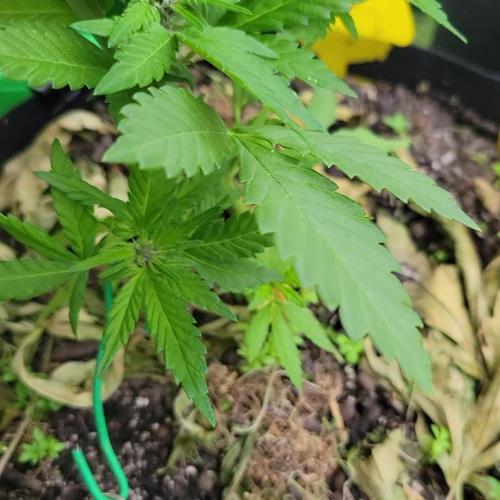
2 Weeks into Flowering
Daytime temperatures have gone from 15° to 30° in just one or two days. But I really can’t complain… because I needed the warmth, too😅. I decided to do a light LST to help the little side shoots get more sunlight. The little flowers are slowly taking on a beautiful purple hue.
Hopefully, they’ll get really plump and sticky. 😋🤤
Thanks so much for stopping by. ✌️
Likes
45
Share


@masterofsmeagol
Follow
5/1 Plants are being rock stars. The event horizons and toasted toffy have been lollipopped abd it looks like lsted. I need to tie down the branches. The one sherb pie looks like it has a little bit of light burn but everything else is doing awesome.
5/2 Didn't write anything I forgot.
5/3 Plants are still doing great. The event horizon is coming out of reveg and isn't so twisty. It's time to start LSTing. I just haven't had time. I'm planning to put some work in today. Soil still seemed a little wet. I FIMed a GMO. I'll wait to see how that turns out before I do the rest. After today I'll have more time. Plants still aren't DIRECTLY under the light. I want to turn on both switches but I'm afraid they'll burn.
5/4 Still going strong. Watered today. Used approximately 3 Gatorade bottles. I tried to split one bottle between 3 plants. I want the roots searching for water. I want these 1 gallons to be full of roots before the transplant. I'm thinking I may do some lsting today as well as some topping or FIM. I'll update. Seedlings seem to come out of that stall. Didn't think they'd make it.
5/5 When I arrived I realized I had left the light OFF from the morning before when I was watering and inspecting things. Hooe this doesn't mess things up to bad. I've got one event horizon that's having trouble coming out of reveg. Everything else looks good. Those stunted auto seeds are coming up with their Second set of leaves. Definately took long enough.
5/6 I got close and inspected every plant. I really want to flip the bloom switch on too. I turned it on for a minute and it's bright as fuck. I think if I could find a way to raise the light higher (I'm working on a theory) I might be able to flip both switches. However I'm noticing what looks like light burn or light stress on some of them. It's not the too of the plant though. It's like the serated leaves are turning in on themselves. The 2 that I think reveged are turning their leaves inside out. Not sure if it's a reveg thing or has something to do with the light. I raised the light at noon. I'll see if this has a positive effect. The shades only partially block direct sunlight so I may need to make sure that's what's not causing this. The 4 gmo show no signs. I moved one almost directly under the light to see if it had an effect or if it's strain dependent. I'm definitely need to learn how to use l.e.d's better. Oh well. They'll go outside in less than a month.
5/7 I'm hoping leaving that light off didn't fuck with the clones that revegged. Raisingcthe light was a good idea. I can raise it higher and I'd like to hit the other switch. It's so much brighter and the gmos don't have any burns. They'll be going outside in a few weeks anyway. I was going to but a parmeter and I still might. The auto seeds are coming up pretty good. It's in the 60s today. I might bring the girls outside on the covered porch and see how they do.

Processing
Likes
10
Share


@Teamdirtbag2
Follow
So the end is here. Its time, only damage from this point on, in this case.. I chopped her. She is hanging... strong pine smell with a little lemon. Not my favorite that's for sure.


Processing
Likes
10
Share


@Hbomb420
Follow
Gone in to flower so started on some bloom nutes this week and also gave them a good defoliation
Likes
10
Share

@MistaOC
Follow
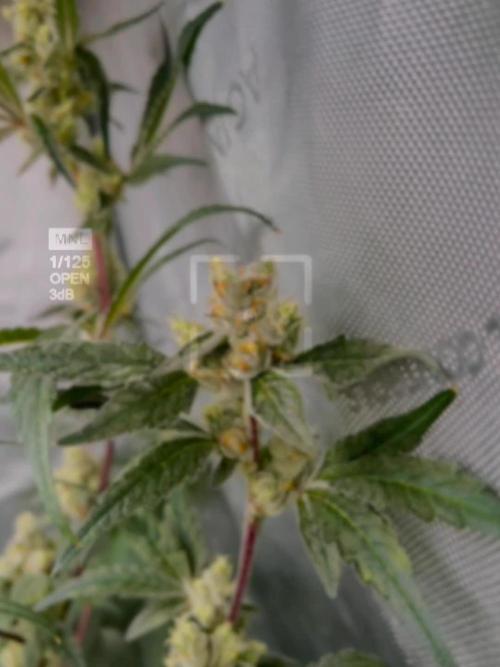
06.03. F46
Day 46 of flower and everything is moving forward exactly as planned.
The powdery mildew situation is significantly more under control compared to previous grows. It hasn’t disappeared completely, but the difference is huge. At this stage of flowering it’s absolutely manageable and no longer something that worries me. Humidity is staying consistently between 47–53%, which helps keep the situation stable.
Aside from that, the plants are simply impressive. The buds continue to develop beautifully and the overall health of the canopy remains excellent. It’s one of those moments where you just stand in front of the tent and admire what’s growing in there.
More and more it becomes clear that this genetic line is something special. Every day the plants show more character and quality.
This run continues to be an absolute pleasure to watch. 🌿🔥.

Likes
26
Share


@PatriciaGant
Follow
Dane, We all should help one another. Human beings are like that.
We should live by each other’s happiness - not by each other’s misery.
We don’t want to hate and despise one another.
In this world there is room for everyone. And the good earth is rich and can provide for everyone.
The way of life can be free and beautiful, but we have lost the way.
Grow High and Give the world A smile. Have A Great Day.
What n°2 is lacking is n°1 compensating,
(day 11, dont know what to do ph is right ppm is right themperature is ok light is ok should be recovering within 3-4 days i hope.)
roots are already grown into water bucket.(should i picture them as well?)
ph lv is such a pain in the ass but grow speed is worth all the trouble in hydro.
(16 n°2 still not good i placed another one next to her with luck she recovers if not another one already in place to grow)
(19 all hope is lost she probably doesent make it i set replacement already so waiting for her sisters to pop out and take over)
(20 it is the same water in the buckets so im a little lost why one explode and the other one not,)
(21 n°2 complete reset, new water, new nutrients new clay. probably died cause to shock now)

Likes
16
Share


@DoDrugs420
Follow
An Indica-dominant hybrid that’s incredibly easy to grow and very resilient, suited for new and experienced growers who, with not much effort, will be rewarded with impressive 24% THC packed colorful buds with red and pink highlights, accompanied with light orange and white pistils that stand out from afar. Provides a powerful yet not overwhelming high that comes hand in hand with a unique extremely delicious sweet and doughy citrus pine-sol smell. Lemon Pie Auto performs exceptionally well indoors and outdoors, where it’s recommended to grow in bigger pots to let her show her full potential; being able to yield up to 550 gr/m2 in around 8 weeks. The extremely dense and chunky buds will leave you amazed by the excessive resin production that makes it look like they are completely buried in it, perfect for people looking for potency and great taste while having a balanced cerebral and body effect that will please even the more experienced growers. Also recommended for extractors looking for terpenes that will captivate your taste buds.
Tech Specs
Taste
Lemon, Dough, Sweet, Pine
THC
Up to 24%
CBD
< 1%
Size
XL
Height
80 – 100 cm
Flowering
8 – 9 weeks
Genes
Sativa 50%/Indica 50%
---------------------------------------------------------------------------------------------------------------
Grow Sponsored by MARSHYDRO
HIGH EFFICIENCY WHITE LED LIGHT: Newest SMD LED technology provide highest PAR/LUMEN output(743umol@18"), designed to replace a single-ended 250watt HPS; MARS HYDRO TS 1000W Plants Growing lamp makes you get 30% higher yield compare OLD blurple led lights, Max 2.0g yield per wattage (power draw)
LOW ENERGY CONSUMPTION GROW LIGHTING : Consuming only 150W with 342 LEDS! It saves up to 50% energy than other led grow lights. Perfect for 2.5x2.5ft,Max coverage 3x3ft. Over 90% light energy can be absorbed by plants; higher intensity and more even coverage in a MARS HYDRO grow tent, reflective area, or by crossing over using multiple TS1000
SUNLIKE FULL SPECTRUM LED INDOOR GROWING: 660-665nm Red IR/3200-4200Knm/5200-6800Knm, infinite close to natural light, best for all plants all stages growing, rapid plant response from seed to flower and increase yield & crop quality
HIGH REFLECTIVE & NOISE FREE-Fanless LED GROW SYSTEM design will make your growing life easy and quiet, quickly heat dispersing material aluminum reducing light lost to aisles and walls, increase the light intensity up to 20%, allowing your plants receive more energy and without burning your plants for maximum headroom
Get your own at https://www.amazon.de/dp/B07ZVFBR34
Likes
62
Share


@Reyden
Follow
La tenda (4x4) è in fioritura da circa 2 settimane e la SF2000 lavora a pieno regime riuscendo a coprire bene e in maniera efficace praticamente ovunque, ho trasferito la Purple OG Punch di SSSC che è l’unica autofiorente e mi stava crescendo troppo in altezza per stare nell altro box e quindi aggiungerò lei in questo diario!😄💥🎬💚
Tutte le Gorilla 🦍 sia di Zamnesia che di RQS sono state defogliate nelle foglie più gialle e con carenze, le 3 piante di Seeds Mafia invece continuano così cercando di recuperare le altre in altezza…ora le Gorilla 🦍 sono tutte a 1.800 EC mentre le 3 di SM sono a 1.600 EC, la PPOG è a 1500 EC.
Ci vediamo presto con altri aggiornamenti e grazie di essere passato!
Grazie Spider Farmer ancora per questo LED SF2000, questo nuovo modello fa veramente la differenza e le piante crescono in maniera ottimale!!! 💯🙌🌱


Likes
2
Share


@Ultraviolet_
Follow
The nighttime VPD does not need to mirror the daytime VPD. Daytime VPD dictates the pull of water and nutrients, while nighttime VPD acts mostly as a prevention tool. A high nighttime VPD increases the risk of the leaf temperature dropping below the dew point, which can trigger bud rot and powdery mildew.
Switched down to 12's hours of light mid-week, changed spectrum, increased light intensity from 840umol up to 1150umol at current height. Overnight from 800ppm to 1500ppm, morning compensation point (microorganisms) 46-47 days from germination, she fills the canopy herself, once the apical dominance is broken.
Measuring a plant's overnight CO2 emissions provides an accurate estimate of its dark respiration rate. Because photosynthesis stops in the dark, you are isolating the respiration process, which allows you to gauge how much stored energy (glucose) the plant has consumed and estimate the scale of oxidative phosphorylation. Oxidative phosphorylation is the final stage of respiration that generates the bulk of the plant's ATP (90%) and relies directly on the oxidation of these respiratory substrates NADH and FADH2 along with the consumption of oxygen.
From a thermodynamic standpoint. Growth is an energy-capturing process, and the rate of that growth is bound by the available free energy (Gibbs free energy) and the First Law of Thermodynamics. While the ceiling or upper limit is dictated by free energy (such as photosynthetically active radiation), the actual amount of growth relies on how the plant balances that energy with other limiting factors. These are often described as the nine cardinal parameters of plant growth. 4 Above, 5 Below. If any one of the 9 becomes bottlenecked, the entire plant's cycle is restricted.
Operating an 80F+ environment at night to force rapid carbon conversion comes with major drawbacks, as the biochemical processes work differently than the deductive logic suggests. While raising nighttime temperatures to 80F indeed accelerates respiration and speeds up the conversion of captured sugars (sink activity), doing so also radically increases the plant's overall metabolic baseline. If the plant's metabolic rate is artificially forced too high via heat, it can actually "burn" through more energy than it managed to assimilate during the day. This leads to carbohydrate starvation, stretching, and a net loss in final biomass yield.
400 ppm is near the standard ambient level; the plant's stomatal intake is the primary limiting factor, not the dark-reaction enzymes. To push 45 DLI without burning out the plant. Trying to force the conversion of a massive daylight DLI in a compressed time frame (12 hours) becomes highly inefficient because the Rubisco enzyme simply hits a saturation limit. To successfully convert a 45 DLI into dense, productive mass, the ambient CO2 generally needs to be elevated to the 1000 to 1200ppm range. This creates a steeper concentration gradient, driving the stomata to inhale CO2 fast enough to match the high photon energy.
It's not all about the amount of light, but the ratio too, as this will dictate growth through the ratio of phytohormones. In order for correct bud development, there needs to be a correct ratio of RGB. Different wavelengths have different penetration depths. When one grows using top-down lighting, only the entire canopy is limited to 2-3 layers of leaf, meaning there will only be correct bud development in those layers, regardless of getting 45DLI.
The biomass potential of a plant is linked to root mass. Generally, when a plant reaches its maximum biomass, you can help to chop off parts of the plant that are in less than efficient areas of the plant (low light) so that it can create new biomass growing towards the light.
Strength is the maximum potential, and power is the rate of conversion. You can have the biggest veg period of 18 weeks, and it means nothing, as soon as you start flowering, the chronological clock starts ticking, the only metric that matters to bud size is how much energy you convert each cycle, not by how long it took you to build the framework, it helps a lot nonetheless.
Not saying anyone should not defoliate for a reason, only that you should have one, and at the right time. Don't defoliate 30+% on autoflowers or 4 weeks into the flower period and expect an increase in yields; it doesn't work like that. There is room for dictating growth patterns and clearing out overcrowded nodes, but it needs to be done in veg because once that timer starts and buds start growing, it's all just energy conversion. One barely needs to defoliate at all in a 4x4 because with side lighting, turning a 2d canopy penetration into a 3d, even lower buds are 90% the quality and density of top ones. The rate of photosynthesis and the ultimate density of lower buds aren't just about the sheer number of photons PPFD. The specific ratio of R:G:B dictates canopy penetration and drives different photochemical reactions. The Electron Transport Rate (ETR) measures the speed at which electrons are driven through Photosystem II (PSII) during photosynthesis. The ratio of Red, Green, and Blue (RGB) light heavily dictates this rate.
Plant leaves continuously perform cellular respiration regardless of the time of day, using energy and oxygen to fuel essential metabolic maintenance. If you over-defoliate, the remaining canopy may be unable to produce enough net sugars during the day to offset the constant respiratory demands of the plant. Must balance fixation with assimilation; there's no point in capturing 45 DLI if you only convert 20% every cycle due to an extreme lack of respiratory capacity to perform cellular oxidative phosphorylation.
You can have a 4x4 canopy or a 4x4x4 canopy, yes, we know that side lights are not as effective at absorption from the sides or underneath, but it's not about DLI, it's never been just about efficiency, it's about the penetration ratios of RGB that drive ETR of/photosynthesis and trigger correct bud development. The size of each bud is its own ability to perform the ETR required for its own personal growth, and bud development is dictated by the ratio of RGB. It drives localised growth and acts as a regulatory switch for that development. Turgor pressure is another very important factor in understanding if you want big buds, for it is the "steam engine" that dictates the rate of bud expansion. Simply, a lot harder to achieve metabolically at ambient 75F than at say 86F
Because buds have less chlorophyll, they do not suffer from the same photosynthetic shutdown that over-exposed, light-stressed leaves do. They can soak up direct light energy to swell in density and size. Their tolerance to intense light is heavily limited by the temperature and humidity, but if you can control those temps and keep the rot away, buds have a much, much higher tolerance to high light than leaves. Beneficial to hammer with high light before trichomes appear. Balancing this with trichome maturity is key for rich terpene and flavonoid profiles, want it just right, somewhere in the middle, not too much, not too little. Find cannabis plants can defoliate themselves come harvest, given the right signals. Every last ounce of potential is recycled into buds by the plant itself (senseceance), given you can keep the level of conversion high enough to prompt a need to do so.
Get the canopy @ optimal PPFD range, 45-55DLI, then let the plant "stretch" the stems into a "PPFD range much higher, one that leaves don't like to grow in, but buds thrive in. What is optimal for a bud is different from what is optimal for a leaf photosynthetically. Genes provide the blueprint, but the environment dictates how, when, and if those genes are expressed. Must first signal the condition to increase the expression you want to exist through stress and response, cause and effect. A well-buffered CEC medium prevents extreme nutrient swings, allowing plants to maximise their dedicated genetic expression.
A plant is either genetically expressing "growing" or "recycling" genes based on its nutrient starvation level in the medium. Constantly toggling between "growing" and "recycling" hormonal states creates a futile cycle that wastes valuable metabolic energy. Plants rely on sophisticated biochemical switches to manage this trade-off and prevent rapid fluctuations that disrupt that balance.
This energy inefficiency is a recognised biological challenge. Plants avoid this costly "flip-flopping" by using hierarchical master regulators (like the TOR and SnRK1 protein kinases) that act as strict molecular switches. These networks enforce cellular commitment to either growth or survival, preventing mixed signals.
This is something that was missing from previous grows.
Under nutrient-rich conditions, TOR promotes protein synthesis, cell division, and structural expansion.
Under starvation, TOR is inhibited, and SnRK1 is activated. This triggers autophagy—where the plant breaks down old macromolecules and organelles to scavenge and reallocate essential nutrients to critical sinks.
"What's the point in flushing?"
The core idea behind a PK booster is to deliver a massive, concentrated surge of P&K exactly when buds are swelling in conjunction with a N starvation. Because these are short, targeted windows, the nutrients must be highly bioavailable so the plant can process them immediately. As soon as you go "organic," that's out the window. Much slower release, uncontrolled, very difficult to "spike". to cause the ratio that will initiate a response.
High-volume PK spikes rely strictly on the immediate uptake capabilities of mineral fertilisers. Making it far less efficient in organic/living soil setups.
When you use organic nutrients, it changes the dynamic with which the plant delivers and trades its nutrients; organic is always releasing new nutrients into the immediate EC. This prevents a lot of autophagic responses from occurring due to a constant stream of new nutrients into the immediate medium's EC. This can prevent nutrient starvation from being signalled.
PK boost is essentially just N starvation, triggering an autophagic response. Concentrated ratio of P&K while tapering off the Nitrogen base. To the plant, the sudden drop in Nitrogen registers as a severe environmental stressor—essentially, the beginning of starvation protocols. She aggressively strips nutrients and proteins from older leaves and vegetative structures and shuttles them directly to the developing flowers and fruit. Ta daaa. Call it a PK booster and sell it. Nothing to do with the P and K itself, it's the ratio immediately available in the medium triggering a nutrient recycling mechanism within the plant itself; all the "booster" sells is the trigger to the signal.
PK BOOST with 50% ammoniacal N signals floral maturation.
PK BOOST with N starvation signals nutrient recycling/sinking.
Very difficult to initiate a response when organic nutes are doing their thing. It takes 4x5x more water significantly to leach or wash ammonia out than it does nitrates. This can prevent triggering N starvation from having its normal impact.
Manipulating the C:N ratio in the medium. One autophagic response has multiple potential signal triggers. Nutrient starvation is not an option.
Likes
4
Share


@Bread_n_Buds
Follow
Our friends at Zamnesia are frenetically active in the search for innovation for their growers and here too we have one of the newest, full of hype, Californian strains Super Boof naturally in an exclusive Zamnesia version.
You can find the other one in the next diary worked with Topping / Main Lining / Main Folding
In this diary you will find the plant worked with the techniques in this case the first topping was carried out, we cleaned everything else by creating the Mainfold and we are going to work everything with the main lining. We are at the first topping and we have two mini branches growing.
The other one you can find in the diary alongside worked without the application of techniques that involve cuts to preserve its speed.
The comparison is the salt of the experience.
We have started the Plagron fertilization program, we are in 100% organic configuration, the soil is recycled Promix + 1/3 fresh soil + 10% Perlite + RQS Mycorrhiza Mix (4gr in the mix, 1 gr under the small fiber pot).
We are administering // 1 ml/l of Power Roots - 1 ml/l of Pure Zym - 1 ml/l of Sugar Royal - 3 ml/l of Alga Grow
I have doubts about the compatibility of Pure Zym with mycorrhizae. If in doubt, ask the experts, do not mix too much at random.
https://plagron.com/en
Doubts about Pure Zym / Mycorrhizae compatibility have been dispelled, they can go well together according to Plagron experts. If someone tells you that enzymes eat mycorrhizae, which in principle may seem possible, explain to them that it is not true.
https://www.royalqueenseeds.it/growing/452-easy-roots-mix-di-micorrhize.html
Sample some of Leafy's strain of the year ---- // https://www.zamnesia.io/en/13317-zamnesia-seeds-super-boof.html
Zamnesia Short Description // Here's your chance to grow one of the most sought-after strains of recent years: Super Boof, crowned Leafly's strain of the year 2024, and for good reason. Descended from Black Cherry Punch and Tropicana Cookies, this indica-dominant hybrid (70%) takes the already exceptional characteristics of its predecessors to new heights. Grow it at home to find out for yourself.
You can find the whole world of growing at Zamnesia and much more, take a tour of the site and you will find "all the best that nature has to offer" in various shapes and colors.
The new strains are exceptional and the old ones are no exception... p.s. no Hermaphrodites yet, growers can you say the same?
---- // www.zamnesia.com
Likes
7
Share

@PavementPunk
Follow
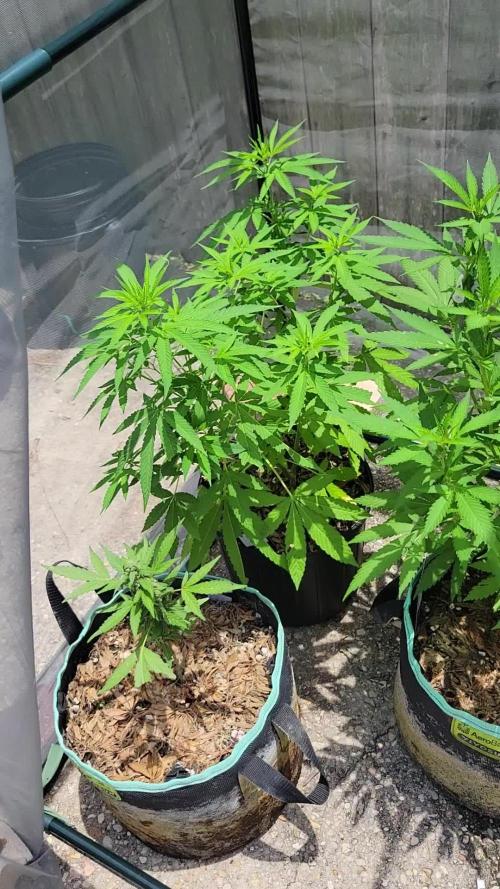
7/8/26 I really dont feel there is much to report on this plant or my whole grow in general. Maybe im just being lazy. I feel like it was just a bit of a normal week everyone got fed twice. I made sure to take my time and water them with care. Only real note is that i got a few spidermites in the tent. I caught it super early and manually squished them and hopefully its done. I did see one outside i believe. And thats got me wanting to lay down some pesticide to get rid of those bastards from around my house. This spit shot has been loving the sun loving it outside and is looking great. Photoperiod plants are the shit. Bad slow start? No worries just veg em longer and bang big gorgeous girl like woah now! 🙃happy growing friends ✌️


Likes
Comments
Share

@BudBeat
Follow
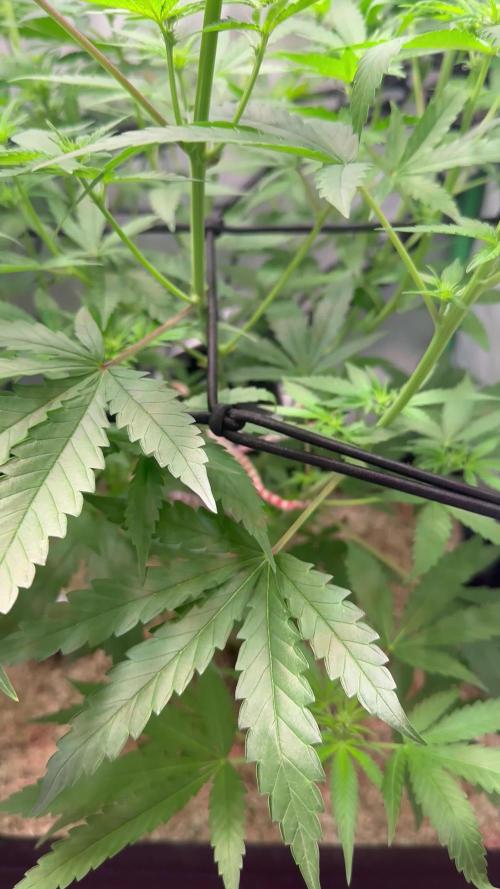
Ein wunderschöner Anblick. Die Transformation in Blüte schreitet voran. Es ist schön zu sehen, dass die Dame ohne Probleme heranwächst. Es wuchert ohne Ende und ich muss täglich ein paar Blätter entfernen, damit die Triebe genug Licht bekommen.Die Mimosa ist die kleinste im Zelt, aber macht sich ganz gut.

Likes
2
Share


@ediah
Follow
Hab die Ladys entlaubt. Sie wachsen richtig schön. Habe zur Zeit etwas weniger Zeit mich zu kümmern, aber sie machen es mir auch einfach. Freue mich auf die nächsten Wochen und bin gespannt, wann die ersten Blütezeichen sichtbar werden.
Likes
20
Share


@RunWithIt
Follow
I mean, overall this was an extremely painless grow. The test of whether we should or shouldn't top autos is still TBD imo. Our topped candidate produced denser, frostier buds, but weighed slightly less, at 14 grams of bud total. And our lst plant produced 18 grams of bud, not as frosty, and almost as dense as our topped girl. I'll be topping autoflowers from here on out only under the circumstance I have 4+ to grow at the same time. Seems like it could be used to speed up the autoflower grow cycle if done properly, like with right. Since I'm doing a perpetual cycle, it's still a viable option for me in the long run. A few tips I have for anyone growing this strain in organics:
Start feeding bloom nutes a little bit prior to flower transition - this makes the transition more seemless. From weeks 1-3 flower, I slowly dropped the grow dosage until I cut off grow nutes week 3 flower.
Starting the flush around week 6 flower seemed to really bring out this plant's potential. But I think you could get away with starting the flush around week 5. I hope this helps anyone trying this strain out. It's a good one, I hope to see more journals of it, eventually.
Cheers everyone! Time for me to take a well-deserved puff. :) ☁️ 🌼