


Likes
Comments
Share


@MaestroBud
Follow
📍 Microgenetics meets Master Bud – Delicate but determined
The Papaya Sunrise, an exclusive selection of the very Italian Microgenetics Seed Bank, continues to amaze me. In this 7ª week of vegetative he is finally bringing out all his fruity, vigorous and surprisingly compact personality.
At first she was the most reserved among the sisters, but now - thanks to the controlled environment, the targeted defoliation and the balanced diet - she is exploding in width, opening the branches like palm trees in the sun, ready to conquer the SCROG network.
🌿 The leaves are wide, healthy, full green and vital. The structure is solid but elastic, and each knot carries with it a promise of future flowers.
💧 This week received the right attention: enriched rainwater, high-quality radical stimulators and a mix between mineral (Advanced Nutrients pH Perfect) and calibrated organic inputs. Result? Vigorous lateral growth, excellent breathability, zero deficiencies.
Despite some residual moisture in the pot that I monitored, the Papaya reacted very well, confirming its resilience.
The improved microclimate and new ventilation helped it open up like a true tropical queen.
🎯 Now everything is ready for the last sprint before the switch. The tucks are on the way. The genetic profile begins to "push", and you can already feel the aromatic potential that will come out in a few weeks.
📸 Exotic fruits on the way. This Papaya is not a plant. It's a destination.

Likes
6
Share


@MistaOC
Follow
28.01. Day 36
Unfortunately, I had problems with the two front ones because I watered too much early on. lockout
——————————————————-

Likes
2
Share



Likes
16
Share


@Plant_Scientist
Follow
Sometimes things don't go the way you want to and are out of your control. That's precisely what happened to me last week. In the middle of summer, it wouldn't stop raining for over a week, causing the humidity to skyrocket in my room. That's the last thing you want in week 8 of flower, especially if you don't have something like a dehumidifier. So unfortunately I found a spot of botrytis developing on one of the main colas... I cut off the whole cola that was infected. The next day I found another spot, unfortunately, so I decided it was time to cut my losses and harvest what was left. I would have loved to let her ripen a week or two more, but that's life sometimes. Fortunately, there are still 2 big, main colas and lower buds left!

Likes
13
Share


@GERGrowDesigns
Follow
Dear Growers ,
Welcome to Veg Week 3 Day 19-28 of WeedSeeds Express Future #1 Auto
Whether you're a beginner or an expert, you are warmly invited to join, ask questions, and share your own experiences along the way!
Project Setup & Conditions:
• Brand/Manufacturer: WeedSeeds Express
• Tent: 222cmx150cmx150cm
• Light: 2x 720 Watt Full Spectrum
• Humidity: 50%
• Soil: Narcos Organix Mix
• Nutrients: Narcos Products
• pH Value: 6
Get Your Epic WeedSeedsExpress Genetics or Explore the whole seeds/headshop or Merchandise from This Amazing Breeder and one of the best EU Stores.
Just Take a look with some time in your pockets with this link [https://weedseedsexpress.com/?a_aid=GGD]
If you want Germinitation results like mine , check out Kannabia Seeds with my link [https://www.kannabia.com/de?ref=61966] and grab the germination device or theyre amazing strains . Trust me – it’s worth it for sure !
Congratulations on Your Own Projects!
We celebrate your growth, your creativity, and the passion you bring to the table. It’s truly inspiring to witness at Each visit .
Stay curious and keep up Growing —we look forward to welcoming you back for the next chapter soon!

Likes
7
Share

@FourTwenty_Plants
Follow
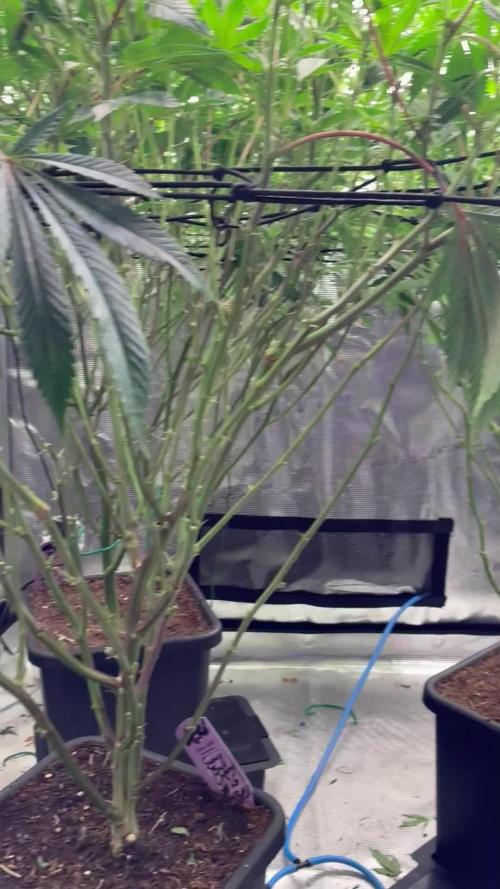
Sooo the girls stretched heavyyyyyyyy many many budsites and a 4x4 thats not only filled in the width but also almost in the height😂. Im just in love with the grow so far.
Thirsty like a mf, they went down on 20L in 48hours so about 3.3L per day for ONE plant.
About 18 days since I flipped so I think the last 3-5 days of stretching before its finally over.
Did a good lollipop and defoliation on them below the net so enjoy the view!
Likes
69
Share


@Natrona
Follow
The Divine ladies Afghan Bullet and Pablo Escobar are getting close to harvest. I'm going to water only for the remainder.
Tps1 30 ml
Ph 7.01
Ppm 505
each received 3 ltrs
Thank you @DivineSeeds
Thanks for the visits, likes and comments, I appreciate all the plant love💚.
Have fun & love what you grow 💚
Sending you good vibes of love, light, and healing 💫
💫Natrona 💫

Likes
Comments
Share


@BakedBotanist
Follow
Massive growth, going to be big girls. Experiencing some calcium deficiencies but has been corrected
Likes
16
Share


@MountainFlowers
Follow
Final Report:
Grow:
The plants has grown very beautiful and healty without pests and diseases. They grown bushy and with medium height during all the life cycle.
I had try to use LST in third veg week but i did't made correctly and after that i dicided to return to grown normally without any particolar tecnique.
I used a littel more fertilizer then mine usual and that made the plants grown fast with only a littel bit of leaf margin burn which I solved by decreasing the quantity.
In the first two weeks of flowering stage the plants started grow not to very tall (except for one) and the number of the branches increase, in this phase i only defoliated when the fan leaves turn yellow in late stage.
During all flowering stage the flowers grown but they remained very soft, they turned dense and bigger in the last weeks and this time i waited until almost all of them were mature before harvest the plants(I waited a littel more respect OG Kush CBD).
I changed the taller plant from one grow room to another(in the sixth week) when she became too high and she couldn't stay more in the smaller grow box(nothing changed in the enviroment between the two boxes).
Equipment and grow box:
The enviorment of grow box has been optimized every stage with the right temperature, umidity and air flow.
Vegetative temp/umidity --> 23-29 °C/45-55%
Flowering temp/umidity --> 20-26 °C/40-50%
The air flow was created by two pc fans and one big fan.
Harvest:
This time the plants were full of dense buds but the lower branches had many fluffy flowers(i used them to make some hash) but the result not change too much .
The result of this grow is amezing compared to my old expiriences.
I harvested the flower and i made a fast curing process after i washed the crop and i let them to dry with a fan on it.
After five days a take the branches which were to dry and i did the final trimmig before put all the harvest in a open jar for finishing to dry.
I collected all the leaves, fluffy buds and trimming scraps in a bag and i let them dry.
I harvested the taller plant before the other two because she had matured earlier(with the OG Kush ladies).
Later i put the bag in the freezer and when i collect and dried all the scraps from OG Kush and Dandoverde Haze i did some Ice-O-Lator hash.
I used 250g of trimming stuff and i made 11.50 g of hash, I had use a set of 5 bag and i take the resin from the 160µ - 120µ - 73µ- 25µ bags.
I pressed all the resin in a great block of tasty strong hash.
Always better every time 😊💪
Total harvest ---> 126g only of dense buds and 11.50g of hash.

Likes
1
Share


@GreenLupinCWB
Follow
Lindas e bem desenvolvidas, colheita em breve.
Uma tropicana24k,a outra uma cruza com 24k e sourDiesel ,um cheiro magnífico e as duas estão cobertas por tricomas.
Likes
22
Share


@Grassland
Follow
Nice progress this past week as well. Should be ready in specified time 63 ish days. Some leaves are showing there age and possibly that the lights were to close.
Dropped Root 66 and Diamond nectar thinking I am at least half way threw mid bloom. TDS = 750 , total wattage =277, 24 hr lights on.

Likes
12
Share


@Siriuz
Follow
Week 12
Day 79
Started flushing this week
She's almost ready for harvest
We plan on to next week
Stay tuned for more
Day 80
She's starting to smell more and more after we added so much water to drain all nutes
Day 81
Looking good and can't wait to smoke some soon!
Day 82 Good
Day 83 She's good
Day 84 check out the video sorry for the late updates I've been busy being a dad of a newborn baby boy :)
Day 85 End of week 12
Everything looking neat
Processing
Likes
5
Share


@WooderIce
Follow
only half way thru week 8, but Im going be too busy to update this over the weekend. unfortunately, the Gelato turned male, so Ive got 4 females (from orginally 8) three GG4, & one GSC. pistils are poppin everywhere, but as the true 1st week of flowering, nothing too fun to see. so far leaves look great, no ph imbalance issues like last grow.

Likes
6
Share


@urbanmitchell
Follow
they grow very fast this weeks no problem at all whit the Remo nutrients theys drink 12 liters a week crazy the last watering of the week 3 liters each i give them 9ml mix whit 4 liter of waterthe week 4 is going to be 10 ml mix whit 4 liters of water hi give for 7 plants 72 liters this weeks


Likes
3
Share


@Noobygrower
Follow
They are looking no different to 2 weeks ago and I’ve no idea what is going on... can someone please tell me if I’m in the right direction or what is going on... confused right now. Also they are supposed to be ready in a week according to seed stockers but was wondering if they will take longer due to the weather and the greenhouse situation.
They are starting to smell a bit more but not much.. had mixed reviews people saying the pots are too small or maybe they just need little longer

Likes
6
Share


@KannaGrowing
Follow
Estamos en la tercera semana de crecimiento vegetativo.
Nuestras plantas ya tienen unos 15 centímetros aproximadamente, y han superado la fase crítica.
Recordamos que hasta ahora solo estamos regando con agua, aún no hemos incorporado los fertilizantes.
Seguimos manteniendo la humedad relativa bastante alta, y la temperatura entre 22 y 24ºC.
Pero aumentamos la potencia al 50% de ambas luminarias.


Likes
6
Share


@Mismatas
Follow
PRIMERA SEMANA DE FLORACIÓN, VAMOS PASANDO LAS RAMAS ENTRE LA MALLA, Y AÑADIMOS EL BUD IGNITOR A NUESTRO RIEGO
