Likes
Comments
Share
Likes
11
Share
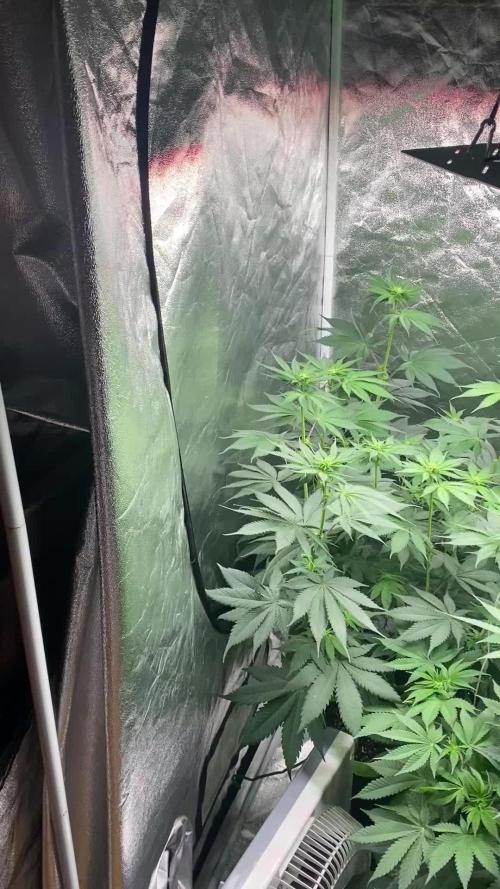
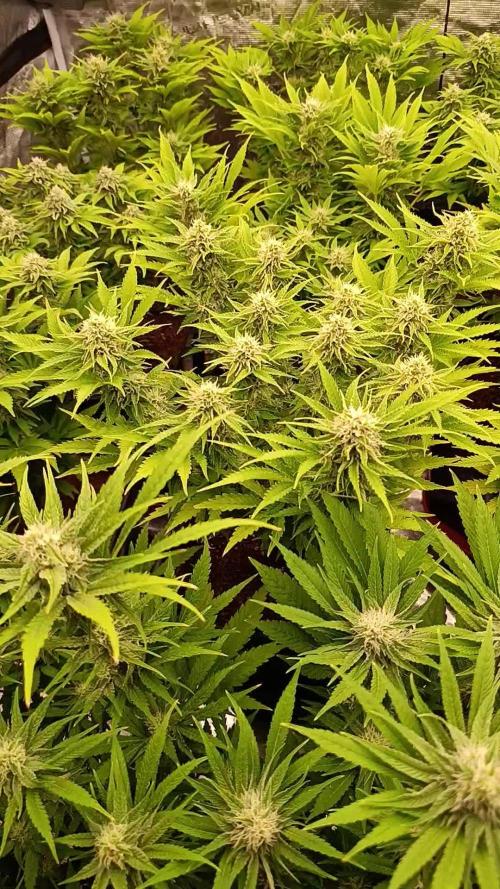
Topped this plant been a few days fingers crossed she stays in veg state
Likes
25
Share
21/12/20 inicio de semana tiene una estructura muy indica pero las hojas muy sativas es una planta que esta creciendo asta3cmpor dia al igual sus brazos bajos 23/12/20 hoy alcanzo el metro de altura 27/12/20 no pude subir foto con eesto de las fiestas de navida haha pero hoy es su cierre de semna
Likes
25
Share
ANTHOCYANIN production is primarily controlled by the Cryptochrome (CR1) Photoreceptor ( !! UV and Blue Spectrums are primary drivers in the production of the pigment that replaces chlorophyll, isn't that awesome! 1. Diverse photoreceptors in plants Many civilizations, including the sun god of ancient Egypt, thought that the blessings of sunlight were the source of life. In fact, the survival of all life, including humans, is supported by the photosynthesis of plants that capture solar energy. Plants that perform photosynthesis have no means of transportation except for some algae. Therefore, it is necessary to monitor various changes in the external environment and respond appropriately to the place to survive. Among various environmental information, light is especially important information for plants that perform photosynthesis. In the process of evolution, plants acquired phytochrome, which mainly receives light in the red light region, and multiple blue light receptors, including his hytropin and phototropin, in order to sense the light environment. .. In addition to these, an ultraviolet light receptor named UVR8 was recently discovered. The latest image of the molecular structure and function of these various plant photoreceptors (Fig. 1), focusing on phytochrome and phototropin. Figure 1 Ultraviolet-visible absorption spectra of phytochrome, cryptochrome, phototropin, and UVR8. The dashed line represents each bioactive absorption spectrum. 2. Phytochrome; red-far red photoreversible molecular switch What is phytochrome? Phytochrome is a photochromic photoreceptor, and has two absorption types, a red light absorption type Pr (absorption maximum wavelength of about 665 nm) and a far-red light absorption type Pfr (730 nm). Reversible light conversion between the two by red light and far-red light, respectively(Fig. 1A, solid line and broken line). In general, Pfr is the active form that causes a physiological response. With some exceptions, phytochrome can be said to function as a photoreversible molecular switch. The background of the discovery is as follows. There are some types of plants that require light for germination (light seed germination). From that study, it was found that germination was induced by red light, the effect was inhibited by subsequent far-red light irradiation, and this could be repeated, and the existence of photoreceptors that reversibly photoconvert was predicted. In 1959, its existence was confirmed by the absorption spectrum measurement of the yellow sprout tissue, and it was named phytochrome. Why does the plant have a sensor to distinguish between such red light and far-red light? There is no big difference between the red and far-red light regions in the open-field spectrum of sunlight, but the proportion of red light is greatly reduced due to the absorption of chloroplasts in the shade of plants. Similar changes in light quality occur in the evening sunlight. Plants perceive this difference in light quality as the ratio of Pr and Pfr, recognize the light environment, and respond to it. Subsequent studies have revealed that it is responsible for various photomorphogenic reactions such as photoperiodic flowering induction, shade repellent, and deyellowing (greening). Furthermore, with the introduction of the model plant Arabidopsis thaliana (At) and the development of molecular biological analysis methods, research has progressed dramatically, and his five types of phytochromes (phyA-E) are present in Arabidopsis thaliana. all right. With the progress of the genome project, Fi’s tochrome-like photoreceptors were found in cyanobacteria, a photosynthetic prokaryotes other than plants. Furthermore, in non-photosynthetic bacteria, a homologue molecule called bacteriophytochrome photoreceptor (BphP) was found in Pseudomonas aeruginosa (Pa) and radiation-resistant bacteria (Deinococcus radiodurans, Dr). Domain structure of phytochrome molecule Phytochrome molecule can be roughly divided into N-terminal side and C-terminal side region. PAS (Per / Arndt / Sim: blue), GAF (cGMP phosphodiesterase / adenylyl cyclase / FhlA: green), PHY (phyto-chrome: purple) 3 in the N-terminal region of plant phytochrome (Fig. 2A) There are two domains and an N-terminal extension region (NTE: dark blue), and phytochromobilin (PΦB), which is one of the ring-opening tetrapyrroles, is thioether-bonded to the system stored in GAF as a chromophore. ing. PAS is a domain involved in the interaction between signal transduction-related proteins, and PHY is a phytochrome-specific domain. There are two PASs and her histidine kinase-related (HKR) domain (red) in the C-terminal region, but the histidine essential for kinase activity is not conserved. 3. Phototropin; photosynthetic efficiency optimized blue light receptor What is phototropin? Charles Darwin, who is famous for his theory of evolution, wrote in his book “The power of move-ment in plants” published in 1882 that plants bend toward blue light. Approximately 100 years later, the protein nph1 (nonphoto-tropic hypocotyl 1) encoded by one of the causative genes of Arabidopsis mutants causing phototropic abnormalities was identified as a blue photoreceptor. Later, another isotype npl1 was found and renamed phototropin 1 (phot1) and 2 (phot2), respectively. In addition to phototropism, phototropin is damaged by chloroplast photolocalization (chloroplasts move through the epidermal cells of the leaves and gather on the cell surface under appropriate light intensity for photosynthesis. As a photoreceptor for reactions such as escaping to the side of cells under dangerous strong light) and stomata (reactions that open stomata to optimize the uptake of carbon dioxide, which is the rate-determining process of photosynthetic reactions). It became clear that it worked. In this way, phototropin can be said to be a blue light receptor responsible for optimizing photosynthetic efficiency. Domain structure and LOV photoreaction of phototropin molecule Phototropin molecule has two photoreceptive domains (LOV1 and LOV2) called LOV (Light-Oxygen-Voltage sensing) on the N-terminal side, and serine / on the C-terminal side. It is a protein kinase that forms threonine kinase (STK) (Fig. 4Aa) and whose activity is regulated by light. LOV is one molecule as a chromophore, he binds FMN (flavin mononucleotide) non-covalently. The LOV forms an α/βfold, and the FMN is located on a β-sheet consisting of five antiparallel β-strands (Fig. 4B). The FMN in the ground state LOV shows the absorption spectrum of a typical oxidized flavin protein with a triplet oscillation structure and an absorption maximum wavelength of 450 nm, and is called D450 (Fig. 1C and Fig. 4E). After being excited to the singlet excited state by blue light, the FMN shifts to the triplet excited state (L660t *) due to intersystem crossing, and then the C4 (Fig. 4C) of the isoaroxazine ring of the FMN is conserved in the vicinity. It forms a transient accretionary prism with the tain (red part in Fig. 4B Eα) (S390I). When this cysteine is replaced with alanine (C / A substitution), the addition reaction does not occur. The effect of adduct formation propagates to the protein moiety, causing kinase activation (S390II). After that, the formed cysteine-flavin adduct spontaneously dissociates and returns to the original D450 (Fig. 4E, dark regression reaction). Phototropin kinase activity control mechanism by LOV2 Why does phototropin have two LOVs? Atphot1 was found as a protein that is rapidly autophosphorylated when irradiated with blue light. The effect of the above C / A substitution on this self-phosphorylation reaction and phototropism was investigated, and LOV2 is the main photomolecular switch in both self-phosphorylation and phototropism. It turns out that it functions as. After that, from experiments using artificial substrates, STK has a constitutive activity, LOV2 functions as an inhibitory domain of this activity, and the inhibition is eliminated by photoreaction, while LOV1 is kinase light. It was shown to modify the photosensitivity of the activation reaction. In addition to this, LOV1 was found to act as a dimerization site from the crystal structure and his SAXS. What kind of molecular mechanism does LOV2 use to photoregulate kinase activity? The following two modules play important roles in this intramolecular signal transduction. Figure 4 (A) Domain structure of LOV photoreceptors. a: Phototropin b: Neochrome c: FKF1 family protein d: Aureochrome (B) Crystal structure of auto barley phot1 LOV2. (C) Structure of FMN isoaroxazine ring. (D) Schematic diagram of the functional domain and module of Arabidopsis thaliana phot1. L, A’α, and Jα represent linker, A’α helix, and Jα helix, respectively. (E) LOV photoreaction. (F) Molecular structure model (mesh) of the LOV2-STK sample (black line) containing A’α of phot2 obtained based on SAXS under dark (top) and under bright (bottom). The yellow, red, and green space-filled models represent the crystal structures of LOV2-Jα, protein kinase A N-lobe, and C-robe, respectively, and black represents FMN. See the text for details. 1) Jα. LOV2 C of oat phot1-to α immediately after the terminus Rix (Jα) is present (Fig. 4D), which interacts with the β-sheet (Fig. 4B) that forms the FMN-bound scaffold of LOV2 in the dark, but unfolds and dissociates from the β-sheet with photoreaction. It was shown by NMR that it does. According to the crystal structure of LOV2-Jα, this Jα is located on the back surface of the β sheet and mainly has a hydrophobic interaction. The formation of S390II causes twisting of the isoaroxazine ring and protonation of N5 (Fig. 4C). As a result, the glutamine side chain present on his Iβ strand (Fig. 4B) in the β-sheet rotates to form a hydrogen bond with this protonated N5. Jα interacts with this his Iβ strand, and these changes are thought to cause the unfold-ing of Jα and dissociation from the β-sheet described above. Experiments such as amino acid substitution of Iβ strands revealed that kinases exhibit constitutive activity when this interaction is eliminated, and that Jα plays an important role in photoactivation of kinases. 2) A’α / Aβ gap. Recently, several results have been reported showing the involvement of amino acids near the A’α helix (Fig. 4D) located upstream of the N-terminal of LOV2 in kinase photoactivation. Therefore, he investigated the role of this A’α and its neighboring amino acids in kinase photoactivation, photoreaction, and Jα structural change for Atphot1. The LOV2-STK polypeptide (Fig. 4D, underlined in black) was used as a photocontrollable kinase for kinase activity analysis. As a result, it was found that the photoactivation of the kinase was abolished when amino acid substitution was introduced into the A’α / Aβ gap between A’α and Aβ of the LOV2 core. Interestingly, he had no effect on the structural changes in Jα examined on the peptide map due to the photoreaction of LOV2 or trypsin degradation. Therefore, the A’α / Aβ gap is considered to play an important role in intramolecular signal transduction after Jα. Structural changes detected by SAXS Structural changes of Jα have been detected by various biophysical methods other than NMR, but structural information on samples including up to STK is reported only by his results to his SAXS. Not. The SAXS measurement of the Atphot2 LOV2-STK polypeptide showed that the radius of inertia increased from 32.4 Å to 34.8 Å, and the molecular model (Fig. 4F) obtained by the ab initio modeling software GASBOR is that of LOV2 and STK. It was shown that the N lobes and C lobes lined up in tandem, and the relative position of LOV2 with respect to STK shifted by about 13 Å under light irradiation. The difference in the molecular model between the two is considered to reflect the structural changes that occur in the Jα and A’α / Aβ gaps mentioned above. Two phototropins with different photosensitivity In the phototropic reaction of Arabidopsis Arabidopsis, Arabidopsis responds to a very wide range of light intensities from 10–4 to 102 μmol photon / sec / m2. At that time, phot1 functions as an optical sensor in a wide range from low light to strong light, while phot2 reacts with light stronger than 1 μmol photon / sec / m2. What is the origin of these differences? As is well known, animal photoreceptors have a high photosensitivity due to the abundance of rhodopsin and the presence of biochemical amplification mechanisms. The exact abundance of phot1 and phot2 in vivo is unknown, but interesting results have been obtained in terms of amplification. The light intensity dependence of the photoactivation of the LOV2-STK polypeptide used in the above kinase analysis was investigated. It was found that phot1 was about 10 times more photosensitive than phot2. On the other hand, when the photochemical reactions of both were examined, it was found that the rate of the dark return reaction of phot1 was about 10 times slower than that of phot2. This result indicates that the longer the lifetime of S390II, which is in the kinase-activated state, the higher the photosensitivity of kinase activation. This correlation was further confirmed by extending the lifespan of her S390II with amino acid substitutions. This alone cannot explain the widespread differences in photosensitivity between phot1 and phot2, but it may explain some of them. Furthermore, it is necessary to investigate in detail protein modifications such as phosphorylation and the effects of phot interacting factors on photosensitivity. Other LOV photoreceptors Among fern plants and green algae, phytochrome ɾphotosensory module (PSM) on the N-terminal side and chimera photoreceptor with full-length phototropin on the C-terminal side, neochrome (Fig. There are types with 4Ab). It has been reported that some neochromes play a role in chloroplast photolocalization as a red light receiver. It is considered that fern plants have such a chimera photoreceptor in order to survive in a habitat such as undergrowth in a jungle where only red light reaches. In addition to this, plants have only one LOV domain, and three proteins involved in the degradation of photomorphogenesis-related proteins, FKF1 (Flavin-binding, Kelch repeat, F-box 1, ZTL (ZEITLUPE)), LKP2 ( There are LOV Kelch Protein2) (Fig. 4Ac) and aureochrome (Fig. 4Ad), which has a bZip domain on the N-terminal side of LOV and functions as a gene transcription factor. 4. Cryptochrome and UVR8 Cryptochrome is one of the blue photoreceptors and forms a superfamily with the DNA photoreceptor photolyase. It has FAD (flavin adenine dinucle-otide) as a chromophore and tetrahydrofolic acid, which is a condensing pigment. The ground state of FAD is considered to be the oxidized type, and the radical type (broken line in Fig. 1B) generated by blue light irradiation is considered to be the signaling state. The radical type also absorbs in the green to orange light region, and may widen the wavelength region of the plant morphogenesis reaction spectrum. Cryptochrome uses blue light to control physiological functions similar to phytochrome. It was identified as a photoreceptor from one of the causative genes of UVR8 Arabidopsis thaliana, and the chromophore is absorbed in the UVB region by a Trp triad consisting of three tryptophans (Fig. 1D). It is involved in the biosynthesis of flavonoids and anthocyanins that function as UV scavengers in plants. Conclusion It is thought that plants have acquired various photoreceptors necessary for their survival during a long evolutionary process. The photoreceptors that cover the existing far-red light to UVB mentioned here are considered to be some of them. More and more diverse photoreceptor genes are conserved in cyanobacteria and marine plankton. By examining these, it is thought that the understanding of plant photoreceptors will be further deepened.
Likes
12
Share
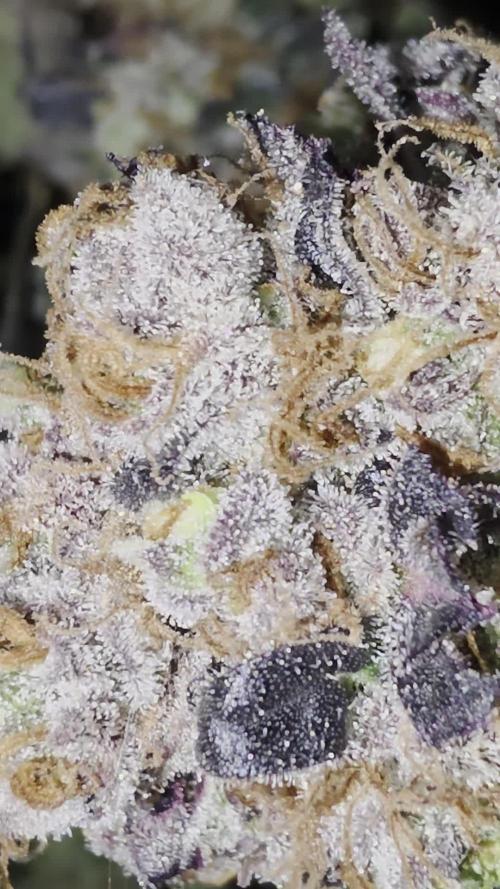
She was the smallest of the 4 but weighed in at 2nd place. All in all I would grow again. Great weed. 9/10 from me
Likes
18
Share
@Nune2021
Follow
Hey Leute ich hab bei den Pflanzen Ungeziefer bemerkt kann nur aus der plagron Erde vom Grow Shop sein Trauermücken thripse bei zwei Pflanzen außert sich das Schon negativ die Pflanze sieht kränklich aus gelb Stich von oben nach unten überdüngung ausgeschlossen, hab die Pflanzen mit combo neem behandelt 4 Tage gewartet und wieder behandelt das Pflanzbild der Zustand kann auch davon kommen !!! sobald die Pflanzen sich erholt haben schick ich die endlich in die Blüte
Likes
10
Share
Processing
Likes
13
Share
@Andres
Follow
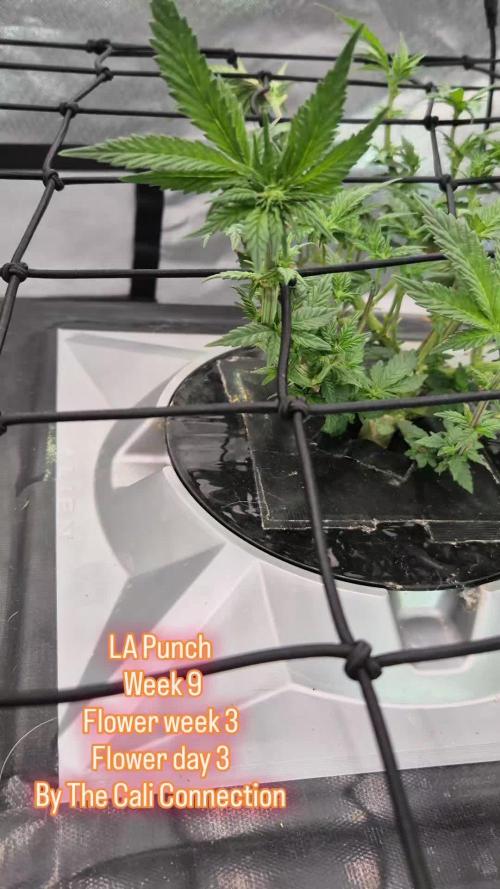
cloudy days with 14 c min and 19 c max. Its flowering has been slow compared to other newspapers. The smell is already strong and continues to feed organically. She is flowering in 2 parts. I made an apical cut. at the same time there was also a light that gave only the upper part of it. the lower part is already in the last part and the upper part is just in flowering
Likes
3
Share
Colas are getting heavy. Smell getting louder overall I am really happy with the strain
Likes
2
Share
Processing
Likes
62
Share
I’m so excited to show you guys week 3. These plants are huge!!! Even though I’m watching them grow right before my eyes I’m still shock as to how big they are. I browsed through other growers diaries that’s growing the same strains as me and I haven’t came across none as big as mines. The plants are responding well to their nutrients and TLC from me. I was planning to scrog this grow but I’m curious to see how big these autos are going to get so I’m going to just let them ride it out. Make sure to follow my diary for your weekly updates and give a like if you like the grow. Peace Love & Guidance #OwlGang #AGrowingEmpire
Likes
25
Share
Day 17 05/19, welcome to another week of this comparison grow between FoopCanna and Down To Earth. So the two plants getting Foop are growing slow but growing. However, on the other side we got two plants in Down To Earth and both are twice as big. Had to defoliate and do some LST on those two to try and have a even canopy. Day 20 05/22, so almost at the end of the week and the plants are still going. The DTE are by far looking better in my opinion. FoopCanna looks like they might start taking off. Other than that they have all been defoliated and 3/4 have started LST.
Likes
9
Share
@Belivitez
Follow
Very happy with buds i have some problems in flowering and this is new school for me... Thanks to watch ✌️
Likes
26
Share
There are some things that remain memorable in my journey as a grower, and one of them is my encounter with Nectar Drip. This strain stole my heart and will never give it back like all the strains in my top five, but every time it's magical, like falling in love, except I don't feel butterflies, but Wu Tang's Killa Beez. This strain is a unique marvel, one of those one-night stands, because it's a Limited Edition, already sold out after a few days of release, and given its limited nature, it will never be released again. I begged my friends at Zamnesia on my knees, but they're adamant about this: once a Limited Edition is gone, it's gone forever. Think carefully before letting it slip away. Add to this the fact that I've been a hop-hop guy for about 30 years and have also followed the entire Meth journey, and it's incredible to grow a strain named after the albums that drove me crazy when I was 20. It's pure fire for my graying ass. And the best part is that it's not just conceptual fire, but the strain is a marvel like very few on the market, producing wonderful flowers in every way: hardness, density, and weight are unbeatable. The resin production is top-notch, and, as only American plants can do, the yield is consistently good and lends itself perfectly to mainlining, topping, mainfolding, and cloning. We're talking about a strain with typically American characteristics called Nectar Drip, obtained by hybridizing a Zamnesia Apple Fritter with a 24K Gold Fangs by Tical. The result is truly explosive, with an apple aroma and a huge amount of resin that makes it perfect for extraction, even from residue. The leaves are full of pure resin and smell like heaven. I'm deeply embarrassed by her beauty again, like when a beautiful girl talks to me and makes me blush. And I have to say, she's not even the best; There are four more epic plants on the way that might surprise us, one of which is a clone of this one. Maturity - The pistils have been looking super mature for quite some time, especially the upper ones, which are very red, and we're still over 90%. It's a 50-50 Indica/Sativa mix. Sorry, I may have written it wrong in previous diaries, so it'll be all day. I'll let you know how it goes. For now, it's curing. The plant was cloned and left in the vegetative stage for a short time, trained with a Main, but without bending it; I find it practical. We chose 100% organic soil, 1000% Plagron, as always. The soil we chose is the recently launched Plagron Bio LightMix, which will allow us to start with more gradual and consistent watering, without the sudden changes that liquid fertilizers can cause. A week of soil is sufficient, so don't overdo it. Choose your preferred method and calculate your results on the website: www.plagron.com Visit the new Growshop section on the Zamnesia website: Z - https://www.zamnesia.io/it/531-growshop These seeds are sold out and were a limited edition. I'm so sorry I didn't save one, but we can choose from Zamnesia's excellent strains and keep an eye out for exclusive limited editions like this one when they're released... Z - https://www.zamnesia.io/en/35-cannabis-seeds T - https://www.zamnesia.io/en/35-cannabis-seeds/745-tical Z - Nectar Drip is a unique cannabis hybrid created in collaboration between Zamnesia Seeds and TICAL. These flowers are pure power, with up to 26% THC and effects that stimulate the mind and stabilize the body. But if you want to try them, you'll have to hurry: only 750 packs are available! There's nothing better than a good collaboration: we know this better than anyone! For this partnership, we joined forces with TICAL to create a strain packed with flavor and potency. We brought our delicious Apple Fritter, while TICAL contributed its 24K Gold Fangs. After perfecting the result, Nectar Drip was born. This strain produces potent flowers with a THC content of up to 26%, accompanied by delicious fruity and skunky aromas. Considering one of its parents is Apple Fritter, you can be sure that Nectar Drip has inherited an explosion of fruity aromas and flavors. Skunky notes are evident, creating a rich and intriguing profile. Smoking this beauty will leave you relaxed, with a pleasant cerebral euphoria accompanying the experience. It's definitely a great evening smoke, perfect for when you want to take a moment for yourself. You already know this, but I recommend it. You'll find so many wonderful things here, essentially "the best that nature has to offer." Z - www.zamnesia.com // Music // Last Week by Daddy Method Man's entire discography + Wu Tang by www.radionula.com + Feng Shui Music
Likes
1
Share
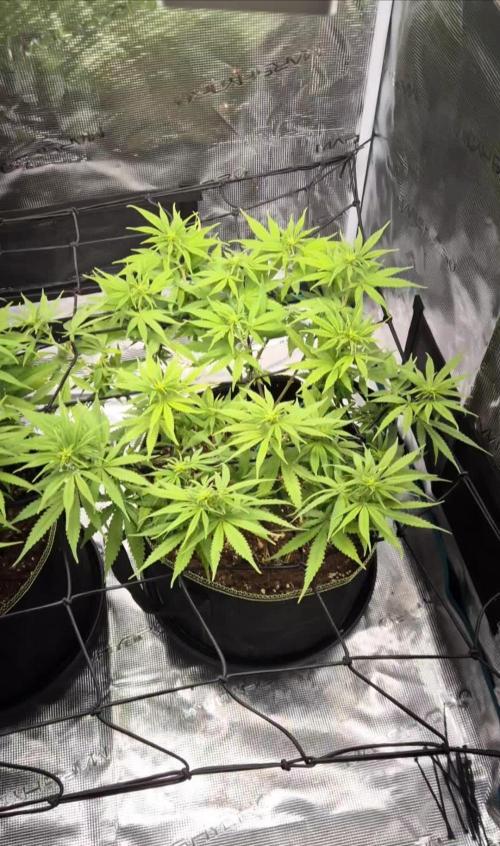
This week I can see the bud sites starting to stack up — she’s looking happy and healthy. Whenever a big fan leaf blocks the bud sites, I just snip it off. I’m still fighting to get the RH down, though. By the end of next week, I’ll give her a nice fresh haircut.
Likes
8
Share
@Hempcules
Follow
WEEK 9 Wuhuuu 🙂 Things really took off this week with my Diablo Delights XL. The buds have bulked up significantly and are now filling out almost the entire plant. I think it’s going to end up as one big bud ball 😅 She’s absolutely stunning to look at, even though she stayed relatively short in height. You can already start to pick up on the flavor, and the smell is downright delicious. I’m really looking forward to the tasting. If she keeps up this pace, I don’t think she’ll need another four weeks. I did a bit more defoliation and removed a few weak shoots since she was still a bit too bushy for my liking. This week, I ran the light at 800 PPFD and watered once with plain water and once with nutrient solution.
Processing
Likes
21
Share
Hello Growers and Tokers! 👋 👩‍🌾 🧑‍🌾.🔥💨 THE MOST PHOTOGENIC Thinking about changing the title of the diary to that.. 😂😂 I swear the camera loves this one.. And it's not the placement because I've tried moving them to that same spot and the pictures just don't come out the same. I guess the others just need to mature a bit more and they'll be more appealing in pictures because in person they really are.. 😍 Green sensation is really bringing it to the table. Buds are getting fat, stinky and sticky! I'll have to add a bit of support for sure because some are starting to bend a bit. Smell is just grrreat! She's definetly not ready yet so those 40-45 days of flower aren't that correct.. No problem with me though, i'm glad they've got more time to rippen up. Not much difference in nutrients.. I do use 2ml/L of enzymes every 10 days or so in flower.. Noticed it does great work in the roots during flower. Hope you enjoy the pics and vids. Taken on day 42 of flower. Check out the other strains i've got going as well. Take care out there! One love!
Likes
14
Share
Vamos familia novena semana de floración de estás Punch Pie de RoyalQueenSeeds . Que ganas tengo de ver el final de progreso de esta variedad, las plantas están sanas, se ven con buen color. La cantidad de agua cada 48h entre riegos, quitamos todos los nutrientes de la gama Agrobeta. Y entramos en la recta final, últimas semanas de floración ya, y como se están hinchando las flores. Estas próximas semanas veremos cómo acaban. Mars hydro: Code discount: EL420 https://www.mars-hydro.com/ Agrobeta: https://www.agrobeta.com/agrobetatiendaonline/36-abonos-canamo Hasta aquí todo, Buenos humos 💨💨💨.