






@HandsomeTerpz
Volgen
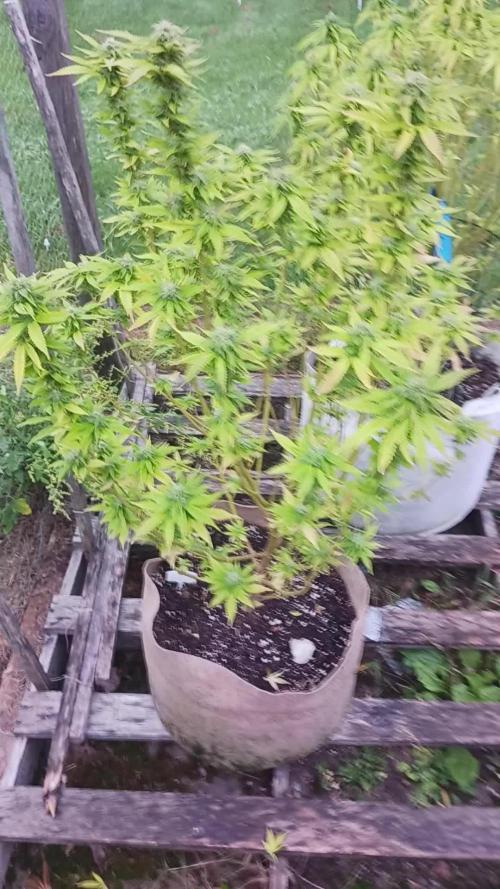
Green Goblin had a bit of a rough start – unfortunately, one of the main stems snapped. 😕 Because of that, she’s grown a little wild and uneven. But overall, she’s doing well!
🌱 Her growth is slightly slower than the others, but she’s definitely holding her own.
🇺🇲 WEEK 7
--------------------------
🔧 This week included:
Lots of LST training
Defoliation to improve light penetration
Only watered with plain water, no pH adjustment strictly following the BioTabs schedule
💨 The smell is starting to develop nicely very promising!
💡 I’m planning to switch to 12/12 next week and send her into flowering as well. Curious to see how she performs in the next phase! 🌸🕛
🇩🇪 Woche 7
-------------------------
Die Green Goblin hatte es nicht ganz so leicht einer der Hauptriebe ist leider abgebrochen. 😕 Dadurch ist die Pflanze etwas ungleich und wild gewachsen. Trotzdem macht sie sich gut!
🌱 Das Wachstum ist minimal langsamer als bei den anderen, aber im Gesamtbild steht sie ihnen in nichts nach.
🔧 Diese Woche wurde einiges gemacht:
Viel LST-Training
Entlaubung zur besseren Lichtverteilung
Nur mit Wasser gegossen – ganz ohne Anpassung, streng nach dem BioTabs-Schema
💨 Der Geruch entwickelt sich ebenfalls sehr gut vielversprechend!
💡 Auch bei ihr werde ich voraussichtlich nächste Woche auf 12/12 umstellen und damit die Blüte einleiten. Bin gespannt, wie sie sich in der nächsten Phase schlägt! 🌸🕛



@OS_Farmz
Volgen
Последняя неделя перед переводом на цвет и первая для репорта. Провел дефолиацию нижних и верхних веерных листов и фиминг верхушек у 3х цветков.


@TommyBVRSA75
Volgen
Pues terminando las entradas de los cinco diarios de la temporada y he dejado para el final, la Tropicanna Poison Fast de Sweet Seeds...y como podéis ver algo aquí es muy distinto tanto a las fotodependientes cuanto a las automáticas.
Las fast son en mi opinión, una "tierra de nadie" y aún habrá que evolucionar en lo que las genéticas de estas F1, terminan expresando en sus grows
Primera de las evidencias. Son raras en su expresión de vegetativo y os explico, solo las Fast en indoor te pueden regalar hojas fan con casi 20 centímetros cada una, pero ojo al dato, no solo una de estas hojas y si un montón de ellas. O sea que el diseño genético de esta cepa F1, te lanza hojas primarias gigantes como si fueran paneles lumínicos y co o si con ellos quisieran chuparse todas las áreas de luces que puedan estar en un armario grow.
Otra característica que me tiene patidifuso y que es sencillamente el grosor de tallos, el central es como un árbol y las inserciones de hojas primarias son tremendas en tamaño.
Esta F1 tiene una característica que me ha sido posible registrar y que es no haber una definición clara de una cola principal...son ramas que a espacios fueron compitiendo en el particular del aprovechamiento de la posición de los paneles de luces y lo que ha pasado es que nonçe he puesto una malla SCROG, pero el grow por "voluntad" propia generó como que un nivelamento de sus ramas y es casi como ver que este grow tiene como media docena de colas.
Los primeros señales de floración son muy específicos, con el grow sacando pistilos tremendamente grandes, lo que representará a la postre cogollos que serán al menos en el tope, también gigantes y todo en este grow Fast es sobredimensionado...es como si fuese una planta gigante y es ya muy claro que por su tamaño existirán internudos muy apartados, pero por la estructura cada punto donde haya floración, habrá un cogollo de dimensiones muy grandes y la pregunta del millón es "que esperar de algo así?"...siempre tendremos unos cogollos rojos y con mucha carga psicoactiva o será esta Tropicanna Poison F1, como una otra también de Sweet Seeds y también F1, que fue la S.A.D. (la afgana delicious) y que fue uno de los humos que menos me gustó (ya os comenté que fue un humo sin mucha imaginación, muy a los aromas y sabores a hachis de toda la vida; y con cogollos no muy buenos en densidad, pese a su tamaño.
Y esa es mi reflexión final de la semana, serán las F1 ya plantas que sus genéticas son lo suficiente estables, para que salga algo especial.
Para mí, que una F1 pueda llegar a término, dos semanas antes de una fotodependiente nunca ha sido la principal idea en desarrollarlas y aún necesito entender si lo que pasa con las Fast es algo como ese chiste de dos amigos que tenían cada uno un burro y decidieron crear descendencia y uno tenía un burro macho muy grande pero poco empeñado en trabajar y otro tenía la burra, que era pequeña pero muy dispuesta al trabajo y en lo que pararon, el burro nacido que esperaron que fuera grande y muy fuerte para trabajar, les salió casi un "perro" o sea un burro enano y que el curro no le gustaba ni un poco...así que mi pregunta sobre las F1 es un poco, que "burro" nos sale en regla en estos grows??? Las F1 heredan que características por lo general?!?
Dudas tengo y no son pocas y como ya os había comentado, a las Fast quizás sea esta la oportunidad de oro para que me decante, por si sigo haciendo apuesta en ellas o las dejo de una vez y en este momento, solo el tiempo podrá decirlo.
420 siempre y el Dios Jah siempre con todos los hermanos growers!



@masterofsmeagol
Volgen
9/20 Man I've been busy. I'm sick too. Looking back at my diaries I get sick this time of year every year it seems. Once I get the important stuff done I'll put some pictures of finished product up. Sunny today and windy as hell. All the plants left seem to be doing good and look like they'll finish. The pink kush might not finish how I WANT but it's stinky and has lots of milky trichs. I'm playing with fire with this mk ultra. It's fucking done. It could get a LITTLE more amber and maybe come together a bit more but I don't know if it's smart to risk it. Frost warning in effect tonight. I'll probably check the forecast and harvest tomorrow. We're having some good weather just cold nights. Then it turns to like a 30% chance of rain for 4 or 5 days. I'll yank it before that. This actually turned out tp be a pretty good year. Haven't tested everything (especially shit in the ground) but what I have sampled I'm incredible happy with.
9/21 IT was a balmy 36° on my way to the garden. My windshield had frost on it. Surprisingly the TIGHT nugs of the pink kush and this phenome of 10th planet didn't seem to mind it. Both strains are still increasing in size, smell and trich development. Not just changing but adding more. Trichs on trichs. Very in hospital environment. It will be interesting to see what happens with these girls. We will be getting some rain. I mean we've had SOME but I mean real rain. If thays the case I'll put these in the garage for a little bit. Honestly I thought these would be goners. I've gotta get to work trimming bucking and manicuring flower. Doing a garden like this sure is an awful lot of work. But the reward is worth every penny. WATERED EVERYTHING LEFT A HALG GALLON APIECE. PROBABLY SHOULDVE GAVE A GALLON BUT THEY WERE STILL A LITTLE HEAVY.
9/22 It rained last night and we got another frost. HAD to cut a main branch of the tenth planet as it had stem rot. Lots more cold weather coming. If I could get it done and I wasnt sick and have all this other material to process I would probably pull then. It's getting really cold. We're going to be getting rain. I'll check the weather and hopfully I can just put the movable ones in the garage. Either way things will work out. Pictures that will be coming will be of the finished product!
9/23 Had a super busy day. Had to but a branch off the pink kush due to stem rot. If I had time I would've taken it. It rained today but I think the plants will be alright. I've been working non stop. I may not have the quantity I'm used too but the quality is AMAZING. I can't wait to do the smoke points and put up finished flower. The other 10th planet seems to be doing really well. I expected nothing off that. I'll keep it updated but it's hard with everything going on.
9/24 Had more emergencies. Raining and cold. Finding stem rot a boytritus but not much. We are getting an inch of rain tomorrow and rain the next day. I wasn't going to watch my shit rot as it was hard as hell and all milky so I quickly waited for a break in the rain and harvested two pink kushes. Still have one pink kush in the 50 and the 10th planet. I cut a cola off 10th planet just in case. This should've been done yesterday but it is what it is. Even with ALL the damage this had been a pretty good year. I can't believe the quality of....well....everything lol. A couple take the cake but I'll wait to do that. I gotta get back to work.
9/25 Heavy rains today and tomorrow. After seeing the damage on the 10th planet and the stripped branches and dying leaves I took out the loupe and checked the trichs. It was a rare break in rain and the plant was luckily dry. After seeing the pistols change on many buds to pure red and seeing lots of cloudy trichomes abd swollen buds I was able to harvest it. I have one pink kush left that sea7s like a willow. I probably should've taken that by looking at it but the trichs had some clear on it. Lots of damage this year on all plants but the first special kush. The quality is amazing though. I havent got to try every strain but I am incredibly impressed with what I have so far. I stopped smoking dabs (for now) in favor of switching my different strains up. I hope that every gardener is able to instil there energy in the plant and gets the same feeling that I do because it's wonderful. I will do an independent review of each strain, and keep updated on last pink kush.





@3lementa1
Volgen
This is the 8th week. Thursday will be 9 weeks of 12/12. Some trichs are amber. They just added a good bunch of girth over the past few days, but most of the pistils are red now. The rest of them have been dropping leaves consistenly but the canopy remains full so they must be putting out more leaves.
I just flushed to 80% runoff and found out that I had 1200ppm. I just got an ec meter but my last reading said closer to 600 so idk what happened there.
I flushed until I had runoff ppm of about 150. Now they're back in the grow tent. I don't want to keep assaulting them with my microscope. I think they're ready. Just gonna let them settle another day or two to dry out a bit.
I took one small branch off the small Wedding Cake plant on Thursday and I've just been watching it dry on my counter. It's been 5 days and the stem snaps but still leaves a fiber connecting. I put it into a small jar with a 64RH thing. I just want to try it. It already smells amazing.
The leaves on the big CBD Blue Shark plant are going really yellow and some other colours are starting to come out as well.
The buds all fattened up and got more frosty again. I was worried they were foxtailing but they got more calyxes underneath the peaks and have been making more of a pyramid shape. They're really close to peak. Harvest day will be March 17 or 18.
March 17 1023pm chopped and hung after lights off all day. RH was 65% before I chopped and 50% after I closed the window and cut the plants off the saturated pots. I did a wet trim to prevent mold. The buds are sticky af. Gonna hang them to dry for 7-9 days before curing in jars :)
March 18 : checked the RH when I woke up and it's chilling at 45% 😎
March 19 : just checked to see how they were drying. There are seeds in every plant. RIP
I'll update when I put them in jars and again a few weeks later for final review. Overall it was a good grow despite the rocky start and a good introduction to the mainline technique and my new grow space. Next grow I should have everything pretty well dialed in.
March 23
They were hanging for 3 days. Rh was around 45, then spiked to 65 overnight when I forgot to turn the fans back on. Temp was high at around 26.they felt wet after 2 days, and bone dry after 4 days. The stems still didn't snap but I put them in jars anyway. A day later, jar RH was 50%. I burped all the jars and there was a smell from the new jars. I took all the weed out, washed out the jars, and did a dry trim on the weed.
One of the Wedding Cake plants must have gone hermie. I didn't see any bananas and didn't even realize there were seeds until the very end. The seed pods looked just like calyxes while the plants were growing. Many of the nugs are unusable. Under the sugar leaves are just layers and layers of seeds. Some weren't hit that badly. The CBD Blue Shark is much better off but still has some seeds.
I'm trying to stay positive. It's a bit of a shock though. I'm anxious to try the finished product. If the flowers at least taste good and have a good effect, all is not lost.



@Ultraviolet
Volgen
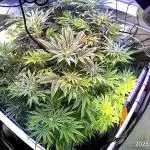
2nd net is up. Early bud formations are promising. holding up to the extremes pretty well, some leaves taking minor damage, but overall, she is holding up, gave her 1 night at 50F see how she would react, stressful. Not advised as it messes with her metabolism, but I want to see if it triggers any anthocyanin response. Love to see her purp up but no signs yet. Remember, For every molecule of glucose produced during photosynthesis, a plant needs to split six molecules of water. This process provides the hydrogen needed for synthesizing glucose and other organic compounds, while oxygen is released as a byproduct.
Homework.
If Rubisco activity is impaired and it cannot properly function or regenerate its substrate, the plant's leaves are likely to turn a pale green or lime green, a condition known as chlorosis. Essentially, Rubisco activity is highly regulated and susceptible to various environmental and metabolic factors that can cause it to become inhibited, leading to an apparent failure in RuBP regeneration due to a lack of consumption.
Rubisco regeneration is intrinsically linked to nitrogen supply because Rubisco is a major sink for nitrogen in plants, typically accounting for 15% to over 25% of total leaf nitrogen. The regeneration phase itself consumes nitrogen through the synthesis of the Rubisco enzyme and associated proteins (like Rubisco activase), and overall nitrogen status heavily influences the efficiency of RuBP regeneration. RuBisCO is a very large enzyme that constitutes a significant proportion (up to 50%) of leaf soluble protein and requires large investments in nitrogen. Insufficient nitrogen supply limits the plant's ability to produce adequate amounts of RuBisCO, thereby limiting the overall capacity for photosynthesis and carbon fixation. Maintaining the optimal, slightly alkaline pH is crucial for the proper function and regeneration of Rubisco. Deviations in either direction (too high or too low) disrupt the enzyme's structure, activation state, and interaction with its substrates, leading to decreased activity and impaired RuBP regeneration. (Lime/yellowing)
Structural Component: Nitrogen is an essential building block for all proteins, and the sheer abundance of the Rubisco protein makes it the single largest storage of nitrogen in the leaf.
Synthesis and Activity: Adequate nitrogen supply is crucial for the synthesis and maintenance of sufficient Rubisco enzyme and Rubisco activase (Rca), the regulatory protein responsible for maintaining Rubisco's active state. Nitrogen deficiency leads to a decrease in the content and activity of both Rubisco and Rca, which in turn limits the maximum carboxylation rate, Vmax, and the rate of RuBP regeneration Jmax, thus reducing overall photosynthetic capacity.
Nitrogen Storage and Remobilization: Rubisco can act as a temporary nitrogen storage protein, which is degraded to remobilize nitrogen to other growing parts of the plant, especially under conditions of nitrogen deficiency or senescence.
Nitrogen Use Efficiency (NUE): The allocation of nitrogen to Rubisco is a key determinant of a plant's photosynthetic nitrogen use efficiency (PNUE). In high-nitrogen conditions, plants may accumulate a surplus of Rubisco, which may not be fully activated, leading to a lower PNUE. Optimizing the amount and activity of Rubisco relative to nitrogen availability is a target for improving crop NUE.
Photorespiration and Nitrogen Metabolism: Nitrogen metabolism is also linked to the photorespiration pathway (which competes with carboxylation at the Rubisco active site), particularly in the reassimilation of ammonia released during the process.
To increase RuBisCO regeneration, which refers to the process of forming the CO2 acceptor molecule Ribulose-1,5-bisphosphate (RuBP) during photosynthesis, the primary methods involve optimizing the levels and activity of Rubisco activase (Rca) and enhancing the performance of other Calvin-Benson-Bassham (CBB) cycle enzymes.
Biochemical and Environmental Approaches:
Optimize Rubisco Activase (Rca) activity: Rca is a crucial chaperone protein that removes inhibitory sugar phosphates, such as CA1P (2-carboxy-D-arabinitol 1-phosphate), from the Rubisco active site, thus maintaining its catalytic competence.
•Ensure optimal light conditions: Rca is light-activated via the chloroplast's redox status. Adequate light intensity ensures Rca can effectively maintain Rubisco in its active, carbamylated state.
•Maintain optimal temperature: Rca is highly temperature-sensitive and can become unstable at moderately high temperatures (e.g., above 35°C/95F° in many C3 plants), which decreases its ability to activate Rubisco. Maintaining temperatures within the optimal range for a specific plant species is important.
•Optimize Mg2+ concentration: Mg2+ is a key cofactor for both Rubisco carbamylation and Rca activity. In the light, Mg2+ concentration in the chloroplast stroma increases, promoting activation.
•Manage ATP/ADP ratio: Rca activity depends on ATP hydrolysis and is inhibited by ADP. Conditions that maintain a high ATP/ADP ratio in the chloroplast stroma favor Rca activity.
Enhance Calvin-Benson-Bassham (CBB) cycle enzyme activity: The overall rate of RuBP regeneration can be limited by other enzymes in the cycle.
•Increase SBPase activity: Sedoheptulose-1,7-bisphosphatase (SBPase) is a key regulatory enzyme in the regeneration pathway, and increasing its activity can enhance RuBP regeneration and overall photosynthesis.
•Optimize other enzymes: Overexpression of other CBB cycle enzymes such as fructose-1,6-bisphosphate aldolase (FBA) and triose phosphate isomerase (TPI) can also help to balance the metabolic flux and improve RuBP regeneration capacity.
Magnesium ions, Mg2+, are specifically required for Rubisco activation because the cation plays a critical structural and chemical role in forming the active site: A specific lysine residue in the active site must be carbamylated by a CO2 molecule to activate the enzyme. The resulting negatively charged carbamyl group then facilitates the binding of the positively charged Mg2+ion. While other divalent metal ions like Mn2+ can bind to Rubisco, they alter the enzyme's substrate specificity and lead to dramatically lower activity or a higher rate of the non-productive oxygenation reaction compared to Mg2+, making them biologically unfavorable in the context of efficient carbon fixation. The concentration of Mg2+ in the chloroplast stroma naturally increases in the light due to ion potential balancing during ATP synthesis, providing a physiological mechanism to ensure the enzyme is activated when photosynthesis is possible. At the center of the porphyrin ring, nestled within its nitrogen atoms, is a Magnesium ion (Mg2+). This magnesium ion is crucial for the function of chlorophyll, and without it, the pigment cannot effectively capture and transfer light energy.
Mg acts as a cofactor: Mg2+ binds to Rubisco after an activator CO2 molecule, forming a catalytically competent complex (Enzyme-CO2-Mg2+). High light + CO2) increases demand: Under high light (60 DLI is a very high intensity, potentially saturating) and high CO2, the plant's capacity for photosynthesis is high, and thus the demand for activated Rubisco and the necessary Mg2+ cofactor increases. Mg deficiency becomes limiting: If Mg2+ is deficient under these conditions, the higher levels of Rubisco and Rubisco activase produced cannot be fully activated, leading to lower photosynthetic rates and potential photo-oxidative damage.
Optimal range: Studies show that adequate Mg2+ application can enhance Rubisco activation and stabilize net photosynthetic rates under stress conditions, but the required concentration is specific to the experimental setup.
Monitoring is key: The most effective approach in a controlled environment is to monitor the plant's physiological responses e.g., leaf Mg2+ concentration, photosynthetic rate, Rubisco activation state, and adjust the nutrient solution/fertilizer to maintain adequate levels, rather than supplementing a fixed "extra" amount.
In practice, this means ensuring that Mg2+ is not a limiting factor in the plant's standard nutrient solution when pushing the limits with high light and CO2.
Applying Mg2+ through foliar spray is beneficial to Rubisco regeneration, particularly in alleviating the negative effects of magnesium (Mg) deficiency and high-temperature stress (HTS). While Mg can be leached from soil, within the plant it is considered a mobile nutrient, particularly in the phloem. Foliar-applied Mg is quickly absorbed by the leaves and can be translocate to other plant parts, including new growth and sink organs.
Foliar application of: NATURES VERY OWN MgSO4 @ 15.0g L-1 in a spray bottle. For those high-intensity workouts when 1 meal a day is just not enough!
Foliar sprays are often recommended as a rapid rescue measure for existing deficiencies or as a supplement during critical growth stages, when demand for Mg is high. Application in the early morning or late evening can improve absorption and prevent leaf burn. The plant was getting a little limey yellow in the centre. Shortly thereafter, she was back in business, green mostly regenerated. The starting point [of creativity] is curiosity: pondering why the default exists in the first place. We’re driven to question defaults when we experience vuja de, the opposite of déjà vu. Déjà vu occurs when we encounter something new, but it feels as if we’ve seen it before. Vuja de is the reverse—we face something familiar, but we see it with a fresh perspective that enables us to gain new insights into old problems.
Confidence is evidence... nothing more. You are confident because you have driven 10,000 times, you are confident because you have spoken 10,000 times. People think confidence is a feeling, but it's not. If you want more confidence, then you need to create evidence, take more shots, collect more data, build more experiences, take more risks; fail, confidence doesn't come first; it is the reward you get for doing the work. no one else wants to do.


@DogDoctorOfficial
Volgen
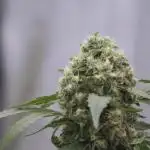
Super Silver Haze (Zamnesia Seeds) — Flower Week 7 (Recovery)
Grower: Dog Doctor
Strain: Super Silver Haze
Breeder: Zamnesia Seeds
Stage: Flower — Week 7 (recovery after localized bud rot)
Pots/Medium: 11 L fabric pots — living super soil with Aptus pellets and Plagron support
Watering: Hand watering; currently water only (see science below)
Lights: F.O.G. Black Series 600W + ThinkGrow ICL-300 (inner canopy) + Lumatek Zeus Compact Pro 465W
Control & Monitoring: TrolMaster Hydro-X/Tent-X + WCS substrate sensors
Air exchange: Dual 6” filtered exhausts + filtered intake; oscillating fans moving canopy air
Current environment (example): day ~29–31 °C, night ~24–26 °C, RH mid 50s–60s, CO₂ ~700 ppm
⸻
Quick recap — seed to the present moment
• Germination & early veg: 3/3 germinated via Cannakan; strong, even starts.
• Transplant: Into 11 L fabric pots with a super soil base inoculated with Aptus Mycor/Micro mixes and buffered for pH stability.
• Veg: Compact, steady growth; conservative feeding with Aptus starter lineup.
• Early flower: Fast flower transition, pistils and bud sites stacking quickly. Plagron trio (Power Buds, Sugar Royal, Green Sensation) + Aptus boosters used to enhance bloom development.
• Bud rot event: Localized Botrytis found inside one cola; removed quickly and thoroughly. Loss minimal. Immediate steps taken (see below).
• Recovery week (this report): Plants responding strongly — dense colas, heavy frosting, explosive aroma. We moved temporarily to water-only feed to stabilize the root zone and let the soil biology drive nutrition.
⸻
What happened and how we dealt with it
1. Detection: Small dark spot discovered deep inside a dense cola. Because rot often starts inside dense clusters, early detection is key.
2. Immediate action: Removed the affected flowers and any suspicious material. Cut generously around infected tissue to avoid leaving spores. Placed waste in sealed bags and removed from the growroom.
3. Sanitation: Cleaned tools, wiped surfaces, checked fans and filters for dust pockets, and increased canopy airflow.
4. Environment adjustments: Increased air movement across and through the canopy; checked extraction; planned AC installation to lower day temps and stabilize RH.
5. Observation & patience: Kept strict daily inspections for any new spots; let plants recover without additional heavy nutrient pushes.
Result: the loss was minimal, the rest of the canopy stayed healthy, and the plants rebounded quickly. Dense, frosty colas and an incredibly strong smell are the signs they are back on track.
⸻
Why “water only” right now — the science, explained simply
We moved to water-only feeds for a short, strategic period. That decision is conservative and backed by three practical goals:
1. Reduce salt and nutrient spikes: After stress and after tissue removal, roots can be sensitive. Water-only flushes prevent sudden EC spikes that can further stress roots. Salt buildup can inhibit water uptake (osmotic stress); clean water restores osmotic balance.
2. Let the soil biology work: You’re growing in a living super soil with Aptus pellets and biological inoculants. Microbes mineralize nutrients slowly and steadily. When plants are stressed, microbial mineralization becomes more important than high-concentration liquid feeds. Water-only gives beneficial microbes a stable environment to supply what the plant needs.
3. Avoid overstimulating lush growth: At late flower, you want carbohydrate partitioning to favor flower filling and resin production, not new vegetative pushes. Limiting NPK pulses prevents a late vegetative response and encourages the plant to allocate sugars to trichome and calyx growth.
Practical note: “Water only” does not mean nutrient-starvation. Your living soil still releases NPK and trace elements. Monitor substrate EC (WCS) and plant appearance; if deficiency signs persist for more than a week, reintroduce a light, balanced feed.
⸻
The gear doing the heavy lifting — why the ICL-300 inner canopy lights matter
• ThinkGrow ICL-300 (inner canopy lights): These deliver targeted, diffuse light deeper into the canopy. For dense sativas or hybrids that set flowers lower on the plant, inner-canopy LEDs reduce shading and encourage even bud set on lower nodes. They also reduce the need to strip leaves to reach light—so you can preserve biology and microclimate.
• F.O.G. Black Series & Lumatek: Provide high PPFD to the top canopy for strong photosynthesis and sugar production. The combination of powerful top light + targeted inner lights = even canopy carbon distribution and more uniformly fat colas.
• TrolMaster + WCS: Real-time data on substrate moisture and EC lets you water by need (you’re already using ~19–25% dryness triggers), which prevents both saturation pockets that encourage rot and drought that stresses plants.
• Airflow & filtration: Dual exhausts and oscillating fans keep air moving; carbon filters keep air clean. This is essential to lower local humidity around flowers and prevent new rot pockets.
All gear together creates a system: light for sugar, airflow for dryness, monitoring for precision, and soil biology for nutrition.
⸻
Observations this week
• Colas: Thickening, dense, frosty. Trichome production visible even with the naked eye.
• Aroma: Extremely potent — strong typical Super Silver Haze profile developing (citrus/citrus-haze + spicy/earthy back-notes), likely driven by terpene expression and warm room temps.
• Leaves: Minor spotting in places earlier; after CalMag adjustments and water-only period, new growth is healthy and vibrant.
• Root zone: Very active — roots visible through fabric, good white root color where checked.
⸻
Risks to watch and mitigation steps (practical, daily checklist)
• Risk: Secondary rot pockets — Mitigation: daily inspection, move a small headlamp into canopy to view internals, keep oscillating fans moving air between bud layers.
• Risk: High night humidity with cooler temps — Mitigation: install AC / run dehumidifier at night, maintain extraction during lights-off.
• Risk: Support failure from heavy colas — Mitigation: pre-position soft ties / netting to support colas now before they get heavy.
• Risk: Late-flower nutrient imbalance — Mitigation: watch leaf tips/edges for burn or deficiency. If signs appear, use small, dilute corrective feeds rather than heavy dosages.
⸻
What to expect in the next 1–3 weeks
• Short term (next 7 days): Continued fattening of calyxes, sustained trichome increase, aroma intensifies. Plants will drink more as flowers bulk. Keep water-only until the canopy is stable and substrate EC is within your target range.
• Mid term (weeks 2–3 from now): Major bulk phase — colas will gain weight and density. Trichomes will move from clear → cloudy (start of potency peak). Expect more resin and heavier terpene bouquet.
• Near harvest planning: Start planning drying/curing space and harvest timeline once trichome clouding reaches your target (we’ll plan this together when the time approaches). Also plan to stagger harvests if colas mature at different rates.
⸻
Short educational sidebar — why trichomes explode now (brief)
Late flower is all about sugar allocation and secondary metabolism. With high light, steady CO₂, and stable root nutrition, plants convert energy into:
• Calyx growth (mass) — the physical body of the bud
• Trichome production (resin glands) — metabolically expensive, but essential for protection and reproduction; trichomes store terpenes and cannabinoids which act as plant defense and pollinator signals in nature
The combination of your lighting, living soil biology, and current conservative feeding strategy drives both mass and resin production.
⸻
Final practical tips for the diary entry
• Post a short video walk-through of the canopy with commentary pointing to the saved areas vs. new growth — that tells the recovery story visually.
• Photograph a closeup of a supported, heavy cola to show density and resin.
• Note the date of the rot removal and actions taken in the GrowDiaries log — that makes the journal useful for other growers and for troubleshooting later runs.
• Keep a small “harvest box” ready: sanitized scissors, nets, gloves, labeled trays — you’ll want them when the time comes.
⸻
Gratitude and perspective
we acted fast, used sound horticultural judgment, and let biology and environment do their work. That combination saved the run. Super Silver Haze is responding like a champion — dense, frosty, and unapologetically aromatic. This week shows the essence of growing: attentive care + good systems = comeback.
📲 Don’t forget to Subscribe and follow me on Instagram and YouTube @DogDoctorOfficial for exclusive content, real-time updates, and behind-the-scenes magic. We’ve got so much more coming, including transplanting and all the amazing techniques that go along with it. You won’t want to miss it.
• GrowDiaries Journal: https://growdiaries.com/grower/dogdoctorofficial
• Instagram: https://www.instagram.com/dogdoctorofficial/
• YouTube: https://www.youtube.com/@dogdoctorofficial
There’s a new series blooming and it’s more than just plants. It’s about process, patience, and paying attention.
⸻
Explore the Gear that Powers My Grow
If you’re curious about the tech I’m using, check out these links:
• Genetics, gear, nutrients, and more – Zamnesia: https://www.zamnesia.com/
• Environmental control & automation – TrolMaster: https://www.trolmaster.eu/
• Advanced LED lighting – Future of Grow: https://www.futureofgrow.com/
• Root and growth nutrition – Aptus Holland: https://aptus-holland.com/
• Nutrient systems & boosters – Plagron: https://plagron.com/en/
• Soil & substrate excellence – PRO-MIX BX: https://www.pthorticulture.com/en-us/products/pro-mix-bx-mycorrhizae
• Curing and storage – Grove Bags: https://grovebags.com/
⸻
We’ve got much more coming as we move through the grow cycles. Trust me, you won’t want to miss the next steps, let’s push the boundaries of indoor horticulture together!
As always, this is shared for educational purposes, aiming to spread understanding and appreciation for this plant. Let’s celebrate it responsibly and continue to learn and grow together.
With true love comes happiness. Always believe in yourself, and always do things expecting nothing and with an open heart. Be a giver, and the universe will give back in ways you could never imagine.
💚 Growers love to all 💚


@Crwfz1
Volgen
I love this strain i got it from them a long while back and some reason. It made seeds every time but gives me a female every time also so cant complain and i love the smoke really great taste grows easy all around good buds!


@C_More_Budz
Volgen
They got the formation that I wanted them to have so now it’s time to flip into flower. I took some clones because you never know what u got until the end. I also top dressed for flower and I started a compost tea I’m gone give them tomorrow, but other than that we off to the races baby!!! Thanks for everyone that is following the grow I started a YouTube channel so if u don’t mind go subscribe and all that good stuff
https://youtube.com/@C_More_Budz


@HeavyHead
Volgen
Great week. Really starting to take off in growth. Onto full strength nutrients and going full power on the lights now :p
Going to start my LST soon possibly this week or early next week.
Will add more pictures and edit as the week goes :)



@MrGrowDiarie
Volgen
Day 98
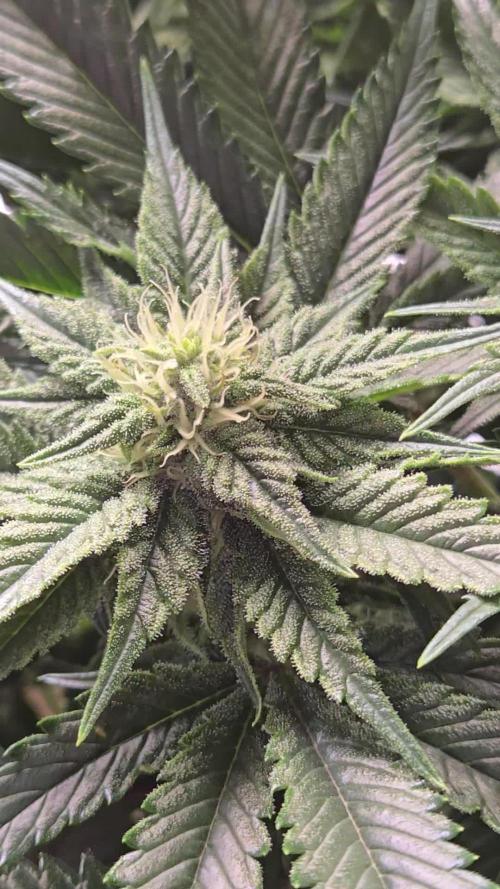
The plants are deep into flowering now and really starting to fill out nicely. The buds have become dense and covered in a thick layer of trichomes, giving off a strong, sweet aroma that’s getting more intense each day. The pistils are starting to turn from white to a light amber tone, a good sign that the plant is moving toward maturity.
Overall health looks great — leaves are a rich green, with only a few showing minor fade on the lower canopy, which is normal at this stage. I’ve been keeping a close eye on humidity and temperature to avoid any mold issues as the buds continue to fatten up.
Feeding schedule remains steady with a focus on bloom nutrients and a bit of molasses to enhance flavor and resin production. Watering every 2–3 days, making sure not to overdo it.


@GreenCasual
Volgen
30% of the pistils are brown now. Trichrome are 100% milky.
Started flushing on this week. I hope that buds are still going to fatten up a lititle before harvest.


@2Stones1Bird
Volgen
Checkout my Instagram @smallbudz to see the Small budget grow setup for indoor use, low watt, low heat, low noise, step by step.
17/11/2019 - Pot feels light and the is bottom dry to the touch time to water, gave her 1,5l of water PH 6.2 with 0.5ml Grow, 1ml, Bloom and 0.5ml Max Biobizz reduced the dosage from last time, watered util some runoff appeared.
18/11/2019 - Mixed another batch of Alg-a-Mic 2ml per liter to spray on lights off PH 6.2


@Hommero75
Volgen
This week was good. The bud density increase. The ladies are looking great and they have an amazing aroma. They just received their last feeding. Now is PH water and cal-mag into they are ready to harvest. It might take a couple of weeks to for them to be ready. Due to the fact the I had some issues in the beginning with the developing of the plants. The growth was slow and it took longer than expected. Tropicana Cookie is the tallest with 17" , Forbidden Runtz with 16" and Banana Purple Punch with 15". I expected them to be taller.


@RellestPlant3r
Volgen
Cycling these girls outa the tent and into a dark tent lol! The time has come to harvest northern lights and banana purple punch 🥊 is not far behind. Definitely growing these in the future!


@Smoking_Joe_Frazier
Volgen
Flowering Week 21: Structural Battles & Rainy Reprieves
Update: 07.08.2025 | Day 150
Hey Growmies,
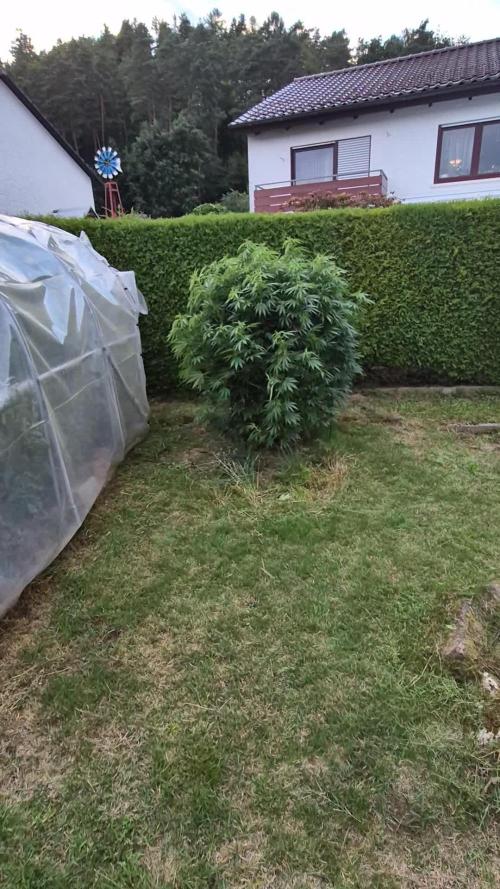
Man, Week 21’s weather is a pain in the ass – constant rain would’ve wrecked us in full bloom. Thank god the girls are still stretching in pre-flower! Mold can kiss my ass for now. Here’s the wrap :
Support Wars
I hauled ass to the hardware store today – grabbed four 2.1-meter stakes and heavy twine. Blueberry’s dancing past 2 meters like it’s nothing, so I caged her up proper. Durban? She’s splittin’ like cheap firewood under those heavy side branches. Shoutout to Birdmountain – I lashed her split stem together with hemp cord. Ugly? Maybe. Working? Hell yes.
Durban Poison – The Bush Queen
This girl’s exploding like fireworks on New Year’s! New shoots popping out everywhere – it’s a damn jungle down there. I gotta get ruthless soon: Light lollipopping’s coming to clear those lower branches. She needs airflow, not a mosh pit. Hardest part? Deciding what to chop without butchering her. Wish me luck.
Blueberry – The Elegant Giant
My god, she’s beautiful. Textbook structure – like one of those fake plants in grower magazines, except real and stretching past 2 meters. After staking her? Even prettier. If Durban’s the fat-bottom girl, Blueberry’s got that peach-shaped ass. Perfection with leaves.
Silver Linings
Zero pests crawling around – maybe this shitty rain’s good for something. Still feeding nothing but Bokashi juice, and they’re sucking it up like cheap beer.
Next Moves
- More Bokashi – if it ain’t broke…
- Lollipopping Durban’s undercarriage
- Tucking branches into their new support harnesses
Week 21 Takeaway
Sometimes you fight plants with stakes and twine.
Catch y’all next week – keep growin’ dirty.
– Smoking_Joe_Frazier


