Likes
Comments
Share


@Bncgrower
Follow
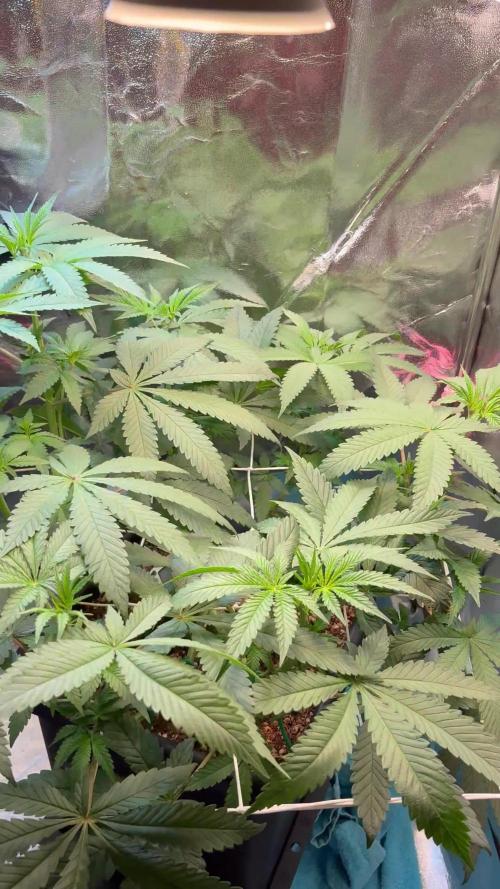
Good evening, a little late but updating... this girl is more compact, but the buds are extremely resinous and fragrant as the last weeks approach... Otherwise everything is as expected.
Happy growing! 🌱🌱

Likes
35
Share


@Mrs_Larimar
Follow
March 11th.
All Seedlings are stable, Looking good
Working on Leafset 4
Rooting job is done, now the allover development can Start
Plants are sitting in 3l Pots, filled with my Soilmix
Watering with Beneficals
Spraying with Foliar Feed " Fast Plants Spray"
March 13th.
Iam done with setting up
Now i have another Babytent. and Inside the New Viparspectra XS-1000
and the other Stuff to run the Envoirement
I already ca see a difference between both Tents. If you stand outside and just look with Eyesight
the Viparspectra seems to be brighter// has another color of Light.
I made a Unboxing Video for more informations.
Amazon: http://url-9.cn/0y9i
Amazon US: https://amzn.to/3e0P2bk
Amazon CA: https://amzn.to/3bTnEJC
Amazon discount Code:
it10mlarimar XS1000 10%
it15mlarimar XS1500 5%
it20mlarimar XS2000 5%
it40mlarimar XS4000 5%


Likes
Comments
Share


@CropHouseLew
Follow
I harvested 2 weeks after the last update. The videos are from a month later after the buds were cured.

Likes
6
Share


@GoldenWeedGrower
Follow
Legend
Timestamp: 📅
EC - pH: ⚗️
Temp - Hum: 🌡️
Water: 🌊
Food: 🍗
pH Correction: 💧
Actions: 💼
Thoughts: 🧠
Events: 🚀
Media: 🎬
D: DAY, G: GERMINATION, V: VEGETATIVE, B: BLOOMING, R: RIPENING, D: DRYING, C: CURING
______________
📅 D57/B20 - 11/06/24
⚗️ EC: 1.0 pH: 6.1
🌡️ T: 25°C H: 70%
🌊
🍗
💧
💼
🧠
🚀
🎬 1 TL video
______________
📅 D58/B21 - 12/06/24
⚗️ EC: 1.0 pH: 6.4
🌡️ T: 25°C H: 80%
🌊 8 L
🍗 Calmag - Bloom A-B
💧
💼
🧠
🚀
🎬 1 TL video
______________
📅 D59/B22 - 13/06/24
⚗️ EC: 1.2 pH: 6.6
🌡️ T: 25°C H: 70%
🌊
🍗
💧
💼
🧠
🚀
🎬 1 TL video
______________
📅 D60/B23 - 14/06/24
⚗️ EC: 1.0 pH: 5.8
🌡️ T: 25°C H: 70%
🌊 15 L
🍗 Calmag - Bloom A-B - B52 - Big Bud - Bud Candy
💧
💼 Spinosad and pH-
🧠
🚀
🎬 1 TL video
______________
📅 D61/B24 - 15/06/24
⚗️ EC: 1.0 pH: 5.8
🌡️ T: 25°C H: 70%
🌊
🍗
💧
💼
🧠
🚀
🎬 1 TL video
______________
📅 D62/B25 - 16/06/24
⚗️ EC: 1.0 pH: 5.5
🌡️ T: 26°C H: 80%
🌊
🍗
💧
💼
🧠
🚀
🎬 1 TL video
______________
📅 D63/B26 - 17/06/24
⚗️ EC: 1.0 pH: 5.2
🌡️ T: 26°C H: 80%
🌊
🍗
💧
💼
🧠
🚀
🎬 1 TL video

Likes
33
Share

@Brujha77
Follow
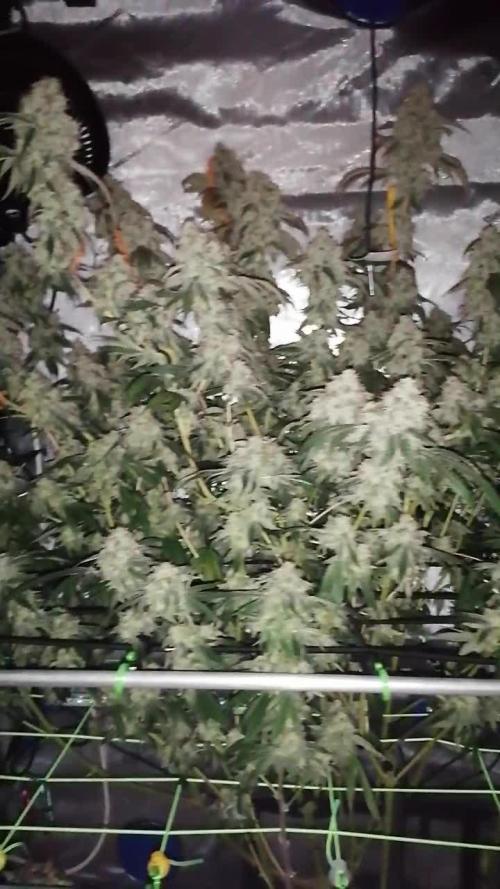
Start Woche 10 Blüte
Das werden die letzten Tage. Im laufe der Woche ist die gute dann soweit🥀
Ich hoffe der Geschmack ist ähnlich wie die gute riecht. Deutlich Heidelbeere/Brombeere leicht sauer und leichten Hazearomen.
Kommt der Beschreibung jedenfalls sehr nah. Schön fruchtig mit etwas Haze dabei 👌👍👍
Die Chilled Cherry hatt gestern nen Hagelsturm abbekommen 😓😓😓 und ist leider komplett gespalten und ein Seitentriebe ist auch halb ab.
Hab mal alles wieder zusammengebunden.. Mal schaun und hoffen😢😢
Ich mach bei Gelegenheit noch mal Fotos.
Die Chilled Cherry hatt sich wieder gut erholt🍀🥀
Immer wieder faszinierend wie viel die guten Aushalten (Stamm war komplett in der Mitte gespalten) 🍀🍀🍀

Likes
48
Share


@PrairieFrostGrow
Follow
******** Week 9 - Feb 3 to 9/20 (Days 57 - 63 from seed popping out)
She has continued to swell this week and stacking her buds. The hairs are turning this week. More at the top of the plant but some on the bottom as well. Still has many white hairs and a good thickness as well. This week has been one of those......is today the last feed.....no one more.......is today last feed......no one more.....🤨🧐🤨🧐 😃😃😃 And so it finally came down to Saturday Feb 8, Day 62 as the last day of feed. Plan it to just flush with water and Rezin & Liquid Weight to the end.....or early 70’s anyway.
Kind of a boring week in a way because she has been such an awesome girl to grow!! She is dense with a lot of leaves but I am trusting this next week will continue to bring significant swelling. She has been fine with the fluctuations that happen through a grow and has been vigorous all the way through.....great genetics! She is a real beautiful little girl with how she has grown....a couple of the pictures on the stand show just how well she grew and then how much bud is now on those branches. On bigger branches I would clip off another node lower than I did to give a little more energy to fill in the tops. Not sure this girls top colas will fill in as much as one would like but........take your time girl😀 Also.....I think it could be worth a run doing this girl in a 5 gal pot.....if she has no problem going 77 days or so then maybe there is time build a nice mass????
I am concerned at the end of the week that I may be seeing signs of root bound with the leaves clawing down?????? Don’t think its light.....was the same the morning before watering so don’t feel its over watering......could be nitrogen toxicity???? Not going to chase it at this stage but would like to know for next run to correct. Became more visible Feb 6/7/8 idea....appreciate any comments😕
Have not spent anytime looking at Trich colour this week.....too early anyway. What I have noticed is one crazy amount of frost forming on this girl in the last week!!!!! Wednesday had to do a double take on some of the images and zoomed in on a bud.....DAMN!!!!💪👍🙏 Hope she continues to be happy and keeps pushing out them trichs.......DAMN😃😃😃
Changed the light schedule again this week. Moved her to 19.5 hours of light because she is still not falling to sleep at lights out.
Will be avoiding use of Flawless Finish for now and I suspect she has two weeks left in her. If something changes and she ripens quicker then may use.
Little more detail to come..........
Feb 3/20 - Day 57
- Water feed today. Runoff in tray was 6.1pH.....good
- 3L given with Sensyzime @ 1ml/L. 80ppm and 6.15pH going in.
Feb 4/20 - Day 58
- Full feed today. Pot still had some weight.
- 3L off full feed with 1125ppm and 6.05pH
- Runoff water in tray before feed: 900ppm and 6.03pH
- Runoff water in tray after feed: 1300ppm and 6.2pH
- she had small leafstrip today.
- removed most of the LST today. Left two ties.
Feb 5/20 - Day 59
- nothing today.
- Light cycle changed to 19.5hrs on and 4.5hrs off.
- Her hairs are still long an reaching.....good sign for growing longer
Feb 6/20 - Day 60
- Verify medium today....close to flush
- 3L feed of Sensyzime and Rezin @ 2ml/L and Liquid Weight @ 1.5ml/L. = 100ppm and 5.8pH
- Runoff was 680ppm and 6.25pH.
- ppm is a little low and pH is creeping up.
Feb 7/20 - Day 61
- Nothing today, still heavy.
- slow growth happening??? Thickening behind the scenes???
Feb 8/20 - Day 62 - ********Last Feed********
- Full strength feed......base nutes both at 0.5ml/L
- 6L feed with 1150ppm and 5.4pH going in.
- pH was a little high so lowered for this feed.
- Medium got a good soak and good runoff amount
- Runoff: 1500ppm with 6.05pH
- ppm might be a little high but hopeful she will go two weeks......will be flush a fair bit of water at minimum.
Feb 9/20 - Day 63
- Dry out day
- the "CLAW" is more prominent today. Mainly on top couple of leaves on the large colas.
- raised the light a bit.....will use lower pH water in flush......not much else other than let her dry out at this stage.......
Hope we can drag out harvest day until Feb 22 or 23rd.......🤞😁😁😁.....Thanks for the read and hope you have a smooth week!


Likes
141
Share

@Mr_und_Ms_Lue_Roots
Follow
Hallo zusammen,
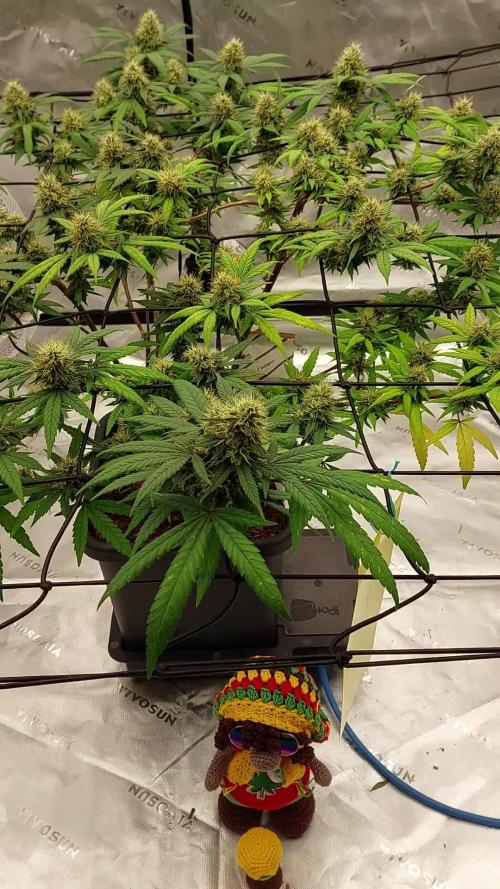
Wir befinden uns inzwischen in Woche 6 der Blütephase.
Es ist sichtlich festzustellen, dass sie identisch wie die erste Purple Coockie Kush, während der Blütephase vereinzelt Versorgungsprobleme aufzeigt. Es liegt zumindest durch den eigen Versuch mit identischen Pflanzengut sehr nah, dass es wirklich weiter vererbt wurde. Dahingehend ein toller eigenversuch mit eher negativen Ausgang aber zugleich, wertvollen Erfahrungen für uns. Aus diesem Grund, sehen wir davon ab, die P.C.K die sich z.Zt im Re veg befindet, weiter zu führen. Am Wochenende werden wir uns noch mal die Blätter die Kraft nehmen, kleinstblüten und wahrscheinlich den einen Unterversorgten Trieb entfernen. Ansonsten schwellen die Blüten die versorgt werden schön an und Baldchin bauen breitgefächert aufeinander auf.
So bis nächste Woche liebe Gartenfreunde und vielen Dank für das vorbeischauen!
VG ✌️ 😎
Likes
77
Share


@SooSan
Follow
120w :
- 2xQBmini lm301b 3000k + Far Red
- Spyder Lm301h 3500k + Emerson
Box 50x50x100
Double Scrog Vertical
Tropical Fuel 32g
Afghan Peach x Blue Monkey 26g
Hindu Kush 25g
Gelato Cake 33g
Fast Critical Poison 27g
(Blueberry x Black Domina) X (Kosher Kush x Mk-Ultra) 13g
(Blueberry x Black Domina) X (Kosher Kush x Mk-Ultra) 4g
Blueberry 3,5g
Herz OG 4,5g
120w = 168g


Processing
Likes
24
Share


@Grnhead
Follow
Update 1/19 (day 9):
* The plants are maturing a bit more so I increased the light output back up to 100% (up from 75% at the end of last week). I bought a light meter and they are getting about 48.6K LUX at the top of the plants (I checked each plant individually and they are getting the same amount of light). I have mostly been not using the side lighting during veg.
* Still riding the last nutrient swap at the end of last week (with week 2 ratios) at 60% dilution and in a few days I will get them closer to 80%.
* Root development is looking really good for all of them. The biggest plant is getting its second full set of leaves and the others are about 1 stage behind at the moment.
* Humidity has been challenging with winter in full force. I have the humidifier blasting right outside the box but it can barely crack 50% at the moment.
Update 1/21 (day 11):
* The oldest plant started to branch out before I wanted it to so I trimmed off all the small branches yesterday. It didn't seem affected and has been growing strong since.
* Starting to see more vigorous growth.
* Exchanged the nutrient water after a quick flush with only PH'd water. Now nutrients are at about 73% strength and 740 PPM with a 230 PPM base, the highest PPM I plan to go during veg.
Update 1/23 (day 13):
* Discovered that water was increasing in PH to the point I couldn't control it. After some troubleshooting I determined that the CO2 bag was working, and working well. My DWC pump was in the box and pumping CO2 into the water which increased the acidity every day. I have moved the pump to the outside of the box so it is pumping fresh air into the water now.
* Had to replace the water because of the CO2 incident, the water became very cloudy and didn't look right. At about the same strength level as before for nutrients, sitting currently at about 75% strength.
* The Pineapple Skunk is directly next to the CO2 bag and it seems to be working because it is really starting to grow vigorous and is a darker green than the other two. Noticeable differences that correlated with when the water was becoming acidic. I need to buy a CO2 monitor but haven't felt like dropping $100 for it.


Likes
4
Share

@MasterGrowda88
Follow
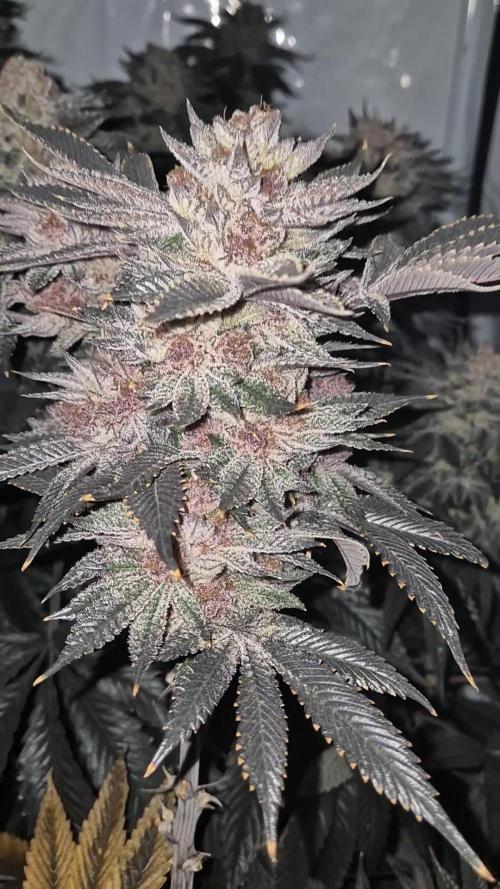
I've owned this wonderful red lady for about six years. She was my first plant imported from the States, and to this day, she's one of the best genetics I have here. Very robust, can withstand anything, likes to be trained, and the smell is very strong even before flowering.

Likes
8
Share

@WestphaliaFarms
Follow
Flush Week 8: Flushed the Plants 2x with Flawless Finish to get rid of mineral buildups and bring down the EC and 1x with RO water. Also lowered the PPFD to around 600.

Likes
134
Share


@DogDoctorOfficial
Follow
And , and, and… i mean she is growing amazing and kind a fast now, she is almost with the canopy the way i like and almost ready for her defoliation and to be flipped to flower :) <3 <3 <3
She is so, but i mean so vigorous and strong that i thing this will be an outstanding exemplar and will produce amazing medicine.
Like i sayd before i dont do expectations but i do have big ones for this Mana, she was once my favorite medicine and if she delivers me that kind of medicine, i will b like a kid eating gummy by the fire camp , but thats latter on in life lol for now i will bend her one or 2 days more and after i will work her hard hehehe
Love how her leafs have 9 fingers and keep on trowing them fingers out to the world <3 <3 <3
As always thank you all for stoping by, for your time, your love and for it all, i am truly blessed with you all.
All info and full product details can be find in can find @
https://dutch-passion.com/
https://aptus-holland.com/
#aptus #aptusplanttech #aptusgang #aptusfamily #aptustrueplantscience #inbalancewithnature #trueplantscience #dutchpassion #dogdoctorofficial #growerslove
With true love comes happiness , Always believe in your self and always do things expecting
nothing and with an open heart , be a giver and the universe will give back to you in ways you could not even imagine so
More info and full updates @
https://growdiaries.com/grower/dogdoctor
Growers love to you all
P.S. reminder no emogies other way the text just puff and its gone lol
Likes
4
Share


Likes
12
Share


@DrGreenbutterThumb
Follow
So I harvested 1 Grlato Cake seed 🙃22 Gelato cake × Dosi-punch, & 18 Gelato cake × Lamb's Bread. Already germinating the gelato × dosi mix.
Excited to start the next diary
Likes
18
Share


@rhodes68
Follow
9/27 Just wanted to put up the last pics before harvest of Gloria. She made it to the 13th week and that aint bad for the little Sativa