Likes
Comments
Share
@poloq
Follow
2026_08_08 _Setup I rotated the pot again (back to its original position) because the plant is actually growing 'too vigorously' and is already touching the wall. This gives it more space and makes it easier to shape it into a more even canopy. _Living Soil I got a little weevil! _Plants Although there were some slight imbalances in recent weeks, there are no longer any signs of a deficiency. Even the tips of the leaves are completely green.
Likes
141
Share
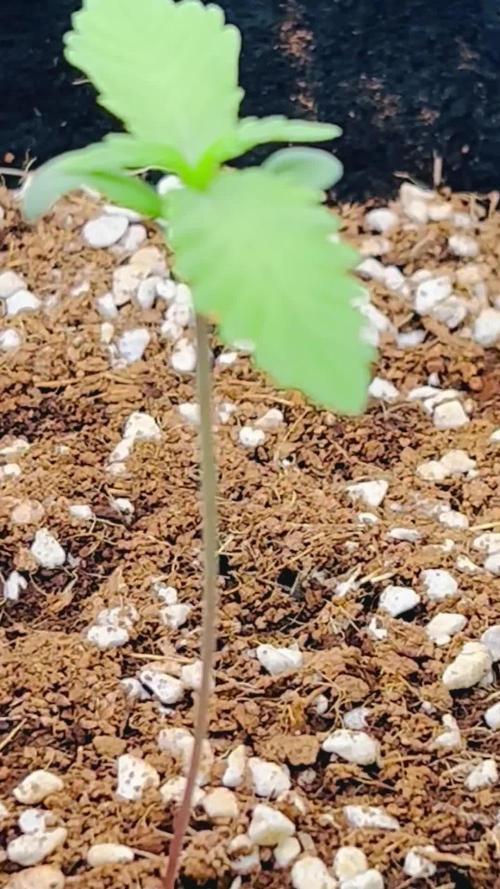
Приветствую, коллеги! 💚💛❤️ В этот раз я захотел вырастить сативадоминирующий сорт, Strawberry Cream от SumoSeeds как раз подходит: "Прямо из района Эр-Риф Марокко, эксклюзивный гибрид Goji Haze с Strawberry Haze, знаменитой фруктовой сативой от Арьена из GHS. При курении этой красотки будет замечен приятный сладковатый аромат клубники." Звучит интригующе.😏 Теперь пару слов о проращивании: обычно после замачивания в стакане воды(RO water), я проращиваю семечки во влажных ватных дисках и зип-пакете(так мне легче контролировать нужную влажность). Но при этом способе нужно следить за корнем, есть риск вростания в ватный диск, что и случилось с одной из семечек. В этом случае извлекать семечку нужно предельно аккуратно(см. видео). Видимо в следующий раз я попробую менее рискованный способ проращивания. Ах да, перед стаканом с водой я слегка подпилил семечки по острой грани маникюрной пилочкой. Итого: 23.01(вечер) поместил в стакан с водой 24.01(утро) поместил в диски 25.01(утро) появились корни 25.01(вечер) корни ≈1см. посадил в кокос 26.01(вечер) взошли На всякий случай отметим, что чуть позже взошла растишка из правой(на фото) семечки, и она же была заметно крупнее. Кокос(уже с перлитом, спасибо линейке Plagron) я зарядил слабеньким компотом(A+B-2, B52-1, CalMag - 0.5 pH5.9 ppm514), полетели! Спасибо, что заглянули, и будьте здоровы! 🙏 Продолжение следует ...😶
Likes
18
Share
Green light is radiation with wavelengths between 520 and 560 nm and it affects photosynthesis, plant height, and flowering. Plants reflect green light and this is why they appear green to our eyes. As a result, some growers think that plants don’t use green wavelengths, but they actually do! In fact, only around 5 – 10% of green light is reflected from leaves and the rest (90 – 95 %) is absorbed or transmitted to lower leaves [1]. Green wavelengths get used in photosynthesis. Chlorophyll pigments absorb small amounts of green wavelengths. Light that doesn’t get absorbed is transmitted to leaves that are shaded out from direct light. This means that leaves at the bottom of the canopy get more green light than leaves at the top. A high proportion of green wavelengths compared to other colors tells lower leaves that they are being shaded out, so they are able to react accordingly. Lower leaves may react by opening or closing their stomata or growing longer stems that help the leaves reach brighter light [1, 2, 3]. When it comes to growing cannabis, many cultivators are interested in the quality of light used for the flowering stage. In many plants, flowering is regulated by two main photoreceptors: cryptochrome and phytochrome. Both photoreceptors primarily respond to blue light but can also respond to green, although to a lesser extent. Green can accelerate the start of flowering in several species (although cannabis has yet to be tested) [1, 4, 5]. However, once flowering has begun, it’s important to provide plants with a “full spectrum” light that has high amounts of blue and red light, and moderate amounts of green, in order for photosynthesis to be optimized. Green light mediates seed germination in some species. Seeds use green wavelengths to decide whether the environment is good for germination. Shade environments are enriched in green relative to red and blue light, so a plant can tell if it is shady or sunny. A seed that senses a shaded environment may stay dormant to avoid poor growing conditions [1]. Some examples of plant species where researchers have documented this response are: ryegrass (a grass that grows in tufts) and Chondrilla (a plant related to dandelion) [1, 6]. Although green wavelengths generally tell plants NOT to germinate, there are some exceptions! Surprisingly, green wavelengths can stimulate seed germination in some species like Aeschynomene, Tephrosia, Solidago, Cyrtopodium, and Atriplex [1, 6, 7]. Of course, light is not the only factor affecting seed germination – it’s a combination of many factors, such as soil moisture, soil type, temperature, photoperiod, and light quality. When combined with red and blue light, green can really enhance plant growth [1, 8]. However, too much green light (more than 50% of the total light) can actually reduce plant growth [8]. Based on the most current research, the ideal ratio of green, red, and blue light is thought to be around 1:2:1 for green:blue:red [9]. When choosing a horticultural light, choose one that has high amounts of blue and red light and moderate amounts of green and other colors of light. Not many studies can be found about the effect of green light on cannabis growth or metabolism. However, if one reads carefully, there are clues and data available even from the very early papers. Mahlberg and Hemphill (1983) used colored filters in their study to alter the sunlight spectrum and study green light among others. They concluded that the green filter, which makes the environment green by cutting other wavelengths out, reduced the THC concentration significantly compared to the daylight control treatment. It has been demonstrated that green color can reduce secondary metabolite activity with other species as well. For example, the addition of green to a light spectrum decreases anthocyanin concentration in lettuce (Zhang and Folta 2012). If green light only reverses the biosynthesis of some secondary metabolites, then why put green light into a growth spectrum at all? Well, there are a couple of good reasons. One is that green penetrates leaf layers effectively. Conversely red and blue light is almost completely absorbed by the first leaf layer. Green travels through the first, second, and even third layers effectively (Figure 2). Lower leaf layers can utilize green light in photosynthesis and therefore produce yields as well. Even though a green light-specific photoreceptor has not yet been found, it is known that green light has effects independent from the cryptochrome but then again, also cryptochrome-dependent ones, just like blue light. It is known that green light in low light intensity conditions can enhance far red stimulating secondary metabolite production in microgreens and then again, counteracts the production of these compounds in high-intensity light conditions (Kim et al. 2004). In many cases, green light promoted physiological changes in plants that are opposite to the actions of blue light. In the study by Kim et al. blue light-induced anthocyanin accumulation was inhibited by green light. In another study it has been found that blue light promotes stomatal opening whereas green light promotes stomatal closure (Frechilla et al. 2000). Blue light inhibits the early stem elongation in the seedling stage whereas green light promotes it (Folta 2004). Also, blue light results in flowering induction, and green light inhibits it (Banerjee et al., 2007). As you can see, green light works very closely with blue light, and therefore not only the amount of these two wavelengths separately is important but also the ratio (Blue: Green) between these two in the designed spectrum. Furthermore, green light has been found to affect the elongation of petioles and upward leaf reorientation with the model plant Arabidopsis thaliana both of which are a sign of shade avoidance symptoms (Zhang et al. 2011) and also gene expression in the same plant (Dhingra et al. 2006). As mentioned before, green light produces shade avoidance symptoms which are quite intuitive if you consider the natural conditions where the plants grow. Not all the green light is reflected from the highest canopy leaves in nature but a lot of it (50-90%) has been estimated to penetrate the upper leaves at the plant level ((Terashima et al., 2009; Nishio, 2000). For the plant growing in the understory of the forest green light is a signal for the plant of being in the shade of a bigger plant. Then again, the plants growing under unobstructed sunlight can take advantage of the green photons that can more easily penetrate the upper leaves than the red and blue photons. From the photosynthetic pigments in higher plants, chlorophyll is crucial for plant growth. Dissolved chlorophyll and absorb maximally in the red (λ600–700 nm) and blue (λ400–500 nm) regions of the spectrum and not as easily in the green (λ500–600 nm) regions. Up to 80% of all green light is thought to be transmitted through the chloroplast (Terashima et al., 2009) and this allows more green photons to pass deeper into the leaf mesophyll layer than red and blue photons. When the green light is scattered in the vertical leaf profile its journey is lengthened and therefore photons have a higher chance of hitting and being absorbed by chloroplasts on their passage through the leaf to the lower leaves of the plant. Photons of PPFD (photosynthetic photon flux density) are captured by chlorophyll causing an excitation of an electron to enter a higher energy state in which the energy is immediately passed on to the neighboring chlorophyll molecule by resonance transfer or released to the electron transport chain (PSII and PSI). Despite the low extinction coefficient of chlorophyll in the green 500–600 nm region it needs to be noted that the absorbance can be significant if the pigment (chlorophyll) concentration in the leaf is high enough. The research available clearly shows that plants use green wavelengths to promote higher biomass and yield (photosynthetic activity), and that it is a crucial signal for long-term developmental and short-term dynamic acclimation (Blue:Green ratio) to the environment. It should not be dismissed but studied more because it brings more opportunities to control plant gene expression and physiology in plant production. REFERENCES Banerjee R., Schleicher E., Meier S. Viana R. M., Pokorny R., Ahmad M., Bittl R., Batschauer. 2007. The signaling state of Arabidopsis cryptochrome 2 contains flavin semiquinone. The Journal of Biological Chemistry 282, 14916–14922. Dhingra, A., Bies, D. H., Lehner, K. R., and Folta, K. M. 2006. Green light adjusts the plastic transcriptome during early photomorphogenic development. Plant Physiol. 142, 1256-1266. Folta, K. M. 2004. Green light stimulates early stem elongation, antagonizing light-mediated growth inhibition. Plant Physiol. 135, 1407-1416. Frechilla, S., Talbott, L. D., Bogomolmi, R. A., and Zeiger, E. 2000. Reversal of blue light -stimulated stomatal opening by green light. Plant Cell Physiol. 41, 171-176. Kim, H.H., Goins, G. D., Wheeler, R. M., and Sager, J. C. 2004.Green-light supplementation for enhanced lettuce growth under red- and blue-light emitting diodes. HortScience 39, 1617-1622. Nishio, J.N. 2000. Why are higher plants green? Evolution of the higher plant photosynthetic pigment complement. Plant Cell and Environment 23, 539–548. Terashima I., Fujita T., Inoue T., Chow W.S., Oguchi R. 2009. Green light drives leaf photosynthesis more efficiently than red light in strong white light: revisiting the enigmatic question of why leaves are green. Plant & Cell Physiology 50, 684–697. Zhang, T., Maruhnich, S. A., and Folta, K. M. 2011. Green light induces shade avoidance symptoms. Plant Physiol. 157, 1528-156. Wang, Y. & Folta, K. M. Contributions of green light to plant growth and development. Am. J. Bot. 100, 70–78 (2013). Zhang, T. & Folta, K. M. Green light signaling and adaptive response. Plant Signal. Behav. 7, 75–78 (2012). Johkan, M. et al. Blue light-emitting diode light irradiation of seedlings improves seedling quality and growth after transplanting in red leaf lettuce. HortScience 45, 1809–1814 (2010). Kasajima, S., et al. Effect of Light Quality on Developmental Rate of Wheat under Continuous Light at a Constant Temperature. Plant Prod. Sci. 10, 286–291 (2007). Banerjee, R. et al. The signaling state of Arabidopsis cryptochrome 2 contains flavin semiquinone. J. Biol. Chem. 282, 14916–14922 (2007). Goggin, D. E. & Steadman, K. J. Blue and green are frequently seen: responses of seeds to short- and mid-wavelength light. Seed Sci. Res. 22, 27–35 (2012). Mandák, B. & Pyšek, P. The effects of light quality, nitrate concentration and presence of bracteoles on germination of different fruit types in the heterocarpous Atriplex sagittata. J. Ecol. 89, 149–158 (2001). Darko, E. et al. Photosynthesis under artificial light: the shift in primary and secondary metabolism. Philos. Trans. R. Soc. B Biol. Sci. 369 (2014). Lu, N. et al. Effects of Supplemental Lighting with Light-Emitting Diodes (LEDs) on Tomato Yield and Quality of Single-Truss Tomato Plants Grown at High Planting Density. Environ. Control Biol. 50, 63–74 (2012).
Likes
14
Share
Likes
14
Share
@Peeman
Follow
Dealing with very strong winds this week. Also morning temperatures are below 15°C causing quite a bit of morning dew. Clear tarps are a big help as long as the strong wind doesn’t blow it away ha ha
Likes
8
Share
@AutoCrazy
Follow
This plant is a Beast! Can’t believe how big she is for being in a 20 gallon pot. She is starting to fatten up now! 🍿😎 Dinafem nailed it with these genetics!
Likes
13
Share
¡Buenos vibras y excelente humos para todos! Regresamos al cultivo y vamos a probar 6 automáticas de MrHide Seeds. Lámpara: Bestva Quantum Led 2000W Semillas: 4 Auto Kritical Red , 1 Auto Triping 25 , 1 Cream Mass Nutrientes Canna: Vega - Rhizotonic - Camnazym. Sustrato 1:2 Floragard - Jiffy fino para semilleros Germinó directa en sustrato 🔥👈 NOTA: La lámpara que utilizo y el banco de semillas no está entre las opciones de Growdiaries.
Likes
4
Share
@Slobasian
Follow
I don’t wanna cut them down it’s almost over lol
Likes
17
Share
Top dresses a little late on 2 of the girl but the doing good and growing fast can't want to put in flower going for a scrog tent.
Likes
3
Share
We were flushing at this point, aiming for a Day 60-64 harvest. Was super impressed with Ayahuasca Purple and LSD genetics for our environment. The Cookies Kush could have used a few more weeks to reach her full potential but still put off decent weight nonetheless. Shoutout Barney's Farms for putting out high quality, affordable genetics! Respect.
Likes
7
Share
@Canna96
Follow
Hey now, hope everyone is having a great weekend. Not much to report on the Bubble Runtz, , she popped above soil on day 3 and is now on day 7 and is working on her 2nd set of true leaves. I started prepping the Coco Coir by flushing down to .4 EC and then soaking in water with an EC of 2.0 with Cal Mag and a PH of 6.8. I will let it soak until the seedlings are ready to be transplanted hopefully by next weekend or shortly thereafter. The weather in my region is perfect for cultivating seedlings as it is fairly hot and humid and I only have the Spectrum X running at 30% so it is not putting out much heat and I also have a humidifier running in the tent on low which is maintaining a RH of around 68%. I do have the AC Infinity fan kick on here and there just to keep some fresh air in the tent but no real issues with heat. This is my first run with Tastebudz genetics and super excited to try a cross of Bubble Gum and Runtz. I plan to build a mainline and flip as soon as all 5 mainlines are built, hopefully around week 7. This Medic Grow light is perfect for a 5X5, and the AC Infinity 8" exhaust does an excellent job of keeping the tent cool. I will set up an auto feeding system which consists of a reservoir, and some 1/2" tubing that is hooked to a submersible pump in the reservoir and set to feed for 1 minute every 6 hours through halo feeders connected to ball valves to adjust the flow. The runoff then flows via gravity to a 5 gallon bucket in the tent with a shallow pan condensate pump that pumps the runoff out of the tent when it gets above 3 inches to another reservoir. I have been growing fruit and vegetables for over 40 years and I have recently switched to high frequency fertigation in Coco Coir for my tomatoes as well, as I believe this growth medium combined with this technique is the safest, most environment friendly, and foolproof method of getting monster yields no matter what crop you are growing, and I have seen massive results in both cannabis and tomatoes. My goal is to have these ladies transplanted by around day 14-17, and have the first toppings done within 48 hours or so of transplant. I hope everyone has a safe and peaceful weekend. Thanks for stopping by, Stay Safe and Blaze On!!! 💪 Website: https://medicgrow.com/ https://growdiaries.com/grower/medicgrowled
Likes
18
Share
At Breadandbuds we have never underestimated F1s and here we have a great example of why: Do Si Dos F1 Hybrid Automatic. We have two plants that you can find compared at the end of the photo gallery of this diary, one left to grow straight that will be harvested tonight and you can find described in this diary and the other worked with a mainiling that made it bonsai style that will be harvested in about 10 days. THIS IS THE HARVEST DAY FOR PLANT 1 the one not worked with techniques. The characteristic of F1 plants small and fast flowering (on average) is found in this strain grown in winter () I'm sure that in autumn I can do something bigger) They are both very beautiful, resinous and fast, the one worked with the techniques has the natural delay due precisely to this type of work. This plant collected in particular has a height anot very great but it really has all the little things in their place we really want to taste it as soon as possible. It was all in an intensive flush, we both arrived a little too full and so we planted with the basic fi fertilizers girls. Fertilizers x Soil x Additives 100& Organic Plagron --- www.plagron.com Try a seed of this strain that drives us crazy.. ---- https://www.zamnesia.io/en/10664-zamnesia-seeds-do-si-dos-f1-automatic.html Zamnesia Description // From the team at Zamnesia Seeds comes Do-Si-Dos F1 Automatic. Using consistent and reliable F1 genetics, this strain is not only incredibly easy to grow, but also offers potent and delicious buds. The plants remain small and offer a reliable growing experience that everyone will appreciate. All the best that mother nature has to offer is at ---- www.zamnesia.com
Likes
2
Share
Vegetative steering Aiming for: leaf Temp -70f CO2 300 VPD +.93 Planning for: MJ and bras foilar 60%+1.5/-71f set to 68f+1.5 Leaf Temp is about 3f higher than ambient temp At 68f outside, grow room still wont hit 68 with lights off Day 24 No Co2 50-55klux 15inch from light Leaf Temp 71-73f 60%/72F Veg steering Coconut water Uneven canopy(11 at 29inch, 3ag 31 inch ———————— Day 26 56%68f(humidity dropped because i havnt watered in two days 🤡) 23inch-34inch tal. Arranged in order. 52-59klux Sprayed 5Bras,(23inch)70 leaf temp 4Jas,(29inch) 70 leaf temp 4Bras&Jas(34inch)72f leaf temp ——————— Day 27 Watered once ————- Day 28 Im pretty sure the sprays worked. Noticed leaf burn with 3 plants sprayed with MJat 147ppm(.5ml) No leaf burn with the .1Bras sprays I wonder how long both are good for. Also, can i pour the unused spray in the medium? I just dont want to waste it. Plants are noticeably more vigorous. I am wondering if now is a good time for my defoliation. i was planning for Week 5. I feel like the buds are to developed for me to be pruning off lower buds and makes me feel like i should have pruned beginning of week4 __________
Likes
137
Share
@MrJones
Follow
mrjones - Slurricane #7 S1 🌱Slurricane #7 S1 @inhousegenetics_official 👨‍🌾🏽GD Grower: MrJones 🔹🔹🔹🔹🔹🔹GOALS🔹🔹🔹🔹🔹🔹 🌞Environment - 75/80℉ and 60% Humidity Good Old Mother Nature 💧 Feeding - The Green Sunshine Company - Earth Dust All-Natural Plant Nutrients ⚗️Soil - 35% ProMix MP / 25% Ocean Forest / 20% Tupur Royal Gold / 10% lobster Compost / 10% Additional Perlite 🍃Training / So this girl was 60 Inches and spread out under a 5x5 Trellis 🕷️ IPM - Will be using Green Cleaner" 1 OZ per Gallon, and CannControl from Mammoth alternating between products each month 🔹🔹🔹🔹🔹🔹🔹🔹🔹🔹🔹🔹🔹🔹🔹 📜 Rambling - So with the end of July on the Horizon, my time is running out to get the 3rd trellis up and do some major defoliation, but work has been so busy, the girl under the trellis has grown a foot above the second trellis! The other plant is almost 7 feet tall as well, just amazing, the Earth Dust is rocking it out! 🔹🔹🔹🔹🔹🔹🔹🔹🔹🔹🔹🔹🔹🔹🔹 ▶️ Sunday - 07.25.21 / Just watering daily with Dechlirnated H20 using the BOOGIE BLUE PLUS+ (High-Capacity Filter) to remove the Chlorine and Chloramine out of the water. ▶️ Monday - 07.26.21 / Just watering daily with Dechlirnated H20 ▶️ Tuesday - 07.27.21 / Just watering daily with Dechlirnated H20 ▶️ Wednesday - 07.28.21/ Just watering daily with Dechlirnated H20 ▶️ Thursday - 07.29.21 / Just watering daily with Dechlirnated H20 ▶️ Friday - 07.30.21 / Just watering daily with Dechlirnated H20 ▶️ Saturday - 07.31.21 / Today the girls got a hair cut, in the form of massive defoliation, adjusted the trellises, then top dressed with Earth Dust, watered it n with Dechlirnated H20. 🔹🔹🔹🔹🔹🔹🔹🔹🔹🔹🔹🔹🔹🔹🔹 Earth Dust - DESCRIPTION 🔹Earth Dust is our all-natural plant nutrient designed for indoor and outdoor flowering plant growers. You can grow easily by “just adding water” to your soil for the entire growth cycle. It creates a “living soil” so your plants thrive from seedling all the way through flower and harvest. Earth Dust represents an organic dry amendment method of gardening, it’s made of a natural powder of ingredients. 🔹Because you only need to water your soil with Earth Dust, you can concentrate on caring for your plants and getting a healthy crop “on autopilot”. Now you can grow without spending hours of your life mixing chemical nutrients, and you can do it naturally. What’s more, is you will enjoy the cleanest, most aromatic, and flavorful harvest you’ve ever experienced when a plant grows in a rich, organic web of living soil. Product Highlights 🔹All-Natural Ingredients – Mostly plant-based – Safe around children and pets. 🔹Packaged in kraft paper bags that are recyclable and compostable. 🔹Easy to Use – Just mix the powder into the soil 3 separate times – then water only. 🔹Packed full of rich microbe food & contains billions of beneficial fungi and bacteria! Creates a resilient, living soil that defends against pests and diseases. 🔹Rich in trace minerals and nutrients for full plant expression. Sourced from rock dust, sea-farmed kelp, and land-grown crops. 🔹Soil Conditioners help balance pH and make nutrients more available in the soil. Achieved with ingredients like bat guano, worm castings, limestone, molasses, and humic acid. 🔹The correct balance of N-P-K nutrients for each stage of growth: 🔹Earth Dust Base (3-1-2) contains key nutrients for sustained vegetative growth. High nitrogen (N), Low Phosphorous (P), and Medium Potassium (K). 🔹Earth Dust Boost (2-3-6) contains accelerated-release nutrients for powerful flowering growth. Low nitrogen (N), Medium Phosphorous (P), and High Potassium (K). 🔹Re-use soil harvest after harvest by simply adding more Earth Dust Base to begin again. Create your own living soil that gets better every time it’s used. 🔹Go organic, save time, and get predictable, healthy harvests. 🔹🔹🔹🔹🔹🔹🔹🔹🔹🔹🔹🔹🔹🔹🔹 Compost Tea for Vegetative Stage Water 4 Gallons 3 Cups Composr (Your Favorite Worm) 4 TBL Molasses 4 TBL Seaweed Extract 4 TBL Fish Fertilizer Use air Stone o the tea for 24/3 hours 70/75F, use at full strength for establishing plants and a half-strength for younger plants
Likes
10
Share
@Eauderay
Follow
I think I was mistaken about her parentage, the more she develops and the more I see some Blimburn S1 I found in my Blimburn cookie stash I grew a year back, I can see my old diary on here and it is a match. So cool when you can see your past grow and not just rely on your memory 😁 Very strong and resistant to all 😁... But light bleaching so I had to higher up those voost leds, they are super duper and so far perfect but I need to find and fine tune the perfect goldy lock zone in my grow room for my plants😉😂, you know not too hot and not too cold 🙄😀 She smells sweet, lemon mixed with vanilla, skunk and feels greasy.
Likes
14
Share
@EaRtH
Follow
18.5. - Entering new week, probably the last one with feeding. I've ran out of Biobizz juice, so I have already fed them the new mix with Advanced Nutrients and it seems they like it. Buds are ripening, smell is strong. I just think that Apricots and Gorillas will need some more time than Jack and Lemon. 20.5. - Last feeding for Jack and Lemon. Only water, from now on and harvest next week ✂️ Others still have one or two more weeks to go. Watered 💧 22.5. - Jack and Lemon are fully matured based on the looks of trichomes. Very yummy looking and smelling buds. Very dense too. I'm flushing them tomorrow and I'm super excited for the harvest 😎 23.5. - This day marks exactly 10 weeks from the day all seeds sprouted through soil. I have flushed Jack and Lemon. Those plants are looking stunning. Watered 💧 24.5. - Week wrap-up: Very successful week. After I switched to Advanced Nutrients my plants exploded. Next week, when Jack and Lemon are dried out after flushing, I'll harvest them. Others will still go at least one more week with feeding. 18.5. - 24.5.2024