


Likes
Comments
Share


@burnout
Follow
That's a wrap. Long time in veg due to cold wet soil, but turned around for some decent buds. The White Gold plants could have gone for another week or longer, Papaya Bang Bang was getting past its peak so decided to take them all down today. Be back in a couple of weeks for weights after drying and trimming .

Likes
32
Share


@Chucky324
Follow
Hello All. I took a lot of pictures. Hope you don't mine, but I had fun. I think everyone likes to see large harvest pictures.
It all started back in early January when I took clones of my favorite plants. It was a cold winter here this year, for these parts. So it was mid March when I got the plants out in the greenhouse. The spring was damp and cold too. I found powdery mildew in the garden about 2 weeks before I found it in the greenhouse. I got it on the Skunkberry and the Burmberry, But not on either Amnesia Lemon or the Sister Amnesia Lemon. I was very pleased about that :) I found some spider mites in the last week and a half. I decided to turn up the fans instead of spray. Yes they still spread but very slowly when they can't spin their webs. I didn't find many when I harvested.
Everything else went well this season. I found a male Dr. Atomic Northern Lights that I liked. So I'll try to make some seeds with the Amnesia Lemon, Skunkberry and the Burmberry. I'm trying to fatten up the Burmberry. I'm interested to see if the Amnesia Lemon gets fatter buds and carries the P.M. resistance to the seeds, I'm hoping.
The tall Sister Amnesia lemon in the middle did cause a drop of production from the plants on either side of it. They were in more shade. Something to work on for next year :)
The Skunkberry had the most P.M. I used a new produce that I'm pleased with, it's White Wash frequency altered water. Knocks the P.M. right out. I found that if you put a large tray under where you are spraying you can catch the run off. I could use it a couple of times with no change in effectiveness. It must be the Scottish in me. I try to reuse or recycle as much as possible. Cuts costs, and help make me feel like I'm doing good and helping the planet.
My feeding schedule was: I had a 15 gallon half barrel and pump with hoses and nozzles. I filled the barrel with nutrient solution and watered by minuets, 15 for clod days and 25 or 30 minuets on hot days.
After 3 or4 days I added water when the solution got low. Mixed new solution once a week, and cleaned the barrel and pump. I also took the hose in the greenhouse and soaked them till run off once a week and measured the ph. I saw a few fungus gnats, but the spiders and nematodes (from my compost I added when I mixed soil) sure help to keep the numbers down.
I like to put my buds in a paper bag to dry and cure. Inside I hang the buds for 3 days before putting the buds in paper bags. But it was so hot in the green house that 2 days was more that enough before putting the buds in the paper bags. The bags sat in the greenhouse for 3 days and then went in to the basement to finish. The old hippies told me that they use to put their buds to cure in the middle of a bushel of straw. I seems that the drying buds gives off a gas, that when trapped around the buds helps to take away the bitterness and raunchiness' of the uncured buds. The bags also help in wicking away the moisture of the drying buds, just like the straw did. After a week I check to see if it is dry enough. If the buds are dense the bag might need to be rehung for a few days to finish. I prefer a dryer bud. I like to hear a light crunch when I put a bud in my pipe. I like to hear a light crunch when I put the bud in a grinder.
> Amnesia Lemon- Plant #1 North plant=343 g.
>Amnesia Lemon - Plant #2 South plant=397 g.
> Sister Amnesia Lemon - Middle Tall Plant=401 g. Winner :)
> Skunkberry - Southern Middle Plant=316 g.
> Burmberry - Plant #1 North Plant=239 g.
> Burmberry - Plant #2 South Plant=294 g.
> Total= 1990 g. or 71 oz. or 4.4 lbs.
In Conclusion: This was my best grow ever! Big thanks to Barneys farm, for great seeds. I've got LSD started and I will try that in the greenhouse next year, 5/5 for mold and pest resistance. I'm very happy with the results. I was concerned because I have 2 rental houses behind me and one of them had a big backyard party at my week 5 of flowering. You could smell the grow by then and I was hoping I wasn't going to get ripped off. I looked through the fence a few days later and saw about 12 large plant pots, growing cannabis. I'm very happy. Cheers Chuck.
> November 3 Added pictures of the seeds I made this summer.

Likes
2
Share
@Tropical_Grow
Follow
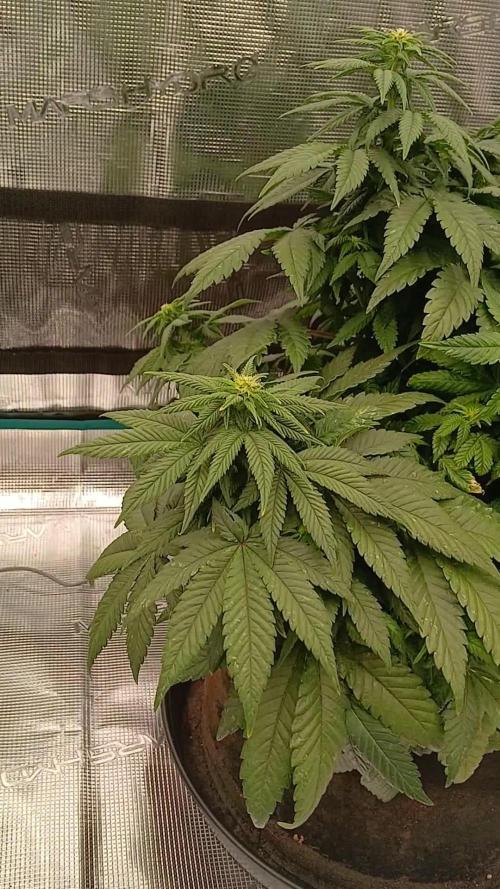
Very good structure, the branches are sturdy.
Short and compact plant. Flowering has begun; I'll see how it stretches.

Likes
49
Share


@masterofsmeagol
Follow
6/23 Due To The Two 8 Day weeks this week will only consist of five days to get me back on track. SEE LAST WEEK FOR DETAILS. I DID ANOTHER EIGHT DAY WEEK. I'LL DO THIS WEEK AS SIX DAYS. THAT WAY IM BACK ON SCHEDULE. WATERED 6/22. WENT BACK AT NIGHTCAND WATERED ANOTHER GALLON WITH 1/3 TSP Armor Si. I mixed the solution with kelp you kelp me but I dumped it out. I've mixed silica with other nutes before but I had read something earlier about bioavailability issues and I didn't want to risk it. My plants are the healthiest I've ever grown. I'm considering transplanting the large 10th planet that I'm light depping. I also need to develop my ipm and my nute schedule. Still gonna have to keep an eye onvthe water situation. Luckily I have a buddy in my corner that's co tinualkt Bern a great help.
WENT BACK OVER AROUND NOON. BEAUTIFUL OUTSIDE AND THE PLANTS WERE LOVING THIS SUN. I DEFOLIATED SOME BURNED LEAVES AND MIXED A SOLUTION IF KELP ME KELP YOU THAT I PLAN TO FEED TO THE GARDEN TODAY. IM HAPPY WITH HOW THINGS ARE GOING. WE HAVE SOME RAIN AND THINDERSTORMS COMING. I NEED TO GET MY IPM UP AND RUNNING AND THE NUTES ONLINE. I ALSO NEED TO DECIDE IF IM GOING TO TRANSPLANT THE LIGHT DEP 10th PLANET. Went back over to put the girls to bed at six and if was still 90 degrees. The water from yesterday had dissipated. The tops were dust dry. I mixed two gallons of kelp you kelp me and fed it to the garden. Afterwards I pointed qbd found a couple plants that were more open to the wind were a little lighter. I know tomorrow will be very hot. Maybe quarter inch of rain. However after that it will rain (showers) off and on for days. I wanted to make sure the girls had what the needed to make it through tjis heat wave until they get that rain. I had another gallon mixed up and I'm thinking I should've given it to them. Oh well. I'd rather underwater than overwater any day. I did notice a burnt top on the plant furthest from the tarp that the sun JUST BARELY TOUCHES when the rest are in shade. I'll just raise the tarp a little. These are tiny problems. Can't upload video until tomorrow.
6/24 Good thing u gave the plants that water. I know it wasn't much but we didn't get any rain. Suppised to get a qtr in today and another qtr in tomorrow. Then rain a couple more days. It's working our really good for my watering schedule lol. Yesterday the girls got there first dose of a bottled nute. They got two gallons of kelp me kelp you (1/3 tsp per gallon) and another gallon of just phed water. I was going to do another gallon but held off due to the threat of syring rain. Didn't get it bur it looks like the plants loved the kelp. It had reached 90 yesterday. They look better today. It's 70 at 9 today. I LST the 10th planet in the 3 gallon. It's getting huge. I should start a separate diary for those three light dep plants. Its cool as hell watching this. One of the purple punches is flowering pretty good. I probably should start another diary for them. I'll be starting to feed my plants soon. Wondering if I should pinch plants again. TUCKED THE LITTLE GIRLS IN AT SIX AND SHOT A VIDEO AND TOOK SOME PUCTURES. PLANTS LOOKED PHENOMINAL! GOT HOME AND AROUND SEVEN IT JUST STARTED RORREBTIAL DOWNPOURS! THE TYPE OF RAIN THAT BREAKS STEMS. I SHOULDVE PUT MY OTHET TARP UP BUT I DIDNT. I WISH I HAD. IM A LITTLE NERVOUS. I KNOW THESE GIRLS ARE STRONG THOUGH! TOMORROW. ILL ROLL THE RARP UP AND SECURE THE BOTTOM FOR FAST ACCESS. IM ALSO GOING TO KOOK INTO FINDING A TOP FOR MY CAGE I CAN USE IN INCLIMENT WEATHER.
6/25 That little qtr in of rain we were supposed to get turned into torrential downpours and high winds. Luckily no REAL damage. If you watch the video you'll see what I mean. I'm going to havecto be cognizant moving forward. Noticed a few chunks from leaves butvplants are still healthy. I'm surprised how well these girls withstood this storm. They are certainly resilient. The 2 purple punch 1 10th planet that I'm light depping are flowering nicely now. They missed all the commotion from the storm as they were inside. It's smelling good. I'm happy.
6/26 It's what a friend would say is "maineing") out. That mistcthe plants love. I'm surprised the plants are doing as good as they have been considering the wind. Will be adding nutes soon. Need to add extra supports too. Light dep
6/27 Brief periods or torrential downpours. Light depped 3 gallon 0lants are under an overhanfcwhete the hatsxrain can't hurt them but they still get sun. They are really starting to flower now! I'm going to begin feeding with a base nute and a flower nute I think. I'm thinking about giving the light dep some open sesame or something similar. I need to set up a nute program soon but the plants ALL look so healthy! And it's been raining! I've only watered like once or twice since they've been in the big pots. I've seen zero pests aside from a chunk missing from a grasshopper. Usually by now I'd have battled half a dozen things and be battling another half dozen. However I was posing from clones. These are seeds and boy don't I see the difference!

Likes
12
Share

@Bread_n_Buds
Follow
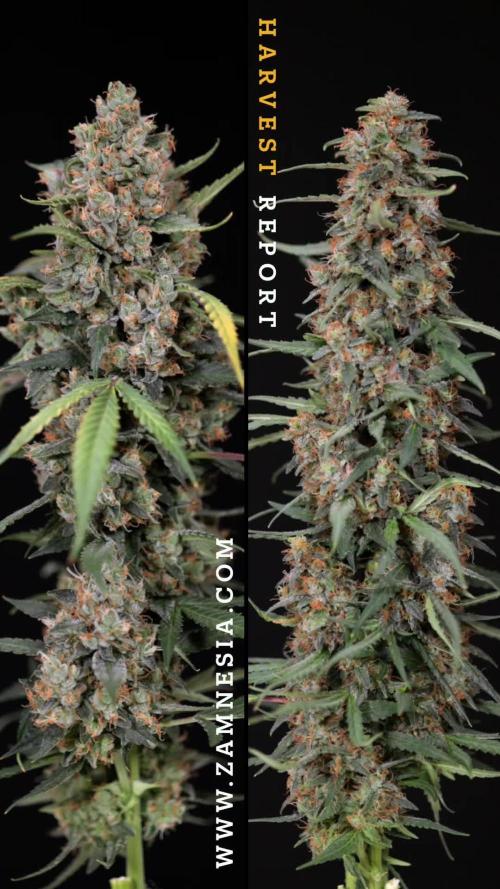
This week, you'll find the HARVEST of Chocolope Autoflowering #2. This plant has a different phenotype and will be available next week.
** This is plant and trichomes running AWC
The plant is a beautiful plant, around 100 cm tall, with beautiful, full, dense, and resinous flowers, despite growing in less than ideal temperatures.
Pot and Soil - This plant was grown in an 11-liter pot with Plagron's BioLight Mix organic soil.
Lighting/PPFD - A Zamnesia Phytonaut 480W LED lamp was used from mid-flowering until fruiting. We achieved a PPFD (photosynthetically active photon flux density) between 800 and 1200 μmol/m²/s, with a cycle of 24 hours, then 23 hours, then 20 hours, and finally 18 hours.
Z https://www.zamnesia.io/it/14526-lampada-led-per-coltivazione-phytonaut-480.html (National link if Google doesn't work)
Growing system: Zamnesia Ecosystem, fan, extractor, and grow box, all made by Zamnesia.
Trichomes: We harvested the plant at the beginning of the harvest window because we had to send the samples to the Autoflower World Cup. We still have a good amount of amber, 15% to 20%. 30-40% cloudy and transparent are still abundant, but in any case, with a sativa, you harvest early. Remember, amber is a sign of oxidation and means the plant is moving towards indica effects, so sativas should not be harvested too late to preserve their day-use effects.
Nutrients: Grown with Plagron Official, a 100% organic base fertilizer, and all recommended additives.
Visit www.plagron.com for grow cycle calculations, product selection, and general information.
All nutrients are available on the Zamnesia website. Also check out the live substrate and the fantastic new Zammi product line.
You can find this excellent strain here:
https://www.zamnesia.io/en/11102-blueberry-crumble-auto-zamnesia-seeds-feminized.html
(Google if the link doesn't work; it's a national link)
You can find this excellent strain here:
https://www.zamnesia.io/it/11113-chocolope-auto-zamnesia-seeds-femminizzata.html
(Google if the link doesn't work; it's a national link)
Zamnesia Description -
Chocolope Auto brings the beloved flavor and uplifting energy of the original Chocolope to a fast, compact, and easy-to-grow autoflowering strain. By blending OG Chocolate Thai, Cannalope Haze, and ruderalis, Zamnesia Seeds has created a 90% sativa hybrid designed for those seeking old-school aromas with all the convenience of modern genetics.
From seed to harvest in just 11–12 weeks, Chocolope Auto maintains a manageable height of 120–180 cm. In optimal conditions, it can yield up to 300 g/m² indoors or 200 g/plant outdoors. Despite its slightly compact structure, the buds are extremely resinous and bursting with sweet, chocolate, and fruity aromas.
With 21% THC, Chocolope Auto offers an uplifting, cerebral high that promotes creativity and focus. It's the ideal companion for daytime use, lively social gatherings, or for finding motivation without a heavy physical effect. Expect a clean, euphoric boost followed by a gently relaxing finish.
For growers looking for a quick and reliable way to enjoy one of the most iconic flavor profiles around, Chocolope Auto is a must-try. Fragrant, fast, and full of retro charm, it proves that practicality doesn't have to come at the expense of character.
Music - Frequencies 432 Hz and 528 Hz and black musc from www.radionula.com
"The best that nature has to offer"
www.zamnesia.com
Likes
6
Share


@macrocefalo
Follow
Fourth week the plants are growing very well, with very dense foliage. I performed the first defoliation and applied LST on G1 and G2 that were already with a larger structure to plan the size of the cannopie.

Likes
12
Share


@ThatSmolesGuy
Follow
Absolutely amazed at the growth over the last week. Gave the plants their first (tiny) nute feed at 10 days old, 50% of recommended amounts.
No problems with temp after lowering light. GG has the tallest and shortest plants, CC are all way more consistent in size and shape.
All plants bar baby GG are on third set of "5" leaves.
Keen to start LST soon, will probably top GG1 at around day 21, and play rest by ear.

Likes
35
Share


@Hashy
Follow
She did quite well for being grown in a 9L pot and got a decent root structure. Because there where 4 plants in the tent this one suffered a bit and got squashed out the way. But she still did a good solid yield.

Likes
14
Share


@NorthernChemist
Follow
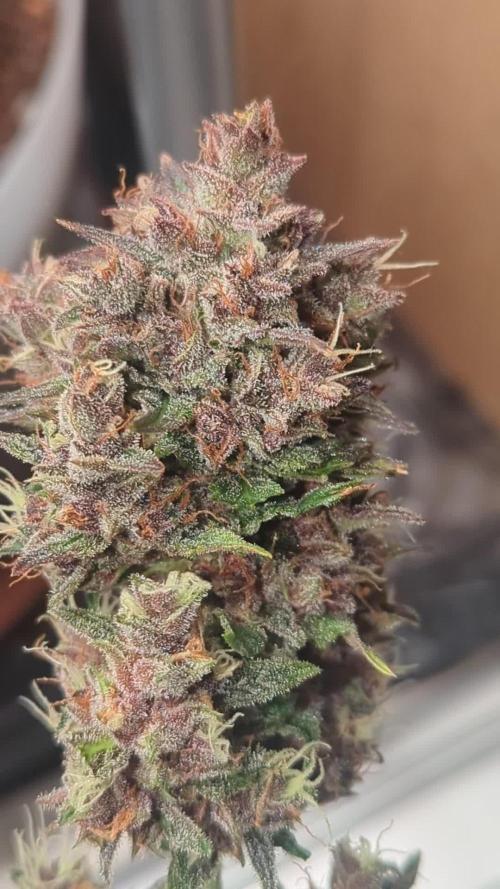
Aug 6: Harvest is about a week away I think. Some very minor aphid appearance on lower undersides of leaves suggest I can't wait too much linger to chop. Colors are developing nicely and the purple tones really punched out this week. Resin is thick caked now and smells of burned rubber funk.
Likes
5
Share


@CK-OrgGrow
Follow
Woche 9
Blüte Woche 5
Die Money Maker von den Strain Hunters ist in der 5ten Blüte Woche angekommen.
In dieser Woche habe ich an der Money Maker eine Entlaubung durchgeführt und habe viel große Blätter entfernt.
An der Nährlösung habe ich in der Woche nix verändert.
Bei Fragen einfach die Frage stellen, genauso bei Verbesserungen und Tipps für mich.
Danke und viel spaß mit euren Pflanzen.

Likes
15
Share


@Ultraviolet
Follow
Human Body
65% Oxygen (in all liquids and tissues, bones, and proteins)
18% Carbon (everywhere)
10% Hydrogen (in all liquids and tissues, bones, proteins
3% Nitrogen (in all liquids and tissues, proteins
1,5% Calcium (lungs, kidney, liver, thyroid, brain, muscles, heart, bones)
1% Phosphorus (urine, bones, DNA)
0,35% Potassium (enzymes)
0,25% Sulphur (proteins)
0,15% Sodium (in all liquids and tissues) (in terms of salt)
0,05% Magnesium (lungs, kidney, liver, thyroid, brain, muscles, heart)
The average adult male contains about 140 g of K(Potassium); the level varies with body weight and muscle mass. We ingest about 2.5 g per day of K from our food and excrete about the same amount. 0.0118 % of that is K40
The answer is that they were present when our earth was formed. Any radioactive material originally present at the formation of the earth would have decayed and disappeared if its half-life was short compared to the age of the earth. However, if its half-life were long, close to or greater than the age of the earth, then such materials would not have disappeared but are still with us today.
There are several radioelements in this category, such as the well-known elements uranium and thorium. Thorium (Th232) has a half-life of 14,000,000,000 years, uranium has two long-lived radioisotopes; U238 has a half-life of 4,500,000,000 years, and U235 has a half-life of 710,000,000 years. These give rise to the radium and thorium atoms found in all humans, acquired from the food we eat. That food, of course, obtained these materials from the soil in which it grew or on which it grazed.
Potassium is also in this category. There are actually three potassium isotopes: K39, a stable isotope, is the most abundant, at 93.26 % of the total; K41 is next in abundance at 6.73 % and is also a stable isotope. The potassium isotope of interest is a radioactive isotope, K40. It is present in all potassium at a very low concentration, 0.0118 %. It has a very long half-life, 1,260,000,000 years. When it decays 89 % of the events give rise to the emission of a beta ray with maximum energy of 1.33 MeV. The other 11 % of the decays produce a gamma-ray with an energy of 1.46 MeV
The forces required to forge thorium 232 can only be harnessed when traveling close to or at the speed of light, so essentially what I'm getting at is 0.0118% of every person alive is formed of the same element that was forged in the anvil of creation itself. We are all one & the same
German chemist Johann Wolfgang Dobereiner attempted to classify elements with similar properties into groups of three elements each. These groups were called ‘triads’. Dobereiner suggested that in these triads, the atomic mass of the element in the middle would be more or less equal to the mean of the atomic masses of the other two elements in the triad.
An example of such a triad would be one containing lithium, sodium, and potassium. The atomic mass of lithium 6.94 and that of potassium is 39.10. The element in the middle of this triad, sodium, has an atomic mass of 22.99 which is more or less equal to the mean of the atomic masses of lithium and potassium (which is 23.02). 9 controls the 6 and 3.
The Limitations of Dobereiner’s Triads are :
All the elements known at that time couldn’t be classified into triads.
Only four triads were mentioned – (Li,Na,K ), (Ca,Sr,Ba) , (Cl,Br,I) , (S,Se,Te).
2. Newland’s Octaves
English scientist John Newlands arranged the 56 known elements in increasing order of atomic mass in the year 1866. He observed a trend wherein every eighth element exhibited properties similar to the first.
Azomite contains 180ppm of thorium.
Your plant will thank you, you are welcome.
Most farmers do have not a proper understanding of what is Azomite and how to use it in gardening, especially if they practice organic farming. Continuous propagation and leaching effects of water deplete the essential minerals and micro-nutrients from the soils. Such soils remain weak, not able to support the production of fruits and vegetables. Azomite mineral contains micronutrients that supplement the soil. It also balances the minerals for growth and overall productivity. Constant use of this mineral rejuvenates your soil renewing its potency again. Azomite is a naturally mined mineral product that is ready to use. It’s a unique rock that comes from a mine in central Utah. Azomite requires no mixing or special preparation before use. It is derived from volcano ash that spewed out millions of years ago. It contains the widest range of minerals of all the rock dust in the world. Azomite provides plants with 70% essential elements. These elements include magnesium, calcium, potassium, and silicon for plant growth.
Facts About Azomite Fertilizer
It’s a natural mineral – 100% natural with no fillers or additives
Does not contain any harmful elements
Requires no special preparation before use
It’s odorless – very friendly to use
Does not restrict water penetration or aeration
Is easily broken down and absorbed into the soil
Does not burn plants.


Processing
Likes
4
Share


@inxxx
Follow
Beginning of week 6. Northern is getting very thick and burly. The gorilla clones are all iced in trichomes, very sticky. I love it, but very fluffy for some reason. I mean they look awesome and smoke is incredible too since these are clones and I remember they looked exactly the same at 7 weeks under 400w hps lumatek setup. 3 weeks left so hoping for better results this time :) CBD danceworld is doing ok, like I said in comments somewhere I don’t expect much from cbd strains in terms of yield. In few months I will be running medical mass just to see if I can get a decent yield as RQS advertises this strain as heavy yielder. Will see about that :) other than that no probs whatsoever.


Likes
3
Share

@eldruida_lamota
Follow
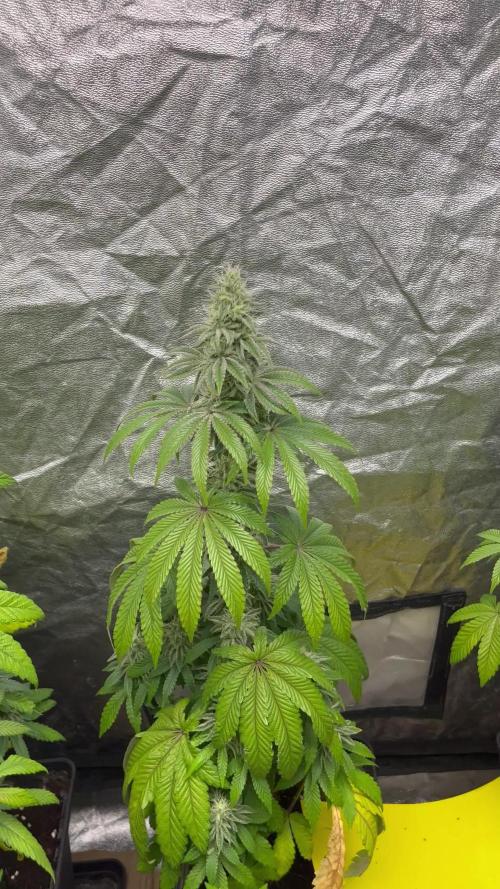
Que pasa familia, vamos con la sexta semana de floración de estas Barcelona Puff feminizadas de Seedstockers.
Vamos al lío ,se trasplantaron en macetas de 7 litros definitivamente.
El ph se controla en 6.0 , la temperatura la tenemos entre 25/21 grados y la humedad ronda el 50%.
El ciclo de floración puse 12h de luz, el foco está al 100% de potencia.
De momento van creciendo a buen ritmo y tienen un buen color, la flor ya empezó a formarse y a tricomar, por el momento bien.
Comentar de nuevo el estrés hídrico a sido superado de momento todo bien.
Agradecer a Agrobeta por el envío del kit gold series para la temporada 🙏.
- os dejo por aquí un CÓDIGO: Eldruida
Descuento para la tienda de MARS HYDRO.
https://www.mars-hydro.com
Hasta aquí todo, Buenos humos 💨💨💨



Likes
17
Share


@BLAZED
Follow
W19 (Harvest)
6-6
Last day before harvest.
7-6
Harvest day!
Installed a humidifier outside the tent, set to 55% aiming for a 60% humidity inside the dry tent.
17-6
After 10 days of drying she is ready to be trimmed.
While posting this a couple of months later i found out that i totally forgot to make pictures and video's of the trimmed buds 😅
End result #1:
37 Grams of dried buds.
35.84 Grams of dried trim and very small buds, into the freezer.
I would describe pheno 1 as normal frosty, almost stone like buds, smells chemical with hints of dish soap (i really like it!)
I cant describe the taste but it was very tasty out of the box, before the cure, very sad i only had 37 grams of it haha.
End result #2:
Around 70 grams of dried buds.
43.23 Grams of dried trim and small buds, into the freezer for bubble hash.
I would describe pheno 2 as very frosty buds, little bit fluffy, smells very gassy, with a nice sour taste after curing a couple of months.
Very interesting strain, i will definitely grow it again!
I have some trim and small buds saved up from different strains and i will be posting a diary of the full process making hash of them!
If you are interested in me making bubble hash feel free to follow me as i will make some in the next month, this way you keep notified!
Likes
21
Share

@Ultraviolet
Follow
Heyókȟa
I desire naught but the study of nature, to find my way back home.
12x12=144, A dodecahedron is a polyhedron with 12 faces, and in coordination chemistry, it refers to a geometry where ligands surround a central metal atom (in this case, Magnesium) in a specific, 8-coordinate arrangement. Dodecahedrane is a hydrocarbon, meaning it's composed solely of carbon and hydrogen atoms. The carbon atoms are arranged at the corners of a dodecahedron, a 3D shape with 12 pentagonal faces. The water molecules in the dodecahedron form hydrogen bonds that are individually slightly weaker than in either the dimer or the tetramer. However, because three-quarters of the O -H groups in the dodecahedron form hydrogen bonds, it has a more negative energy per molecule than has either the dimer or the tetramer. Magnesium (Mg2+) is the essential, central metal ion in the chlorophyll molecule, crucial for photosynthesis by enabling light absorption and energy transfer. It is chelated by four nitrogen atoms within the porphyrin (or chlorin) ring structure. Chlorophyll appears green because it reflects light in the green region of the visible spectrum, specifically between 490 and 570 nm. The main resonance electronic frequency of a neutral Magnesium (Mg) atom corresponds to the transition from the ground state to the first excited state. Resonance Line Wavelength of Mg2+: 285.1nm (UVB light). The central atom of the chlorophyll molecule is Magnesium (Mg2+), which is coordinated within a porphyrin ring. The electronic "resonance frequency" of this central atom—meaning the frequency at which its electrons absorb energy—is primarily driven by the electronic transitions (ETR) of the surrounding conjugated chlorin ring structure, rather than a discrete atomic transition of the Magnesium atom itself. The resonant electronic frequencies of the chlorophyll porphyrin (technically, a chlorin) ring are determined by the energy required to promote π-electrons within its conjugated system, primarily appearing in the blue and red regions of the visible spectrum.
In standard physics, Chloryphyll b has peak absorption at 460nm (Blue). If we take the peak wavelength 460nm and a UV-B, UVR8 peak absorption wavelength 285nm Tryptophan-285 (W285) Sensing protein. 460/285=1.618 Φ, "natural harmony" and the "structure of light". The cryptochrome photoreceptor (CRY) is a UV-A/blue light receptor that shares this dual sensitivity with several other biological structures and functions, including significant sequence similarity and a common evolutionary ancestor with DNA photolyase enzymes. These are light-activated enzymes that use blue/UV-A light to repair DNA damage caused by UV-B radiation in plants.
Dodecahedrane (C20H20) is a hydrocarbon with a cage-like structure where carbon atoms form 12 pentagonal faces (a regular dodecahedron). It is highly symmetric (icosahedral), contains no delocalized electrons (no aromaticity), and has minimal angle strain, but significant torsional strain. Water Dodecahedron (H2O) forms hydrogen-bonded cages. While individual hydrogen bonds in this structure are weaker than in the linear dimer or tetramer, it has a more negative total energy per molecule. This is because three-quarters (75%) of the groups are involved in hydrogen bonding, creating a very stable, closed-shell configuration. a 3D carbon hydrocarbon (C20H20) to stable water clusters in hydrate, while the Magnesium ion acts as the central activator within a conjugated ring in biological systems, with its electronic absorption dominated by the ring, not the atom itself.
Effective quantum efficiency of photosystem II, often denoted as ΦPSII
In horticultural lighting, adding 730 nm (far-red) LEDs alongside standard red/blue lights has been shown to increase canopy photosynthesis by 20–30% in several crops by acting synergistically with shorter wavelengths. However, the limitation is that excessive, pure IR/Far-red light (without accompanying red light) can trigger the "shade avoidance response," causing plants to grow tall, weak, and spindly rather than robust. Knowing is half the battle however, engineering or utilizing infrared light (specifically the 700-750 nm far-red range) is a viable method to boost photosynthetic efficiency. It acts as a bridge to allow PSII to utilize a broader spectrum of light, breaking the traditional 700 nm barrier.
Extend, then multiply.
UVR8-mediated signaling (often in conjunction with CRY proteins) triggers protective mechanisms that maintain the stability of the photosynthetic apparatus (including LHCII and reaction center proteins), thus ensuring that the efficiency of Photosystem II remains higher in UV-B-exposed plants compared to plants lacking this receptor. ΦPSII indictates the rate of electron transfer from water to plastoquinone, which drives the production of ATP and NADPH. There is a close link between ΦPSII and the true rate of CO2 fixation (Φ*co2), particularly in C4 plants.
Effective quantum efficiency of photosystem II, often denoted as ΦPSII, represents the proportion of light absorbed by Photosystem II (ΦPSII) that is actually used in photosynthetic electron transport. It is a key indicator of how efficiently a plant is using light for photosynthesis, as opposed to losing it as heat or fluorescence. ΦPSII (effective quantum yield of photosystem II) functions primarily as a "multiplier" (a coefficient of efficiency) rather than an additive factor when estimating the overall photosynthetic electron transport rate (ETR). Multipliers are considered far more beneficial than additions because they generate exponential growth, leverage existing resources to their full potential, and create sustainable, self-multiplying capacity, rather than just incremental, linear increases.
Humans, and most other mammals, rely on other mechanisms, such as nucleotide excision repair, to manage and repair UV-induced DNA damage. As such, humans do not have the direct, light-driven repair mechanism that photolyase offers in plants.


Likes
37
Share


@CruellaDeVil
Follow
So am 15.05. hab ich nun das Licht umgestellt. Eigentlich wollte ich den Pflanzen noch mehr Zeit in den Töpfen geben aber die Zeit wird knapp zu meinem Sommerurlaub daher muss das ihnen reichen. In den nächsten zwei Wochen wachsen haben sie ja auch noch Zeit weiter zu wurzeln.
Würde mich aber mal intressieren ob die Wurzeln in der Blüte irgendwann das Wachstum einstellen?
Diese Woche haben die Pflanzen endlich mal etwas nach Dünger gerufen, dem Wunsch kam ich natürlich gerne nach.
Versuch meinen VPD immer so auf 1,2 zu halten, denke das ist ein guter Kompromiss zwischen den Wachstumsstadien.
Generell bin ich sehr zufrieden wie mein erster Homegrow so verläuft und das die Pflanzen so gesund sind. Macht aufjedenfall mortz den Spaß und hab auch schon sehr viel dazu gelernt.


Likes
10
Share


@KcKush
Follow
*Increased PPM from 450 to 550
*Topped all plants.
*One of the white widows is showing purpling on the stem don’t know if it’s generic, coldness, or something.