


Likes
Comments
Share


@Oktoberfest
Follow
17. Mai 2025
- Video aus dem Zelt vom 12.05.25.
- Licht wieder auf 12/12 gestellt. Dieser Phänotyp der Runtz bringt das Zelt (180 cm hoch) weiterhin an die Grenze. Auch die Seitentriebe haben die Höhe der Lampen erreicht. Die Pflanze toppt alles, hoffentlich auch im Ertrag.
- Weitere 20 l Wasser aufgefüllt, in Summe 65 l Aqua Flores.


Likes
6
Share


@Hix57
Follow
Le 42e jour ce passe très bien.
Les plantes sont au milieu de la prefloraison et ne vont pas tarder à arrêter leurs croissance pour se concentrer sur les bourgeons ainsi j'adapte l'alimentation au circonstances.
J'ai rattrapé l'erreur de pH même si cela reste précaire les plantes se portent dans l'ensemble très bien 🌱🙏

Likes
16
Share


@eldruida_lamota
Follow
Vamos familia, hora de cosechar estas gorilla de RoyalQueenSeeds.
No veáis que pinta que tienen las flores están bien formadas y repletas de tricomas.
Estoy deseando probarlas.
El problema han sido las temperaturas las últimas semanas que excedieron los 30 grados.
Aun así salió todo para alante
Agrobeta:
https://www.agrobeta.com/agrobetatiendaonline/36-abonos-canamo
Mars hydro:
Code discount: EL420
https://www.mars-hydro.com/
Hasta aquí es todo , espero que lo disfrutéis, buenos humos 💨💨.

Likes
2
Share

@Nickeluring
Follow
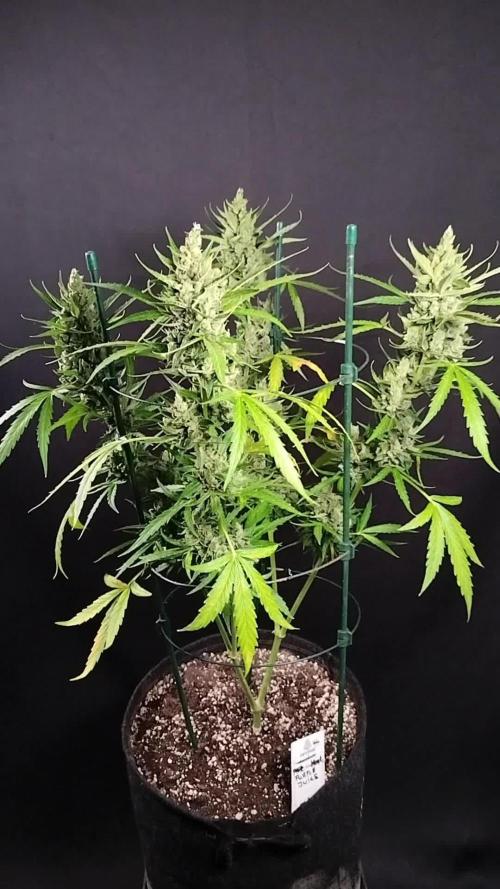
It is still hot here and all my girls are suffering. We´re almost done and I will start checking the trichomes now.
I had to add some support to help keep the heavy buds upright. Both plants are getting beautiful buds that smell amazing.

Likes
4
Share


@Mr_nugs_lover_David
Follow
She's developing very fast and without any type of issues, there's not too much to say on the first days of life. I'm so excited about this indoor run. I'll be training this lady in not too long. Hope to make a big bush with this beautiful lady right here. Stay tuned to see this beautiful strain in action! 💎💚❤️💛👨🌾✌️

Likes
2
Share


@Ninjabuds
Follow
My Gorilla Cookies seedling is looking healthy with its deep, dark green leaves. I've been gradually increasing the light intensity over the past few days, which is crucial for autoflowers at this stage. It's definitely time to ramp up the light now, and I'm excited to see how it responds
It's been a challenging week with the constant rain and ridiculously high humidity. Keeping things dry indoors has been a real struggle. Despite the weather, I managed to flip all my feminized photoperiod plants to flower this week. I'm hoping the switch will go smoothly, but with this humidity, it's going to be tough.
Likes
1
Share

@Kadash368
Follow
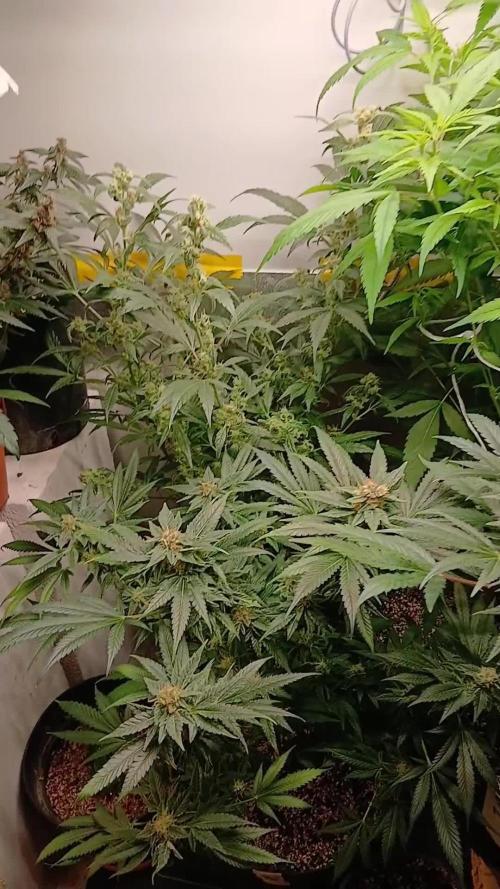
Almost ready to harvest, 7 weeks in flowering, lets see how many more days left. What do you think?

Processing
Likes
Comments
Share


@MG2009
Follow
08/13/2019
Another rainy day. Recovering from topping and,fimming.
Looking good for start of flower, soon.
08/18/2019
Did a little training.


Likes
8
Share


@ProfessorAutoflower
Follow
Lost count of days.
In flowering now. Upgraded to a tent and a new light. Mars hydro 1000

Likes
96
Share


@MrCOCO
Follow
Hi everyone🍃🍃🍃 ... Everything is going well... girls are happy so you can only enjoy looking at the pictures... 🍃🍃🍃
Happy growing 🍃🍃🍃

Likes
5
Share


@Ieiogrow94
Follow
Eccoci di nuovo qui!!!
Super eccitato per questa nuova collab con Spliff Seed, che mi ha dato l’opportunità di testare questa nuova genetica e di condividere i progressi con tutti voi!!!
Come sempre partiamo nei bicchieri per poi travasare.. Questa volta verrà svolto tutto sotto la Lumatek Zeus 465 ProC, mi aspetto molto da questo ciclo!!
Pianta davvero incredibile, molto vigorosa e super resinosa..
Siamo verso la fine!!!
Grazie a tutti per il supporto ❤️🍀🔥

Processing
Likes
3
Share


@Iop420
Follow
Hi guys 👋. Also this week I let the pictures and grow log to speak. Thanks for watching. Peace and patience ✌️
Likes
56
Share

@SwabianMadness
Follow
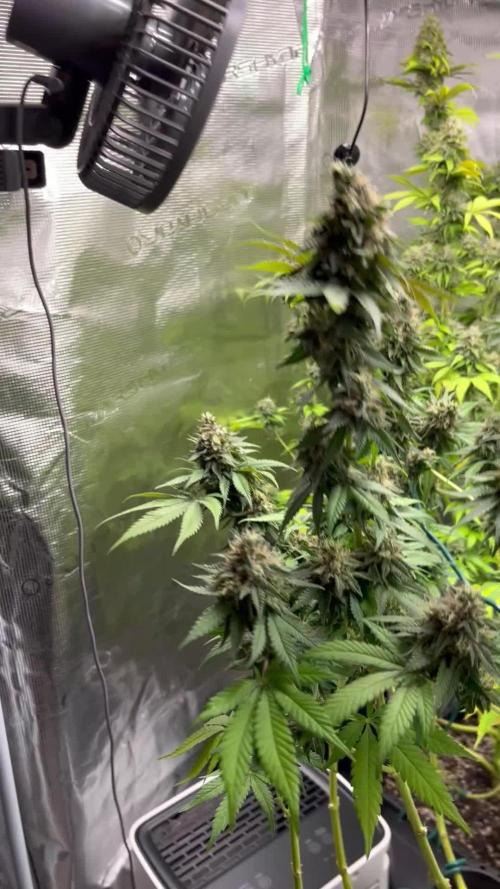
Peace my Dudes 🏼🙂
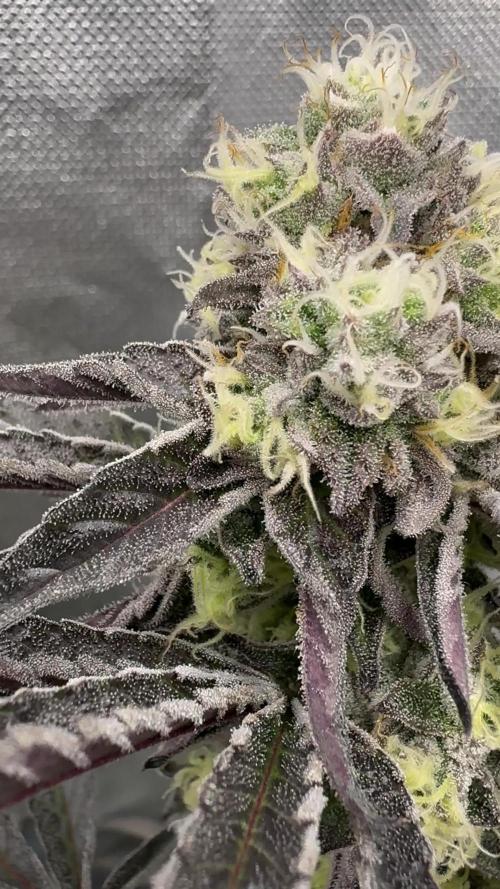
for now i just need Patience. They get more voluminous with Time
Just give Calmag for a few Days more but that’s all with Nutrients



Likes
13
Share


@FlavoursUk
Follow
So, eventful week.
Prior to putting my seeds into my system, my light and rdwc system was left on as I was dialling in the growing environment before placing the seeds as a final home. My only issue was I had a light leak BEFORE putting the foil top covers on the clay pebbles. Long story short, I got algae which ended up turning to root rot.
I spotted it very swiftly and did a res change adding beneficial bacteria to the system along with the base products of remo nutrients. A few days later new growth and recovery is taking place.
Day 16- Fully back on track, new roots shooting out into the water and the growth rate has picked up as it should.
Foliar feeding twice a day for a little boost until the root system establishes a bit more. Huge changes in just a day. Can't wait to see what a week's growth looks like.
Really loving the sunset/sunrise feature on the trolmaster, something I got to experience watching recently!
Watching by closely to make sure everything stays in track.
Stay tuned for the next one 😉

Likes
2
Share


@Luram
Follow
Starting week 6 , going full force with the nutrient dosages for the next 2 weeks and getting them ready after for their final flush week
Problems i had to deal with but i didnt was clearly the defoliation as i got a bit lazy start dealing with that twice, i ll just leave them as they are and see how their final development is

Likes
3
Share

@GreenEldritchGardens
Follow
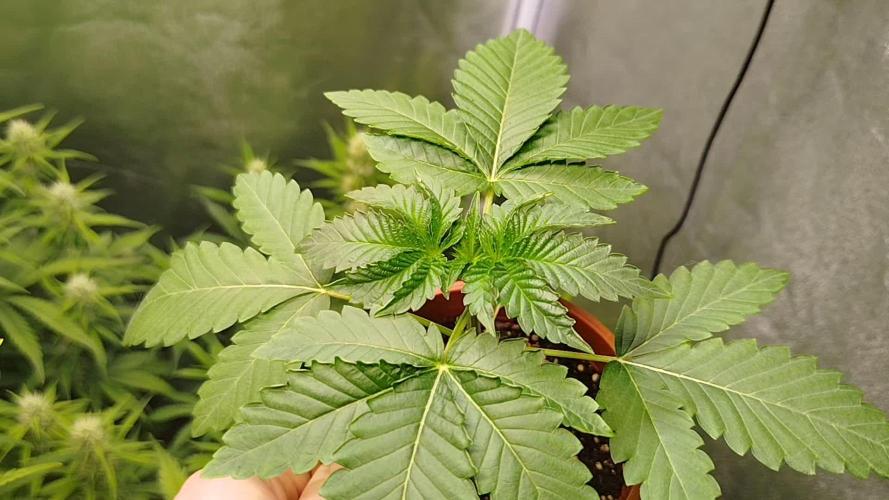
Wow! Such a beautiful plant! Literally glazing, shining leaves hunger for light photons.
So far really low effort to keep, does not drink much, will stay one more week in this pot before going to her final soil mix.
Also I decided not to top her, avoid stress and see her true nature and main cola.

Likes
45
Share


@Ultraviolet
Follow
2nd net is up. Early bud formations are promising. holding up to the extremes pretty well, some leaves taking minor damage, but overall, she is holding up, gave her 1 night at 50F see how she would react, stressful. Not advised as it messes with her metabolism, but I want to see if it triggers any anthocyanin response. Love to see her purp up but no signs yet.
My homework.
Rubisco regeneration is intrinsically linked to nitrogen supply because Rubisco is a major sink for nitrogen in plants, typically accounting for 15% to over 25% of total leaf nitrogen. The regeneration phase itself consumes nitrogen through the synthesis of the Rubisco enzyme and associated proteins (like Rubisco activase), and overall nitrogen status heavily influences the efficiency of RuBP regeneration.Structural Component: Nitrogen is an essential building block for all proteins, and the sheer abundance of the Rubisco protein makes it the single largest storage of nitrogen in the leaf.
Synthesis and Activity: Adequate nitrogen supply is crucial for the synthesis and maintenance of sufficient Rubisco enzyme and Rubisco activase (Rca), the regulatory protein responsible for maintaining Rubisco's active state. Nitrogen deficiency leads to a decrease in the content and activity of both Rubisco and Rca, which in turn limits the maximum carboxylation rate, Vmax, and the rate of RuBP regeneration Jmax, thus reducing overall photosynthetic capacity.
Nitrogen Storage and Remobilization: Rubisco can act as a temporary nitrogen storage protein, which is degraded to remobilize nitrogen to other growing parts of the plant, especially under conditions of nitrogen deficiency or senescence.
Nitrogen Use Efficiency (NUE): The allocation of nitrogen to Rubisco is a key determinant of a plant's photosynthetic nitrogen use efficiency (PNUE). In high-nitrogen conditions, plants may accumulate a surplus of Rubisco, which may not be fully activated, leading to a lower PNUE. Optimizing the amount and activity of Rubisco relative to nitrogen availability is a target for improving crop NUE.
Photorespiration and Nitrogen Metabolism: Nitrogen metabolism is also linked to the photorespiration pathway (which competes with carboxylation at the Rubisco active site), particularly in the reassimilation of ammonia released during the process.
To increase RuBisCO regeneration, which refers to the process of forming the CO2 acceptor molecule Ribulose-1,5-bisphosphate (RuBP) during photosynthesis, the primary methods involve optimizing the levels and activity of Rubisco activase (Rca) and enhancing the performance of other Calvin-Benson-Bassham (CBB) cycle enzymes.
Biochemical and Environmental Approaches:
Optimize Rubisco Activase (Rca) activity: Rca is a crucial chaperone protein that removes inhibitory sugar phosphates, such as CA1P (2-carboxy-D-arabinitol 1-phosphate), from the Rubisco active site, thus maintaining its catalytic competence.
•Ensure optimal light conditions: Rca is light-activated via the chloroplast's redox status. Adequate light intensity ensures Rca can effectively maintain Rubisco in its active, carbamylated state.
•Maintain optimal temperature: Rca is highly temperature-sensitive and can become unstable at moderately high temperatures (e.g., above 35°C/95F° in many C3 plants), which decreases its ability to activate Rubisco. Maintaining temperatures within the optimal range for a specific plant species is important.
•Optimize Mg2+ concentration: Mg2+ is a key cofactor for both Rubisco carbamylation and Rca activity. In the light, Mg2+ concentration in the chloroplast stroma increases, promoting activation.
•Manage ATP/ADP ratio: Rca activity depends on ATP hydrolysis and is inhibited by ADP. Conditions that maintain a high ATP/ADP ratio in the chloroplast stroma favor Rca activity.
Enhance Calvin-Benson-Bassham (CBB) cycle enzyme activity: The overall rate of RuBP regeneration can be limited by other enzymes in the cycle.
•Increase SBPase activity: Sedoheptulose-1,7-bisphosphatase (SBPase) is a key regulatory enzyme in the regeneration pathway, and increasing its activity can enhance RuBP regeneration and overall photosynthesis.
•Optimize other enzymes: Overexpression of other CBB cycle enzymes such as fructose-1,6-bisphosphate aldolase (FBA) and triose phosphate isomerase (TPI) can also help to balance the metabolic flux and improve RuBP regeneration capacity.
Magnesium ions, Mg2+, are specifically required for Rubisco activation because the cation plays a critical structural and chemical role in forming the active site: A specific lysine residue in the active site must be carbamylated by a CO2 molecule to activate the enzyme. The resulting negatively charged carbamyl group then facilitates the binding of the positively charged Mg2+ion. While other divalent metal ions like Mn2+ can bind to Rubisco, they alter the enzyme's substrate specificity and lead to dramatically lower activity or a higher rate of the non-productive oxygenation reaction compared to Mg2+, making them biologically unfavorable in the context of efficient carbon fixation. The concentration of Mg2+ in the chloroplast stroma naturally increases in the light due to ion potential balancing during ATP synthesis, providing a physiological mechanism to ensure the enzyme is activated when photosynthesis is possible. At the center of the porphyrin ring, nestled within its nitrogen atoms, is a Magnesium ion (Mg2+). This magnesium ion is crucial for the function of chlorophyll, and without it, the pigment cannot effectively capture and transfer light energy.
Mg acts as a cofactor: Mg2+ binds to Rubisco after an activator CO2 molecule, forming a catalytically competent complex (Enzyme-CO2-Mg2+). High light + CO2) increases demand: Under high light (60 DLI is a very high intensity, potentially saturating) and high CO2, the plant's capacity for photosynthesis is high, and thus the demand for activated Rubisco and the necessary Mg2+ cofactor increases. Mg deficiency becomes limiting: If Mg2+ is deficient under these conditions, the higher levels of Rubisco and Rubisco activase produced cannot be fully activated, leading to lower photosynthetic rates and potential photo-oxidative damage.
Optimal range: Studies show that adequate Mg2+ application can enhance Rubisco activation and stabilize net photosynthetic rates under stress conditions, but the required concentration is specific to the experimental setup.
Monitoring is key: The most effective approach in a controlled environment is to monitor the plant's physiological responses e.g., leaf Mg2+ concentration, photosynthetic rate, Rubisco activation state, and adjust the nutrient solution/fertilizer to maintain adequate levels, rather than supplementing a fixed "extra" amount.
In practice, this means ensuring that Mg2+ is not a limiting factor in the plant's standard nutrient solution when pushing the limits with high light and CO2.
Applying Mg2+ through foliar spray is beneficial to Rubisco regeneration, particularly in alleviating the negative effects of magnesium (Mg) deficiency and high-temperature stress (HTS). While Mg can be leached from soil, within the plant it is considered a mobile nutrient, particularly in the phloem. Foliar-applied Mg is quickly absorbed by the leaves and can be translocate to other plant parts, including new growth and sink organs.
Foliar application of: NATURES VERY OWN MgSO4 @ 15.0g L-1 in a spray bottle.
Foliar sprays are often recommended as a rapid rescue measure for existing deficiencies or as a supplement during critical growth stages, when demand for Mg is high. Application in the early morning or late evening can improve absorption and prevent leaf burn.
The starting point [of creativity] is curiosity: pondering why the default exists in the first place. We’re driven to question defaults when we experience vuja de, the opposite of déjà vu. Déjà vu occurs when we encounter something new, but it feels as if we’ve seen it before. Vuja de is the reverse—we face something familiar, but we see it with a fresh perspective that enables us to gain new insights into old problems. Come walk in the enchanted forest.
Likes
21
Share


@GrowBro503
Follow
Apparently you can give your plant nitrogen burn with an organic fish emulsion. Live and you learn LOL

Likes
5
Share

@Aleks555
Follow
Hello friends! 🌱
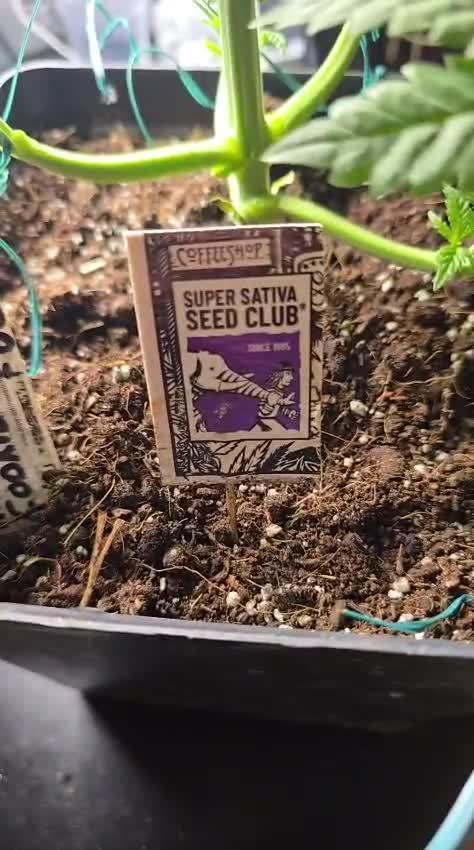
F028 - The Devil’s Cookie One from Super Sativa Seed Club — Day 23
Everything is going great, and she’s really spreading out — over 30 cm wide now! She looks amazing, with big, healthy leaves, already showing more than 5 fingers per leaf. After topping, she has gained noticeable mass in just 6 days — a real chunky girl 💪
Today we stretched her out again and will continue to enjoy watching her grow.
Day 26 — we performed defoliation
Lighting: 50% power, about 45 cm from the top
Temperature — Day: up to 27°C | Night: 19–22°C
Humidity — around 80% day and night
We are not using any nutrients yet, as the soil is already rich and provides everything she needs for now.
We really love how she looks — what do you guys think? Drop your comments, ask questions, don’t be shy! Let’s share experience and knowledge — we’re all here to learn and help each other 🤝