


Likes
Comments
Share

@Olduffybastard88
Follow
Done under mars hydro fc 3000 to start then finished in sun light as I got such good weather and had tent full


Likes
74
Share


@MrHightimes
Follow
All systems grow!!! They happy, I'm happy!
Giving a little water daily! Took off humidity domes today
🥛🍪🥛🍪🥛🍪🥛🍪🥛🍪🥛🍪🥛🍪🥛🍪
Well. This hobby is never a sure thing. I'm pretty sure I either overwatered a bit or gave them to much supplements. I think in the future i'll skip calmag and rapidstart in bushdoctor. also water every other day. I think i got over anxious. Hoping they snap out of it!
_______________________________________________________________________________
Ha!!! I'm just a negative nilly! I was rushing things. These ladies are GREAT!!!! I think after that first set of leaves the plants takes a few days to grow that tap root THEN pushes that leaf growth!!!! Nearing the end of the week I couldn't be happier with things!!! I added a ghetto DIY humidifier to to get tent up till I can water plants a bit more, but this new tent is working out AWESOME! I'm hoping my time lapse is working now too so we will have a nice little treat when things are done!

Likes
10
Share

@Sobreruedas
Follow
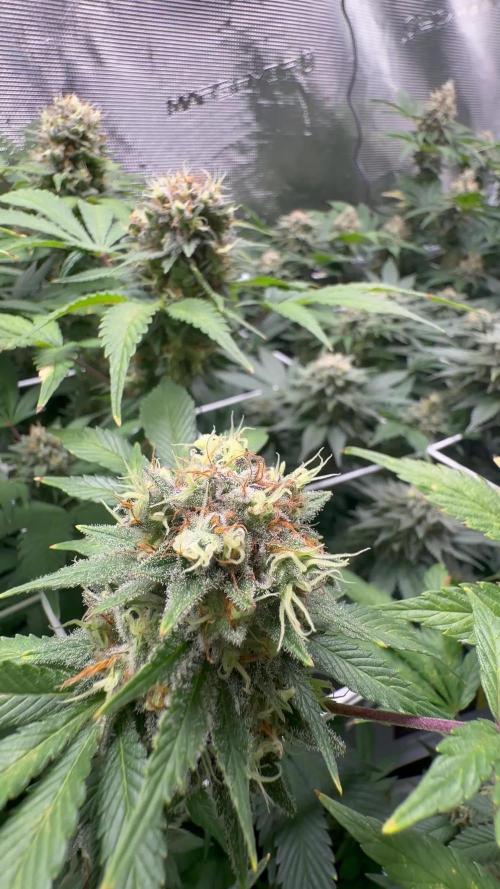
This week everything remains stable with no significant changes.
The plant continues developing well, so I’m just maintaining the current conditions and letting her do her thing 🌸💪

Likes
13
Share


@Chitown_grower
Follow
Definitely forgot to water to water the ladies a few too many days in a row last week so one of the plants started to get a little a brown around the pistils. Will be better about watering this week lol.
Other than that, the ladies are doing great!


Likes
15
Share


@JeyGanesha
Follow
3° settimana di fioritura. Il profumo che emanano è già bello forte... immagino che l'ultima settimana sarà concentrato di aromi dolci e fruttati 😂🤣👍💪✌️🙏

Likes
17
Share


@Eddjack
Follow
Arrivato fresco fresco dalla Spagna si pianta subito.
12/01 12 h in acqua
13/01 l'ho messo in un tovagliolo di carta umido ed è è uscita la prima parte di radice ed è stato trapiantato in un vasetto.
14/01 e uscito dalla terra sfogliando le prime 2 foglioline tonde. Questa è una super partenza 72 h e già cerca la luce.

Likes
5
Share


@momothehobo
Follow
This week the alpha plant needed some training but boy did she stretch! I had to defoliate them both but a lot less on the omega plant she's been such a pleasure to watch grow because, up until now I haven't done anything but give her water sunlight and nutrients.
Likes
7
Share



Likes
82
Share


@Streptokok
Follow
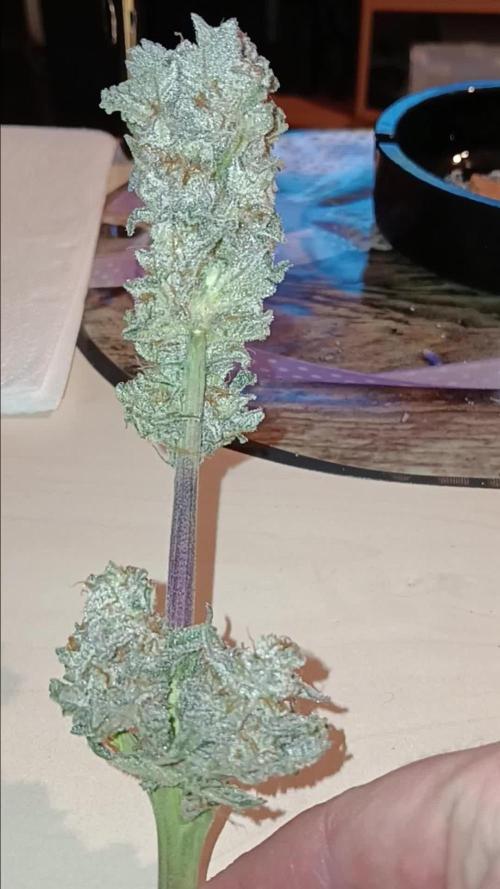
Purple Buds are amazing.I could not be happier with their color, buds are chunky and frosty, the smell is indescribable. It reminds me a certain sweet from the childhood :) and I bet it will taste even better. Later, I will show some more pictures for Industrial CBD which is doing fine. I will move Purple Buds tomorrow out of my tent for two days in the darkness and then - harvest time :) CBD has got one more week to go I think. Happy growing to everyone.


Likes
16
Share


@EaRtH
Follow
8.3. - Last week for last two plants. These Fritters look really tasty and buds are hard as real apples 🍏 This week I won't use any nutrients, just pure water. Watered 💧
11.3. - Plants have been in dark for last two days and without watering. Considering that I'll harvest today as my next seeds are already soaked in water.
8.3. - 14.3.2024
Likes
28
Share


@Northerngrowers
Follow
Hemos probado ésta genética de fast buds en cultivo ecológico de guerrilla y la verdad que nos ha sorprendido gratamente.
Facil de cultivar y con poca atención hemos obtenido grandes resultados.
Por lo que a plagas respecta ésta niña ha crecido fuerte y sana durante todo el cultivo.
Resistente a clima húmedo y costero pero si llueve demasiado hay que estar atentos a principios de brotitis cuando las flores ya están formadas.
Muy buen aroma y sabor, a tropical y dulce y un efecto de felicidad y motivación muy placenteros.
Totalmente recomendable.
Likes
23
Share


@Chubbs
Follow
420 Fastbuds Week 9
Gorilla Zkittlez Auto
What up everyone it's week 9 for these 2 wonderful girls. They're getting super close to being finished. The smell I wish I could package and save its so delightful and nice. The flowers are fattening up great. I'd guess maybe one more week tops. I'm already seeing mostly cloudy heads on the trichomes. Hopefully be in time for a little Christmas meds.
All in all Happy Growing


Likes
7
Share


@Grisly
Follow
Harvest 2024
Total Hash: 102g
Total Kief: 95g
Total Flower: 3868g/138oz/8.6lb
Total Yield: 4065g/145oz/9lb/4kilo
———-/-////////—vs———-/////————/
Sugar Diesel #1: 117g
Sugar Diesel #2: 313g
White widow Clone: 14g
Dual OG:
112g
LA Affie North Field: 248g
Granddaddy Purple N: 63g
Black Raspberry Kush N: 210g
————————————————-
Total North: 1077g/38oz/2.5lb
————————///——/—————-/
Fruity Pebbles: 184g
Granddaddy Purp S H2: 54g
Granddaddy Purp S H1: 275g
Granddaddy Purp Total: 329g/12oz
Black Rasp Kush S H1: 160g
Black RaspKush S H3: 70g
Black Rasp Kush S H2: 511g
Black Rasp Kush S H4: 17g
Black Rasp Kush S: 758g/27oz
Blue Cheese S H1: 281g
Blue Cheese S H3: 83g
Blue Cheese S H2: 285g
Blue Cheese Total: 649g/23oz
Dr Grinspoon S H1: 485g
—————————————————-
Total South: 2405g/85oz/5.3lb
————————///——/—————-/
North Popcorn: 148g
BC Popcorn: 100g
GP Popcorn: 73g
BRK Popcorn: 65g
—————————————————-
Total Popcorn : 386g/14oz/0.9lb
————————///——/—————-/
Trim: 8lb
—————————————————
————————///——/—————-/


Likes
25
Share


@Ultraviolet
Follow
ANTHOCYANIN production is primarily controlled by the Cryptochrome (CR1) Photoreceptor ( !! UV and Blue Spectrums are primary drivers in the production of the pigment that replaces chlorophyll, isn't that awesome!
1. Diverse photoreceptors in plants
Many civilizations, including the sun god of ancient Egypt, thought that the blessings of sunlight were the source of life. In fact, the survival of all life, including humans, is supported by the photosynthesis of plants that capture solar energy. Plants that perform photosynthesis have no means of transportation except for some algae. Therefore, it is necessary to monitor various changes in the external environment and respond appropriately to the place to survive. Among various environmental information, light is especially important information for plants that perform photosynthesis.
In the process of evolution, plants acquired phytochrome, which mainly receives light in the red light region, and multiple blue light receptors, including his hytropin and phototropin, in order to sense the light environment. .. In addition to these, an ultraviolet light receptor named UVR8 was recently discovered. The latest image of the molecular structure and function of these various plant photoreceptors (Fig. 1), focusing on phytochrome and phototropin.
Figure 1
Ultraviolet-visible absorption spectra of phytochrome, cryptochrome, phototropin, and UVR8. The dashed line represents each bioactive absorption spectrum.
2. Phytochrome; red-far red photoreversible molecular switch
What is phytochrome?
Phytochrome is a photochromic photoreceptor, and has two absorption types, a red light absorption type Pr (absorption maximum wavelength of about 665 nm) and a far-red light absorption type Pfr (730 nm). Reversible light conversion between the two by red light and far-red light, respectively(Fig. 1A, solid line and broken line). In general, Pfr is the active form that causes a physiological response. With some exceptions, phytochrome can be said to function as a photoreversible molecular switch. The background of the discovery is as follows. There are some types of plants that require light for germination (light seed germination). From that study, it was found that germination was induced by red light, the effect was inhibited by subsequent far-red light irradiation, and this could be repeated, and the existence of photoreceptors that reversibly photoconvert was predicted. In 1959, its existence was confirmed by the absorption spectrum measurement of the yellow sprout tissue, and it was named phytochrome. Why does the plant have a sensor to distinguish between such red light and far-red light? There is no big difference between the red and far-red light regions in the open-field spectrum of sunlight, but the proportion of red light is greatly reduced due to the absorption of chloroplasts in the shade of plants. Similar changes in light quality occur in the evening sunlight. Plants perceive this difference in light quality as the ratio of Pr and Pfr, recognize the light environment, and respond to it.
Subsequent studies have revealed that it is responsible for various photomorphogenic reactions such as photoperiodic flowering induction, shade repellent, and deyellowing (greening). Furthermore, with the introduction of the model plant Arabidopsis thaliana (At) and the development of molecular biological analysis methods, research has progressed dramatically, and his five types of phytochromes (phyA-E) are present in Arabidopsis thaliana. all right. With the progress of the genome project, Fi’s tochrome-like photoreceptors were found in cyanobacteria, a photosynthetic prokaryotes other than plants. Furthermore, in non-photosynthetic bacteria, a homologue molecule called bacteriophytochrome photoreceptor (BphP) was found in Pseudomonas aeruginosa (Pa) and radiation-resistant bacteria (Deinococcus radiodurans, Dr).
Domain structure of phytochrome molecule
Phytochrome molecule can be roughly divided into N-terminal side and C-terminal side region. PAS (Per / Arndt / Sim: blue), GAF (cGMP phosphodiesterase / adenylyl cyclase / FhlA: green), PHY (phyto-chrome: purple) 3 in the N-terminal region of plant phytochrome (Fig. 2A) There are two domains and an N-terminal extension region (NTE: dark blue), and phytochromobilin (PΦB), which is one of the ring-opening tetrapyrroles, is thioether-bonded to the system stored in GAF as a chromophore. ing. PAS is a domain involved in the interaction between signal transduction-related proteins, and PHY is a phytochrome-specific domain. There are two PASs and her histidine kinase-related (HKR) domain (red) in the C-terminal region, but the histidine essential for kinase activity is not conserved.
3. Phototropin; photosynthetic efficiency optimized blue light receptor
What is phototropin?
Charles Darwin, who is famous for his theory of evolution, wrote in his book “The power of move-ment in plants” published in 1882 that plants bend toward blue light. Approximately 100 years later, the protein nph1 (nonphoto-tropic hypocotyl 1) encoded by one of the causative genes of Arabidopsis mutants causing phototropic abnormalities was identified as a blue photoreceptor. Later, another isotype npl1 was found and renamed phototropin 1 (phot1) and 2 (phot2), respectively. In addition to phototropism, phototropin is damaged by chloroplast photolocalization (chloroplasts move through the epidermal cells of the leaves and gather on the cell surface under appropriate light intensity for photosynthesis. As a photoreceptor for reactions such as escaping to the side of cells under dangerous strong light) and stomata (reactions that open stomata to optimize the uptake of carbon dioxide, which is the rate-determining process of photosynthetic reactions). It became clear that it worked. In this way, phototropin can be said to be a blue light receptor responsible for optimizing photosynthetic efficiency.
Domain structure and LOV photoreaction of phototropin molecule
Phototropin molecule has two photoreceptive domains (LOV1 and LOV2) called LOV (Light-Oxygen-Voltage sensing) on the N-terminal side, and serine / on the C-terminal side. It is a protein kinase that forms threonine kinase (STK) (Fig. 4Aa) and whose activity is regulated by light. LOV is one molecule as a chromophore, he binds FMN (flavin mononucleotide) non-covalently. The LOV forms an α/βfold, and the FMN is located on a β-sheet consisting of five antiparallel β-strands (Fig. 4B). The FMN in the ground state LOV shows the absorption spectrum of a typical oxidized flavin protein with a triplet oscillation structure and an absorption maximum wavelength of 450 nm, and is called D450 (Fig. 1C and Fig. 4E). After being excited to the singlet excited state by blue light, the FMN shifts to the triplet excited state (L660t *) due to intersystem crossing, and then the C4 (Fig. 4C) of the isoaroxazine ring of the FMN is conserved in the vicinity. It forms a transient accretionary prism with the tain (red part in Fig. 4B Eα) (S390I). When this cysteine is replaced with alanine (C / A substitution), the addition reaction does not occur. The effect of adduct formation propagates to the protein moiety, causing kinase activation (S390II). After that, the formed cysteine-flavin adduct spontaneously dissociates and returns to the original D450 (Fig. 4E, dark regression reaction).
Phototropin kinase activity control mechanism by LOV2
Why does phototropin have two LOVs? Atphot1 was found as a protein that is rapidly autophosphorylated when irradiated with blue light.
The effect of the above C / A substitution on this self-phosphorylation reaction and phototropism was investigated, and LOV2 is the main photomolecular switch in both self-phosphorylation and phototropism. It turns out that it functions as. After that, from experiments using artificial substrates, STK has a constitutive activity, LOV2 functions as an inhibitory domain of this activity, and the inhibition is eliminated by photoreaction, while LOV1 is kinase light. It was shown to modify the photosensitivity of the activation reaction. In addition to this, LOV1 was found to act as a dimerization site from the crystal structure and his SAXS. What kind of molecular mechanism does LOV2 use to photoregulate kinase activity? The following two modules play important roles in this intramolecular signal transduction.
Figure 4
(A) Domain structure of LOV photoreceptors. a: Phototropin b: Neochrome c: FKF1 family protein d: Aureochrome (B) Crystal structure of auto barley phot1 LOV2. (C) Structure of FMN isoaroxazine ring. (D) Schematic diagram of the functional domain and module of Arabidopsis thaliana phot1. L, A’α, and Jα represent linker, A’α helix, and Jα helix, respectively. (E) LOV photoreaction. (F) Molecular structure model (mesh) of the LOV2-STK sample (black line) containing A’α of phot2 obtained based on SAXS under dark (top) and under bright (bottom). The yellow, red, and green space-filled models represent the crystal structures of LOV2-Jα, protein kinase A N-lobe, and C-robe, respectively, and black represents FMN. See the text for details.
1) Jα. LOV2 C of oat phot1-to α immediately after the terminus
Rix (Jα) is present (Fig. 4D), which interacts with the β-sheet (Fig. 4B) that forms the FMN-bound scaffold of LOV2 in the dark, but unfolds and dissociates from the β-sheet with photoreaction. It was shown by NMR that it does. According to the crystal structure of LOV2-Jα, this Jα is located on the back surface of the β sheet and mainly has a hydrophobic interaction. The formation of S390II causes twisting of the isoaroxazine ring and protonation of N5 (Fig. 4C).
As a result, the glutamine side chain present on his Iβ strand (Fig. 4B) in the β-sheet rotates to form a hydrogen bond with this protonated N5. Jα interacts with this his Iβ strand, and these changes are thought to cause the unfold-ing of Jα and dissociation from the β-sheet described above. Experiments such as amino acid substitution of Iβ strands revealed that kinases exhibit constitutive activity when this interaction is eliminated, and that Jα plays an important role in photoactivation of kinases.
2) A’α / Aβ gap.
Recently, several results have been reported showing the involvement of amino acids near the A’α helix (Fig. 4D) located upstream of the N-terminal of LOV2 in kinase photoactivation. Therefore, he investigated the role of this A’α and its neighboring amino acids in kinase photoactivation, photoreaction, and Jα structural change for Atphot1. The LOV2-STK polypeptide (Fig. 4D, underlined in black) was used as a photocontrollable kinase for kinase activity analysis. As a result, it was found that the photoactivation of the kinase was abolished when amino acid substitution was introduced into the A’α / Aβ gap between A’α and Aβ of the LOV2 core. Interestingly, he had no effect on the structural changes in Jα examined on the peptide map due to the photoreaction of LOV2 or trypsin degradation. Therefore, the A’α / Aβ gap is considered to play an important role in intramolecular signal transduction after Jα.
Structural changes detected by SAXS
Structural changes of Jα have been detected by various biophysical methods other than NMR, but structural information on samples including up to STK is reported only by his results to his SAXS. Not. The SAXS measurement of the Atphot2 LOV2-STK polypeptide showed that the radius of inertia increased from 32.4 Å to 34.8 Å, and the molecular model (Fig. 4F) obtained by the ab initio modeling software GASBOR is that of LOV2 and STK. It was shown that the N lobes and C lobes lined up in tandem, and the relative position of LOV2 with respect to STK shifted by about 13 Å under light irradiation. The difference in the molecular model between the two is considered to reflect the structural changes that occur in the Jα and A’α / Aβ gaps mentioned above.
Two phototropins with different photosensitivity
In the phototropic reaction of Arabidopsis Arabidopsis, Arabidopsis responds to a very wide range of light intensities from 10–4 to 102 μmol photon / sec / m2. At that time, phot1 functions as an optical sensor in a wide range from low light to strong light, while phot2 reacts with light stronger than 1 μmol photon / sec / m2. What is the origin of these differences? As is well known, animal photoreceptors have a high photosensitivity due to the abundance of rhodopsin and the presence of biochemical amplification mechanisms. The exact abundance of phot1 and phot2 in vivo is unknown, but interesting results have been obtained in terms of amplification.
The light intensity dependence of the photoactivation of the LOV2-STK polypeptide used in the above kinase analysis was investigated.
It was found that phot1 was about 10 times more photosensitive than phot2. On the other hand, when the photochemical reactions of both were examined, it was found that the rate of the dark return reaction of phot1 was about 10 times slower than that of phot2. This result indicates that the longer the lifetime of S390II, which is in the kinase-activated state, the higher the photosensitivity of kinase activation. This correlation was further confirmed by extending the lifespan of her S390II with amino acid substitutions. This alone cannot explain the widespread differences in photosensitivity between phot1 and phot2, but it may explain some of them. Furthermore, it is necessary to investigate in detail protein modifications such as phosphorylation and the effects of phot interacting factors on photosensitivity.
Other LOV photoreceptors Among fern plants and green algae, phytochrome ɾphotosensory module (PSM) on the N-terminal side and chimera photoreceptor with full-length phototropin on the C-terminal side, neochrome (Fig. There are types with 4Ab). It has been reported that some neochromes play a role in chloroplast photolocalization as a red light receiver. It is considered that fern plants have such a chimera photoreceptor in order to survive in a habitat such as undergrowth in a jungle where only red light reaches.
In addition to this, plants have only one LOV domain, and three proteins involved in the degradation of photomorphogenesis-related proteins, FKF1 (Flavin-binding, Kelch repeat, F-box 1, ZTL (ZEITLUPE)), LKP2 ( There are LOV Kelch Protein2) (Fig. 4Ac) and aureochrome (Fig. 4Ad), which has a bZip domain on the N-terminal side of LOV and functions as a gene transcription factor.
4. Cryptochrome and UVR8
Cryptochrome is one of the blue photoreceptors and forms a superfamily with the DNA photoreceptor photolyase. It has FAD (flavin adenine dinucle-otide) as a chromophore and tetrahydrofolic acid, which is a condensing pigment. The ground state of FAD is considered to be the oxidized type, and the radical type (broken line in Fig. 1B) generated by blue light irradiation is considered to be the signaling state. The radical type also absorbs in the green to orange light region, and may widen the wavelength region of the plant morphogenesis reaction spectrum. Cryptochrome uses blue light to control physiological functions similar to phytochrome.
It was identified as a photoreceptor from one of the causative genes of UVR8 Arabidopsis thaliana, and the chromophore is absorbed in the UVB region by a Trp triad consisting of three tryptophans (Fig. 1D). It is involved in the biosynthesis of flavonoids and anthocyanins that function as UV scavengers in plants.
Conclusion
It is thought that plants have acquired various photoreceptors necessary for their survival during a long evolutionary process. The photoreceptors that cover the existing far-red light to UVB mentioned here are considered to be some of them. More and more diverse photoreceptor genes are conserved in cyanobacteria and marine plankton. By examining these, it is thought that the understanding of plant photoreceptors will be further deepened.

Likes
43
Share


@Jack_Greenstalk
Follow
added trellis netting this week to start SCROG. two layers close to eachother so I don't have to wait for entire square of growth to tuck under higher growth to keep flat even canopy. also minimizes my need for zip tie and garden ties needinf adjustment. I'm happy with veg growth thus far, and once the screen fills up with more green in a week or two these two ladies will both be ready to flip to flower. waiting on lower nodes to develop a bit more and get best use I can from a big(ish) 315 w LEC light.
the girls are getting foliar every 3 or 4 days. using heavy 16 foliar only at the moment but will follow their foliar mix as grow progresses.
smell has gotten much heavier, especially in nemo, the more blueberry pheno of the two, looking at the fan leafs I think V is more haze pheno with super thin sativa leaf structure.

Likes
65
Share


@MiyaguiOkPolilla
Follow
Hola amigo!
Arrancamos un nuevo proyecto, esta grandísima cepa Feral Fuel ABC de @TERPYZ
Semillas regulares, con una mutación muy estable, de porte medio a grande, gran poder sativa, larga floración y poca necesidad hídrica.
La marca recomienda sembrar directamente al sustrato, aquí, en suelo vivo funcionó perfectamente, una no dio a luz pero ya tenemos dos nuevas representantes!
Debo decir que la marca me envió mi paquete de 10 semillas y dentro había 12!!!
Que alegría!!!
Los brotes tardaron 5 a 7 días en aparecer pequeños entre el húmedo ambiente inicial.
Se mantendrán en el tupper hasta que se vea estabilidad.
Saludos a todos y éxitos, este proyecto viene cargado de una gran aventura

Likes
23
Share


@Horseluisweed
Follow
Esta semana más de lo mismo aunque aún no ha terminado...jeje, le tuve que quitar el poso de café xq se le puso una pelusilla un tanto sospechosa(y mejor prevenir que curar ☝️)voy a hacerle un té de hummus, al volver el último fin de semana la he visto con los colores ligeramente más claros en algunas hojas(no sé si falta de nitrógeno o si es un problema de Ph)🤔, estoy planteandome poner mas luz y poner ventilación,🧐 al final de esta semana además quizá empiece a oler a ortiga en la habitación (ojalá 🎃☝️🕺)
🙌👌Quiero que crezca como la levadura!!!!🌵😋
