


Likes
Comments
Share


@nowayReggie
Follow
Happy this grow cycle is over.
I will give more attention and focus next time I work with these




Likes
34
Share


@LockDownGrow
Follow
well the C1 is coming along very nicely , i managed too bend over the top stem using trainer wire ,
This week I had too change my lighting too 600 true watts of kingbo dual optical LED range due too the temps getting closer too 30c than I would like , and by doing so I have now got a constant temp of 27c lights on and 18c lights out
Update day 5 week 3
Well as you can see from the pics this week has had alot of growth and even showing signs of pre flower and it drinking alittle more than the others
Update ,
Day 6 of week 3 this lady is well into pre flower now the growth tip formation is looking like early flowers and I wouldn't expect her too grow leaves now ,
Really cannot fault these kingbo led lights they produce large plants in a short space of time and gives nice thick and dense buds ,

Likes
Comments
Share


@morg0Th
Follow
mimosa has become very big, I can clearly smell the orange. I will harvest next week, this week I cut off all the food flow, only water will be given 3 times,, I will leave the blue gelato 41 for 1 week longer.


Processing
Likes
4
Share


@Barcelona_Farmers710
Follow
Mientras yo me divertía en la spannabis las niñas se ponian cada vez mas resinosas farmers!! Solo basta ver la shining haze para darse cuenta que el mammoth p es brutal!!👌🏻

Likes
13
Share


@goeser
Follow
I love this strain. Really strong genetics. Nice fruity and og kush like smell. Cant wait to harvest and try them.
Likes
1
Share

@Growfather1
Follow
Hello, everyone.
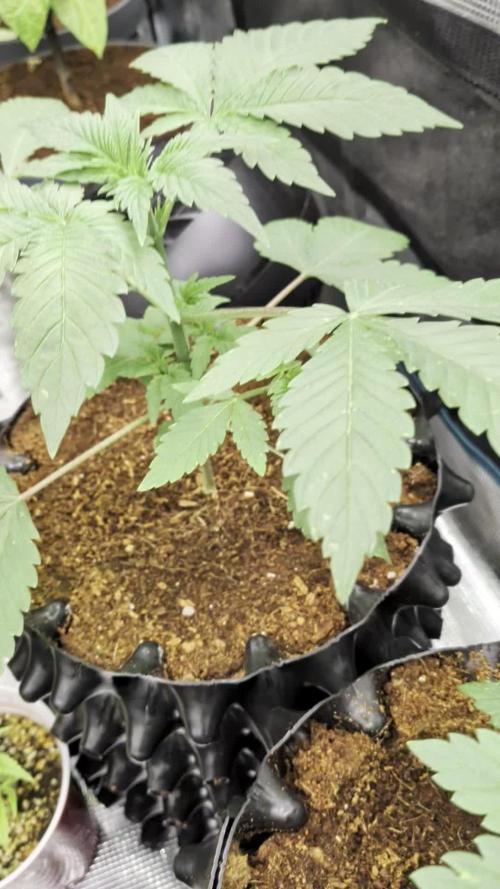
The Tangerine Dream from Zamnesia Seeds is absolutely thriving, with the plants looking healthy and green.
Everything is steady in the grow room, with temperatures checked between 19° and 24°, and humidity staying between 55% and 70%.
I'm feeding them on the lower side with 1 ml of Canna Coco A&B and 4 ml of Canna Rhizotonic per liter of water.
While doing a routine check, I noticed a few thrips, so I'll be treating the plants with neem oil, making sure to coat both sides of the leaves.
Thank you for stopping by and have yourself a nice day.
Best regards,
Growfather.

Likes
10
Share


@Barzenegger
Follow
The plants were stretching a bit, pretty much as expected - except for the Sour Strawberry. I don't know if it was due to it getting a bit less light since it was much shorter, but it tripled its size and overtook all of the other plants in height.
OK. I guess I could have flipped 2 weeks earlier?
Anyway, stretch was almost over, flowers started forming. Some of the plants still looked a bit meh and yellow-ish, but overall the growth during stretch looked healthier than the previous 1-2 weeks.


Likes
39
Share


@Belverde
Follow
Plants really very resistant and above all resinous..
I'm sorry not to have even posted the vegetative phase, it will be for next time..
With them I used a substrate filled for about half with light-mix
cocomix
perlite
humus
guano kalong ( bloom)
mycorrhite ..the upper part only Light-mix with perlite coconut.. In the vegetative phase I gave them only the root juice the few nutrients already present in the light-mix..
The light that I used is a 205w Black-dog phytomax 2-200..
The total of the light must be subdivided as well as their two also another Peyote C.
n ° 2 LSD autoflowering (for the whole first month of flowering)
n ° 3Cookies Kush (in the last two weeks)..
So the final weight in flowers has probably been affected enough ...but the quality is the quantity of the resin and it was really exceptional ..
Vaporizer test (mighty / ghosmv1) 180/185/190 °..taste on the classic line of kush, but with sweet notes of vanilla, coffee in mix with an earthy and pungent base, but not persistent..
Very good ...
Relaxing effect but not by "locking sofa"..
Mind quite clear and focused..like good kush ..
Of Critical has taken a lot in the structure of the plant, but also a little bit in the flavor with some fresh" notes "referable to some fruit like mango / lemon, just a pinch..
I think it is suitable for making extractions..
With secondary peaks and resin-laden leaves I will most likely make a coconut oil, to eat alone or in a mix where I happen to be..
Strain recommended for everyone ..
Excellent for beginners..
Thanks for reading..
🙏🌱😊
Likes
8
Share


@South79
Follow
Added net, did a bit more defoiliation. no signs of nute excess so added a small bit of pk booster

Likes
Comments
Share


@OslyDabs_10
Follow
Aún las tenía metidas en casa por la noche, por qué las plante en pretemporada y no quería que se congelarán.

Likes
36
Share


@Kushsmoker516
Follow
Almost there probably another 20-30 days for blueberry and white widow im guessing while peyote zkittles is taking her time

Likes
11
Share


@GREENPHOENIX6262
Follow
Week 3 Veg Update, (Please see the following)
Both Plants ( Seedsman -Critical +2.0 - Blimburn (Applefritter)
Thus far both plants are coming along nicely
WIll be using Bud clip bender this week to utilize PPF light usage.
*Mid-Week Update*
Introduced CaliMagic this week
LST and Bud clipped
Light Defoliation
Introduced Element Nutrient (Flower Fuel)
1 week until early Flower.
*End of week recap* 08/21
Light Defoliation
Bud Clip tie down
Thus far all is running smoothly, No changes from above.

Likes
34
Share


@Salokin
Follow
Hello Growmies,
Two weeks into vegetation, our Watermelon Candy by Zamnesia is striking a fine figure in the grow tent. Each plant has achieved a notable height of 14 cm, an impressive feat for their age, suggesting that they are well on their way to becoming vigorous and bushy specimens.
The uniformity observed in the first week continues to be a defining trait of the Watermelon Candy strain. These plants, with their symmetrical leaf structure and consistent growth patterns, are reflecting their strong genetic lineage. The lush green leaves and the tautness of the stems speak volumes about the care they've received.
Their transplant into the 12.5-liter air-pots, coupled with the application of Great White during the process, has provided them with a fertile foundation for root development. This mycorrhizal support will surely bolster their ability to uptake water and nutrients efficiently, setting them up for success in the coming weeks.
The controlled environment, with precise management of temperature and humidity, continues to foster their growth. With the lights dimmed to 25% and delivering 150-180 PPFD, the plants are receiving the perfect amount of energy to thrive without the stress of overexposure. The IR lighting before lights on and off, along with the midday UV light exposure, is fine-tuning their growth cycles and boosting their natural defenses.
Once the inline fan is connected and operational, you'll have complete control over the tent's environment, enhancing dehumidification during the night and ensuring optimal conditions 24/7. It's this attention to detail and environment that is paving the way for these Watermelon Candy plants to flourish.
Stay lifted,
Salokin.
Likes
1
Share


@Ultraviolet_
Follow
Turned off IR @ nights
Red wigglers (Eisenia fetida) are highly beneficial. They are considered an ideal choice for "no-till" or container-based organic growing because they live in the upper layers of soil, feeding on organic mulch rather than the plant's root system. Red wigglers accelerate the breakdown of organic amendments and produce high-quality, nutrient-dense worm castings directly in the root zone. Clover is another exceptional component of an organic rhizosphere, offering a sustainable, self-sustaining alternative to synthetic nitrogen fertilizers produced via the energy-intensive Haber-Bosch process. By forming a symbiotic relationship with Rhizobia bacteria, clover converts atmospheric nitrogen N2 into ammonium NH4, providing a steady, slow-release nutrient source that enhances soil health and reduces environmental impacts. Red clover offers superior nitrogen fixation and biomass production compared to white or yellow clover, making it the premier choice for maximum soil vitality, particularly for improving soil structure and providing a high-volume nitrogen credit for subsequent crops.
If it is fully functional and efficient soil, the rhizophagy cycle is far superior long-term than any synthetic delivery when it comes to preventing deficiencies, not because it's "better," per se. The medium will require a very high CEC to make it to harvest without re-fertilization. The rhizosphere acts as a dynamic, interactive exchange where plants and soil microbes trade resources based on immediate needs. When a plant lacks a specific nutrient, it changes its physiology and releases specialized chemical cocktails—root exudates—into the surrounding soil. These exudates, which include sugars, amino acids, and organic acids, serve as a "shopping list" to attract specific microorganisms, which in turn return higher levels of desired nutrients. There is nothing in comparison to synthetic delivery, which causes plants to stop producing exudates, effectively "starving" the beneficial soil life, over time turning the soil barren and void of microbial life. Responsible use, applying the right amount at the right time, can minimize these negative effects. Relying solely on synthetic fertilizers without replenishing organic matter is what typically leads to exhausted soil. The use of synthetic fertilizers can utilize the Cation Exchange Capacity (CEC) of the soil, but without a robust rhizosphere and active microorganisms, the efficiency of this process is significantly reduced. This makes synthetic growing more difficult to prevent deficiencies overall compared to an efficient organic living soil with a robust rhizophagy cycle, as there is no "one size, fits all" when it comes to different nutrient profiles of strains/genetics, making it trickier to "guess" and prevent creeping deficiencies.
CEC does not contribute towards EC. Add more CEC using biochar, problem solved. If you keep pH between 6.3 and 6.7, hydrogen is exudated to cycle the medium's CEC for its needs. Keeping the pH between 6.3 and 6.7 creates an environment where plants release H+ to displace positively charged nutrients (like Ca2+, Mg2+, K+ held on soil particles or within artificial media this cycle through nutrients via the medium's Cation Exchange Capacity (CEC)
Microorganisms generate a stable potential of approximately 0.5 V EC. The rhizosphere creates its own food, similarly to chelation, using 1000's of varying combinations to create its own food.
Start to finish, just add water. Eventually, more materials will need to be added at the beginning of each new grow, but very attainable to go from seed to harvest without ever fertilizing, regenerative cultivation.
ATP is king above all else when it comes to biomass accumulation. Cellular root respiration and cellular respiration are essentially the same biological process, the breakdown of glucose to create usable energy (ATP) in the presence of oxygen, just taking place in different parts of the plant. Synthetic (salt-based) grows have significantly lower levels of total rhizosphere respiration, often referred to as root-zone activity, compared to organic living soil grows. While the plant roots themselves may respire in both systems, the surrounding soil ecosystem in a living soil setup is vastly more active, teeming with bacteria, fungi, and beneficial microorganisms.
2 pools of ATP, it won't double in growth buuuut, but improving root respiration by ensuring high oxygen in the soil is crucial. Good aeration ensures roots can fully utilize glucose to generate the ATP necessary for nutrient uptake, leading to healthier and more productive plants, even if growth isn't exactly doubled. The ATP created using root respiration is dedicated to rootzone growth; the ATP created using regular cellular respiration in a synthetic system would have to dedicate a lot of ATP to the roots when there is little or no root respiration. It's true that there is less of an initial ATP cost in breakdown when nutrients are already in their final form (synthetic), but you lose a solid chunk of ATP when the entire plant is reliant on cellular respiration alone; a large portion of ATP is dedicated to root zones for "forced" (active) nutrient uptake. Making it overall less efficient, even if the initial cost of breakdown is higher. If that makes sense. Oxygen is of critical importance when growing in living soil compared to synthetic methods because it supports the metabolic needs of the microbial, fungal, and insect ecosystem, rather than just the root respiration required by the plant itself. While synthetic grows can survive in lower-oxygen environments with precise mineral feeding, living soil systems rely on aerobic microbes to decompose organic matter (microbial mineralization) to create plant-available nutrients, which is an oxygen-intensive process. While a specific fair percentage is difficult to guess, my experience points to a massive, compound difference between the two methods and the amount of oxygen required. All the ATP spared is used on more biomass, not only that, but the extra root respiration can achieve a much higher CO2 compensation point naturally than you could with synthetic and atmospheric CO2 alone.
As a plant grows faster and increases in size, its demand for nutrients to support that growth increases, requiring a higher rate of nutrient uptake. As plants enter phases of rapid vegetative/floral growth, their metabolic demand for nutrients increases exponentially. Without a robust buffer zone—whether in the soil (cation exchange capacity) or in a hydroponic reservoir—deficiencies will occur rapidly because the instantaneous demand for specific nutrients can quickly exceed the rate of supply.
A growing body of evidence suggests that organic living soil provides superior long-term soil health and environmental benefits compared to synthetic fertilizers, which are often criticized for promoting a cycle of dependency and degradation. While synthetic fertilizers offer short-term convenience and high yields, they often come at the expense of long-term soil health, sustainability, and increased corporate control over growers/ farmers. Organic living soil, while slower and requiring more care to establish, creates a sustainable, resilient, and, ultimately, more fertile environment.
We don't grow; we facilitate energy conversions.
Once all water is removed, approximately 95% to 97% of a plant’s dry matter consists of carbon, oxygen, and hydrogen. These three elements form the structural backbone of all plants. Corporate interest sells you the other 3-5% NPK & all the rest in RATIOS! Why not throw the 3-5% in a pot, and focus your energy on the other 95-97%?
Indigenous Amazonians created, or at least significantly enhanced, the fertile, dark soil known as Terra Preta de Índio (Portuguese for "Indian Black Earth") by incorporating biochar and other organic materials into the soil. This anthropogenic (human-made) soil technique, which dates back roughly 2,500 to 8,000 years, allowed ancient civilizations to flourish in regions with naturally poor, acidic, and nutrient-poor tropical soils.


Likes
1
Share

@ohcibi
Follow
Update June 4th
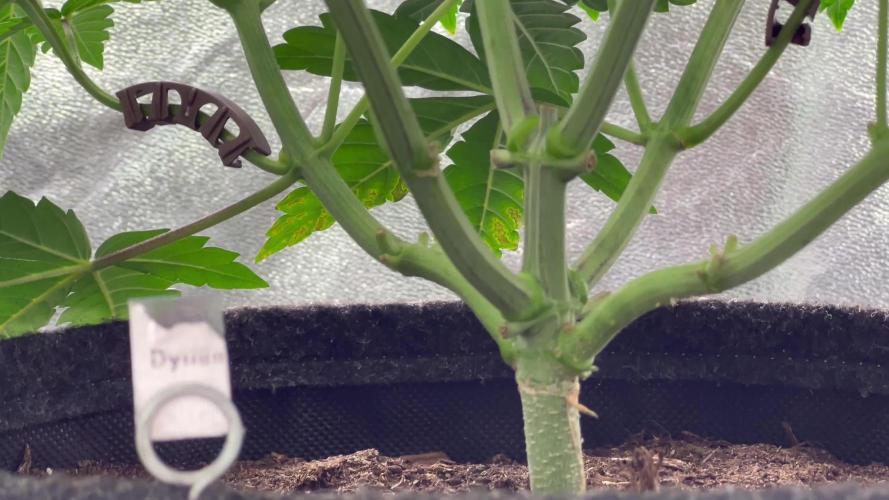
Another 3 liters fed today. As expected, this week is full of LST and scrogging only, but it’s going very well. The prep work I’m doing now is basically what I did in the first week(s) of flower in the last grow, so the foundation for flipping will be much better prepared this time. Maintenance on Taktlo$$ is even getting a tad bit simpler.
Flipping is expected on Sunday. I’ll just keep the same week marker for simplicity, even if I could flip earlier.
Update June 1st
Fed a full 3 liters again. Those plants are chugging like hell. Last grow I fed 1.5 liters per plant. This time it’s 3 liters per plant and they drink it up as fast as the last ones drank their 1.5 liters. Not saying 3L is exceptional. I was likely just too conservative before. That said, this grow I’ve been feeding roughly double since the start, so the plants are prolly just more developed overall.
Maintenance on this Dynamite Diesel strain is still much simpler than on the Royal Gorilla. Let’s see if the yield in the end is on par.
Update May 31st
Also for Samy this will be the final veggie week. This Dynamite Diesel strain is a little bit simpler to train and maintain as it doesn’t grow as bushy. Clips are easier to apply. Scrog is easier to do. Other than that the strain grows as strong and fast. No further topping plans on Samy as well. So same deal as for Takti as I will flip both at the same time no matter what (can’t do different) I might go flower half way through this week. So stay tuned!
Likes
12
Share


@Greenys
Follow
Week 3/ day 21 big strip, unfortunately I did not have enough time to complete so i will going going back in to continue tomorrow.
Somthing mess up with Journal week date..
THIS IS WEEK 3 of flower
Intake
Run off
PH 5.8
5.9
EC 1.8
1.8