


Likes
Comments
Share


@FarithAriasFajardo
Follow
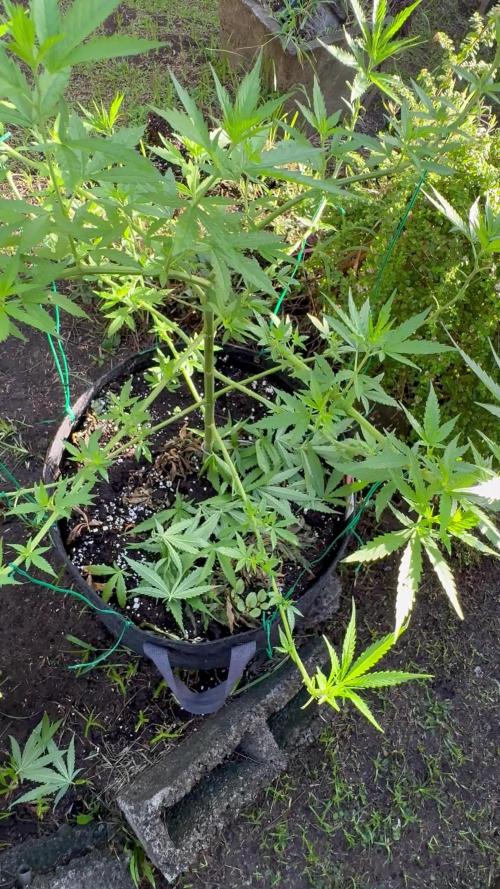
El registro corresponden a los dias 28, 30 de abril y 2,3,4 de mayo Despues de realizar corte apical y algo de lst junto defoliación leve. Hasta ahora las plantas van muy bien, creciendo muy bonitas y con fuerza. Tratando de llevar todo de la mejor manera ya pude ajustar algo el set donde tengo mis planta y cada vez más contento con estos resultados! Ya hoy la white widow ibl cumple 30 dias desde germinada y la zinfandel 23.


Likes
10
Share


@Minuteman_Organics
Follow
A few of the zed blacks hermed..spreading pollen into the flower tent. Already seeing some seeds develop. It is what it is. I should have done a better job checking on them. I kept the Zed blacks that only had a couple flowers on the bottom but tossed anything that had flowers growing up the majority of the plant. Some of the most famous strains in the world were self pollinated so I don't have issues with a couple male flowers. They're just trying to improve their fitness as nature intended.
The plants are doing very well. A few of the bottom leaves are dying which is normal...senecense! Sucking up those nutrients. I've been liquid feeding using the fish, seaweed, humate and recharge.
I have saved the males and they are trying to reveg. Still popping out a few flowers which I'm cutting off. 1 rainbow belt. 1 zed black. 3 hash plants
The hash plants are smelling incredible. Definitely a few keepers mixed in here. Maybe 3/7. Hopefully the quality of the flower backs it up.
Zed blacks have 2/3 I'm interested in. One is very very low yield. Unless its a really high quality plant I'm gonna toss it
Rainbow belts are both smelling ridiculous. Super frosty. Good yield. One is slightly more frosted than the other. The zkittles pheno has pure Skittles smell with a little lemon cleaner chem to back it up. Probably my keeper!


Likes
41
Share


@MMSC16
Follow
Dec 28 - Both plants are close to harvest. Had 5.5. hours of darkness after 24 hr period to prevent budrot developing. Also moved plants inside tent moreso, and closer to fans.
Dec 28 - Watered healthy plant today at 2PM - I'll chop unhealthy plant tomorrow, so didn't water, instead inspected trichomes.
Dec 28 - Unhealthy Plant is showing amber trichomes, but also clear - Unsure if I should chop tomorrow or not.
Dec 29 - DAY 73 - CHOPPED - Trimmed larger fan leaves (accidentally trimmed a sugar leaf or two) and harvested to dry whole, upside down. I'm hoping for a half ounce per plant.
Dec 19 - 11.50PM Trichome Calyx' were observed, there are new calyx' appearing. Calyx' are swelling.
Dec 30 - Plant developing more senescence and calyx are swelling.
Dec 30 - Trichomes are still clear, but I'm seeing some PM develop so I think I'll chop tomorrow morning.
Dec 31 - Nice Senescence occurring, Happy to have left it this last day. Accidentally left temps up to 78F for a half hour.
Dec 31 - Decided to push another week as per feedback from GD member. When watering I noticed she was perky after 3 days w. no water. Interesting and likely the frequency I'll continue watering at.
Dec 31 - Watered at 9PM.
Jan 1 - Removed small fan leaf with signs of PM at the base. This defoliation should help with airflow. Checked newly formed calyx' and they're clear enough not to document.
Jan 2 - Buds are developing nicely, calyxes are noticably swelling nicely too. I see some green pistils appearing in the lowest buds. Clear Trichomes.
Jan 3 - Watered at 8AM. Woke up to 90F temp. Unfortunately they'd been cooking for about an hour.
Jan 3 - DRYING UPDATE - I'm seeing fluctuations in the drying room between RH 49% and 70%. As of 3.10PM @ 61RH after adding jars of water. I want to maintain this RH.
Jan 3 - Senesence looking good, calyx' are continuing to swell. Will inspect trichomes tomorrow at latest.
Processing
Likes
152
Share


@ThrashedTV_BakedByGlaze
Follow
PICTURE VIDEO UPDATE - 10/28/2020
Day 49 - 10/26/2020
Bud site established. Nice big base in relation to my tent. Both nice and strong with new LST + Accidental HST in the last week and a half.
Made the best Screen for a ScrOG i've made so far but the accidental breaks during LST/HST didn't heal up in time for me to risk a snap getting them in the net.
Good news is the screen is ready and waiting for the next grow (Might go back to photoperiod)
Very excited to watch the buds grow so i gave them their final major tie down and defoliation to get the light/air flow set so the final weeks can be hands off.
Gave a feeding of Molasses/Water on the 24th and will give another full nute mix feed today or tomorrow (27th/28th)
Going to take pictures of the Chocolate Mint OG Autos and give them a final snip/clip down today and get that diary updated by the end of the week as well 🙌
Thanks for checking out this week! Throw down a like and/or follow so I can return the favour! 💪
--
IG: @GlazedGrow (Let me know you're from Grow Diaries so i can follow back!)

Likes
103
Share


@Magnetous_tryko
Follow
That first diary was a very interresting experience! GD community helped a lot and it's a real pleasure to be surrounded by such nice and experienced growers! Thank you to everybody and see you soon on the next run!
Thanks also to the GD team that as always been so kind and reactive! (thanks a lot for posting one of my pics on IG either 😺: 1:)0000



Likes
4
Share


@HydrokronicZA
Follow
Roots starting to grow out of net pot. Top feed system keeping the plants growing strong as roots develop


Likes
4
Share


@902EastCoast
Follow
This week went great again. They are getting heavy now and packing on the crystal. They smell soooo fckin good!
Likes
12
Share


@Guerillafarm
Follow
Day 94 Harvesting and making Hash with the cut leaves.
5weeks of veg and 9,5weeks of flowering
Pot size 6L
Likes
7
Share


@MariRemediesLLC
Follow
Day 15: 👍🏾 Note: Plant closer to plant slower growth than the other.
Day 18: 👍🏾
Day 21: 👍🏾 Note: Electric out for 2 days due to bad storm therefore plants are on balcony. They love their natural habitat.


Likes
6
Share


@Stickygreens420
Follow
8/12/2023 - Day 39 Veg: she seemed to be handling the topping well. I'm also seeing more signs of the lower branches starting to grow, which tells me the topping has helped. Other than her slow growth, she looks healthy.
8/16/2023: watered again today using water at about 6 ph. Mixed in Jay Plantspeaker Quillaja, Silica, Calmag, BuildASoil Big 6, Pure Protein Dry, Rootwise Mycrobe omplete, Rootwise Bio-Catalyst, and some Dr. Zymes Eliminator. The plant is finally getting big enough to start bottom watering soon, so this will likely be on of the last top watering until flower. Also, I defoliated a couple leaves that were blocking the lower branches, and super cropped the top, to promote more growth in the lower branches.
8/18/2023: Installed the first layer of trellis netting today


Likes
1
Share


@kauilmayel1996
Follow
Está increíble
Fascinado con esta planta
Está enorme no cabe en el armario
Tiene un olor dulce como a chicle
Increíble planta para el hidro
Toma agua como loca...


Likes
19
Share


@Sergio_721
Follow
despite the maximum temperature with lights on she grows very well, drinks a lot and I hope she will produce dense and juicy buds soon. 😂
Likes
3
Share



Likes
6
Share

@Chucky324
Follow
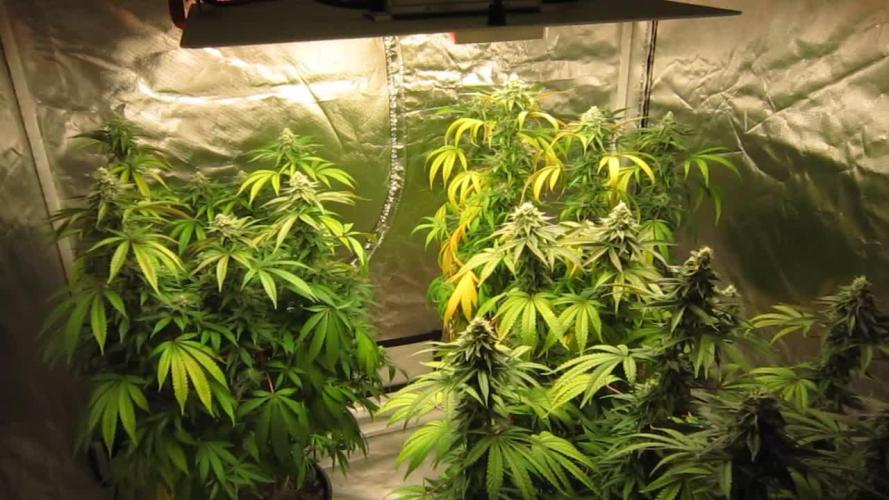
Hello. This is the end of week 7 and the beginning of week 8 of flowering.
Everything is going good in here. I see this strain is hungry. I've got more yellow leaves than I should.
I should have been feeding this strain a bit more nitrogen and I wouldn't have had so many yellow leaves.
It's hard to read the plant signs, sometimes. There will be a few more feedings before flushing starts.
Hey... I've got a 50% off code for UKHTA Seeds if anyone is interested? Won it in a contest, and I won't use it before it expires.
It's a 50% off your first order code, has to be used by May 1st 2026.
They would love diaries made on their seeds.
That's... www.ukhta.es/ to see their strains.
Privet message me if your interested.
OK. Keep Growing Straight.
Chuck.

