Likes
Comments
Share
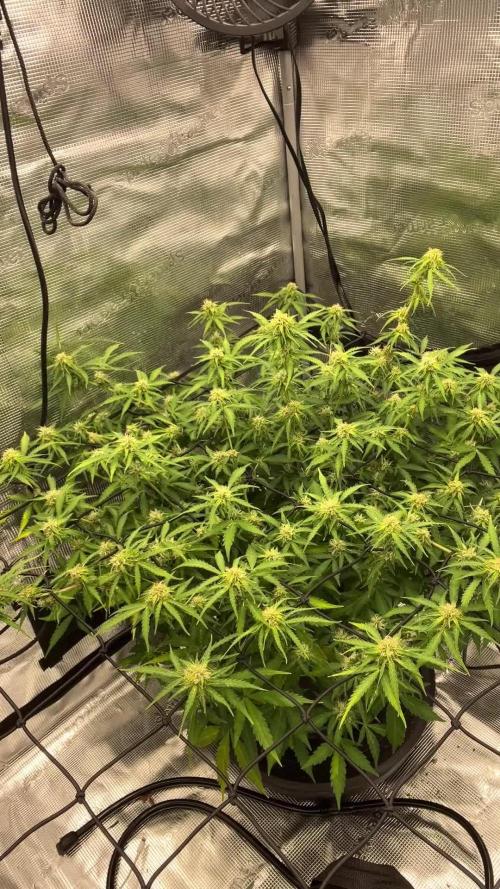
Von links nach rechts: Sleepy Joe, Lava Cake, Runtz. 02. Mai 2025 Die Wurzeln sind jetzt sehr gut entwickelt. Seit dem Einschalten des Lüfters haben die drei gut 20l Wasser verbraucht. 😅 Sie wachsen so unglaublich schnell, dass sie in drei Tagen fast die LED berührt haben. Dadurch leichte Verbrennungen an den Spitzen der Lava Cake. Viel höher darf die Runtz nicht werden, sonst muss ich die Spitze nach unten binden. Das Zelt ist nur 180 cm hoch. Der Lüfter des Filters läuft jetzt schneller mit 50% Leistung. Die Luftfeuchtigkeit lag heute bei 75% und musste aus dem Zelt. Das führt aber auch dazu, dass die Wärme abgesaugt wird. Wird Zeit, dass es draußen konstant wärmer wird. 03. Mai 2025 Die Lüftung habe ich über den Trenntrafo wieder eine Stufe langsamer gestellt. Aber auch vorher lag die Temperatur nachts bei 22°C, also alles im grünen Bereich. Licht: Eine der zwei Sanlight S4W strahlt exklusiv seitlich auf die Runtz. Normalerweise würde ich das nicht so machen, aber die Runtz wächst sehr luftig und hat sehr großen Abstand zwischen den Blättern. Sie sieht gesund aus und wächst gleichmäßig. Die Rückseite der Pflanze zeigt keinen Lichtmangel durch unsymetrisches Wachstum. Eine Beleuchtung von oben wäre aktuell schlechter. Ich muss schon sagen, die Runtz überrascht mich immer wieder und ich mag das zwar hohe aber sehr luftige Wachstum! Die Sleepy Joe und die Lava Cake sind vergleichbar hoch und teilen sich die zweite Sanlight S4W. Auch ihnen geht es gut, etwas größer wachsende Pflanzen sind mir aber lieber. Wasserbrauch: Bisher 30l. Heute den kleinen Tank mit 20l Wasser inkl. 64 ml Canna Aqua Flores aufgefüllt. 34 ml pro 10l bei hartem Wasser gemäß Rechner von Canna. Beim letzten Grow habe ich noch pH-down verwendet, das ist laut Canna nicht nötig und funktioniert aktuell perfekt! Canna: "Es sind pH-Stabilisatoren enthalten die ein Einstellen des pH-Werts unnötig machen." Quelle: https://www.canna-de.com/canna-aqua-flores Die Pflanzen wachsen wie beim letzten Grow kräftig und gesund, ohne Anzeichen von Mangelerscheinungen. Und sie sind nicht übertrieben dunkelgrün durch zu viel Stickstoff. 😱
Likes
18
Share
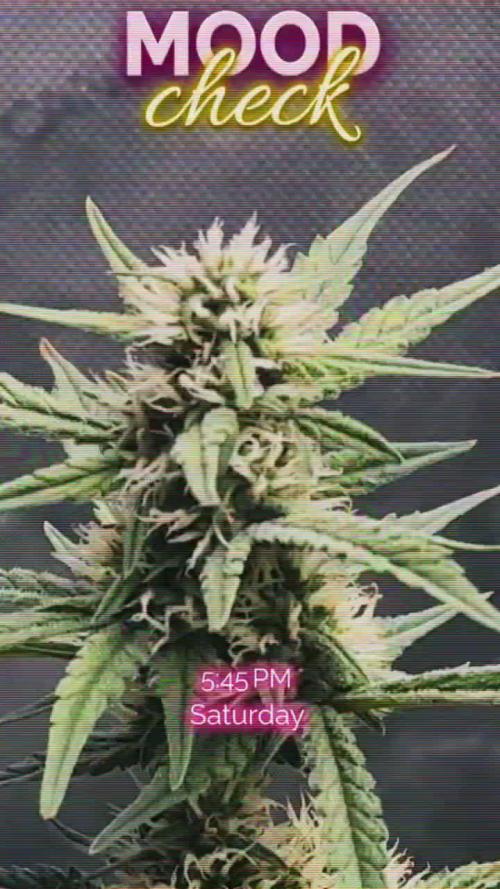
,Good evening to all of you, masters and beginners of the old grass and welcome back for a new week of growth, fun and experience towards the plant we love to tell them! We began to rinse the roots to get rid of excesses! The explosion of these thus brilliant -looking tricomes seems to come from other planets! I can't wait to enjoy that cotton candy! 🌈🌈🌈🌈🌈🌈🌈
Likes
18
Share
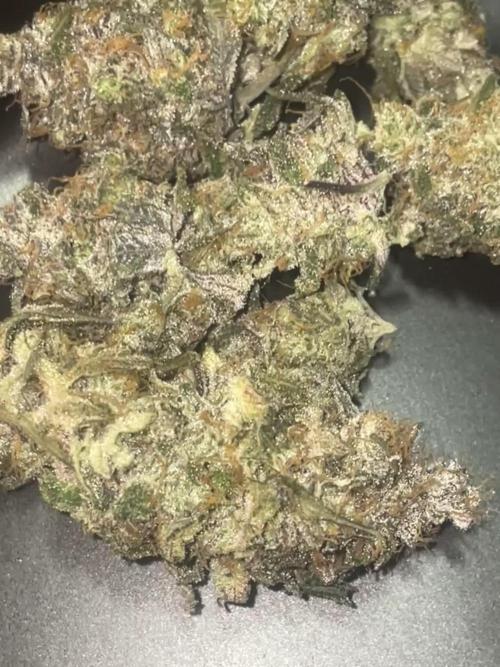
Did some super cropping to get some more light penetration in the last month of flowering. plant got hit with a case of spider mites but I believe I got it on time. She smells super sweet and should be done in another month
Processing
Likes
9
Share
Growth stun abit in #1 due to snap in the stem but still manage to grow half inch. n push new growth........#2 main growth stun but directed to lower branches n still grow about 2 inch......#3 double it growth with 4.5 inch. didn't need lst was showing good growth in lower branches from early
Likes
80
Share
7wk into flowering..i should have de-foliate way more than i did.. Cola's should be fatter.. Think I'm off on something🤔🤔not sure where.. Great genetics . good soil..great nutrients.. GREAT LIGHT .maybe it was temperature or as simple as SIZE OF CONTAINER...any advice would be appreciated..OH MAYBE A MORE POWERFULL LIGHT??
Likes
10
Share
# LSD Zamnesia Tripping 🙂 | Drying, Trimming & Final Numbers — Week 15 From Seed First of all… Yes 😄 We are once again dividing the harvest into multiple parts, and we sincerely apologize for that. But honestly, there was simply no realistic way to fit everything properly into a single GrowDiaries update. Between: - harvest photos, - trimming sessions, - macro stacks, - drying process, - preservation methods, - extraction preparation, - washing content, - smoke review material, - and all the little behind-the-scenes moments… …the amount of data collected during this run became massive. And instead of rushing through everything or leaving important parts unexplained, we decided to split the final stages into multiple chapters so every step gets the attention it deserves. Because harvest is not just “cut plant, dry plant, smoke plant.” The final weeks are honestly an entire process on their own. And this week? This week was all about: - drying, - trimming, - preservation, - resin collection, - and finally seeing what these girls truly delivered. For everyone joining now, quick recap: These LSD girls were grown under 12/12 from seed from the very beginning. Minimal intervention. Almost no traditional training. Mostly leaf tucking and gentle bending when needed. The plants grew naturally toward the light while we focused mainly on environmental balance and observation instead of aggressive manipulation. The goal was never maximum optimization. The goal was understanding. And honestly? These girls became absolute monsters anyway. After harvest, the plants that were not frozen for future washing were dried mostly whole instead of being aggressively broken down immediately. We wanted the drying process to happen slowly and naturally to help preserve: - terpenes, - resin quality, - smoothness, - and final flower texture. Drying conditions stayed around: - 18–20°C - approximately 60% humidity And after around 10 days… That beautiful little branch “click” finally arrived. Growers know the sound 😄 Not fully snapping into dust… not bending wet anymore… …that perfect middle point where you know trimming time has officially arrived. And honestly? This is where the room became chaos again 😄 Trim bin ready. Gloves on. Scissors prepared. Mr. Baggy supervising operations as usual. We even gave him a trimming cap so his imaginary hairs would not contaminate the flowers 😄 Safety first. One branch at a time, we slowly started breaking everything down by hand: - separating flowers, - removing excess leaf material, - preserving structure, - checking density, - and admiring the insane amount of frost these girls developed. And wow… These flowers are ridiculously resinous. Not just visually frosty. Sticky frosty. The type where: - scissors stop cooperating, - gloves become glued together, - fingers turn black with resin, - and every few minutes you accidentally create little hash sculptures while trimming. The Zamnesia curved trimming scissors honestly became one of my favorite tools during this process. The pointed curved tips make it incredibly easy to reach deep inside dense flowers without damaging structure too aggressively. And these flowers definitely deserved precision. Dense. Heavy. Compact. Extremely resinous. Some buds honestly felt closer to small rocks than flowers 😄 While trimming, the trim bin also started collecting beautiful material underneath: - tiny trichome heads, - broken resin glands, - small fragments, - and all the golden dusty goodness growers love seeing accumulate slowly over time. And once enough collected… Of course we hand-pressed it 😄 Nothing fancy. No giant machinery. No complicated setup. Just warmth from the hands, gentle pressure, patience, and resin slowly transforming itself into beautiful soft hash. The color came out gorgeous too: light golden, slightly creamy, soft, sticky, and incredibly fragrant. Simple. Traditional. Beautiful. Exactly the kind of small moments that make harvest season special. Now for the final dry numbers so far: Plant A: 287g dry flower Plant B: 107.3g dry flower And it is important to mention: the second plant was NOT harvested fully for flower because a significant portion had already been separated and frozen for future ice-water extraction work. So these numbers do not represent the total biomass produced by that plant. And honestly? We are extremely happy with the results. Especially considering: - the 12/12-from-seed approach, - minimal intervention, - the massive resin production, - the flower density, - and the overall quality expression these girls delivered. The aroma during trimming was unbelievable too. The entire studio became saturated with terpenes: - loud, - greasy, - sweet, - sharp, - complex, - almost offensive in the best possible way 😄 Every movement released more aroma into the room. Every branch smelled alive. And even now during curing, these girls continue evolving beautifully. For preservation, we decided to divide storage between: - Grove Bags, - glass jars, - and a few additional preservation containers. And honestly, this is something we always enjoy testing because curing is never just “put flower somewhere and forget about it.” Different storage methods can slightly influence: - moisture stabilization, - terpene retention, - aroma evolution, - texture, - and long-term aging behavior. Glass jars remain classics for a reason. But Grove Bags are also extremely interesting because they are specifically designed to help stabilize humidity exchange internally without constant burping routines. And over time, comparing these methods becomes part of the fun too. Of course, this is still not the end of the story. Far from it 😄 The next chapters will cover: - frozen material washing, - ice-water extraction, - separation, - resin collection, - drying techniques, - curing updates, - smoke review, - terpene analysis, - and final concentrate results. And honestly… These girls already gave us some absolutely beautiful medicine during washing tests 👀 But we will save those details for the proper extraction update. Mr. Baggy stayed with us through the entire trimming process as always, emotionally supporting operations and probably stealing quality control samples when nobody was looking 😄 And finally… Thank you. To Zamnesia for the genetics. To Plagron. To F.O.G. To all the LEDs, gear, and equipment involved. To GrowDiaries. To the community. To the longtime followers. To the new followers. To the silent supporters. To the curious visitors. To the skeptics. To the lovers and the haters 😄 To everyone spending even a few minutes following this strange beautiful plant journey with us. And next week? Things get icy 🌊❄️ Fresh frozen material. Washing. Extraction. Resin separation. And another entire side of this plant still waiting to be explored. Stay safe everyone. Stay curious. And may your scissors always stay sticky 🌱
Likes
5
Share
@Nicogreen
Follow
Er bare lavet for sjov men den gør det godt nok super godt afllgevel. 😉. MEN JEG håber at den bare kan bærer sine buds. 😉 Ved at der er andre der også laver samme forsøg for at tjekke rødder osv. Plus det bare sjovt at se hvor lidt der skal til af plads til at lave bare 25gram
Likes
1
Share
Super sanas en su primer semana de vegetación, no muestran ninguna deficiencia y creo que les espera un buen futuro a estas pequeñas sin duda crecerán mucho mas.
Likes
18
Share
@NMGDOC
Follow
I was flushing all the plants since August 9. You can see in the videos with de microscope ( I really try my best, but it was pretty difficult) the trichomes looks cloudy and some of them looks amber. Maybe in the videos you can't see it because my hand was really shaky. August 17: all the plants were in dark. August 18: i cleaned all the plants, buds, leafs, everything..., spraying water to remove the rests of potasic soap. Today august 18, during the nigth, i'm going to harvest all the ladies. In the past 3 days i didn't watering the plants and the smell was stronger. August 19: Before dry -Critical Kush: 150g -Red dwarf: 60g -Syrup (2 plants): 270g -Lemon (4 plants): 570g
Processing
Likes
12
Share
Growbox 100x100x200 cm // 900W VIPARSPECTRA LED // Biobizz light mix // 185m3 exhaust air system // FAN 40W 1-3 days // Germination and Planting into 0,5l Cups of Biobizz light mix DAY 1 Plants coming out doing well
Likes
38
Share
For LIQUIDS & NUTES ******GREEN BUZZ NUTRIENTS***** organic. Also i’m using their LIVING SOIL CULTURE in powder form! MARSHYDRO ⛺️ has large openings on the sides which is useful for mid section groom room work. 🤩 ☀️ MARSHYDRO FC 3000 LED 300W 💨MARSHYDRO 6” in-line EXTRACTOR with speed-variation knob, comes complete with ducting and carbon filter.
Likes
Comments
Share
Likes
9
Share
@Fyno_TH
Follow
🌸 Flowering Week 7 — Frost Incoming! ❄️🔥 Short update this week — but the Queen is really starting to shine. Buds are swelling fast, stacking beautifully, and the first layer of frost is officially here. Trichomes are popping everywhere under the light ✨🌿 Aroma also kicked up a level… sweet, citrusy and loud every time I open the tent. She’s drinking well, holding strong, and no signs of stress at all. If she keeps building like this, the last few weeks are going to be crazy
Processing
Likes
7
Share
@Reaper
Follow
i can see a few purple tints coming at the budsites (day 36) no nutrients, just rainwater with calmag all the way
Likes
7
Share
@Dunk_Junk
Follow
Wow 19cm taller this week! Nice growth so far.
Likes
10
Share
Seconda settimana di vita delle nostre Strawberry Pie di Fastbuds! Continuiamo a mantenere l'umidità relativa abbastanza alta 50-60% per permettere alle plantule di svilupparsi al meglio, senza però farle prendere troppo freddo! Tra qualche giorno potremo procedere anche al prossimo passo: Dare i nutrimenti necessari per permetterle di crescere sane e forti per le prossime tre settimane di crescita. 😎
Likes
52
Share
Lacewings seemed to have mostly killed themselves by flying into hot light fixtures. I may have left the UV on which was smart of me :) Done very little to combat if anything but make a sea of carcasses, on the bright side its good nutrition for the soil. Made a concoction of ethanol 70%, equal parts water, and cayenne pepper with a couple of squirts of dish soap. Took around an hour of good scrubbing the entire canopy. Worked a lot more effectively and way cheaper. Scorched earth right now, but it seems to have wiped them out almost entirely very pleased. Attempted a "Fudge I Missed" for the topping. So just time to wait and see how it goes. Question? If I attached a plant to two separate pots but it was connected by rootzone, one has a pH of 7.5 ish the other has 4.5. Would the Intelligence of the plant able to dictate each pot separately to uptake the nutrients best suited to pH or would it still try to draw nitrogen from a pot with a pH where nitrogen struggles to uptake? Food for stoner thought experiments! Another was on my mind. What happens when a plant gets too much light? Well, it burns and curls up leaves. That's the heat radiation, let's remove excess heat, now what? I've always read it's just bad, or not good, but when I look for an explanation on a deeper level it's just bad and you shouldn't do it. So I did. How much can a cannabis plant absorb, 40 moles in a day, ok I'll give it 60 moles. 80 nothing bad ever happened. The answer, finally. Oh great........more questions........ Reactive oxygen species (ROS) are molecules capable of independent existence, containing at least one oxygen atom and one or more unpaired electrons. "Sunlight is the essential source of energy for most photosynthetic organisms, yet sunlight in excess of the organism’s photosynthetic capacity can generate reactive oxygen species (ROS) that lead to cellular damage. To avoid damage, plants respond to high light (HL) by activating photophysical pathways that safely convert excess energy to heat, which is known as nonphotochemical quenching (NPQ) (Rochaix, 2014). While NPQ allows for healthy growth, it also limits the overall photosynthetic efficiency under many conditions. If NPQ were optimized for biomass, yields would improve dramatically, potentially by up to 30% (Kromdijk et al., 2016; Zhu et al., 2010). However, critical information to guide optimization is still lacking, including the molecular origin of NPQ and the mechanism of regulation." What I found most interesting was research pointing out that pH is linked to this defense mechanism. The organism can better facilitate "quenching" when oversaturated with light in a low pH. Now I Know during photosynthesis plants naturally produce exudates (chemicals that are secreted through their roots). Do they have the ability to alter pH themselves using these excretions? Or is that done by the beneficial bacteria? If I can prevent reactive oxygen species from causing damage by "too much light". The extra water needed to keep this level of burn cooled though, I must learn to crawl before I can run. Reactive oxygen species (ROS) are key signaling molecules that enable cells to rapidly respond to different stimuli. In plants, ROS plays a crucial role in abiotic and biotic stress sensing, integration of different environmental signals, and activation of stress-response networks, thus contributing to the establishment of defense mechanisms and plant resilience. Recent advances in the study of ROS signaling in plants include the identification of ROS receptors and key regulatory hubs that connect ROS signaling with other important stress-response signal transduction pathways and hormones, as well as new roles for ROS in organelle-to-organelle and cell-to-cell signaling. Our understanding of how ROS are regulated in cells by balancing production, scavenging, and transport has also increased. In this Review, we discuss these promising developments and how they might be used to increase plant resilience to environmental stress. Temperature stress is one of the major abiotic stresses that adversely affect agricultural productivity worldwide. Temperatures beyond a plant's physiological optimum can trigger significant physiological and biochemical perturbations, reducing plant growth and tolerance to stress. Improving a plant's tolerance to these temperature fluctuations requires a deep understanding of its responses to environmental change. To adapt to temperature fluctuations, plants tailor their acclimatory signal transduction events, specifically, cellular redox state, that are governed by plant hormones, reactive oxygen species (ROS) regulatory systems, and other molecular components. The role of ROS in plants as important signaling molecules during stress acclimation has recently been established. Here, hormone-triggered ROS produced by NADPH oxidases, feedback regulation, and integrated signaling events during temperature stress activate stress-response pathways and induce acclimation or defense mechanisms. At the other extreme, excess ROS accumulation, following temperature-induced oxidative stress, can have negative consequences on plant growth and stress acclimation. The excessive ROS is regulated by the ROS scavenging system, which subsequently promotes plant tolerance. All these signaling events, including crosstalk between hormones and ROS, modify the plant's transcriptomic, metabolomic, and biochemical states and promote plant acclimation, tolerance, and survival. Here, we provide a comprehensive review of the ROS, hormones, and their joint role in shaping a plant's responses to high and low temperatures, and we conclude by outlining hormone/ROS-regulated plant-responsive strategies for developing stress-tolerant crops to combat temperature changes. Onward upward for now. Next! Adenosine triphosphate (ATP) is an energy-carrying molecule known as "the energy currency of life" or "the fuel of life," because it's the universal energy source for all living cells.1 Every living organism consists of cells that rely on ATP for their energy needs. ATP is made by converting the food we eat into energy. It's an essential building block for all life forms. Without ATP, cells wouldn't have the fuel or power to perform functions necessary to stay alive, and they would eventually die. All forms of life rely on ATP to do the things they must do to survive.2 ATP is made of a nitrogen base (adenine) and a sugar molecule (ribose), which create adenosine, plus three phosphate molecules. If adenosine only has one phosphate molecule, it’s called adenosine monophosphate (AMP). If it has two phosphates, it’s called adenosine diphosphate (ADP). Although adenosine is a fundamental part of ATP, when it comes to providing energy to a cell and fueling cellular processes, the phosphate molecules are what really matter. The most energy-loaded composition for adenosine is ATP, which has three phosphates.3 ATP was first discovered in the 1920s. In 1929, Karl Lohmann—a German chemist studying muscle contractions—isolated what we now call adenosine triphosphate in a laboratory. At the time, Lohmann called ATP by a different name. It wasn't until a decade later, in 1939, that Nobel Prize–-winner Fritz Lipmann established that ATP is the universal carrier of energy in all living cells and coined the term "energy-rich phosphate bonds."45 Lipmann focused on phosphate bonds as the key to ATP being the universal energy source for all living cells, because adenosine triphosphate releases energy when one of its three phosphate bonds breaks off to form ADP. ATP is a high-energy molecule with three phosphate bonds; ADP is low-energy with only two phosphate bonds. The Twos and Threes of ATP and ADP Adenosine triphosphate (ATP) becomes adenosine diphosphate (ADP) when one of its three phosphate molecules breaks free and releases energy (“tri” means “three,” while “di” means “two”). Conversely, ADP becomes ATP when a phosphate molecule is added. As part of an ongoing energy cycle, ADP is constantly recycled back into ATP.3 Much like a rechargeable battery with a fluctuating state of charge, ATP represents a fully charged battery, and ADP represents a "low-power mode." Every time a fully charged ATP molecule loses a phosphate bond, it becomes ADP; energy is released via the process of ATP becoming ADP. On the flip side, when a phosphate bond is added, ADP becomes ATP. When ADP becomes ATP, what was previously a low-charged energy adenosine molecule (ADP) becomes fully charged ATP. This energy-creation and energy-depletion cycle happens time and time again, much like your smartphone battery can be recharged countless times during its lifespan. The human body uses molecules held in the fats, proteins, and carbohydrates we eat or drink as sources of energy to make ATP. This happens through a process called hydrolysis . After food is digested, it's synthesized into glucose, which is a form of sugar. Glucose is the main source of fuel that our cells' mitochondria use to convert caloric energy from food into ATP, which is an energy form that can be used by cells. ATP is made via a process called cellular respiration that occurs in the mitochondria of a cell. Mitochondria are tiny subunits within a cell that specialize in extracting energy from the foods we eat and converting it into ATP. Mitochondria can convert glucose into ATP via two different types of cellular respiration: Aerobic (with oxygen) Anaerobic (without oxygen) Aerobic cellular respiration transforms glucose into ATP in a three-step process, as follows: Step 1: Glycolysis Step 2: The Krebs cycle (also called the citric acid cycle) Step 3: Electron transport chain During glycolysis, glucose (i.e., sugar) from food sources is broken down into pyruvate molecules. This is followed by the Krebs cycle, which is an aerobic process that uses oxygen to finish breaking down sugar and harnesses energy into electron carriers that fuel the synthesis of ATP. Lastly, the electron transport chain (ETC) pumps positively charged protons that drive ATP production throughout the mitochondria’s inner membrane.2 ATP can also be produced without oxygen (i.e., anaerobic), which is something plants, algae, and some bacteria do by converting the energy held in sunlight into energy that can be used by a cell via photosynthesis. Anaerobic exercise means that your body is working out "without oxygen." Anaerobic glycolysis occurs in human cells when there isn't enough oxygen available during an anaerobic workout. If no oxygen is present during cellular respiration, pyruvate can't enter the Krebs cycle and is oxidized into lactic acid. In the absence of oxygen, lactic acid fermentation makes ATP anaerobically. The burning sensation you feel in your muscles when you're huffing and puffing during anaerobic high-intensity interval training (HIIT) that maxes out your aerobic capacity or during a strenuous weight-lifting workout is lactic acid, which is used to make ATP via anaerobic glycolysis. During aerobic exercise, mitochondria have enough oxygen to make ATP aerobically. However, when you're out of breath and your cells don’t have enough oxygen to perform cellular respiration aerobically, the process can still happen anaerobically, but it creates a temporary burning sensation in your skeletal muscles. Why ATP Is So Important? ATP is essential for life and makes it possible for us to do the things we do. Without ATP, cells wouldn't be able to use the energy held in food to fuel cellular processes, and an organism couldn't stay alive. As a real-world example, when a car runs out of gas and is parked on the side of the road, the only thing that will make the car drivable again is putting some gasoline back in the tank. For all living cells, ATP is like the gas in a car's fuel tank. Without ATP, cells wouldn't have a source of usable energy, and the organism would die. Eating a well-balanced diet and staying hydrated should give your body all the resources it needs to produce plenty of ATP. Although some athletes may slightly improve their performance by taking supplements or ergonomic aids designed to increase ATP production, it's debatable that oral adenosine triphosphate supplementation actually increases energy. An average cell in the human body uses about 10 million ATP molecules per second and can recycle all of its ATP in less than a minute. Over 24 hours, the human body turns over its weight in ATP. You can last weeks without food. You can last days without water. You can last minutes without oxygen. You can last 16 seconds at most without ATP. Food amounts to one-third of ATP production within the human body.
Likes
10
Share
@Cannabot
Follow
Stalks getting thicker ,seem to all look pretty uniform in growth.Waiting