


Likes
Comments
Share


Likes
11
Share

@TrickzGrowz
Follow
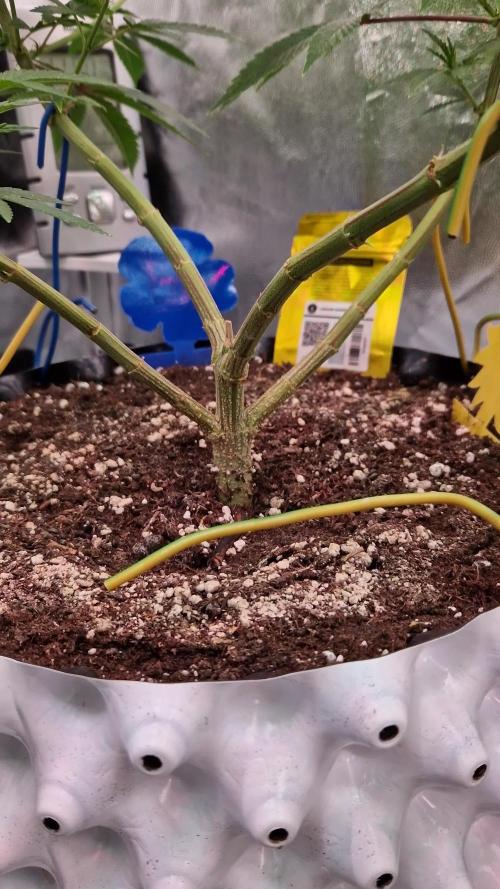
Der Stamm ist schön dick geworden. Die Wurzeln sind unten schon komplett angekommen und zeigen sich beim Untertopf.
Gelbtafeln und Blautafeln angebracht.

Likes
290
Share


@Ferenc
Follow
I have covered her to force flowering she didn't like it.... brown injuires appeard :/
I removed the bad leaves...


Likes
15
Share


@Shizzlemanizzle
Follow
Day 43
Watered them with feeding but a bit less than in Chart. Ppm is still high but because I got bio-fertilizer I think it should be okay 👍🏽. I also set the light from stage 7 to stage 9 so far the plants seem to like it. Will give an update on day 45.
Day 50
Trying to fix the overfeeding. looked good
Day 53
Still a bit overfed. Reducing the feed. I’m trying water without minerals next and will see how it is going.

Likes
1
Share

@Diaaz
Follow
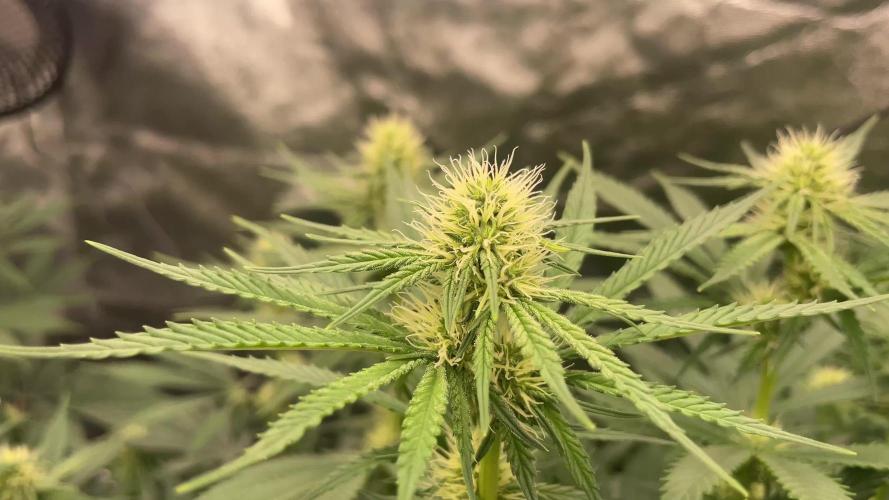
Another week is here, there are little troubles... In the middle of the week my lamp died and it took day than i bought new one... Overall everything looks good :)

Likes
6
Share

@Trichoma
Follow
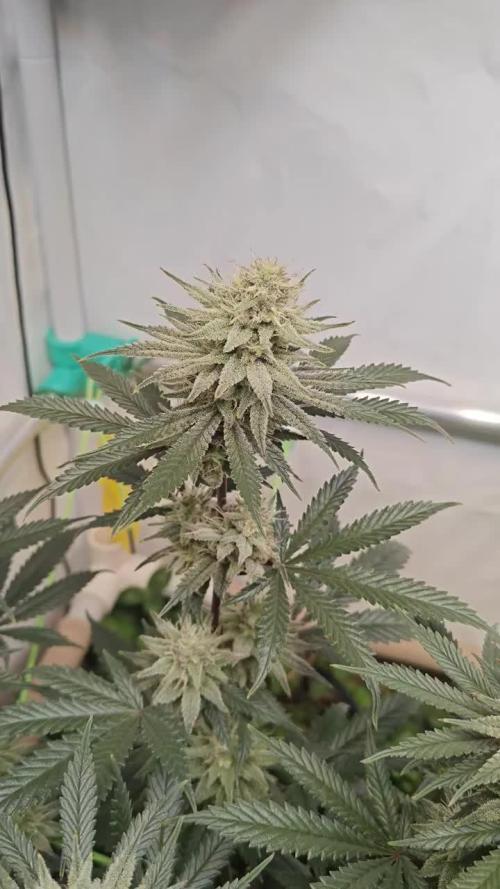
@ 1.2-1.4 kPa
Raspberry parfait smells strong, this instantly noticeable when opening the tent.
The BlueZushi smells good as well but only noticeable when rubbing on the sugar leaves.


Likes
3
Share


@Green_Dream
Follow
The first week of flowering went great! The girl stretched nicely and she is growing vigorously. The pistils started showing up quite quickly, only a few days after I flipped her. I increased the PK as she showed slight signs of deficiency.
She is packed with shoots, almost too much I would say, I hope she will have enough space for the buds to develop properly and healthily.
Likes
12
Share


@DripDrop88
Follow
This is week 3 I only gave this plant just a tab of nutrient and it sent her into a growing frenzy. She has a slight scent and is already showing signs of flowering. Is this normal help!!

Likes
29
Share


@lefthandedJ
Follow
Now we're growin'! Buds popping out everywhere, only two Viper Cookies still apparently in veg. The Lamb's in the 10 gal is really spreading her wings, I've had to adjust the pots a little to compensate for the overcrowding (a problem which I am happy to have). Chemdog is really budding strong, I like what I'm seeing but I hope they plump up. The smaller plants are making up for their size with an abundance of pretty little future nugs. Even the two Lemon OG's (not listed here, ran outta room for strains) are looking good and they were kinda a last minute addition.
Had some bug issues--just minor though. Worse damage than that was done by me and my slightly over-zealous LST. The foliage is lookin good, rich and green. I've had to pull a good deal of yellow leaves lately, but I'm pretty sure they've just been used up and aged out.
Lots of humid weather now, of course. No problems yet, though. As a preventative measure I've defoliated a little heavier than before, making sure every part of the plant can breathe. I use the morning dew as a guide-- with my location the wind almost always blows and by about 8 am I can see any patches of growth that might be too thick because they still have a lot of dew. So far this method has worked, and I don't see any major slow downs in growth from the haircuts.
Been watching a lot of DGC and thinking Recharge might be useful, but I'm pretty stuck with what I got this year (too damn rooted to do much with the soil any more). Awesome place for info though-- the more I learn the more I want to learn.
8/22 -- Bud worms. Bastards. Heavy neem spraying will hopefully bring it under control. Been watching these girls constantly (lot of time on my hands at the right time of year), and the buggers sure made headway fast. Been finding a few, like one or two, each day. Today I checked and found over a dozen on one plant. I neemed the bulk of the plants, leaving two of the smaller ones un-sprayed. I couldn't spray the very tops of the bigger plants very well because they're topping 7 - 8 feet and too close together to fit the ladder (planning-- live and learn). I moved the smaller unsprayed plants to the side of the garden and I'm hoping that if they're really hell bent on infesting something they'll take the bait and at least leave the bigger girls alone. Meanwhile, remnants of the hurricane are headed this way keeping shit really really moist all around. So far so good for bud rot still, but it's prime time.
8/23-- Hmmm. What could tip a 5 gal bag, saturated, supported with lines, with a 7 1/2 ft flowering female in it, without breaking or even bending the plant? I want to believe it's not a human pest......but thinking my pest tried to grab her and couldn't get it past the lines. I'm all ears if anyone has other ideas (wind- no. deer- no.)
So assuming I have an asshole in the neighborhood, it's back to old school. I really liked the idea of not worrying about them so much, I thought poeple might be better these days, but I guess not. Time for stakeouts and hidden cams.
8/25-- Had to spray BT for the damn caterpillars. Not a lot of damage so far, but keeping an eye on it. Fortunately the buds are still tiny so easy to spot damage. I'm really pleased with the number of bud sites in general, especially on the Lamb's Bread. I'll have to climb the ladder and see if I can get some good photos next week.
No sign of my human infestation. Been watching close and checking cams and nothing. The flash went off a few times, but I was out in less than a minute and saw nothing, and nothing in the photos it took either. Ganja ghosts???

Likes
6
Share

@Dottgreenthumb
Follow
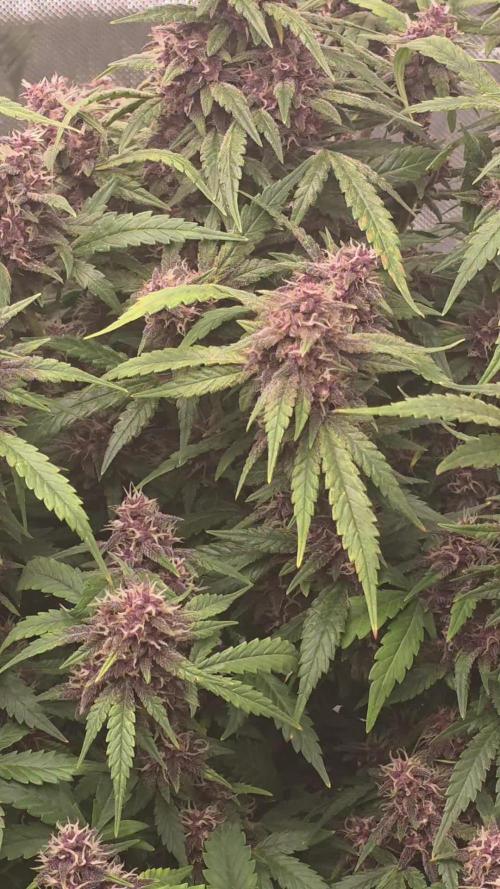
Giorno 85 per la papaya cookies inizio a fare il flush annaffiando solo con acqua regolata e canna flush
Per gli altri due strains ancora fertilizzazione una per la banana altri due per la gelato almeno vedendo l andamento è ancora indietro sembra proprio una sativa
Run off per la papaya cookies 1.4
Run off per le altre due 1.8
Ph 6.1
Likes
15
Share


@Ganja_Victoria_Aus
Follow
I was trying to be artistic. I'm so stressed. I may roll another one. Unfortunately, I'm smoking medical cannabis. It tastes like shit. But, well few more weeks. End of poverty. More art is coming. Hopefully less weird. My hand is so shaky. Apologies for this, but the little camera compensates a bit. I did not play the music. Do you remember Napster? Well, come from there somehow. Appreciate

Likes
15
Share


@Krissci
Follow
Been very bad & struggling with this diary and many other all at once.
Down to 8 full sized plants
1 plant HERMED last week.
Overall growth is fine/even.
New fan/filter installed to cope with 600w CMh.
New test on nutrients
-bloombastic
-Rezin
So
Processing
Likes
22
Share


@Silverback_Guerilla
Follow
2/10:
I watered today with about 3/4 gallon each, plus cal-mag, signal, bembe, armor si, a little open sesame, and their final dose of endoboost.
I took photos today, but forgot to snap a shot of the Soooperrunt. She's as tall as the short one now, just not as bushy. I think she'll make a fair amount of bud despite her sloooow start, smaller stature, and smaller pot. The tall one is keeping pace with the biggest plants in the garden.
2/11:
Wife home sick today....postponing construction project to raise the lights....kinda scary....about 10"-12" from the tops now..
2/12:
I woke up to find the tallest of these bitches stretched another few inches and within 9 inches of the lights!!!
I quickly drug everybody out of the closet and undertook the project. In addition to that project, I installed and hooked up my new AC Infinity 6" intake fan. It's pulling in fresh air from the soffit vent on the eave of the attic, and currently feeding the garden with 46f fresh air. I'm able to easily maintain daytime temps in the lower 70f's now. I am able to drive the nighttime temps as low as I want. The only issue is that the outdoor RH varies quite a bit, so I ordered a 30-pint dehumidifier to put in the top of the closet. It will battle with the evaporative cooler while the lights are on to keep it at 45% RH, but after the lights go off, it will lower the RH to 35% unti morning. After another couple of weeks, I'll kill the evap cooler altogether and try to maintain 35% RH 24/7. I'm optimistic that it will be the difference-maker in maintaining lower RH while I'm flushing all the plants during the last couple of weeks. That's usually such a challenge...especially with a bunch of 5 gallon pots.
I also sprayed everybody with boomboom spray to try and mitigate the light burn damage that is likely to ensue.
2/13:
Still stretching... about 12" from the lights again. I will wait to raise the lights until tomorrow when I feed them. I'm seeing calcium deficiency on a few plants, including a #9. Will up the dose tomorrow when I feed.
2/14:
I fed them today with about 3/4 gallon each including grow big, big bloom, tiger bloom, cal-mag, signal, bembe, humic acid, and I switched over from Open Sesame to Beastie Bloomz. Raised the lights another couple of inches. I did some training on them and defo'd a little bit.
2/15:
Installed the new dehumidifier and rigged the continuous drain on it...works great.
2/16:
I rotated the edge plants and removed some old leaves. I added another 22w 3000k 4' bar light under the canopy.
2/17:
I rearranged the garden and defoliated a little bit. That's it for week 8-

Likes
69
Share


@nonick123
Follow
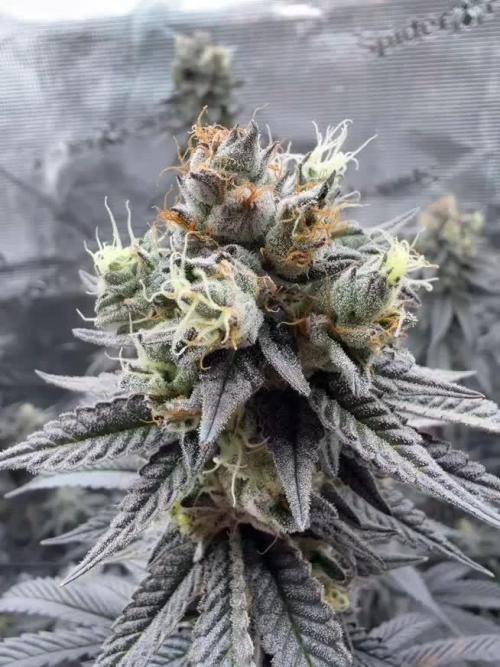
Día 59 (29/07) Este cultivo no es muy entretenido con solo agua, asi que...
Le hago supercropping a todas! 😁 A ver como reaccionan!
Día 60 (30/07) Las plantas se están recuperando muy bien del supercropping! 😁
Todos las puntas hacia arriba! 💥
Come onnnnnnn! A por esa floración en 2-3 semanas!
Riego 500 ml H2O pH 6,75
Día 61 (31/07) Las plantas se han recuperado genial del supercropping y están lanzando TODAS las ramas hacia arriba 😍
Un espectaculo la fuerza de estas plantas! 💥
Redistribuyo las plantas, para ver si OnionOG está más protegida del sol, ya que consume muchisima agua y voy a estar en unos días fuera...
También reubico ligeramente la malla de sombreado, debido a que en mi latitud el sol empieza a incidir lateralmente por las tardes...
Riego 500 ml H2O pH 6,55
Día 62 (01/08) Vuelvo a redistribuir las plantas en el invernadero dejando a OnionOG todavía más protegida del sol directo, para tratar de disminuir su consumo de agua estos días que no voy a estar...
Pongo una protección "visual" en el invernadero en el lado que da a los vecinos (cara norte), porque he "cazado" miradas indiscretas...
Riego 500 ml H2O pH 6,55
Día 63 (02/08) Debido a que me voy de vacaciones unos días, adelanto el riego semanal con Té y la aplicación foliar de Kelp
Riego con 1 Litro de Té Vegetativo de Lurpe Solutions. Preparación: 24 horas con bomba de aire (oxigenación) con ingredientes:
Green Sunrise 8 ml/L + Insect Frass 16 ml/L + Hummus Lombriz 8 ml/L + Melaza 1 ml/L + Kelp Hidrolizado 0,25 g/L
Aplicación foliar Kelp hidrolizado de Lurpe Solutions a 0,25 ml/l
Día 64 (03/08) Cerrado por vacaciones
Día 65 (04/08) Mi amigo viene a casa a hacer un riego con 1 Litro de H2O pH 6,5
💦Nutrients by Lurpe Solutions - www.lurpenaturalsolutions.com
🌱Substrate PRO-MIX HP BACILLUS + MYCORRHIZAE - www.pthorticulture.com/en/products/pro-mix-hp-biostimulant-plus-mycorrhizae


Likes
4
Share


@ChiloteAnonimo
Follow
Satisfecho pero voy por mejorar los parámetros en la siguiente para ver algún cambio, como también cambiar de banco de semillas a uno nacional (Chile) y serán Fem.

Likes
13
Share


@FlavoursUk
Follow
So, eventful week.
Prior to putting my seeds into my system, my light and rdwc system was left on as I was dialling in the growing environment before placing the seeds as a final home. My only issue was I had a light leak BEFORE putting the foil top covers on the clay pebbles. Long story short, I got algae which ended up turning to root rot.
I spotted it very swiftly and did a res change adding beneficial bacteria to the system along with the base products of remo nutrients. A few days later new growth and recovery is taking place.
Day 16- Fully back on track, new roots shooting out into the water and the growth rate has picked up as it should.
Foliar feeding twice a day for a little boost until the root system establishes a bit more. Huge changes in just a day. Can't wait to see what a week's growth looks like.
Really loving the sunset/sunrise feature on the trolmaster, something I got to experience watching recently!
Watching by closely to make sure everything stays in track.
Stay tuned for the next one 😉

Processing
Likes
13
Share


@LumberjackBuds
Follow
Thanks @SweetSeeds for the development of this strain. I’m absolutely in love with the color of this one, I never imagined we would see anything other than slight purple. I’m gonna be growing this strain and 9 others at the same time. 3 Dark Devils will be germinated to grow with my 6 Mephisto. I also ordered some Red Poison Auto to do in my next grow.
Day 3: I don’t think they liked the ghetto dish setup I have for them at all. Ready to transplant to air pots
Day 7: New Grow Room I’m pumped!
Likes
2
Share


@CuriosityWebster
Follow
Went away for seven days had a friend come by and water the garden
Absolutely exploded since I’ve seen them last very pleased with all of the plants except for mystery auto number one. It is disappointing me some but hopefully the top will bring more growth.
Can’t wait to see these continued to develop!!!