


Likes
Comments
Share


@Slap22
Follow
Starting to really stack up not going to be a giant harvest but those buds are dense af
Likes
150
Share


@Ferenc
Follow
Day 88, 30th of October 2020:
I am just back from my holiday my friend looked after her really nice the 4th week already and buds are coming nicely along....
Great to see this beautiful lady very stinky by the way.... Smell is strong...🤪
She is very nice.... ;)
I removed some leaves getting pointless to be as she focuses more on the buds....
Those leaves were removed from the top mostly....
Now she gets one day extra darkness and but previously she had more dark hours than 12 hours because she was removed in the morning and back in the evening because she is in the tent with other plants and they are in veg now....🤪🤣🤣
I just started changing the schedule for those as well so from tomorrow no need to remove her and putting back.... ;)

Likes
20
Share


@Ultraviolet
Follow
Not particularly growing for speed or any dedicated reason this time round, just adding water and a abundande of positivity, gotta admit I do like the autoseed logo. Off we go again into the magical forest.
(Arthrospira platensis) cultivated in high-alkaline, mineral-rich water in Kailua-Kona, Hawaii. It is renowned for having a higher nutrient content, including more carotenoids and essential fats, compared to other spirulina brands. It is frequently cited as a "complete food" due to its dense concentration of proteins, vitamins, minerals, and pigments.
The nutritional profile of standard dried Spirulina platensis biomass. 3kg of spirulina powder has an approximate NPK ratio of 10-2-1 (or 10% Nitrogen, 2% Phosphorus, and 1% Potassium).
Here is the breakdown of the nutrient content for 3kg of powder:
Nitrogen (N): ~300g (10% of total mass)
Phosphorus (P): ~60g (roughly 2% of total mass)
Potassium (K): ~30g (roughly 1% of total mass)
3kg of spirulina powder is more than enough nitrogen for 4 cannabis plants in a 100-gallon pot—in fact, it is likely excessive and could cause severe nutrient burn or toxicity if not properly managed. Spirulina has a very high protein content (46% to 63% dry weight), which translates to a significant nitrogen source. It is often described as a 5-1-1 NPK fertilizer.
3kg (3000g) of powder in 100 gallons means 30g per gallon. General organic recommendations for potent amendments (like frass) are often around 1–3 tablespoons per gallon. 30g of powder is roughly 2-3 tablespoons, making this a very high-strength application rate if added all at once. Balance this with calcium/magnesium, and organic nutrient delivery in soil growing can lead to deficiencies in these nutrients.
Not all of that 100 gallon is used, so figuring out precise measurements was ballpark, but there is about 10kg of engineered biochar in that pot. Mostly in the top half. Ideally, I'd have 25kg in a full active 100-gallon, but......... don't mess with something that is not broken. Roots do not utilize the entire 100 gallons. This has been a couple of years of trial and error, mostly error. The amount of cations you can add in grams depends entirely on the specific cation exchange capacity (CEC) of your biochar and the type of cation being added. Biochar CEC values vary widely, typically ranging from 4 to over 300cmolc/kg. Multiple Biochars in use, ranging upwards of 100cmolc/km.
Different cations have different atomic weights
Potassium K+ 39.1g/mol.
Calcium Ca2+ 40.1g/mol.
Magnesium Mg2+ 24.3g/mol.
Nitrogen NH4+ 18.04g/mol.
You get more nitrogen bang for your buck. It all depends on the CEC of the biochar you use, but brrrrrrrrrr roughly I'm looking at 500-600 grams worth of elemental cation exchange capacity, give or take. That's just for the biochar alone. Elemental cation exchange capacity refers to the ability of materials—such as soil, minerals, and biochar to adsorb, hold, and release positively charged ions Ca2+, Mg2+, K+, Na+, Al3+, and Zn2+. This capacity is a critical measure of nutrient availability in soil and energy density in electrochemical systems.
Added calmag 2:1 to complement spirulina.
Calcium (Ca): Approximately 150g - 300g of elemental calcium.
Magnesium (Mg): Approximately 75g - 150g of elemental magnesium.
So long as pH stays in 6.3 to 6.7 ish, the plant will unlock hydrogen. Plants will be able to cycle CEC for their own needs. Hydrogen ion pumping (proton pumping) is a fundamental mechanism used by plant roots to facilitate the cycling of nutrients within a medium's Cation Exchange Capacity (CEC), directly increasing nutrient availability. A growing medium's Cation Exchange Capacity (CEC) does not contribute directly to Electrical Conductivity (EC). CEC represents potential nutrient storage, while EC represents active nutrients in the water/soil solution. A medium with a high CEC can hold many nutrients, but if there is no water present, the EC will be low.
98% of plant nutrient uptake comes directly from the soil solution.
2% of nutrient uptake is directly from soil particles.
Nutrients held on exchange sites (CEC) are not directly measured by EC until they are released into the soil solution through exchange with other ions (e.g., hydrogen ions from roots or fertilizer).
Plants source the H+ ions (protons) used in cation exchange primarily by exuding carbon sugars into the rhizosphere, then microorganisms perform root respiration, which reacts with soil water to form carbonic acid H2CO3 that dissociates into H+ and bicarbonate. Roots also actively pump out H+ ions directly to acidify the rhizosphere, plants trade hydrogen produced through metabolism for essential nutrients held by the soil.
In plant cells, the H+ (protons) used in proton pumping across the plasma membrane come primarily from the cytoplasm (cytosol). The protons are derived from internal cellular sources, including metabolic processes that release H+, and the regulation of intracellular pH homeostasis.
Distilled water is highly useful in managing the electrical conductivity (EC) of a growing medium by allowing for precise control over nutrient concentration and assisting in the mobilization of nutrients from the cation exchange capacity (CEC) into the active, plant-available nutrient solution.
Just add water & positive energy.
Potential hydrogen. pH. + - , potential charge balance for hydrogen.
So long as there is adequate oxygen in the soil and air and water moves at a decent interval, its practically impossible for the pH to skew in a soil that is taking in oxygen and releasing CO2 and nitrogen, I say practically, but meh, even with plenty of oxygen, the process of converting ammonium NH4+ to nitrate NO3- by bacteria releases hydrogen ions H+, which directly causes acidification (lowering pH). While water movement is necessary, consistent water moving through the soil can leach away basic cations Ca2+, Mg2+, K+, Na+, leaving behind acidic hydrogen and aluminum ions, causing pH to drop, especially in humid regions. High levels of CO2 in the soil (from intense respiration) dissolve in soil water to create carbonic acid, H2CO3, which lowers the pH. (barometric pumping removes that possibility) The pH in a cannabis cultivation environment, particularly in hydroponic or soilless setups, will often naturally drift towards acidic (lower pH) over time. Understand how to know when to lime the pH back up. Complex but critical. Once I understood this it helped ease the pain of understanding pH.
Base saturation directly reflects the percentage of CEC occupied by base cations. Generally, as base saturation increases, soil pH increases because fewer acidic cations, H+ and Al3,+ are present on the soil colloid surfaces.
At a pH of 7 or higher, the soil colloids are saturated with base cations, resulting in a base saturation of 90+%.
While many sources include Sodium Na+ as a base cation, some calculations focused specifically on plant nutrients (like in some nutrient management contexts) may focus solely on the "Big 3": Ca2+, Mg2+, and K+. However, in soil science and CEC (Cation Exchange Capacity) measurements, sodium is usually included in the definition of total base cations, making it the "Big 4" base cations.
At a pH around 5.5, soils often have a 45–55% base saturation, while a soil with a pH between 6.5 and 6.8 generally has an 80–90% base saturation.
Base saturation is considered a reliable, albeit complex, indicator of soil fertility and the degree of soil weathering, acting as a crucial metric in soil classification and management.
Once you take full control of the pH, so long as there is oxygen, and one keeps tabs on base saturation levels. Its near impossible for anything to go wrong. All you are essentially doing is adding water and waiting for any sign of deficiency. Not so much growing as eliminating the possibilities of things going sideways. Can't over or under water, can't skew pH, can't go anaerobic. Everything runs in optimal cycles, watering every 2 to 3 days or as required, depending on the rate of combined ET. A little warmer, a little drier, but never short on water. All the nutrients are already there in the medium, we still focus on the water, just not adding salts, but to mobilize nutrients held in the Cation Exchange Capacity (CEC) and move them into the active soil solution for plant uptake, the best supplements to add to water are fulvic acid, humic acid, or seaweed/kelp extract. Liquid solutions with high concentrations of essential trace elements. Distilled water has no alkalinity or minerals to help buffer or release nutrients. Adding these supplements turns the "empty" water into an active agent that forces nutrients off the CEC colloids into the solution for plant uptake.
When to water? When Electrical Conductivity of soil gets low. No water, no conductivity.


Likes
8
Share


@LonelyStonerz
Follow
This week we are seeing the girls starting to flower, mixed in a gaia green topdress and chopped it up into the sand, then adding another layer. The sand really does a number on the fungas gnats. Going to do some lollipopping and lots of defolation. Trying to pick and chose which colas to bring to the end. I cant wait to see what this looks like when its filled with bud. After I train tonight its going to be hands off completely besides watering.

Likes
11
Share


@StickyFingah420
Follow
Es el resultado del cruce de 2 variedades me gustan bastante, por lo que se imaginarán lo expectante que estaba por este nuevo ciclo. Me gustó y disfruté mucho viendo el desarrollo de esta planta, esta vez no quise entrenarla (LST, topping) para ver como se desarrollaba y la verdad no me decepcionó, quizás hubiera esperado más producción pero sin duda que la calidad de las flores vale totalmente la pena en desmedro del rendimiento. Flores compactas y poco aireadas completamente repleta de resina dulce y muy frutal.
Totalmente recomendable para los que disfrutan de humos dulces, frutales, cremosos y con notas a frutos secos, ¡un lujo!
Gracias a Sweet Seeds por darme la oportunidad de cultivar estas 3 novedades que la verdad son unas maravillas que sin duda volveré a cultivar.
Será hasta la próxima, buenos humos!
Likes
9
Share


@JamaweedOPO
Follow
A planta está reagindo bem ao treinamento, continuando a crescer de forma saudável. Durante o processo, acabei danificando algumas folhas, mas nada preocupante até o dia 23. Esta semana, reduzi a quantidade de nutrientes e reguei mais com água. Minha lâmpada de 240W está em 60%. Devo aumentar?
Dia 24 apareceram os primeiros pistilos.
🌱
Likes
3
Share


@Passionatos
Follow
Start of the bloom phase I got some nitrogen deficiency but I could handle the problem by giving them some extra nutes

Likes
1
Share

@Nistnov
Follow
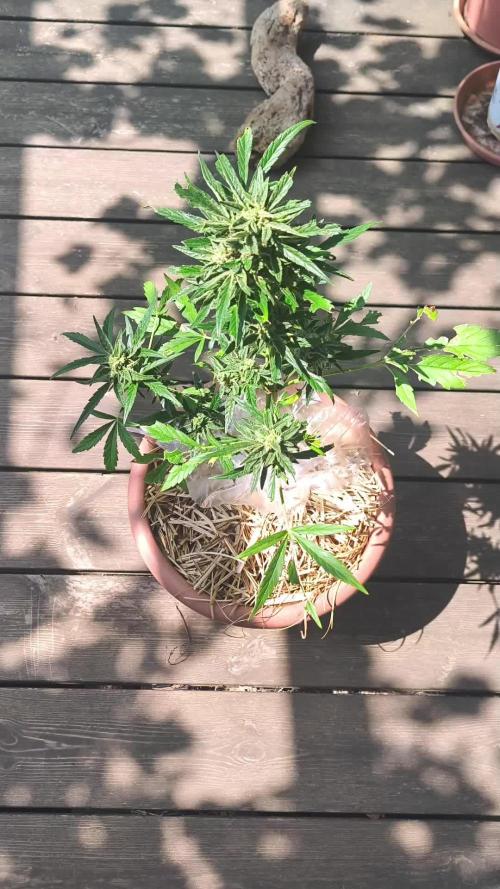
I harvested the plant in week 9. I put her in dark room for 3 days before harvesting. I didnt flush her, just let the soil dry out.
I gave the buds 3 washes in water and one wash with water with lemon juice.

Likes
30
Share


@Roberts
Follow
I am starting a Runtz auto that I will be growing for the plagron eternity grow. I scuffed the seed, and dropped it in a cup of water. Everything is off to a normal start. Thank you Zamnesia, Medic Grow, and Plagron. 🤜🏻🤛🏻🌱🌱🌱
Thank you grow diaries community for the 👇likes👇, follows, comments, and subscriptions on my YouTube channel👇.
❄️🌱🍻 Happy Growing 🌱🌱🌱
https://youtube.com/channel/UCAhN7yRzWLpcaRHhMIQ7X4g.

Likes
29
Share


@CannbellFarms
Follow
Was such a pleasant harvest from start to finish, no issues at all. A tip for next time would be to have the SCRoG lower as I couldn’t really tuck any node sights this time round, smells absofuckinglutely amazing from 3RD week bloom onwards!

Likes
9
Share


@Irshaads
Follow
Approaching week 5 of flower.
Ladies are healthy as can be.
No signs of deficiency or stress.
Increased bloom nutrient feed.
Removed Grow nutrient from feed.
Processing
Likes
4
Share


@2x4auto
Follow
Good week of growth. Fed twice throughout the week. Couple signs of insects but hoping it's just the few fruit flies I have in the vicinity. Also continued with LST, both plants seem to like it. Growth on Alaskan purple is slow due to the shitty Amazon light overjead I believe. Seemango has a mars hydro ts1000 overtop.


Likes
21
Share

@Z420Organics
Follow
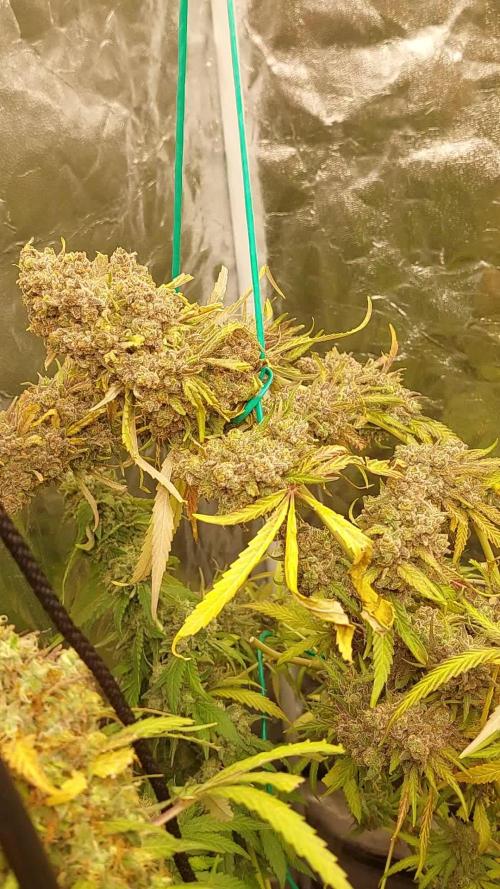
🌿 Kannabia Grow Update – Cold Temps and colors🌿
The temperatures have dropped noticeably, and that’s exactly what we wanted! ❄️
Cooler nights = better, cleaner, more refined maturation, deeper colors and richer aromas. 🌈👃
We’re not there yet — some plants still need days or even weeks — but everything looks absolutely stunning!
---
🔥 RS11
The colors are insane! Purples, pink hues… pure eye-candy.
The fast pheno is almost ready — I’ve already cut a few small branches at different ripeness levels so I can test the difference in effect and high. Super excited for that experiment!
---
🦍 Monkey Grease
One of them is already harvested!
The rest follow soon — very stable, easy plants, beautiful finish.
---
🍋 Amnesi-K Lemon
This cultivar seems like it wants more time than the others — totally normal for lemon-dominant profiles.
Still swelling and stacking nicely.
---
🍒 Cherry Dream
WOW. Just WOW.
The smell is unreal — I can’t wait to smoke it.
One pheno is pure cherry, the other is straight sugar, like cotton candy sweetness.
---
🍎🍌 Apples & Bananas
Colors are starting to pop hard now — blues, purples, darker greens.
Really interesting finish coming!
---
🕒 Timing
If everything continues like this, I expect most of the plants to be chopped in 7–10 days.
Just a bit more patience — we are on the final turn! 💚✨

Likes
5
Share


@GoodBudz
Follow
At this stage and after dealing with such tall plants in such a small area it was getting more and more difficult to get around each plant. Thus making it very hard to spot any deficiencies such as mold and rot. The colas that were up close to the light were starting to show signs that they were going to get some light/heat damage as the leaves were getting fried.
With all the supercropping, made some make shift crutches to help support each bend. Duct tape was also used to support each bend.
The colas were starting to frosty up this week and it was very exciting to see
Likes
18
Share


@Pokan187
Follow
Everything is going smoothly, the buds are getting bigger day by day
All the girls are bug free, they are still looking green
The G13 has the strongest smell followed by the Runtz and the GDP doesn’t smell like anything for now

Likes
33
Share


@zera1337
Follow
Week 4:
I somehow managed to overwater 2 of my cuties. Having a humidifier + the fan not being properly positionend kinda lead to this. However, they are now looking stronger again and back on track.


Likes
35
Share


@eldruida_lamota
Follow
Vamos familia con la octava semana de vida y cuarta semana de floración de estás Cereal Milk de RoyalQueenSeeds.
La temperatura está en 25 y la humedad actualmente está en 50%.
La cantidad de agua cada 48h entre riegos no cambia, y por supuesto controlando el Ph entre riegos alrededor de 6.5 - 6.2.
Ya se ven bien sanas estas 5 cereal milk, tienen un color y una salud espectacular, vemos como siguen progresando y van formándose las flores estas próximas semanas.
Mars hydro:
Code discount: EL420
https://www.mars-hydro.com/
Agrobeta:
https://www.agrobeta.com/agrobetatiendaonline/36-abonos-canamo
Hasta aquí todo, Buenos humos 💨💨💨
Likes
5
Share


@AestheticGenetix
Follow
Plants doing really well. This one isnt drinking as aggressively as the other 1 gallon plants. She's getting the same amount of water but is becoming more water logged than her counterparts previously.
She's turning dark dark in the leaves. Almost black.
Likes
132
Share


@BudBoutique
Follow
Welcome to Bud Boutique Grow Diary - really appreciate all your love and support :)
Dont forget to check out my other current grows!
🗓️ This Week:
- LETS CHOP IT ✂️✂️✂️
- beautiful big bud structure
- last trichome check again after 48hrs Darkness - looking perfect!!
- Now lets dry inside the tent for 12-14 Days - Trimjail soon
Thank you for still staying with me 💚
___________________________________________
--- 🌱 Strain ---
🏷️ SWEET CHEESE by Sweet Seeds
https://sweetseeds.es/en/photoperiod-dependent-seeds/48-sweet-cheese.html
---💡 Lighting ---
💡LUMATEK ZEUS PRO 600
https://lumatek-lighting.com/zeus-600w-pro-29/
--- 🥗 Nutrients and Feeding
* 🍸 PLAGRON Algae Baseline grow/bloom + Additives: Power Roots, Sugar Royal, Pure Enzym, Silic Rock, Power Buds, Green Sensation
* 📅💪 baseline grow/bloow: 4ml/l & additives: 1ml/l each
https://plagron.com/de/hobby/produkte
--- 🏭 Grow Setup ---
* 🏠🌿 Indoor: Homebox 120x120x200cm (4x4)
* 📐🌀 PrimaKlima exhausting Fan 1180m3/h (running on 60-80%) & Can Light Filter 800m3/h & 1x Fanbox 1x Dyson fan for Air circulation
https://primaklima.com/de/shop/ventilatoren-de/ec-ventilatoren/pk160ec-tc/
https://canfilters.com/products/filters/
All Likes and comments are highly appreciated!!!
don't forget to check out my Instagram: budboutiquee