Likes
25
Share


@DeepRootsGrowTrees
Follow
FAT BANANA 🍌 AUTO / RQS
WEEK #7 OVERALL
WEEK #2 FLOWER
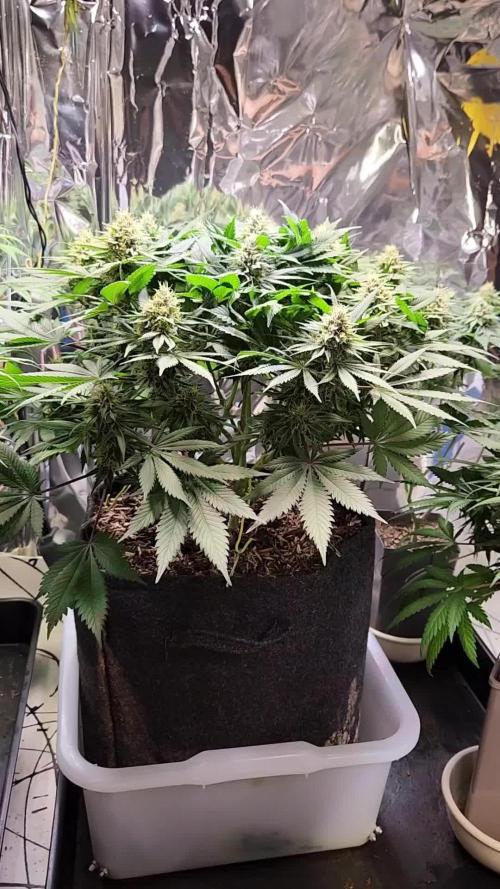
This week no issues to report she's doing really well so far buds are looking good and growing at a high rate. Stay Growing!!
Thank you for stopping by and taking a look!! It's much appreciated!!
Thank you ROYAL QUEEN SEEDS!!
FAT BANANA 🍌 AUTO / RQS

Likes
6
Share


Likes
11
Share


@Chuckwaggon420
Follow
This has been an amazing growth once again and I got to do the compound genetics like been wanting to for a year. This stuff is so decked out

Likes
23
Share


@Kakui
Follow
V23, riego pH 6.2 y EC 1.5, se realizó una pequeña defoliación y Lollipop, las plantas están mejor que nunca, creciendo al ritmo esperado y hojas apuntando hacia la luz, cómo "rezando al cielo" mostrando fotosíntesis al máximo, plantas felices.
V24, se realizó LST a las ramas con buen crecimiento. He notado que son más difíciles de entrenar, son algo más duros los tallos, por lo que les hice un pequeño masaje antes de doblarlas para evitar que se rompan.

Likes
26
Share

@BunnyBud
Follow
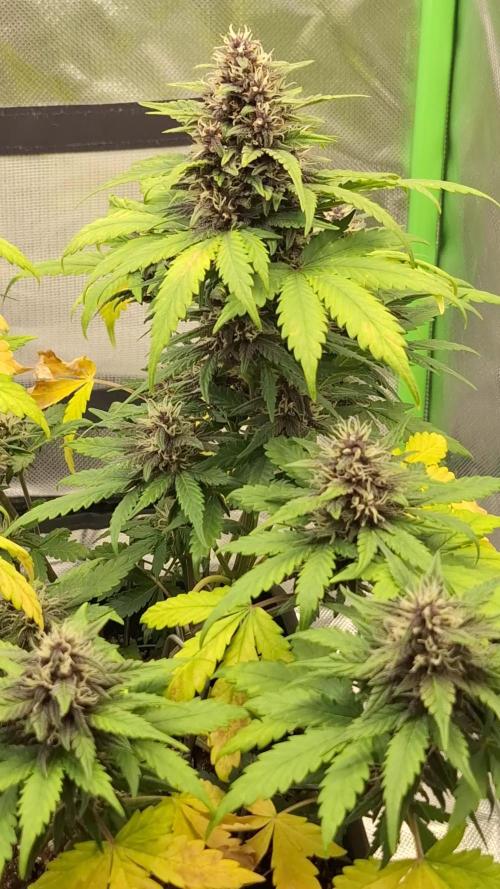
There has been quite a bit of stress from nutrient deficiencies and excess water due to my inexperience but with the lemon I am avoiding all of this, I am still satisfied because it is precisely from mistakes that we learn ❤️❤️

Processing
Likes
5
Share


@Growjardin
Follow
Start of week 7 and her time cas come to show us what she’s got! I’m excited for the next 7 weeks ahead.
4 days into flower I experienced a hellish bit of droop. She didn’t look well although healthy, she was under the weather literally!
24 hours later I realised she needed a flush of Ph’d water 1L to be precise after raising her pot from her tray a little higher and removing the excess water run off. I never achieved this amount of run off before normally very little so I guess she needed it as she perked up within a hour.
Will closely monitor and repeat 5 words in my head - DO NOT FEED EVERY DAY
Update - recovered and back to herself. What a way to start a week of flower. Lesson learnt. New week tomorrow
Likes
155
Share


@deFharo
Follow
Bienvenidos cultivadores de marihuana clandestinos y también a los que tienen la fortuna de no serlo!🖐️👨🌾👍
Este es un diario semanal de técnicas de cultivo y Bio preparados orgánicos caseros, los cuales llevo experimentando dos años en cultivos de marihuana interior.
Esta semana dos en uno:
1) ELABORACIÓN DE AUXINAS EN POLVO EXTRAIDAS DE ALUBIAS NEGRAS GERMINADAS.
La primera vez que hice este preparado y lo publiqué en GD fue en Octubre de 2019, lo volví a hacer en Junio de 2020 y llevo dos años usándolo, me ha costado el precio de 2kg de alubias negras.
INGREDIENTES:
- 1kg de alubias o frijoles negros, porque son las semillas que más concentración de auxinas contienen, comparándolas por ejemplo, con lentejas o cualquier otro tipo de leguminosas, también se puede usar granos de maíz.
Preferentemente, se deben usar semillas de alubias nuevas y cultivadas cerca de tu zona.
- Agua pura.
PROCEDIMIENTO:
- Se cubren las alubias con agua y se dejan a remojo durante una noche.
- Al día siguiente se separa el agua. Esta agua la puedes usar para riegos, contienen varios minerales.
- Se mantiene la humedad en el recipiente de las alubias por unos días, hasta que germinen. Se pueden cubrir con un paño húmedo y compensar la perdida de humedad rociando agua. Se debe observar que la mayoría de las semillas hayan germinado.
- Cuando las alubias, en su mayoría estén germinadas, se añade unos dos litros agua pura y se bate todo.
- Ahora filtramos con malla y escurrimos los restos sólidos. (Reservamos esta materia para un segundo lavado)
- Dejamos reposar el líquido durante dos días, hasta que se vea acumulación de materia en el fondo.
- Retirar la mayor cantidad posible de agua clara.
- Dejar al sol cubierto con una malla, hasta la completa deshidratación del producto.
- Moler y guardar en un sitio seco y oscuro, en estas condiciones puede ser efectivo durante años.
-- A los residuos sólidos recuperados del primer filtrado, les añado agua, los bato y los filtro con doble malla, lo embotello y guardo en el frigorífico (no más de 15 días, pues fermenta), lo uso para mezclas de riego. Los residuos finales se aprovechan, para aquellos que tengan tierra en exterior o hagan compost.
QUE SON LAS AUXINAS Y USOS:
- Las auxinas son un grupo de hormonas vegetales naturales, que regulan varios aspectos del desarrollo y crecimiento de las plantas, en la marihuana sobre todo en el periodo de crecimiento vegetativo y en el comienzo de la floración, después no hacen falta.
- Uno de los aspecto más característicos es el efecto que causan en el desarrollo del crecimiento radicular, promoviendo sobre todo la formación de raíces secundarias y adventicias gracias a la estimulación celular que provocan las hormonas.
- Otro aspecto de las auxinas es que distribuye su energía principalmente al ápice primario, reprimiendo el desarrollo de las ramas laterales, lo que provoca dominancia apical, pero esto es en el caso de plantas de marihuana sin corte apical y donde se quiere conseguir un cogollo principal monstruoso, su uso puede dar muy buenos resultados en cultivos SOG... pero ¿Qué pasa si hacemos un corte apical para promover el crecimiento de ramas laterales y que por ende, de buenos cogollos en cada una de ellas? Cuando se hace un corte apical al ápice principal las hormonas se reorganizan por la planta, ahora para mandar energía a todas las ramas y sus ápices, promoviendo el crecimiento!.. es un buen momento, después de un corte apical, aplicar auxinas para potenciar el proceso.
- Finalmente os dejo un gráfico de la actuación de las auxinas en las diferentes etapas de un cultivo, también se ve la importante relación con otras hormonas (Citoquininas o Ácido Giberélico) y los nutrientes claves que no deben faltar para finalizar todo el proceso hormonal. Las Citoquininas y el ácido Giberélico naturales se encuentra en el agua de coco, y es muy interesante conocer como actúan, en la quinta semana de este diario hablo sobre las propiedades del agua de coco.
Bien, una vez dicho lo anterior, yo uso las auxinas en polvo de las siguientes formas.
- Como mezcla del sustrato donde germino las semillas y donde mantengo las plántulas hasta el trasplante a la maceta definitiva, para potenciar el enraizamiento.
- Por la misma razón, lo espolvoreo sobre el cepellón de raíces de la plántula, en el momento del trasplante a la maceta final.
- Lo uso como enraizante de esquejes, impregnando el tallo de polvo antes de enterrarlo.
- 10 días después de realizar el producto, todavía tenía en la nevera un litro de auxinas líquidas, provenientes del segundo lavado de los restos de las alubias molidas... y entonces pensé que sería buena idea incorporarlo a un fermentado, y de aquí vienen esta segunda parte...
2) LACTO FERMENTO DE AUXINAS ENRIQUECIDO CON NUTRIENTES Y MINERALES
En esta ocasión, para la fermentación anaeróbica, elegí hacerlo con suero de leche como base de microorganismos (Ácido láctico, Bacterias Acidolácticas BAL y Lactobacillus) que harán el trabajo de solubilizar los nutrientes y quelatar los minerales, es un preparado muy eficiente para riegos y aplicaciones foliares, en este caso lo hice enriquecido, mezclando diversos materiales orgánicos con otros minerales. Puedes ver la lista arriba.
Sobre esto tengo que decir que después de dos años haciendo diferentes lacto fermentos, ahora los hago más específicos, sin mezclar tantos nutrientes, por ejemplo, si quiero solubilizar guanos, harina de huesos o algas, lo que hago es crear un lacto fermento con cada uno de ellos, en el caso de lacto fermentos con minerales, sigo preparándolo mezclando varios, este preparado es muy eficiente en quelatar minerales, y sobre todo en solubilizar fósforo.
PROCEDIMIENTO:
A veces consigo suero de oveja de un vecino que hace quesos, a veces hago suero de leche cruda de vaca y cuando no tengo ninguna de estas fuentes, hago suero a partir de leche pasteurizada, como el caso de este.
- Mezclo el suero (1l) con la melaza y la miel, lo caliento a unos 30°C.
- Peso los ingredientes. Como regla general, en el caso de componentes orgánicos usar del 8 al 10% como máximo, respecto a la cantidad de líquido. En el caso de minerales del 4 al 5%.
- Añado la levadura al suero con la melaza y la miel.
- Añado los componentes secos al barril.
- Añado el suero con la melaza y la levadura al barril y agito.
- Añado el litro de auxinas líquidas y agito bien.
- Lo cierro hermético con válvula de gases.
- Guardo el barril a oscuras al menos durante 30 días, pero cuanto más tiempo lo mantengas cerrado antes de abrirlo por primera vez el resultado será mejor.
La fermentación comienza violentamente a los pocos minutos dura varios días así y después se hace más lenta.
USOS:
Este es un preparado que uso como complemento a las auxinas en polvo, lo uso para hacer riegos o aplicaciones foliares de disponibilidad inmediata.
- Hago aplicaciones foliares en plántulas, en las primeras semanas de vida.
- Lo uso al comienzo de la etapa de crecimiento vegetativo en conjunto con agua de coco.
- Riego con este preparado después de hacer cortes apicales.
- Lo vuelvo a usar en riego en conjunto con el agua de coco al comienzo de la floración, y esta es la última vez que lo uso en un cultivo.
Una señal inequívoca de la actuación de las hormonas, es que las plantas son más susceptibles al fototropismo, esto se traduce en una respuesta mayor a la incidencia lumínica, las plantas, sus hojas y brotes se inclinan y se dirigen hacia la mayor fuente de luz. Yo lo he visto muchas veces después de aplicar auxinas.
y esto es todo por hoy... 😅
Hasta la próxima semana...
GRACIAS POR ESTAR AHÍ, CULTIVADORES!!🖐️👨🌾💧💦🌞💡
=================================
Likes
1
Share


@mauigrown
Follow
Week 8 is finally here! We changed up the nutrient feeding to the week 8 on the feed chart.
I am diluting everything at a 50-40% rate to keep EC within acceptable ranges of 0.8 - 1.1 EC.
I started adding Terpinator to the mix and I do notice a significant smell increase vs. without it. I am going to keep using this as I think it is a great supplement. I did figure out that even though on the bottle and on the specific feed chart, it says it is a light formula that will have minimal impact on EC and will not burn your plants at the recommended rates - it will!
First time mixing up my nutrients with terpinator, I had to dilute it because the EC was too high. I put the recommended amount in my mix, and checked EC and low and behold it was high. The next feeding I did a 50% dilution rate and that seemed to be ok if you are diluting your other inputs properly to compensate.
ALWAYS make sure your EC and PH are in check prior to fertigating your plants.
I am watching the trichomes on a daily basis and am looking to harvest sometime this week or next. I plan to dry it in the tent it is growing in as it has AC and good airflow. Once they are done drying, they will get trimmed up, lightly vacuum sealed and stored in the freezer.
Updates will be coming throughout the week!


Likes
4
Share


@HeitorLeao
Follow
Will be harvesting Anandamida in the next few days, I placed her inside to protect from the rain



Processing
Likes
7
Share


@Kushizlez
Follow
Day 38-45
(Day 39) Almost overnight, nearly a third of the white pistils turned red. Not sure if this is something do with environment but it wouldn’t surprise me if it had something to do with the feeding I gave it yesterday. Who knows
(Day 42) I was going to give a fat defoliation today but I’m second guessing myself. I might take a few of the leaves that are sitting on top of each other but that’s it. After that, I’m on cruise control until the end.
I’m watering in a gallon every other day and 1 day off when they look a little overwatered. All plants look happy and herm free. Bud size is still lacking overall. In my experience, buds don’t really swell that much after day 45ish so this is pretty much it. Can’t say I’m too happy but I’m certain the quality will be on point.
(Day 43) I’m seeing a little more fade each day now. It’s almost pinkish right now.
(Day 45) I’ve been taking a few leaves per plant every couple days or so. Once I can see that almost every budsite has adequate light I will stop.
Just for good measure, I’m going to give a final feeding of seaweed extract. We still have 2 weeks of fattening up to do and they could definitely use a K surplus. And since this is a water soluble nute nothing is lingering and breaking down for more than a few days.
Earlier in the season I had a seedsman white widow and a local m39 plant I was going to flower if I got less than 4 female BBB’s. I was lucky enough to get 5 so I gave the insurance 2 plants to a family member. M39 is now done after 60 days of flowering. And the white widow, which was really stunted is going another 10 days at least. Both plants were flowered in a closet under 2 cheap amazon blurples totaling about 200w. They were in 1.7 gallon pots with amended soil nearly their whole lives. They were only top dressed once around day 30 of flower. M39 must be a low feeder because it really didn’t get any deficiencies after it left my hands. It was consistently the most vigorous plant in the tent during veg too. From what I understand, it has the classic fruity m39 smell and because it’s not grown with paclobutrazol it’s not freakishly dense. Awesome. I will post some more pics and report on the smoke once it’s dried.
Likes
120
Share


@DogDoctorOfficial
Follow
The Harvest Prelude:
After a patient wait and 48 hours of darkness, the moment arrived. The Tropical Tangie Lego Ninja, standing proudly like a silent guardian, was ready for the grand harvest. The sound of each cut echoed through the grow space, reminiscent of felling a mighty tree. The compact structure of the buds was awe-inspiring, a testament to the ninja's disciplined growth.
The Lego Ninja, like a stoic warrior, was then hung upside down, beginning a two-week drying ritual. Maintaining an ambient temperature of around 21°C and a relative humidity of 60%, this slow-drying process allowed the buds to retain their essence, preserving the symphony of terpenes and cannabinoids.
The trimming phase unfolded like a fragrant masterpiece. Each bud, adorned with a glistening layer of resin, transformed the trimming process into a sensory delight. The zesty aroma of oranges enveloped the room, a tangible expression of the tropical lineage. The compact buds made every snip a careful dance, revealing an abundance of frosty trichomes.
The moment of reckoning arrived with the scale's unveiling. The Tropical Tangie Lego Ninja, from a single plant, bestowed upon me 309 grams of dried medicine. Each gram was a treasure trove of cannabinoids, a promise of euphoria and relief. The sheer compactness of the buds translated into a concentrated potency that left me in awe.
In parallel, the clones, nurtured with equal care, showcased a fascinating divergence. A twist in the tale unfolded as the intense oranges of the mother transitioned into vibrant tangerines. This unique expression, I believe, was a testament to the clones weathering a summer heatwave differently, bringing forth a distinct personality.
The clones, resilient and generous, gifted me a bountiful 549 grams of pure joy. This now my keeper of the garden, an embodiment of the Lego Ninja's legacy. The harvest dance, though familiar, carried the nuances of tangerine zest, a refreshing twist that left me eager to explore its intricacies.
Both harvests shared a common thread—their resinous abundance. The trim bin, akin to a treasure chest, gleamed with golden trichomes and fragrant joy. Sticky fingers became a badge of honor, a tangible connection to the resinous richness that filled the room.
Shout Outs:
No harvest report is complete without expressions of gratitude. A special nod to @DutchPassion_Official for crafting the genetic marvel that is the Tropical Tangie Lego Ninja. Their expertise paved the way for this epic journey, and I tip my hat in acknowledgment.
In conclusion:
As the dust settles on this epic harvest saga, my heart brims with happiness and excitement. The Tropical Tangie Lego Ninja has proven itself not just as a plant but as a living masterpiece. Stay tuned for the smoke report, where we delve into the true essence of this botanical ninja's legacy. Until then, fellow cultivators, may your gardens flourish, and your harvests be as bountiful as the joy they bring.
As always thank you all for stopping by, for the love and for it all , this journey of mine wold just not be the same without you guys, the love and support is very much appreciated and i fell honored and blessed with you all in my life<3 <3 <3
#aptus #aptusplanttech #aptusgang #aptusfamily #aptustrueplantscience #inbalancewithnature #trueplantscience
With true love comes happiness <3 <3 <3 Always believe in your self and always do things expecting nothing and with an open heart , be a giver and the universe will give back to you in ways you could not even imagine so <3 <3 <3
Friendly reminder all you see here is pure research and for educational purposes only
<3 <3 <3 Growers Love To you All <3 <3 <3
P.S- I must extend my sincerest apologies for the missing video reports. Regrettably, Grow Diaries is still facing some technical issues that are preventing me from uploading them. Rest assured, as soon as the situation is resolved, I'll share those videos to give you an even closer look at this fascinating journey. or in my case apparently GD dont let me do uploads over 100mb with is super small file if you working and editing videos , doing my best here to upload them all but GD is not making my life easy on this <3 <3 <3


Likes
8
Share


@RFarm21
Follow
Semana 25 março - 31 março
27 março - feeding day
30 março - feeding day:
Bio bloom 2ml; topmax 1ml; bio heaven 2ml; bio grow 1ml; acti-vera 1.5ml pH 6.3 1.1L de água
Likes
23
Share


@BB_UK
Follow
Such a beautiful beast! Hybrid of beauty and the beast!
What you know about rolling down in the deep 👽 this girl is superb! She popped up first flowered first and is now forming fat frosty flavour filled batons. The smell is a dream, getting some tropical scents flowing off her! Opening my tent is like opening the doors to Willy wonka factory! I’ll begin to lower the humidity in the final few weeks! Loving how all my anxiety in the past had me keep it at 50% but now I see I can be comfortable with a little more as I’ve seen some people at 83% near the end but I won’t be doing that! Thanks for stopping by buds and chuds 😎🤩
Likes
24
Share


@Theia
Follow
The bean was soaked in a 25c solution of humic acid calmag and more roots for around 12 hrs then put into a paper towels for 18 hrs.. taproots came and they went into a jiffy..
As they get introduced to some photons I will give some fastplant spray..
Details...
Growing Jack Herer feminized seeds (indoors and outdoors)
As for cultivation, Jack Herer is a reasonably thick and productive plant that produces enormous buds. Make sure that the branches are supported to prevent snapping. Most Sativa plants should be controlled indoors by training or pruning a little. She is pretty rapacious when it comes to nutrients but, in return, offers impressive results under the right growing conditions.
Outdoors, Jack Herer prefers warm, dry climates such as the Mediterranean coast, where she will give outstanding results with large, productive trees. However, you would be well-advised to use a greenhouse if growing in a cooler, wetter region. In addition, she does not develop a strong odor until after harvest and good ripening, which makes Jack Herer an ally of choice in terms of discretion.
Jack Herer's genetics achieve excellent yields indoors or outdoors in the right conditions.
Flowering time
Flowering time takes between 60 and 70 days when grown indoors.
Plant height
Jack Herer seeds grow into relatively compact strains. Its height indoors is 90 to 130 cm, and typical sizes outdoors range from 130 to 180 cm.
Jack Herer feminized yield
Indoors, the maximum yield is 500 to 600 grams per m².
Yields outdoors are generally higher, with 600 to 700 grams per plant.
Effects of Jack Herer
First, the smoke is heavy and lingers in the mouth; you won't want to light yourself up a cigarette right after smoking Jack Herer. This bud is perfect for chilling with friends having a little fun. For film lovers, it's the ideal choice! The high that lasts a little is sure to keep your interest in the plot as long as the stone nails you, even seeing the time pass.
The effect is a pleasant balance between a full-bodied stone and a cerebral high, although the stone is powerful and dominant. Jack Herer will be suitable for daytime smoke to improve your mood and feel relaxed. However, the buzz won't bring on couch-lock if you need to get things done.
Despite low levels of CBD (0.8%), Jack Herer is highly rated for stress, anxiety, depression, pain, fatigue, migraine headaches, and appetite.
Side effects
Users frequently report that Jack Herer can make them feel dehydrated, particularly in the mouth and eyes. So make sure you have plenty of fluids to hand to combat this side effect.
Smell and taste
The Haze taste is excellent, a flavor that takes different paths depending on the seeds. But very often, you will find the typical Indica aromas which mingle with the sweet notes of Sativa, quite fruity, lemony with earthy and skunky undertones. In addition, you may experience sweet nuances of fruit reminiscent of sandalwood or even pine forest smells.
Jack Herer has become famous for its medicinal benefits over the years. The strain is straightforward and will produce a good yield if grown in the right conditions. Jack Herer produces copious quantities of THC, so much that you can practically see the branches glistening with the sticky resin.
Origin
Jack Herer was created in the Netherlands in the mid-1990s as a tribute to the infamous activist and author. Consisting of Haze x Shiva Skunk x Northern Lights #5 genetics, she quickly rose on the bestsellers list in Dutch coffeeshops for being a reputable and reliable medical-grade variety.
Thanks for looking.
I'm excited to see how these strains grow..
💚🌿

Likes
8
Share


@Froggman
Follow
The ICE is almost done; the NL doesn’t even seem close. Interesting since ICE sprouted a day later than the NL.


Likes
84
Share


@Doc_Homegrow
Follow
I removed all of the LST strings, to let her grow more freely in her last week. She looks amazing and i am very happy with my first grow. I will harvest her next week or the end of the week. I won't do flushing, because I only use organic fertilizer and want her to grow till her last day.
Some crazy Things are happening right now. She ist growing new buds on her buds! I decided to give her another extra week, just to see how this experiment will turn out.