Likes
Comments
Share
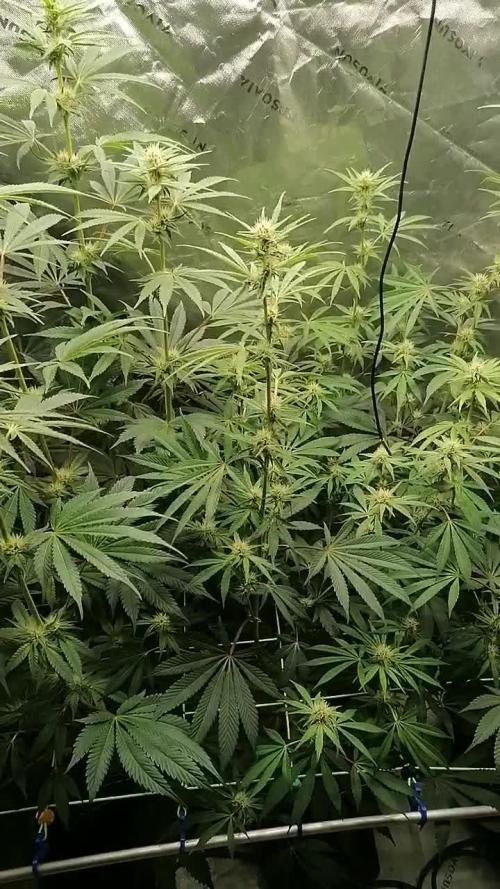
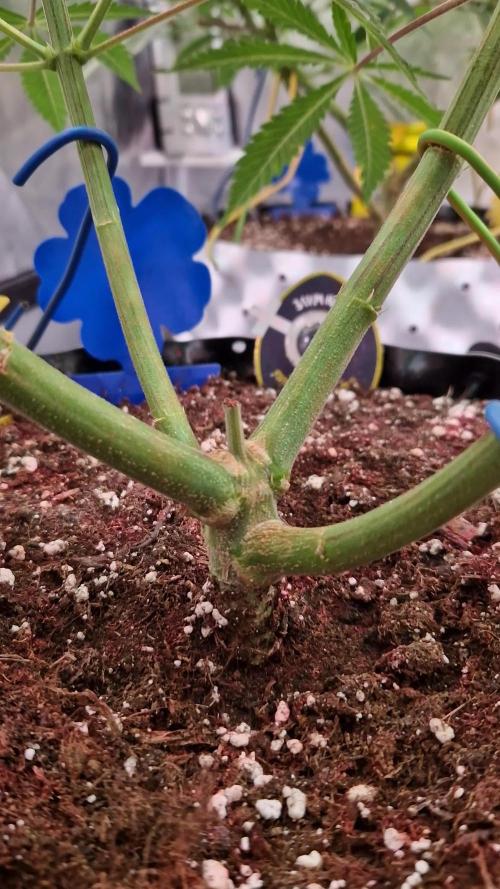
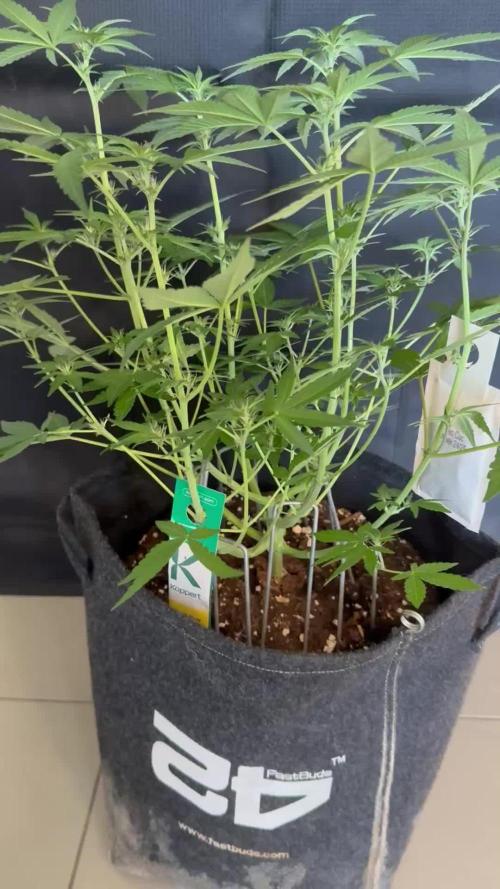
Vamos familia, actualizamos la primera semana de floración de estas Sagrada amnesia de Seedstockers, salieron las 5 de 5, 100% ratio éxito. Aplicamos varios productos de Agrobeta, que son increíbles para aportar una buena alimentación a las plantas. Temperatura y humedad dentro de los rangos correctos dentro de la etapa de crecimiento. La tierra utilizada es al mix top crop, por cambiar. De 5 ejemplares seleccioné los 3 mejores para completar el indoor y trasplanté directamente a macetas de 7 litros, cambie el fotoperiodo a 12/12 y también aplique una buena poda de bajos, se ven bien sanas las plantas, tienen un buen color y progresan a muy buen ritmo por el momento, ya marcaron preflores. Agrobeta: https://www.agrobeta.com/agrobetatiendaonline/36-abonos-canamo Hasta aquí todo, Buenos humos 💨💨💨
Likes
31
Share
this lady has stayed very short but bushy , she is drinking the least out of the rest and bud production has been minimal so far , i gave her a light / last defoliation this week and she has already recovered , purely too open her up too the available light , i really do hope she very soon steps up a gear with bud production otherwise i dont think there will be very much on the scales at the end , again have had absolutely no issues with this plant at any stage and she certainly has had more than enough light on her too produce , so lets watch this space and see what she can do ,
Likes
98
Share
I guess I first have to extend a big thank you to James and the folks at RQS. The genetics of their “Northern Light” did not disappoint and this was a no fuss grow across all categories. This will be the only time you hear me refer to Northern Lights in the singular. It’s kinda like calling a “pickerel” a “walleye” - you just don’t do that up here😉. She took well to training, showed no signs of lockout or deficiency, and we were at the top limits of botanicare’s recommended feeding schedule the whole time. I’d call this typical NL - the scent wasn’t overly powerful, she grew somewhat squat and while I’m actually very surprised at the final weigh (thought it would be much less), the whole grow was typical of the strain in my experience. Possibly her biggest limiting factor was simply space constraints. The photos pretty obviously demonstrate that she got really crowded out by the neighbouring kush and I wouldn’t be surprised at all if she’d have done a little better with some more room. That said, what isn’t “typical” are the effects. RQS touts this as a cup winner and I can see why. Had the opportunity to sample a little and WHOA! She Hits with a lasting, cerebral and euphoric effect that starts as a light, happy high. Not a crippling or dulling effect at all. Just everything you’d expect from a well rounded strain in general. Perfect. I almost wanna describe it as a classic sativa but I’ve been smoking nothing but a pure indica for so many months now that anything different is gonna feel that way 😂. Thank Christ for some new stash diversity: 1:! Many, many thanks to all those who cared to comment, suggest or converse on this one. It’s been a pleasure hearing from everyone and I did what I could to keep ‘er interesting : 1:. Next up will be a couple autos on RDWC before the summer outdoor season (and a significant indoor upgrade) is upon us. That said, I still might be outta touch for a little while due to “life developments”. All the best with that quality smoke folks😉: 1:😜! Seeya on the flip side.👊😎0
Likes
96
Share
The growing cycle it self worked out as expected, except that the pH-level was way off from where it should be, and I found out a bit too late. Because of this the outcome of the harvest didn't say much about the potential of this strain, but as soon as I got enough time and space, she will get a new chance to shine. ---------------------------------------------------------------------------------------------------------------------------------- 2018-02-27. This is my review / smoke report of this lovely cbd flower. There are rock hard buds and almost no give at all, even in those smaller buds. When you grind it the scent will appear more than just smelling on the buds. It smells a little weak of grass, hay, pepper, some spicy and sweet. The taste is grass, soil, pepper and exceedingly sweet fruit. The effect is directly, the thc feeling above the eyes and in the forehead. A little light ringing in the ears and a dry mouth. After 10 minutes, the cbd kicks in and one feels that the neck and shoulders begin to relax and the feeling continues down over the back and chest down to the stomach. A calm and well-being is found in the body. After 15-20 minutes it is down in the legs. But in a strange way, you also feel like doing something, or meeting some friends and just sitting and talking about fun things. It is a very well-balanced strain and it fits in all sorts of contexts. I also think it might be good for someone who needs something that makes you more social and dampens enough anxiety and rushing thoughts effectively. I think this is a lovely strain and I highly recommend it to everyone but especially for more inexperienced people who want to soften with a pleasant medicine.
Likes
11
Share
Defoliated this week. Ladies are filling back in nicely. Tons of bud sites. Very happy with this batch so far! Nutrients every watering this week. These girls will now get one watering of just ph water, then the next watering will be the last watering with nitrogen. After that, we kick the bloom phase into overdrive. They will get micro, bloom, and advanced big bud. Every watering, for the rest of their lives. Grow-5ml Micro- 5ml Bloom- 5ml Recharge once a week.. Very much looking forward to these ladies! I have 4 of the auto cheese by seedsman running and they are all identical phenos! Looking great!
Likes
16
Share
Likes
6
Share
Flipping these biatches today, gummy buns have coped well with my not so dialled in room!! Give them a defol gotta make sure there’s no light leak etc and we’re ready to go✌️🏼
Likes
4
Share
Likes
3
Share
@DoMoNe
Follow
Added Hphonics nutes to autopot system. Bent branches, took some leaves off. Timelapse added. Might add pics for the week, but dancing flowers is always a good plan b...
Likes
6
Share
Jardineros una semana más dándole al lío! Ya queda poco para cortar Todas las plantas tienen su limpieza de raíz y están listas para que las pongamos a secar
Likes
1
Share
Turned off IR @ nights Red wigglers (Eisenia fetida) are highly beneficial. They are considered an ideal choice for "no-till" or container-based organic growing because they live in the upper layers of soil, feeding on organic mulch rather than the plant's root system. Red wigglers accelerate the breakdown of organic amendments and produce high-quality, nutrient-dense worm castings directly in the root zone. Clover is another exceptional component of an organic rhizosphere, offering a sustainable, self-sustaining alternative to synthetic nitrogen fertilizers produced via the energy-intensive Haber-Bosch process. By forming a symbiotic relationship with Rhizobia bacteria, clover converts atmospheric nitrogen N2 into ammonium NH4, providing a steady, slow-release nutrient source that enhances soil health and reduces environmental impacts. Red clover offers superior nitrogen fixation and biomass production compared to white or yellow clover, making it the premier choice for maximum soil vitality, particularly for improving soil structure and providing a high-volume nitrogen credit for subsequent crops. If it is fully functional and efficient soil, the rhizophagy cycle is far superior long-term than any synthetic delivery when it comes to preventing deficiencies, not because it's "better," per se. The medium will require a very high CEC to make it to harvest without re-fertilization. The rhizosphere acts as a dynamic, interactive exchange where plants and soil microbes trade resources based on immediate needs. When a plant lacks a specific nutrient, it changes its physiology and releases specialized chemical cocktails—root exudates—into the surrounding soil. These exudates, which include sugars, amino acids, and organic acids, serve as a "shopping list" to attract specific microorganisms, which in turn return higher levels of desired nutrients. There is nothing in comparison to synthetic delivery, which causes plants to stop producing exudates, effectively "starving" the beneficial soil life, over time turning the soil barren and void of microbial life. Responsible use, applying the right amount at the right time, can minimize these negative effects. Relying solely on synthetic fertilizers without replenishing organic matter is what typically leads to exhausted soil. The use of synthetic fertilizers can utilize the Cation Exchange Capacity (CEC) of the soil, but without a robust rhizosphere and active microorganisms, the efficiency of this process is significantly reduced. This makes synthetic growing more difficult to prevent deficiencies overall compared to an efficient organic living soil with a robust rhizophagy cycle, as there is no "one size, fits all" when it comes to different nutrient profiles of strains/genetics, making it trickier to "guess" and prevent creeping deficiencies. CEC does not contribute towards EC. Add more CEC using biochar, problem solved. If you keep pH between 6.3 and 6.7, hydrogen is exudated to cycle the medium's CEC for its needs. Keeping the pH between 6.3 and 6.7 creates an environment where plants release H+ to displace positively charged nutrients (like Ca2+, Mg2+, K+ held on soil particles or within artificial media this cycle through nutrients via the medium's Cation Exchange Capacity (CEC) Microorganisms generate a stable potential of approximately 0.5 V EC. The rhizosphere creates its own food, similarly to chelation, using 1000's of varying combinations to create its own food. Start to finish, just add water. Eventually, more materials will need to be added at the beginning of each new grow, but very attainable to go from seed to harvest without ever fertilizing, regenerative cultivation. ATP is king above all else when it comes to biomass accumulation. Cellular root respiration and cellular respiration are essentially the same biological process, the breakdown of glucose to create usable energy (ATP) in the presence of oxygen, just taking place in different parts of the plant. Synthetic (salt-based) grows have significantly lower levels of total rhizosphere respiration, often referred to as root-zone activity, compared to organic living soil grows. While the plant roots themselves may respire in both systems, the surrounding soil ecosystem in a living soil setup is vastly more active, teeming with bacteria, fungi, and beneficial microorganisms. 2 pools of ATP, it won't double in growth buuuut, but improving root respiration by ensuring high oxygen in the soil is crucial. Good aeration ensures roots can fully utilize glucose to generate the ATP necessary for nutrient uptake, leading to healthier and more productive plants, even if growth isn't exactly doubled. The ATP created using root respiration is dedicated to rootzone growth; the ATP created using regular cellular respiration in a synthetic system would have to dedicate a lot of ATP to the roots when there is little or no root respiration. It's true that there is less of an initial ATP cost in breakdown when nutrients are already in their final form (synthetic), but you lose a solid chunk of ATP when the entire plant is reliant on cellular respiration alone; a large portion of ATP is dedicated to root zones for "forced" (active) nutrient uptake. Making it overall less efficient, even if the initial cost of breakdown is higher. If that makes sense. Oxygen is of critical importance when growing in living soil compared to synthetic methods because it supports the metabolic needs of the microbial, fungal, and insect ecosystem, rather than just the root respiration required by the plant itself. While synthetic grows can survive in lower-oxygen environments with precise mineral feeding, living soil systems rely on aerobic microbes to decompose organic matter (microbial mineralization) to create plant-available nutrients, which is an oxygen-intensive process. While a specific fair percentage is difficult to guess, my experience points to a massive, compound difference between the two methods and the amount of oxygen required. All the ATP spared is used on more biomass, not only that, but the extra root respiration can achieve a much higher CO2 compensation point naturally than you could with synthetic and atmospheric CO2 alone. As a plant grows faster and increases in size, its demand for nutrients to support that growth increases, requiring a higher rate of nutrient uptake. As plants enter phases of rapid vegetative/floral growth, their metabolic demand for nutrients increases exponentially. Without a robust buffer zone—whether in the soil (cation exchange capacity) or in a hydroponic reservoir—deficiencies will occur rapidly because the instantaneous demand for specific nutrients can quickly exceed the rate of supply. A growing body of evidence suggests that organic living soil provides superior long-term soil health and environmental benefits compared to synthetic fertilizers, which are often criticized for promoting a cycle of dependency and degradation. While synthetic fertilizers offer short-term convenience and high yields, they often come at the expense of long-term soil health, sustainability, and increased corporate control over growers/ farmers. Organic living soil, while slower and requiring more care to establish, creates a sustainable, resilient, and, ultimately, more fertile environment. We don't grow; we facilitate energy conversions. Once all water is removed, approximately 95% to 97% of a plant’s dry matter consists of carbon, oxygen, and hydrogen. These three elements form the structural backbone of all plants. Corporate interest sells you the other 3-5% NPK & all the rest in RATIOS! Why not throw the 3-5% in a pot, and focus your energy on the other 95-97%? Indigenous Amazonians created, or at least significantly enhanced, the fertile, dark soil known as Terra Preta de Índio (Portuguese for "Indian Black Earth") by incorporating biochar and other organic materials into the soil. This anthropogenic (human-made) soil technique, which dates back roughly 2,500 to 8,000 years, allowed ancient civilizations to flourish in regions with naturally poor, acidic, and nutrient-poor tropical soils.
Processing
Likes
3
Share
Well these three girls had a rough week to say the least. Two of the girl's became an afternoon snack for Pebbles our pet rabbit lol. He chewed on the main stalk of each, and ripped the what im going to call bark. I used vaseline to keep out disease and pests and also placed 3m transpore tape (medical tape) on to "replace" the bark so to say. Switched to transitional bloom nutrients by lowering the amount of grow pro and introduced monster bloom and nirvana.
Likes
18
Share
@valiotoro
Follow
Easy trim✂️ I have two different pheno💥 Pheno 1 : smell is sweet fruit & candy 🍭🍉🍌 Pheno 2 : green sour apple 🍏 absolutely divine🤤 The buds are a little bit less dense but very good quality from Zamnesia💥 See you in 1 month for the smoke review Take care 😎
Likes
11
Share
Servus Moin! Die Blucci OG hängt zwar noch ein wenig hinterher, aber sie kam diese Woche gleich mit in den großen Topf und kann gleich richtig durchstarten.
Likes
8
Share
Day 70: She now starts to develop her buds. Ill keep the feed constant and let her dry out a bit between waterings. Day 74: She developed some brown spots. Flushed and gave her a new feed. Dont now whats going on here. Hopefully it stops and don't progress further.
Likes
13
Share
@russrahl
Follow
End of week 4 and things are still moving along despite a few hiccups. Ended up over feeding them at the end of last week and this week we have dropped there ppm down to the 450 ppm mark untill they come around. Didn’t really do to much damage except burn my leaves a bit and maybe slowed there growth a bit this week. Got a laser temperature gun for another project and I’m now able to check my canopy temperature too and it’s great. Canopy sits around 24-25 in the center of the screen and between 21-23 on the rest. Got around 65 D.L.I on the canopy's tallest area in the Center of the screen directly under the light when it passes over. The 1000w HPS is on the rail mover so it’s keeping things from burning and getting too intense. I recently added 2 x 1000x(180w actual) LED “Blurple” lights I had kicking around not been used so I through them in the tent to add some different light spectrums that the HPS doesn’t have. Just a little added extra kick for them, why not rite?...lol been struggling to keep humidity up across all my tents really, got the bare minimum everywhere and only one 1gal humidifier to run in the big room. Temperatures were cold the last week outside in the -20c range so my basement was a bit cold despite the one baseboard heater, which makes things even drier! Lol There has been no need to use either of my air conditioners in my tents for a month or so now even with the 2 x 1000w HPS lights in tents running side x side in the same room. Which is good cause they also drastically drop my humidity, the lights and the air conditioners...ugh. Lol well that’s if so far for now, Cheers 💨
Likes
19
Share
This was an amazing firat grow and I’m not done yet love mainlining. Depending on how these dry and the yields come out I may just do lst and get about the same amount of yield out of the grow but I still have another week or so till I chop the others