


Likes
Comments
Share


@GoodTimesOrganics
Follow
Die Pflanze entwickelt sich wunderbar 😁
Durch das Supercropping geht sie schön in die Breite und entwickelt wunderschöne Blütenansätze.
Leider habe ich einen leicht Thripsbefall im Zelt und die Raubmilben plus Florfliegenlarfen sind schon unterwegs.
Pestkontroll gehört zum Biogrow eben dazu.

Likes
14
Share


@Dieselnutz
Follow
Day 74 of flower, all the colas are beginning to topple over due to how dense n chunky they are.the sample nug takin at 9 weeks was excellent super gassy skunky LOUD! Pretty sure im gonna take them within the next few days.
Likes
6
Share


@Muravushka
Follow
text to edit nbvnbvnbvnbvnbvnbvnvnbvnbvbbbbnjbmhgdhgshcnkbvfxvvb,nmmbvcxcvbncxcvbnbvcvbnmtext to edit nbvnbvnbvnbvnbvnbvnvnbvnbvbbbbnjbmhgdhgshcnkbvfxvvb,nmmbvcxcvbncxcvbnbvcvbnm

Likes
19
Share


@DrLaggis
Follow
🌱 Day 57 - Start of the Second-to-Last Flowering Week 🌱
Hello, Grow Friends!
Today marks the start of the second-to-last flowering week—Week 9 overall, and Week 5 of flowering. 🌿 I’m getting more and more excited as my first grow nears its end. As I approach harvest, I’ve decided, based on my research, to stop feeding nutrients and stick to just pH-adjusted water for the final two weeks. 💧⚖️
Watering Routine:
I’ll keep the same watering schedule—1 liter every two days, which is about 10% of the pot volume. 🌱💧 This should be enough to flush out the remaining nutrients, ensuring a clean finish for the plant.
Temperature & Humidity:
The temperature remains stable between 19-23°C, which I believe is ideal for this stage of the grow. 🌡️🍂 No more high temperatures to worry about! The humidity is fluctuating between 45-58%, and I’m keeping a close eye on it to stay below 60%. 💧🔍 Everything seems on track for now. 🌿
Plant Health & Growth:
The plant still looks very healthy overall. 🌱💪 However, I’ve noticed that in the past three days, there haven’t been any visible changes in the size of the buds. 🤔 It could just be that I’m not seeing the growth clearly, but the only noticeable change is the daily opening of new flower calyxes. 🌸
Harvest Preparation:
I’m already getting my equipment ready for drying after harvest. 🛠️ Once it’s time to cut, I’ll be hanging the plant to dry for the first 10 days. 🌿✂️ I want to make sure everything is set for a smooth drying process.
Stay tuned for more updates, and as always, daily photos of the plant will be posted! 📸🌱


Likes
73
Share


@PEAKYPLANTERS
Follow
Hello everyone ,
masters and beginners .....
my Dutch daughter has been able to satisfy me great!
autoflowering with maximum yields and rock-solid buds!
the smoke of her? sweet, tropical and beautiful powerful!
From true Dutch thoroughbred can give a lot of highs

Likes
5
Share


@Kirsten
Follow
Orion F1 Liquid Nutrients grow.
31.5.25:
Well, this week has been pretty dull 😅 I was hoping to have something to report on by now. I guess maybe next week 🤞
I've just been keeping the pot watered. I watered twice this week, with about 2l of dechlorinated water PH'd to 6.4. Once;
I used 1ml/2l of Xpert Nutrients Cal-Mag amino acids, the other watering I used .15Tsp Ecothrive Biosys.
☆ Xpert Nutrients PH down, up to 1ml.
☆ Ecothrive Neutralise 1 drop per litre from the 1ml pipette, which is attached.
This is my dechlorinator.
I am planning on either topping or FIMing both plants. So I'm hoping that purgatory won't last much longer here 🤞
Quite a boring update, I know, but thanks for stopping by and hanging out! 💚✌️🍃😊🌱

Likes
21
Share


@BB_US
Follow
Week went well with my ladies. The Colorado Cookies are very stinky of skunk and earthy aroma. Loaded with trichromes and crystals covering from head to toe. I put 1 banana blaze outside to finish her cycle. 🌿💚💨🍪

Likes
37
Share


@MrJones
Follow
Cream Mandarine XL-Auto #2 / FOOP Nutrients
======WEEKLY GOALS =======
🌞Environment - 80F and 50%Humidity - using Humidfyer as needed.
💧 Feeding - Feeding with FOOP Canna Organic Nutrient Line
🍃Training / Keeping Stems Stable and Strait
🕷️ IPM - Will be using Green Cleaner" 1 OZ per Gallon, and CannControl from Mammoth alternating between product each month for Integrated Pest Management.
🔅 Vegetation & Flower Kingbrite 240W QB288 v3 LM301H 4000k+ 660nm Red x2 - Maintianing 575 PPFD
========Plant Update===========
🌱 Plant - Week 6 started today, the plants are doing great very healthy, will need to do another IPM treatment in the mornting.
===========================
▶️Monday 03.29.21 / These girls are re well into flower, they are soundly in the 9/10 week glide path, they should start building up this week, may need to remove a few more leaves.
▶️Tuesday 03.30.21 / These look great every day, and have gotten too tall!! Feeding about 30 ounces per day.
▶️Wednesday 03.31.21/ Decided to cut the FOOP to 60%, feeding 30 ounces per day.
▶️Thursday 04.01.21 / Decided to cut the FOOP to 60%, feeding 30 ounces per day.
▶️Friday 04.02.21 / Decided to cut the FOOP to 60%, feeding 30 ounces per day.
▶️Saturday 04.03.21 / Decided to cut the FOOP to 60%, feeding 30 ounces per day.
▶️Sunday 04.04.21 / Decided to cut the FOOP to 60%, feeding 30 ounces per day.

Likes
20
Share


@RastaMouse
Follow
Ok my first grow on my new rdwc system made by urban Culture very exited to move to this I have done a lot of research and I know I will make mistakes but hopefully non too big. This is a step up from my Wilma 4 pot. I can get more in the system water wise and Easyer to clean out. Any advice or tips with rdwc feel free to comment 😎😊
Likes
Comments
Share


Processing
Likes
12
Share


@n00bs
Follow
22/05 Riego con agua pura antes de etapa de floración. Ph 6,5. Algunos signos de sobre fertilización, espero que baje con el riego actual.
26/05 Disculpas por las pocas actualizaciones, semana muy ocupada. Mantenemos riego con solo agua por etapa inicial de sobrefertilizacion en 3 plants. Despues de 2 dias de ultimo riego veo mejora, mañana foto de estado actual. PH 6.5. Aplicado nuevo LST.
Likes
13
Share
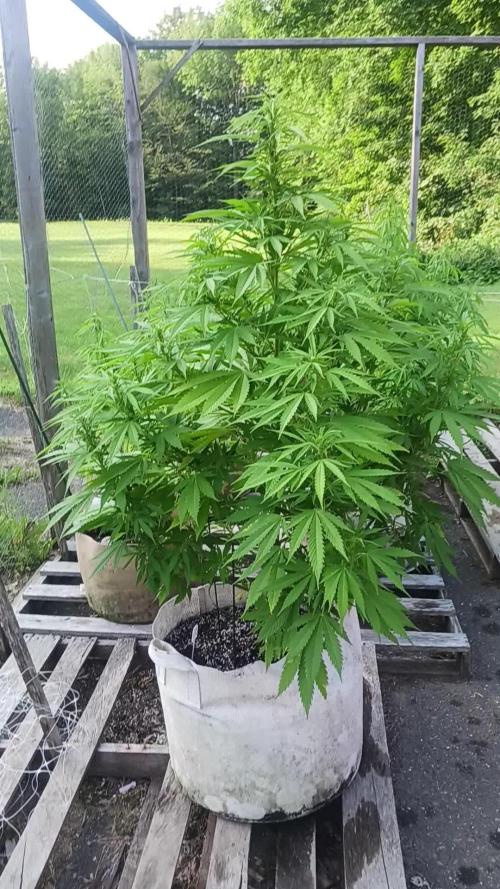

@masterofsmeagol
Follow
7/27 My phone ran out of storage and wouldn't let me take a video. I tried deleting several other videos bit that didn't work either. Finally I wad able to upload a few RANDOM pictures from the "website" camera. But no video. Everything looked so beautiful tjis morning too. Not watering was the right choice. I defoliated a couple septoria leaves on the reveg 10th planet that wad about to receive its third dose of Plant Doctor. The chem dog #4 and mk ultra this will be their second treatment. Seeing the positive impact of the product and finding a few septoria leaves I decided to treat every plant in the garden with plant doctor. I'm still going to do the diy Dr. Zymes but Plant Doctor had been working good and I want to suppress as much as possible. Everything looks great. I started by giving the thirstiest plants a half gallon of water. I then did a root drench of 3tsp per gallon on every plant but the 10gal. A gallon of solution was used on each plant. I really feel like this is a good mood. Previously AFTER I applied Plant Doctor the plants would have a noticeable positive effect shortly after. I'm hoping this will be the case here. I think stretch has stopped. I have one special Kush that has buds already but EVERYTHING is in early flower. I'll fix the phone and get a video up there.


Likes
31
Share


@GrandmasBoy2021
Follow
Week 13,
Week 13 is the final week! Woohoo! I used some ClearEx at the start of the week to help the flushing process. I am beyond happy with the results. The buds are big and dense! Her flowers are nice and crystally and she has a nice strong sweet smell.
Enjoy the little videos :D Let me know if you have any questions. Happy Growing Growmies!


Likes
252
Share


@Tropicannibis_Todd
Follow
💩Alrighty then Growmies We Are Back At it 💩
Well folks we just finished up the last run and so we are back to do it all over again 😁
So what do you say we have some fun 👈And what we got here folks is a Strawberry Blast 🍓 🍓 🍓 🍓
Strawberry 🍓 Gorilla , Strawberry 🍓 Banana 🍌 and there new release 🍓 Ztrawberriez 🍓 from FastBuds
And we also got Strawberry 🍓 Cola from Exotic Seeds
👉 Well we are doing great so far for day 21 👈 So i have begun to pull them over and do some LST on all 4 plants 😮
So it's been another great week so far 👌 👉 just started there nutrients regiment 👈
FC4800 from MarsHydro Lights being readjusted and chart updated .........👍I've added a RU45 to the mix 👍
www.marshydro.ca
👉I used NutriNPK for nutrients for my grows and welcome anyone to give them a try .👈
👉 www.nutrinpk.com 👈
NutriNPK Cal MAG 14-0-14
NutriNPK Grow 28-14-14
NutriNPK Bloom 8-20-30
NutriNPK Bloom Booster 0-52-34
I GOT MULTIPLE DIARIES ON THE GO 😱 please check them out 😎
👉THANKS FOR TAKING THE TIME TO GO OVER MY DIARIES 👈

Likes
5
Share


@Xabii
Follow
49 Days!
Lost a day of timelapse footage, found a temporary fix tho, should not happen again.
The plant stretched a little and is full on on flower.
This will most likely end up as a single big bloop of bud again, sadly did not stretch as much as I liked it to be.
Overall a good week.
Spoiler: added lights to the bottom to get more light inside the plant at the first day of week 8, more on that next week.
Values are average of the day.
DATE - EC(us/cm)
20250705 1373
20250706 1362
20250707 1346
20250708 1378
20250709 1333
20250710 1331
20250711 1353
DATE - PH
20250705 5.67
20250706 5.67
20250707 5.90
20250708 5.95
20250709 6.17
20250710 6.15
20250711 6.13
DATE - ORP (mV)
20250705 -8
20250706 62
20250707 19
20250708 43
20250709 21
20250710 -1
20250711 -4
DATE - °C - RH% (Tent Temp/RH)
20250705 24.8 46
20250706 25.1 55
20250707 24.7 59
20250708 23.8 52
20250709 24.2 56
20250710 24.8 52
20250711 24.1 60
DATE - °C (Reservoir)
20250705 22.1
20250706 22.7
20250707 22.5
20250708 21.4
20250709 21.8
20250710 22.3
20250711 22.4
DATE - CF
20250705 13.73
20250706 13.62
20250707 13.46
20250708 13.78
20250709 13.33
20250710 13.31
20250711 13.53

Likes
26
Share


@pifflestikkz
Follow
Day 29
29/07/24 Monday
Nice feeding today with De-chlorinated tap water pH 6.
Gave her 300 ml and she had a small run off.
Getting chunky in the stem now 💪💚
Day 31
31/07/24 Wednesday
De-chlorinated water pH 6 today with Plagron pk13-14 5ml to 5L
Plagron power buds 5ml to 5L
Used 300ml of the 5L solution.
I will be using these on water days from now on as they are advised to be used every irrigation.
We'll see how they perform 💪💚
Day 32
01/08/24 Thursday
Another feed today using de-chlorinated tap water pH 6, there now taking 300ml every evening.
Day 35
04/08/24 Sunday
END OF WEEK 😁
De-chlorinated tap water pH 6 today with Plagron products. 300ml each.
Had a issue with leaf invaders this week, I have treated and am checking every 48 hrs so far seems ok and not progressive.
All plants look great, very healthy, one of the Overdose is way behind and due to space maybe culled at flower I'll see how she gets on.

Likes
28
Share


@Sators
Follow
Hi, good fellows!💚
🌱Day 72. Watering with 3.1L 6.7ph 150ppm clear water. Run off water get 90ml 6.7ph 300ppm. Leaves more indicates nutrients deficiency.💚
🌱Day 74. Watering with 3.5L 6.4ph 150ppm clear water. Run off water get 165ml 6.5ph 300ppm.💚
🌱Day 75. Due to mistake, because some time too high🤣💚, watering with 2.5L 6.4ph 150ppm clear water one day earlier. 😂💚 Run off water get 165ml 6.1ph 400ppm. Add some video.💚
Processing
Likes
3
Share


@Cultiv8or
Follow
I think there’s been some sort of salt build up / nutrient lock. The lower leaves have been turning a lighter green and some even yellow on SL plants. Most stems are red. Seems like it’s a pH problem. I flushed them with 4-5 litres of water to reduce the nutrient concentration in the roots.
Going to introduce molasses in next feeding! Organic Unsulphered
And also stop the Micro (nitrogen)
