


Likes
Comments
Share


@Grisly
Follow
Harvest 2024
Total Hash: 102g
Total Kief: 95g
Total Flower: 3868g/138oz/8.6lb
Total Yield: 4065g/145oz/9lb/4kilo
———-/-////////—vs———-/////————/
Sugar Diesel #1: 117g
Sugar Diesel #2: 313g
White widow Clone: 14g
Dual OG:
112g
LA Affie North Field: 248g
Granddaddy Purple N: 63g
Black Raspberry Kush N: 210g
————————————————-
Total North: 1077g/38oz/2.5lb
————————///——/—————-/
Fruity Pebbles: 184g
Granddaddy Purp S H2: 54g
Granddaddy Purp S H1: 275g
Granddaddy Purp Total: 329g/12oz
Black Rasp Kush S H1: 160g
Black RaspKush S H3: 70g
Black Rasp Kush S H2: 511g
Black Rasp Kush S H4: 17g
Black Rasp Kush S: 758g/27oz
Blue Cheese S H1: 281g
Blue Cheese S H3: 83g
Blue Cheese S H2: 285g
Blue Cheese Total: 649g/23oz
Dr Grinspoon S H1: 485g
—————————————————-
Total South: 2405g/85oz/5.3lb
————————///——/—————-/
North Popcorn: 148g
BC Popcorn: 100g
GP Popcorn: 73g
BRK Popcorn: 65g
—————————————————-
Total Popcorn : 386g/14oz/0.9lb
————————///——/—————-/
Trim: 8lb
—————————————————
————————///——/—————-/


Likes
5
Share


@cookingwithninja
Follow
7ft tall doing high stress training to bend down. Tent is maxed. All under control
day21 frosty oh my!

Likes
8
Share


@sellem
Follow
Week 8 underway!
Watered on 01/04 with 1.5L 5.8PH 1.8 EC, 5ml/L Terra Grow and 1ml/L Green Sensation. They looking good and are mostly on a water-every-2-days schedule. Really couldnt be happier with plagron at the moment. 1 Bottle until recently and they look and grow dandy in their 5L Pots. Added Green Sensation but im sure it will be equally good. Great bang for your buck so far!
One BPP is purpling like crazy, one LCC is getting colorful. The other ones each look pretty standard, but healthy and fat nonetheless!
watered on 03/04, 1.5L, 5.8 PH, 1.8 EC
watered on 06/04, 1.5L, 5.8 PH, 1.8 EC
end of week 8!

Likes
28
Share


@GanjaGecko
Follow
Die Woche war schonmal wieder etwas mehr Sonne. Die GorillaAuto ist die letzte der drei Ladys aus dem Report. Ich denke das sie noch 1 - 1½ Wochen stehen wird bis sie auch zum trocknen aufgehangen wird. Die Trichome sind ca 20%milchig, 75%klar und 5%amber.
Die Fanleaves werden auch langsam heller und gehen ins herbstliche.
Gegossen wird nur noch mit Wasser wenn der Topf leichter wird. An heißen Tagen waren es teilweise zwei mal täglich.
Hoffentlich überlebt sie die letzten Tage ohne schlimmere wettereinflüsse🍀
Vielen Dank fürs reinschauen 💚


Likes
376
Share


@Metatronix
Follow
Good day to all my friends and visitors here on GD.
Decided to finally finish this diary so that on New Year eve I'm not opening the year with unfinished business.
Now we cut the second Tropicanna XL auto plant, the first cut you can find in week 17. The plant from week 17 weighted 2.6 kilo wet, this one finished at 2.1kg. wet.
The girls where autoflower but thanks to me starting this grow in cold day temps (14 degree Celsius) the started flower really late and grew and grew :)
I enjoyed growing this strain immensely, smells so sweet and fruity, she has the most intense and most delicious aroma ever
She brunches off like crazy, gave me a ton of big and dense bud.
They were the biggest plants I have ever grown and to top that this cultivar rewarded me with one of the most tasteful buds, fit even for a picky connesour.
--------------------------------------------------------------------------------------------------
SE7000 done it's magic with this grow as with all my other grow ops.
For anyone who is interested in obtaining this efficient and affordable light fixture ($ to gram) here's the link:
https://spider-farmer.com/products/spider-farmer-upgraded-se7000-730w-commercial-led-grow-light/
A shout out to Sweet Seeds for the gift of this fenomenal genetics: https://sweetseeds.es/en/
Thank you all for your companionship on this voyage, I hope you enjoyed it at least as much as I did.
Also thank you for this awesome year together here.
Together with my little family we want to wish you all a Merry Christmas and a happy slide into the New Year, we love you all.

Processing
Likes
4
Share


@Green_Thumb
Follow
Added some CO2 to help with photosynthesis while at higher temps. These ladies really blew up at the end of last week and this week! The smell has really starting to be noticeable and pistols / flowers are finally showing! Side note I finally got more seeds to replace the one I lost early on. These ladies are really starting to become a treasure. Ended my LST this week.
Likes
1
Share

@MyLittleGarden
Follow
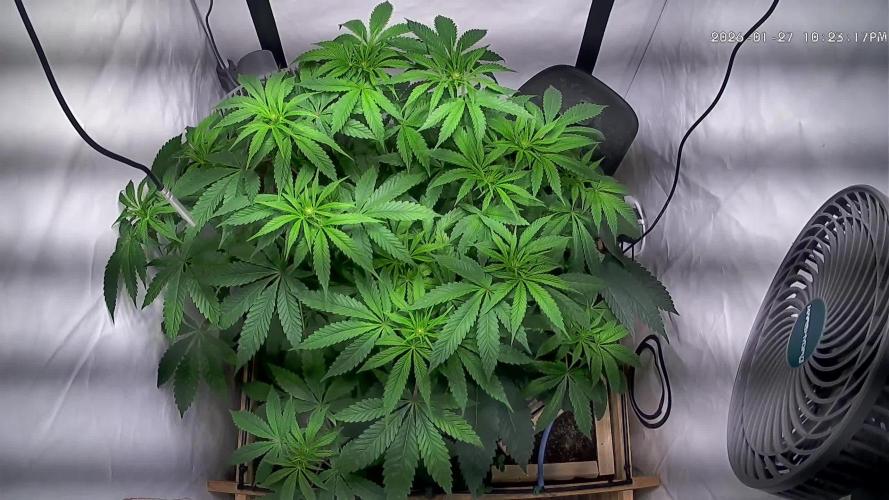
Blütewoche 3
Die dritte Blütewoche ist nun abgeschlossen. Trotz der seitlichen Fixierung hat sie in dieser Woche noch einmal leicht an Höhe zugelegt. Der Stretch scheint sich dem Ende zu nähern, eventuell ist noch ein geringes Höhenwachstum zu erwarten, der Fokus verlagert sich nun zunehmend auf die Blütenentwicklung.
Wie auf den Bildern zu erkennen ist, bilden sich mittlerweile deutlich sichtbare Blütenansätze. Die Budsites entwickeln sich gleichmäßig und beginnen langsam an Struktur zu gewinnen.
Die Amnesia Lemon zeigt insgesamt einen sehr vitalen und gesunden Eindruck. Die Blätter sind kräftig, satt dunkelgrün und stabil. An einzelnen Blattspitzen ist eine leichte Aufhellung zu erkennen, was vermutlich auf eine relativ hohe Lichtintensität bzw. den geringen Lampenabstand zurückzuführen ist.
Die Umgebungsbedingungen lagen tagsüber bei etwa 27–28 °C und einer Luftfeuchtigkeit von ca. 63–67 %. In der Dunkelphase steigt die Luftfeuchtigkeit zeitweise auf etwa 70 %. Um die Luftzirkulation zu verbessern und Feuchtigkeitsansammlungen im unteren Bereich zu vermeiden, habe ich sie etwas entlaubt. Dabei wurden sowohl einige große Fächerblätter als auch untere, lichtarme Blütenansätze entfernt, um die Energie gezielt auf die oberen und besser belichteten Triebe zu lenken. Der VPD-Wert liegt bei ca. 1,2-1,4kPa.
Die Ventilation läuft durchgehend mit zwei Umluftventilatoren, was für eine gute Luftbewegung im gesamten Zelt sorgt. Insgesamt verläuft die Entwicklung sehr stabil. Kann gerne so weiter gehen!
Likes
3
Share

@Elemental
Follow
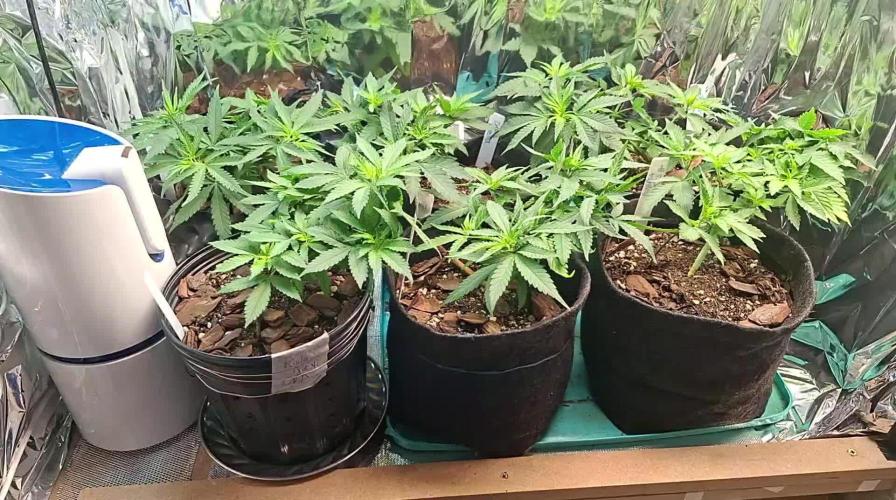
0.1) Observação Geral
Todo o cultivo foi conduzido com monitoramento constante e ajustes precisos de intensidade luminosa (DLI e PPFD), temperatura e umidade, garantindo condições ideais em cada estágio do desenvolvimento.
1) Substrato e Nutrientes
O cultivo foi realizado utilizando água mineral com pH balanceado durante todo o ciclo.
Fase vegetativa: fertilização com BioGrow.
Floração: alimentação com Flowermind.
A mistura do solo foi composta por 50% de substrato reutilizado, rico em nutrientes do cultivo anterior, e 50% de novo solo (proporção 70/15/15), resultando em uma base equilibrada e fértil.
2) Germinação – 19 de agosto
As sementes foram germinadas utilizando água mineral + peróxido de hidrogênio em copinhos de gelatina individuais. Permaneceram por 24 horas na solução líquida, seguidas de 24 horas no escuro total sobre papel toalha umedecido com a mesma água, dentro do mesmo recipiente. Os copos foram abertos apenas a cada 12 horas, em ambiente de baixa luminosidade.
Todas as sementes germinaram com sucesso.
As sementes com raízes de aproximadamente 2 cm foram transferidas para vasos de 1 litro, com adição gradual de substrato conforme o crescimento das plântulas, prevenindo o tombamento dos caules.
3) Fase de Plântula
a) Conduzida sob lâmpadas de 35W e 50W dentro de uma caixa de papelão personalizada, equipada com coolers e exaustor para controle de temperatura.
b) Aplicação de FORT (enraizador) em uma rega, após o aparecimento do primeiro conjunto de folhas com cinco pontas.
4) Topping – 10 de setembro
Foi realizado o primeiro corte apical para incentivar maior ramificação e uma distribuição mais equilibrada de energia.
5) LST (Low Stress Training) – iniciado em 13 de setembro
O treinamento começou três dias após o topping, com amarrações graduais dos ramos para promover a abertura do dossel e melhor penetração de luz.
6) Transplante – 27 de setembro
Transplante realizado para vasos de 4 litros, com rega leve e adaptação gradual à nova base de substrato.
7) Início da Floração (Troca para 12/12) – 6 de outubro
O fotoperíodo foi ajustado para 12 horas de luz e 12 horas de escuridão, marcando o início oficial da fase de floração.
8) Defoliação – 10 de outubro
Remoção estratégica das folhas grandes de ventilador (fan leaves) para melhorar a circulação de ar, otimizar a distribuição de luz e estimular o desenvolvimento dos buds.
pment.

Likes
422
Share


@Crashoverite
Follow
Hi everyone 😁
Welcome back on another week update.
So far everything going as well as can be. Both 🍌💜👊 girls developing very well. This week I have reduced root juice by half and by the end of this week may introduce fish mix and biogrow on very small dose but all will depend how girls will be developing in coming days.
Thank you all for all the likes comments, follows and pm's.
Love you all 😁💚
I will keep updating this week progress every few days.
Wishing you all a wonderful week ✨🍀✨
Peace and love brothers and sisters ✌️💜
23/10 day 15
Smooth development on both baby girls. Watered with approx. 300-400ml each pot on the entire surface.
26/10 day 18
Girls are growing very nicely.
Today another watering approx. 200ml each of 🍌💜👊 girl. Still spraying water around the surface everyday.
29/10 day 21
It's been a perfect week. No issues at all. Very steady growth. Next week will introduce to my 🍌💜👊 girls few new dishes and possibly will start with LST.
Thank you all for such a great support 😊✌️💚
Wishing everyone a wonderful upcoming week✨🍀✨
Peace and love brothers and sisters ✌️💚


Likes
7
Share

@MrBulldops
Follow
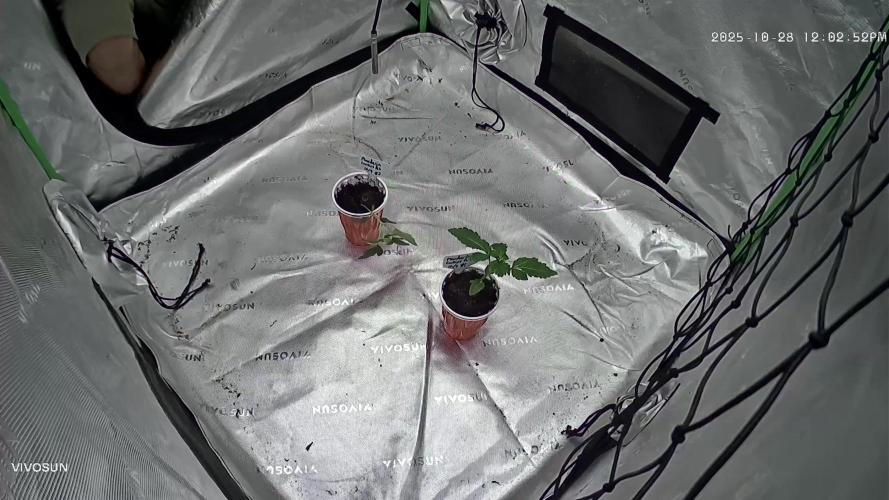
Harvested the green pheno on day 64 of flower (2/16/26) smells really skunky/gas so far before full dry/cure
Harvest purple fade pheno on day 71 of flower (2/22/26)
Smells like orange candy with a bit of gas in the background
Great daytime smoke and makes you happy

Likes
77
Share


@DogDoctorOfficial
Follow
Week 10 Flower — The Beauty Before the Finish
This week marks a very special chapter in the Eternity Grow Cup. As we approach harvest, the garden is simply glowing with beauty. Every corner, every canopy, every branch tells a story — and this week, I’ve taken the time to slow down and capture that story as best I can through the lens of my camera.
All the photos you’ll see in this update were taken with care and intention. I use my Sony camera in full manual focus mode, and I don’t just snap and go — I spend time with each plant, each angle, waiting for that perfect moment when everything aligns. These are not just photos to document — they’re my attempt to reflect the feeling of the room, the energy of the grow, and the soul of each plant.
Just like with the videos, I don’t shoot randomly and decide later. I record what matters, and what I record, I use. It keeps me focused, organized, and deeply connected to the process — and I believe it helps me tell the story more clearly, whether through stills or moving pictures.
All five Runtz phenos are finishing beautifully. Each one expressing unique traits, but all carrying the same stunning quality — dense, clean, colorful, resin-rich flowers that fill the room with pride. This garden is finishing spotless, and I couldn’t be happier.
This week’s YouTube episode will reflect that beauty. If you’re seeing this here on GrowDiaries, I highly recommend checking it out in full 4K once it’s live — there are moments that simply can’t be translated in photos alone, even though I try my best. But for those who love the details, the full spread of pictures is right here, as always.
t this point in flower, the girls are not eating — they’re just drinking clean water with nothing but System Clean in the reservoir, at a rate of 0.25 ml per liter. This is part of a gentle, prolonged flush phase I like to implement, giving the plants a chance to metabolize and fade naturally. The goal is to promote clean, vibrant flowers that finish with optimal expression, without rushing the process. No forced flush, just time and care.
Lighting-wise, the spectrum has been tuned with precision — we’re currently running 40% on the whites, with reds and UVs at 100% to drive trichome development, resin production, and color expression in these final days. The plants are loving it — they’re soaking in the deeper wavelengths that signal the end of their life cycle and responding with a final push of energy.
And yes — we’ve been running 11 hours of light and 13 hours of darkness from the very start of flower. It’s not the usual 12/12, and it comes with its pros and cons. On the upside, it helps speed up ripening slightly, encourages more compact flower formation, and mimics the natural seasonal decline in daylight. On the flip side, it slightly reduces the overall DLI (daily light integral), so you need to ensure your PPFD and spectrum are dialed in just right to avoid sacrificing yield. For me, the trade-off is worth it — the plants are expressing themselves beautifully, finishing strong, and packing on the final magic.
Now it’s your turn — I’d love to hear from you. Which phenotype is standing out the most to you in this garden? Which one is catching your eye with its colors, its fade, its structure, or just that vibe that speaks to your soul? Is it the frost? The density? The posture? Each of these girls has her own personality, and I know many of you have been following closely — so drop a comment, let me know: which one is your favorite? Which one would you take home?
This run has officially earned the Dog Doctor Official Wax-Sealed Stamp of Approval. These genetics are beautiful — expressive, vibrant, clean. It’s been a joy to grow them, and an even greater joy to share this journey with all of you. Of course, we still have the final word coming after harvest, drying, and curing — that’s when the full picture reveals itself. But until then, based on everything we’ve seen and lived in this grow… this is the real deal.
To everyone following the journey — thank you. To the sponsors, the community, the silent observers, the passionate growers, the haters, the lovers — I see you all, and I appreciate every bit of energy you send.
This cup has been about more than just growing. It’s been about sharing. Connecting. Creating something beautiful together. And we’re almost there.
Next stop: harvest? provably yes lets see !
Growers love always 🌿❤️
DD
Genetics - Runtz https://www.zamnesia.com/6000-zamnesia-seeds-runtz-feminized.html
Nutrients - Plagron https://plagron.com/en/hobby
- Aptus Holland https://aptus-holland.com/
Controls - Trol Master https://www.trolmaster.eu/
LED - https://www.futureofgrow.com/en
LED - https://www.thinkgrowled.com
Soil - https://www.promixgardening.com/en
Germination - Cannakan https://cannakan.com/?srsltid=AfmBOopXr-inLXajXu3QFgKXCXXos4F1oEvScjMKIB5MR5dk8-GJ-F49
DOGDOCTOR 15% off
Smoking Papers - https://ziggioriginal.com/
Terpene saver - https://grovebags.com/
As always thank you all for stopping by, for the love and for it all , this journey of mine wold just not be the same without you guys, the love and support is very much appreciloved and i fell honored with you all in my life
With true love comes happiness Always believe in your self and always do things expecting nothing and with an open heart , be a giver and the universe will give back to you in ways you could not even imagine so
As always, this is shared for educational purposes, aiming to spread understanding and appreciation for this plant. The journey with nature is one of discovery, creativity, and respect. Let’s celebrate it responsibly and continue to learn and grow together!
Growers Love To you All 💚
#EternityGrowCup #RuntzHunt #GrowersLove #CannabisCommunity #AptusHolland #ProMixSoil #TrolMaster #Zamnesia #Plagron #ZiggiPapers #Grovebags

Likes
77
Share

@squalino
Follow
🌿 Journal de Culture :
Mac 1 Autoflower – "Bee Happy"
🐝 (Semaine 10)
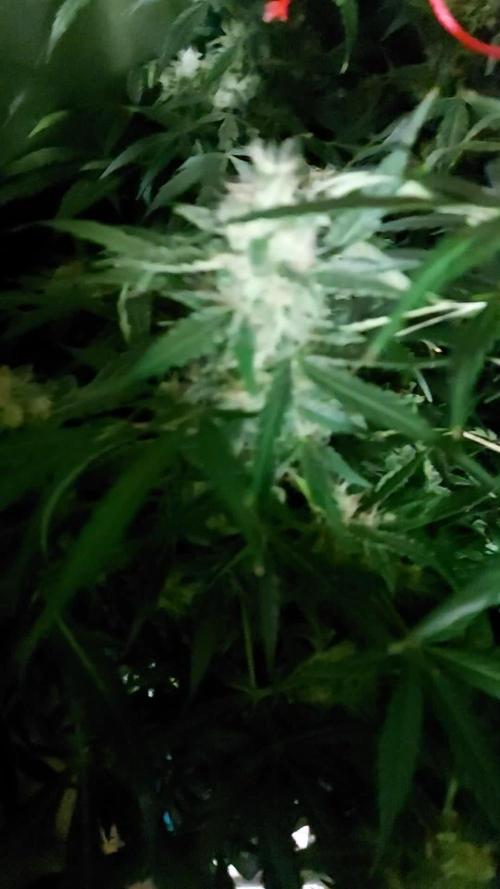
On entre dans la phase lourde où les fleurs prennent une densité impressionnante. "Bee Happy" continue de m'épater par sa structure, même si la cohabitation dans la tente commence à imposer ses limites.
Un Grand Merci
Comme toujours, un grand merci à @mia_biotabs, à Mrs_Larimar pour leur suivi, et à toute la communauté qui reste branchée sur cette session !
Paramètres de Culture & Gestion de l'Espace
Taille :
Stable à 91 cm. La structure est définitivement ancrée.
Le problème de colocation
: C'est le gros point noir de cette fin de session. Cette variété a un besoin viscéral d'espace pour exprimer tout son potentiel. Là, j'en manque cruellement. Sa sœur, Spirit, a pris tellement d'envergure qu'elle lui cache la moitié de la lumière. C'est frustrant parce que "Bee Happy" serait encore plus monumentale avec une exposition totale, mais bon, pas le choix, on fait avec les moyens du bord !
Climat & Environnement
. Lampe maintenue à 40 cm de la canopée, températures à 24°C jour / 21°C nuit, et humidité stabilisée à 60% grâce au déshumidificateur.
Nutrition & Maintenance
Système :
Toujours connectée au système Autopot qui gère parfaitement son niveau d'eau.
Ration du jour :
Aujourd'hui, je lui ai remis sa dose de boost : 5 ml de Liquid PK 5-8 Biotabs. Elle gère super bien cet apport, les gourmandes continuent d'assimiler sans broncher.
Évolution des Buds & Profil
C'est le gros point fort de cette semaine. Les têtes gonflent à vue d'œil et le manteau de résine devient ultra-épais. Ce qui est dingue, c'est que les têtes ne sont même pas encore finies d'être formées qu'elles sont déjà hyper compactes et super dures au toucher. Ça promet un très gros score sur la balance en termes de densité.
Le visuel global reste magnifique.
Le "frost" s'étend de plus en plus sur les petites feuilles de sucre.
L'odeur a un peu évolué :
on est sur un parfum très sucré, super agréable et pas du tout agressif pour les narines, un vrai bonbon.
Le feuillage maintient son vert de santé, montrant que le petit couac de pH d'il y a deux semaines est définitivement de l'histoire ancienne.
Merci à tous de suivre l'évolution de "Bee Happy" ! Malgré l'ombre que lui fait Spirit, elle se bat comme une championne et produit des buds durs comme de la pierre. On se retrouve la semaine prochaine pour suivre la fin du gonflement !

Likes
55
Share


@Natrona
Follow
Blue Cheese F1 automatic
Week 5 2/2-2-8
The Cheese gals are in full flower and are stretching like crazy. At the beginning of the week, they were 7 inches tall, Wed 10 and today 2/7 they are 14 & 15 inches tall. They have doubled in height.
I’ve moved the pins out to the edge of the pot. For future training, I must add some wires thru the pot holes to keep the branches lower as the outer rim is taller than the center.
I reduced nutrients in the feed solution since Runtz and Pink Rozay are showing some purples/blues in the leaves. These gals are vigorous and don’t seem to mind the full strength feedings. Hopefully they won’t start showing deficiencies.
I added Green Sensation this week then read the instructions said add in 4th week flower.
Blue Cheese is supposed to be a 10 week flower from seed to harvest. If I wait till the 4th week, it will only be used for 2 maybe 3 weeks. Would that actually benefit the plant. So I think I will add some each time but a 25% strength. Calls for 4ml/g I will use 1ml. They are autos and I should be lowering the nutes anyway. Pinned more branches. I add 2 gallons of water to the T700 humidifier daily to keep the VPD in line.
2/5 4 gal fed 2 liter each nutrients added at ½ of recommended amount. Making 4 gallons since I have 2 pots of carrots and Dill in the back.
Bloom Juice 60ml
Plant Juice 60 ml
Royal Rush 15 ml
power bud 15ml
green sensation 7.5ml
Recharge 2.5ml/gal
7.5 ml
Ppm 333
Ph 7.02
Temp 66
2/7 3 ltr each
Bloom Juice 60ml
Plant Juice 60 ml
Royal Rush 15 ml
Power bud 15ml
Green sensation not added
Ppm 298
Ph 6.5
Temp 65
Your likes and comments are appreciated. Thanks for stopping by.
Growers love 💚🌿
💫Natrona💫
Likes
38
Share


@Green_Mountains
Follow
Another good week. Watered them twice. I'm not planning on feeding them again. A little defoliation. I definitely think they are in the last 2 weeks before harvest.
Still seeing some nutrient burn developing on the leaves. I don't think I watered enough through the whole grow! I'd love to hear opinions on this!
Took some videos of the buds with an iPhone 12 at 6X magnification. Decent quality!
Otherwise, still looking to successfully harvest these plants! Thinking about the next grow. Probably going to be Auto Strawberry Cheesecake and Auto Anesthesia.
Peace!
Likes
Comments
Share

@SolitudeCorners
Follow
15/07/26
Water 140L
Balance 50ml
A 1050ml
B 1100ml
PH 6 EC 2.3
Feed 1.30min
21/07/26
Water 150L
balance 70ml
A 1050
B 1050
PH 6 EC 2.2
27/07/26
Water 140L
Balance 200ml
Cake 1200ml
PH6 EC 1.4
02/08/26
Water140L
balance
Cake
Runclean
EC1 PH5.9
08/08/26
Water
Run clean
Cake
FFJ
Likes
10
Share


@Lazuli
Follow
The smell was new for me its amazing that Fastbuds strains always smell exactly like the name they give them
Processing
Likes
1
Share


@magicjohnson
Follow
Wk 4 was where I started to notice things weren't as they seemed. Continuous growth and some LST started towards the end of Wk3 and throughout 4 as different plants developed.
The 3 girls in the Coco were looking wonderful, with nothing really done to them.
- Towards the end of the week I noticed my leaves on the girls In the aero were now dramatically wilting and discolouration continued.
- I flushed the tank and proceeded with just water.. 12 hours later after some research I realised I most likely have root rot!!
- The following morning I took a look at the roots in more detail and what I thought was a bit of nute burn from the gunky root juice was in-fact slime.
- I again drained the tank and rinsed the roots with tap water. Fortunately I have an adaptable tap and managed to hose them with an actual hose sprinkler! (it was better than a shower head). To my surprise most of the slime and damaged root matter rinsed away. I literally just scrubbed the whole tank with Flash bleach and rinsed the absolute crap out of it.
- Again more research educated me that organic fertilisers are generally not great for hydro
- I also realised that amazons system is terribly designed. The red sprinkler covers which are there purely for inspection let an immense amount of light penetrate through. This was another noob mistake I learned the hard way!
Moving on I bought some Regen -e- root and pursued my crusade!
Likes
57
Share


@Roberts
Follow
So grow diaries is acting up really bad. It won't let me finish putting in nutrition. Hopefully it get fixed soon. So when Pablo Escobar sprouted, she pushed herself out of the rockwool. She is rooting lower down. Plus I didn't have the light turned up enough. So she stretched a lot, and got top heavy. So if she makes it, this will be a interesting grow against a few odds. Things are going, I dunno about good, but there is a chance. Thank you Spider Farmer, and Divine Seeds. 🤜🏻🤛🏻🌱🌱🌱
Thank you grow diaries community for the 👇likes👇, follows, comments, and subscriptions on my YouTube channel👇. ❄️🌱🍻
Happy Growing 🌱🌱🌱
https://youtube.com/channel/UCAhN7yRzWLpcaRHhMIQ7X4g
