


Likes
Comments
Share


@SubliminalSociety
Follow
Week 23 - kitty says hi!
This lady is getting out of control. We're 4 weeks from harvesting. Autumn gets very wet and last year I had bud rot, so end of october is the last day. I really need to defoliate to give those buds all the sun they can get.

Likes
17
Share

@Northern_Ent
Follow
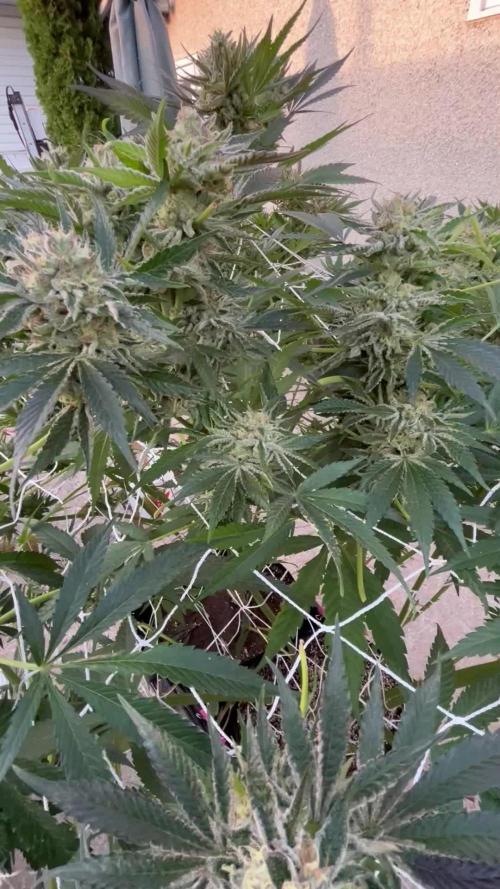
Sep 27: still lots of buds remaining and did a big defoliation to expose them to sunlight. Very nice and the hash resin looks terrific. Awesome.
Oct 1: the remaining lower buds are almost ready, and I will likely harvest them this weekend. There are lots buds left - like 1 kg of wet kind of a lot.
Oct 3: harvested lower buds totalling 280 + 1106 g wet for hash plus 1350 g from previous. Total wet of 2736 g buds equivalent to 620 g dried buds. Rock on.

Likes
30
Share


@Dunk_Junk
Follow
The buds are fattening up now. Still no amber trichomes. Weather is hot here. Tent seeing 30+c at it's peak. I'm wondering if the heat is stressing her.

Likes
2
Share

@youdan
Follow
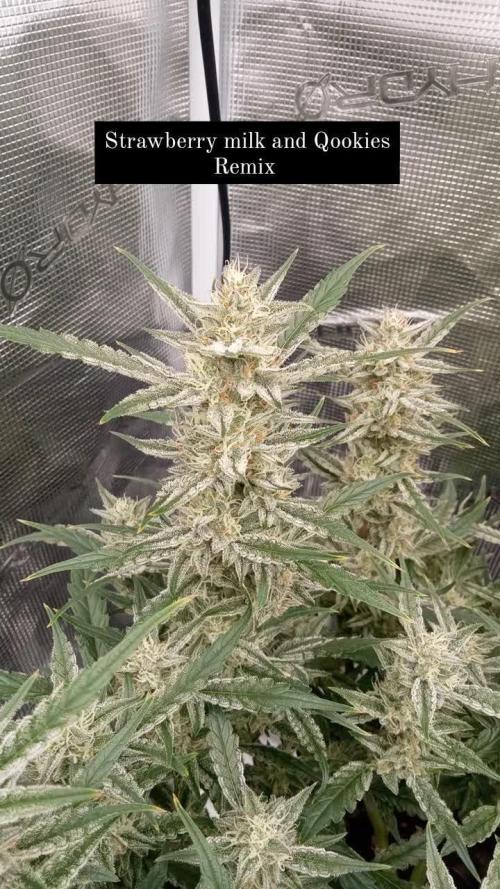
una fioritura bestiale, i tricomi sono fuori scala penso che si potrebbe lavare anche al 9%, sara un ottima prescelta per le estrazioni!!! non vedo l'ora!

Likes
4
Share


@Soskar69
Follow
Hello!!
Too bad I only found this site now and didn't take too many photos during the first month.
About the plant, it was the smallest of my plants at first, but then it grew very weel and now is the biggest of my girls. She entered in flowering a week later than expected, but beacuse of that she could grow more than the others. I've done only some LST and the plant just loved it, now i have like 11-12 main stems. Today I also have done some lollipopping but very cautiously because it was my first time doing it, and I didn't want to mess up.

Likes
5
Share


@dwotTV
Follow
Harvesting the rest of the first plant later this week. Looking good, and hurtling toward the finish line.

Likes
8
Share


@DoMoNe
Follow
Following RQS auto guide : https://www.royalqueenseeds.com/blog-how-to-grow-autoflowering-cannabis-n83
WEEK 5: FLOWERING BEGINS#29 12.4. - #35 18.4.
#29 12.4.
-Opened new week with new pics and basic diary structure
-Noticed the temps have gone up to 29'c , raised lamps, will see if i can make the tent cooler by removing some instulations during this week, it should not go to subzero degrees outside anymore.
-Opened the side air intake hatch a bit to give more outside air directly in to tent, also took out the ventilation pipe so that the incoming air now comes in at plant height (not freezing temps anymore)
-Took out few fanleaves again
-Moved temp meter from soil level to middle of the pots
-Topped(or fimmed) the purplematic #2 which is non-LST, unlike the non-topped/fimmed purplematic #1 which is LSTd
-Should water now daily about liter / plant / 24h (with nutes) : Watered 2x 1,75liters with stated nutes
Mostly following https://www.royalqueenseeds.com/blog-how-to-grow-autoflowering-cannabis-n83 on waterings (1ltr/24h, so would mean 4-5liters in my tent)
#30 13.4.
-Opened 'side hatch' fully
-Didnt water, soil was moist
-Hopefully got the in-tent temp now lowered to steady 25'c, outdoors about 0-12'c daily for this week
#31 14.4.
-Once again removed all LST, the form of the plant still stays, might start ScrOG:n next week, possibly
-Added 1½liters Coke bottles to each pot, will see how much the water drains in a 24h, if it really doesn't, ill just lift the bottles tomorrow and let it run.
#32 15.4.
-Nothing here
#33 16.4.
-Removed bottles, added 1,5liters overall to pots and what was left of in each bottle to each pot
-Temps are keeping steady now, also Hum is what it says at the RQS's AF guide
-So far this week about 0,55liters/24h/plant, dunno if i should nor can increase the watering from current rhytm,
will see if i can draw a water line closer to tent so wont have to carry so much water, or get a 20liters containers or something
#34 17.4.
-Nothing here
#35 18.4.
-Water 1,5liter / plant (6liters in total) with normal nutes
-Nice grow after removing LST this week, will start ScrOGin next week
-Also have to defoliate next week way more as the plants are getting a bit too bushy
Likes
36
Share


@Themythicalchristine
Follow
This week we are working on flushing these beauties; these plants have been awesome and harvest time is nigh!
we started out with a Flawless finish drench, let that sit for about six hours; after that I ran about 4 gallons through each of them and let them rest for a day; ive repeated the 4 gallons of fresh water flush every second day for about 6 days now ( 3 flushes) and we are resting at a TDS of around 75.
I look forward to harvesting these in the next few days.
Stay tuned 🌱✨

Likes
39
Share

@squalino
Follow
Journal de Culture : Frost 1 (Semaine 6)
Génétique : Frostbanger (F2 Perso) | Système : Autopot 20L
📣 Remerciements
Un immense merci à toutes les personnes qui suivent ce journal depuis le début ! Un grand merci en particulier à @MIA_BIOTABS et à Mrs_Larimar pour leurs précieux conseils toujours aussi utiles. Merci à tous pour votre soutien !
🛠️ Configuration Technique & Gestion de l'Espace
Éclairage :
Lumatek ATS 300W Pro (réglé à 75%)
Distance lampe/canopée :
52 cm (obtenue de justesse après domptage)
Climat :
Jour : 25°C / Nuit : 21°C
Humidité (HR) :
50%
Tente :
1m80 de hauteur
📅 Évolution, Changement d'Espace et Domptage du Stretch
Observations Phénotypiques & Réorganisation de la Tente :
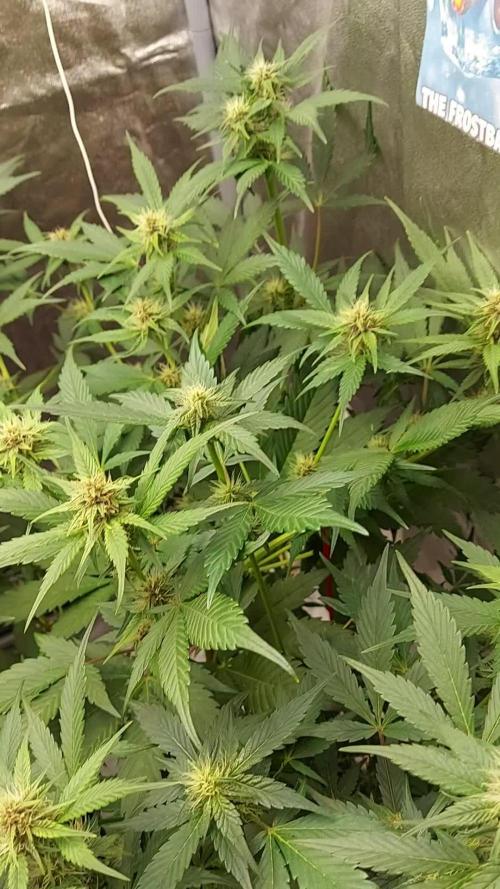
Sur cette session de Frostbanger F2 perso, la stabilité nous montre deux phénotypes bien distincts qui ressortent entre elle et sa sœur :
un phénotype violet et un phénotype plus vert.
Grand soulagement dans la box :
nous étions à 4 plantes au départ dans cet espace. J'ai enfin pu déplacer les deux MAC 1 dans la tente qui leur était initialement prévue. Avec le recul, je me suis rendu compte que l'une des MAC 1 avait pris une envergure tellement énorme qu'elle masquait et bloquait le développement de nombreuses branches secondaires sur les trois autres plantes !
Aujourd'hui, la structure de ma Frostbanger est vraiment très belle, mais je reste persuadé qu'elle aurait pu être encore plus
impressionnante si elles n'avaient pas été entassées à 4 au début. Maintenant qu'elle a de la place, elle va pouvoir s'exprimer pleinement !
Le combat contre la hauteur (Nouveau LST) :
Hauteur maximale atteinte :
Libérée de ses voisines, la demoiselle a complètement explosé sa croissance verticale pour culminer à plus de 87 cm de hauteur !
Action :
Face à cette poussée ingérable et pour éviter qu'elle ne finisse brûlée dans le panneau, j'ai dû ressortir les ficelles et refaire un gros LST pour la coucher et contraindre sa structure.
Hauteur après LST :
78 cm (Ce qui nous fait tout de même +10 cm par rapport à la semaine dernière, tout en ayant gagné 9 cm de sécurité grâce au pliage).
Le casse-tête du Système D pour la lampe :
Avec un pot de 37 cm de haut, le sommet de la plante après son palissage culmine tout de même à 1m15 du sol.
En ayant supprimé les attaches d'origine qui me faisaient perdre 10 cm pour la suspendre au plus haut directement avec des ficelles (système D),
mon panneau est calé à environ 1m67 du sol.
Cela me permet de maintenir mes 52 cm de distance de sécurité avec la canopée.
Si je plaque la lampe à fond contre les barres de toit de la tente, je n'ai plus que 10 cm de marge de manœuvre totale pour toute la fin de session. C'est très serré !
Nutrition & Gestion Autopot :
Action :
Je viens tout juste de couper l'arrivée d'eau de l'Autopot.
Objectif :
Je laisse le pot sécher tranquillement pour les prochains jours. Dès que le substrat sera bien sec et aéré, je lui ferai un arrosage manuel pour envoyer le PK 5-8 de chez Biotabs afin de donner un grand coup de fouet aux premiers pompons qui pointent le bout de leur nez.
le 21/05
Apport de 0,75 cl d'eau avec 4 ml de PK 5-8 biotabs PH 6,3
Résumé :
Le grand ménage dans la tente et le nouveau palissage ont permis de rééquilibrer la canopée. Les branches secondaires, enfin libérées de l'ombre des MAC 1, vont pouvoir profiter à 100% de la lumière. Malgré l'espace restreint en hauteur, la plante affiche une santé resplendissante et commence à bien cristalliser.
À bientôt pour le premier engraissage PK !❤️
Processing
Likes
10
Share


@TrimQueen
Follow
So, guys.. This is her first month blooming. 4 complete weeks has passed. Here we are for 2 more. Gave Her a super powerful egg shell fert (all powdered - Phosforium Whelthy.)
07/10/20 - We are in the middle of week 5. Thats the way they look like. For me a good number of buds and they are as dense as I thought they would be by this time. I think everything is under control despite some foxtails cuz the heat. Loving the experience.
Likes
7
Share


@Eponymus29
Follow
Transplanted her into a 3 gal air pot, added some mycorrhizae to the soil and watered her with pH'd water 6.0...

Likes
14
Share


@tiasmaaa
Follow
so the original clon is having a little issue with the yellow leaves, don't know if it's because it's approaching the end or maybe I started flushing too early I don't really know.
and jelly pie is always looking great, for the moment I keep giving them nutrients and I'll start flushing in a small week

Likes
8
Share


@pzwags420
Follow
I switched the light timer to 12/12 and turned the carbon filter on. I wish I had more space to grow vertically, but the height of my box and grow light distance limits me from vegging too long. I hope to have a larger set up in the future 😀. At the start of week 7 The girls are chugging along (Cal/Mag really seemed to help) and I'm looking forward to seeing the bud structure and that Blueberry smell! I will be going on vacation in a little over a week for 8 days 😅. This is also why I started flowering now..so that I can be home during the majority of the stretch period(12 days from flip). The day I leave I will apply nutrients and thoroughly saturate the coco and then the girls will be watered with the blumats from my 5 gal reservoir (hopefully that is enough and there isn't too much PH drift). On day 5 of week 7 I applied 1 gal of nutrients until runoff. Week 7 went well.

Processing
Likes
Comments
Share


@Hampoop35
Follow
This week it seems like they are starting to flower or getting ready to. Day 42 and they are smelling great. I’m super excited to see the difference in plant A and plant B. The runt seems to be bouncing back. After I did some LST it really started to take off.
Likes
14
Share


@Onlygrow99
Follow
Empezamos 3ª semana de crecimiento, durante esta semana, podare los bajos y algún nudo. Tras unos días de recuperación pasaremos a floración.
Se empezaron a germinar el día 10/10/23 llevamos 27 días desde que se empezó a germinar.
Hoy día están siendo regadas con 1.5 de ec y 6.0 de ph, usando la gama de abonos orgánicos de boom nutrientes y CALMAG. Uso de sustrato el LIGHT MIX de GBNUTRIENTS.
Son frondosas con grandes hojas, nudos muy corto entre si y además están verdes. Se nota que la luminaria hace su trabajo sin calentarse y por eso la tengo cerca de las plantas evitando que se "espiguen"
**Actualización 08/11** he podado bajos de todas las plantas y alguna hoja grande que tapa las formaciones.
En pasar 2-3 días para que se recuperen, pasamos a floración.

Processing
Likes
2
Share


@eldruida_lamota
Follow
Esa familia, nuevo LST con misty gorilla autofloreciente, empezaremos de momento con 2/3 misty gorillas con este método de cultivo. Uno de los ejemplares me parece algo pequeño aun como para andar atando nada.
Añadi BETA SHARK , quite el producto de crecimiento, y aporte el producto de floración de la gama BLACK LINE de AgroBeta.
También quite el enraizante, ya que fácilmente consigo buenos cepellón es y con varias semanas de dosis son suficientes.
Ph controlado en 5.8 humedad entorno al 45%, la temperatura no sube nunca a los 27 grados , se queda siempre en 26 poco.
Se las ve con buen color , un tallo bastante manejable, fueron atados entre 2 y 3 nudos por planta con alambre forrado.
Espero que os gusten las fotos e imágenes ya que gracias a Zambezaseeds, marshydro y AgroBeta es posible este cultivo, un saludo fumetillas 💨💨💨💨.


Likes
Comments
Share

@MetallicaDave
Follow
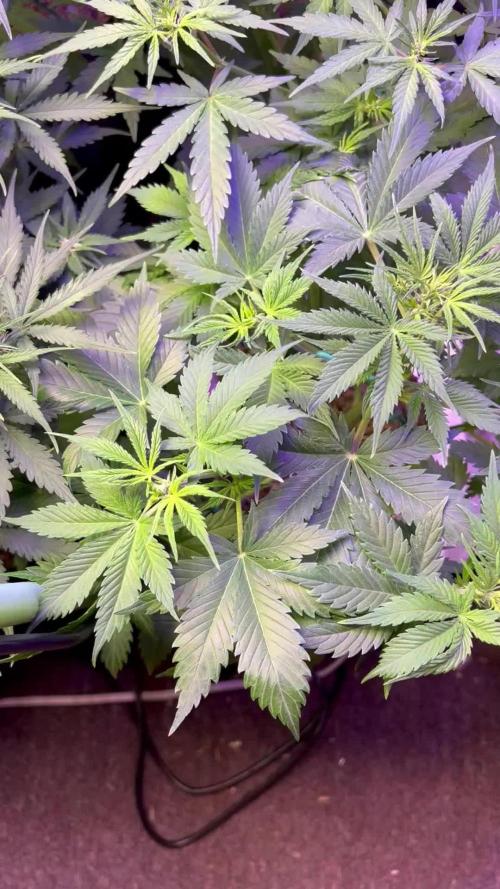
Week 6 of my 4th grow autoflowers dry nutrients were very useful and the boost to flower made these my tallest and healthiest plants great PH and 81’ with three big external fans and and two in my tent great VPD. Plants were gently lollipoped and LST worked I bent trunk on main and I used everything on Tuesday first silica then cal mag, Mychorysia granular, molasses, PH booster Fox Farm , regular 10/10/10 liquid nutrients just a smidge, and rain water 775 ppm 6.5 PH. I soaked them about an hour set them on grills for 10 minutes to drain excell then returned to tent. Heavy and I mean might wait four days for next watering ⭐️👍
Likes
29
Share


@D_growz
Follow
Started in shot glass with 6.0 150ppm achieved using superthrive and a drop of calmag.
Soaked 24hrs, then placed on damp paper towel in Tupperware on a heat pad.
Following morning, taproot had formed so transferred to rockwool. With same 6.0 solution.
Following morning, they had broken ground.
Update, they have developed their first true leaves and were starting to stretch under 7k, so I turned the lights up to 13k then 15k lux and they seem to be loving it.
The rdwc has been running for days and no leaks or malfunctions so far. Once I harvest my 4x8 I will be building a similar system in it, but with 2, 2 site totes with the intention of vegging in this 2x4 for 4-5 weeks then taking the entire lid with the plants and putting in the 4x8 tote for flower. Then immediately start 2 more in the veg tent. Keep 3 sets of 2 in 4-5 week rotation and potentially harvest every 1.5 months, depending on how long it takes em to finish of course.
Likes
5
Share


@DaddyPrime2
Follow
May 15th
We’ve had some tough winds. She handled it very well actually. Her stem bulked. Added a layer of coco on top to help with winds and to choke up on her stem
May 25th she's small and bushy
Likes
1
Share


@pareto
Follow
Buds look great. I think shes got about 1-2 weeks to go.
Some brown spots have been apearing that look like bud rot... Hope its not
Smell is still so awesome and fruity!
--------------------------------------------------------------------------------------------------------------------------------------------------------------------------------
Set up cost (fixed costs)
-Lamp: 40€
-Timer: 3,5€
-Pot: 4€
-Total fixed costs: 47,5€
Given 5 years (or 15 grows) usage time translates to around 3,17€ per grow in materials.
Variable costs:
-Seed: 10€
-Soil: 6€
-Fertilizer: 3,50€
-Power (100 days 20h/day): ~28,8€ (exact figure after harvest)
-Total variable costs: ~48,3€
-Total costs per grow: ~51,47€