


Likes
Comments
Share


@Ieiogrow94
Follow
Eccoci di nuovo qui!!!
Super eccitato per questa nuova collab con Anesia Seeds, team davvero al top, che mi ha dato l’opportunità di testare questa nuova genetica e di condividere i progressi con tutti voi!!!
Reggetevi forte.. NON SIETE PRONTI PER LORO... SI SCHERZA
TOP ASSOLUTO DEL CULTIVO UNA PRELIBATEZZA SIA PER IL PALATO CHE PER L'OLFATTO DAVVEROO SCONVOLGENTE..
Strain 2 è un capolavoro faccio davvero i complimenti ad Anesia Seeds che ha sganciato una bomba!!
La consiglio a tutti sia per la facilità di coltivazione che per i risultati al dir poco esagerati in dei vasi da 11l!!
Grazie a tutti per il supporto ❤️🍀🔥





Likes
6
Share


@pzwags420
Follow
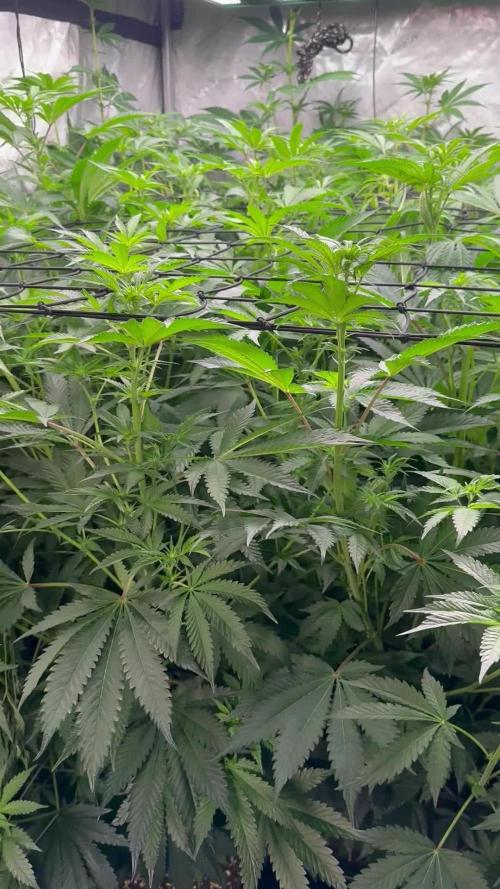
On day 3 week 3 of flower shes putting out a lot of preflowers and the tops are staring to put out pistils and start of sugar leaves. Im giving a max of 1100 ppfd on tops with an average of 900 ppfd on all tops. Im very happy with the pheno so far and look forward to her expressing her aroma! :)

Likes
2
Share


@Altitonans_Fulmen
Follow
For most crops, a slightly acidic soil pH between 6.0 and 6.8 is ideal because it optimizes nutrient availability. When soil pH rises above 7.0 (alkaline), the concentration of hydrogen ions H+ drops significantly, and they are replaced by calcium, magnesium, or sodium ions on the clay colloid exchange sites. To naturally lower alkaline soil pH, you can add organic matter (carbon-rich materials), which produces weak organic acids as it decomposes. Maintaining this slightly acidic range stimulates a highly active, diverse microbial community; these microbes decompose organic matter and release carbon dioxide CO2, which plants absorb through their roots and leaves to boost photosynthesis and sugar production. Furthermore, the added organic carbon acts like a sponge, drastically improving the soil's water-holding capacity.
While soil biological activity does involve cellular electron transport, electrical conductivity (EC) in soil is actually a measure of dissolved mineral salts, not a voltage carried by individual microbes. Soil microorganisms secrete organic acids and chelate metallic and non-metallic minerals, transforming locked-up inorganic compounds into bioavailable organic complexes. Unlike harsh synthetic fertilizers that can dehydrate soil life in high concentrations, these naturally chelated nutrients safely nourish the plant, creating a thriving, self-sustaining ecosystem where plants can efficiently synthesize their own food.
Metal-based: Could include elements like iron, manganese, copper, or zinc, which are essential nutrients for plants but can exist in forms not readily accessible.
Non-metal-based: Examples like calcium carbonate, phosphate, or sulfur are also important for plant growth and potentially serve as building blocks for the organic salt.
Chelation in a plant medium is a chemical process where a chelating agent, a negatively charged organic compound, binds to positively charged metal ions, like iron, zinc, and manganese. This forms a stable, soluble complex that protects the micronutrient from becoming unavailable to the plant in the soil or solution. The chelate complex is then more easily absorbed by the plant's roots, preventing nutrient deficiency, improving nutrient uptake, and enhancing plant growth. Chelation is similar to how microorganisms create organic salts, as both involve using organic molecules to bind with metal ions, but chelation specifically forms ring-like structures, or chelates, while the "organic salts" of microorganisms primarily refer to metal-complexed low molecular weight organic acids like gluconic acid. Microorganisms use this process to solubilize soil phosphates by chelating cations such as iron (Fe) and calcium (Ca), increasing their availability.
Added sugars stimulate soil microbial activity, but directly applying sugar, especially in viscous form, can be tricky to dilute. Adding to the soil is generally not a beneficial practice for the plant itself and is not a substitute for fertilizer. While beneficial microbes can be encouraged by the sugar, harmful ones may also be stimulated, and the added sugar is a poor source of essential plant nutrients. Sugar in soil acts as a food source for microbes, but its effects on plants vary significantly with the sugar's form and concentration: simple sugars like glucose can quickly boost microbial activity and nutrient release. But scavenge A LOT of oxygen in the process, precious oxygen. Overly high concentrations of any sugar can attract pests, cause root rot by disrupting osmotic balance, and lead to detrimental fungal growth. If you are one who likes warm tropical high rh, dead already. Beneficial, absolutely, but only to those who don't run out of oxygen. Blackstrap is mostly glucose, iirc regular molasses is mostly sucrose. Sugars, especially sucrose, act as signaling molecules that interact with plant hormones and regulate gene expression, which are critical for triggering the floral transition. When sucrose is added to the growth medium significantly influences its effect on floral transition.
Probably wouldn't bother with blackstrap given its higher glucose content. Microbes in the soil consume the sugar and, in the process, draw nitrogen from the soil, which is the same nutrient the plant needs. Glucose is not an oxygen scavenger itself, but it acts as a substrate for the glucose oxidase (GOx) enzyme, effectively removing oxygen from a system. Regular molasses (powdered if you can), as soon as she flips to flower or a week before, the wrong form of sugar can delay flower, or worse. Wrong quantity, not great either. The timing of sucrose application is crucial. It was more complicated than I gave it credit for, that's for sure. When a medium's carbon-to-nitrogen (C:N) ratio reaches 24:1, it signifies an optimal balance for soil microbes to thrive, leading to efficient decomposition and nutrient cycling. At this ratio, soil microorganisms have enough nitrogen for their metabolic needs, allowing them to break down organic matter and release vital nutrients like phosphorus and zinc for plants. Exceeding this ratio results in slower decomposition and nitrogen immobilization, while a ratio below 24:1 leads to faster breakdown and excess nitrogen availability.
Carbon and nitrogen are two elements in soils and are required by most biology for energy. Carbon and nitrogen occur in the soil as both organic and inorganic forms. The inorganic carbon in the soil has minimal effect on soil biochemical activity, whereas the organic forms of carbon are essential for biological activity. Inorganic carbon in the soil is primarily present as carbonates, whereas organic carbon is present in many forms, including live and dead plant materials and microorganisms; some are more labile and therefore can be easily decomposed, such as sugars, amino acids, and root exudates, while others are more recalcitrant, such as lignin, humin, and humic acids. Soil nitrogen is mostly present in organic forms (usually more than 95 % of the total soil nitrogen), but also in inorganic forms, such as nitrate and ammonium. Soil biology prefers a certain ratio of carbon to nitrogen (C:N). Amino acids make up proteins and are one of the nitrogen-containing compounds in the soil that are essential for biological energy. The C:N ratio of soil microbes is about 10:1, whereas the preferred C:N ratio of their food is 24:1 (USDA Natural Resource Conservation Service 2011). Soil bacteria (3-10:1 C:N ratio) generally have a lower C:N ratio than soil fungi (4-18:1 C:N ratio) (Hoorman & Islam 2010; Zhang and Elser 2017). It is also important to mention that the ratio of carbon to other nutrients, such as sulfur (S) and phosphorous (P) also are relevant to determine net mineralization/immobilization. For example, plant material with C:S ratio smaller than 200:1 will promote mineralization of sulfate, while C:S ratio higher than 400:1 will promote immobilization (Scherer 2001).
In soil science and microbiology, the C:S ratio helps determine whether sulfur will be released (mineralized) or tied up (immobilized) by microorganisms.
A carbon-to-sulfur (C:S) ratio smaller than 200:1 promotes the mineralization of sulfate, when the C:S ratio is low, it indicates that the organic matter decomposing in the soil is rich in sulfur relative to carbon. Microorganisms require both carbon and sulfur for their metabolic processes. With an excess of sulfur, microbes take what they need and release the surplus sulfur into the soil as plant-available sulfate
A carbon-to-sulfur (C:S) ratio higher than 400:1 will promote the immobilization of sulfur from the soil. This occurs because when high-carbon, low-sulfur materials (like sawdust) are added to soil, microbes consume the carbon and pull sulfur from the soil to meet their nutritional needs, temporarily making it unavailable to plants.
200:1 C:S 400:1: In this range, both mineralization and immobilization can occur simultaneously, making the net availability of sulfur less predictable.
This dynamic is similar to how the carbon-to-nitrogen (C:N) ratio regulates the availability of nitrogen in soil. Just as microbes need a certain amount of nitrogen to process carbon, they also require a balanced amount of sulfur. Both mineralization and immobilization are driven by the metabolic needs of the soil's microbial population.
Sulfur is crucial for protein synthesis. A balanced ratio is particularly important in relation to nitrogen (N), as plants need adequate sulfur to efficiently use nitrogen. A severely imbalanced C:S ratio can hinder the efficient use of nitrogen, as seen in trials where adding nitrogen without balancing sulfur levels actually lowered crop yields.
Maintaining a balanced carbon-to-sulfur (C:S) ratio is highly beneficial for plant growth, but this happens indirectly by regulating soil microbial activity. Unlike the C:N ratio, which is widely discussed for its direct effect on nutrient availability, the C:S ratio determines whether sulfur in the soil's organic matter is released (mineralized) or temporarily locked up (immobilized).
Glucose will hinder oxygenation more than sucrose in a solution because glucose is consumed faster and has a higher oxygen demand, leading to a more rapid decrease in oxygen levels. When cells respire, they use oxygen to break down glucose, and this process requires more oxygen for glucose than for sucrose because sucrose must first be broken down into glucose and fructose before it can be metabolized.
In a growth medium, glucose is a more immediate and universal signaling molecule for unicellular and multicellular organisms because it is directly used for energy and triggers a rapid gene expression response. In contrast, sucrose primarily acts as a signaling molecule in plants to regulate specific developmental processes by being transported or broken down, which can be a more complex and slower signaling process.
Critical stuff.
Likes
19
Share


@KambleFrost
Follow
Wow the amount of growth over the last week have been staggering!
Keeping the plants on the same strength feed as not nute burn or deficiency has been shown yet.
HOWEVER I did notice some of them showing signs of sex!!!! I can’t tell yet so hopefully soon!
Installed a filter in the tent with an actual exhaust fan instead of my pc fan pushing air out.
The airflow seems great and it keeps temps nice and balanced
Heater gets temp to 81° With the fan pulling air out slightly then the heater stops and the exhausts kicks up faster to pull air in until temps drop to 75° rinse and repeat.
The runt is finally starting to grow lots now as well.
And I have a short time lapse video that I’ll try and post in a bit!
Noticing some mild weed smell now too, filters working as I don’t smell it outside only in the tent :) that makes me pretty happy lol

Likes
19
Share


@budshaman
Follow
The Autos seems to move much slower than Photos. You can see the difference in growth from seed in the same amount of time. In order to accommodate everything that sprouted, I decided to take the chance of moving the Blueberry Fem and White Widow Fem out of the 5 gallon plastic grow bags and put everything into tall 3 gallon fabric grow bags. Now I can fit 8 plants in the grow tent.
Since the flowering schedule is pretty loose, I sprouted a Strawberry Cheesecake which is in the incubation chamber now. It will be one of the eight. But the 2-3 Gelat.OGs that will be left will have to either be given away or I have one other idea. Tell me what you think. Leave them in the Solo cups right in the tent, in the spaces between the pots. They'll be limited in size, but they will flower. That would be a total of ten plants in the space.
Pretty outrageous. Watch it work.


Likes
18
Share


@Onlygrow99
Follow
Bueno pues el sábado 4 y el domingo 5 de marzo realice las defoliaciones y el lunes 06/03/23 puse las luces a 12/12 para inducir la floración.
Las autos ya estaban en prefloración hace 1 semana. Son 12 plantas en macetas de 7L con 44 días desde que se empezaron a germinar las semillas.
Uso la gama completa de nutrientes, Boom nutrients
Están bajo la luz del panel LED 780W ResinX de GBLIGHTING
Pretendo poner una malla de scrog y en floración avanzada otra, para sujetar todo bien.


Likes
11
Share


@High_And_Hydro
Follow
- Ich hab die erste Woche des Biobizz Allmix Düngeschemas gestartet und gebe wie immer erstmal vorsichtige 100%, da meine Erde an sich durch den Kompost recht potent sein sollte.
- Außerdem hab ich mit meinem Calmag-Rechner mein Leitungswasser angepasst. Die Werte könnt ihr auf den Bildern sehen.
- Den PH-Wert passe ich ebenfalls auf 6,5 an.#
- Die Lampe bringt zur Zeit etwa einen PPFD-Wert von 350 - 360 µmol/s/m² bei 18 Stunden Beleuchtungszeit (DLI von 22 - 23 mol/d/m²). Sie wird aber nur eingesetzt bis es warm genug draußen bleibt. Tagsüber stehen sie jetzt schon draußen, sofern es nicht regnet oder stürmt.
Die Tropicana Cookies macht sich hervorragend und sie ist sehr uniform mit den anderen Fastbuds Strains bis jetzt. Sieht gut aus finde ich 💪😁👍
YT: www.youtube.com/@High-And-Hydro
Likes
11
Share


@Divs_darkroom
Follow
This girl grew up to be 77 days old. She grew short and without training, focused most of her energy to her main top cola. Even with the cheap Chinese leds shes got dense and really does pack a punch with a strong aroma and flavor. I'm thinking I should probably get more of these beans while they're are still available because she could easily be end up being added to the favorites list. I'll probably put a few nugs away for a long term cure. She was a pleasure to grow.

Likes
Comments
Share


@Cultivandomedicinanatural
Follow
Por una parte tenemos la que llamaremos Biscotii 1:
Tiene un tamaño monstruoso, que tuve que doblar en varias ocasiones el tallo porque no me daba más el foco para subirlo. De hecho una de las ocasiones me quemo una hoja del puntal y un pelín la puntita y como se puede ver hizo que la punta parezca un monstruo!! enorme, grande y de forma especial.
Hay gente en instagram que me pregunta que si lleva anabolizantes jajaajja lo más parecido a eso es los nutrientes de plagron!!! Que las revienta a las pequeñas
Esta tiene unos tonos morados que la hacen muy atractiva y una resina generosa. El olor es fuerte y la altura estirada es una pasada!!
Por otra parte la Biscotti 2:
El tamaño es inferior que la anterior, pero no por eso diría que poco productiva... Tiene un central que da miedo igualmente, los satélites son una pasada llena de resina.
En esta ocasión no tiene tonos morados, pero tiene mayor resina.
En general ambas dos tapan la botella de litro y medio de agua, prieta, olorosa y con resina para aburrir!!
😍😍😍😍😍
El peso le pondré en seco en cuanto lo pese 😇
Likes
2
Share


@Albanymedicinalgarden
Follow
Good growth, Blueberry powering through cal mag issue. Skywalker will be first to harvest for sure. Insane amount of frost on that plant. Glueberry og continues to require fairly frequent defoliations to open up canopy. Blueberry starting to get some subtle berry coming through.

Likes
22
Share


@PrairieFrostGrow
Follow
*
********* Week 8 - May 30 to June 5, 2020 - Day 50 to 56 **********
*
Getting caught up on pictures.........
Bud sites finally set in this week and the girls are in full flower now. They have been switched back to 18/6 light cycle as well........they spent 4 nights at 12/12 so I didn’t want to push it further and risk low productivity in 12/12 or her being overly stressed coming back to 18/6 after too long so it was time to switch back. GSC is staying in her own tent now.....she is too big to go back in with the other girls. I have to order a couple of things to make it work but feel that is the best answer. GSC2 went back into the flower tent with the others and just put her on several risers to bring canopy up. The girls need some leaves removed here and there but there are actually very few leaves in the big picture so I am very reluctant to remove too many.
The girls seemed to grow smaller leaves and bud sites are smaller right now. Lots of branch on GSC but I am not looking to grow branches😃Branches stiffened up more this week and have been working a little more silica into her feed. Strong stock = big yield👍 GSC has been feeding hard this week. She is having no issues going through 3L a day of feed. GSC2 is being fed the same right now and she is also stiffening up and looking more “perky” all the time......forming into a cannabis plant more now🤞GSC2 has done so well with her bad transplant and growing out of the pot almost sideways......she is a fighter!!!
Stay the course for now and get the second environment dialled in for the big girl!!!
Little more detail........
May 30/20 - Day 50
- Dry out day for the girls
- GSC still not set bud sites.....three days at 12/12 now??
- GSC2 is looking taller and side branches are reaching up more.
May 31/20 - Day 51
- 8L water mixed with Dual Fuel @ 2ml, Piranha, Voodoo, Sensyzime, Rezin, Liquid Wt, CalMag @ 1ml = 1300ppm and 5.9pH
- GSC took 5L - runoff 900ppm and 5.7pH
- GSC2 took 3L - runoff 1300ppm and 5.9pH
- Leaf strip harder on both girls today
- GSC is 21” tall and slowly forming bud sites.
- GSC still on 12/12 light cycle
June 1/20 - Day 52
- dry out day
- GSC has a number of hairs coming out today......buds slowly forming, Leaves are smaller.
- moved light cycle back to 15/9 today.......slowly working GSC back to 18/6.
June 2/20 - Day 53
- 7L water with Vitathrive @ 2ml, Rhinoskin, Dual Fuel @ 1.5ml = 950ppm and 5.9pH
- GSC took roughly 4L and GSC2 took 3L.........no runoff from either girl
- GSC has more hairs popping and she is progressing.
- GSC tent back to 18/6 today.
- GSC2 is showing some spotting on her leaves.
June 3/20 - Day 54
- dry out day
- GSC stem is stiffening and hairs are looking good.
- GSC2 is in full flower now as well and looking good....not tall though.
June 4/20 - Day 55
- big water day
- GSC given 6L with Massive @ 3ml, Sensyzime, Rezin, Liquid Wt @ 1.5ml, Dual Fuel @ 1ml = 1025ppm and 6.1pH
- she was super dry and took all 6L no problem,
- GSC2 given 4L with Massive @ 3ml, VeloKelp, Sensyzime, Rezin, Liquid Wt, Dual Fuel @ 1.5ml = 1275ppm and 6.1pH
- GSC2 given some kelp and increased based nutes a bit.
- GSC in veg tent by herself......she is just to big to go back in the other tent!!!!😀
- GSC2 is getting squished a bit in the other tent as well as they are all doing well and filling in the tent.
- GSC2 is put on milk crate to raise her up a bit and some more light on her.
June 5/20 - Day 56
- dry out day
- GSC didn’t look as happy today as I would have thought?
- GSC2 on the other hand is firming up and looking a lot more like a plant in flower now👍
Likes
24
Share


@Enollam
Follow
Servus zusammen 🏽
Ich bin bisher sehr angetan von den biotabs
Beide Pflanzen machen im Zelt den besten Eindruck.. ich bin gespannt auf das was da noch kommt... Auf jeden Fall bis hier her angenehm und unkompliziert
Likes
101
Share


@DevilsBud
Follow
10/10/21 new week for Afghani Gold
Growing almost a month now did some topping last week and today started to LST the main everything going great so far plants loving the new FC-4800 so as i 🤩 absolutely no extra heat is coming of them 👌🏻
I maybe will top some more but as far it Goes for LST this will be the only thing i will do to the plants let the rest grow freely
14/10/21
Growing very nicely giving them the watering and nutrients when they need it . I am trying to understand plants better by looking at feeling soil etc instead of a regiment. And learning we do every day because bin growing in 11L pots but now in 8L pots so that means that there gone be smaller then my first grow . But hey got now 12 plants going on and not 4 so that will help lol
15/10/21
Did some small defoliation and some of them get light penetrating better
visit www.marshydro.eu
for your best gear and use the PROMO CODE: DEVILSBUD
Fully marshydro supported Setup:
Marshydro GT120x120x200
Marshydro FC-4800 LED lamp
Mars Hydro tent handy info
●【Lock All Light Insid】MARS HYDRO Grow Tent Interior is made of diamond mylar. Non-toxic to the environment, no harm to plants. High-quality 1680D canvas being double stitched, (ALL OTHERS BRAND grow tent is 601D canvas) which is tear-proof for perfect light locking, No light leaks or rips at all.
●【Durability Grow Tent】Stable Metal corner adapters and poles are the trustful supporters of the tent. No rusting nor paint-falling. Quick easy tool-free installation. Carries strong heavy-duty SBS zippers, double layer lining to create a light-proof seal.
●【Easy Observation of your Plants】Special peeks window made by double layers of cloths. Observe the growing conditions of your plants without opening the tent and avoid disturbing plants. The peek window also serves to dissipate heat and ventilate air.
●【Removable Tray Keep Clean】The package includes a removable waterproof floor tray to hold soil and fallen leaves. The tray can be taken out easily to wash. Removable and water-proof makes cleaning easy.
●【Good Ventilation&Fast Assembly】 Circular double-sleeved vent holes with adjustable nylon strap for air circulation by exhaust fan, ducting, carbon filter, or reflector. Better allows proper light, heat, and airflow. Quick tool-free installation. Reinforced by a sturdy metal frame to ensure security and stability, supports up to 140lb. Perfectly safeguard your plants to thrive even in winter.

Likes
9
Share


@rhodes68
Follow
8/24 I am going to be cautiously optimistic here, the buds on Poly are looking so frosty and a consistent ratio of clear to milky at 1 to 3 with very occasional amber caused no doubt by wind damage. Four weeks to go and the excitement is building.
Zona my Zona ... she is just continuing to improve and build buds like a good girl should. Expressing very sativa obviously I dont expect them to be as dense as the indica Poly. I have great designs on the bud she is producing.
Fed just bio-bloom in a light dose (1 tsp/gal) 0.5 gal each more to give weight to the pots in heavy winds than anything else.
Just some pics of Zona, like children, sometimes the troublesome ones find a special place. Six weeks remain for her god willing and the creek dont rise, so those scraggly little buds are gone be heavy. Beginning the process of bringing her branches higher and supported firmly for both wind and weight protection.
I may never cut a plant down again for looking puny. As it turned out she is helping to save this grow :)
8/25 Zona into a seven gal pot for weight in windy conditions as anything else. Just put her smart pot and all into the larger container on top of about 1.5 inch of soil in the bottom and fill in the sides, worked well. If I lose the pot no big deal, those are cheap.
I know its week 19 just making a note till I can update
8/28 Feed - grow 1 tsp/gal bloom 3 tsp/gal pots light due to humidity and sun

Likes
4
Share


@GODAXE
Follow
11.08.2024
sorry have loosing lot of photo as the timelaps cam sd card get corrupted.😒
from the 12 initial cut 8 have been keep, 2 didnt make it an the 2 other have been discard.
