Likes
Comments
Share


@Growstopher
Follow
Harvest time! Really nice tasting hash from the trimmer! Last water was 3.11.25.
Watered with only ph’d water at 6.4. Time to enjoy! Getting ready for next grow!
Processing
Likes
13
Share


@Green_Blood
Follow
On the final few days of a 10 day flush.
Will be chopping down this week to harvest and hang dry.
Really excited to try this one. The smells in the room are unreal.


Likes
7
Share


@Philippovic
Follow
Nach genau 84 Tagen war es nun soweit, gegen Ende hin wurde die Blueberry schön dunkel und entwickelte einen hervorragenden Duft!

Likes
8
Share


@BigBaby420
Follow
Completely guessing at her actual height at this point because I tied her down and am planning to let her complete her grow like this. I’ve gotten my canopy pretty even. Also top dressed with a little natures organic this week.

Processing
Likes
4
Share


@Dylannthoo
Follow
Just germinated the 3 OG Kush seeds, only one had a tap root. Decided to soak my White Widow just in case only one OG plant makes it. 6 plants in total (if the other 2 OG makes it)

Likes
1
Share
@PapaTerps
Follow
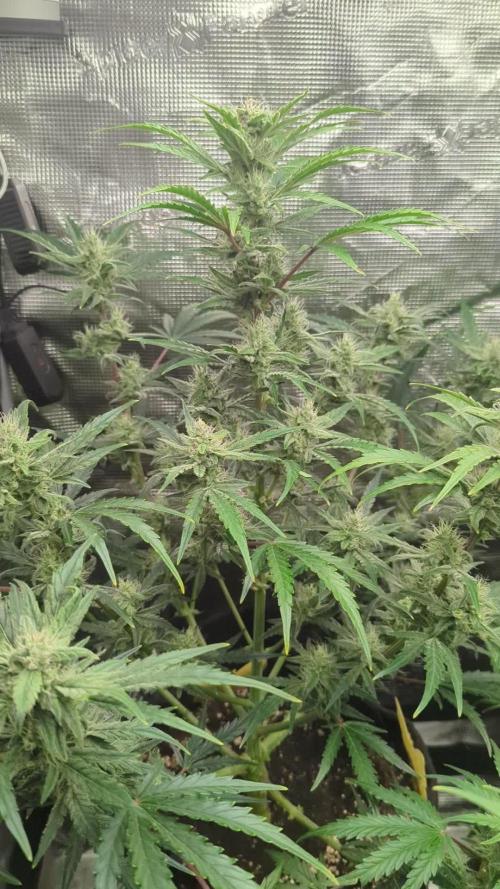
Runtz Automatic - Zamnesia
Day 51 - watered with 2L of RO tap water with defined nutrients. She's has stopped growing and is focusing all her energy on bulking now, as her flower gets taller and thicker, and her arouma is now filling the tent; a rich, sweet smell, really beautiful. 👌 I have to say, I'm very impressed with her, she is so beautiful and requires little to no work, this week was the first time I've had to perform any real defoliation on her since she entered bloom and it was only to remove smaller fan leaves around the bud sites, to allow more light to get to them.
Notes:
- Looking at her today, I would say she's around 2-3 weeks from harvest, which would be one of my fastest seed-to-harvests ever 💪


Processing
Likes
46
Share


@PureMedicin
Follow
2 of my Blueberries were root bound one more than the other.. i transplanted them into soil in a bigger pot. I Have a bunch of strains going on but one vegging mother soon ready to get in under the CFL. Loving the HPS tho wont go back to LED any time soon. Feeding with CANNA terra nute line and using the last Bud candy and big bud from Advanced Nutrients before going full canna. The monster crop was a succes but it took long before shooting. Hope my other clone will do better. I have a very healthy strawberry banana that will be my motherplant as well as a sweet valley kush that are just a seedling now. I am very happy with the HPS from phillips it work wonder in my oppinion :) I started 12/12 as well this week

Likes
29
Share


@Wrongholn519
Follow
This is really the day when I am cutting the plants down. I don't want to fill out the harvest section until I have all the info needed to do it. I find the way it is set up on here to be kind of silly...
Today is day 95 since these girls popped and stuck their heads out of the soil. I'm blown away with the size of these plants considering their age.
I'm going to contribute the majority of this success to the CO2 gas I use. I filled out my tank 4 times for a total of 100 dollars .. the 4th tank I bought is still full and I'll be able to use it on my next grow.
These buds and colas are extremely dense and packed with resin. They are giving off a really deep and complex smell. Kind of like a fruity earth mixed with skunk.
I plan on drying at temperatures between 62 and 68 deg. fahrenheit with humidity about 55%. Once the smaller branches snap completely and the buds don't come off 'stringy' then I will move on to the next step of curing. For this I use Grove bags and boveda humidity packs (62% RH).
I'm expecting at least 8 oz off of each plant and I do intend to press some with my resin press

Likes
42
Share


@GODSGIFT_2005_JM
Follow
⛺️ MARSHYDRO
💡VIPARSPECTRA
🍼GREENHOUSE FEEDING BIO GROW
🌱 WEEDSEEDEXPRESS

Likes
4
Share


@cyberaktiv
Follow
Everything is chopped and hanging in the tent to dry. Looks like it should be a nice yield. Updates to come with dry weight.

Likes
3
Share

@JVKdopegrow
Follow
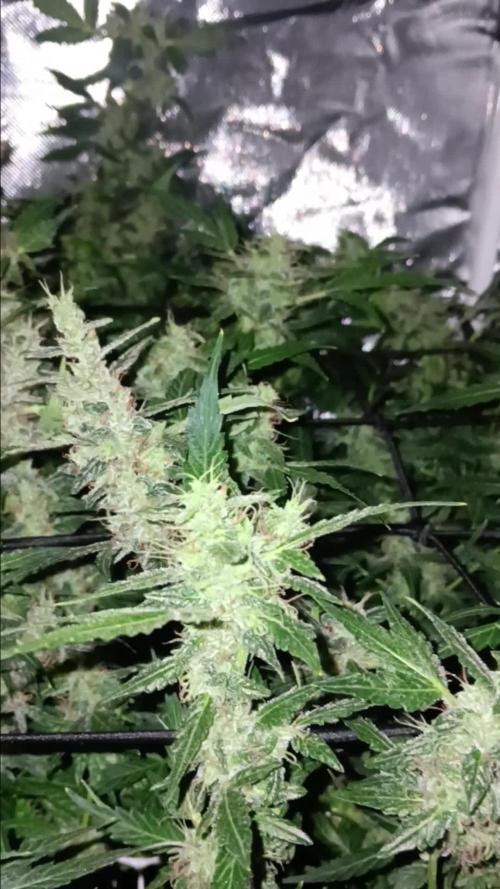
It is officially the waiting game. The impatient weeks where the Ladies appear to be ready but have a week or two to go. My first SCRoG appears successful but the lower buds definitely need more time.

Likes
Comments
Share


@AlterKiffer
Follow
Ganz zum Ende der 2. Woche nach einsetzen der gekeimten Seeds, nehmen die Kleinen so langsam Fahrt auf, messen aktuell ca.4 cm.
In den letzten 2 Jahren habe ich überwiegend Automatics angebaut, muss mich erstmal wieder an die photoperiodische Geschwindigkeit gewöhnen und aufpassen, daß ich nicht zu ungeduldig werde...😂
Gefunden habe ich die Lasche, an der man ziehen muss, damit es schneller geht noch nicht. Falls jemand weiss, wo sie ist...ich würde mich über jeden Tipp freuen! 😉😄
Das "HolidayGrow" Gel ist scheinbar der Hammer, abgesehen von gelegentlichem anfeuchten der Substratoberfläche habe ich noch nicht gegossen.
Fühle ich ein paar Zentimeter in das Substrat hinein, ist es immer noch locker- fluffig und feucht.
Aber erst zum Schluss wird ein Strich drunter gemacht und dann werde ich einen direkten Vergleich zwischen Produktversprechen und Realität ziehen können, bin aber ziemlich optimistisch.


Likes
49
Share


@masterofsmeagol
Follow
7/18 Plants are looking great. I was able to rearrange the plants so they have a little bit more space and so I can get around every plant. I have small random pest damage (i.e. I caught a four lined plant bug while hunting jpn beetles) but not enough h to warrant treatment. I will probably spray before flower. Sun's out amd plants were praying. I rotated a couple and it only took a few hours for them to "straighten out." I went to look again rhis morning and made the final determination to expand the cage. I'm looking for the 2x4's and the wire in the next couple days. The work that ive done now will but me sometime. I wonder how this rain impacted my soil.
7/19 Plants are looking fantastic. The stretch is starting. One purple punch looks like it's beginning to flower. I think I'm entering the transition period. Jpn beetle damage is evident but not significant. I defoliated a leaf with a a leafminwr or something in it. It's so much easier to get around the plants now. I'm seeing some chunks missing sporadically though. Went to the roses out back and found TONS of jpn beetleson top of each other reproducing. They destroyed that rose bush. I'm going to keep it as a trap plant. My dad's girlfriend wanted to spray it but that doesn't make sense as theflowers are all gone. Dad's grabbing the materials to extend the cage today I think. Right now I can get around every plant but the two big ones in the back. I just cant get to the backs of them and they are huge. Almost reaching the top of the cage. A 4'-6' extension will do wonders in flower. Can't wait.
UPDATE: Dad got the 2x4's and we assembled the extension and attached it. He's grabbing the wire as I type this. This worked out beautifully. I had no idea how big the blueberry cheese in the 50 gallon was! This extension (4ft i think) is PERFECT! Then I can get a little extra wire and pull it out if I wanted to. I think I have another 2x4 that I'm going to use in the middle. Lots of great pics and a video I'll upload tomorrow. Hot af today and humidity still super high. Even the commercial dudes was surprised I don't have wpm l and that judging by some of my plants structure that I may do better than I think. I certainly hope so. I WATERED 3 GALLONS OVER THE WHOLE GARDEN. The blueberry cheese in smart pots were drooping. They drink far more water than tje others. I would've given more but we are supposed to have thunderstorms. I left my back tarp off for the night. It will increase airflow and wind is down. I feel like this is going to be my year.
7/20 I updated and loaded everything on the app but notjing would save. Did it again in the website hopfully this saves
i didnt put it all up. Didn't water the plants today. Bags seemed okay weight wise. Good thing I did the extension yesterday because those three plants were drooping they were so thirsty. I focused most of the water yesterday on those plants that needed it. The others were somewhat dry but still had some weight. Like i said the blc drinks much more water than any of the other plants. I'm impressed with the growth I'm seeing. Especially since I have been being very stingy with the water and I've only fed like twice and that was just the kelp me/you and big bloom in negligible amounts. I'm watching for deficiencies. I'm just not seeing them. I'm picking up the wire and finishing the extension and then rearranging things. I'll update.
UPDATE: WATERED 4 GALLONS CONCENTRATING ON THE PLANTS THAT WERE DROOPING THE MOST. FINISHED ENCLOSURE AND INCREASED PLANT SPACE. TRELLIS WILL GO UP THIS WEEK. VIDEOS WILL BE UPLOADED TOMORROW.
7/21 I should've watered more volume last night. I noticed two plants that seemed much lighter than the rest. After some deliberation I gave them each a half gallon of water. One was the purple punch in the 10 that's huge amd the other was that huge blueberry cheese. I think I'm going to swap places with them, take out a pallet and get some other way to elevate that ONE plant and I'll have even more room. Then I'll add my supports. It's a dream working in there now. I noticed some small interior leaves being used up and dieing. I defoliated them but it was only a couple. I'll need to start nutes at some point. Doesn't need it yet though. I'm going to add some kelp me/you for the heat stress. I need to get the watering down better but it's more difficult when they each have different needs. I kinda have to read the plant. I'd rather be overwatered than underwatered. I tried to upload what I could but some won't.
UPDATE: I went over to clip off some fencing that was doubled up AND just to check on tge girls. Found two caterpillars (small but hairy so they were older not the inch worms and possibly what has been contributing to damage on those plants. Things are spread out so it will be harder for insects to move from plant to plant and I have better air flow. I worry that leaving my tarp off might lead to high winds and plants not able to take it buf I digress. I'll add supports later. Plants are huge and drinking far more water than I've been giving them. When I got there several were drooped right over and dry as a bone. The bags are essentially all roots now. I mixed up 8 gallons of water and split it between the plants. I gave less to the two Co trainer plants that weren't drooping and the 10 I watered yesterday that wasn't drooping but for the most part the ones that needed if got at least a gallon or more. The others a little under a gallon. It might rain A LITTLE tonight too. Oh, and since it's been so hot I added 1/2 tsp per gallon of kelp me kelp you to help the plants deal with heat stress. I also noticed that some of the very bottom interior leaves are being used up. I have a feeling ill need to switch to nutes pretty soon. Plus I need to suppirt those plants if I'm going to leave that tarp off and Gove them air. Took a video. But it won't upload here. I'll have to wait till tomm.
7/22 Didn't have much timevthis morning bit I dod a video. Boy those plants loved that water and that kelp. This morning everyone was standing straight up at attention. Supposed to get rain last night but didn't. Good thing I watered. I think I'm going to up the water next watering and then again to the 10% mark if necessary. Especially with the Blueberry cheeses. I'm noticing that a FEW INTERIOR leaves are showing nute deficiencies so I'm probably going to have to start feeding soon. I'll update later.
UPDATE: Went back over and cut off the extra wire. I'm going to need to water more volume. Specifically on two plants. The two huge blueberry cheese in 20 gallon smart bags dries out much faster than the rest. I'll have to out that on a different schedule or increase the amount given. Next watering will be 1.5 or 2 gallons a plant and it might be tomorrow from what I was seeing. It's super hot and with the added airflow the bags dry out faster. I also went through EACH plant looking for pests and defoliating old leaves that needed it. Plants are still nice and green but a VERY few older interior leaves are showing deficiencies. I know this is Normal especially since they are trying n g to transition to flower. I also saw pest damage on a couple plants. Four lined plant bug. I already found the one on the other plant and killed it but I'm considering doing a spray before flower. I'm thinking either captain Jack as a "catch all", BT which works great but mostly just on pillars or the organocide bee safe 3 in one pesticide. I also have pyrethium and other things. Thus far picking things off manually has been good enough. At the very least they will get an application of BT very soon.
7/23 Held off on watering this morning. Supposed to get thunder storms I DID split a gallon with two blueberry cheese that were the lightest in the 20 gallon smart pots. Thet drink way more. My water volume is going to need to increase. We haven't had nearly enough rain. I'm going to bump it up to 1.5 to 2 gallons each plant which will be 10% for the 20s and a little less for the others. I'm still seeing various pest damage. Nothing bad but I found another couples leaves that were chomped on by a four lined plant bug so I'm debating applying something tonight when I water. I'm also noticing old leaves being used up and some interior leaves showing slight deficiencies. It will be time to start nutes soon. I'll update as I go.
UPDATE: GOT THE FEELING I NEEDED TO CHECK THE PLANTS. SOMETHING DODNT LOOK RIGHT ON THE CAMS. WENT OVER AND EVERY PLANT BUT THE TWO I SPLIT A GALLON WITH AND THE PLANT IN THE 50 WERE DROOPED RIGHT OVER. LIFELESS. I SHOULD'VE WATERED THIS MORNING BUT I DIDNT HAVE TIME. I FIGURED THEY COULD WAIT UNTIL NIGHT. EACH PLANT GOT 1.5 GALLONS AT LEAST. I USED SIXTEEN OR SEVENTEEN GALLONS ON THE GARDEN. I GAVE EACH CONTAINER PLANT ONE GALLON AND GOT RUN OFF FROM BOTH. IM NOTICING SKIGHT FADING IN LEAVES BUT IM NOT INTRODUCING NUTES TO UNDERWATERED PLANTS. I THINK 10% IS GONNA BE TGE MAGIC NUMBER. 2 GALLONS EACH. EVEN THE 10 GALLON SMART POT. ALMLST AS BIG AS THE 30S BUT DRIES OUT QUICKER.
7/24 Plants looked fantastic this morning. Defoliated a few leaves that needed it. Showed my commercial buddy and he said things looked fantastic. Since the soils still holding nutes and I'm not seeing many deficiencies I may hold off on feeding. I'm starting early flower now. I will be using nutes soon. I think ive got the watering schedule pretty much down.


Likes
10
Share


@rickytpb
Follow
Week ten. I started giving booster one week ago, so her flowers are getting better every day. What do you guys think? How does she look? Shall I do more defoliation? But my tent is pretty small too. Consider that while responding, please.

Likes
4
Share


@Dirizhor
Follow
Budds are fattening...but.. one day I forgot to turn back the fan after inspection, and it was off for a week almost. As a result i have found little fluffy white patch of mold on my biggest budd.
So far I just sort of collected it, with a cotton stick.. hesitant to chop it down.
Lowering watering, to 1l every 2 days, to keep humidity below 70.
By the plan I am keepimg it through the June, 4 more weeks. Unless trychoms will call earlier.
Thanks for checking
See you next week


Likes
36
Share

@BlaKX
Follow
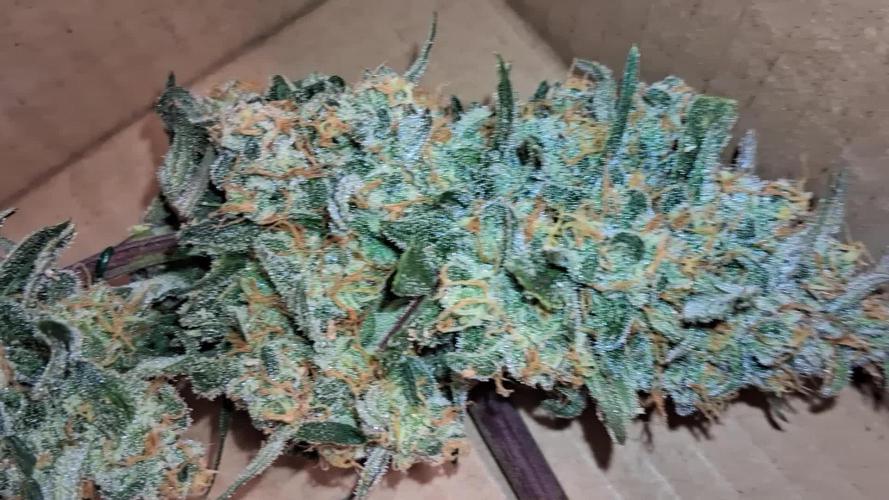
Die Ernte war relativ einfach da sie wenig Blätter ausgebildet hat und mehr Blüten Masse!
Viel länger hätte sie auch nicht mehr stehen lassen können da die Blüten Masse bei der dicke schlecht Belüftung in der mitte hat und mir das schimmel Risiko zu hoch ist .
Likes
3
Share

@Wizardgreen317
Follow
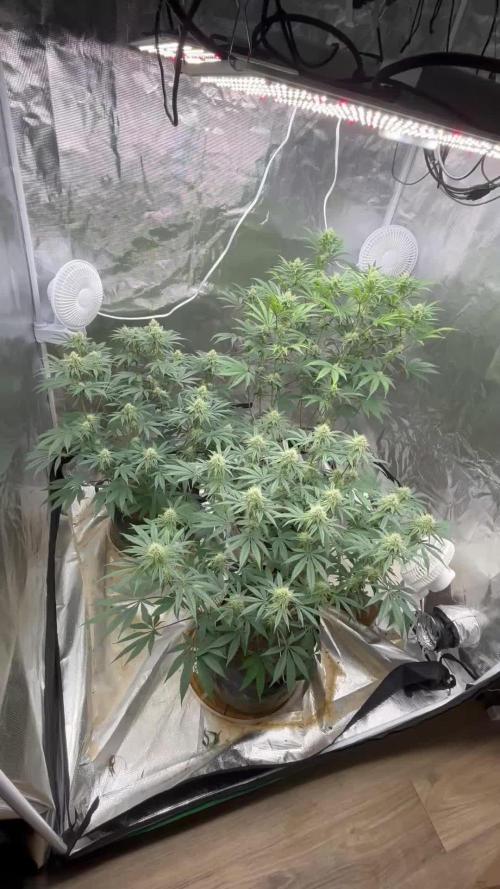
Well this week has been interesting the smalls are all there they all varied but they don’t stink which is a good think but at night my room definitely smell like cake batter lol crazy usually I tell ppl they over do it like my plants smell like this .. they need a lot but they smell wonderful and there bbm crosses are small..