


Likes
Comments
Share


@TST1313
Follow
Viel passiert! habe immer mal Blätter entfernt, immer ein paar,hat Sie gut ausgehalten.jetzt merke ich aber ,das ein Netz besser gewesen wäre,ich habe Angst,das die Äste brechen,die Knospen werden immer größer und schwerer, habe versucht mit Stäben zu stabilisieren, schwierig da zu viele Wurzeln da sind,die dann zerstört werden.Ich muss abwarten und hoffen dass keiner knickt. Blätter ober verbrennen langsam,das liegt am Dünger, ist aber nicht weiter schlimm, lass sie dran bis zu Ende. , Ich dünge 3/4 nach plan. jetzt noch ungefähr 4 Wochen. Nichts mehr wird gemacht,nur noch 3 Wochen gießen und spülen. Jetzt ist Geduld gefragt 🍀🍀🍀 jedesmal wenn ich davor stehe,kann ich's nicht glauben dass es eine einzige Pflanze ist einfach traumhaft schön,und unglaublich gut riechend

Likes
92
Share


@DogDoctorOfficial
Follow
🌸 Week 4 Flower Report: Growth, Challenges & Big Changes! 🌸
Hey, Grow Diaries Fam! ✨
We’re here at Week 4 of Flower, and what a week it’s been—packed with challenges, adjustments, and exciting progress! Before diving into the details, let’s start with a note on my flowering timeline. While this is Week 4, I don’t start counting flower days the moment I flip to 12/12. Instead, I wait for the plants to show true signs of bloom. It’s a small but significant distinction that keeps things accurate and aligned with the plants’ development. 🌱
Defoliation: Timing is Everything!
Defoliation is a critical part of the flowering stage, and I typically wait until Day 21. However, this week, I tackled it earlier on Day 17 because:
1️⃣ The room was simply too full.
2️⃣ And most importantly—the Papaya Zoap had other plans!
She’s a fighter—determined, defiant, and constantly reaching for the moon. Despite intense training like super cropping, she’s still pushing upward, nearly outpacing the LED lights. Challenges like this remind us of a simple truth: gardening mirrors life. It’s about resilience, adaptation, and unwavering determination. 💪
This week, I added a second SCROG layer. While this net will support the flowering colas, it’s also there to strategically manage the Papaya Zoap. Why? Because experience has taught me that if she grows out of the LED’s range, she won’t finish properly—and that could disrupt the balance for every other plant in the tent. It’s all about teamwork, even in the garden. 🌟
Defoliation was intense, removing nearly all the leaves with stems to clear space and boost airflow. The tent now looks dramatically different! For the full before-and-after transformation, be sure to check out my YouTube channel—trust me, you’ll want to see this process up close! 🎥✨
Switching to Aptus Holland Minerals
A major milestone this week: I’ve transitioned entirely to Aptus Holland Minerals. 🌊 From now on, it’s just minerals—no more organic inputs. This marks the start of a new chapter, and I’m incredibly curious to see how the plants react to these changes. Here’s the current nutrient mix:
• System Clean: 0.5 ml/L
• Regulator: 0.15 ml/L
• RO Water Conditioner: 0.8 ml/L
• All-in-One Liquid: 2.1 ml/L
I’m keeping the pH at 6.1 and TDS at 556 ppm, and so far, the plants are thriving. This week also included a thorough system clean, ensuring everything runs smoothly as we enter the final flowering stages. 🌿
Bud Development: Pure Magic!
The bud formation across all the genetics is nothing short of incredible. Every plant is thriving, and the canopy is lush, vibrant, and full of potential. I’ve raised the PPFD to 750 for this stage, with temps steady at 25°C and RH at 63%—keeping the VPD dialed in at 1.11. The TrolMaster ecosystem, paired with the AutoPots, makes managing these precise conditions seamless. With more time to focus on the plants, I can give them the daily care they deserve. 💚
Shoutouts & Gratitude
A huge thank you to my sponsors and supporters: TrolMaster, Aptus Holland, Pro-Mix, Cannakan, and the amazing seed banks. Your incredible products and technology make this journey possible. 🌟
To the Grow Diaries community and all my followers—thank you for your energy, love, and even the challenges from the haters. It all fuels this incredible process, and I apprecilove every bit of it.
Special shoutout to Brother Daggadna—check him out on Instagram and show some love! 💚
The plants are heading into the next phase of bloom, and I can’t wait to share how this story unfolds. 🌸✨
As always, stay tuned, stay positive, and let’s keep growing strong together! 🙌
Growers’ love to all 💚
#TrolMaster #AptusHolland #GrowLife #CannabisCommunity #FlowerWeek4 #NeverGiveUp #GrowWithLove #IndoorHorticulture #Defoliation #PPFD #ControlledEnvironment #SCROGNet #DogDoctorOfficial
Discount Codes so you can save big on your next check out 💚💚💚
Kannabia - DOGDOCTOR 30% off
SeedsmanSeeds - DOGDOCTOR 10% off
CannaKan- DOGDOCTOR 15% off
terpyz.eu - DOCTOR 15% off
The Neutralizer - PORKIT5-DOG 15% off
As always thank you all for stopping by, for the love and for it all , this journey of mine wold just not be the same without you guys, the love and support is very much appreciated and i fell honored and so joyful with you all in my life 🙏
With true love comes happiness 💚🙏 Always believe in your self and always do things expecting nothing and with an open heart , be a giver and the universe will give back to you in ways you could not even imagine so 💚
Friendly reminder all you see here is pure research and for educational purposes only
Growers Love to you all 💚💚💚
P.S. – A Deep Dive into the ICL-300: Revolutionizing Under-Canopy Lighting
The ICL-300 isn’t just another LED—it’s a game-changer for under-canopy lighting. Unlike traditional LED systems that project light in a single direction, the ICL-300’s 300-degree design ensures even light distribution beneath the canopy. 🌟 This unique feature means that no part of your plant is left in shadow, creating a balanced environment for lower buds to thrive.
Key Tech Specs & Benefits:
• 300-Degree Light Distribution: This design fills the under-canopy space with optimal light, enhancing photosynthesis where it often gets neglected. 🌱
• Full Spectrum Output: Tailored to meet the specific needs of plants at every stage, ensuring quality growth from base to apex.
• Energy Efficiency: Advanced LED technology delivers maximum output with minimal energy usage, keeping costs down and sustainability up. 💡
• Durability & Heat Management: Built with high-quality materials, the ICL-300 stays cool and reliable, even in intense growing environments.
Why It Matters:
Under-canopy lighting is a game-changer for growers aiming to maximize yield and quality. Typically, lower buds receive less light, resulting in larfy or underdeveloped flowers. The ICL-300 changes that dynamic entirely by turning shadows into opportunity. 🌟 With light evenly dispersed across the entire plant, you’re not just growing; you’re sculpting a masterpiece.
For me, the ICL-300 is more than a tool—it’s a partner in innovation. It ensures that every plant in my grow room has equal opportunity to shine, from the top colas to the smallest buds at the base. When paired with a carefully managed ecosystem, like the one powered by TrolMaster, the potential for consistent, top-quality harvests reaches new heights.
This isn’t just about adding light—it’s about adding value, efficiency, and balance to the grow process. I’m beyond excited to see how the ICL-300 transforms the game in my tent, and I can’t wait to share the results with you all! 💚


Likes
24
Share


@TerpTurtle
Follow
White Truffle x Red Pop by Detroit Seed Co
BuildASoil 3.0 LOYAL TO THE SOIL
Strawberry truffle | Vivosun 2x4 | Mars hydro sp3000 | 7 gallon pot
Chem 91 x Red pop | AC infinity 2x3 | AC Infinity Iongrid 24 | 5 gallon pot
Likes
17
Share


@HowtoBubatz
Follow
It’s the third week of vegetation, and both plants are growing like crazy! 🌿
They’re super healthy and pushing forward with lots of energy. I’ve been feeding them with the BioBizz nutrient schedule for veg and adding Root Juice to boost their root development. 🌱💧
I’m trying different LST (low-stress training) techniques with both plants.
For one, I’ve applied LST to the entire plant, bending the main stem to get more light exposure across the canopy. 🌿🔄
The other plant is a bit different—I’ve only used LST on the lower branches to encourage better side growth while letting the main stem do its thing. 🌱📈
Both plants are responding really well, and I’m excited to see how these different techniques impact their development. Things are looking promising! 😁✨
Likes
2
Share


@Shefman93
Follow
Buds look great even tho yield may not. Looks like it'll be ready for chop at week 9 or 10. No issues throughout flower so far.


Likes
4
Share


@Crazy_zx10r
Follow
Starting pre-flower, still running 18/6 light schedule . Strong smell starting to fill the room,
sweet berry skunk. plants love kelp every couple weeks
Likes
20
Share


@ReginaldJohnstonX3
Follow
Definitely ready to get the chop. Flushed for the last 7 days.
Ended up with about 12 ounces of buds and 4 ounces of larf.
Water curing the larf for edibles

Likes
6
Share
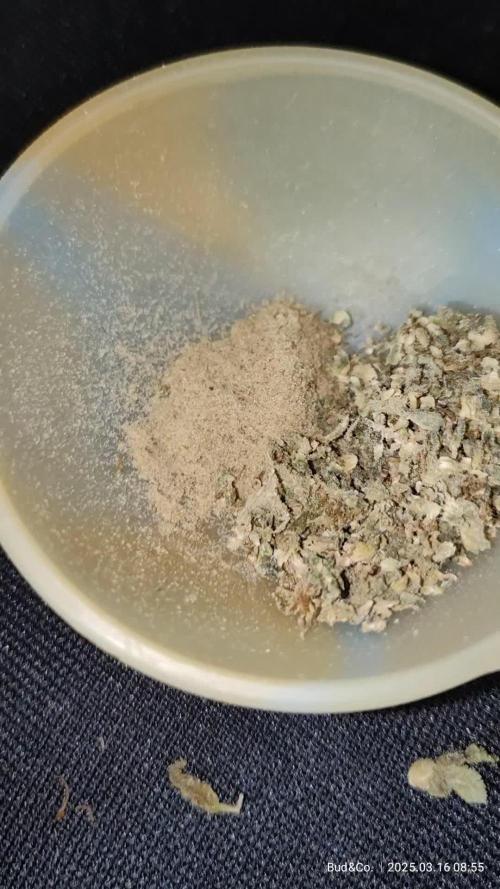

@BudeCo
Follow
Everything is ok
Growing faster than i wish.
I should defoliation again and put some clips tomorrow.
Need some topping after almost a week.
Its health and fine.


Processing
Likes
7
Share


@Mrg7667
Follow
What a crazy week!so excited to finally be in flower only after what seems likea never ending learning curve lmao🤦♂️🤘
I have been reading allot about the 3alight tech and the shwazzing or defoliation they do pre flower and i figured i would give it a try!
I went ahead and defoliated everything on day 0 . Pretty much everythinf that was easy to get to the petiole got chopped off. I left more on the plants still bouncing back from the bad nutes but the ones that looked healthy got a full defoliation! VERY SCARY as i have never takken off so much at once before! Excited to see what this does in my limited spaced!
Still doing half dose for fish mix because of all the stress going to slowly increase to 2ml/l throughout the week!
Also starting ph off around 6.0 for first week then slowly going to work my way up to 6.1 for week 2
Also started with great white every other day!


Likes
67
Share


@BarneyRumble420
Follow
Welcome back guys 💪💪 this week has been astounding in the trichome production and bud production absolutely blown away with the frost this gorilla cookies auto is producing, and a smell that can back that up holy cookies 🍪🍪🦍, very impressed with this strain, thankyou again to everyone that stopped by 💪 happy growing ✌️
www.2fast4buds.com


Likes
40
Share


@valiotoro
Follow
Hello everyone week 6 has passed 😎
I’ve spotted a « true » hermie for the Biscotti Mintz from Barneys Farm,pollen sac & female flower😌i ve posted a photo if it can help🤓
For the others girls they are very well growing at fast pace and with a beautiful green colour on the leaves🤩
For the nutrient my homemade fertiliser 100% bio,now for the flowering stage its Symphytum officinal & banana peel super rich in potassium,phosphorus,boron & macro nutrients ⚡️
For the light schedule they spend 12 hours outside full of sunlight☀️
Some LST🔗
I will force the plants to flower in my garage 100% lightproof😎
So every morning and every night i remove all the plants from my garage at the same hours 💪


Likes
6
Share


@SirBudAlotts
Follow
Well topping her most certainly paid off!!
I got two huge Colas...awesomeness!!
She was a pleasure to grow so far...
Since she is a chuy Sativa she seems to have produced almost frost everywhere!
Likes
15
Share


@DudeGrowsWeed
Follow
Transplanted into bigger pots and moved 2 of the Cream Cookies outdoors. Outdoors I'm growing in 5 gallon buckets filled with ProMix. There are holes drilled at the bottom of the buckets for drainage and the buckets are wrapped with copper tape to help prevent slugs and snails (it works). In the outdoor pics the Cream Cookies are on the right and left (in the middle is Dinafem Quick Critical+). The transplanting didn't stunt anything, seeing significant growth the next day both outdoors and indoors.
Still feeding on the Fox Farm schedule at 1/2 strength. This week adds Grow Big to the mix, still feeding Big Bloom, Recharge and CALiMAGic.
Totally psyched to see how things develop and compare the outdoor with the indoor. Let the fun begin!!! 😃
Likes
14
Share


@n1mbu5
Follow
Please like and follow the diary, or leave a comment!! appreciate the support guys🙏💚🔥
Ok guys here we are i thought they would be ready for harvest by now, but i think they gave another 7-9 days to go soo fingers crossed next post will be harvest time!
I would have carried on feeding if I knew it would take this , but now we are on flawless finish until harvest
Trichomes are still mostly milky, have some clear ones on the banana purple punch because she is foxtailing like mad because of heat, and just a touch of amber on some
Been 30+ Celsius most of the grow, luckily this week will be cooler for them
I also did a stupid and fell in my tent while taking pics, ended up with 1 branch of z up as a premature tester hahaah I've added some pics of it
Am going to enter my banana purple punch and z up in the biggest cola contest (I know my ruler starts from 22cm my 10 month old broke it) so BPP is currently 34cm long and the z up is 24 cm long
Likes
5
Share


@Random80
Follow
I was keeping them as low as possible with LST, now I ll try to keep buds away from each other.
Likes
42
Share


@Shooey
Follow
Amnesia is really starting to fire 🔥, buds are lining the branches nicely, in particular the 2 crowns where she was tipped early on. The weather has really eased off heat wise, in fact it has changed a bit too quickly, and I kind of hope for a few more warm sunny days now. Amnesia takes heaps of feeding and loves it for the most part. No sign of burn, but I have one bud that seems to have a lime yellow outbreak on top. I’m not too worried because it’s only on one bud, and it’s going away a bit now, but it’s weird and I wonder if you guys have seen this before @grey_wolf or @Med_in_Tropic?? Maybe she got the corona!! 🍻