




Likes
13
Share


Likes
226
Share


@Kitties_and_Colas
Follow
~_~_~_~_~_~_~_~_~_~_~_~_~_~_~_~_~_~_~_~_~_~_~_~_~_~_~_~_~_~_~_~_~_~_~_~_~_~_~_~_~_~_~_~_~_~_~_~_~_~_~_~_~_~_~_~_~_~_~_~_~_~_~_~_~_~_~_~_~_~_~_~_~_~_~_~_~_~_~_~_~_~_~_
10/22/21
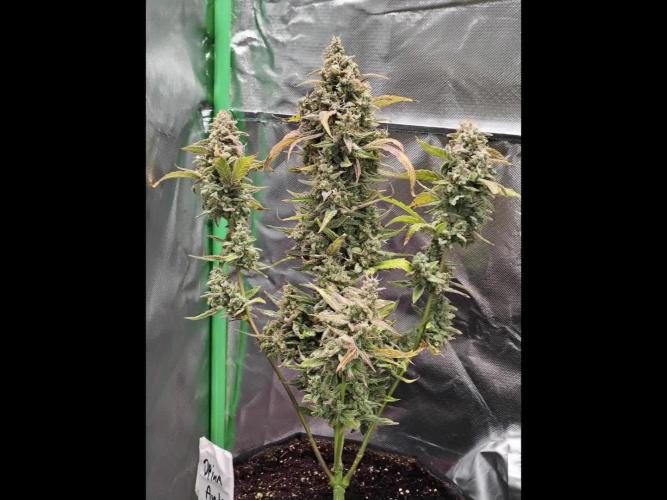
😻Harvest week!! Trichs are finally there friends!..We'll update with photos,vid and weights after our camping trip..thanks for dropping by and happy harvests everyone!! https://youtu.be/JC6zVPeKFPk
~_~_~_~_~_~_~_~_~_~_~_~_~_~_~_~_~_~_~_~_~_~_~_~_~_~_~_~_~_~_~_~_~_~_~_~_~_~_~_~_~_~_~_~_~_~_~_~_~_~_~_~_~_~_~_~_~_~_~_~_~_~_~_~_~_~_~_~_~_~_~_~_~_~_~_~_~_~_~_~_~_~_~_

Likes
7
Share


@JandM
Follow
Things are going pretty good the smaller plant that was growing crooked fixed itself and is starting to grow a lot faster. They both just started sprouting hairs and the tent is starting to smell nice. Also I only mixed in 1 tablespoon of grow dots into each 3 gallon pot. My last grow with Tropicana cookies I did 2 tablespoons of grow dots in 3 gallon pots and had tiny yellow tips throughout the grow. 1 tablespoon seems to be doing the trick this time with the poundcake.

Likes
8
Share


@I_Identify_As_A_Dan
Follow
Week 1 of flower for Ztrawberry by Greenhouseseedco,
After the feeding she really started to get better colour, for now I wouldn't say shes stretched much? maybe an inch or 2.
Have been having to run a heater at night at 27 degrees... Looking forward to week 3 strip if I don't start a little earlier.
Just have to keep the tops flat now and should be easy growing from here.

Likes
126
Share


@nonick123
Follow
Dia 1 (17/01): La semilla ha germinado! (+3 días) 💥 Enciendo la lámpara del armario a PPFD 225
Dia 2 (18/01): Fuerte y vibrante plántula
Día 5 (21/01): Las plántulas se han estirado ligeramente, por lo que subo a PPFD 300
Día 8 (24/01): Las chicas están asomando las raíces por la parte inferior de la maceta. Parecen fuertes!
Nutrients by Gen1:11 - www.genoneeleven.com
Substrate PRO-MIX HP BACILLUS + MYCORRHIZAE - www.pthorticulture.com/en/products/pro-mix-hp-biostimulant-plus-mycorrhizae
Likes
92
Share


@DogDoctorOfficial
Follow
Week 18 (Week 10 Flower) Grow Diaries Report – Part One: Wrapping Up the Journey
🌱 Pre-Harvest Reflections
This week has been a mix of emotions as we approach the final chapter of this grow. Let’s talk about why we made the decision to pre-harvest portions of the Gorilla Melon and Papaya Zoap. While both plants have been incredible performers, a few buds on each started showing early signs of bud rot. This is an unfortunate but natural challenge when growing such dense and resin-packed colas. The decision to harvest those sections early was made to protect the rest of the crop and ensure quality and integrity for the remaining flowers. Vigilance is key in a packed garden like ours, and careful monitoring ensured the rest of the room remained safe and thriving.
🌈 A Symphony of Colors and Frost
The grow room is a visual masterpiece this week, with shades of deep purples, vibrant greens, and golden hues taking over. The fading is absolutely breathtaking, showcasing the natural progression of the plants as they near the end. Combine this with the insane level of frost blanketing the buds, and it’s safe to say this is one of the most beautiful gardens I’ve ever cultivated.
✨ Spectrum Management: The Secret to Stunning Results
The current lighting setup is a game-changer:
• 50% whites to maintain overall balance and structure.
• 100% reds for enhanced ripening and color development.
• 100% UVs to boost resin production and amplify those trichome levels.
The ThinkGrow LEDs paired with the TrolMaster spectrum control system have truly unlocked the garden’s full potential. Watching the plants sparkle under this setup feels like seeing stars on a clear night—magical and unforgettable.
🌟 Quick Recap: The Journey So Far
From seed to this incredible moment, this grow has been a testament to precision and passion. From germination to veg and through flowering, every detail was carefully tuned, every decision made with intention. Along the way, we navigated challenges like pests, mold, and environmental shifts, proving that adaptability and dedication are essential. And here we are, ready to bring this journey to a close with nothing short of perfection.
Week 18 (Week 10 Flower) Grow Diaries Report – Part Two: The Tools That Made It Possible
💡 ThinkGrow LEDs: These lights have been the heartbeat of the grow, delivering unparalleled spectrum control and efficiency. The ability to fine-tune every stage of the plant’s life cycle has been a game-changer.
🌬️ AeroFan System: Consistently circulating air while keeping the environment balanced and mold-free. The AeroFan’s role in preventing hotspots and ensuring even coverage cannot be overstated.
📱 TrolMaster System: The brain behind the operation, the TrolMaster system has provided unmatched control and precision. From monitoring temperature and humidity to dialing in lighting and CO2, it has truly transformed how I grow.
🏕️ Tent-X Setup: The foundation of the grow, this tent provided the perfect space for controlled cultivation. Its design maximized efficiency while keeping everything neat and manageable.
🌡️ Sensors and Monitors: Every parameter was tracked with pinpoint accuracy. From VPD to soil moisture, the sensors ensured every need of the plants was met in real-time.
Each tool, piece of gear, and setup component has worked seamlessly together, creating a true ecosystem of excellence. This grow wouldn’t have been the same without them.
Ending with Gratitude and Excitement
To the community: thank you for joining me on this incredible journey. Whether you’ve been here since the beginning or just tuned in, your support has been everything. From the lovers to the critics, you all push me to grow (pun intended).
To the sponsors: ThinkGrow LED, TrolMaster, Aptus Holland, Pro-Mix Soil, and everyone else involved—your products are not just tools; they’re inspirations.
And finally, to these plants: you’ve taught me patience, resilience, and the beauty of the process.
🔥 Next Up: Stay tuned for the epic harvest and a deep dive into the final results, from trichomes to yields and beyond. The end is just the beginning of the next adventure. 🌟
Let’s finish this grow strong! 🌱✨ Growers Love.
Discount Codes so you can save big on your next check out 💚💚💚
Kannabia - DOGDOCTOR 30% off
SeedsmanSeeds - DOGDOCTOR 10% off
CannaKan- DOGDOCTOR 15% off
terpyz.eu - DOCTOR 15% off
The Neutralizer - PORKIT5-DOG 15% off
Fast Buds - DOGDOCT 15% off
As always thank you all for stopping by, for the love and for it all , this journey of mine wold just not be the same without you guys, the love and support is very much appreciated and i fell honored and so joyful with you all in my life 🙏
With true love comes happiness 💚🙏 Always believe in your self and always do things expecting nothing and with an open heart , be a giver and the universe will give back to you in ways you could not even imagine so 💚
Friendly reminder all you see here is pure research and for educational purposes only
Growers Love to you all 💚💚💚


Likes
52
Share


@PEAKYPLANTERS
Follow
Brothers and sisters farmers.
My job here is over!
Growth was rather difficult because of the heat, but I believe that this strain is the only one who perhaps kept more than all the others, rediscovering to give me the solid nuggets!
Greetings to all of you, fantastic Weed friends
Happy and abundant harvesters

Likes
7
Share


@eldruida_lamota
Follow
Vamos familia actualizamos la cosecha de las gelato Olandese de Dutchfem .
La verdad que el secado muy bien 7 días en Malla y a los botes, 40% humedad y 24 grados es la temperatura ambiental que han tenido en el secado.
Por lo demás de miedo os la recomiendo.
Gracias a DutchFem, Agrobeta y Mars hydro , sin ellos este proyecto no sería igual 🙏.
Agrobeta:
https://www.agrobeta.com/agrobetatiendaonline/36-abonos-canamo
Mars hydro:
Code discount: EL420
https://www.mars-hydro.com/
Buenos humos.


Likes
5
Share


@CaptainKurryKush
Follow
Day 39
Light Cycle 18/06
Air Humidity 52~57%
Temp 20~26ºC
The plants are stretching up very fast and getting bushier. I moved the light cycle back to 18/06 and dimmed the TS 100 to 100%. The plant nº 3 is drinking more water so it was watered with 1 litter today.
Day 41
Light Cycle 18/06
Air Humidity 65 ~70%
Temp 20~28ºC
Yesterday, the plants were top dressed with 10g of EcoThrive Charge mix with soil and watered with 200ml plain water. and today I gave the regular dose of nutrients (1L on each)
The plants were defoliated, and I try to spread the maximum I could on the scrog.
Overall, they are looking very healthy and vigorous. All the secondary branches are stretching up rapidly. I can wait to see the results
Likes
9
Share


@TeaTime
Follow
This cultivation I lost a little bit the size that could reach . 😓
The light stayed too much close of the plant .

Likes
12
Share


@GardenOfHerbs
Follow
not sure where the dry weight thing went but i dont fill in wet weight. who even weighs there whole plant?
dry yield is 269gram of pure bud. Grown in a 22liter pot with biobizz lightmix soil and greenhousefeeding bio line
this smells so hard that my neigbor called the cops. she even smelled it in her apartment so its game over for me because off this plant. never came across such a weed smelling strain in the 8 years that im growing.
hope to be back in 6 months or so.

Likes
Comments
Share


@Mikes
Follow
Just started the 12-12 with carbon load and this thing sprouts like crazy...
Likes
24
Share


@Easygrower
Follow
Hello growers day 50 in the garden things are going well she’s getting big still not a hint of purple 😩I swear I’m being had here all other one’s on here are dark purple and mine is bloody green 😂 what is going on? Until next week happy growing and be safe✌️🏻
Processing
Likes
2
Share


@Cannatech
Follow
So in this week the bids really start taking off so you can see how the colas formed and how they will start to swell

Likes
13
Share


@GrowGuy97
Follow
Flower day 24 - Ladies are coming along great! A few are having calmag deficiencies but nothing major, other than being a bit crowded I couldn’t be happier with the grow so far! Thank you to everyone following & happy growing friends!✌️🏼🌱
Flower day 25 - Humidity is at 47% temp is at 79F - Ladies got watered today at 6.5 PH , a few got some calmag. Happy growing friends!✌️🏼
Flower day 27 - RH is 51% Temp is 81F - Ladies got fed today, I got the fox farm Dirty Dozen kit is so the got a lot more stuff this week hoping it helps! Happy growing friends!🌱✌️🏼
Flower day 29 - Noticed some PM on one of the Gorilla zkittlez😫 have her pulled out of the tent right now apply neem oil hoping she will bounce back!


Likes
3
Share


@CanarianGrow92
Follow
Last week of veg, i think these girls will start to flower the next couple of days! At the moment great results under this TS1000 as always! We gave a very light nutrients this week just to jave some nitrogen as im using a light mix as soil, lets see how it goes the next weeks 😁💪
Likes
149
Share


@SlowpokeFuegobud
Follow
🍪 🍒 🍰🍩 🎀🍪 🍒 🍰🍩 🎀🍪 🍒 🍰🍩 🎀🍪 🍒 🍰🍩 🎀🍪 🍒 🍰🍩 🎀
Day 95 chop time, harvest went fast, the stems were loaded with buds. Hehehehe.. Cannot wait to smoke this one! 😎😍
As you can see, we made a real break-up cake. 😋 You will find the recipe in the smoke report, down there! ⬇️ 😏 Beware! It's a really strong cake, I do not take responsibility whatsoever! ✌️😁
Thanks for showing up and supporting me and the girls, bless you, growmies!! 😘 ❤️
Shouts go out to my sponsors @GreenBuzzNutrients, thanks so much for your support!! 💚 💚 💚
If anyone would like to try their amazing organic products, you can find a generous discount code of 25% in my weekly comments! 😜 🙏
If you want a recommendation which product to get first.. BIGFRUITS!! 😍 I love the tasty terps with this one!!
https://greenbuzznutrients.com/
Thanks also of course @Kannabia, for the beautiful genetics!! 🧡🧡🧡
Pouring all my love into this grow, thank you for joining in, growmies!! 💚 💚 💚 😘 ❤️ ❤️ ❤️
Wishing you all the best for your beautiful gardens!🌱 🙏 Grower love!! 💚
_________________________________________________________
Strain Info:
https://www.kannabia.com/en/feminized-cannabis-seeds/break-up-cake
We need to talk
You’ve got to celebrate everything in this life, and that includes love and heartbreak. Since you’re all familiar with Wedding Cake feminised marijuana seeds, we’ve put a Break-up Cake in the oven at the Kannabia Seed Company – because things don’t always go well, and we sometimes need a friendly seed to lean on.
Break-Up Cake has a base of Girl Scout Cookies, one of North America’s best-known strains, which is earthy with a very potent indica effect. And we top it off with a delicious Cherry Pie which, in addition to giving it an elegant dark attire, adds a silky, deeply sweet flavour of cherries and berries. Look no further – it’s the perfect cake.
This seed will be celebrated for its ease of cultivation and abundant production. It’s one of the best investments you’ll make this year. But if it’s going to be memorable for one thing, it’s for its sweet complex flavour that’s full of contrasts. If we have to break up, let’s do it sweetly and amicably, right?
How to: Break-Up Cake
Break-Up Cake is an “all-terrain” marijuana seed, which will adapt to the place you allocate to it. An ode to independence, it’s a plant with only the most basic needs that knows how to grow by itself.
It’s a pale branching plant with tremendous dark green leaves, purple tips, and an icing sugar coating of trichomes. Its immense buds are some of the stickiest ones we’ve found in our seed bank recently.
Indoors, it needs 60 days of flowering to give no less than 600 grams per square metre. Use a Screen of Green method without hesitation, or plant it using hydroponics if you want to obtain the full benefit of its potency.
Outdoors, it reaches two metres in height with a harvest of 800 grams per plant, which is reason enough to give it a go. Like a good break-up cake, this plant doesn’t need to live with a partner, and knows how to live well in a Guerrilla plot. Between 25th and 10th October is its moment.
Taste and effect of Break-up Cake
Very relaxing but not causing lethargy, it’s a good indica-dominant plant. Its effect is mellow (we’re too old for childish games). It calms the consumer but it also gives rise to creative moments. Head on up to the top floor, later to make your way, little by little, down to the kitchen later (where you might want to give in to temptation if you need to stimulate your hunger).
The flavour is full of nuances. It will remind you of a vanilla sponge or cheese cake: you’ll notice a cherry topping, something sweet that you can’t quite distinguish, and an earthy undertone on a biscuit base… You’ve got to sample it to know it.
_____________________________________________________________________
SETUP:
80x80x180 cm Zelsius
240W Full Spectrum LED IR UV dimmable
DW240H-A6-HS
Heatsink color red
LED Chips:
512pcs SAMSUNG LM301H
24pcs Osram 660nm
8pcs Osram IR 730nm
8pcs UV 385nm
Color mix: 2700K
4000K
2,8umol/J
Driver HLG-240H-C2100B
Coverage: veg 5x3ft / flower 4x2ft
Product size: 628x205x68mm
Green Buzz Nutrients
Shouts go out to my sponsors @GreenBuzzNutrients, thanks so much for your support! 💚 💚 💚
If anyone would like to try their amazing organic products, use code GD42025 for generous 25% discount (for orders of minimum 75€) ✨
https://greenbuzznutrients.com/
Biobizz Lightmix
custom exhaust fan 320/270cm³/h
Carbon Active Granulate 240cm³/h
tab water pH 8 - EC 0,25 with Calmag to 0,5
Advanced Hydroponics pH minus Grow
Bloom to pH 6.2
🍪 🍒 🍰🍩 🎀🍪 🍒 🍰🍩 🎀🍪 🍒 🍰🍩 🎀🍪 🍒 🍰🍩 🎀🍪 🍒 🍰🍩 🎀

Likes
11
Share

@Salokin
Follow
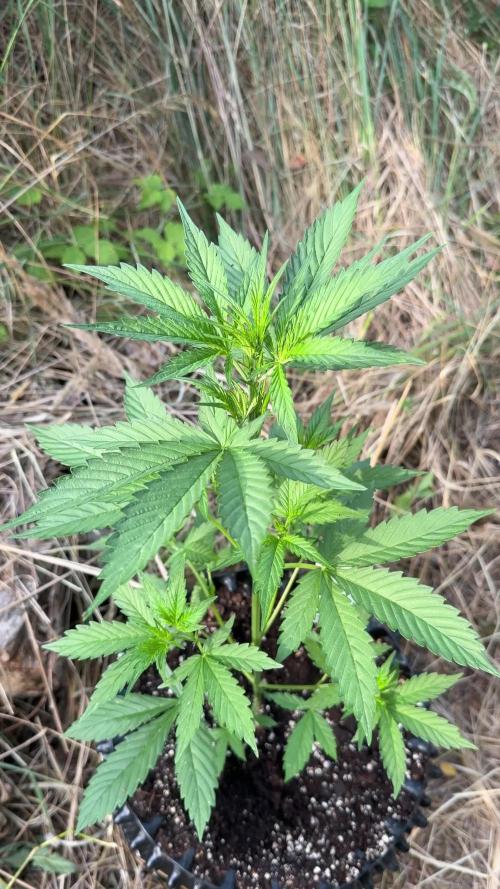
Week 5 | LSD Auto | Vegetation
One week outside and she’s made her feelings very clear. From 18cm at transplant to 50cm this week — the combination of full sun and the freedom of the 12L airpot has lit a fire under her. Structure is strong, internodes tight, canopy spreading well in all directions.
Temperatures have been running hot with 35°C during the day and dropping to 18°C at night — a wide swing, but she’s handling it without complaint. Humidity holding at 60%. Natural light schedule at 17 hours for now.
Watering is up to 1L per plant per 24h to match the increased demand in the heat. EC stepped up to 1.2 mS/cm, pH steady at 6.2. Nutrient stack adjusted to meet her new pace: CANNA Aqua Vega at 3 ml/l, CalMag Agent at 0.9 ml/l, Aptus Regulator at 0.1 ml/l.
Updates every Sunday. Stay tuned.
