


Likes
Comments
Share


@GorkedOut
Follow
Chopped on day 77; and dried for 7 days.
Plant 1: 34.8 grams dry
Plant 2: 40.8 grams dry
Total dry weight: 75.6 grams (2.70 Ounces)
The plant is super frosty and smells very sweet. It's now in a grove bag and curing. Can't wait to do a smoke report in about a month.
Hope you enjoy two song variations I made with a slideshow of the grow

Processing
Likes
10
Share


@Barcelona_Farmers710
Follow
Bueno entramos en semana 3 de flora... pasaremos usar pl booster y esperemos poder pasar led antes que acabe esté cultivo. El calor lo hace insoportable para las plantas están bastante resentidas a ver que tal sale! Salut y força al canut farmers!🔥


Likes
6
Share

@OGorganicsw
Follow
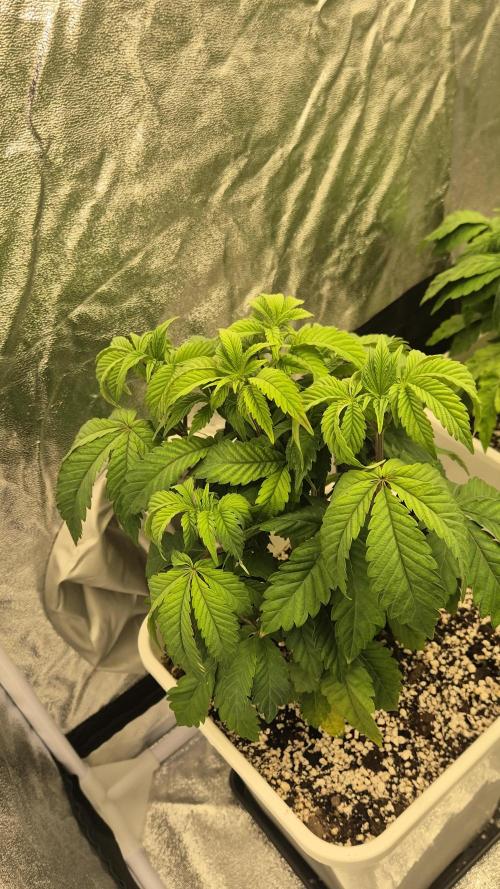
I have already removed the last fan leaves that were blocking the growth of the lateral branches. Now, after one more week, I hope they recover so I can start flowering. At least this has helped develop more bud sites which, I hope, will burst out explosively during flowering.

Likes
1
Share

@Ketamine
Follow
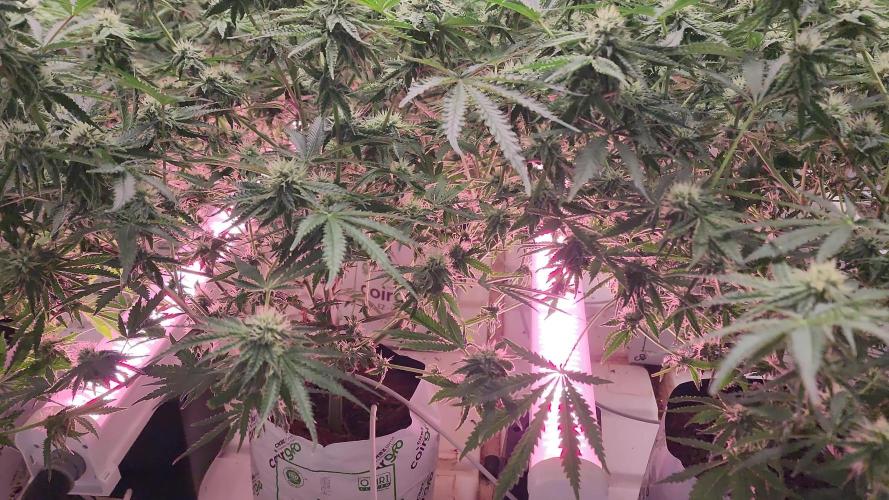
Really bulking up. Did some defoliation this week. For a low yielder not too bad, crop steering + under canopy lighting is pushing these above and beyond. Trellis up today, really bulking up
Likes
5
Share

@TyRun
Follow
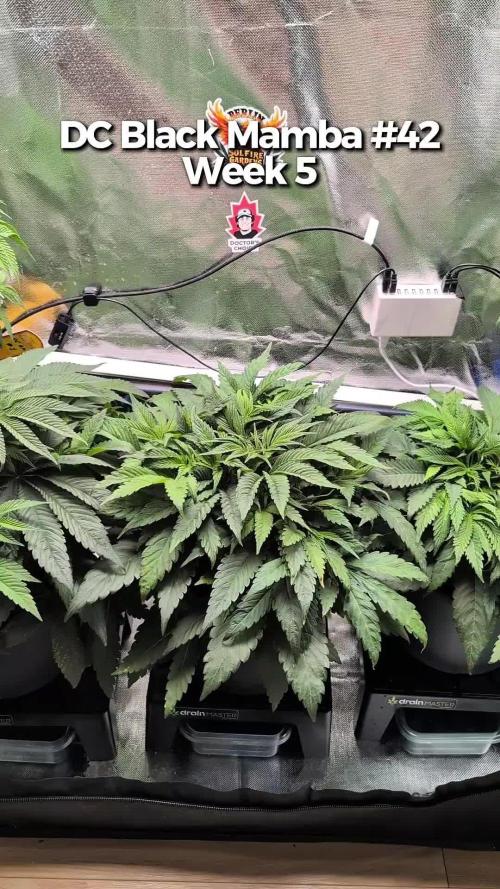
As promised — I fixed everything, dialed it in 🙂
Plants are doing great now, growing fast and looking healthy.
You often see people asking: “My runoff pH keeps dropping, what should I do?”
I used to recommend increasing potassium, even though at that point it was just a theoretical assumption — I hadn’t actually tested it yet.
Well… now I have. And it works.
Situation:
Input pH is stable around ~5.8, but runoff pH keeps dropping over time (in my case down to 5.2, even 4.7 on one plant).
At the same time, EC is either dropping or at least not increasing.
I tried light flushing — yes, it helps temporarily, but:
Only short-term — next day pH drops again
Adds unnecessary stress to the plant (basically suffocating the roots)
Solution:
Increase potassium.
First, I boosted it by about +50%, then added another +30% on top of that.
Example: I had ~2 ml per 10L → increased to 4 ml → after 2 days up to 5.5 ml of Canna Mono K.
It took about 3 days to stabilize — runoff pH went back up to ~5.7–6.0.
If you’re using base nutrients:
Just get some Canna Mono K — it’s made exactly for situations like this.
Yeah, I know I’m basically mixing my whole solution around it, even though Canna says you can’t build a complete feed with it alone — but in practice, it works for me.
Also, side note — now 10L lasts me about 2 days.
And that’s it for veg — switched to 12/12 on day 36.
Likes
11
Share


@Miketama
Follow
One of 4 strains grown together in 0.36m² using Migro Array 2 (125W). Variable dimming: W1 60%/24h, W2-10-11-12 60%/20h, W3-5-8-9-13 80%/20h, W6-7 100%/20h. Average real consumption: 95W with 173.6 kWh total.
STRAIN: Divine Seeds genetics - underrated
breeders producing excellent quality!
NUTRIENTS: Full Biotabs bacterial line - positively surprised by the results! Organic living soil approach.
GROWING APPROACH: Focused on DLI (calculated from Migro’s PAR map), VPD, water temperature, and water resting time. Did NOT monitor pH, EC, CO₂, or use PAR meter.
MY BEST HARVEST SO FAR! 🏆
COLLECTIVE METRICS (4 plants total):
• Total dry weight: 210g (+ 10g bubble hash)
• Total wet weight: 890g
• g/watt: 2.21 (or 2.31 with hash)
• g/m²: 583 (or 611 with hash)
• Average per plant: 52.5g
Individual weights: Fractal 55g, Northern Lights 54g, Black Opium 67g (best performer!), Moon Rock 34g. Dense and resinous buds.
Additionally grew 3 outdoor plants (Fractal #2: 21g + 60g frozen, Northern Lights #2: 14g + frozen, Black Opium #2: 50g fresh frozen) - not included.
~300g frozen trim (indoor+outdoor) yielded ~10g bubble hash.
Good luck to everyone in the contest! 🍀

Likes
15
Share


@I_Identify_As_A_Dan
Follow
Week 7 for gelato 41,
She's been topped a few more times now as you can see she's really pushing her size, I'm still stretching her out size ways.
Nothing too crazy to report from here besides I've been giving her an extra 4/5h in sun light to start to harden her off a bit before moving her outside to her final pot (which may be end of this month but we'll see)

Likes
19
Share


@Foggedaboudit
Follow
Flush is on. A week or so I reckon. 90% of trichomes are already cloudy. The smell is so complex! The colors amazing! Can’t wait!

Likes
17
Share

@BabaHase
Follow
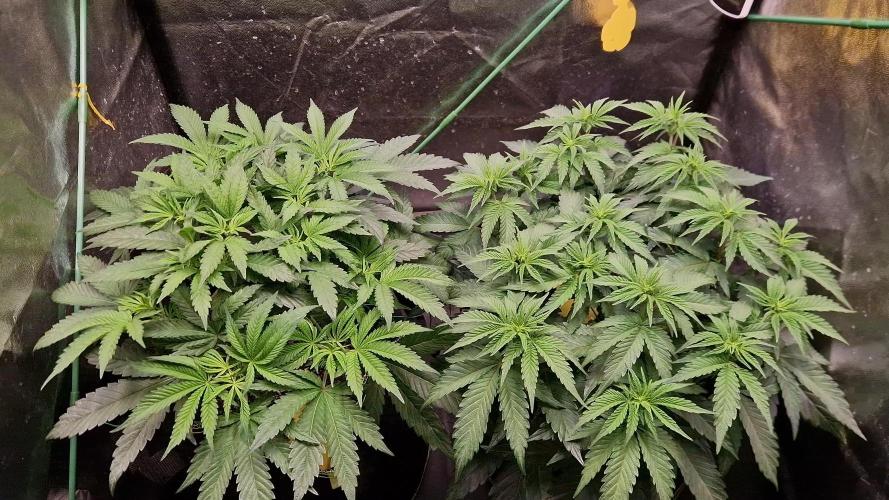
Seitdem 23.11 steht das Licht nun auf blüte - 7. BT. Sie macht sich sehr gut. Ist vital, macht keine Probleme. Hoffe das bleibt so :) planmäßig wird mitte/januar geerntet.

Likes
102
Share


@OrganicNature420
Follow
Germination date 🌱 02/12/2021
Day 94 09/03/2022
Strain 🍁 Barney's Farms Biscotti Mintz
(Biscotti x Mintz)
THC% • 30%
💡 Mars Hydro FC-E6500
• Power draw 650W + 5%
• Max coverage 5 x 5
• LED 3978 pcs high quality chips
• Max Yield 2.5g / watt
• Noise level 0 DB
• Removable Driver & Light bars
• Daisy chain
• Fast cool system
https://marshydroled.co.uk/ 🇬🇧
PROMO CODE • (organicnature420) DISCOUNT
https://www.mars-hydro.com/ 🇺🇲
PROMO CODE • (ORG420) DISCOUNT 👍🏻
⛺ Mars Hydro 150 x 150 x 200cm
📤📥 AC infinity 6inch
💧 10lt dehumidifier
❄️ 3.1kw air con system
💉 Nutrients Dr Forest (dry amendments)
Grow
Bloom
Bloom2
🌱 Growing Media • Soil
Notes 📝
It's not been a good week. Had some family time last week and unfortunately caught covid with all the symptoms. I've been bed bound since Monday and today I'm starting to feel slighty better. Not asking for sympathy 🤣 but this explains why some of my girls have switched on me...
Looks like all 3 Frosted Biscotti have gone into reveg. Obviously have a light leak but think I've sorted it now. The mystery is just well under feed as I've run out of Bloom and big Buds and its also gone into reveg. The other coco ones haven't gone into reveg and almost look done. Biscotti Mintz and Bahama Bussdown look 🔥 well impressed. The mutant Biscotti Mintz (soil) has come along nicely and looks amazing. I don't get why that hasn't revegged as its surrounded buy the others that have. The 2 at the back, (Bahama Bussdown) ones taken a slight knock and revegged and the other one has just got to heavy and collapsed. Again looks near enough done so now need to think of a plan of action for curing as tent will be occupied for at least another month. So I think that's it with the problems 🤣 ..
Apologies again for not getting back to anyones dairys over the last 2weeks. I'm going to spend the weekend catching up with you all and sorting out the tent as long as I'm covid clear. My partner has been doing so much for my son and I I couldn't ask her to maintain the tent aswell. She did give them a water but no nutrients 🙈 half effort still wins my heart ❤️
Discount codes in bio for Mars hydro


Likes
5
Share

@420abbybox
Follow
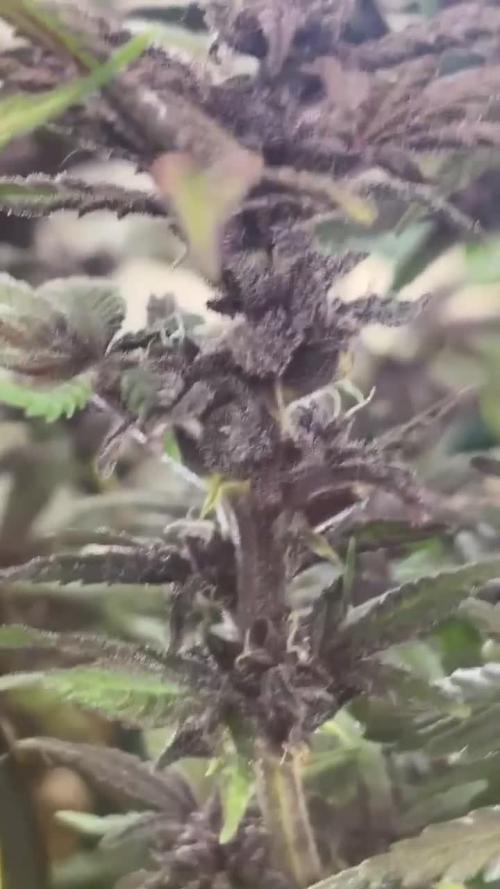
Lemon cherry cookies + lemon cherry cookies +frozen face all have distinct colours and frosty buds with interesting aromas to each plant
Have been in flushing for 3 weeks now gonna leave for a one last week for coco to dry out and ripen so can Harvest


Likes
27
Share

@gr3g4l
Follow
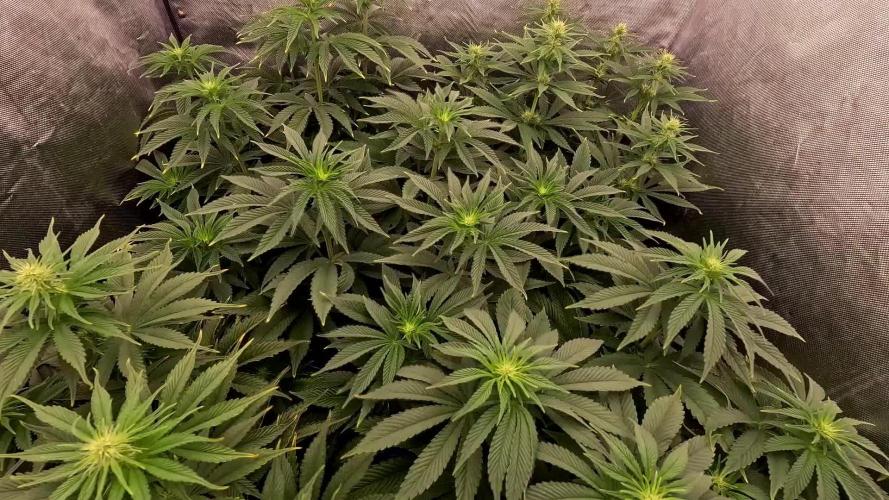
This week, the bud fattening and trichome appearance were clearly noticeable.
There's not much more to add.
Good color, good size, good overall feel.
Size between 60 and 70 cm.
Unfortunately, there's something that needs improvement, like the consistently low humidity, but I'm not keen on using a humidifier during flowering.
This week, first waterings with GreenSensation
Semana en la que se notó bién el inicio de engorde de los cogollos y la aparición de los tricomas.
no habría mucho más que añadir.
Buen color, buen tamaño, buenas sensaciones.
Tamaño entre 60 y 70 ctms.
Desgraciadamente habria algo que mejorar como la baja humedad que suele haber pero meter el humidificador en flora no me hace ninguna gracia.
Esta semana primeros riegos con GreenSensation
Likes
39
Share


@Hazecat_420
Follow
Las altas temperaturas han persistido es por esto que el riego ha sido más seguido variando siempre entre fertilizante y agua. Esta vez ya se utilizó Flawless Finish para este último proceso, una vez secándose el sustrato se comienza con la cosecha. Ha sido un buen cultivo. Veremos como termina esto. Seguimos ! 👽💪
Likes
Comments
Share


Likes
7
Share


@eldruida_lamota
Follow
Venga familia que acabamos la sexta semana de estás Gelato Olandese de Dutchfem.
Entramos en la recta final esta semana aplicamos el PK de Agrobeta, ExplotaCogollos.
Iremos viendo el proceso de engorde de las flores.
Se ve que tienen un buen color están bien sanas, se ve que progresan adecuadamente.
Agrobeta:
https://www.agrobeta.com/agrobetatiendaonline/36-abonos-canamo
Mars hydro:
Code discount: EL420
https://www.mars-hydro.com/
Las maximas de temperatura no superan los 26 grados y las mínimas no bajan 20, así que no me puedo quejar.
Los niveles de humedad también son los correctos van entre 50%/65% de humedad relativa.
Por supuesto el Ph lo estamos dejando alrededor de 6.
Hasta aquí es todo, buenos humos 💨💨💨.

Likes
10
Share


@FrulaFrulaki
Follow
Swiched the light schedule to 12/12. I was planning to put a net in this week but I'll have to swich up the positioning to make it more efficient, as they're growing like crazy and I expect they'll at least double in size,

Likes
2
Share

@WaffleTerps
Follow
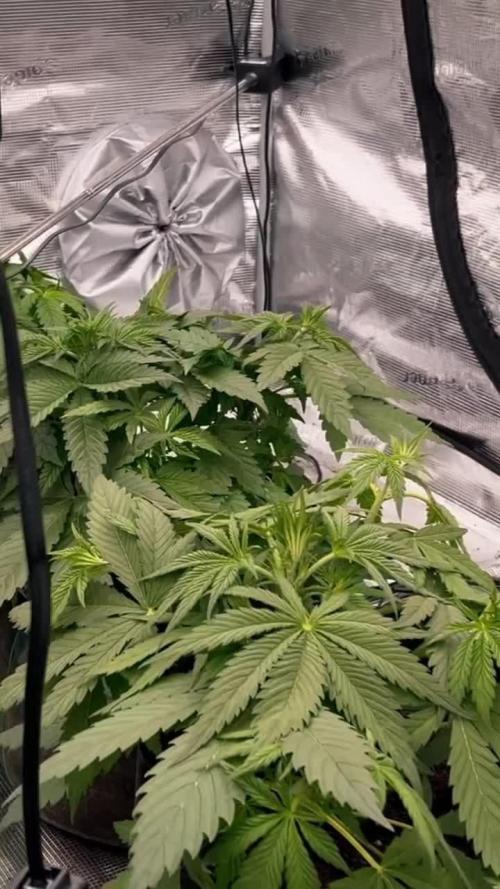
Great structural progress this week. I adjusted the first LST on all Tropicanna Poison plants and they responded perfectly — fast recovery, strong lateral growth and a very even canopy. Installed the SCROG net at ~26–30 cm to prepare for the next stage.
I also switched to the automatic drip system (2 L/h emitters). The nutrient mix needed a few corrections, but the final feed landed at EC ~850 µS / pH ~5.8, giving each plant 700 ml. Soil dried quickly and the roots are clearly active.
Environment stayed stable at 22–23°C, 65–70% RH and PPFD ~420 µmol/m²/s.
All plants look healthy, compact and already releasing a nice sweet cannabis aroma.
Likes
4
Share

@TrickzGrowz
Follow
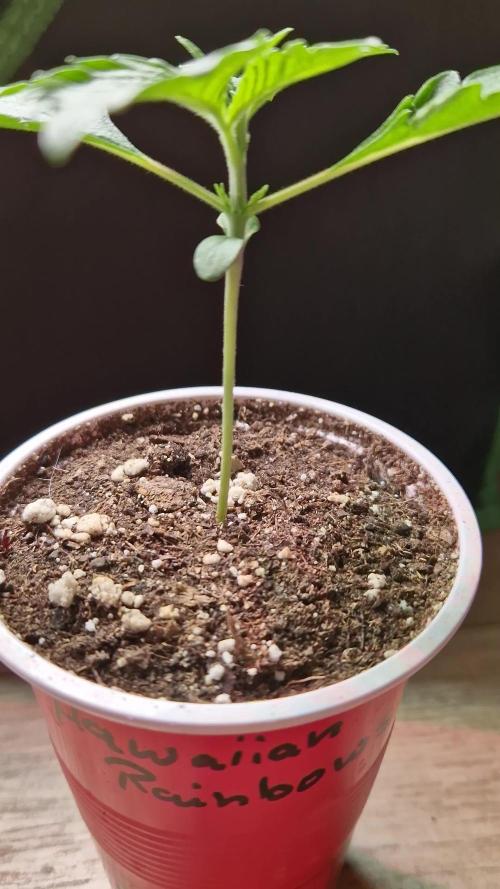
Super wie sie sich macht jetzt! Die 1. Blätter sahen am Anfang sehr gestresst aus. Aber jetzt hat sie sich gut erholt und eingefunden!