


Likes
Comments
Share


@valiotoro
Follow
Week 9🤓!!
Im entering in the last PuSsSh
Green ZenZaaation💥
FCE-6500 100% + adlite UV IR deep red🔛
Happy growing💚👨🏻🌾

Likes
2
Share


@Mr_nugs_lover_David
Follow
She smell so so so strong that doesn't even look like an automatic strain,super strong mango smell coming off the flowers,I'm doing a perfect job here,she's happy and she's giving the best of her! 🌱💚#organics

Likes
4
Share


@CarpediemOK
Follow
After almost 1 week with my girls with MarsHydro 100w znd a proper tender with

Likes
24
Share

@Cooky_420L
Follow
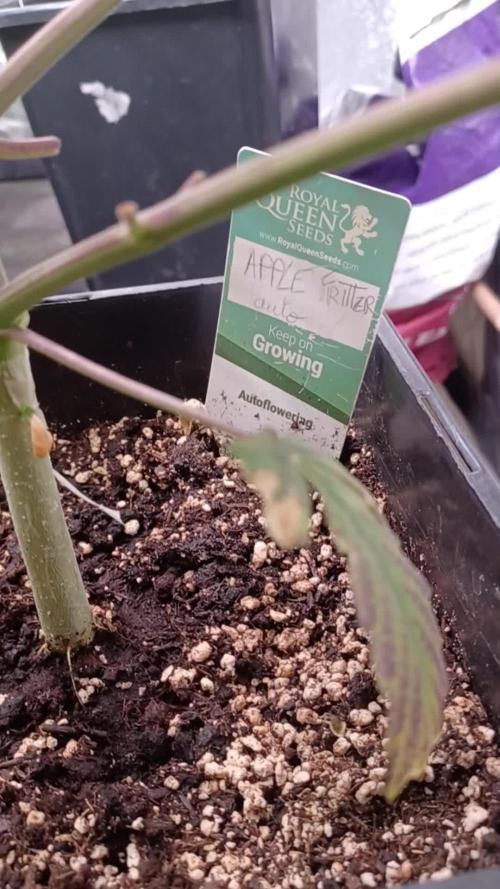
7' semaine de floraison pour ces demoiselles.
Très peut d'entretien encore cette semaine, les pots ont du mal sécher.
Malgré le manque de lumière et le manque de sécheresse A2 m'impressionne par son développement.
Cette semaine elles ont eux un seul apport d'engrais.
Elles ont 71 jours depuis la plantule et 43 jrs de floraison d'après mes calculs.
Réglages culture :
Full :75% Red/IR/UV :100%
PPFD: 780
DLI : 68
HR : 40
E.C 2.0
Merci les Growmies, bonne semaine de croissance à vous les p'tites ✋️ vertes 🌱🌞🌱


Likes
14
Share


@eldruida_lamota
Follow
Venga familia que ya viene la cosecha de estas Punch Pie de RoyalQueenSeeds , que ganas que tenia ya de darles machetazo.
No veas que pinta que tienen estas plantas.
Las flores aparte se ven bien resinosas.
a sido una genética con la que disfruté mucho cultivarla, es algo complicada cultivarla pero merece la pena si eres cultivador con experiencia no te será problema cosechar.
Agrobeta:
https://www.agrobeta.com/agrobetatiendaonline/36-abonos-canamo
Mars hydro:
Code discount: EL420
https://www.mars-hydro.com/
Hasta aquí es todo , espero que lo disfrutéis, buenos humos 💨💨.
Likes
6
Share


@Gardens_of_Of
Follow
Green House Feeded one is enjoying life and growing big health buds. She received her last lollipoping.
Advanced Nutrients one is still struggling. I am increasing the feeding per Advanced Nutrients supports suggestion. Let’s hope she recovers.
Likes
8
Share

@Naujas
Follow
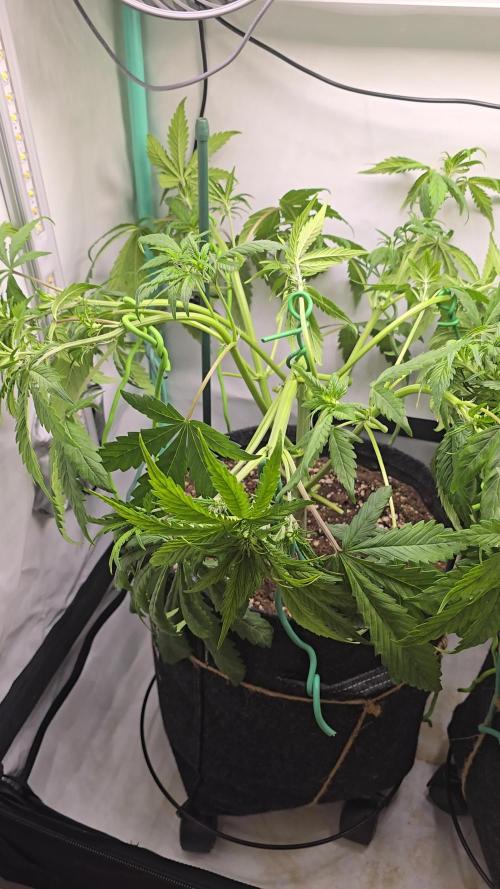
28 dienos!!! Megaitų nemačiau kelias dienas, tad prieš išeidamas šiek tiek palaistiau, bet manau, kad tai bus sutvarkyta, 28 dieną pašalinau lapus ir šakas, taip pat pradėjau ją dresuoti LST, bet mano palapinė tikra netvarka, nežinau, kur ji yra ir kaip :D Vos telpa dvi damos:) sėkmės visiems :).
Likes
294
Share


@StarLorr
Follow
Welcome to my Ðivine ØG Ķush diary.
In this diary:
Seeds: sponsored by Ðivine Șeeds
Media: Promix HP
Nutrients: Advanced Nutrients, Diablo Nutrients.
Light and Weather: Şun☀️and Mother Earth.🌎
___________________________
Feeding:
Mon 03Jun: 2L water not pH'd in bottom saucer only.
Tue 04Jun: 2L water not pH'd in bottom saucer only.
Wed 05Jun: 4L nutrients pH'd 6.5
Fri 07Jun: 2L water not pH'd in bottom saucer only.
Mon 10Jun: 2 L water not pH'd in bottom saucer only.
___________________________
We had very warm weather and by the end of the week rain pouring.
Did spray the girls with Safers insecticide after sunset for good measure after discovering spider mites nests on june 3rd.
___________________________
Thanks for stopping by, likes and comments are appreciated!👊🏻😎
Keep on growin!
Keep on tokin!!!
😙💨💨💨💨💨

Likes
3
Share


@Mrs_Larimar
Follow
2025-07-09
Holy moly, the Gaia F1 is as wide ( horizontal) as high( vertical) she is
she looks like Dome
i took away some leaves, because of her bushy structure.
lovely flowers are to see, and starting to get bigger.
xxxxxxxxxxxxxxxxxxxxxxxxxxxxxxxxxxxxxxxxxxxxxxxxxxxxxxxxxxxxxxxxxxxxxxxxxxxxxxxxxxxxx
Gaia F1 has taken its place in the pantheon of F1 hybrid cannabis genetics. Our breeders created these seeds by starting out with parent genetics New Breed Auto, Black Domina, and Sin Tra Bajo. From here, they conducted an extensive breeding project that culminated in crossing three highly pure inbred lines. The result? A potent and fast-growing autoflower F1 hybrid that boasts incredible uniformity and impressive pest and disease resistance.
Named after the Greek goddess of Earth, Gaia F1 features a chemical profile that will have you feeling at one with the world around you. After a few hits, you’ll feel the urge to head out and bathe in nature. During your contemplative stroll, you won’t see soil, but a living matrix of millions of microbes; not mere trees, but living and breathing organisms standing tall and proud. Gain a newfound appreciation for the natural world with every inhalation.
xxxxxxxxxxxxxxxxxxxxxxxxxxxxxxxxxxxxxxxxxxxxxxxxxxxxxxxxxxxxxxxxxxxxxxxxxxxxxxxxxxxx
Growing Environment Setup & Specifications
Lighting System
Model: Sanlight EVO 5-150
Quantity: Up to 5 units
Power Output: 320W per unit
Maximum Total Output: 1600W
Environmental Control
Management Unit: Growcontrol Growbase Pro
Humidity Management:
Dedicated Humidifier
Dedicated Dehumidifier
Temperature Control:
Primary: System-controlled
Secondary: Additional Radiator for supplemental heating
Air Management
Air Circulation: 2x Stand Fans
Air Extraction: Exhaust Fan with Filter System
Irrigation System
Primary: Autopot XXL Pot System
Water Storage: Flexi Tank
Root Zone Aeration:
Airdomes
Dedicated Air Pump
Growing Medium
Type: TERRA PRETA MJ-Mix
Nutrients
System: BIOTABS
Method: "Just Add Water" Strategy
Type: Organic-based feeding
Likes
36
Share


@BudXs
Follow
Whoa now big momma! This girls is gettin unruly and I need to get her into flower!! Unfortunately, I have to wait for the rest of the room, so this will finish at about 6" indooors!! Stick around to see!!
Continuing to grow 3 main stalks and using some defo and LST to get it there
Follow my son Budxless on his first GrowDiaries journey
I go live in the Scroggernaut Sundays at 9:00pm EST- budxsmedical on insta

Likes
11
Share


@smoker420
Follow
Very orange and creamy taste in pheno 1 and more sweet piney terps come through on pheno2 would recommend to try these out
Likes
11
Share


@BalconyWiTCH
Follow
Feb 13th: Seeds germinating in Paper towel
Feb 14th: Seeds started opening
Feb 15th: Seeds sprouting 👌
They all seem to be sprouting well, except the Royal Kush
Feb 16th: UPDATE! All seeds worked out well except for Royal kush, which still not sprouted, I think it´s a bad seed. I´ll give it more time anyways.
Just transplanted all other seeds to pots!
Feb 17th: I threw royal kush away and contacted the Seed Bank got some seeds on the way, all good I´ll start it a week later it´s not a problem.
Concerning the babies, (Green Gelato, Royal Gorilla, Northern Light, and Bulkberry) all of them grew out from the soil, I see some odd things but I´m hoping everything is going well
Feb 18th: All of them came out, some stronger and some slower but nature seems to be doing its thing 👽
Likes
28
Share


@Bongman
Follow
Hi All,
Its week 6 of flowering. Things are on track and buds are bulking up.
I think I am going to conclude that the red stems on top fan leaves are just a genetic trait.
Will do one last reservoir change and start to decrease nuets next week.


Likes
3
Share


@Squaregrouper
Follow
everything is coming along just fine with the ladies they are very dense and sticky

Likes
14
Share


@Cannabot
Follow
Transplanted in final pots,one is a 25l and the other a 35/40l.Seen some decent growth since I transplanted.Weathers been great bar one or two days of shitty wind.Started lst

Likes
19
Share


@RDWCGrowing
Follow
7/27/2023- Prep
Tent and system are cleaned and ready to go from my last grow. I have submitted my Journa for the Diary of the Month Competition here is to hopeing for good resutls.
7/28/2023- Germination Day 0- Seed initiation
Well lets get this new Grow started.. So My Dad Sent me a custom Landrace Strain that he wanted me to grow out and Breed for him. The Strain is Called Black African Magic:
Black African Magic, Alson known as BAM, is a Sativa pure land race strain, It's classified under the Cannabis Sative species and its genetics come from Africa-the Ituri Forest in the Dmocratic Repoublic of Congo. The Effects are said to be Very Psychedelic, used for Stress managment and for better sleep and rest. This is my frist Land Race so we, will see how this goes together..
RO Water Used
Added Hydrogen Peroxided
8/1/2023- Germination Achieved G-Day1
Popped her head above the root riot today to say hello.. Woot first challenge when dealing with an unknown seed and a new Strain is getting the seed to pop and the lady to show life.
8/2/2023- Germination Day 2
Took the root riot out today and it was soaked not good plant drowing again. I am still having a hard time finding the right blance for where the water should be to keep the root riot moist and not soaked. I had to drain some of the water out of the root riot plug to help give a little oxygen. I also removed some of the water.
8/3/2023- Germination Day 3
Looking good stretching her leaves out to let in the lights
8/4/2023- Germination Day 4
Looking good a few days until I put them into the RDWC System and get this thing rocking and rolling.
8/5/2023- Germinaiton Day 5
Looking good will probably plant tomorrow if the roots are still looking good.
8/6/2023- Plant Day- Germination Day 6
Planted into the RDWC System today. Joy when they go into the system as long as we dial that in right this will now be a great grow.. Survived the hard part..
8/7/2023- Germination Day 7
Everything looks like it is going good, she is showing some damage on the lower leaves from the over watering in the cloning machine but right now I don't see any new damage.
8/8/2023- Germination Day 8
Added the first Nutes today, to help support root growth and to help give there first jump to growth.
TPS SILICA GOLD-.5mil/Gal
Root Drip- 1mil/Gal
GH FLoraMicro-1mil/Gal
GH FlroaGro-1mil/Gal
GH FLroaBloom-1Mil/Gal
ORCA-.5mil/Gal
8/9/2023 - Germination Day 9
Everything is looking good new growth looks like it is praying and they are looking happy. I will take off the damage leaves probably tomorrow.
8/10/2023- Germination Day 10
She looks like she is on track the roots are starting to come out of the basket very small but starting.
8/11/2023- Germination Day 11
Cleaned up the dead leaves... Day 1 VEG tomorrow.. Water Change Day and first real meal...


Processing
Likes
20
Share


@No_Clout
Follow
Looking good this week gonna start to add some big bud coco next feed.

Likes
8
Share

@Sobreruedas
Follow
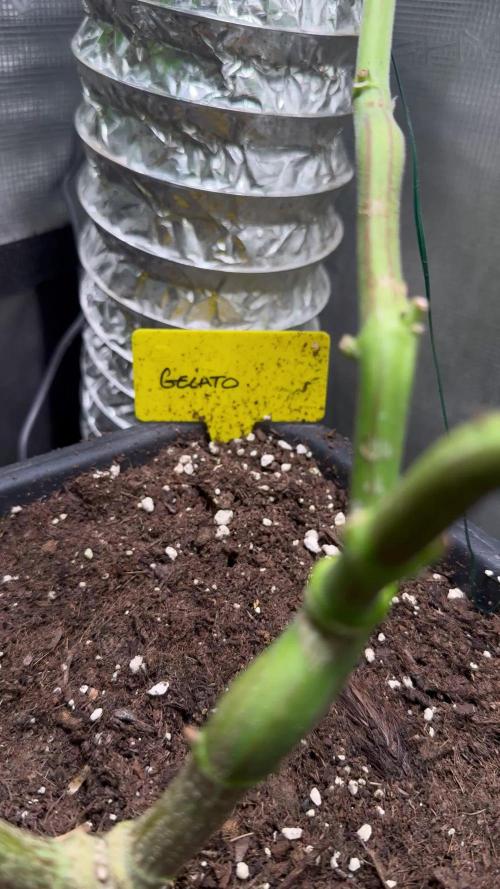
This week I added a scrog net and started guiding some of the branches through it.
A few branches were already long enough to be bent and positioned under the net, while others still need a bit more growth before reaching it.
From now on, the goal is to let the plant grow freely and focus on filling the net evenly before flipping to flower 🌿💪
