


Likes
Comments
Share


@Wicked_Stix
Follow
This girl is the smallest of the group but she is looking nice. Been on 12/12 for a week so hoping to see flowers soon.
Nutrients per gallon
.5 tsp maxigro
.25 tsp maxibloom
.25 tsp armor si
.5 tsp calimagic
.1 tsp 90/10 humic/fulvic acid
Ph to 6.0
Pumping nutrients 24 hours

Likes
Comments
Share


@eldruida_lamota
Follow
Vamos familia, actualizamos la octava semana de floración de estas Sagrada amnesia de Seedstockers, salieron las 5 de 5, 100% ratio éxito.
Aplicamos varios productos de Agrobeta, que son increíbles para aportar una buena alimentación a las plantas.( Justo esta variedad 2 de 3 son bastante sensibles y marcan en las hojas exceso pero no están las puntas quemadas)
Temperatura y humedad dentro de los rangos correctos dentro de la etapa de floración.
La tierra utilizada es al mix top crop, por cambiar.
De 5 ejemplares seleccioné los 3 mejores para completar el indoor y trasplanté directamente a macetas de 7 litros, el fotoperiodo a 12/12, también aplique una buena poda de bajos, se ven bien sanas las plantas, tienen un buen color, ya progresan las flores, llevan ya una tricomada…increíble.
Agrobeta:
https://www.agrobeta.com/agrobetatiendaonline/36-abonos-canamo
Hasta aquí todo, Buenos humos 💨💨.

Likes
12
Share


@TommyBVRSA75
Follow
A ver...oir mi voz ...ya algo es distinto. Después no son de plástico y como sabéis para que puedan ser así, esto es algo que a medias tanto le pones amor como ciencia y después para que estén así, hay que no solo entender un poco de esto y más, dejar que la fé en Dios Jah sea grande y mucho trabajo y gusto en lo que hay que hacer y tener.
420 Siempre...una gran semana

Likes
8
Share


@brunoazazel
Follow
contento con el resultado, se aumenta la dosis de NPK a 14ml/L.
alejé un poco el foco para que se espigue más rápido.
1/3 trasplante definitivo a maceta de 18L.
en unos 15 dias la paso a flora


Likes
11
Share


@AestheticGenetics
Follow
3/28/25 chopped and humidity was a little high starting off
3/30/25 have them drying at 60% and 70°
4/3/25 Still needing a day or so of drying to be at a stable humidity
Beautiful plant. Fan leaves with Triched out patterns visibly everywhere.
Even though i chopped quite a bit off of the plant, i still got quite a bit bigger yield than i expected. All sizable nugs.
Pulled 65 grams.

Likes
146
Share


@Salokin
Follow
Hello Growmies,
The final chapter of this incredible journey has unfolded, and it's time to share the bountiful harvest and reflections on the entire cultivation process. Trimming the plant was a joy, and with gentle fingers, I removed all the large fan leaves. The precision in this process revealed the true beauty of the buds, setting the stage for a smooth harvest. With care and gratitude, the plant was chopped, and the buds were hung to dry. The anticipation for what lies ahead only adds to the sense of accomplishment. The wet weight, excluding fan leaves, stands at an impressive 782 grams. The buds are massive, a testament to the efficacy of the nutrients used, particularly the Power Buds. The name seems apt, as the result is a collection of sticky, dense buds with subtle lemon notes and sweet pungent undertones. In the final moments, the plant unveiled some delightful purple hues. While I wish I could have allowed them to intensify further, it's a reminder that each grow is a learning experience. In hindsight, a slightly longer fading period would have accentuated those beautiful colors. We live and learn, and that's the essence of this journey.
A heartfelt thank you to Plagron and Zamnesia for hosting this amazing contest. The quality of the products and the support throughout the journey have been invaluable.
As this chapter concludes, I'm left with a sense of fulfillment and gratitude for the collective experience we've shared. The plant's growth, from seed to harvest, has been a testament to the art and science of cultivation.
Feel free to check out my other adventures in my bigger environments, until then...happy growing!
Stay Lifted
Salokin

Likes
6
Share


@valiotoro
Follow
Easy trim ✂️
The smell is citrus & pine delicious 🍋🎄
Harvest in 2 times first the top buds then 1 week later the lower buds
Now 7-10 days in the dry racks then the smoke review in 2025
Take care 😎

Likes
4
Share

@Minuteman_Organics
Follow
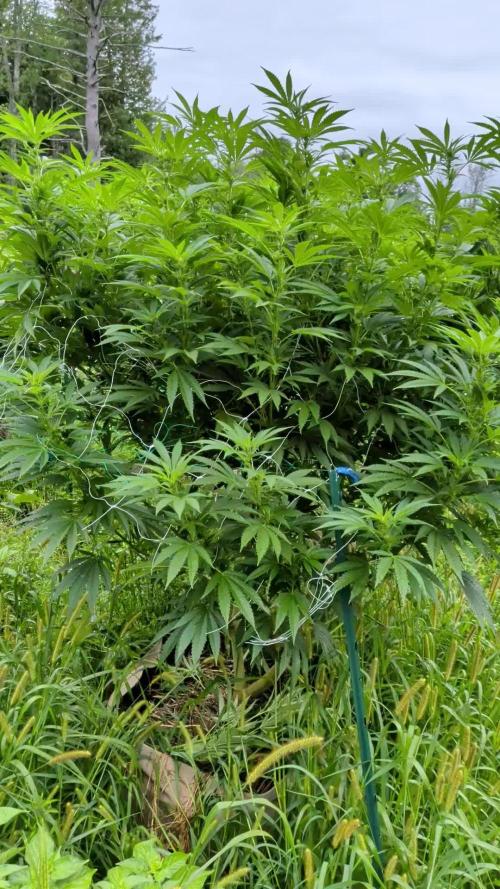
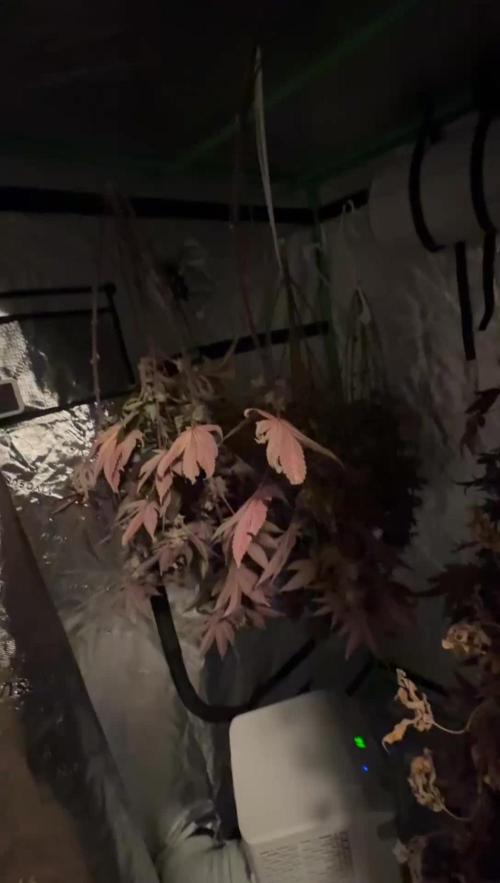
Another week down! The grandpas stash are the clear winners for me this year. They're developing very quick which is what I'm looking for. The early lemon berry are nice but they are getting destroyed by phytoplasma. Still love my grapefruit pheno


Likes
39
Share


@BelgianBudtender
Follow
'Sup Growmies, hope everyone's crop is doing great!
Buds! flowering has started and the first bud sites have established, my canopy is pretty even, and I am pretty happy with her at the moment, I cannot wait to see how these flowers develop!
The tent smells amazing, I cannot place the smell, its not your typical early flower weed smell, most of the normal green growth chlorophyll smell is already dying down.
My time-lapse camera broke, so i'll have to figure out something new because I really liked watching them grow. also added some extra shots of the canopy in the video, which is probably what I'll do next week as I find a solution.
I also want another bucket, outside of the tent, acting as reservoir, I think next week I am going to turn this DWC into a 1 bucket RDWC, for easier access and more importantly better temperature control.
Plus, this plant drinks way too much, I can't keep up, even with this massive 33 Litre mayonnaise bucket, I'll add a picture of what I have in mind..
Next week I am starting Green sensation, its a finisher, which will give this girl access to some much needed PK for those pretty flowers.
Thank you for stopping by, enjoy the rest of your week, stay safe; and keep growing!

Likes
20
Share


@Fergie
Follow
Hey guys so another week has past these lady's are filling out nicely crystals forming everywhere . All looking fantastic and should start to fatten right up over next few weeks 😀
Processing
Likes
21
Share


@LittleBigTrees
Follow
I've turned the light up to 35000 lux.
Up'd the bloom to 1.5ml/l.
There still stretching and could do with more room but there doing well 😎


Likes
15
Share


@DailyhighclubNLyara
Follow
Day 2 in the pots they came out beautifully with their seed as a hat! Day 4 they were all 3 1cm out of the ground, they were born!
Day 6 is almost over today and 2/3 seeds go delicious. Both of them already have their first set of real leaves and you can see the next set coming, oewhhh. Unfortunately there is one that I think is less gene/old seed. It sits around half the height and the lobs are almost closed, but hopefully it is still hard 💪 🏼

Likes
27
Share


@adam_pawloski87
Follow
Today is Day 50 !! We have started flower an they are just looking amazing! We have switched up the nutrients for flower, instead of 1 tsp bloom and 3 tsp of veg , we just swap 3 tsp of bloom and 1 tsp of veg !! Can’t wait to see what these laddies do this week!!


Likes
4
Share


@Donniedanko93
Follow
Harvested these girls at the 9 week Mark I could have pushed another week or so but there were amber trichomes and the temp were getting crazy in the wardrobe this time of year but everything had turned out sweet! The girls look and smell amazing frost everywhere. Forbidden runtz is still growing see how she goes. Fastbuds are reliable ❄️💣
Likes
3
Share

@HeavyHittah
Follow
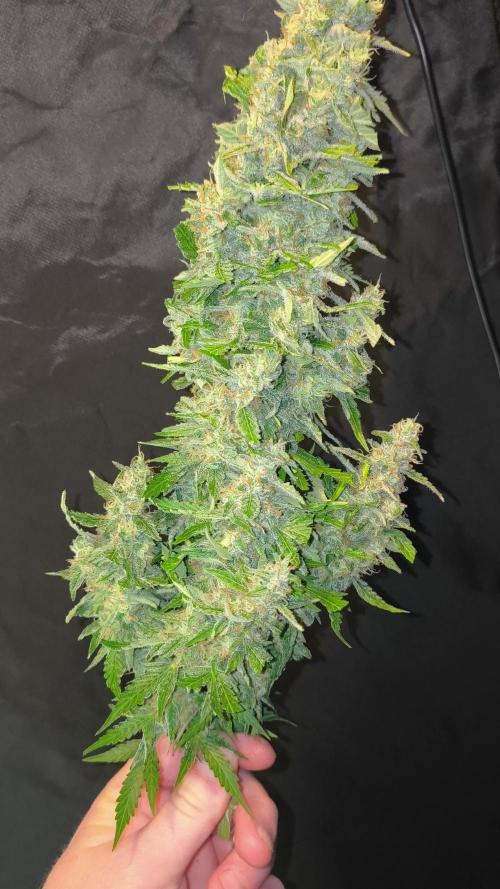
This has to be the biggest plant I've grown in a 12.5 litre. 95 gram of trimmed nugs and 37grams of popcorn nugs. Massive yielder . Nugs not as dense as the frostbangers but the final yield has made up for it.
After 5 days curing it's smoothed out, white ash. It has a strong effect good for day or nighttime. The taste is a bit lemony with hints of fruit on the exhale. I'm buzzing, wasn't expecting such a high yield from one plant. This will last me ages lol.
I Only used 300watts if I had 4 of these that would have been 1 half pounds in a 1 meter 😳 Never had a bad Gorilla Z she won't let you down. 🌱💨
Likes
Comments
Share

@SmokingTiki
Follow
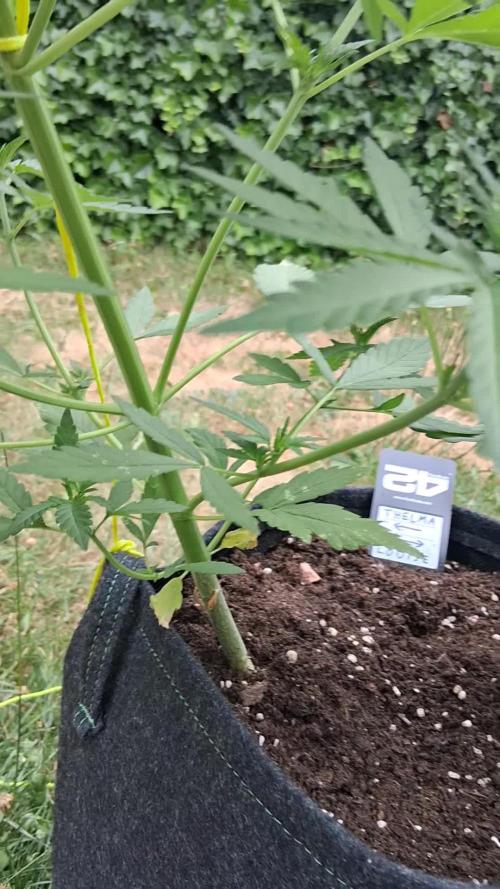
Another great week with warm temperatures and lot of sun 😎 They continued their stretch and developed some pistils, next week will be their first flowering week. I increased the water quantity. Louise has a purple phenotype, nice!👌They started to smell when I'm right next to them 😋
Heights :
Thelma : 50cm
Louise : 30cm
Likes
56
Share

@Wicked_Stix
Follow
Has been a rough week dealing with the heat and rain. Having to run the dehumidifier 24 hours a day and I am seeing some foxtailing in most of the strains from the hot air it puts out. Twisted helix was chopped last week. She's not even worth taking pictures of. Tiny buds about the size of my thumb. Not much smell and they are not impressive. I will be making bubble hash and edibles from it. I pulled the blackcherry punch off the feed tube and a few days ago and she is flushing. I filled the reservoir with nutrients for the last time today. After they drink it down in a few day I will start flushing all the plants. Going to be a big job trimming this round since it looks like most of them will be ready for harvest around the same time. There are buds falling over everywhere due to the weight, but it's impossible to get in and tie them up without rubbing all over the buds and damaging a lot of trichomes. So not much can be done about it at this point. Just going to try to keep the temp and humidity down until they are ready for the chop.

