Likes
Comments
Share


@Barzenegger
Follow
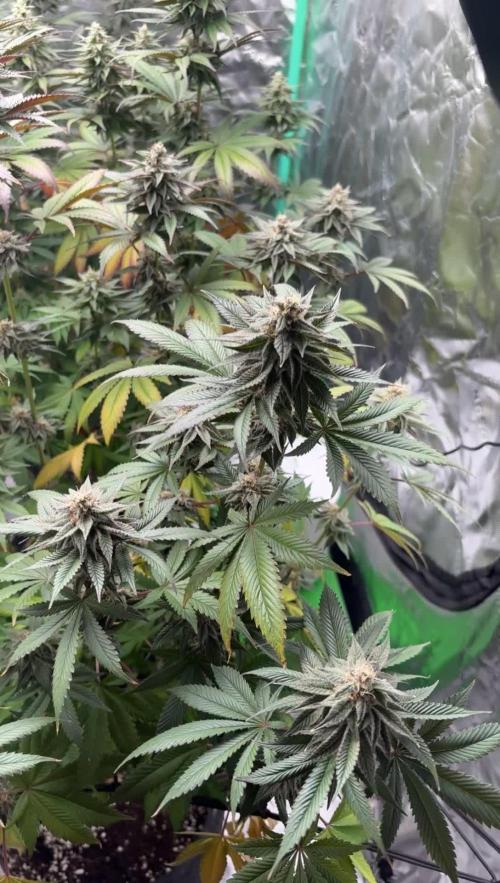
On the first day of this week, I topped the plants after the 5th node. 3 days later I switched to 12/12.
The reservoir wasn't quite empty yet, so I didn't fill it this week, but I probably will at the start of the next one.
Plants are growing quickly now, the yellowing in the BJ and NYC has also pretty much recovered, nutes seem to be fine at the moment. I fear they might grow taller than I'd like them to, but I guess we'll see. I just hope I don't have to put in the net this time, as I like to reserve the option of taking them out of the tent. I also bought an RO filter, which I am probably going to use the next time I fill the reservoir.

Likes
30
Share


@eurorack
Follow
As per usual this plant tells me it needs watering by looking limp, it doesn't mean the pots are dry it just means its demanding more water. We're gunna need a bigger tent!

Likes
14
Share

@Spiritual_Herb
Follow
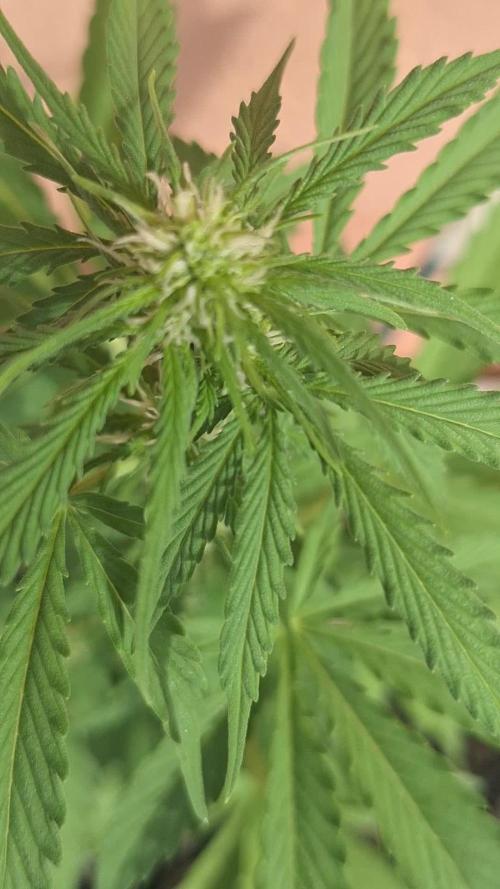
the little one is rising quickly this week, I think it will last another week, a week and a half at most, before dedicating itself to full flowering. the seedling entered the pre-flowering phase a few days ago (2/3 days ago)

Likes
8
Share


@SuperSoul420
Follow
This week I worked on hardening the clones. I got them used to 40% RH pretty quickly. My grow set up is subject to some pretty crazy swings from the weather. Outside, it went from 16% to 45% and back to 24% in one week. Going easy with the light for another week at about 180-200 µmol/m2/s. I'm not going to push any parameters until I get them through the transplant. So far so good.
When I saw the first roots I jumped up and down and did a bunch of spastic air fist pumps. 😂
Likes
2
Share

@MerekKutil
Follow
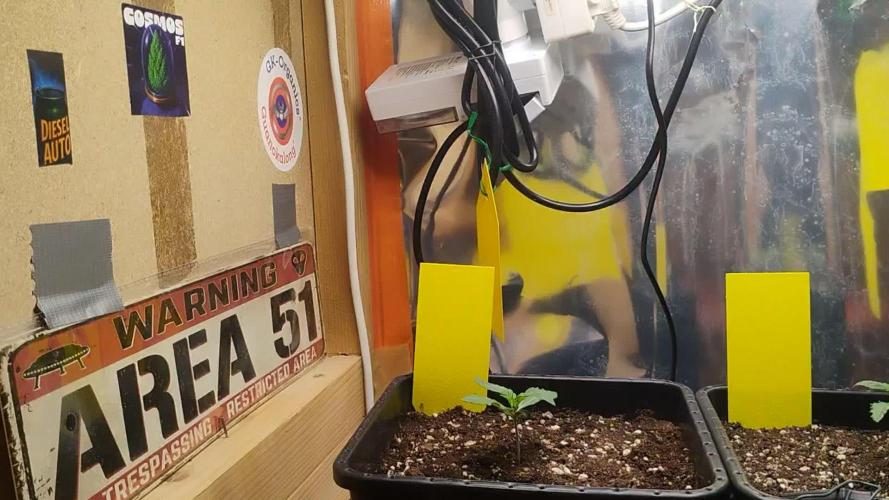
Presadil som defčátka do finálneho 5.7l potu. Pustil som im zvlhčovačku a vlhkosť kontroluje senzor 65 Max 70% aby im bolo príjemné a mali radosť a samozrejme som im dal preventívne ochranu lepové dosky. Lepšie si dať ochranu ako mať potom trpkú zábavu. Zálievka 0.5l

Likes
13
Share


@FlavoursUk
Follow
So, things are going great. The RO water change left me with a nice sterile clean res. The plants are loving the lighter feeding and it shows.
The trolmaster has my light schedule dialled in with the sunrise and sunset setting
Make sure you follow my YouTube and Instagram accounts linked on my profile page.

Likes
37
Share


@DogDoctorOfficial
Follow
🌿 Week 7 Veg Report: Terpyz Mutant Mentha de Croco 🌿
Hello, Grow Fam! We’re now into Week 7 of this exciting adventure with my Terpyz Mutant Mentha de Croco ladies, and what a week it’s been! The theme for this week? Patience and appreciation. These girls continue to grow at their own pace, each one showcasing their unique traits and incredible beauty.
Week Recap: Slow and Steady Wins the Race
The girls are still on the slower side in terms of growth, but that’s part of their charm. Each leaf is a masterpiece, more intricate and stunning than the last. Their prayer posture remains consistent—a true testament to their health and contentment in their environment. They may be taking their time, but their vitality and uniqueness shine through every step of the way.
Environmental Conditions: Keeping Things Balanced
This week has been about maintaining a steady environment despite the natural slowdown in growth due to cooler temperatures.
• Temps: Daytime 18–20°C, nighttime 14–16°C. It’s a bit chillier than usual, but these resilient ladies are adapting beautifully.
• Humidity: Stable at 65%, ensuring the girls remain hydrated and comfortable.
• Airflow: Gentle but constant to keep the space fresh and prevent any stagnant air pockets.
Feeding Program: Aptus Holland Perfection
Feeding remains consistent, and the girls are loving the organic-mineral lineup from Aptus Holland. Here’s what’s in their mix this week:
• Regulator: 0.15 ml/L – To strengthen cell walls and increase stress resistance.
• CalMag Boost: 0.25 ml/L – For robust development and prevention of deficiencies.
• StartBooster: 0.25 ml/L – Enhances early vegetative growth and root systems.
The switch to All-in-One Pellets last week has eliminated the need for liquid All-in-One, and the girls seem to be thriving with this natural, slow-release food source.
Watering: A Gnat-Free Approach
This week, I continued with bottom watering. Filling the trays and letting the soil absorb the water has been a game-changer—not just for healthy root development but also as a part of the war against gnats. Paired with yellow sticky traps, this strategy has kept pests in check while ensuring the roots get all the hydration they need.
Growth Observations: Slow but Stunning
• Structure: The slow growth might test patience, but the payoff is worth it. The compact, vibrant structure of each plant is breathtaking.
• Leaves: Dark green, uniquely shaped, and full of character. Each girl is like an artist’s brushstroke—no two alike.
• Praying Posture: Their leaves reach for the skies like they’re soaking up every ounce of light.
Still no cloning or flipping to 12/12 yet, as I want them to grow a bit more before making any big moves. Next week, I’ll decide whether to flip them for a brief period to determine sex or wait until cloning is feasible.
Photography Spotlight: Capturing the Details
This week, I took some time to immortalize their beauty with my Sony A6000 and Nikon DSLR cameras. The intricate details of their leaves, captured through different lenses, reveal their individuality.
📸 Photography Tip:
• Cameras like my Sony and Nikon bring out fine details you’d never see with a phone camera. The larger sensors, interchangeable lenses, and manual controls allow for stunning clarity and depth.
• Macro lenses, in particular, are fantastic for close-ups, like capturing water droplets or vein details in leaves. The difference between these and even the best phone cameras (like the latest iPhone) is night and day when it comes to quality and creative control.
Looking Ahead: What’s Next?
As we move into Week 8, I’m hoping for an uptick in growth speed, but I’m perfectly content to let these beauties take their time. The journey is just as rewarding as the destination, and these girls are proof of that.
Shout Outs & Gratitude
A massive thank you to:
• Terpyz Genetics for these exceptional mutant seeds.
• Aptus Holland for their top-tier nutrient lineup.
• Future of Grow (FOG) for lighting that keeps these ladies praying.
• Pro-Mix Soil for providing the perfect growing medium.
• TrolMaster for environmental controls that make my life so much easier.
• Grow Diaries for the platform to share this incredible journey.
• And, of course, all of YOU—followers, supporters, and even the haters—for being part of this adventure. Your feedback, encouragement, and interaction mean the world to me.
🌟 If you’re curious about the journey, feel free to check out my Instagram and YouTube for behind-the-scenes content, photos, and more!
Until next week, stay positive, stay curious, and as always: Growers Love! 💚
Genetics - Mentha De Croco
https://terpyz.eu/products/menta-de-croco-fern-type?_pos=1&_sid=e9237cbcb&_ss=r
DogDoctorOfficial Discount Codes @ terpyz.eu - DOCTOR 15% off
Nutrition - @aptusholland
https://aptus-holland.com/
Led Power @ F.O.G. Future Of Grow
https://www.thefuturofgrow.com/en/online-store/BLACK-SERIES-600-p489093171
Controls @ TrolMaster
https://www.trolmaster.eu/tent-x
As always thank you all for stopping by, for the love and for it all , this journey of mine wold just not be the same without you guys, the love and support is very much appreciloved and i fell honored with you all in my life
With true love comes happiness Always believe in your self and always do things expecting nothing and with an open heart , be a giver and the universe will give back to you in ways you could not even imagine so
As always, this is shared for educational purposes, aiming to spread understanding and appreciation for this plant. The journey with nature is one of discovery, creativity, and respect. Let’s celebrate it responsibly and continue to learn and grow together!
Growers Love To you All 💚

Likes
80
Share


@RickJames_Mcdank
Follow
As soon as she is dried aftyer 10 to 14 days I will provide more info on this train. 😎
****UPDATE****
So she cured for 10 to 13 days. man she smells so sweet.
The effect is good its a clear cerebrale high. Good for in the morning and you wont get lazy or slow.00

Likes
24
Share


@PrairieFrostGrow
Follow
****Week 16 growth – March 20 to 26, 2021 – Week 7 flower ******
We are in flush now until the end😃 Its nice to be past toxicity and deficiency issues and will just watch them finish and swell up.
Flushing agent used this week to assist with getting all the nutrients out.
This girl is still looking awesome and I am hopeful she will flush out more of the nutrients. She is pretty green overall so she was given the flushing agent. Still expecting her to be fire, just not a huge producer👍
Little more detail…..
Mar 20/21, Day 43
- plain watering today
- 4L given to each girl at 26ppm and 6.0pH
- turned the light down more today to 410 watts
Mar 21/21, Day 44
- dry out day
Mar 22/21, Day 45
- finishing agent watering today
- typhoon given today for flush at 2ml/l
- 425ppm and 6.0pH
- 4L for each girl.
- a couple of the girls are a little dark so going to use a flushing agent.
Mar 23/21, Day 46
- plain watering
- watering again after the flushing agent
- 4L for each girl and gave a good runoff
Mar 24/21, Day 47
- dry out day
- fade coming out now
Mar 25/21, Day 48
- plain watering with tap water.
- 280ppm and 6.1pH
- 4L each girl again
Mar 26/21, Day 49
- dry out day
- will be drying out the pots more now before the next waterings.
Through week 7 and heading into week 8. Not a lot of action in the final weeks as far as grower maintenance.......love the end when you can just enjoy😃 Very nice ETS💪🙏
Likes
9
Share


@HIAZ_urbanbudfarmer
Follow
Busy week getting the new setup going. GG is going really good has taken to training well. Expecting a bit of stretching off her in flowering. Can notice the sativa traits in her with more distance between nodes, and her slimmer sativa type leaves . Have noticed how sticky she's starting to get when training her, left with sticky resin coated fingers😋 she's a nice plant
Likes
2
Share


@Bwright_315
Follow
Still no have no clue if this is a male or female or if it's a photo or auto? But it's growing so we will see in the next come weeks


Likes
7
Share


@R_Owl_Mirror
Follow
She's finally looking like she is close to finishing. I have cut back on watering and nutrients. She is finally exuding a wonderful fruity aroma. As you can see, she is beginning to sparkle with trichomes, both on the buds and leaves. I pruned back the remaining fan leaves in order to allow her to put all her energy into the final bud production, as well as to allow more light inside the canopy. The description said this White LSD should finish between 8 & 10 weeks. I could be wrong but, I believe she might go into the 11th week before it is time to harvest. The trichomes are approximately 20% cloudy as of today. Until next week, enjoy!

Likes
19
Share


@MrJones
Follow
~~~~04.20.23~~~~
Day 51 - Above Ground - Target 65 Days
📝Saturday 06.10.23 - As this week comes to an end, I am seeing signs that the plants need a bit of calcium, so today was a topdressing day with a 70/30 blend of Bloom to Grow, watered in with H20 PG to 6.2 with CalMag at 5ML per Gallon of H20. Look at those Frosty Buds!
📝Thursday 06.08.23 - Watering with H20 PH @ 5.8/6.5 the buds on these girls are just getting crazy fat!, the new light setting is doing very well, and the plants are praying hard, and the Medic Grow Smart 8 Flowering Setting 1.
~~~~~~~~~~~
📝@fastbuds_official
📝Soil - ProMix HP
📝Medic Grow Smart 8 LED / Light Settings: 40% - V1
📝@medicgrow420
📝@gaiagreenorganics
~~~~~~~~~~~~~
📝Cinderella Auto - grows dark-green thick buds with elongated large-sized calyxes and lots and lots of long amber hairs all over them.
Likes
17
Share


@JonnyKush
Follow
hello growmies! day 51 finally the pre-flowers begin to appear. I apologize for the few photos but unfortunately they really filled the box and I find it difficult. overall I have to say they look in perfect shape! I will keep you updated thanks for passing by. like and comment! good day and beautiful growth to you 🌳🌱
Likes
6
Share


@HornGanjaman
Follow
1 desfolha.. alguns dias de 34 graus tive que deixar aberto teve alguns comidos de inseto.. e estão murchas pois a foto foi pós rega que dá uma murchada.
Ambiente em 70% umidade por umas 10h das 24h nas demais vai decaíndo até chegar entre 50 e 40 onde volto o ciclo... Para não ter problemas de pragas e mofos por excesso de dias umidos sem processo de secar como no solo...

Likes
59
Share

@Hologram
Follow
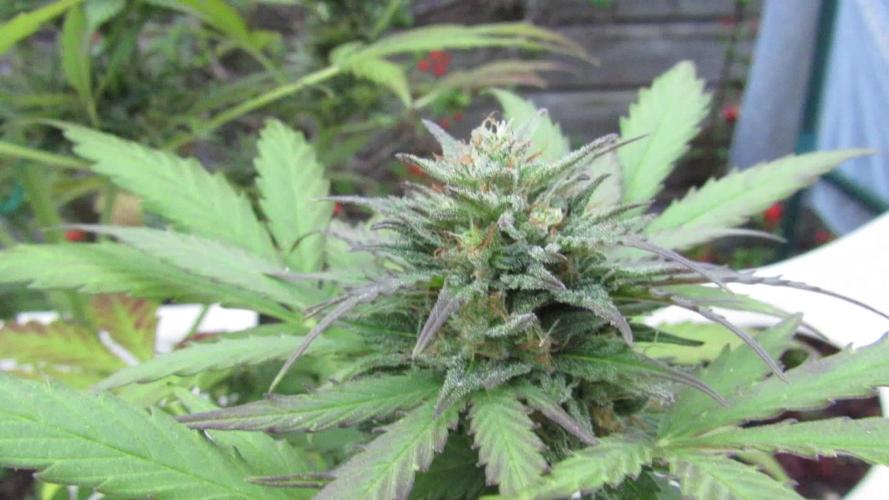
Last update, ready or not!😎
Autumn is really starting to rear its ugly head, rain is starting to reighn..
now she only gets just water.. (love the irony😳)
Happy growing4all✊
***KISS! Growingtechnique: KeepItSimple,Stupid!😉


Likes
13
Share

@Organic473
Follow
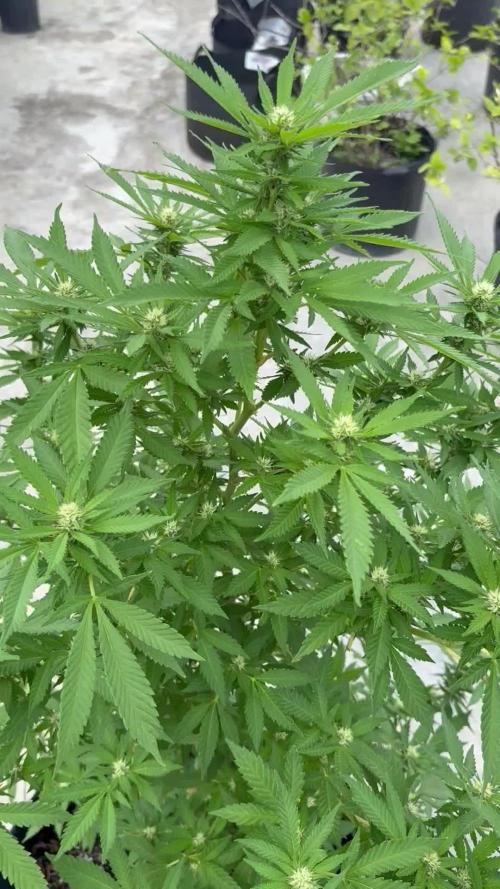
Top dress her also… trying out this new fertilizer so far so good bud sites everywhere.

Likes
4
Share


@DB40til5
Follow
More lst and a little defoliation. Had high humidity issues finally under control seem to be Doing their thing.