





Likes
2
Share


@aquaMan
Follow
Premise was to see how "optimal" i can get my first ever Grow. After some Research i came up with the idea to build an Aeroponic System myself using Water Buckets and Venturi Injektors to provider proper aeration.
Sadly Seedlings had to wait in EazyCubes cause some parts and Nutrients didnt arrive on time. System was fully operationable on Day 16. Atami Nutrients are inside the System since Day 24, Calmag has been added Day 28. Before that, some Tri-part Nutrient.
Planning on switching to Plagron in the Long run, as well as adding Co2, a water chiller and a ~700W LED.
Stats:
- 5 30L Buckets, 4 Plants and 1 Reservoir
- Recirculation happens through 90mm PVC pipes
- 16000 l/h pump going through 4x 1" Venturi Injektors pulling around 700 liters of Air per hour
- 1mx1mx2m Growtent
- 250W The Jackson Nemesis LED
Happy about any Questions and Suggestions!

Likes
96
Share


@PapaNugs
Follow
Another great week for these girls! They look great! Yes, thats what they look like. No filters, just frosty buds. They have a very unique "sweet/candy" smell to them. It's very hard to pinpoint. I'll be so curious what the final product becomes.
This tent is doing wonderful compared to the disaster this week in the other tent. (A whole set of genetics hermed mid flower and another girl got aphids). So this is great to have such a wonderful tent here.
The trichomes are really coming through now. The amber is starting to show on one plant. I'm happy cuz the breeder says 55-63 days but I might pull the one in the middle at 49 days. We

Likes
10
Share


@Unnamed
Follow
Buds are super dense, like rock hard no PGR tho, new note in my books, dense buds can definitely exist without PGR's.
Leafs are bleaching, trichomes are not ripening tho all clear.
Buds smell like that Hubbabubba pink bubblegum! parent genetic Hubbabubba Haze is definitely comming trough!
Top Buds are turning purple due to the intense light, same as every branch that hast direct light blasted on it, the shaded side doesn't.
No Light readings from now on since I don't change anything and the plants aren't gaining size anymore, it stays the same.
Values are average of the day.
DATE - °C - RH% (Tent Temp/RH)
20241202 23.5 61.5
20241203 23.7 61.2
20241204 23.5 60.3
20241205 22.6 62.1
20241206 23.2 63.2
20241207 23.5 63.4
20241208 22.8 62.4
DATE - PH
20241202 5.89
20241203 5.97
20241204 5.98
20241205 5.98
20241206 5.93
20241207 6.12
20241208 6.10
DATE - ORP (mV)
20241202 76
20241203 64
20241204 59
20241205 43
20241206 86
20241207 121
20241208 95
DATE - EC(us/cm)
20241202 2182
20241203 2096
20241204 2109
20241205 2110
20241206 2178
20241207 2210
20241208 2150
DATE - CF
20241202 21.82
20241203 20.96
20241204 21.09
20241205 21.10
20241206 21.78
20241207 22.10
20241208 21.50
DATE - °C (Reservoir)
20241202 21.8
20241203 22.2
20241204 22.6
20241205 21.8
20241206 21.4
20241207 21.3
20241208 22.0

Likes
2
Share


@SolitudeCorners
Follow
Vanilla Zoap
Genetics:
Vanilla Cheesecake × Zoap (by Lit Farms)
Yield: Total dry flower yield: 198g
Aroma & Flavor:
Dry buds: Sweet, creamy vanilla aroma with light fruity-soapy notes from the Zoap lineage.
It has a clean, dessert-like scent—like baked vanilla goods mixed with floral soap.
Smoke is smooth and creamy with a mild fruity aftertaste. Very pleasant and easy on the throat.
Structure & Growth:
Medium-sized plant with moderate branching.
Leaves are light to mid-green, and buds are fluffy and light-colored. faded to black in the late flowering
Visually attractive flowers—great bag appeal.
Recommended Use:
Ideal for flower consumers who enjoy smooth, sweet-smelling buds.
Perfect for joints or blunts—mellow, relaxing experience without being too heavy.
Likes
18
Share


@valiotoro
Follow
Hello everyone 😎
Time to harvest the Vanilla Latte auto from humboldt Seed After 10 weeks
The buds are fat are frosty and a very nice smell 😋

Likes
54
Share


@Roberts
Follow
Gorilla Cookies is starting to bulk. She is looking pretty good considering the navy mites from weeks ago. Leaves are deep green from neem oil. Buds should be free of any oil though. So it should not effect the taste when I get there. She has about a month left to grow roughly. She is under the Spider Farmer G3000 light. It is on 100 percent, and everything is running fairly well now. She is drinking a lot each day. Thank you Pure Instinto Seeds, and Spider Farmer. 🤜🏻🤛🏻🌱🌱🌱
Thank you grow diaries community for the 👇likes👇, follows, comments, and subscriptions on my YouTube channel👇. ❄️🌱🍻
Happy Growing 🌱🌱🌱
https://youtube.com/channel/UCAhN7yRzWLpcaRHhMIQ7X4g
Spider Farmer G300w: https://amzn.to/3S2zvsd
Spider Farmer 10X20 Heat Mat Kit - https://amz.fun/lsa0J
Spider Farmer Amazon Store: https://www.amazon.com/spiderfarmer
Spider Farmer Official Site: https://spider-farmer.com
Discount code: saveurcash (stackable)

Likes
2
Share


@Takeaims
Follow
Getting there tied down the white widow just ti see if it makes a difference loads of shots coming through sweet manderain shouldn't take too long now am hoping withing 4 weeks lol
Sweetseeds always providing monster


Likes
7
Share


@RosQuare
Follow
GLF - 2g - 24” mainline
OLP 2 - 2g - 20” topped
OLP 3 - 2g - 18” topped (and broke 2 branches!)
OLP 4 - 2g - 15” topped, LST & super cropped
OLP 1 - 500ml x4 - 10” super cropped
Little bit of defoliation on bottom and centre.
All doing well. Increased water needs. Flowers starting to develop. The OLPs are a week behind because the timer in their tent was flipping back and forth between 12-12 and 18-6 for about 10 days.. ooosie!
Moms are being maintained as little bonsai plants in solo cups in my back bedroom near the window with a single 100w panel set to 18-6. Being mostly neglected, infrequent watering, lean fertilizer, heavy defoliation.
Likes
4
Share

@Chucky324
Follow
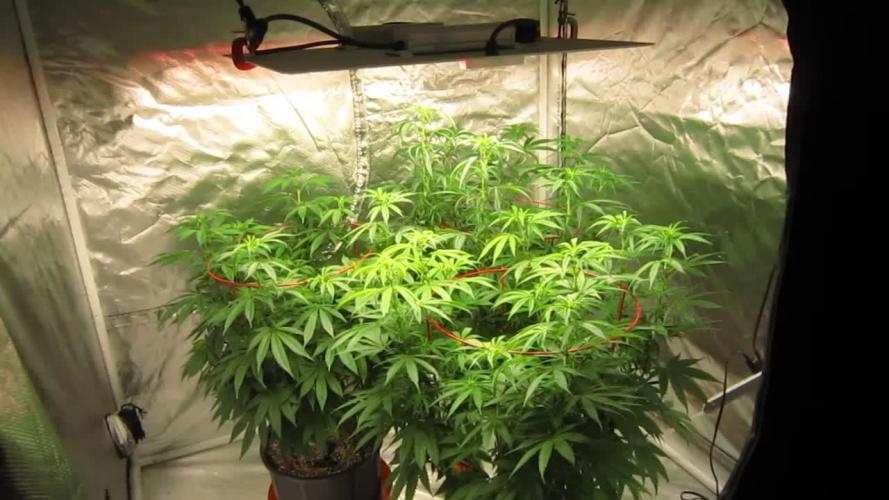
Hello. This is the end of week 1 and the beginning of week 2 of flowering.
End of the first week of flowering the plants always seem to have yellowish new leaves.
I see in the close up photos that the plant is starting to set up her bud sites and maybe do a little stretching.
The plants have a sweetish, musky, earthy, type of smell to them, I'll know better when the resin starts.
The next trim up is before the end of week 3, just before the resin starts flowing in week 4.
Nice warm week here... There's a warm southerly flow up the West coast... Highs of 10 c and 12 c this week, but lots of rain.
OK. Have Fun.
Chuck.


Likes
7
Share


@Mrg7667
Follow
Lowered the lights a good 8-10inches just because i realized i could get them closer without burning! Going for around 6-7 inches above canopy getting the temp in the high 70s low 80s om top canopy. All pheno are getting very unique and super resinous! I have a slight lnat problem going to spray this week when i get paid


Likes
26
Share


@TheCannaProphet
Follow
😎Week 3
8/2- Here we go into week three and I'm looking to see some explosive growth happening in the tent soon!😃 The girls are all running 2 1/2" to 4" in height with the Seedsman Gelato OG's and FastBuds Purple Lemonade currently kicking all the others butts!💪 Gave a good watering this morning 2hrs after lights on with non-chlorinated water ph'd to 6.4. I plan on maintaining that watering schedule from here on out. I refilled the humidifier with non-chlorinated water ph'd to 6.5. Love the new setup with the two HLG quantum boards, 4 plants per light, and currently running at 400w per light. I'm looking forward to some record yields with this new setup using these 650R's! Temp's/RH/VPD are where they need to be at this point with daytime temp's maxing @ 83 Deg F/ nighttime @ 68 Deg F, RH @ 55%, VPD @ 9.0😀
8/3- Started compost tea last night, ingredients were; 5g de-clorinated 7.0ph water & 5tbsp unsulfured molasses, 4 cups worm castings, 1 cup alfalfa meal, 1 cup kelp meal, 2tbsp bat guano, 1 scoop Great White mycorrhiza and 3tbsp Neptunes Harvest seaweed extract which were added after the air was turned on and the 'bag' was in the bucket.
I fimmed the FastBuds Purple Lemonade #2 and Seedsman Gelato OG #1, LST'd the FastBuds Crystal Meth #1 & #2, and the Seedsman Zkittles #1. Whilst doing all that I noticed my old friends the fungus gnats so I immediately placed sticky traps in all pots....little bastards! I went online and ordered Nematoads who will have a field day with the gnats!
The girls all got watered in from the top and bottom with de-chlorinated straight water ph'd to 6.6 @ 76deg 225ppm, lights still @ 36" above the soil and running @ 400w each.😎
8/4- Gave the girls compost tea for breakfast. The tea had brewed for 38hrs., had 854ppm and ph'd @ 7.1...PERFECT! I split 4g of the tea between the eight ladies @ 1/2 gallon each. I also topped the FastBuds Crystal Meth #2 and Seedsman Gelato OG #2 and checked and adjusted LST on all. Temp's, RH, and VPD all on point with the girls are showing it!
8/5- Soil felt moist so skipping water today and will feed early AM. All the ladies have taken on a deeper shade of green and are really starting to take off since receiving the compost tea yesterday and they'll be going crazy by the end of this week going into week four. The FastBuds Crystal Meth #1 & #2 are both showing early flowering signs already and are starting to get some purple coloration in new growth which looks natural, not a deficiency. I topped the FastBuds Purple Lemonade #1 and Seedsman Zkittles #1 and checked/adjusted LST on all.
8/6- Gave a good watering this morning with 4g of de-chlorinated water ph'd to 6.8, went through, and tucked leaves on all the girls to keep exposing lower bud sites to the light so that we have a nice even canopy for flower! All the girls have either been topped, fimmed or LST'd at this point and all I'll be doing from here on out is tucking leaves and possibly some very minor defoliation if needed,
8/7- All the girls look very happy this morning and are starting to get ready for that stretch at the beginning of flower. The FastBuds Crystal Meth's are the shortest, along with the Seedsman Zkittles #1 and the CM's are already showing pistils but I'm not declaring that they're in 'flower' quite yet.
8/8- Gave all the ladies a good water in this morning with .5g each of de-chlorinated water ph'd to 6.9 @ 76deg. Went over all the girls and tucked shade leaves to expose bud sites, removed a couple of the ones that couldn't be tucked, and were blocking numerous bud sites. I also continued with LST on all bending branches outward to expose them to more of that HLG 650R goodness!

Likes
Comments
Share


@Yiyis_Grow
Follow
Buen aumento en el volumen de las flores.
Una planta no está tomando agua, revisé y no es botritis, la regaré con agua solamente cuando esté seca .
La planta con manchas en la hojas sigue igual , ya ella no se recuperará, no tiene tiempo.
Semana con nutriente de floración al 100% y potenciadores.
Se cambió de lámpara por otra del doble de potencia 2000W. BESTVA
- Luz: Bestva Pro 2000W / 18 h/d
-FloraNova Bloom G.Hydroponics: 0.7ml/l
- Bio Bud G. Hydroponics 2.5ml/l
- Armour SI G. Hydroponics 0.4ml/l
- C4 Mills 1ml/l
- Everest: 0.5 ml/l
Control biológico:
-Solution (bioinsecticida generalista: Beauveria, Metarhizium, Lecanicillium y
Cladosporium + esencia de ajo y chile).
-Acaridox (bioacaricida: Metarhizium e Hirsutella + esencia de canela)
- Scamin (control escama y cochinilla) Cladosporium Herbarum
-Bioprotection BD Plus (microorganismos bioestimulantes y bioprotectores: Trichoderma + actinomicetos + Lactobacillus)
- Bioprotection TR + BSLIN
(biofungicida generalista: Bacillus subtilis + Trichoderma y metabolitos).





Processing
Likes
26
Share


@eldruida_lamota
Follow
Como estáis fumetillas, yo estoy flipando, y es que las flores de estas skunks son como rocas, y no solo lo compactas que están si no que están bastante tricomadas, las 3 a cada cual más , lavamos las raíces y ya estarán solo agua, dejemos que termine de florecer y madurar, tampoco hay prisa, ph controlado temperatura ideal, bajamos algo más la humedad, puede que tengamos que tuitear alguna pero estoy evitándolo, se irá viendo estos días, ya nos veremos esta semana que viene un saludo familia y buenos humos.

Likes
35
Share


@Chedderbob112
Follow
It was a roller coaster ride guys but I started with four harvested I earlier got two ounce quick dry wasent flushed properly but these ones hav been there a some nice buds here n a hopefully will get a decent seed harvest stoned @chedderbob112 s2340420 don’t hav dry weight bud av went for fullness plant