


Likes
Comments
Share


@Goldstay87
Follow
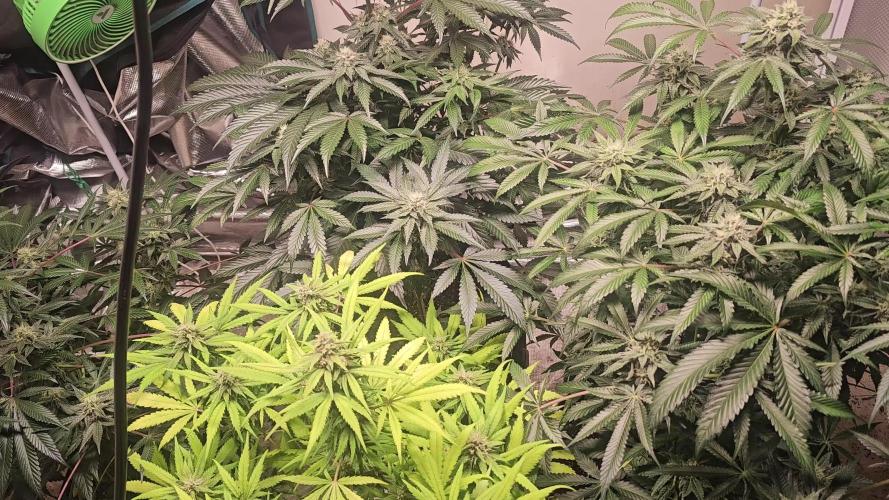
Opening this week is a surprise as the height of the untopped is surprisingly stretches the topped one stays compact and bushy
First signs of pistils shows more clearly here
I defoliated some lower leaves in couple days of the late week and LST at the end of week’s day before lights off.


Likes
28
Share


@SOGMASTER
Follow
A great replacement strain from Barney's. If you can't find the old exodus UK cheese which is almost impossible these days, this variant gives you everything you want.
Definitely keeping this strain since its such an easy plant to grow.
I have two more phenos to test with a full diary already begun!
Thanks Everyone! First diary done 🎉
SM

Likes
5
Share

@RakonGrow
Follow
+
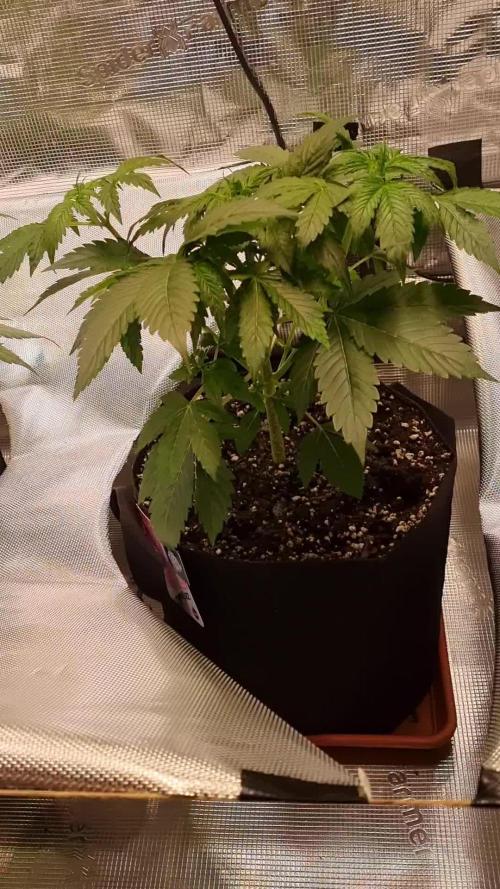
Day 37
2.0L bottle water EC 0.35 + 0.2ml/l CalMAg , 3.3ml/L Vega . PH 6.1
DIY Project fixed my Problem :
+ Top Values : 25.4°C ; 57%rH
+ Bottom Values : 23.0°C ; 64%rH
Day 34
3L bottle water EC 0.35 + 0.4ml/l CalMAg , 3ml/L Vega . PH 6.12
Day 32
1L bottle water EC 0.35 with 0.4ml/L CalMag , PH 6.10 . Reduce EC in some spots .
Build a shadow plane with reflective foil (diamnond tent foil).
my new light is large as hell , and heating all around lol . this DIY project should fix it .
Day 29
2.5L bottle water with 0.4ml/L CalMag 3.3ml/L Vega , PH 6.07
+

Likes
84
Share


@Belverde
Follow
Hi guys
Welcome in the last weekly upgrade 🙂
In the end ten weeks of flowering for this beautiful phenotypes of the brand new DOS SI DOS # 33
For being precise today (the same day where I have do the photos on the top) we are at 68 days of flowering..
I probably will doing harwest in one or two days , so we will arrive at day n°70..
I have still prefere to continue her maturation because she tell me to do that..
So , she decide it..
She know when it's ready , and in some way she tell it us , if we listen..
Probably it's a thinks comes from mind of a stoner , but for me it work well 👌
Anyway..
She's was easy to grow , specially using this Living Soil Hig-Brix recipe I have make..
The resin production it's very very good , super sticky glue 🔥
Like I say in previous weeks..
The aroma reminds me a lot of a Kush earthy , spicy with some other notes like citrus , but faraway for now..
After the cut I will dry it properly , for 7 to 10 days in temperature around 20/22°C and ur 55/60% , the entire plant..
After that , when the branches are dry but before the crack sound , I will do a nice manicuring and then I put the flowers in a browbag for one or two days , it depends..
Then , when I will think the moinsture of the buds can be good , I will put the flowers in to the jar..
Not all full but just for 3/4..
And then I will start the curing process..
Usually after the first time I have put the buds in to the jar , I leave it closed for 24 h..
After this full day closed , I will start to open up the jar four times a day every six hours for the first week..
And then I will doing it for about three to four weeks , and every week I will open the jar one time less..
Sometimes I change the metod , but the final product it's always be the same..
But when I will finish this process I show you in a video how the ash it's and especyally how it's will burn , nice and slowly without still continue to light up..
Unfortunately now I can't do nothing for show you how clean and rich can be the taste..
I hope for the future..
Anyway..
The first test will be around half may and after that I can be able to posting the harwest rewiew..
So stay tuned ⏳
Thank you so much for stopping by here all this pass weeks , or just only now for the first time..
And thanks for reading and support , I appreciate it 🙏
See you in a few weeks..
Or already now in some others diaries 🤙
Do vape some weed and stay safe..
Sun always comes..
But if he doesn't arrive , go in to your growbox ☀️😎
Ciao ✌️
🇮🇹
BONUS
I'm always growing the same strain but in different ways..
Here is the link below 👇
https://growdiaries.com/diaries/48209-barney-039-s-farm-dos-si-dos-33-grow-journal-by-funclouds
And I'm also using the same type of "Living Soil High-Brix" with this other lady , Blue Gelato #41 👇
https://growdiaries.com/diaries/46282-barney-039-s-farm-blue-gelato-41-grow-journal-by-fun-clouds
If you want to see 🌱😉

Likes
20
Share


@Dunk_Junk
Follow
Had to bend the top cola over this week as she was way too tall.
She's nicely entered flowering this week. Buds look nice and compact.
Likes
10
Share


@Kosta_boy16
Follow
14 weeks old , First day of week 15 😬
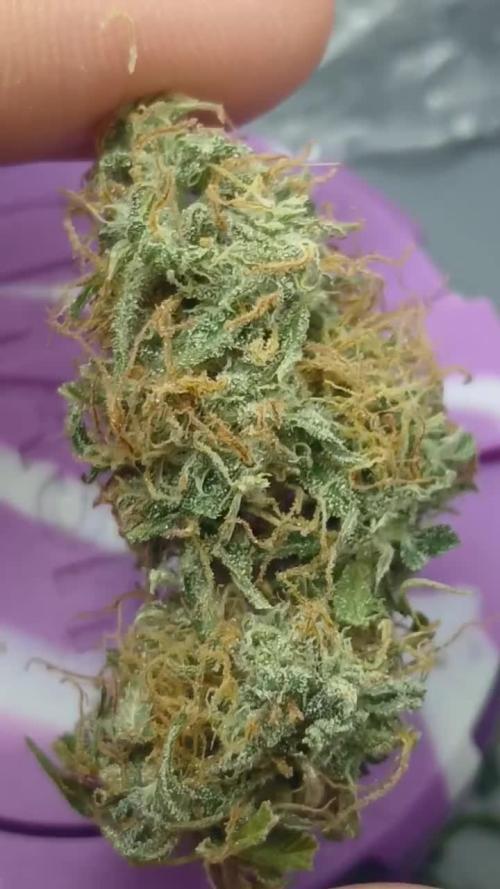
New white pistils .. and leaves yellowing
Trichomes getting milky no amber as yet started a flush for a few days will assess again , somewhat fuller bud
But def need a higher watt light and scrog to get the most out of the plant I think , main cola seems most tight as it’s been closer to light
Good learning experience not bad for first grow
Buds are sticky :)




Likes
4
Share


@FlavoursUk
Follow
Bud structure nothing like I’ve ever seen before, looking healthy And frosty though. Looks close to being ready too, will be checking the trichomes. It’s showing a super high caylax to leaf ratio. Phenotype? Not sure. Next to no nutrients during this grow.
Likes
2
Share


@Delta9tetrahidro
Follow
En esta etapa no agregue ningún nutriente a la solución para evitar que la planta tenga gusto al nutriente, así dicen los expertos que queman esta hierba. Yo lo hago solo por deporte, no porque lo fume. mantuve el ph en condiciones estables a como dictan los científicos en este rubro. la próxima😁 semana corto las plantas y las pongo a secar.
Likes
10
Share

@Fabroking
Follow
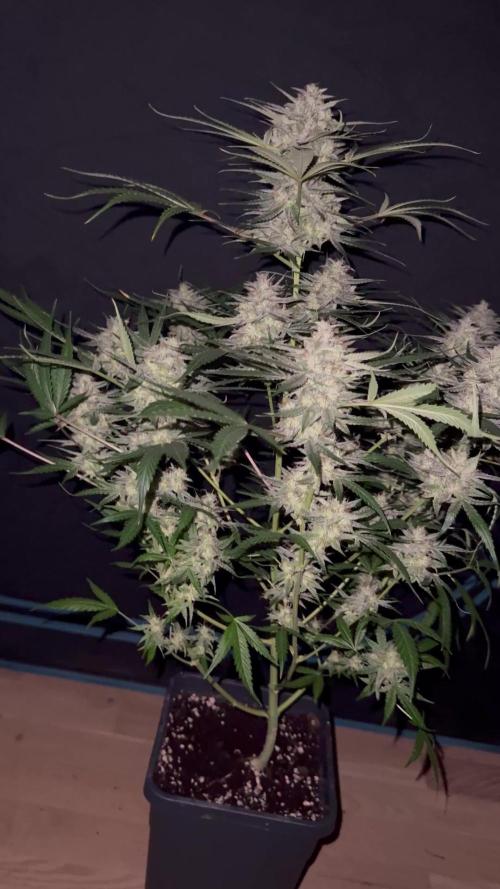
Genetica davvero valida come già detto merita un posto nella coltivazione di tutti almeno una volta, penso sopratutto che quando farò estrazione avrò bella soddisfazione data la quantità di resina e terpeni che hanno sprigionato🍭


Likes
45
Share





Likes
4
Share


@SlickCityOrganics
Follow
Germination completed. 1 out of 2 beans. Got something atleast. Free bean from NASC.
Likes
4
Share


@amazingautoflowers
Follow
Hey All!!,
Today is the 24th - Happy Christmas Eve!
The pictures were taken on the 19th (42 days old) they are looking quite good. They are doing a good job of stacking. Looks like they will be nice dense buds. I will be staying with what I am doing as far as feeding until it's time to flush. It does not look like they will not all finish at the same time. Of the 4 one is really turning purple, a second has more purple buds but the leaves are green, and the last two are just getting frosty but no real color, at least not yet. Also of the 4, one is really tall, two are about exactly the same and then there is one in the middle, taller than the two but ot quite as tall as the one really tall one.
I will follow up next week. I skipped a week as there was nothing significant to talk about, they were just growing well.
I hope everyone has a great Christmas day!
Likes
2
Share

@BennyBud2210
Follow
Letzte Woche in der Veggi...
Ab nächste Woche Umstellung auf 12/12🌑🌞
Die Glitterbomb hat sich mittlerweile wieder gefangen und schiebt gut nach🍀


Likes
22
Share


@Malibu_buds
Follow
It grew so fast, I’d definitely recommend it for a first time grower, im gonna try growing a photo next time,
It’s was very sweet tasting, but a bit dry think I need to learn a bit more about drying and curing before my next grow
Likes
19
Share


@Troy_Farms
Follow
Coming to the end of the week she is looking really great. The the 4 lines are filling in really great. side branching on all of them. She got up to 10" which is great. Pistil production is not really picking up yet. She looks very promising.
