




Likes
27
Share


@Potgoblin
Follow
Ok so here we are Day 1 of flower!! 😁😁
Thursday 19/08/21 7pm
She has came out of her 36 hour dark period looking as healthy and happy as she went in! I've counted AT LEAST 30 Tops but if I'm honest I keep losing count there are so many!!!
And she has had her first bloom feed 4L & NO RUN OFF AT ALL!!!
She must be thirsty haha!
I've gone in at half dose with the Bio Bloom & Top Max just to ease her into it however I went in at full dose with everything else!
The C-Result claims to be a 100% organic yield booster which you only use once in you first feed at the beginning of flower but we shall see
Other than that I'm going to keep an eye out for tip burn & as long as I don't see any she can go on full dose of bloom feed as well once she drys out!!
CANT WAIT TO SEE HER STRETCH!!!! 😜👊
Processing
Likes
23
Share


@eldruida_lamota
Follow
Que Pasa familia,Tenemos cambios , 12/12 empieza lo bueno(floración), empieza a oler el cuarto a un aroma especial 😉, os voy a dejar muchos vídeos para que no tengáis ninguna queja.
•primer problema y único , es la temperatura. (Max30 min28 con Luz).
Llevaba varios días comiéndome la cabeza , de mientras tengo medio abierto las compuertas del indoor.
Todo lo demás funciona, se las ve Sanas, veremos las próximas semanas.

Likes
6
Share


@Izlti_ocelopilli
Follow
Clones rooted with 7 days, started showing new growth around 10 days, they were only fed kelp powder and silica at around 300ppm foliar feed

Likes
28
Share

@eldruida_lamota
Follow
Que hay familia, vamos con la octava semana de floración de estas Apple Fritter de Zamnesia.
La temperatura está entre los 21/24 grados, la humedad está entorno al 55%, y el ph lo mantengo ahora al principio en 6.2, el foco por supuesto está enchufado 12 horas , estan creciendo bien fuertes.
Y aparte añadimos nutrientes de Agrobeta, que no puede faltar semejante gama.
Todo correcto hasta ahora, ya van madurando las flores y ya están bien resinosas, estas próximas semanas veremos cómo avanzan.
Os comento que tengo un descuento y para que compréis en la web de Zamnesia de un 20%, el código es ZAMMIGD2023
The discount 20% and the code is ZAMMIGD2023
https://www.zamnesia.com/
agrobeta: https://www.agrobeta.com/agrobetatiendaonline/36-abonos-canamo
Mars hydro:
Code discount: EL420
https://www.mars-hydro.com/
Hasta aquí es todo, buenos humos 💨💨💨.

Likes
2
Share


@EyeMKing
Follow
Started the first top dressing of Gaia Green All Purpose and Power Bloom at a 50/50 ratio of 1tbsp/gal each.

Likes
40
Share


@valiotoro
Follow
Brocoli buds!🥦
Super sticky & delicious smell its just sweet🤤
When you smell the amnesia Z she seems to be kind but trust me roller coaster effect !🎢
Likes
11
Share


@DixTheReal
Follow
Ho regolato il dimmer della lampada al 100% e distanza 30cm perché si sono allungate troppo i primi giorni. Continuo ad annaffiare solo con acqua ogni giorno con l’aiuto di uno spruzzino

Likes
4
Share


@2x2UkGrow420
Follow
Had to tie branches up to take weight, gonna be a beast 😬🔥👊🏻 Fully flushed and ready for the chop!


Likes
10
Share

@eldruida_lamota
Follow
Que pasa familia, ya estamos aquí para actualizar la 3 semana de floración y es que la vaina se pone interesante, están cogiendo unos tonos.
No os e comentado creo pero hasta ahora hay 2 armarios, uno con 100w y otro con 150w en el de 100w hay 4 red cookies gelato en 7L.y en el de 150w hay 5 ejemplares de red cookies gelato en 15L de maceta.
El cual en donde practique el crooping fue en el de 150w , que veréis todos los céntrales partidos .
Hasta ahora alimentado total con bases de advanced nutrients más big bud y bud candy.
E tenido algún problemita en la sala con las humedades que pronto estará solucionado aunque no fue mucho hay que decirlo todo. ( máximas en interior de 70 % en pico alto…) eso está mal así que la solución es un deshumidificador potente y a seguir.
Hasta aquí todo espero que disfrutéis con los diarios y buenos humos 💨💨💨
Likes
19
Share


@LittleBigTrees
Follow
They've stretched through the net a fair bit , all different heights.
Defoliated reasonably hard on day 20 .
Started sugar royal at half dose this week.
Will start green sensation also from plagron from week 4 as recommended.


Likes
Comments
Share

@mawintinner60
Follow
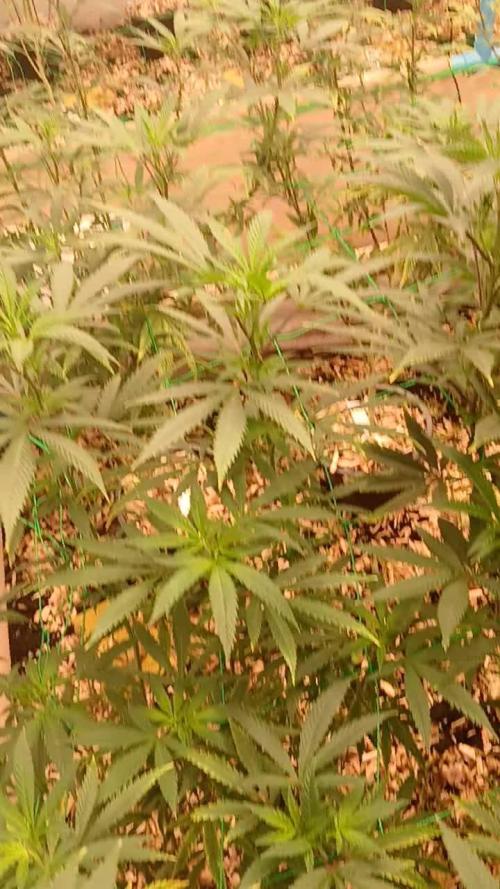
Sprinkle with Kraft to add nutrients and spray the leaves with Epsom salt. The second bed of leaves is starting to recover from the magnesium deficiency.
Likes
9
Share

@Riseandshine
Follow
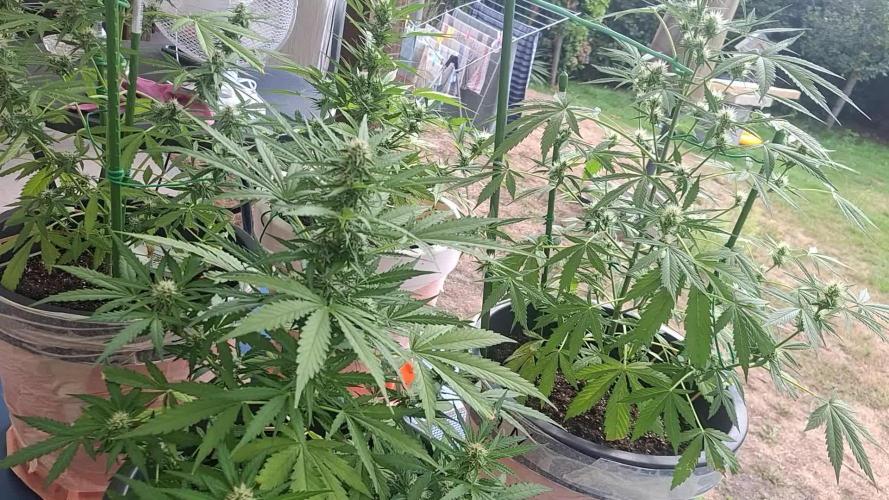
Dag 49 van mijn dames. 😁🌱☘️☘️☘️
Nieuwe week# nieuwe bloei.🌱☘️?
Ze hebben gisteren alle 4 hun liter water zeer goed geïncasseerd en staan trots te blinken in de zon.
Vandaag toch 27 graden en kurkdroog, dus ze staan in openlucht eindelijk.😎🤘🤟
Ik hoop gelijk dat ze tegen morgen droog staan, want dan krijgen ze 2x voeding deze week. Ik ben voorzichtig, maar sta te popelen om nog pk te geven. Is goed voor de dikte van mijn toppen, dus ja, je snapt mijn gedachten wel.😊😅 We zullen zien, maar bij het begin van deze week! Geef ik ze alle 4 een dikke vette tien! 😊
Dag 50 van de knapste plantjes dat ik ooit heb gezien.🌲🌲🌲🌲🌿🌿🌿🌿🌴🌴🌴🌴
And I think to myself!
What i wonderfull world. 🤩🤩🤩
Vandaag perfect weer voor den belgiqeu en een aangenaam briesje.
Ze hebben vanaf 10 uur tot 20 uur in openlucht op hun troon gestaan. Koninginnen zijn het.
Zjan gaat me verassen met haar main cola vrees ik. Die is langzaam aan het komen en ik word er gelijk gelukkig van. Hun liter water van zondag is mooi verteerd, dus ik heb hun vandaag voeding gegeven. Daarna chill de berging in bij hun, ondertussen vertrouwde ventilator. Luchtvochtigheid hou ik daar echt onder de 60 dus dat blijft ook dik oke.
Kijk er al naar uit om hun morgen gaan te begroeten....
I love them so much.😊
Keep on smiling people and don't forget!
Dag 51 van de hofdames.☀️🔥🌝
De dames hun pistels en calyxen ontploffen letterlijk bij gaadkloempke. 💣💣💣💥💥💥
Geen zorgen over de rest, want die ontploffen mee hoor. Echt mooi hoe hard hun toppen met de dag verandering brengen. Die bloom 2 en die pk is inderdaad andere kwaliteit dan mijn substral voor gerariums. 😊😂😂😂 Ach ja, alle begin is moeilijk en ik zal die fout dus niet meer maken. 😊
Heel mooi weer deze nm gehad, dus ze hebben toch echt 8 uurs zon kunnen pakken vandaag. 😁
Deze vm stonden ze wegens reden onder het afdak.
27 graden vandaag, dus lekker.😎😎😎
Morgen zelfs 30, maar das nog afwachten.
Ik zal ze met plezier verhuizen als dat kan.
Vandaag geen water, want ze wogen nog zwaar.
Wat kijk ik nu al uit naar morgen.
Verzorg jullie schatjes goed mensen.
Liefde loont in dit vak blijkbaar.💗💓💞💕❤️🔥
Dag 52 van mijn, mother fucking, beautiful girls!❤️🔥
Zeer lekkere zomerse dag hier. Prachtige 29 graden en een lekker briesje. Plantjes hadden ook meer dan dorst genoeg, dus die liter zuiver lauw water zit dus lekker in hun buikje.
Verder blijven hun toppen met de dag groeien en zwellen!
Dus deze jongen blijft in zijn geluk zwemmen.
Ik begin zwaar uit te kijken naar een trekske van hun bloemen. 🙈🙈🙈😁
Ik zit opnieuw zwaar te kloten met mijn luchtvochtigheid in hun nachtplaats tedju.😅😔😬
Heb daar nu 3 grote en 2 kleine vochtvreter staan en 2 ventilators strategisch gezet op zwenkstand.
Ik moet da op peil krijgen, want ik wordt daar intern ziek van in mijne kop. 😬🤐
Geduld is de beste raadgever, dus morgen vroeg weet ik daar wel meer info over.
Verder blijf ik mooi met mijn handjes van hun hemelse lichamen en kijk vol bewondering, onze resterende tijd, samen met een glimlach tegemoet. 🌱🌿🍀🌲🌲🌲🌲🌲🌲😁
Verder zijn ze alle 4 gestopt met groeien!
Dus laat ze nu maar volop bloeien!😁
Dag 53 van een bang kwekerke😬😅🤯
De luchtvochtigheid swingt hier de pan uit en nu is er buiten verdomme ook nog geen wind.😬🤕
Ik heb er buiten direct ne ventilator bijgezet, zolang dat er geen wind is. Ik hoop echt op geen onverwachts bezoek, want ik krijg het hier kwa vochtvreter en ventilators nie meer gecamoufleerd. 😅😂😂😂😂😂
Hoeft ook niet hoor! De plantjes zijn sowieso prioriteit nummero 1. 😁
Na mijne fuck update van deze morgend, was het de hele dag miserie. Een serieuse stortbui en door de wind melleke een ferm drats gehad. Ocharme dat kind! 😅 Ikke mee, een haardroger op zachte stand en koude lucht, toch een dikke 30 min dat sukkeltje staan drogen. 😬😂😂😂😂
Nu kan ik ermee lachen, maar daarstraks was het iets anders.😅🤕😭😭😭
Dan, omdat er geen wind was buiten, bijna een hele dag daar de ventilator erbij.
Dan ondertussen in die berging zitten kloten met die luchtvochtigheid! Nu blijkt dat dat aan die aardgasketel licht. 😅
Dus met die planten anders te plaatsen en die ventilators te swichen van plaats!
Is die fucking bitch eindelijk aan het zakken en kan ik ook glimlachen.
Ik heb ook gelijk nog 1 grote steunstok geplaatst bij zjan en gaadkloempke en extra draad om ze te steunen. De wind blaasde mijn hoofdtoppen mottig naar Jeruzalem daarstraks. 😂😂😂😂
Ik dacht gelijk alle stress in 1 fles!
Kunnen ze morgen terug chillen.
Ook terug droog weer en zon morgen. Hopelijk betekent dat openlucht.🌴🌴🌴🌴🌲🌲🌲🌲
Alee in ieder geval morgen nieuwe rise en nieuwe shine. 😎😎😎😎😎
Dag 54 van mijn groene bende. 💪😁👌👌👌
Het was fantastisch om deze morgend te ontwaken .
De luchtvochtigheid zat toch al terug op 67 en da was fijn. Nu dat we weten dat het aan de aardgas ketel ligt, mag die om 17 uur zijn portie wind zeker verwachten. 👊👊👊
Deze vm heb ik mijn dames lekker kunnen laten genieten van een dijk van een zon. 😎😎
Da was om 12 uur dus ook weer gedaan en dus maar onder het afdak. Daar zet ik sinds gisteren wel een blazer bij. Die moet hun 1 keer, 15 min per uur een windje geven. Kwestie dat die toppen geen stilstaande lucht krijgen. 🤕
Maar de liefde is sterk, dus ik probeer echt met alles rekening te houden nu.❤️?❤️?❤️?
Wat een ervaring dat ik dit jaar nog heb gekregen. En dan weten dat alles is begonnen met een gekregen zaadje en letterlijk los verzopen uit onkunde.?
Met echt de nodige hartpijn tot gevolg.
Dus 4 sensi seeds gekocht, beginnen opzoeken als ne zot en nu ontroerd het me, hoever we al zijn geraakt. Dus ik blijf vechten tegen mogelijke toprot, want anders wordt deze jongen ook ZOT. 😅😂😂😂
Vandaag geen voeding wegens potten niet licht genoeg. Belgische kutweer, ze drinken weinig.
Morgen wel zonnig en kurkdroog, dus hopelijk morgen avond wel aan de toog.😂😂😂😂😂
Fight for your right en u planten mensen.🌱🌱🌱🌱🍃🍃🍃🍃🍃🌴🌴🌴🌴🌴🌴🌴🌴🌴
Dag 55 van mijn godinnen 😁🙃😁
Lieve mensen, nog iets dat ik dus geleerd heb.
Steek u geld zeker in een deftige luchtontvochtiger.😊😊😊
Bij wisselvallig weer, ist het me niet gelukt met 3 ventilators en 5 vochtvreters om te winnen van moeder natuur. 😅😊😬
Ik heb dus van mijn super lief vrouwke(hoewel ze zelf niet blowst is ze zeer begrip vol) een elektrische mogen kopen bij bol.com. 😁
Voor 120 euro eentje die 40 meters makkelijk onder de duim houdt. 😎😎😎
Dinsdag staat hij voor de deur en dan ben ik eindelijk terug chill aan het kweken. Ik krijg echt stress van die luchtvochtigheid. En mijne agenda staat vol, dus kan echt niet elke avond een strijd gaan leveren die ik toch niet kan winnen. 😊
Verder krijgen mijn schatjes deze avond voeding! Das me dan 2 x gelukt deze week en dat maakt me gelukkig. Nog max 2 weken voeding dus gaaaaas erop. Dat ze mooi dicht groeien! 🌴🌴🌴🌴🌿🌿🌿🌿🌾🌾🌾🌾🍀🍀🍀🍀🍀🍀🍀🍀🍀?????
Heb daarstraks bij gaadkloempke in een top geknepen in verband met toprot.
Zaaaaaalige geur aan mijn 2 vingers en ze plakten al aardig van de hars. 😁🤩🤩🤩🤩😛
Voor de rest blijf ik eraf met mijn vettige handjes.😅😂😂😂😂
Dus beste mensen knalt ze nog lekker fleurig vandaag!
Knal ik straks terug een liter in elk hun maag.😁
Bedankt voor ook deze week mijne zever te lezen en hopelijk heb je nog interesse in hun dol dwaze avonturen en kom je stiekem in hun dagboek gluren.
Liefs Zjan Beir Melleke & Gaadkloempke?☘️☘️☘️
#sensiseeds
#whitedieselhaze
Ps: da poëtische ligt aan de amnesia den hasj bij ons vader.😬😂😂😂😂😂
Rise and shine mensen😎💥🌱🌱🌱


Likes
3
Share


@stonedkoala
Follow
- First round of veg nutes; keeping it light & mild ~
- Bucket is filled with 4.5 gal of water to reach roots; will lower amount of water as the plant and roots get bigger

Likes
80
Share


@Roberts
Follow
Clone 1is growing normal now. Lots of branching. Plus she pit on st least a inch a day in height. So she is growing great. I am not sure what I will do with her. I may move it to a bigger potter then flower it in the tent it was in. It is now just vegging in my autoflower room in a corner under the Medic Grow Mini Sun-2. Thank you Pure Instinto Seeds. 🤜🏻🤛🏻🌱🌱🌱
Thank you grow diaries community for the 👇likes👇, follows, comments, and subscriptions on my YouTube channel👇. ❄️🌱🍻
Happy Growing 🌱🌱🌱
https://youtube.com/channel/UCAhN7yRzWLpcaRHhMIQ7X4g

Likes
4
Share

@Flavors
Follow
🌱 Sticky Broccoli – Grow Diary 🌱
Week 9 | Late Vegetative Stage | Coco + Perlite
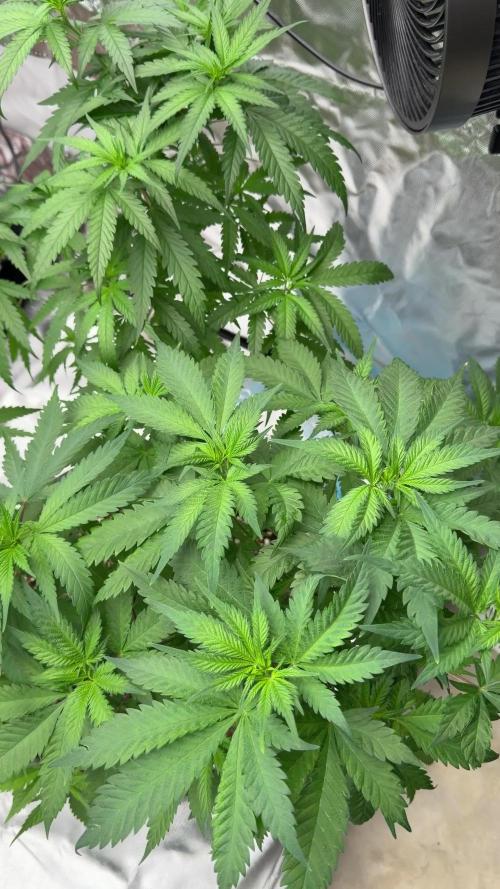
This week included topping, lollipopping, and continued LST ✂️🌿
Final structural work is coming together as the plant nears flower transition.
Topping has created multiple strong main colas 🚀
Lower growth was lollipopped to focus energy on the upper canopy.
LST continues to spread the plant evenly under the future canopy 🌐
Light penetration has improved significantly.
Canopy is now wide, flat, and well-organized.
Airflow through the plant has increased 🌬️
Foliage remains healthy green with no deficiencies 💪
Plant is handling training with minimal stress.
Roots fully established and supporting vigorous growth ?
Watering steady with slight runoff 💧
📈 Focus next week: finalize canopy, install/adjust SCROG, and prepare for flip to flower 🌸🔥
Likes
4
Share


@SybDarret
Follow
They are 43.5 and 50 cm tall.
One headed is the bigger one now but two headed seems more mature.
Both doing good and with white buds, they look almost the same so far.
I run out of Bloom Complex Soil so i'm giving them a new nutrient, Powder feeding by Green House Seed Co. Sativa version.
I hope they grow and develop fast because is summer time and i wanna go somewhere else xD
Added a video of each plant, i hope you enjoy 😺

Likes
12
Share


@Mr_Haze_Chile
Follow
Todo va bien es asombroso como las magnum a pesar de haber terminado el mes de crecimiento vegetativo siguen creciendo de manera exuberante! Se le aplicó una poda súper cropping + LST en la punta o tallo principal por así decirlo
